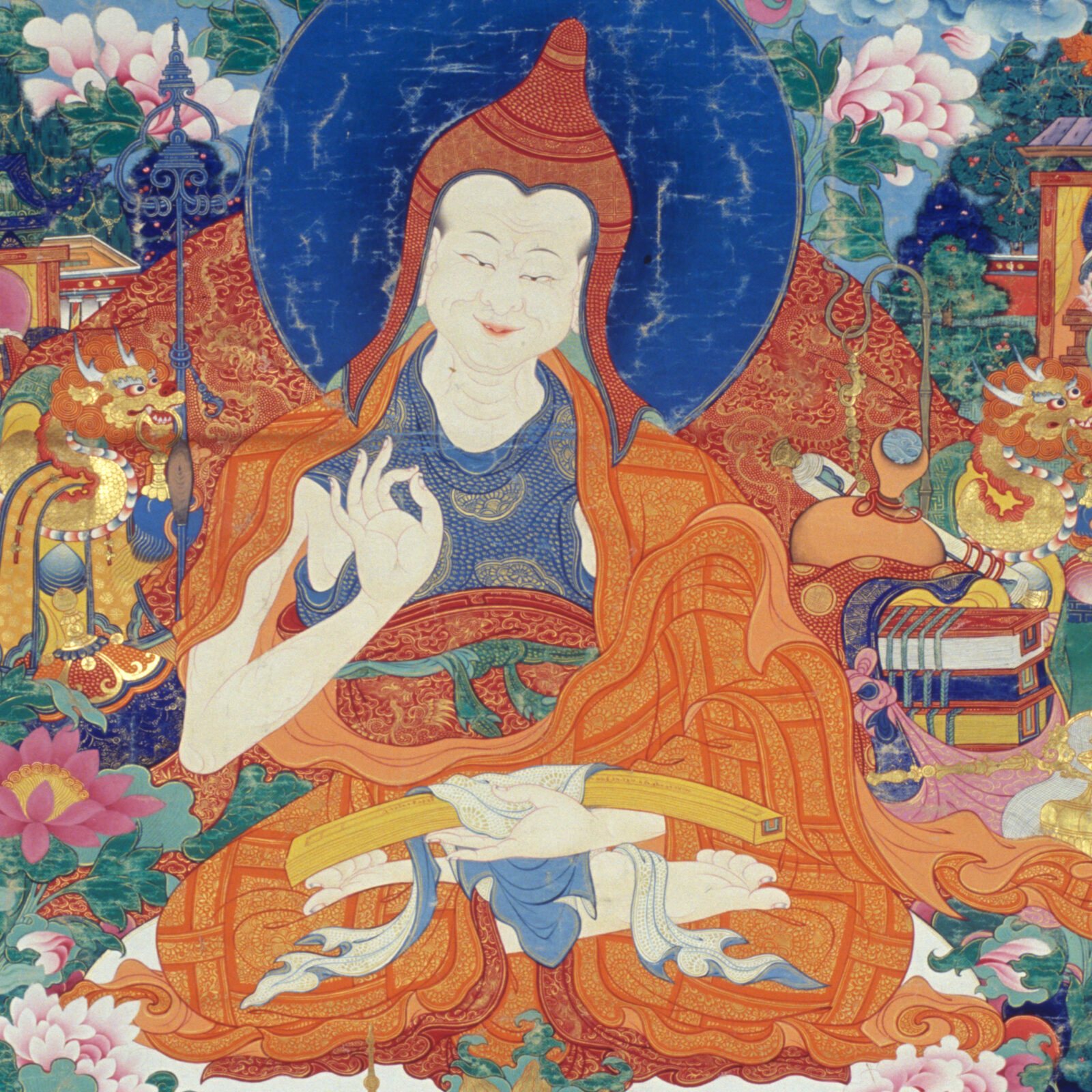
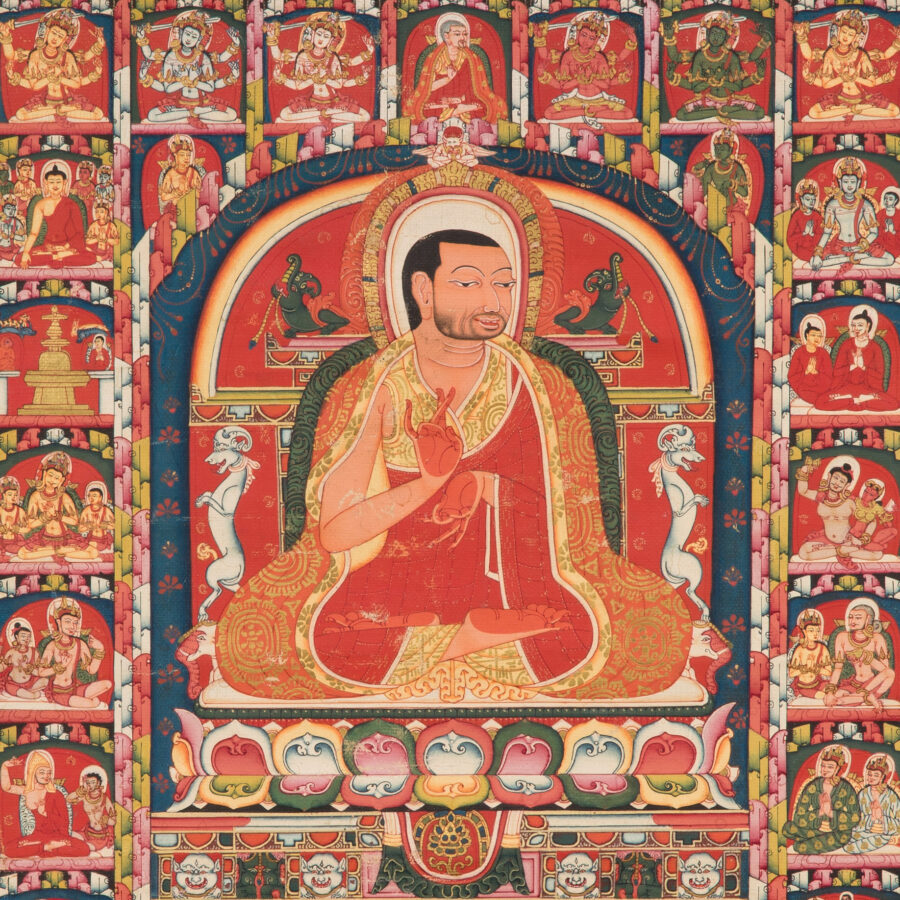
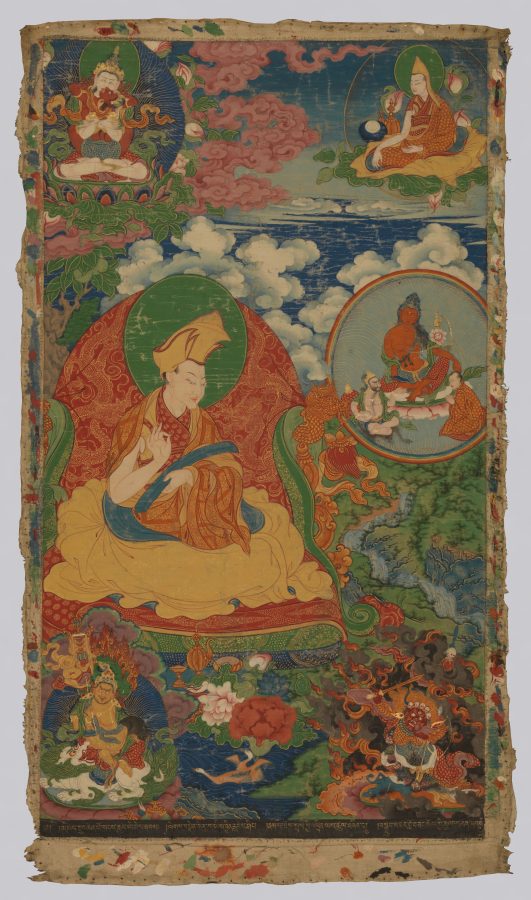
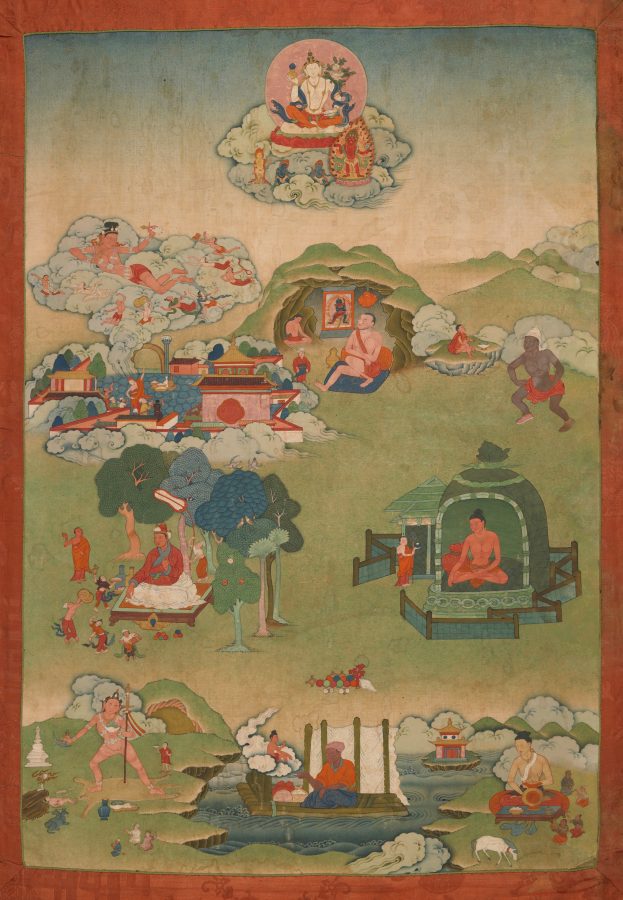
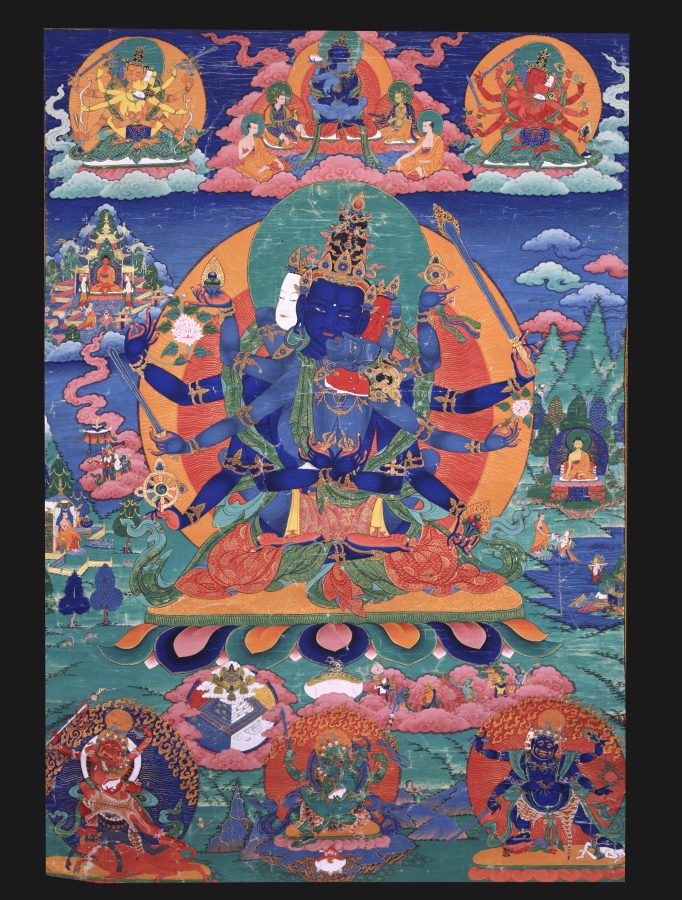
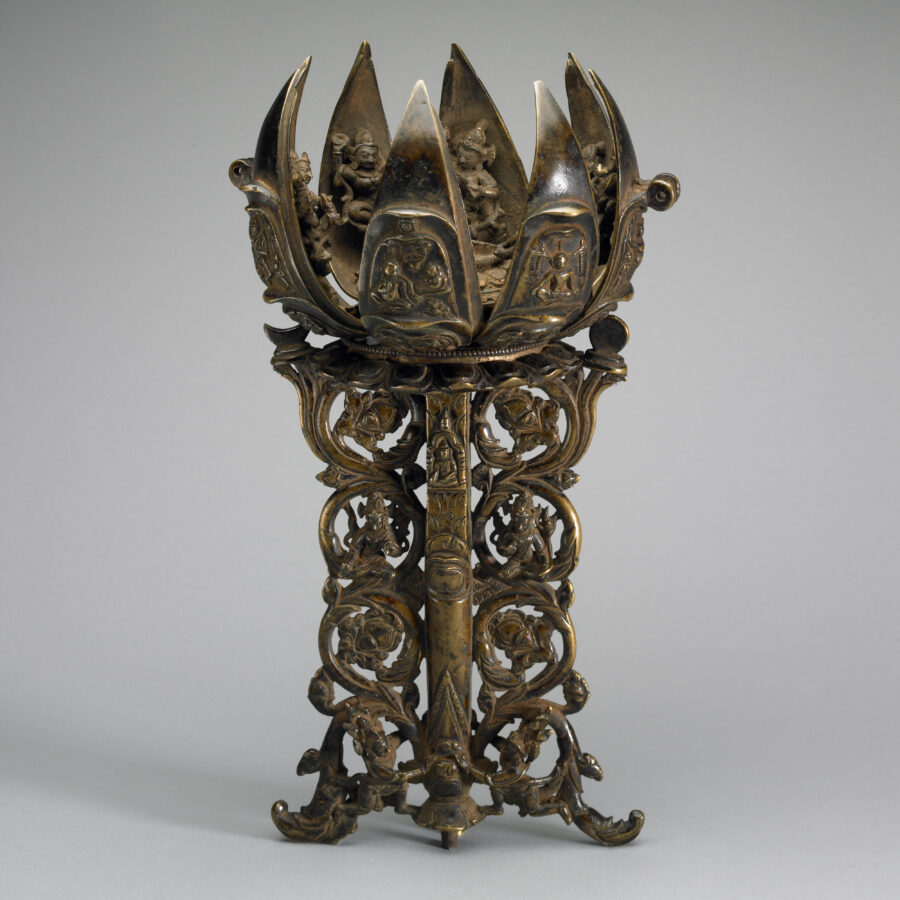
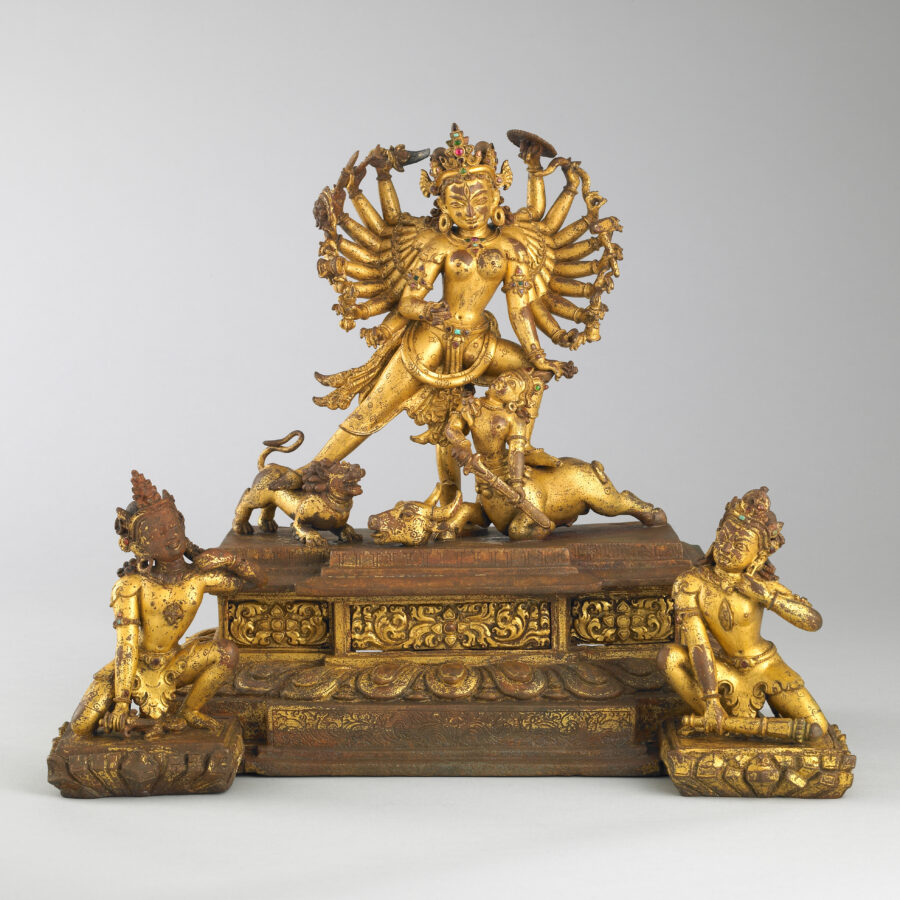
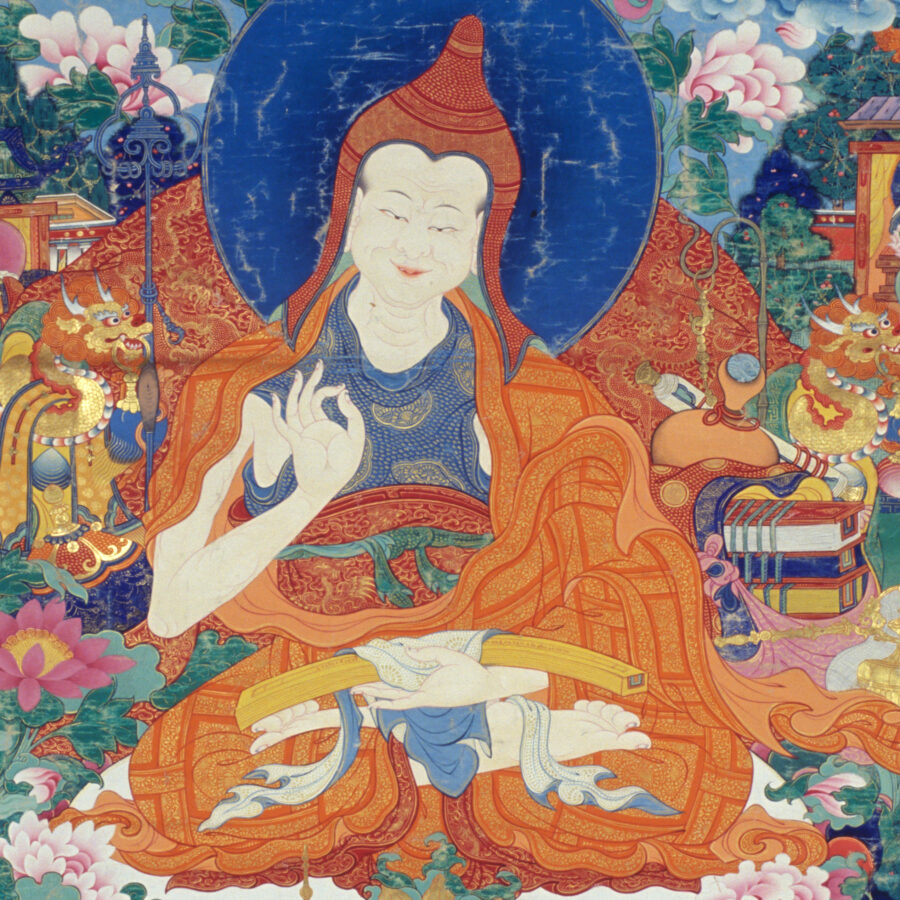
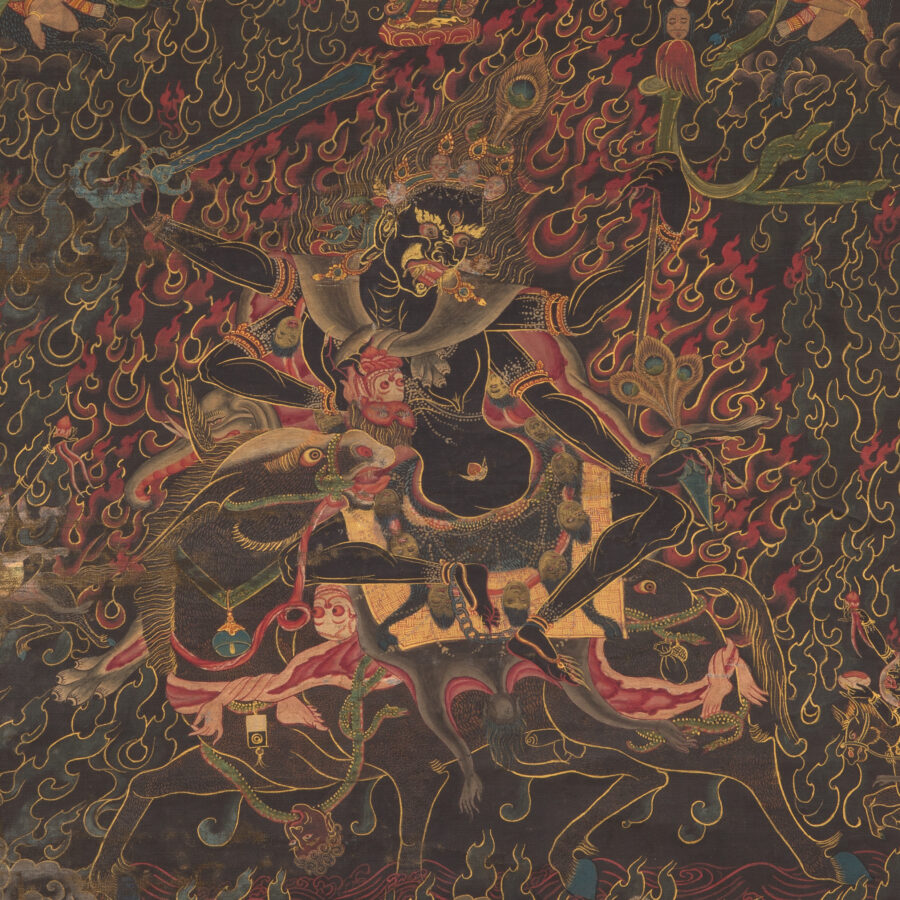
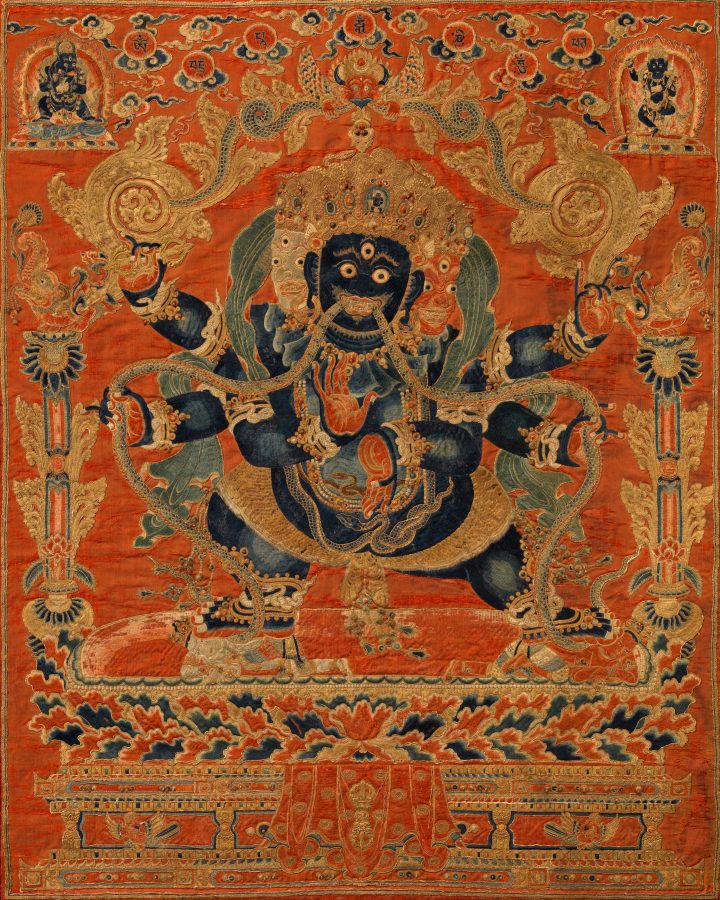
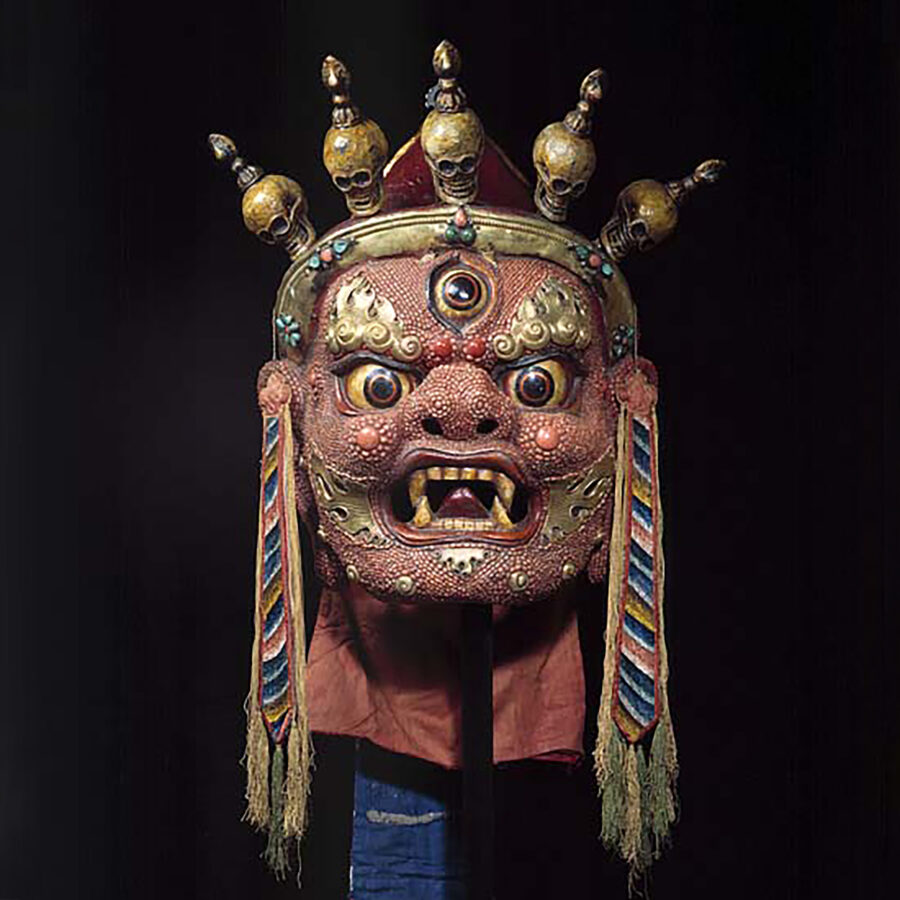
Early Tibetan art closely followed Northeastern Indian, Kashmiri, and Nepalese models. Beginning in the early thirteenth century, distinctly Tibetan compositions appear, expressing Tibetan concerns, such as the need to demonstrate authentic Indian sources of their teachings of this adopted foreign religion, and an increasing focus on those teachers that transmitted them (Skt: guru; Tib: lama). Western Tibetan and Western Himalayan art had particularly close ties to nearby Kashmiri traditions.