Art

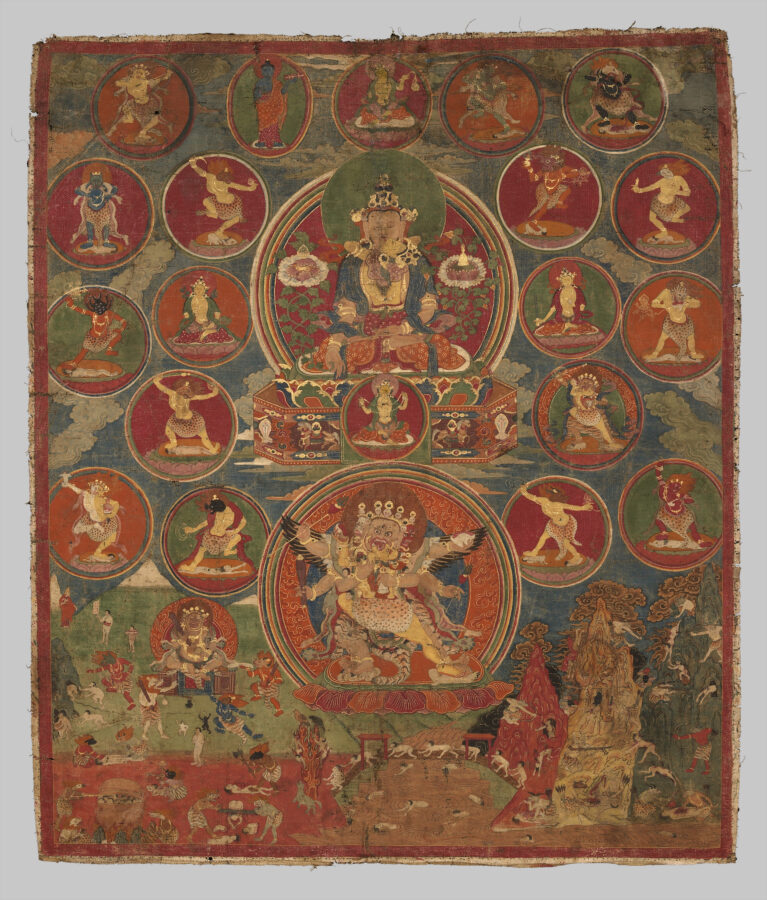
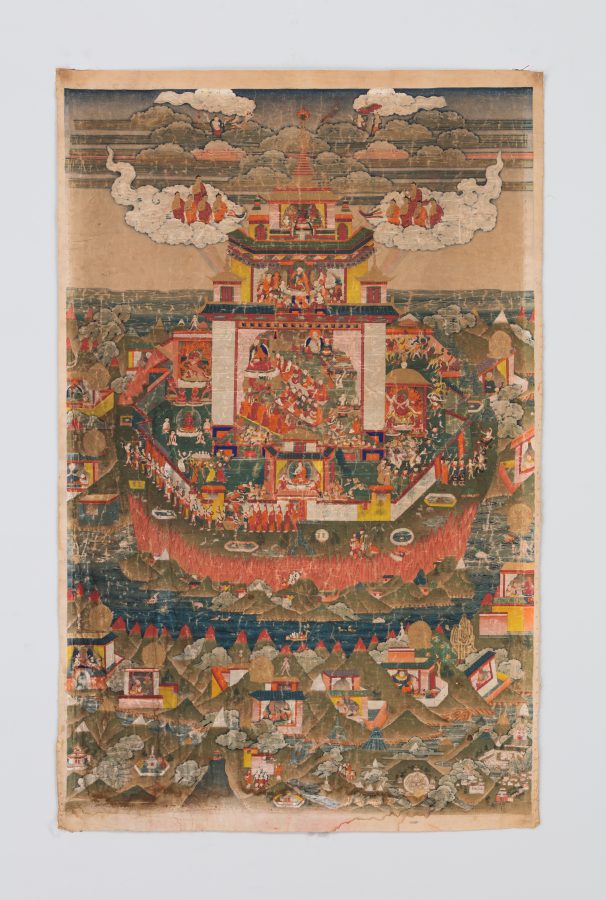
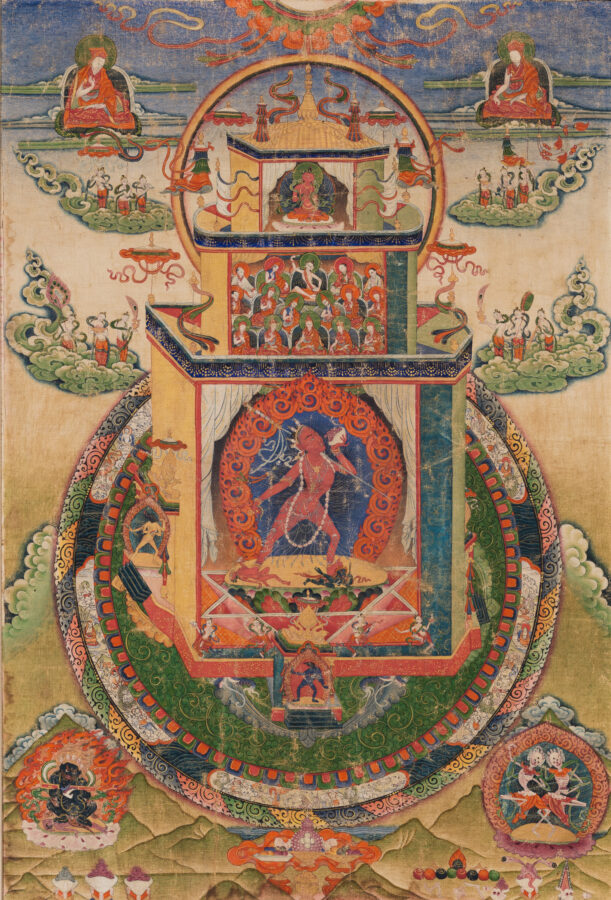
A detailed painting showing multiple deities, with a central seated figure and consort above and a fierce multi-armed deity and consort dancing within a ring of flames below. Other smaller deities in various poses are arranged around the three largest deities. A landscape with small human and nonhuman figures appears at the bottom.
Ratnasambhava, Ratna Heruka, and Peaceful and Wrathful Deities of the Bardo
Tibet, 18th century
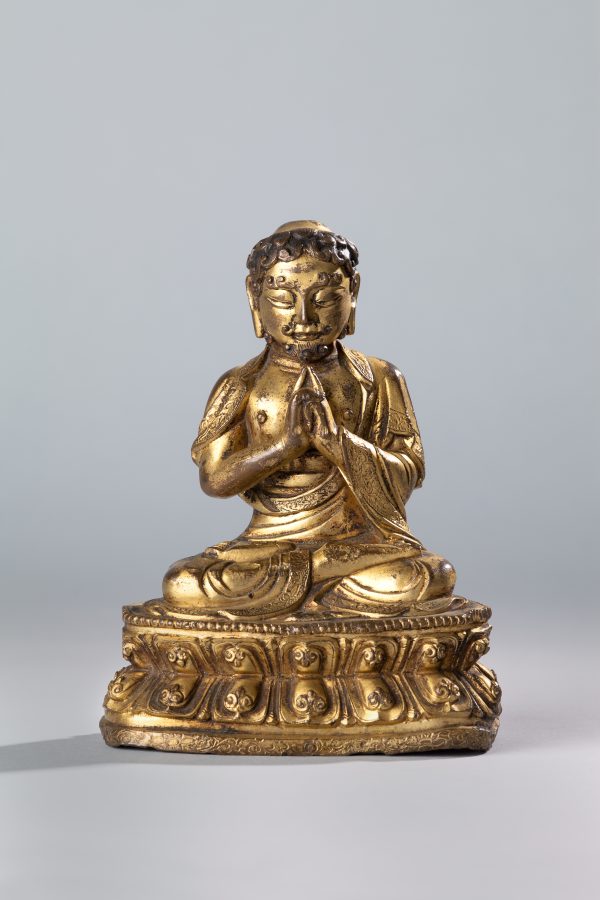
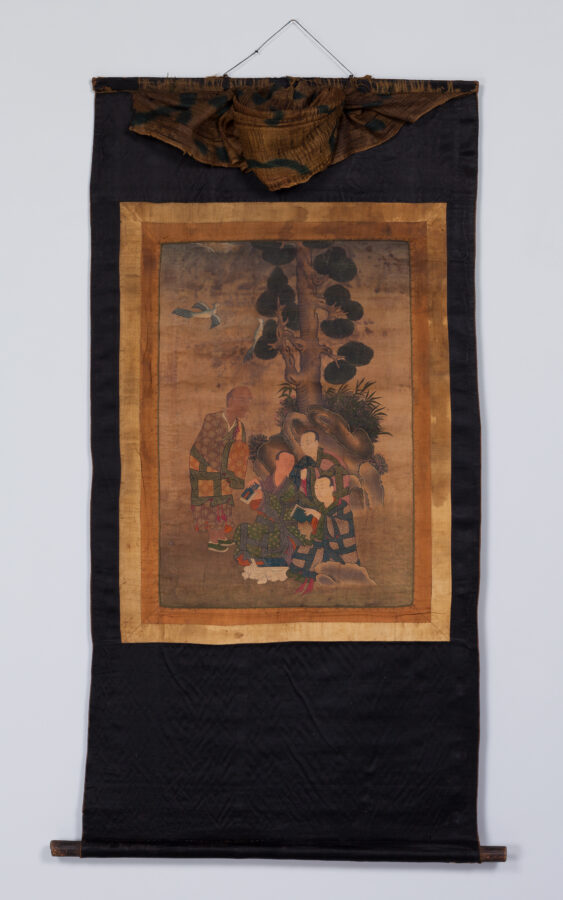
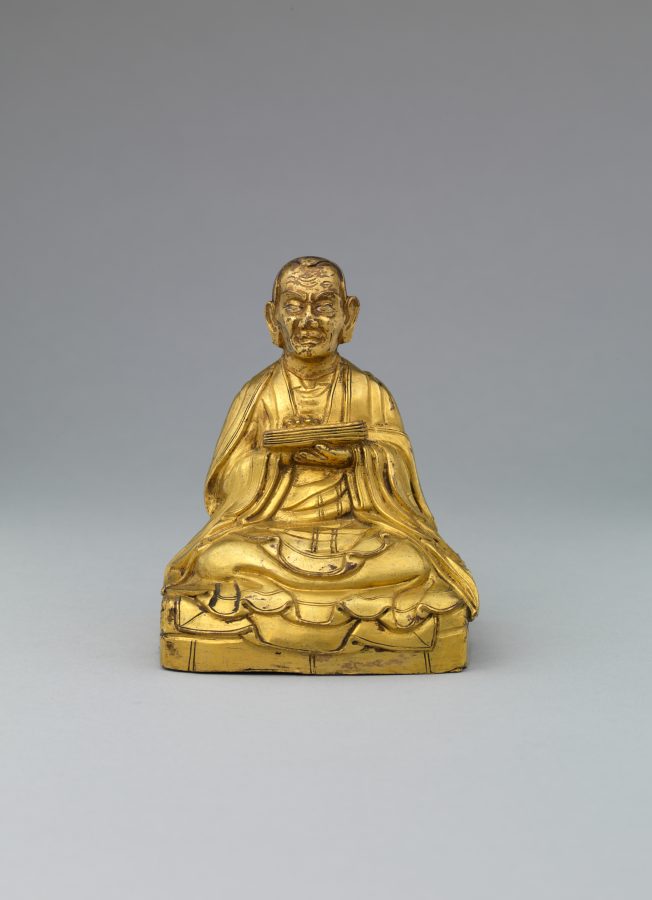
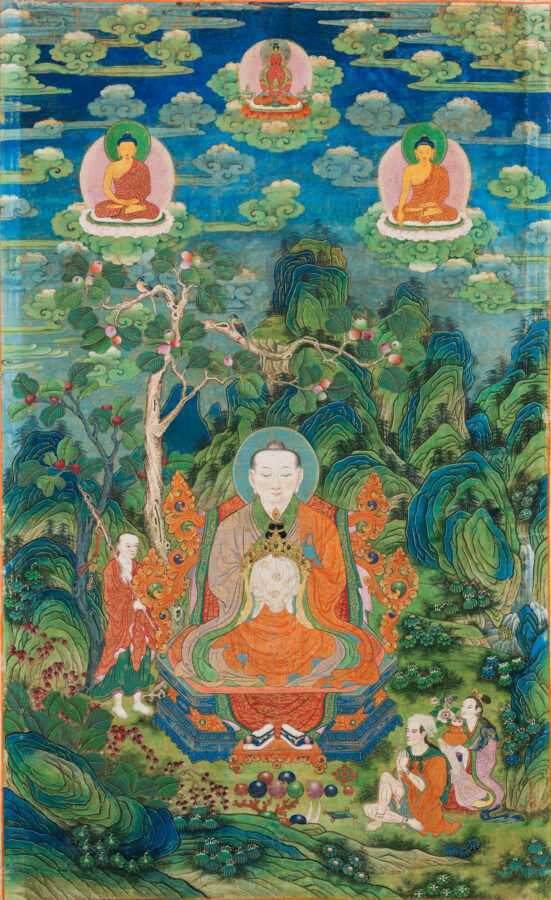
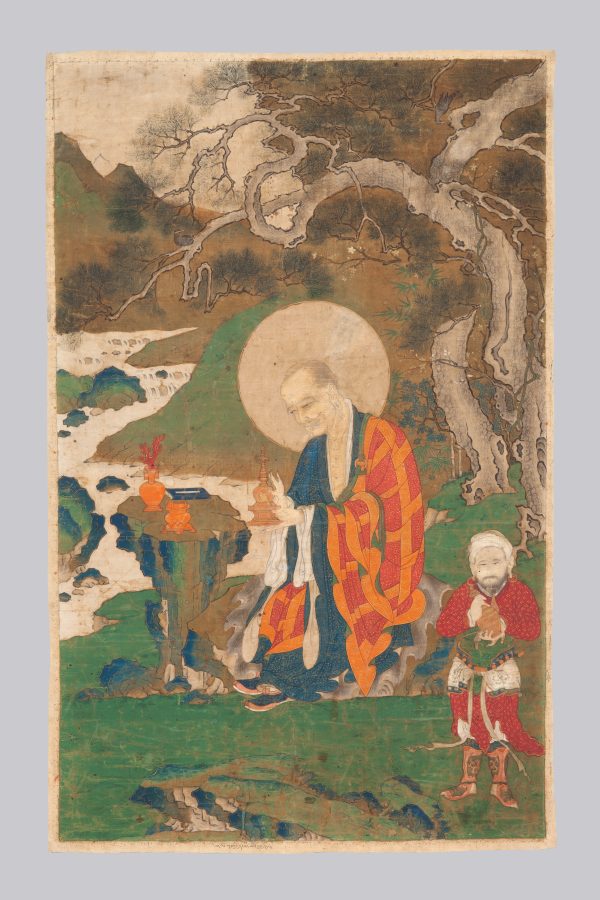
Arhat Mahakashyapa
China, 17th century
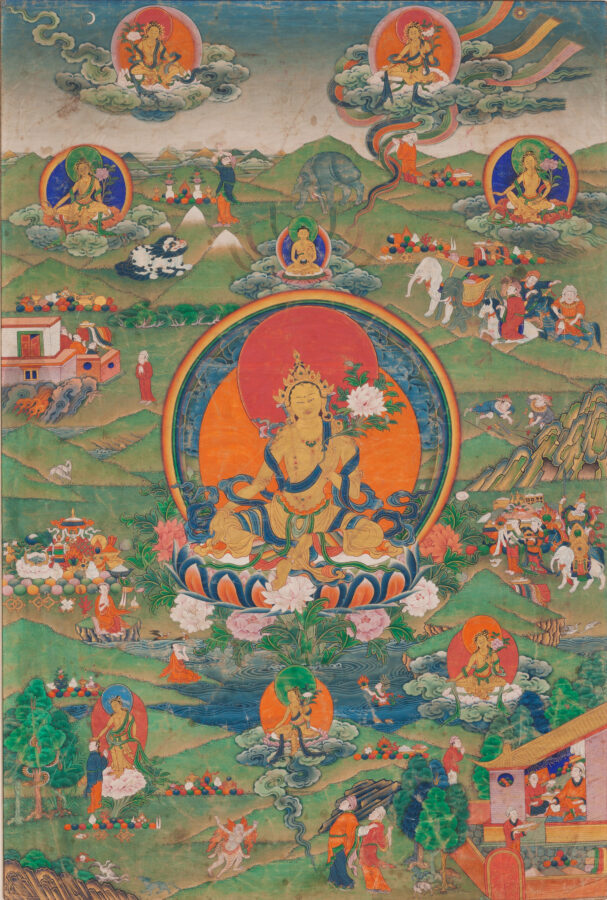
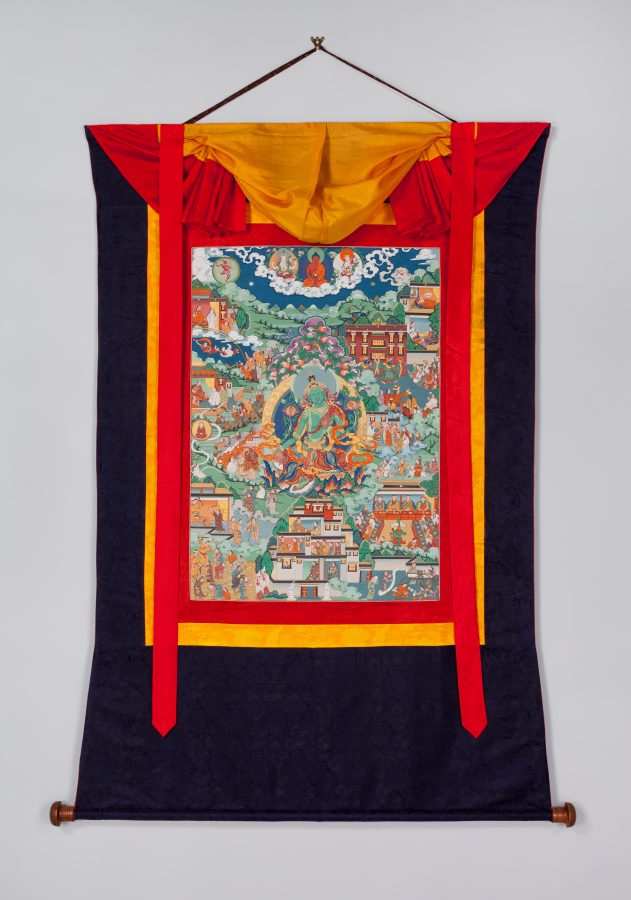
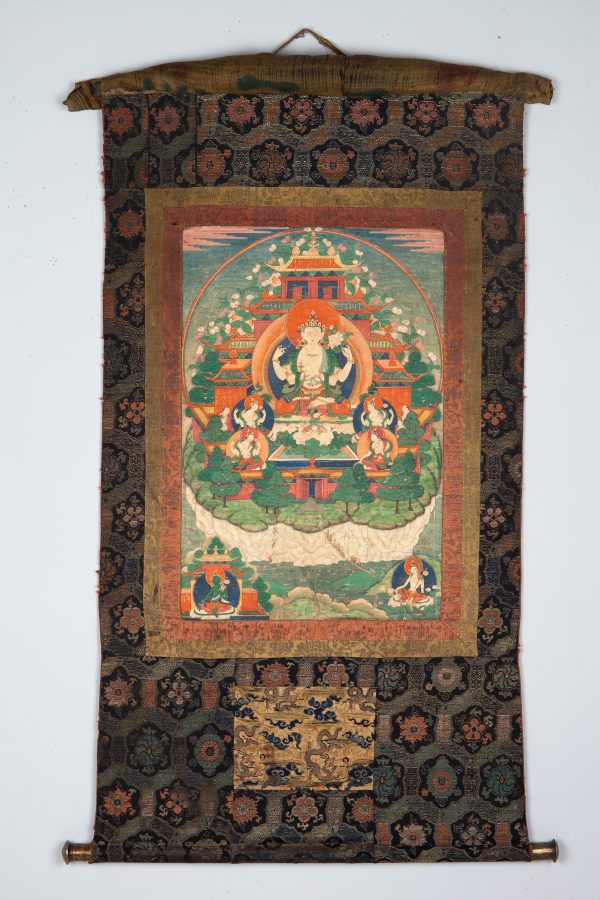
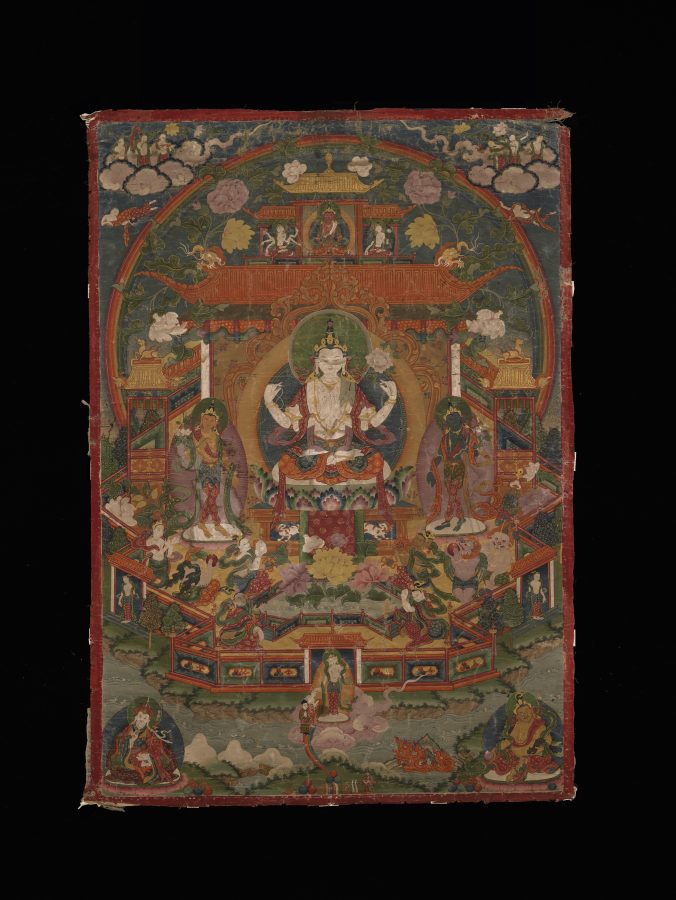
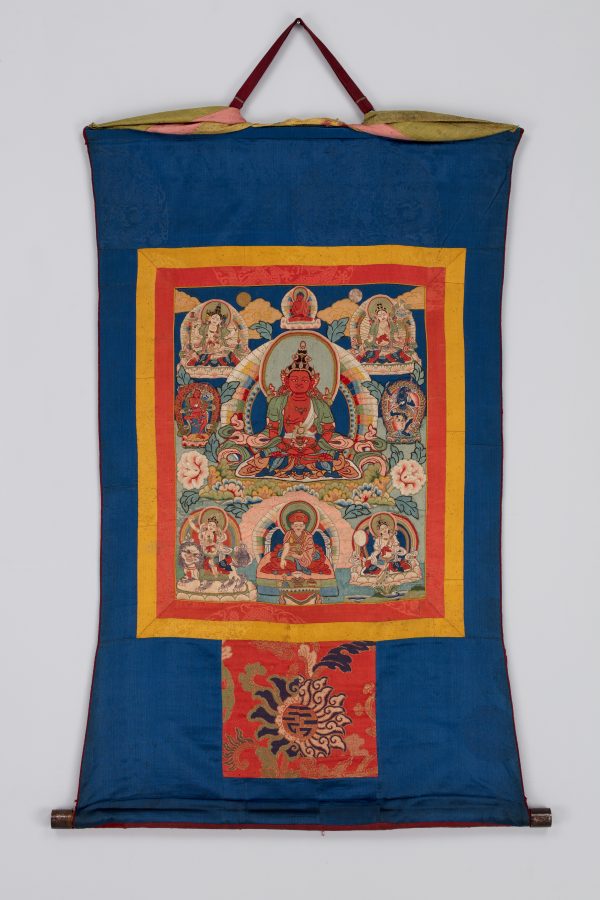
Tara Protecting from the Eight Fears
Kham region, eastern Tibet, 19th century
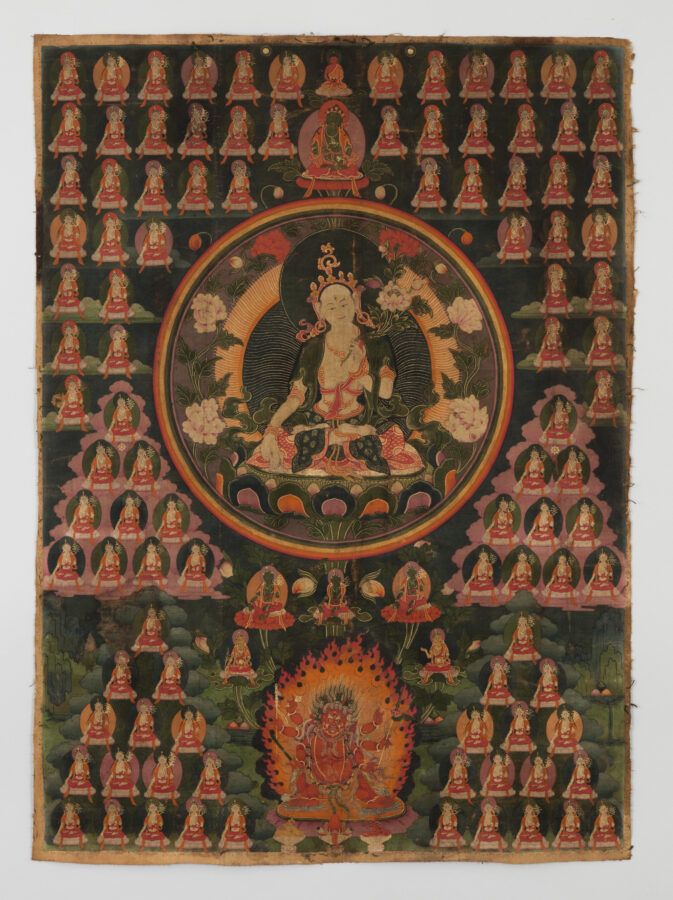
Tara as Protectress from the Eight Fears
Eastern Tibet, 19th century
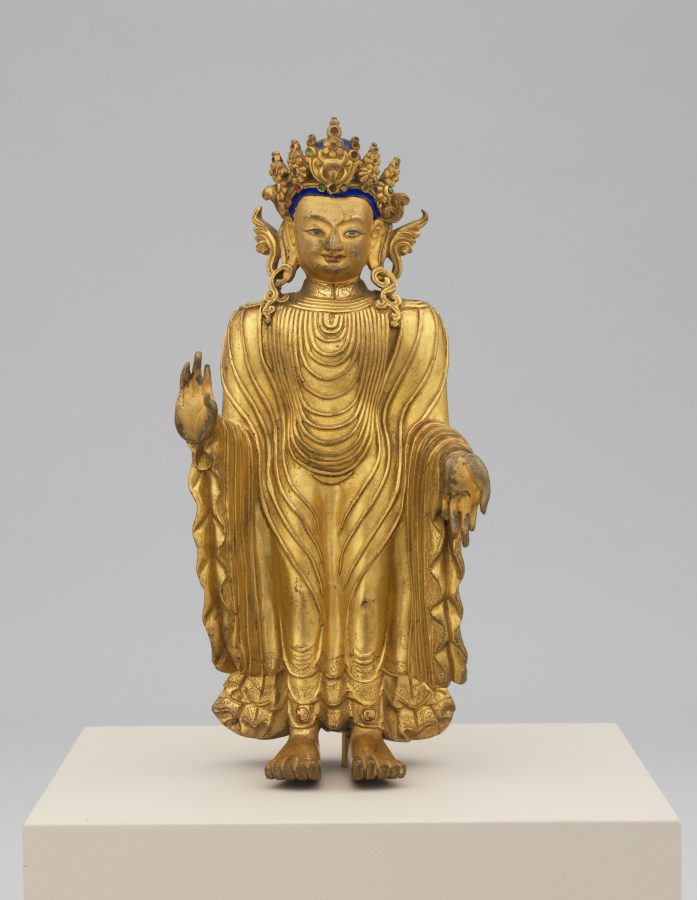
Standing Arhat
China, Dated 1439
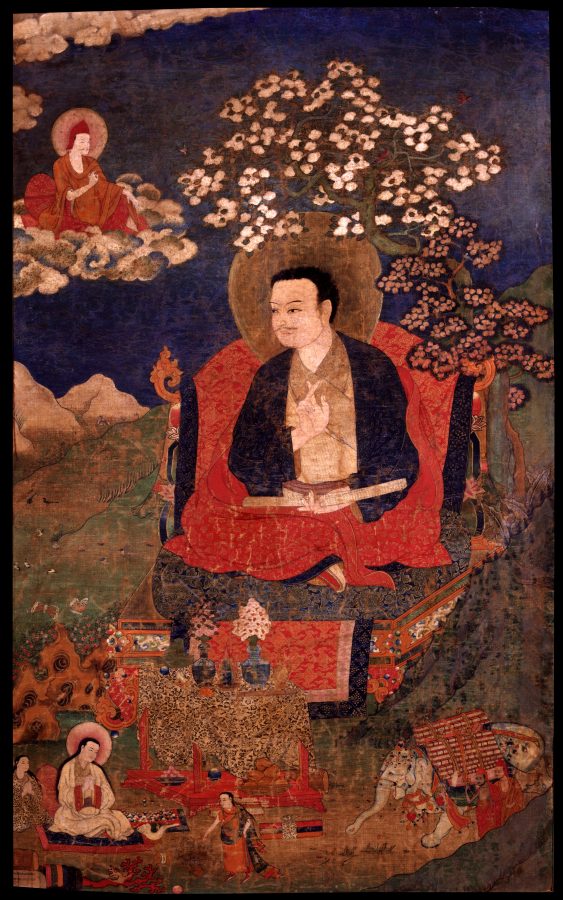
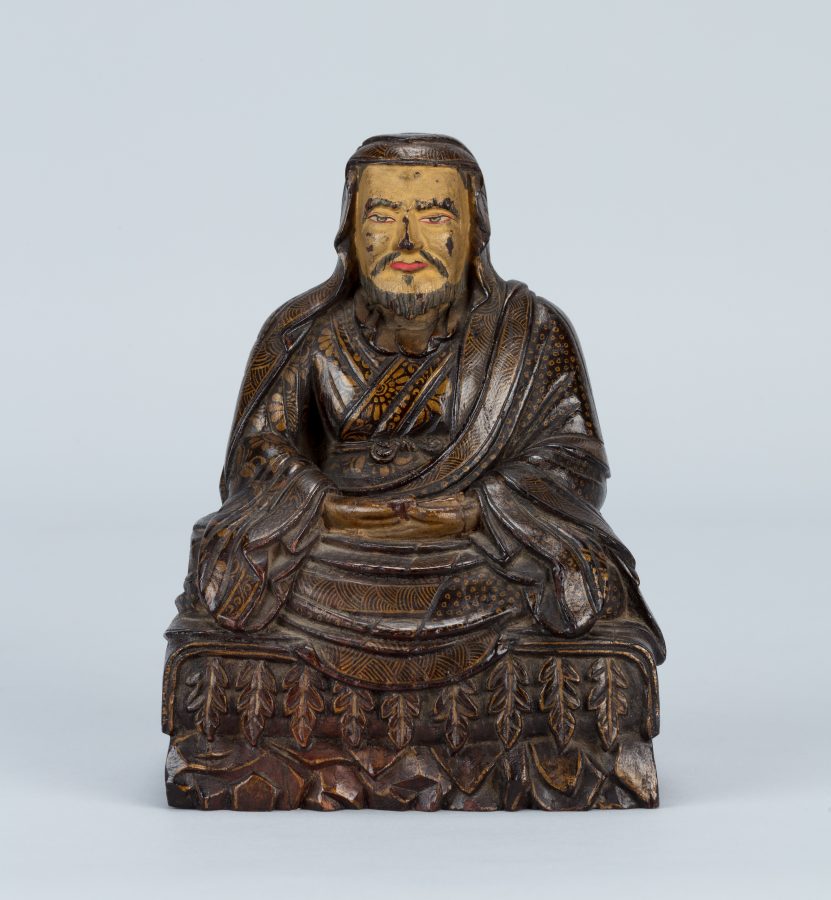
Rongzom Chokyi Zangpo (1012-1088)
Eastern Tibet, 18th century
Padmasambhava in His Pure Realm, the Copper-Colored Mountain
Kham Province, Eastern Tibet, 19th century
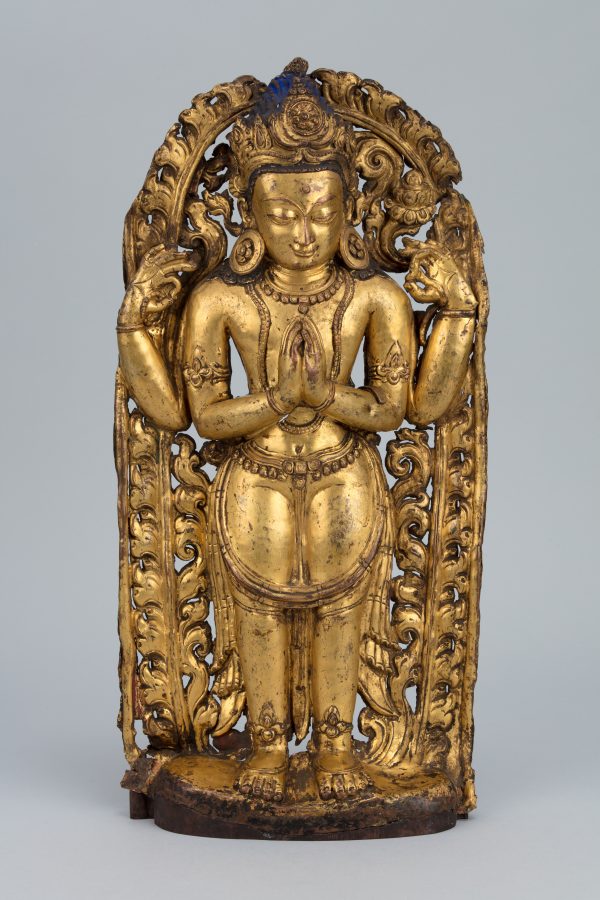
Lokeshvara
Nepal, 16th-17th century
Life Story of Nangsa Wobum
New York City, 2020
Green Tara as Protectress from the Eight Fears
Central Tibet, 19th century
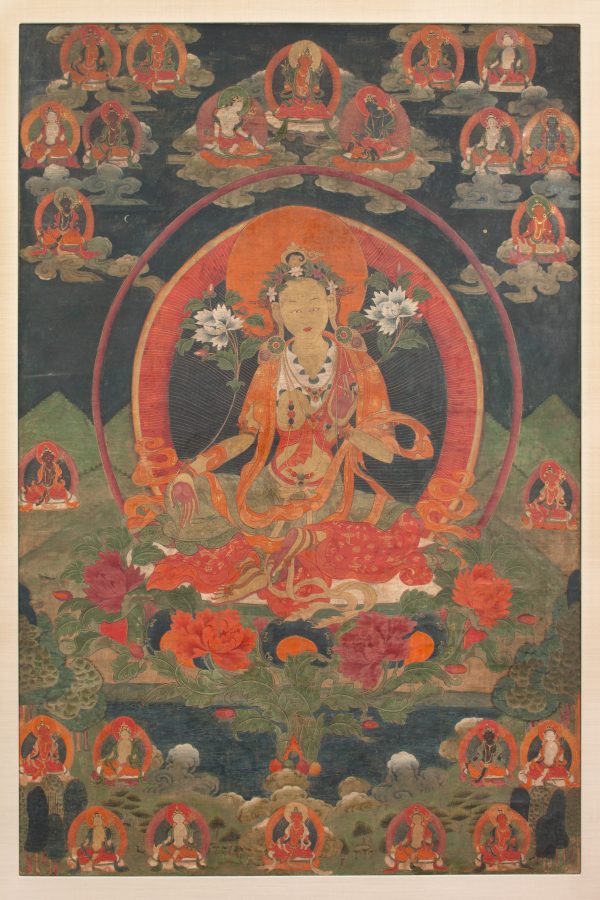
Green Tara
Tibet, 18th century
Green Tara
Tibet, 15th century
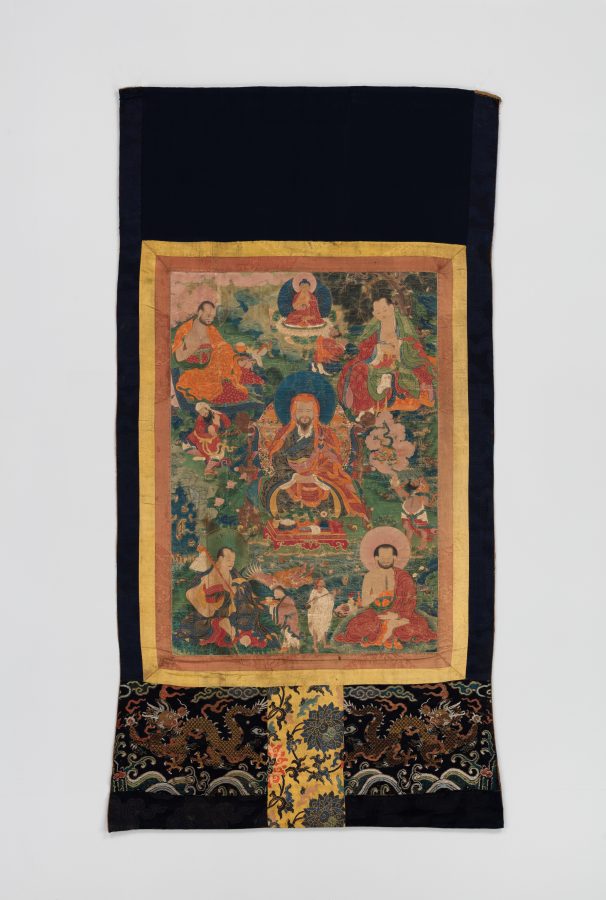
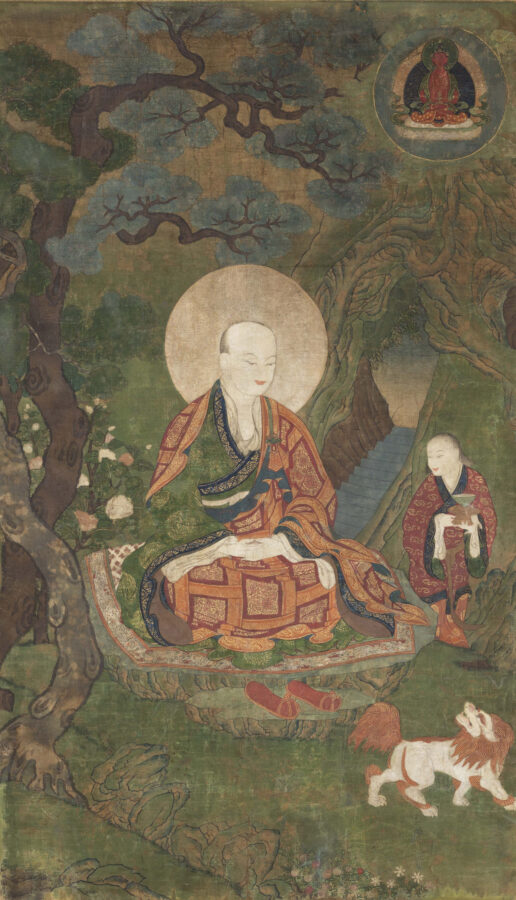
Four Arhats
Kham region, eastern Tibet, 19th century
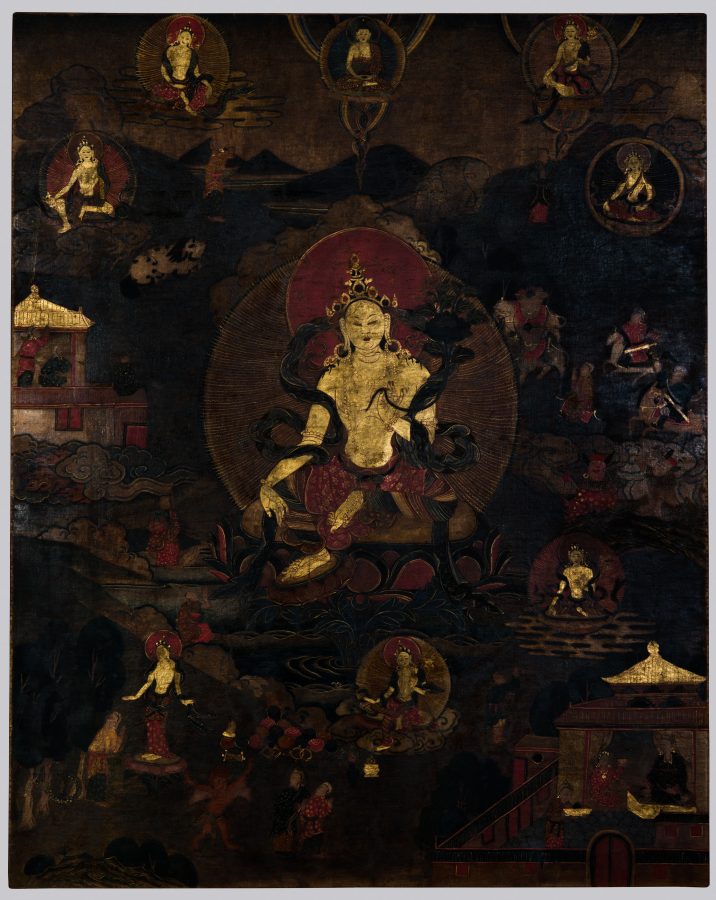
Five Arhats: Ajita, Kalika, Vanavasin, Vajriputra, Bhadra
Tibet, 18th century
Chogyel Phakpa (1235–1280) initiating Qubilai Khan (1215–1294)
Tibet, ca. 16th-17th century
Copy of the Udhayana Sandalwood Buddha
Tibet, 18th - 19th century
Buddha's Birth, from a set of the Twelve Deeds of the Buddha
Derge Printing House, Derge, Kham region, Eastern Tibet, ca 1979
Buddha Amitayus
Bhutan, late 19th or early 20th century
Buddha Amitayus
Tibet, 17th century
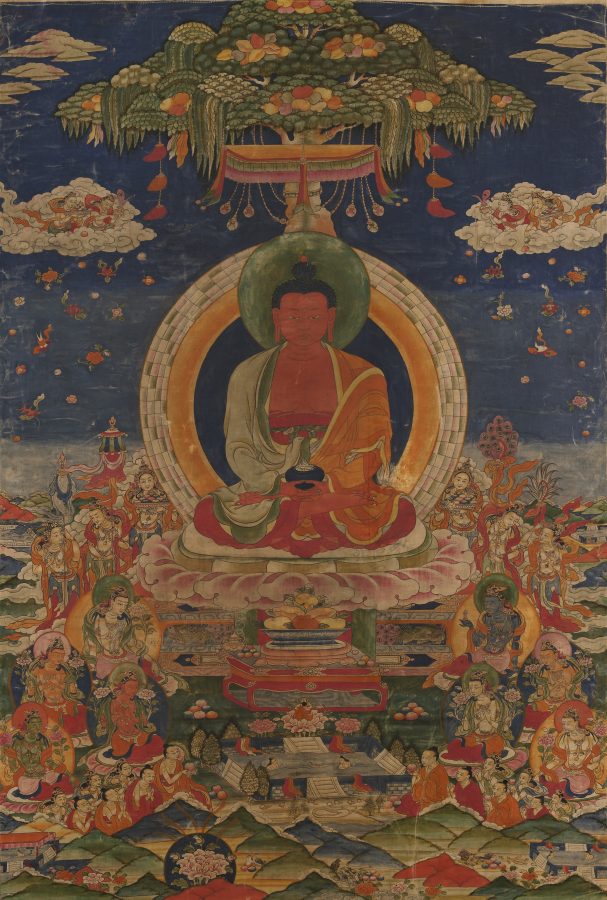
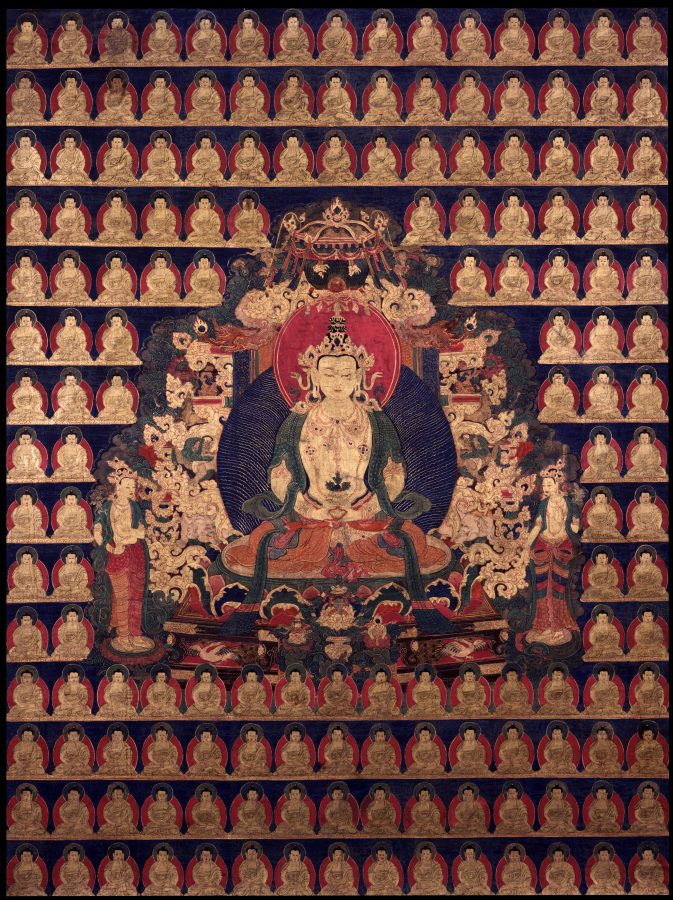
Buddha Amitabha in the Pure Realm of Sukhavati
Central Tibet, 19th century
Birth of the Buddha, from a set of the Twelve Deeds of the Buddha, after a carved woodblock composition attributed to Purbu Tsering of Chamdo (active ca. late 19th century)
Tibet, 20th century
Avalokiteshvara in his Potala Pure Realm
Tibet, 19th century
Avalokiteshvara in his Potala Pure Land
Tibet, late 18th–early 19th century
Avalokiteshvara
Tibet, 12th century
Arhat Rahula
Tibet, 18th century
Arhat Rahula
China, 1736–1795
Arhat Pantaka
China or Tibet, 17th - 18th century
Arhat Nagasena
Tibet, 18th century
Arhat Gopaka
Tibet, 18th century
Arhat Abheda
Tibet, 16th century
Arhat Chudapantaka
Tibet, late 15th century
Arhat Ajita
Tibet or China, 17th century

Spiral

Awake
A poem on remembering and turning the mind
The Power and Purpose of Human Intention in Buddhism
Good intentions offer the possibility of liberation in Buddhism
Waking Up to Power Is a Spiritual Practice
How meditation and activism can work together to quiet the mind in a loud, troubled world
Listening and Liberation: The World Is Sound
An exhibition ventures into the power of sound and practice of listening

Sign up for our emails

Get the latest news and stories from the Rubin, plus occasional information on how to support our work.

Discover artworks, articles, and more by typing a search term above, selecting a term below, or exploring common concepts in Himalayan art.