

Mindfulness Meditation · Impermanence
This week’s meditation session is led by Sharon Salzberg and the theme is Impermanence.
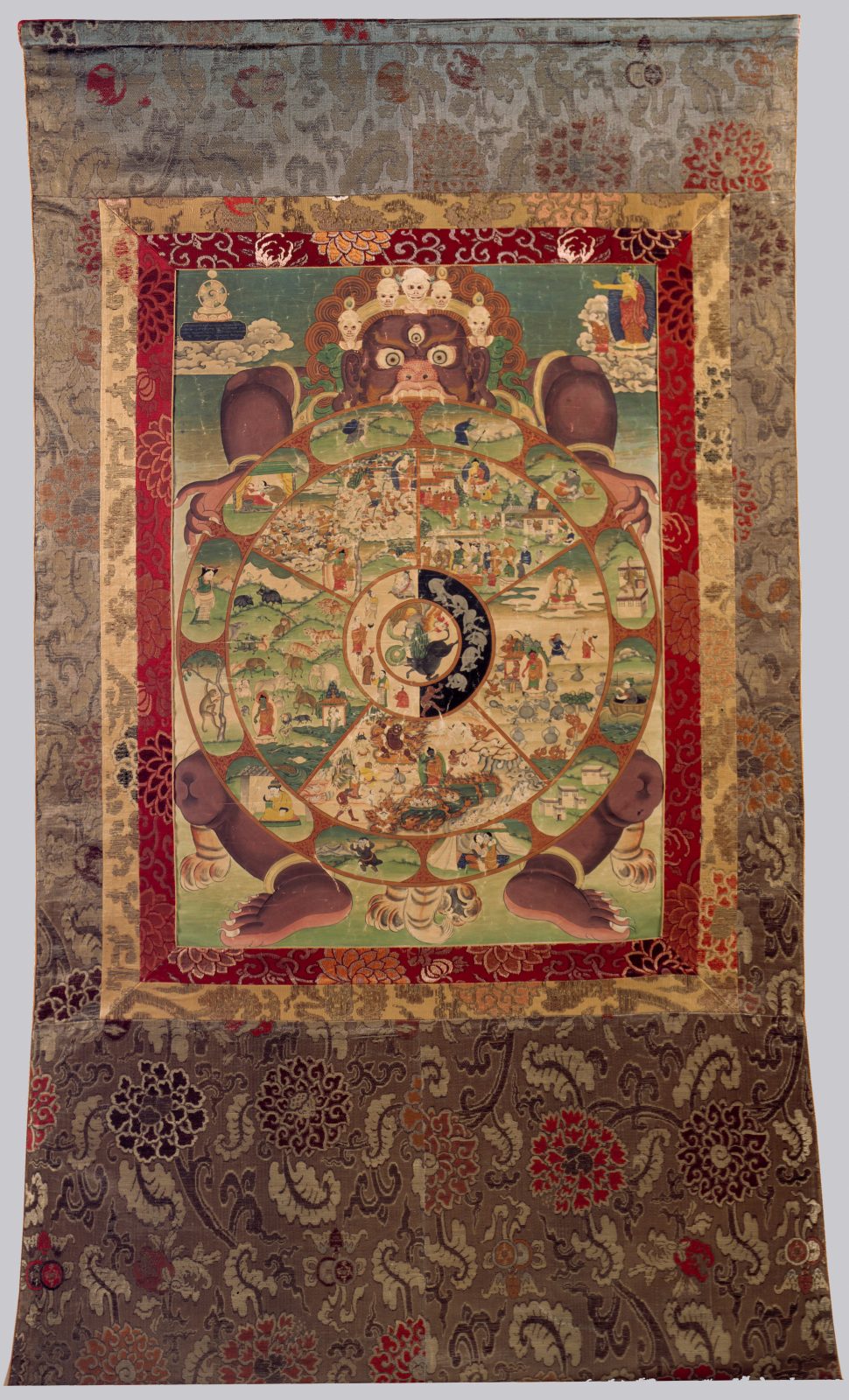
Wheel of Life, attributed to Lhadripa Rinzing Chungyalpa (b.1912, Sikkim - d.1977); Sikkim; c. 1930; Pigments on cloth; Rubin Museum of Himalayan Art; C2004.21.1
The Wheel of Life depicts the six different realms that make up cyclic existence. These realms are divided into three higher realms and three lower realms, with the three higher realms consisting of the realms of the gods, demi-gods, and humans, and the three lower realms being the realms of animals, hungry ghosts, and hell beings.
Each realm has an overriding afflictive emotion that causes suffering. Within the three lower realms hell beings are ruled by anger, hungry ghosts by greed, and animals by stupidity. In the higher realms, gods are ruled by pride, the demi-gods by jealously, and the humans by desire. While Buddhists view these realms as very real, these afflictive emotions can also relate to different mindsets that lead to suffering in our own lives.

Sharon Salzberg is a meditation pioneer, world-renowned teacher, and New York Times bestselling author. She was among the first to bring mindfulness and lovingkindness meditation to mainstream American culture over 50 years ago, inspiring generations of meditation teachers and wellness influencers. Sharon is cofounder of the Insight Meditation Society in Barre, MA, and the author of 14 books, including the New York Times bestseller Real Happiness, now in its second edition, and her seminal work, Lovingkindness. Sharon’s podcast, The Metta Hour, has amassed eight million downloads and features interviews with thought leaders from the mindfulness movement and beyond.
Get the latest news and stories from the Rubin, plus occasional information on how to support our work.