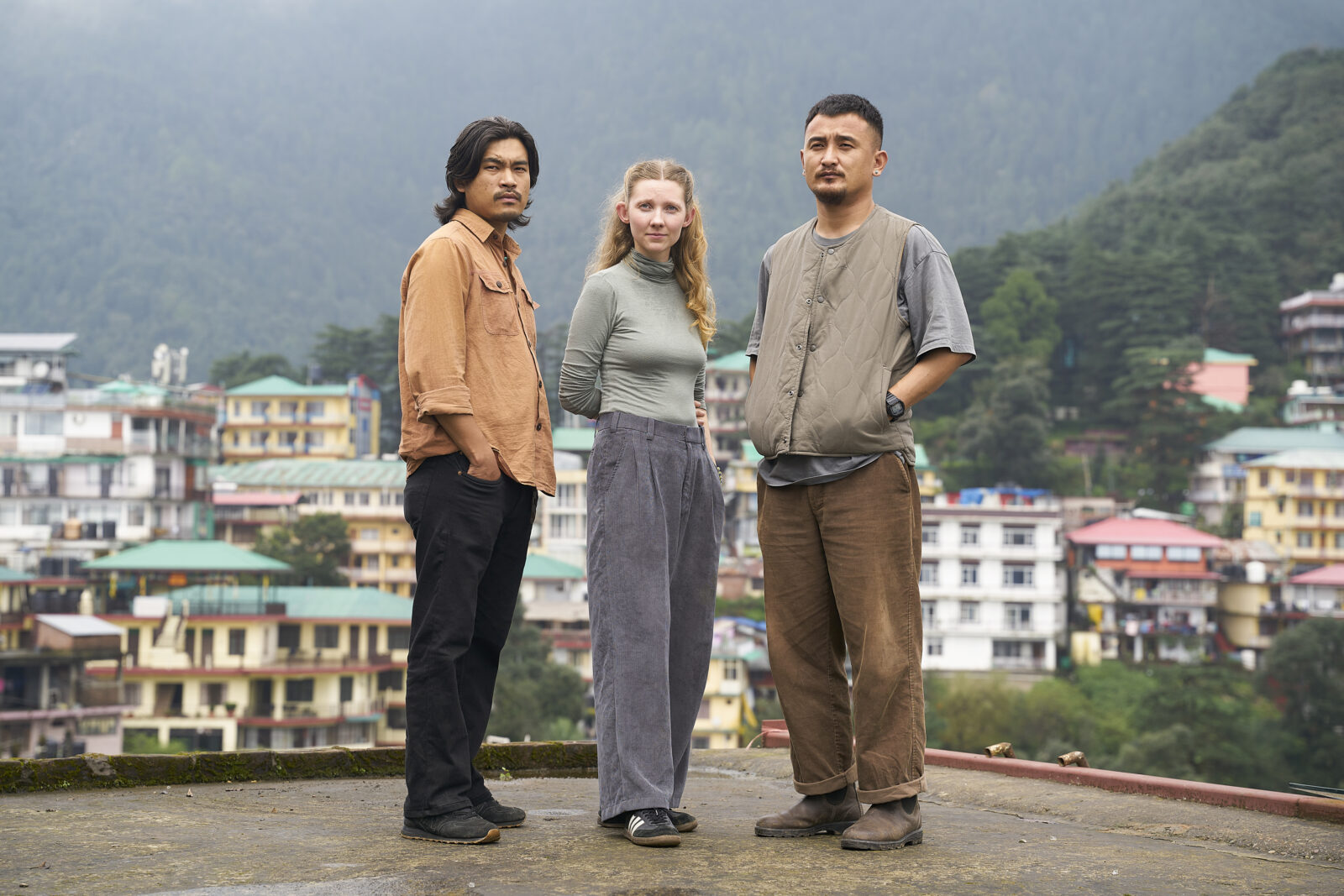
Photo by Tenzin Dorjee, courtesy of the Rubin Museum of Himalayan Art
Photo by Tenzin Dorjee, courtesy of the Rubin Museum of Himalayan Art
Reflections on Tibetan art and community from the three founders of the Dharamsala-based group
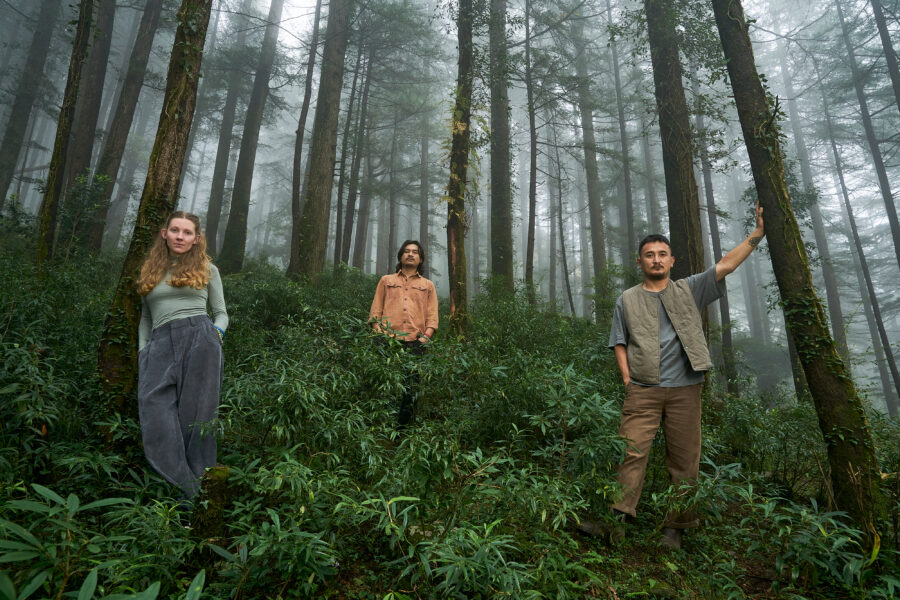
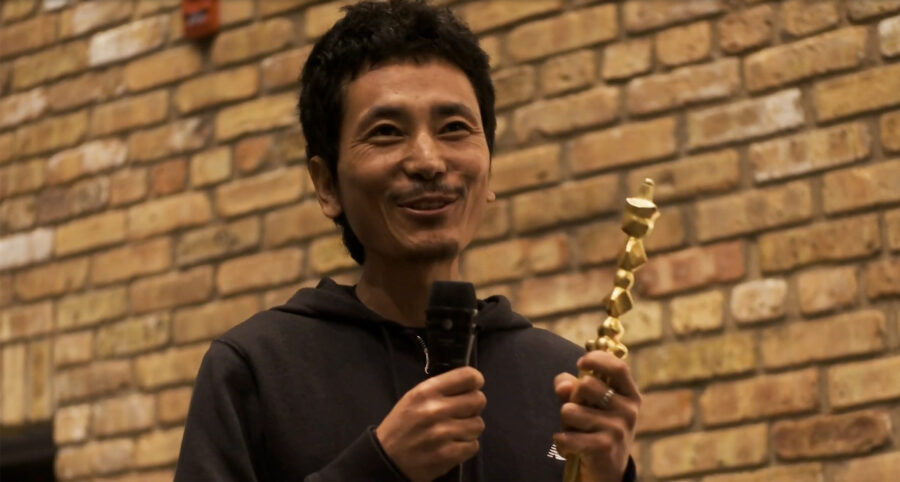
Khadhok is an artists’ collective based in Dharamsala, India, with a mission to show the multitude of colors of Tibetan contemporary arts. The collective, founded in 2023 by Tashi Nima, Tenzin Melak, and Lea Taake, received the 2025 Rubin Museum Himalayan Art Prize, an unrestricted $30,000 cash prize and the largest international award in support of contemporary art related to the greater Himalayan region.
Tashi Nima: I am an exile-born Tibetan contemporary visual artist. From childhood I have been very passionately drawn to doing art. After my schoolings I did my bachelor’s of fine arts in Delhi.
I always have this adaptation in my artworks. You can see how my styles are changing according to the subject, according to the representation that I want to make. My art is constantly changing and never fixed. My artworks are mostly about the human beings around me. You can see a lot of portraits in my work. For me, it might be more to do with my own kind of experience growing up, trying to tell a story about my own culture and identity, but then seeing myself as just another human being.
Tenzin Melak: I was brought up and am based in Dharamsala, the so-called exiled capital of Tibet. I studied in TCV (Tibetan Children’s Village School). After that, I did college in Delhi University, a bachelor’s of fine arts.
I’m always trying to find or search for what art really is. It’s kind of like meditating or searching for something that you don’t know or that you want to know. I’m interested in Buddhist philosophy. I like to experiment with different mediums like prayer flags, mirrors, and rosaries. I also play with some weird stuff. For me, art is also a way of life. It’s connected to each other to find yourself and to help others or to bring something that can change the world.
Lea Taake: I’m from Germany, but I’ve been based in Dharamsala for about three years. I come from the performing arts. In Germany, I studied acting. So my journey came a little crooked to the visual arts.
But I feel like it’s connected because whether it’s through visual art, performing art, or any type of artistic expression, I feel we try to share our stories, our questions, our perspectives. It’s about building connections to an audience. So whether I act and tell stories on a stage, or see a picture on a wall or an installation in a room, I feel like it creates a dialogue between people. This is what I hope for art to do—that it moves people.
Lea Taake: Khadhok came out of a very emotional and painful situation. Jigme Choedak, or JC as people used to call him, was a 26-year-old Tibetan contemporary artist who lived in Dharamsala. He really made a connection to the community, and he was very loved. He passed away in 2023. Since all three of us were very close to him we decided we wanted to do something. He never had a professional exhibition of his artworks. So within the 49 days after his passing, which is a very important timespan in Buddhism, we decided to make an exhibition to honor his life and to honor his art.
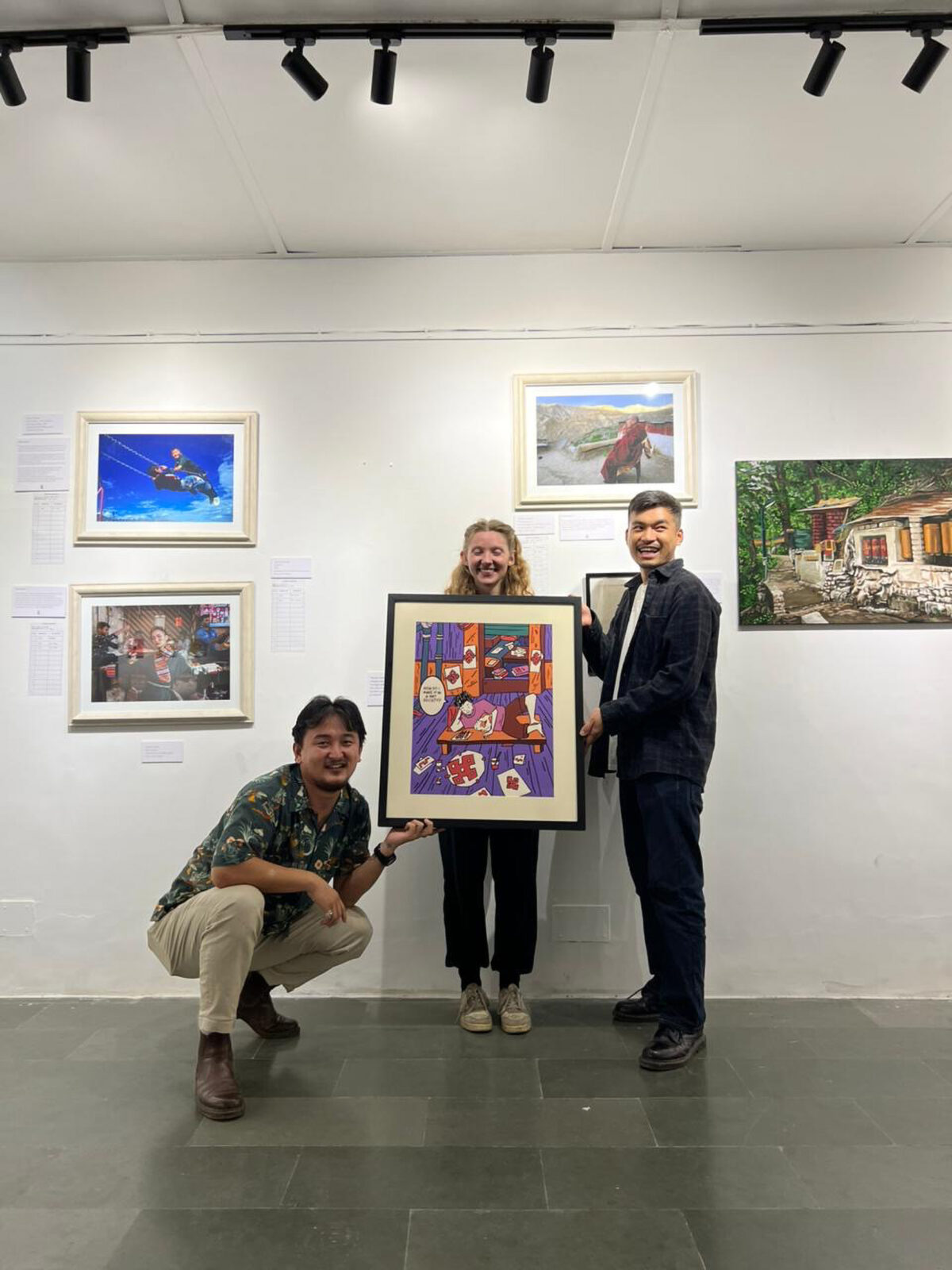
Photo by Khadhok
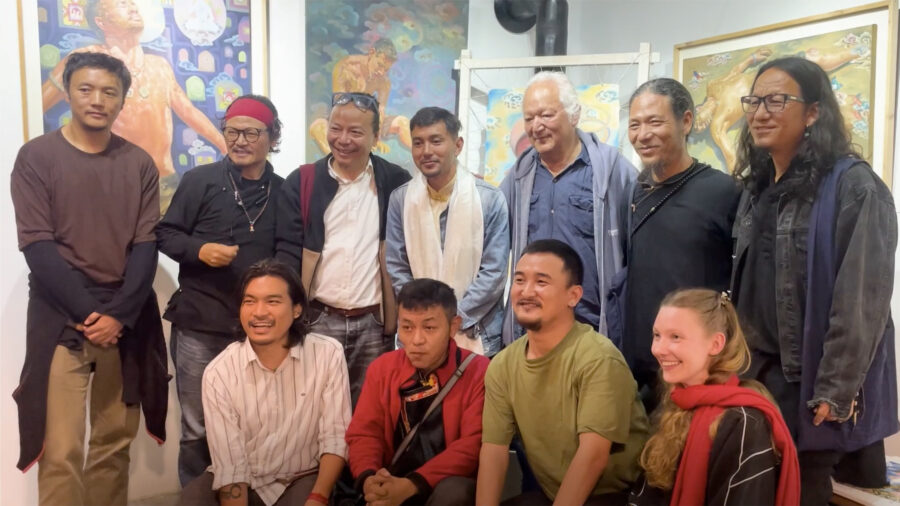
We made an exhibition focusing on his works but also other Tibetan artists who donated their works to get some money for JC’s family. It was only a three-day exhibition within the temple complex of the Dalai Lama, but it felt like something happened there. Suddenly all the people who went to the temple saw a contemporary Tibetan artist exhibition, something most had never seen before. People were so interested and so curious. We felt like there is a spark. There is something happening. We should keep on doing this.
A very big wish of JC’s was that, especially for the young generation of Tibetan artists in exile, that there be a community and a platform. This is how Khadhok took its first steps and grew very fast, I think, because the community was in need of it.
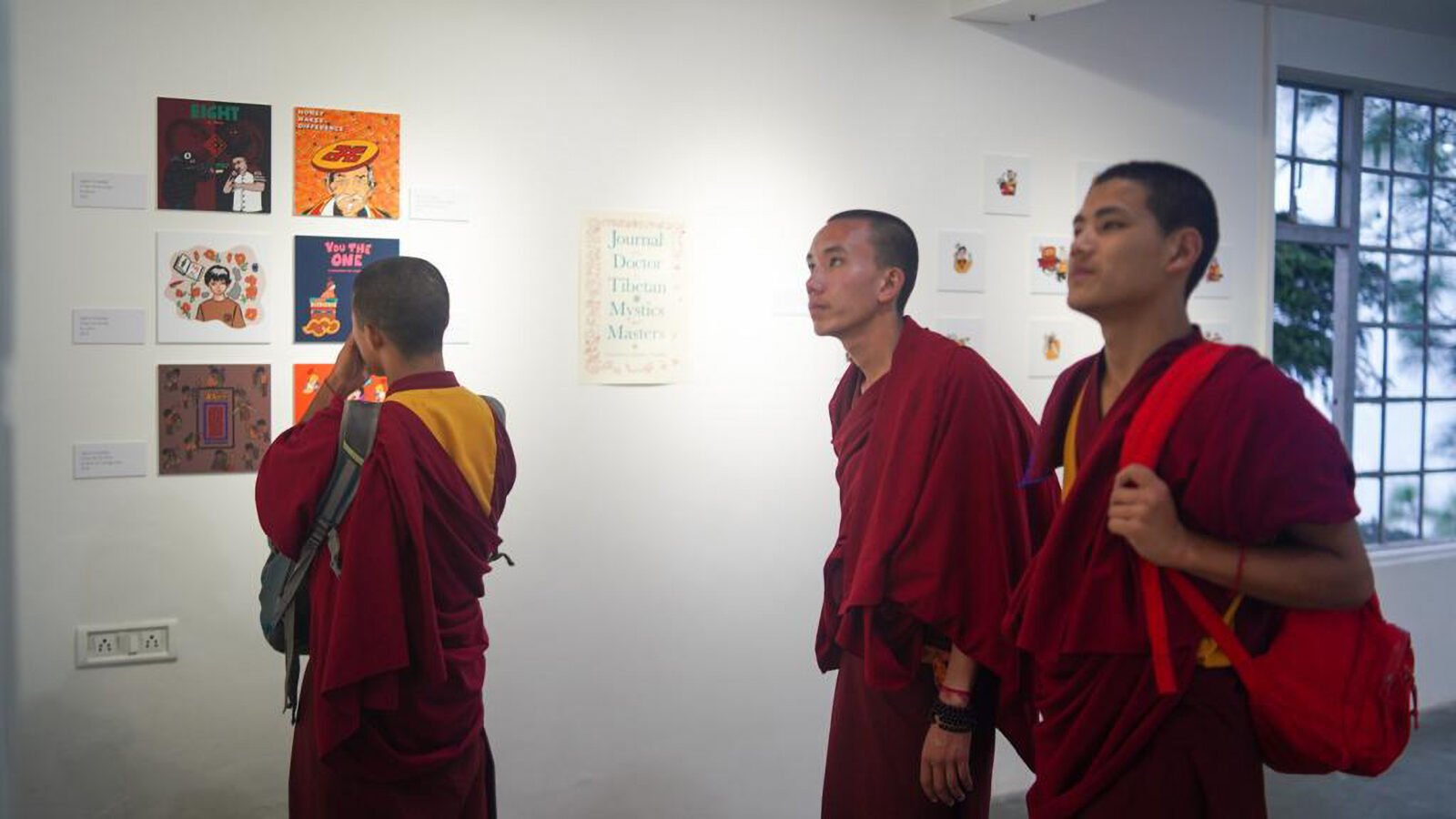
Photo by Sonam Topgyal
Tashi Nyima: Khadhok means colors in Tibetan. We wanted to make this platform where different colors can be resembled to different artists, different artworks, all these things that are different but are also beautiful in their own ways, then uniting them all under one platform. We wanted to keep it as open as possible for artists to feel like they are in this kind of collective where they can express whatever they feel like, not really bound by these pressures from other outside forces.
Tenzin Melak: We were not the only three who made this happen. There were so many people during that time. There are so many people who like JC’s artwork. Families, friends, and all these people really pushed us to do this.
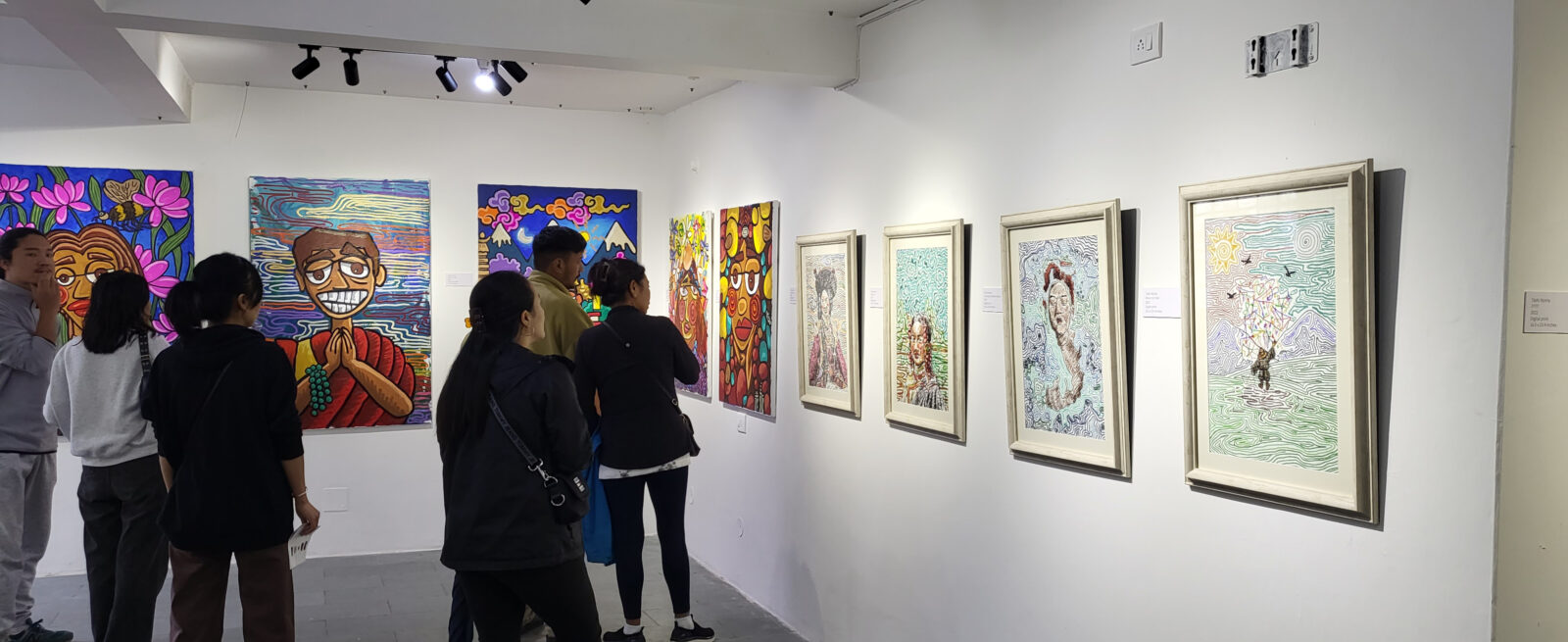
Photo by Khadhok
Tashi Nyima: I always say that as a collective we are just providing the platform. Most of the Tibetan like us, they don’t lack any kind of artistic skill or emotions or stories. We have an abundance of it. And we still haven’t shared it with people of other communities. So our collective is one small kind of platform where these artists can show their artworks.
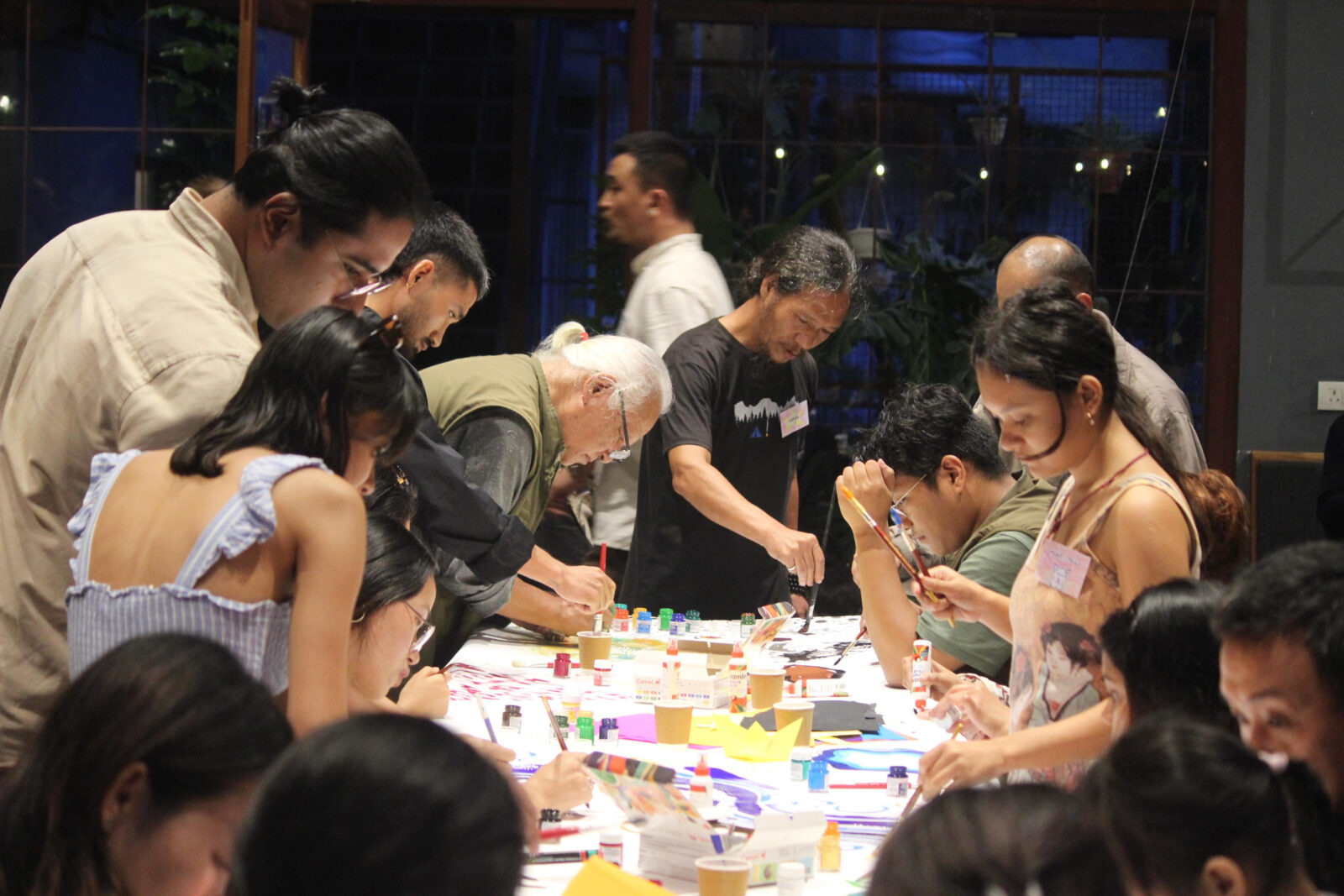
Photo by Tashi Dhondup
Lea Taake: Khadhok is so much about creating space for contemporary art in the community. Sometimes we do it through exhibitions, sometimes we do it through workshops, sometimes we go to schools. Sometimes we do it on walls, on the streets, because we feel like everyone should see it, not only in galleries or secluded spaces.
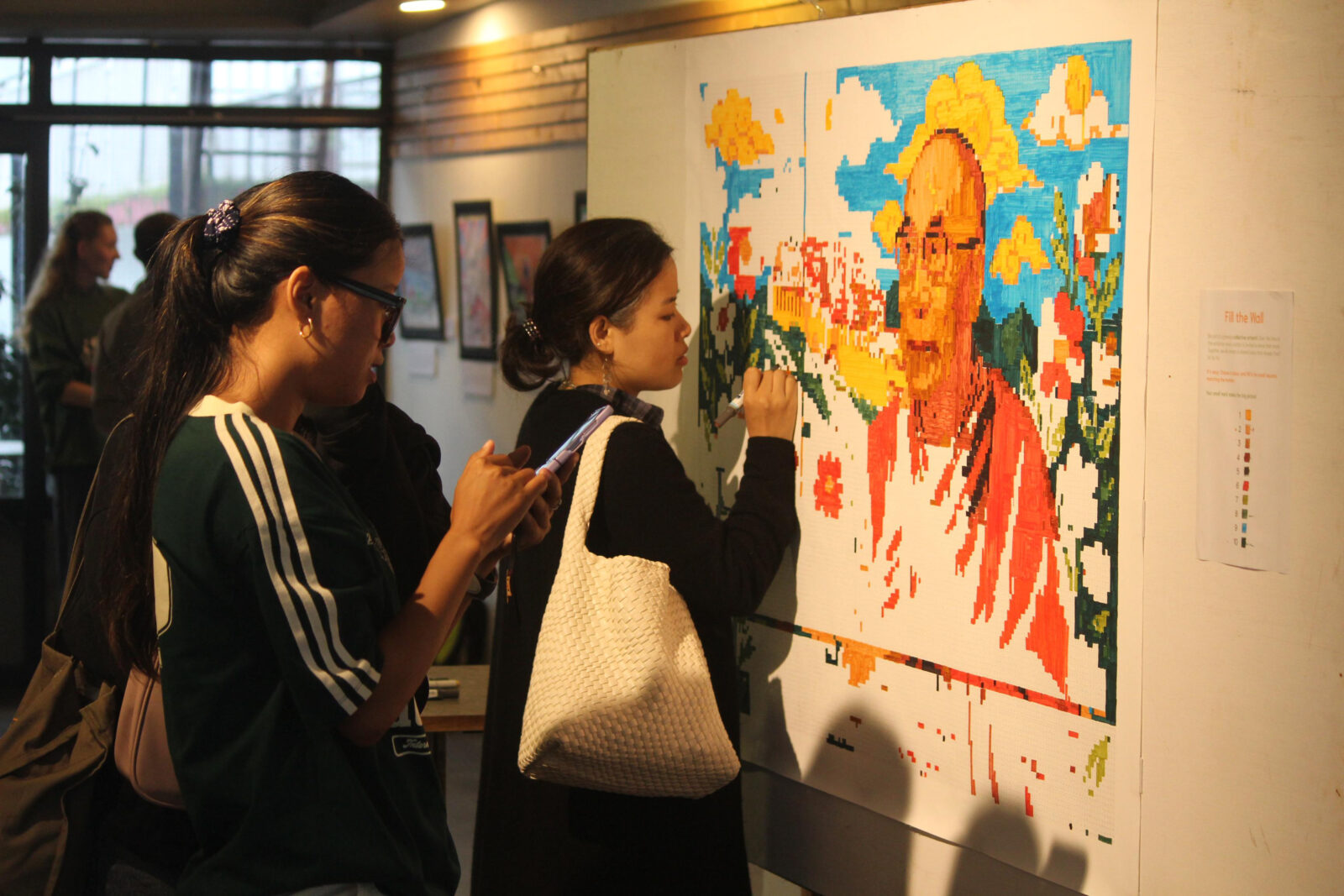
Photo by Tashi Dhondup
One thing that is very important for us is bringing the Tibetan art outside of the community, to spread these stories so more people get awareness. At the same time, what is important for us is to always bring it back to the community. If we do an exhibition in Delhi, we want to bring it back to Dharamsala. We want the community to see their own artists and their own stories through their own people, told by their own people. This is a balance that we always try to find. We help Tibetan artists to get out there and at the same time let the community grow with them.
Tashi Nyima: A lot of it has to do with workshops through our youth art engagement project. What we always try to do is not only display the artworks but also teach the community about what we are doing, how art can be a medium to express yourself as a community, as an individual. We have workshops where we have senior artists in the exhibition space and emerging artists, and they can talk with each other.
Growing up as an artist and in our community, me and my friends didn’t have anyone to look up to, someone to talk to, get advice from. It was really rare for us to get this kind of space where we can share. That’s why with Khadhok we have these events where we arrange these meetings for emerging and established artists to come together, share their minds, ideas, experiences.
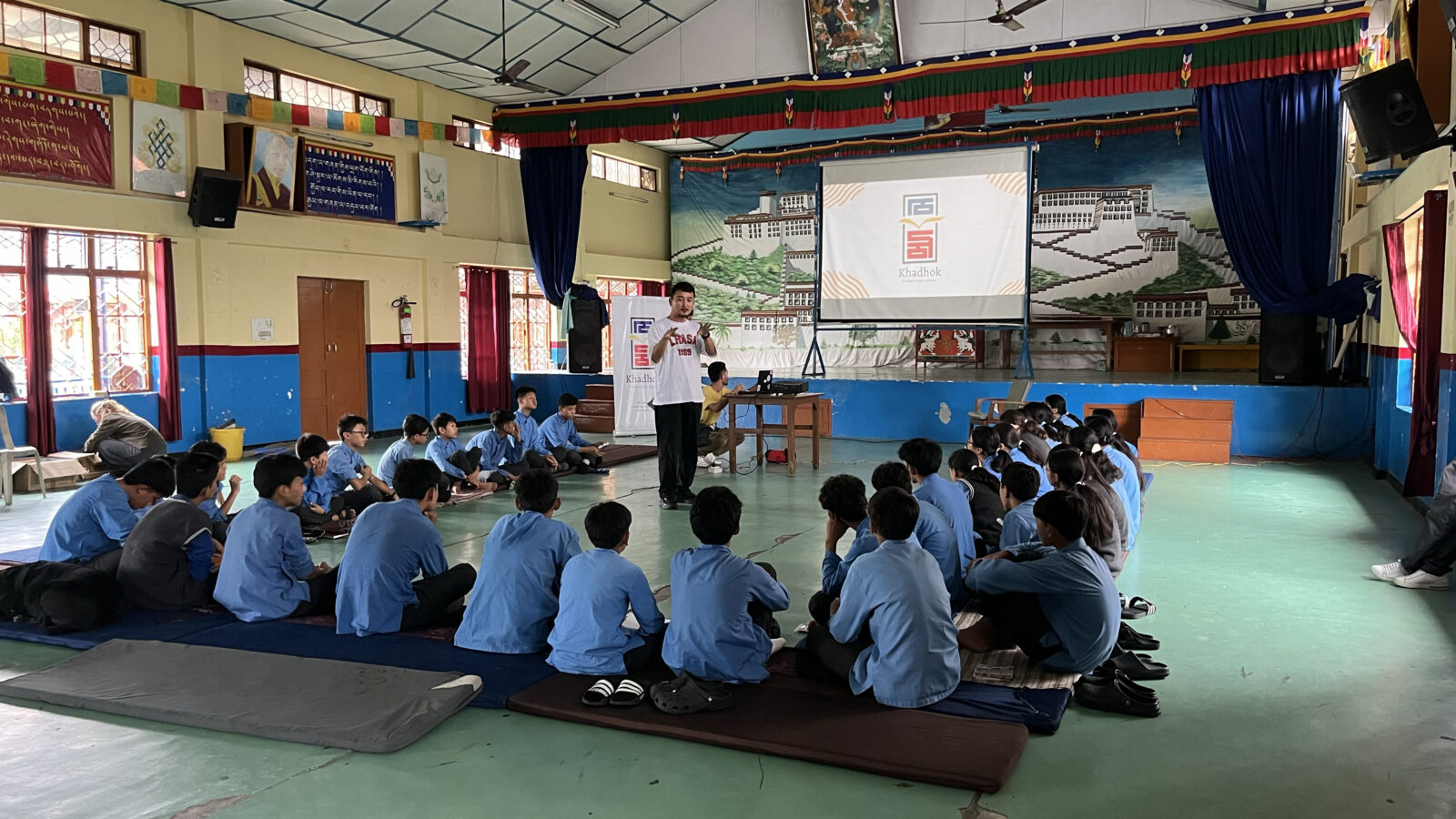
Photo by Khadhok
Lea Taake: It’s so important for us that we not only do workshops but we also do professional exhibitions with the kids. We show them your art deserves to be in a museum, your art deserves to be in the gallery. I think for many kids and even their parents it’s shifting their perspective on what art can do and what it means to be an artist.
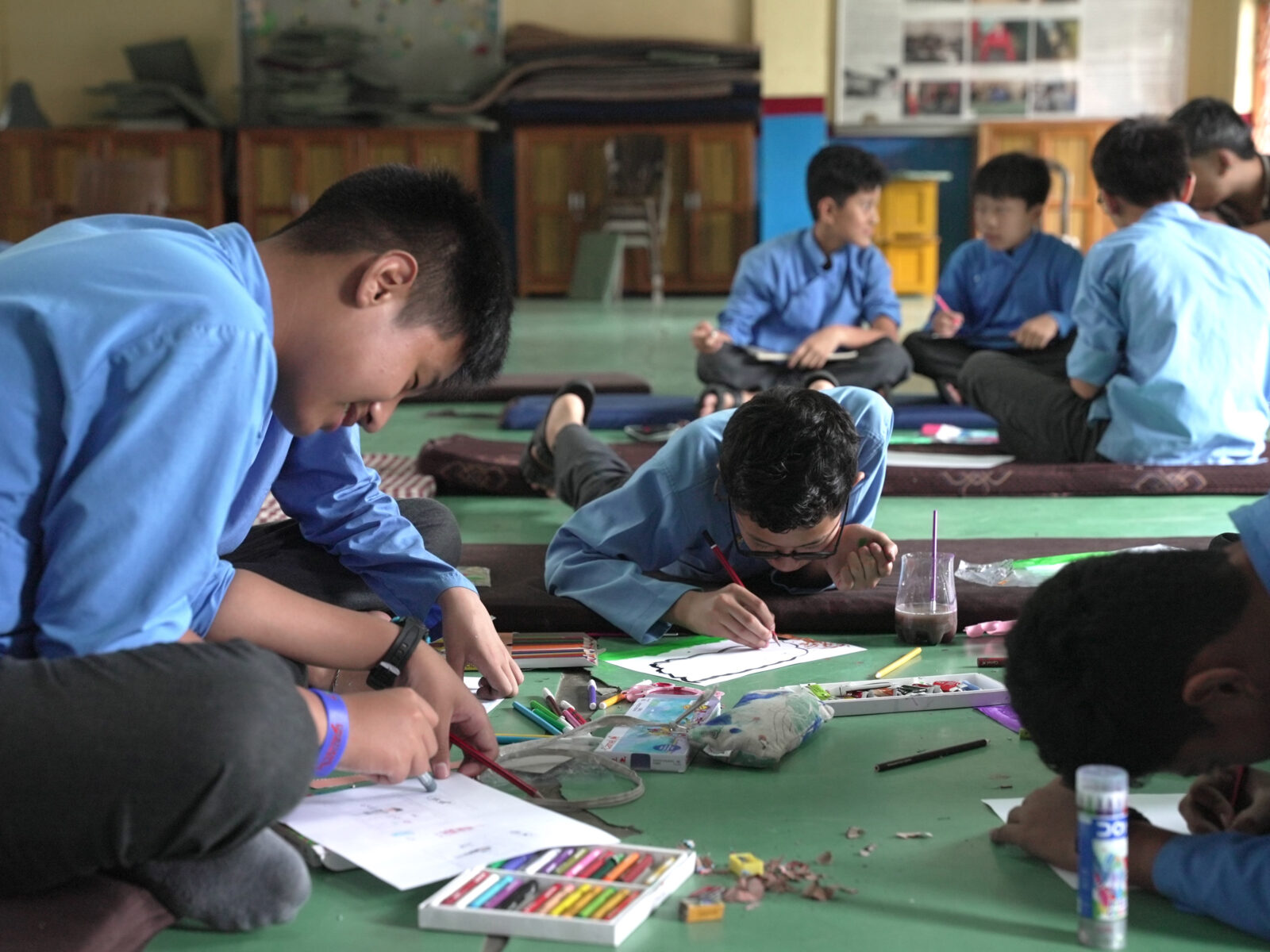
Photo by Khadhok
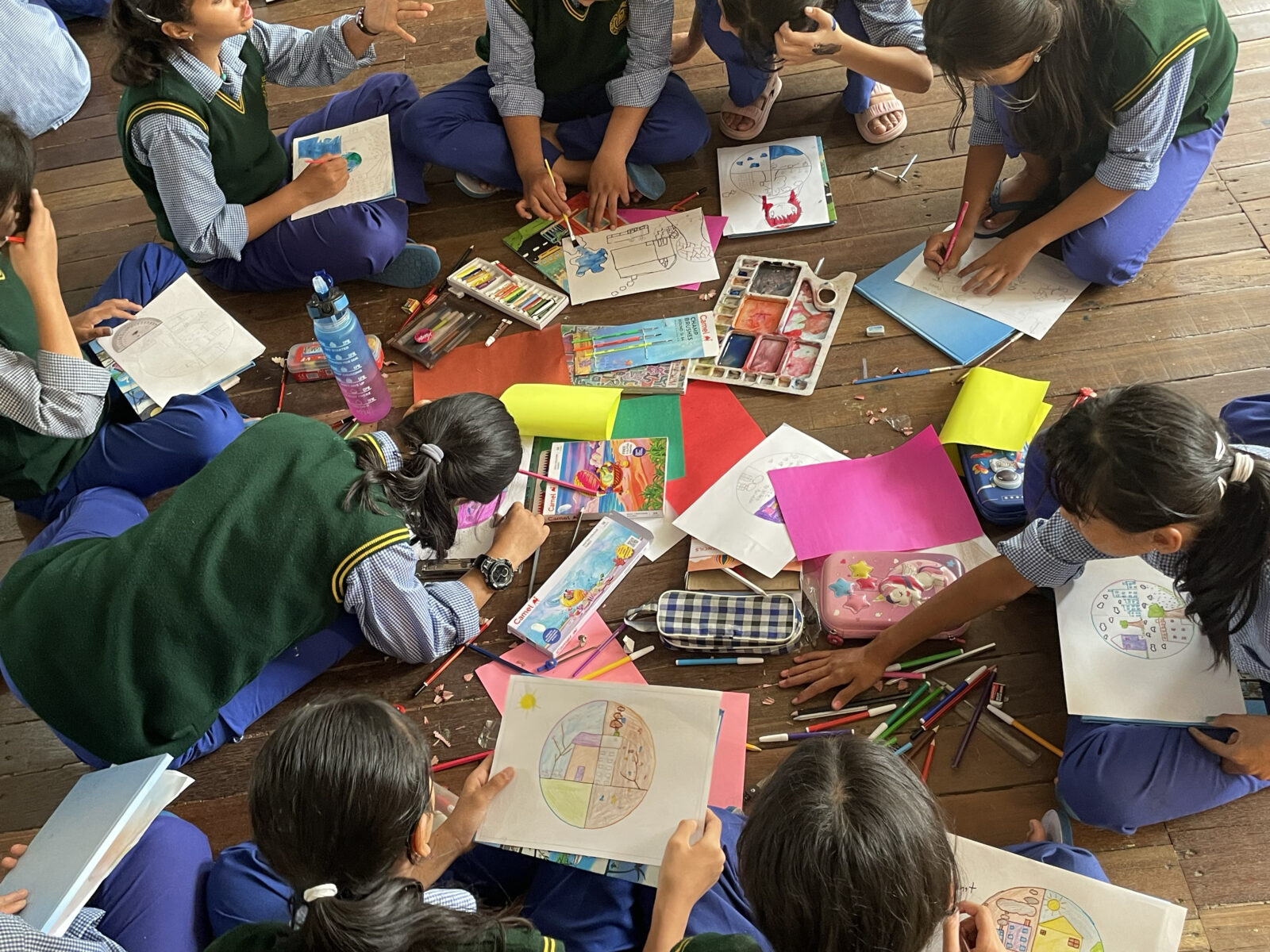
Photo by Khadhok
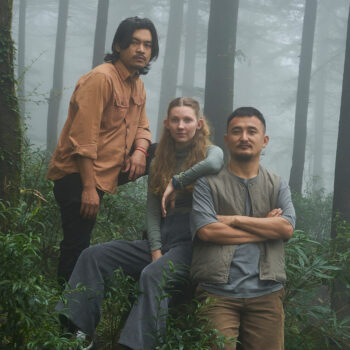
Khadhok – Tibetan Artists’ Collective was founded in Dharamsala, India, in 2023 to provide a dedicated space for Tibetan contemporary visual artists to present their work, exchange ideas, and strengthen their practice, with a focus on emerging artists. Its name, Khadhok, means “color” in Tibetan, reflecting the diversity, vibrancy, and richness of Tibetan expression.
Since its founding, Khadhok has grown into a vibrant platform for artistic exchange, community engagement, and youth empowerment. The collective’s activities include exhibitions, mural projects, workshops, talks, and youth engagement initiatives in schools and community spaces, supporting both professional growth and reflection on identity, culture, and belonging.
Get the latest news and stories from the Rubin, plus occasional information on how to support our work.