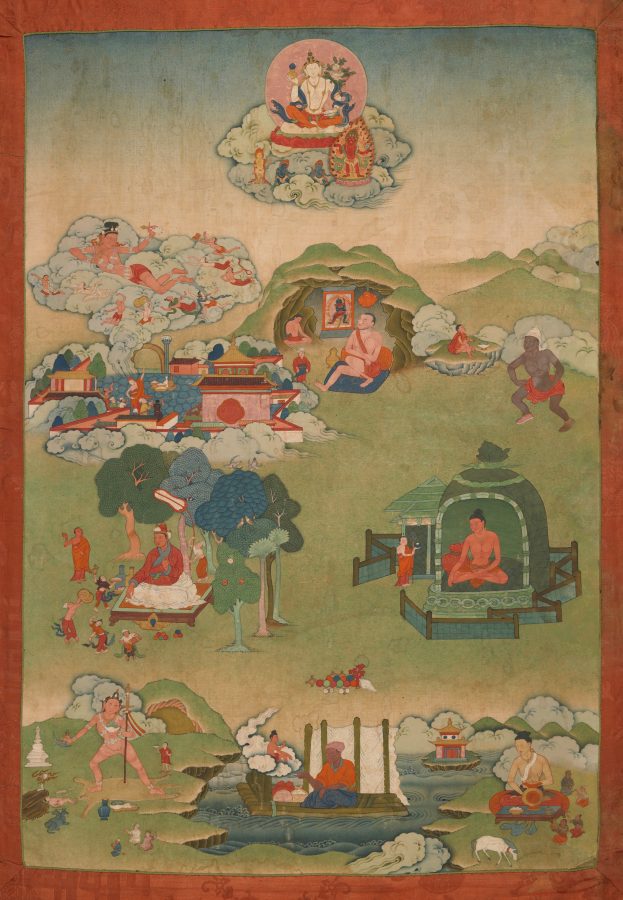
Beginning in the early thirteenth century, art created in Tibet took on a distinctly Tibetan composition.
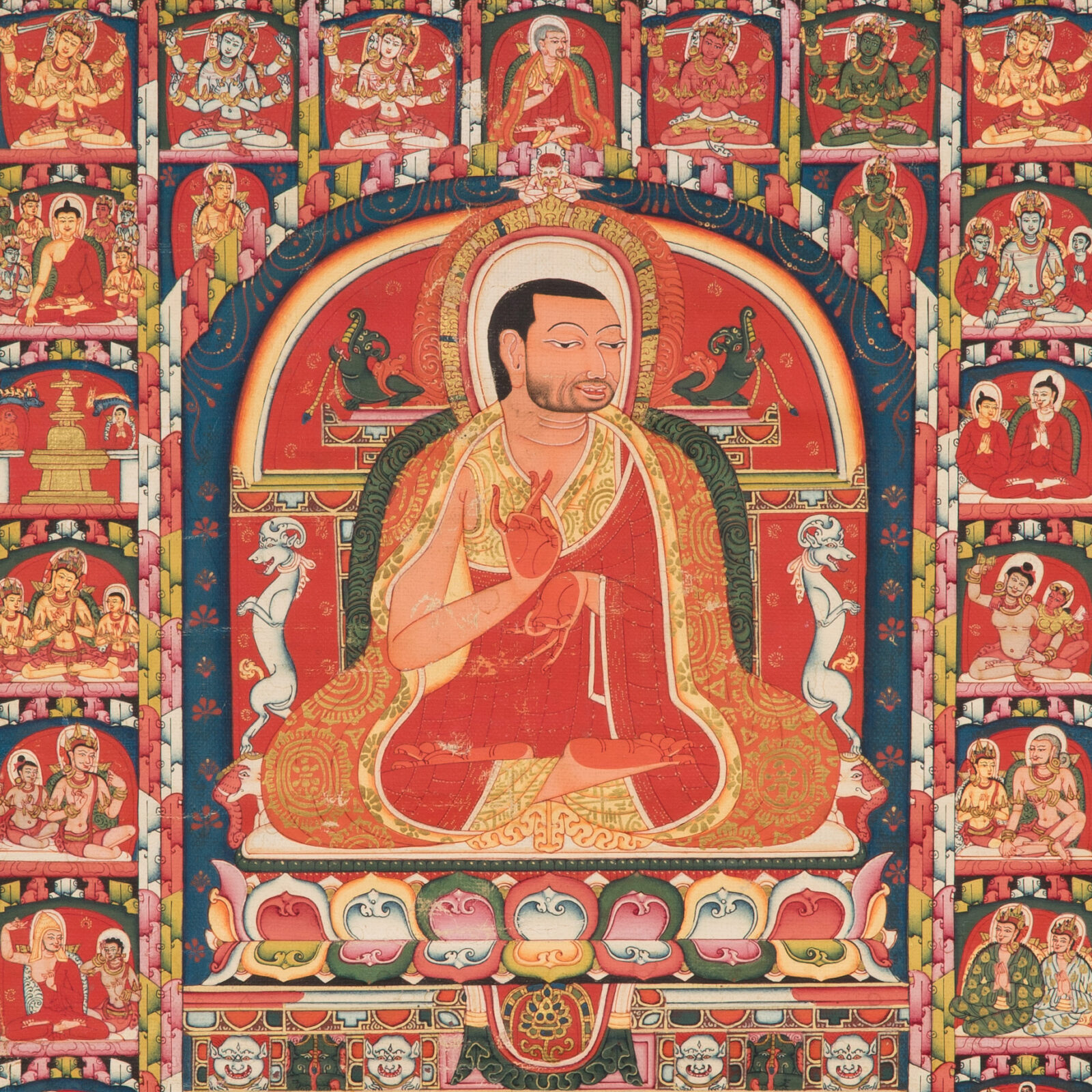
Beginning in the early thirteenth century, art created in Tibet took on a distinctly Tibetan composition.
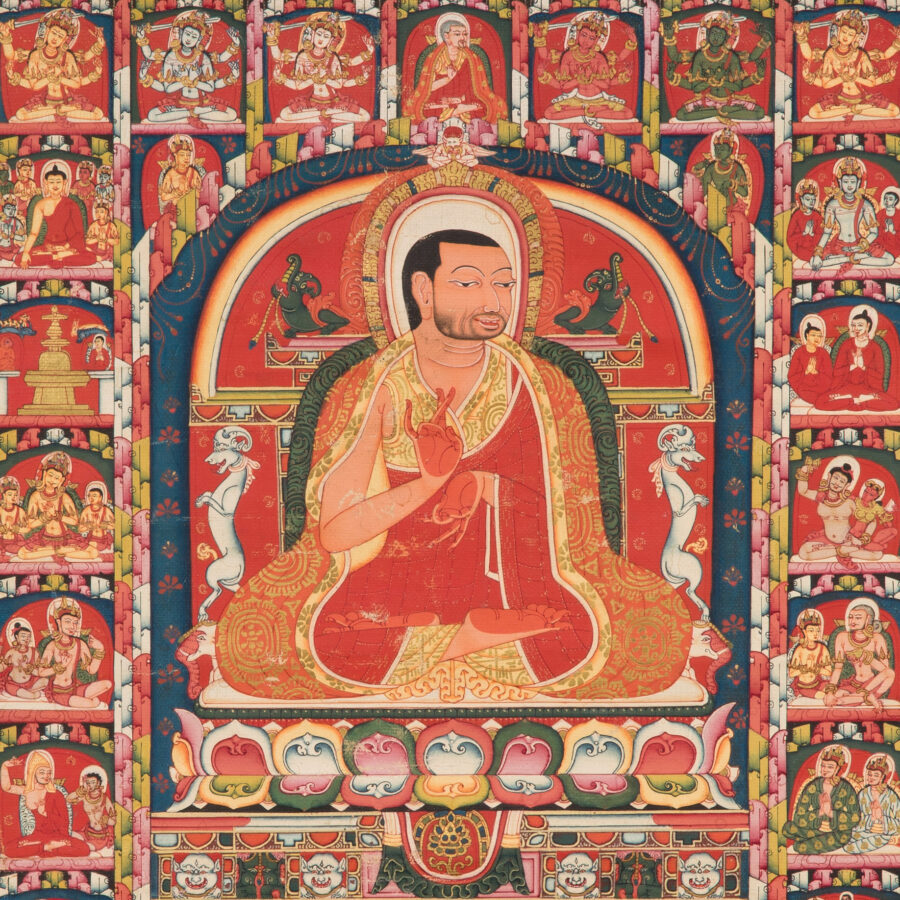
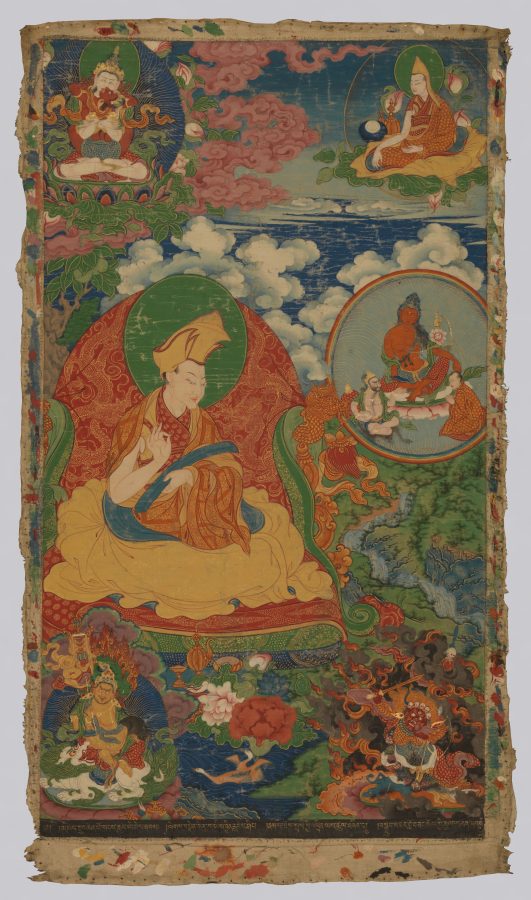
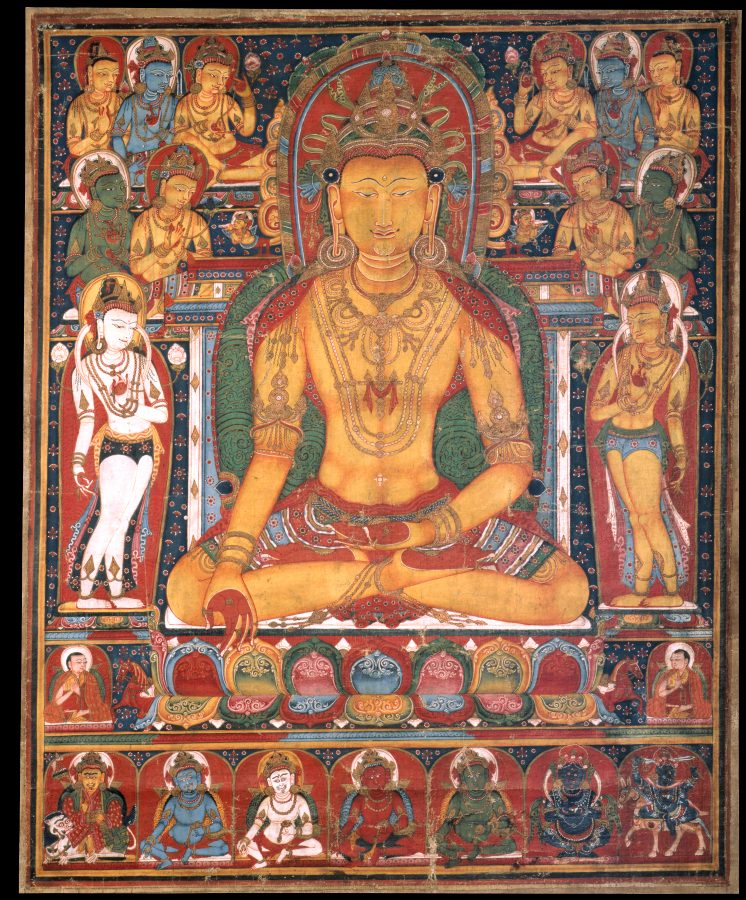
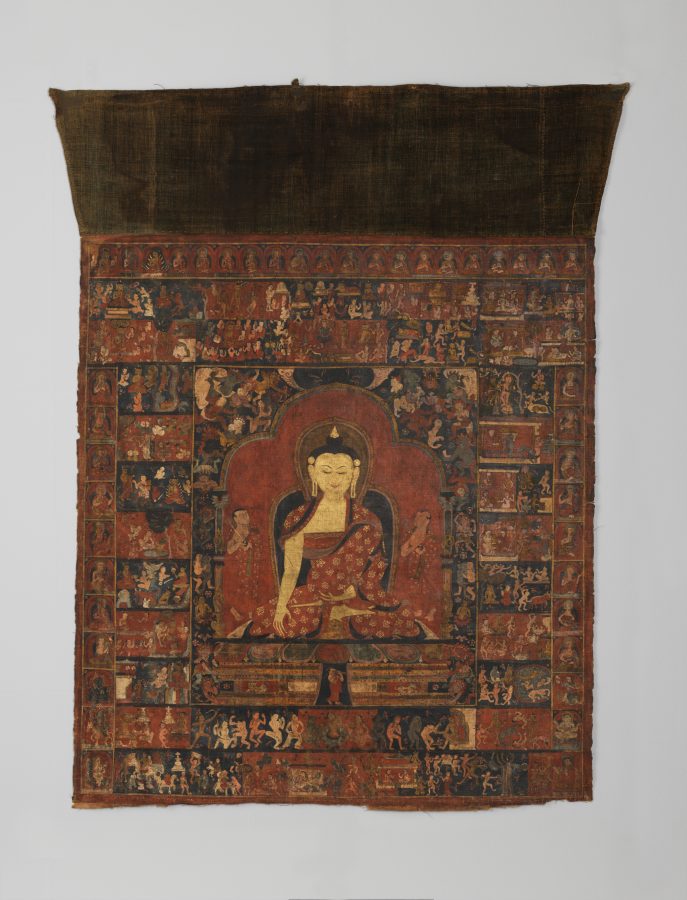
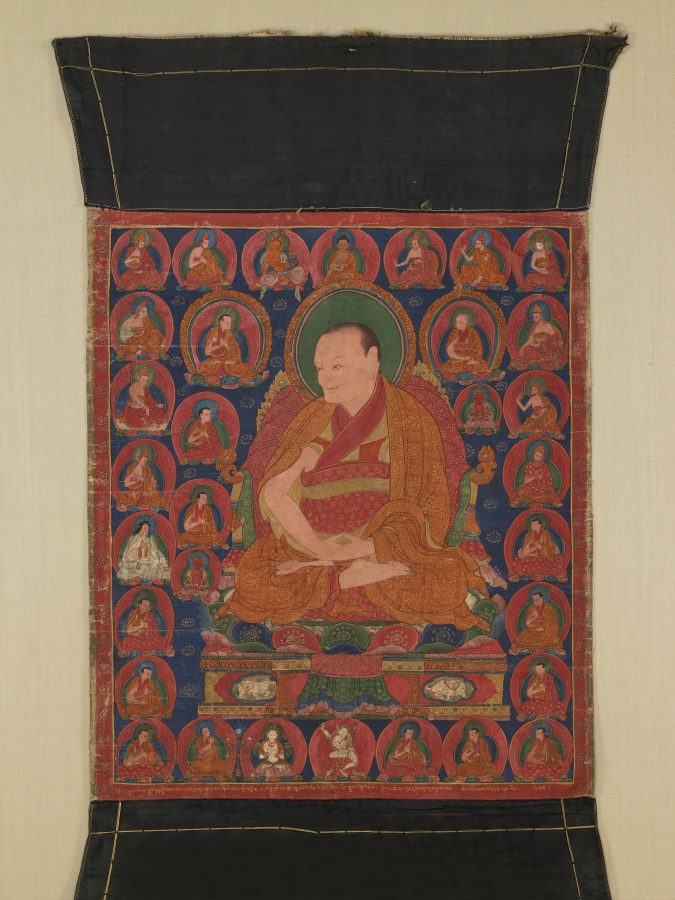
In these paintings, the lineage of religious masters responsible for the transmission of a particular teaching are placed on top. The main figure and entourage representative of the teaching are depicted at the center. The practitioner and/or donor, protectors of the tradition, and subsidiary practices are located at the bottom. The paintings have a rigid organization of space and a color palette dominated by red, and they are occasionally set against a blue background. Green was used more prominently beginning in the fifteenth century.
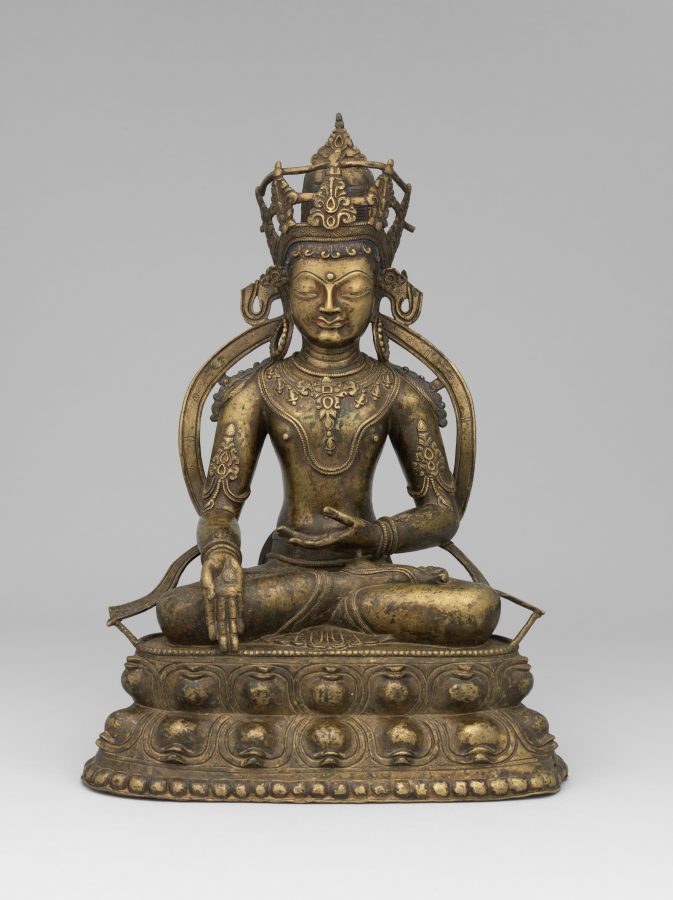
This section presents a range of early Tibetan works primarily dating prior to 1500. Although distinctive in composition, early Tibetan art quoted Indian and Nepalese art extensively. Accordingly, Tibetans retrospectively differentiated works of the Eastern Indian Style (Sharri) and Kashmiri Style (Kache) from those of the Nepalese Style (Beri). These traditions remained strong, especially in western Tibet and the western Himalayas, even while painting styles were rapidly changing in central Tibet.
Select each work to learn more.
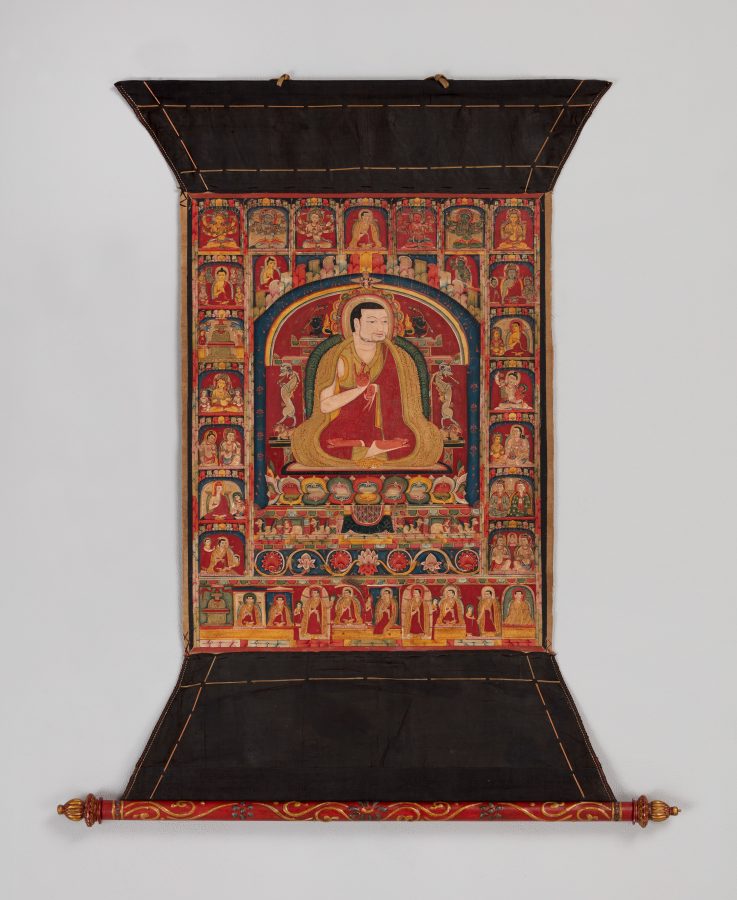
Western Tibet
15th century
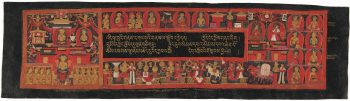

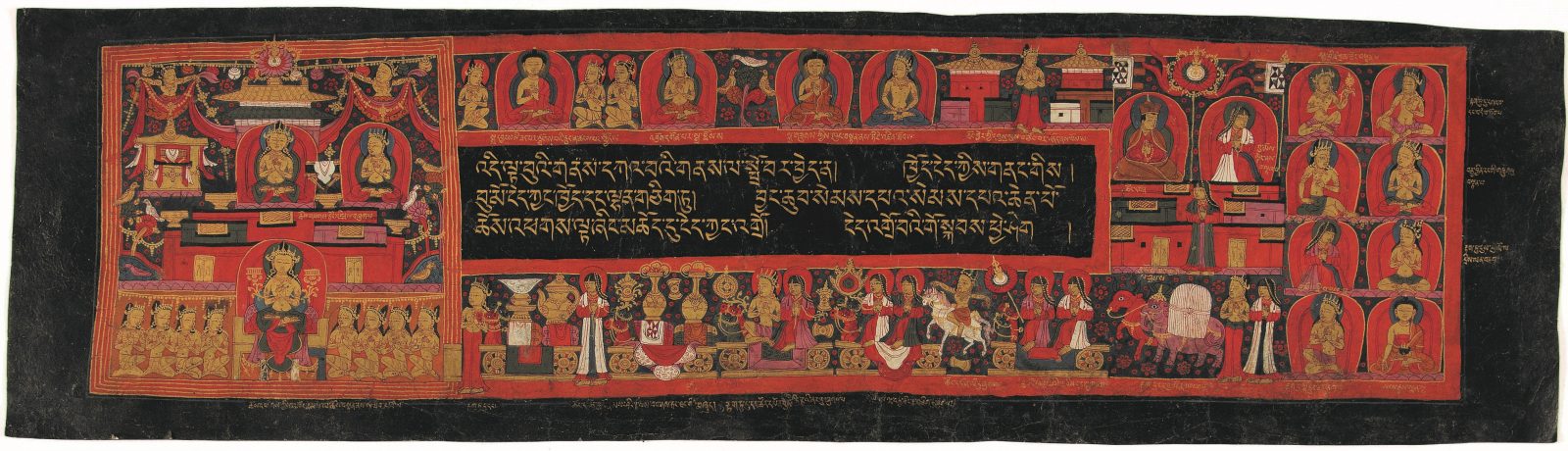
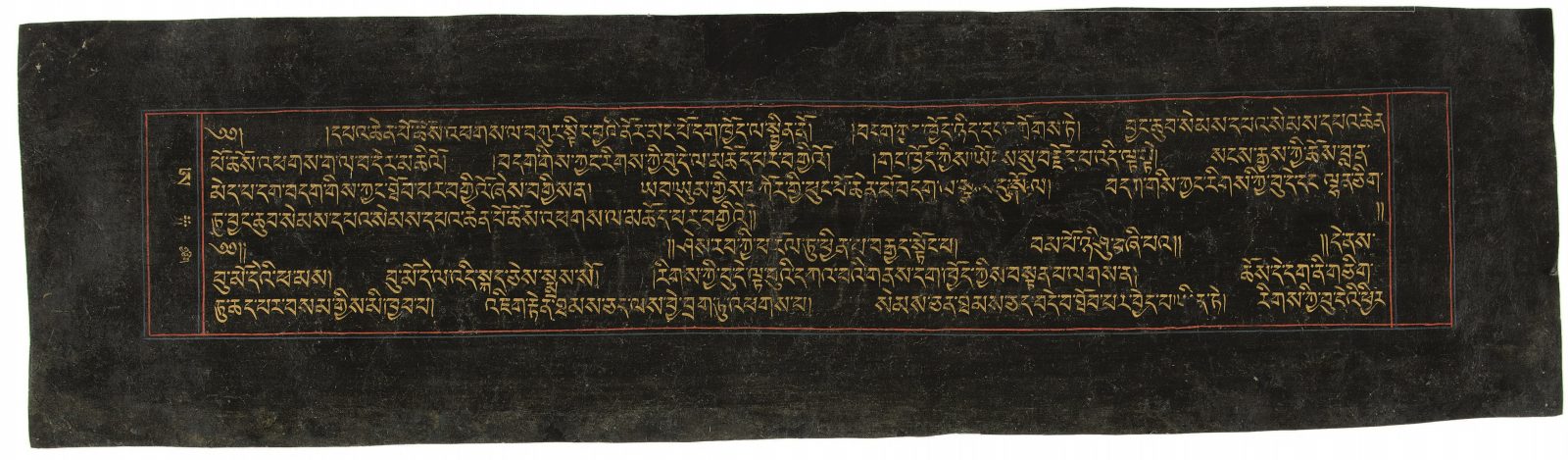
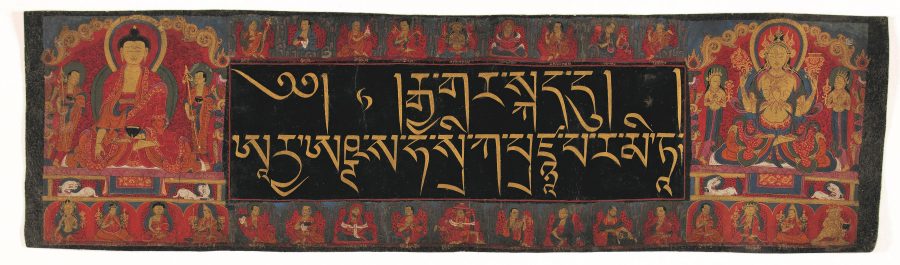
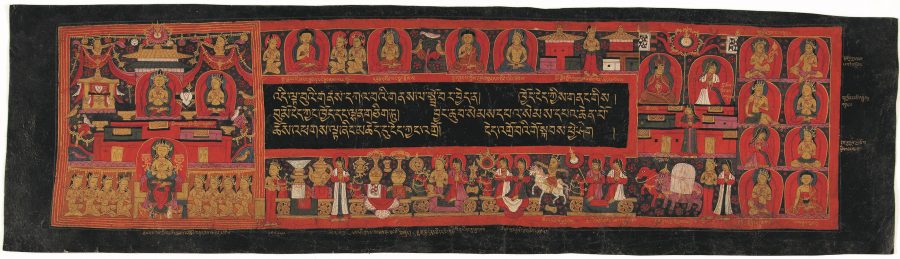
Tibetans revere sacred books as objects of devotion, believing that books contain the power to remove obstacles and advance people on their spiritual paths. It was a common practice, especially in western Tibet, to commission The Perfection of Wisdom (Prajnaparamita) Sutra on behalf of the deceased to improve their rebirth in the next life. For this reason the patrons were prominently featured. Here they are depicted in western Tibetan garments (see detail).

Donors dressed in western Tibetan garments. The painting’s color palette and stylistic elements—such as the red line drawings and outlines, proportions of the figures, and representations of local architecture—are comparable to the mural paintings in the temples of Tsaparang in western Tibet. The root fibers found in the paper indicate that it was produced locally.
Get the latest news and stories from the Rubin, plus occasional information on how to support our work.