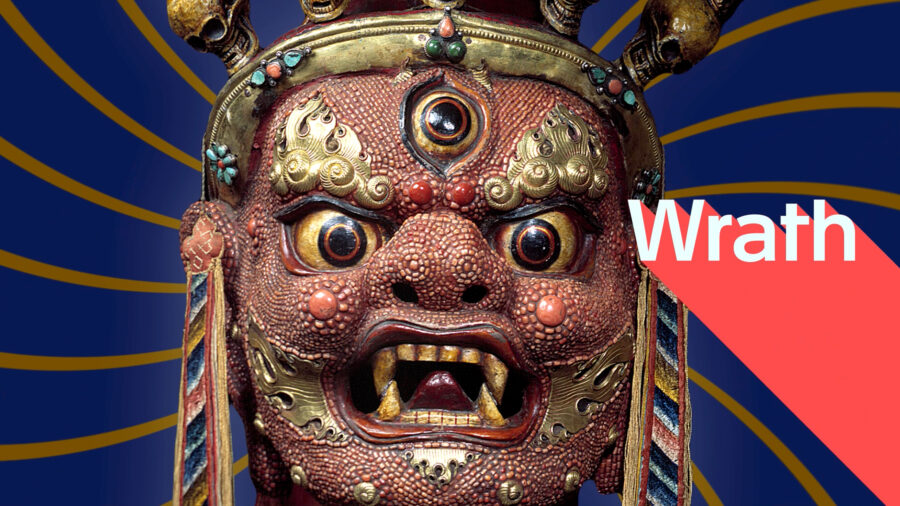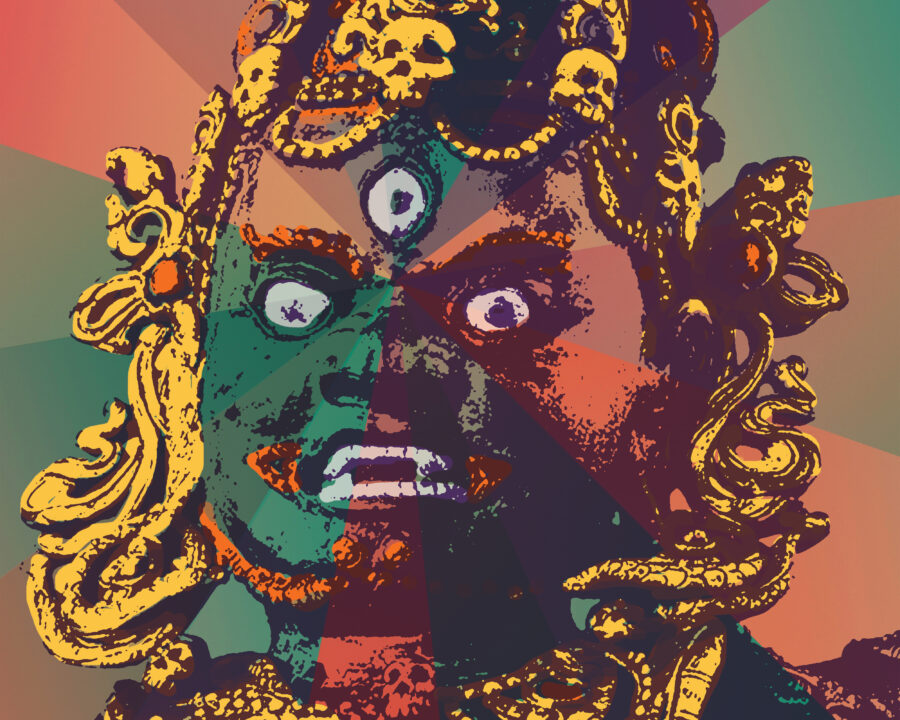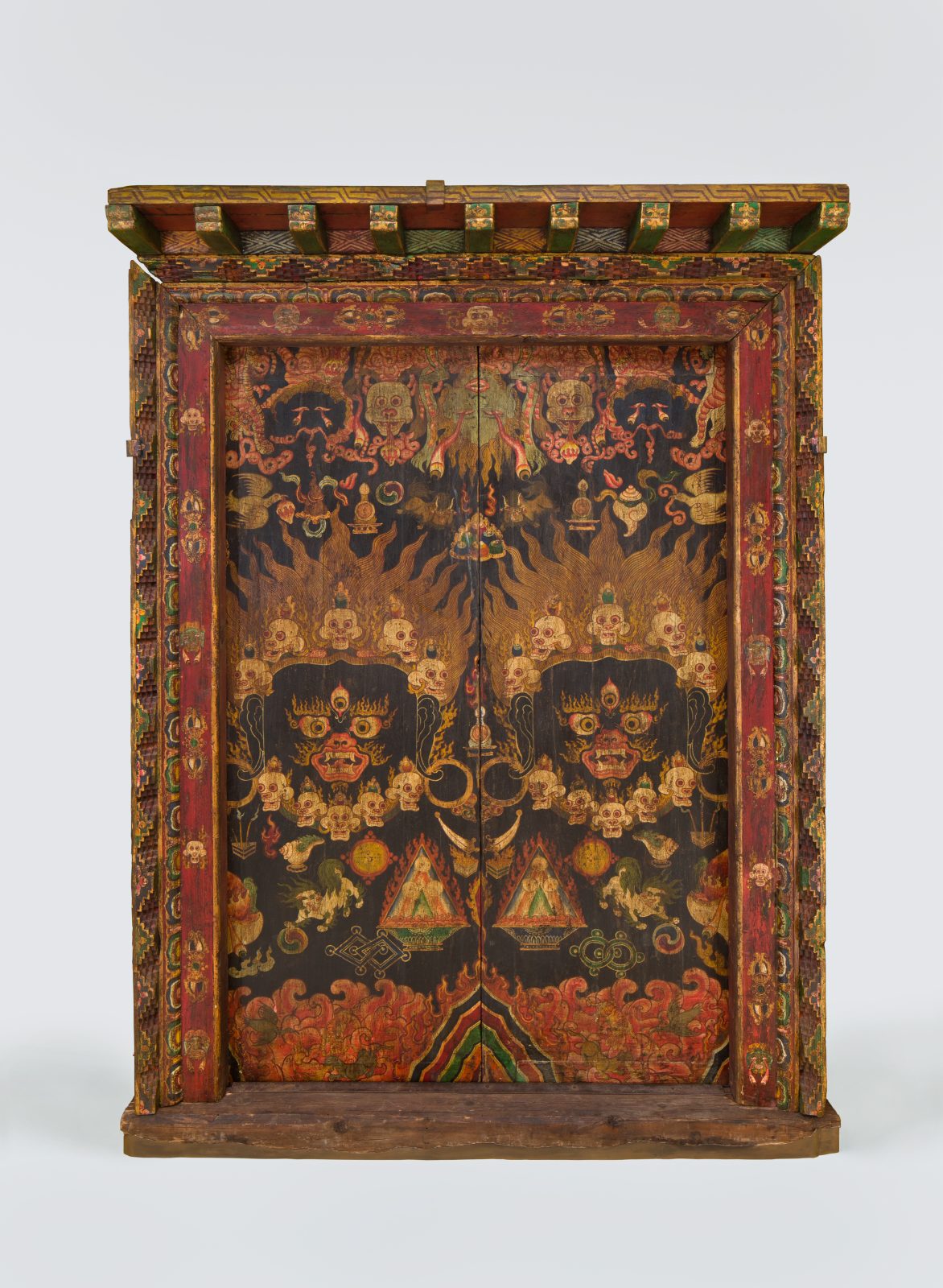
Wrathful Shrine Doors; Kham Region, Eastern Tibet; ca.19th century; Wood, cloth, pigments, gesso, varnish; Rubin Museum of Himalayan Art, Gift of Bob and Lois Baylis; C2014.3a-h

These fierce doors likely marked the entrance to a protector’s shrine or gonkhang. The wrathful faces, probably representing the protector Mahakala or “Great Black One,” wear a crown of five skulls symbolizing the transformation of the five poisons into the five wisdoms.
Learning the visual and symbolic language of the flames, skulls, weapons, and more

Fierce supernatural beings—known as wrathful deities—comprise one of the most visually striking elements of Himalayan art. Flaming halos, bared fangs, bulging eyes, skull garlands, and trampling bodies can strike viewers as jarring. Some people might struggle to reconcile such fierce imagery with the popular notion of Buddhism as a serene, peaceful religion.

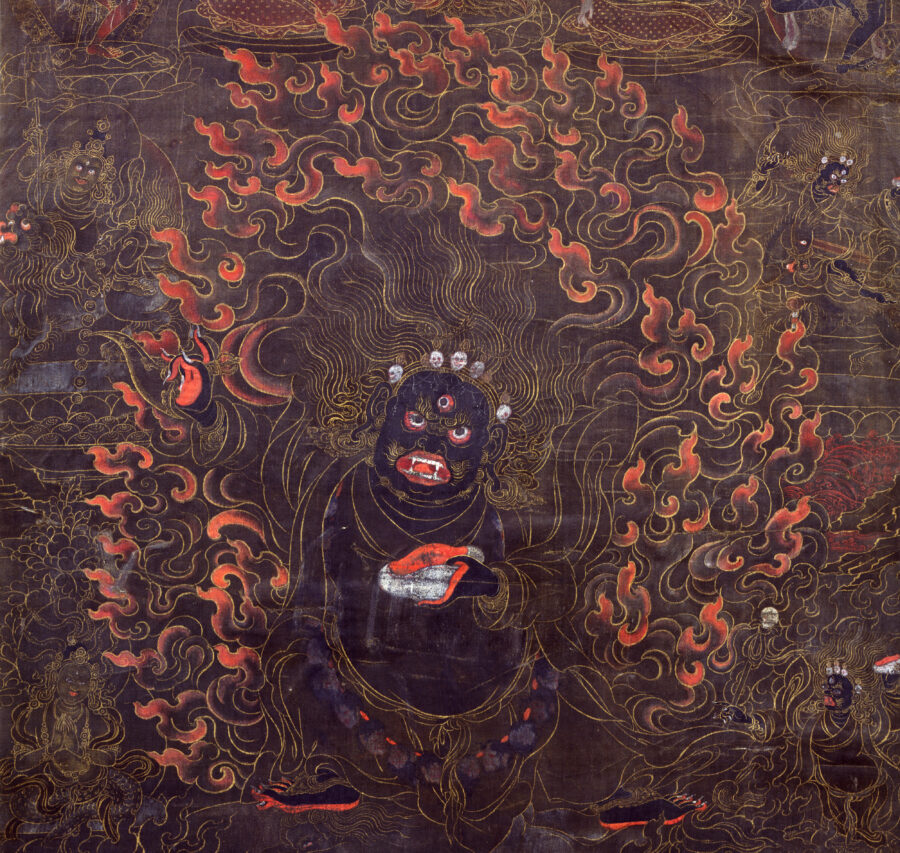
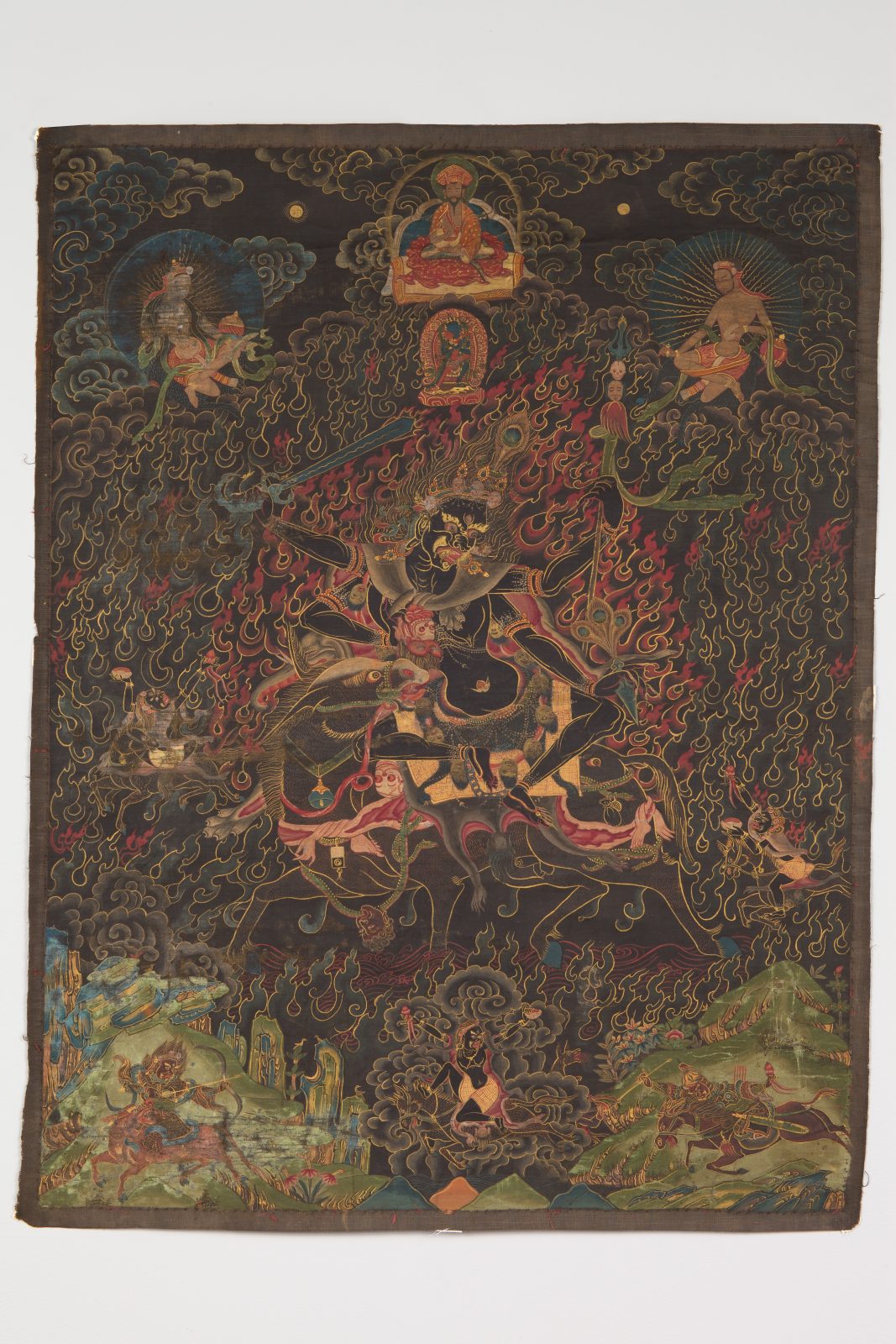
Pelden Lhamo Dusolma; Bhutan; 19th century; Pigments on cloth; Rubin Museum of Himalayan Art, gift of the Shelley and Donald Rubin Foundation; F1996.11.4

This image depicts the wrathful protectress, Pelden Lhamo Dusolma, or “Glorious Smoke-Clad Goddess.” Her name gestures to the smoke of the cremation pyre, a cautionary reminder of the impermanence of all life. In this regard, she is also known as Mahakali, meaning both “Great Black” and “Great Time.”

One of the most important steps to understanding wrathful imagery is recognizing that Himalayan perspectives on wrath diverge sharply from many Western assumptions. Many Western cultures regard wrath as a failure of self-control associated with rage, violence, and vengeance. It is something to be suppressed or overcome. In Himalayan religious art, especially within Tantric Buddhism, wrath is not a lapse in ethics but an expression of them.

From a Buddhist perspective, wrath is care-in-action. Wrath is fierce compassion. It is compassion that moves quickly, decisively, and without hesitation when circumstances demand it. In this worldview, some forms of suffering cannot be soothed gently. They require direct intervention. In this way, wrathful deities embody the courage to confront what is harmful, the precision to destroy ignorance rather than enemies, and the resolve to prioritize long-term liberation over short-term comfort.

Elements that initially appear violent or grotesque reveal themselves as symbolic tools, carefully designed to communicate specific ideas, ethics, and religious practices.

With an understanding of what wrath means for Buddhists, the visual language of wrathful imagery begins to look very different. Elements that initially appear violent or grotesque reveal themselves as symbolic tools, carefully designed to communicate specific ideas, ethics, and religious practices. This guide is intended to help viewers make sense of wrathful imagery and its deeper symbolism.

However, it is important to remember that Buddhism is not a singular entity. It is an umbrella term for hundreds of interconnected traditions and sub-lineages, each with their own specific symbolic language and encoded significance. Such diversity of interpretations cannot be unpacked in a single article. Accordingly, this viewer’s guide to wrathful iconography should be taken as introductory and cursory, and it does not presume to speak on behalf of all Buddhist traditions.

Ferocity in Himalayan ArtFerocity in Himalayan Art

Expressed through glaring eyes, snarling mouths, and powerful postures, ferocity signals bravery, strength, and ethical clarity. It is not a display of temper, but a declaration of fearlessness to confront reality as it truly is and to overcome all obstacles for the benefit of sentient beings.

Guru Drakpo, a Wrathful Form of Padmasambhava; Tibet; 20th century; Pigments on cloth; Rubin Museum of Himalayan Art, Gift of Shelley and Donald Rubin; C2006.66.3

This thangka, or scroll painting, depicts Guru Drakpo, or “Wrathful Guru,” surrounded by other deities, protectors, and lineage holders. Guru Drakpo’s ferocity signifies (among other things) the teacher’s power to fearlessly guide the student through the darkness of their ignorance and into supreme wisdom.

Flames in Himalayan ArtFlames in Himalayan Art

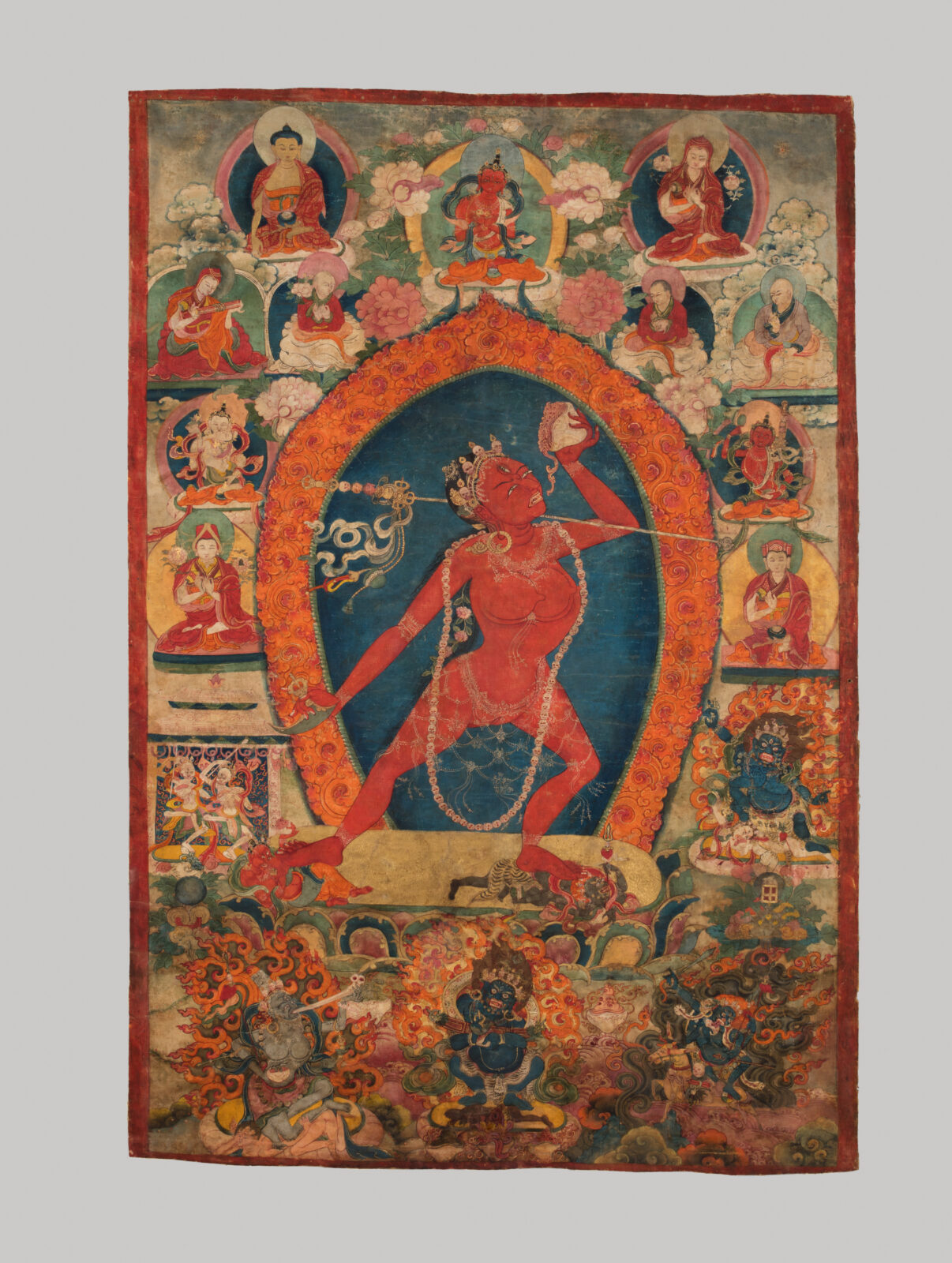
Buddhist scriptures describe the blazing halos that surround many wrathful deities as “wisdom flames.” These are not the punishing flames of hellfire, but rather represent the transformative power of fire to both purify and create. These wisdom flames signify the burning away of ignorance, confusion, and harmful patterns in order to forge new, more virtuous habits.

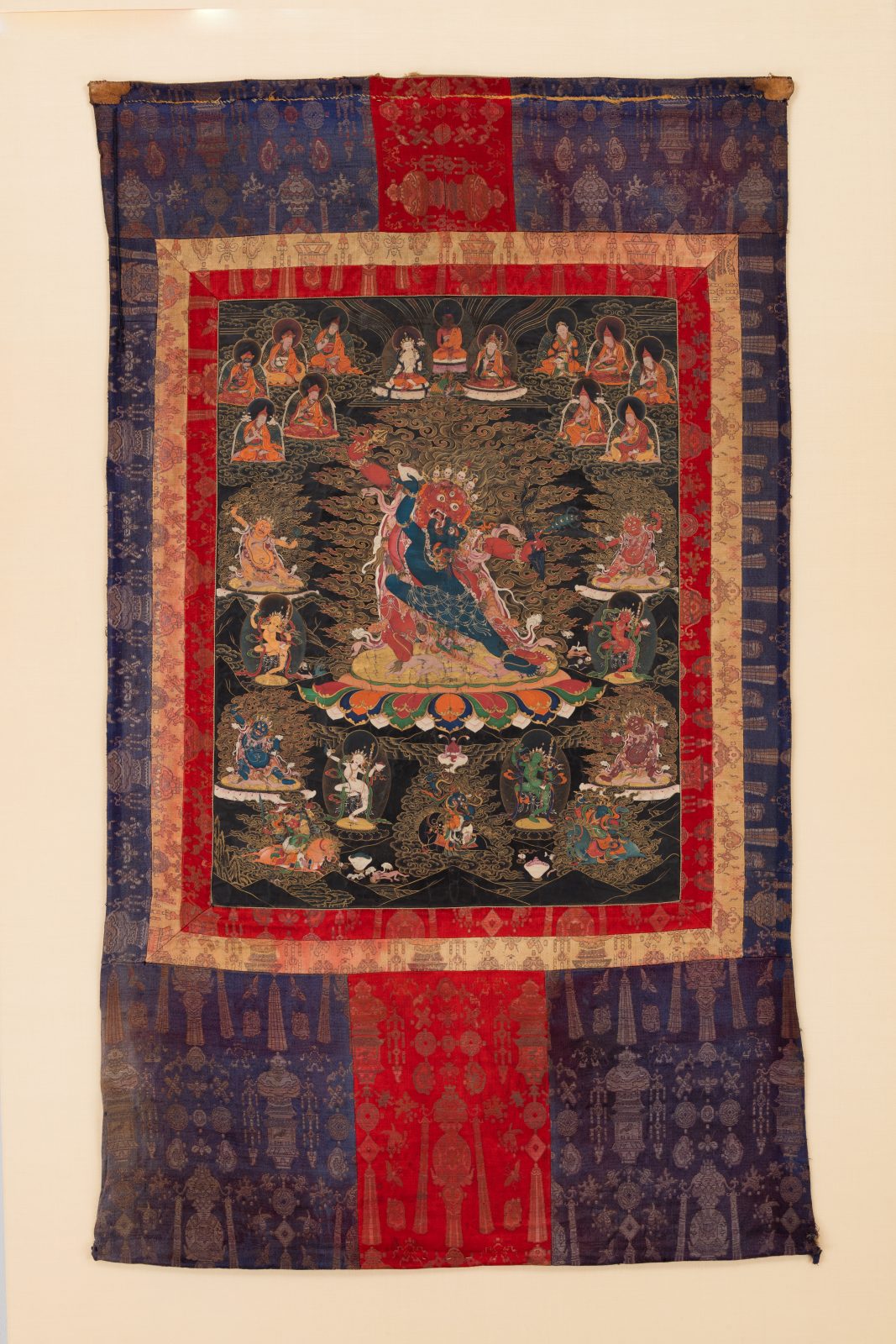
The Red Yogini, Vajrayogini; Tibet; 19th century; Pigments on Cloth; Rubin Museum of Himalayan Art; C2002.24.11

This thangka showcases the supreme Buddhist goddess, Vajrayogini, surrounded by an aureola of wisdom flames. Beneath her stand several protective deities, also surrounded by wisdom flames.

Mortuary Elements in Himalayan ArtMortuary Elements in Himalayan Art

Elements like skull garlands, bone ornaments, and charnel-ground settings serve as reminders of impermanence. Far from fetishizing death, they confront viewers with a core Buddhist insight: everything will change, evolve, pass away, and reemerge in new forms. Wrathful imagery refuses comforting illusions and instead insists on honesty about the fragility of life.

More specifically, mortuary elements often signify the transformational potential of the Buddhist path. For example, many wrathful deities wear a crown of five skulls, signifying the transformation of the five poisons (anger, grasping, ignorance, pride, and envy) into the five wisdoms. Similarly, wrathful deities often dance vigorously upon a reclining corpse, symbolizing the transformation of passive ignorance (the corpse) into active wisdom (the dancing deity).

Lords of the Charnel Ground, Smashana Adipati; Tibet; 18th century; Painted terracotta; Rubin Museum of Himalayan Art; C2002.36.1

This tsatsa, or molded terracotta image, depicts a duo of skeletal protector deities known collectively as Citipati, or “Lords of the Cremation Ground.” Their skeletal form signifies the impermanence of all things, and their association with the cremation ground reminds practitioners to be fearless in exploring the scary, shadowy spaces within themselves.

Weapons in Himalayan ArtWeapons in Himalayan Art

Knives, swords, tridents, and other weapons are not instruments of aggression but tools of discernment. They symbolize the ability to cut through delusion, sever mistaken attachment, and protect what is vulnerable. Instead of attacking the world, these weapons clarify it. For an analogue in the English language, consider how we often use the vocabulary of weaponry to describe wisdom: an intelligent person is “sharp” and their “point” is said to be “incisive” when it “cuts to the heart” of the matter.

Moreover, certain weapons often carry more specific symbolism. For example, a nine-pronged vajra (scepter) can symbolize the nine Buddhist “vehicles” or paths. Similarly, the three tips of a trident can symbolize the “three jewels” of Buddhism: the teacher (buddha), the teachings (dharma), and the community of followers of the teachings (sangha).

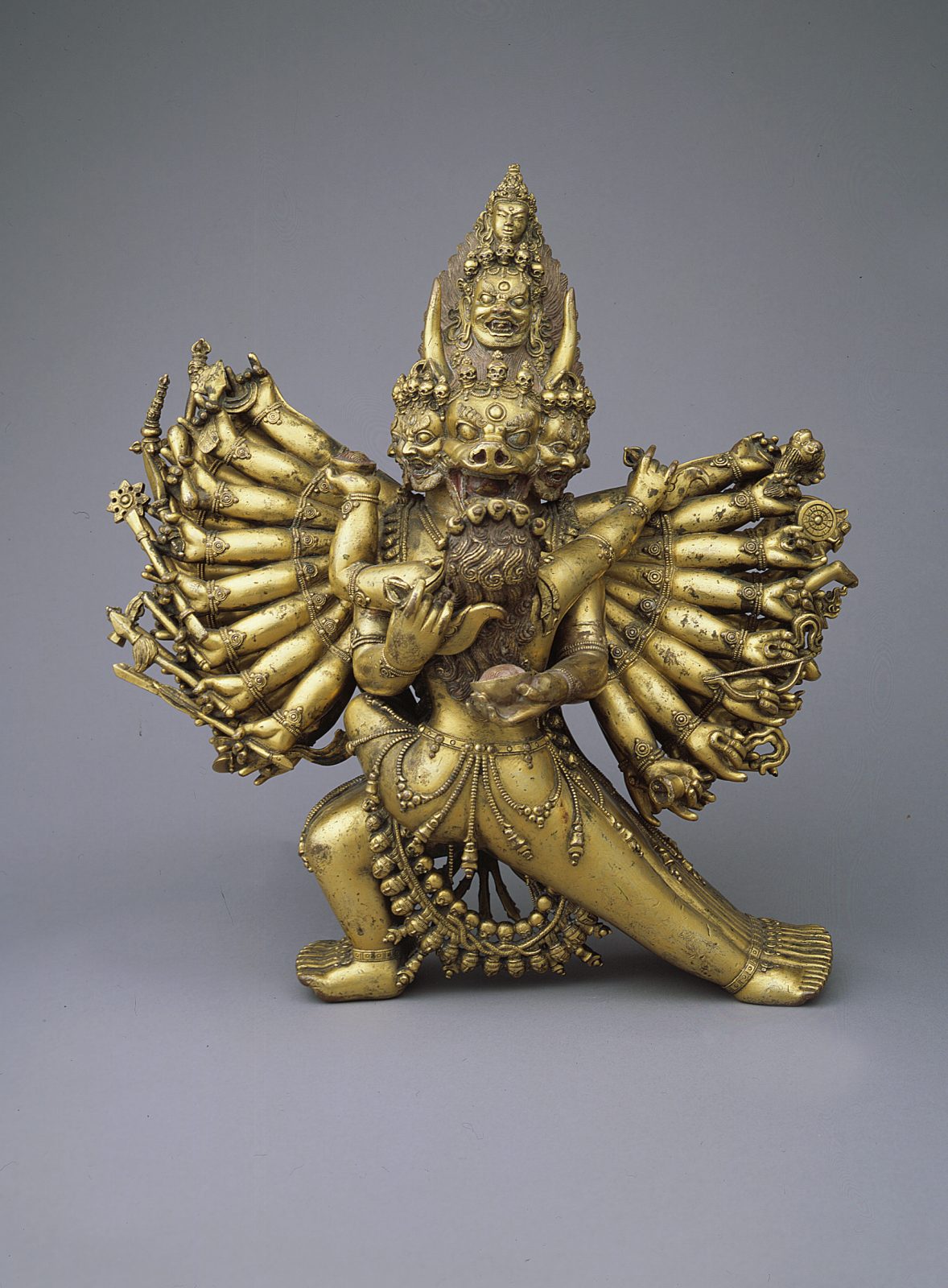
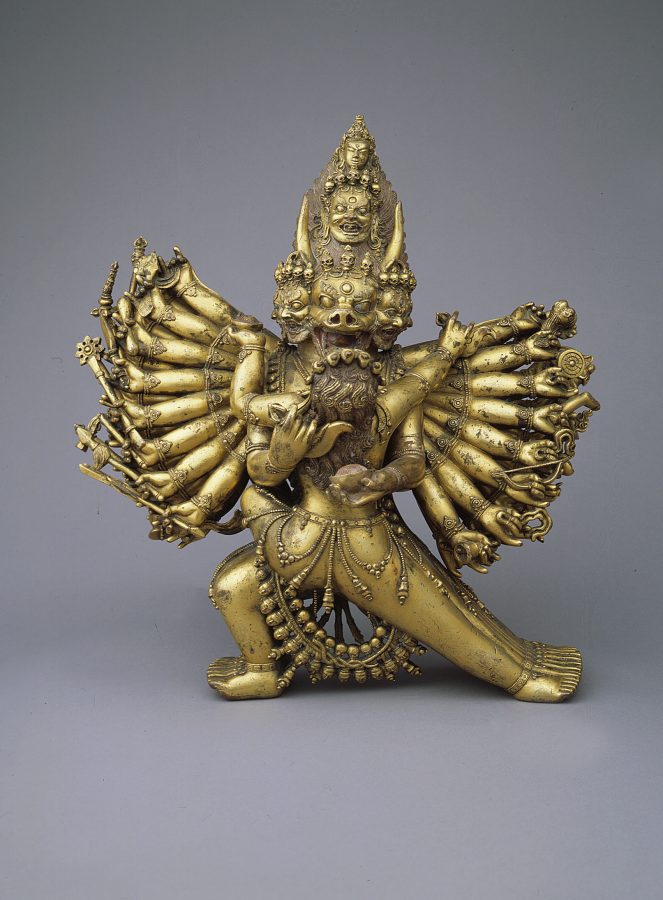
Vajrabhairava with Consort Vajravetali; Mongolia; 18th – 19th century; Gilt copper alloy; Rubin Museum of Himalayan Art; C2005.25.1

This icon showcases the fierce buffalo-headed deity Vajrabhairava, or “Indestructible Terror.” His 34 arms hold various weapons, each with their own specific iconography.

Learn more about the iconography and symbolism of weapons in this digital interactive showcasing the deity Vajrabhairava.

Trampling in Himalayan ArtTrampling in Himalayan Art

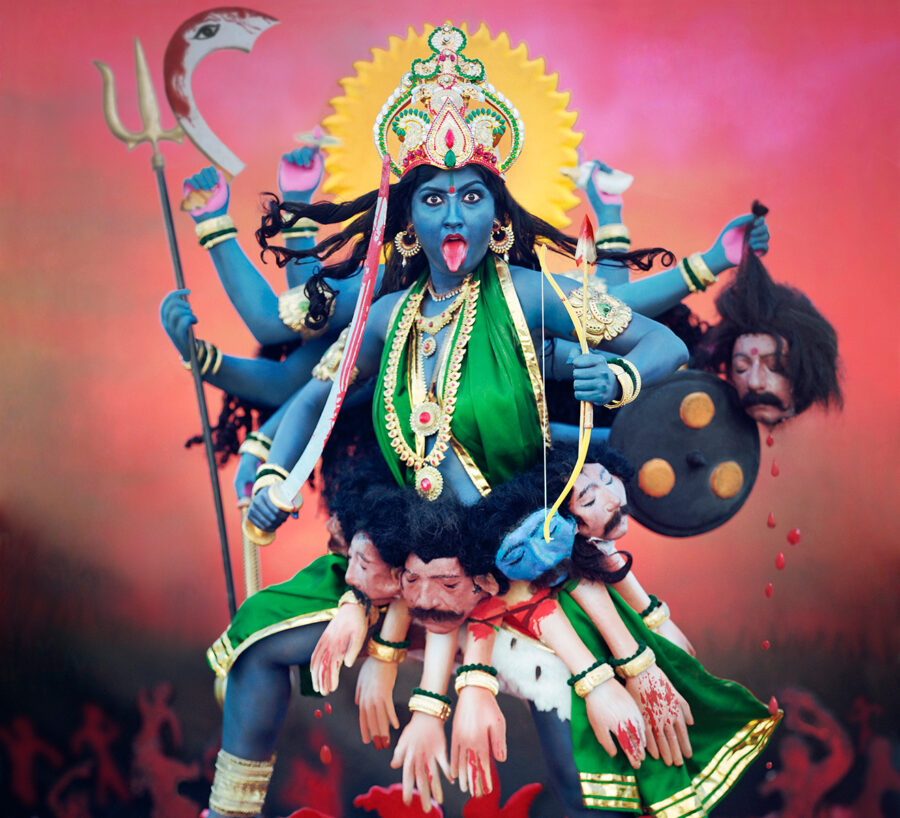
Perhaps most unsettling for some viewers are images in which a wrathful deity tramples other deities, even deities from other religions. Westerners frequently misinterpret images of wrathful Buddhist deities trampling Hindu deities as sectarian propaganda claiming Buddhism’s supposed superiority over Hinduism. This misunderstanding is even repeated by scholars and experts, but it is a deeply flawed interpretation. In fact, many wrathful Hindu deities also trample other Hindu deities. For example, images of the wrathful Hindu goddess Kali virtually always depict her trampling her cosmic consort, Shiva.

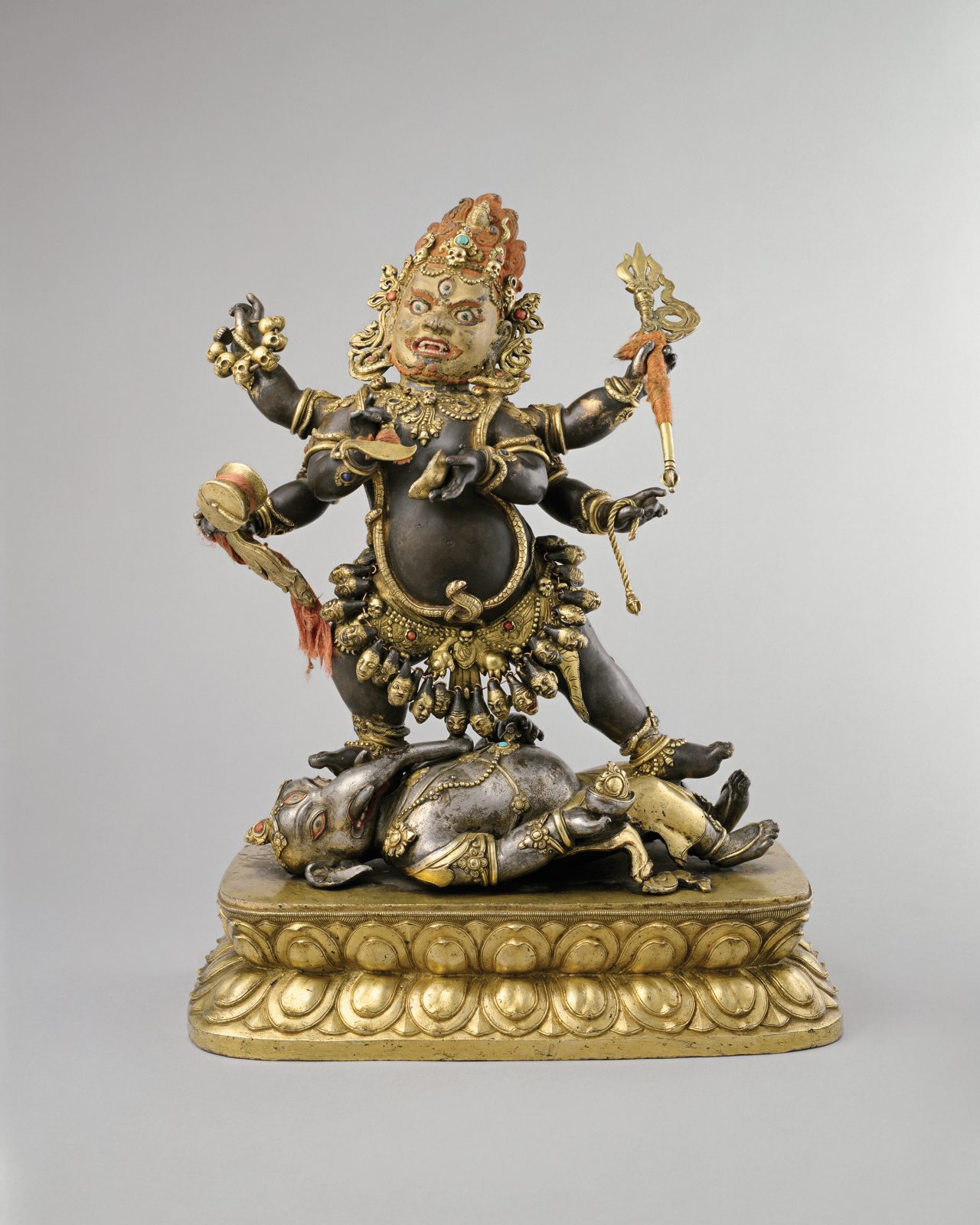
Therefore, the trampling cannot be reduced to simple statements of sectarian superiority. A more nuanced symbolism is at play here. In both Buddhist and Hindu contexts, wrathful deities trampling other deities often signify the transcendence of all preconceived ideas and hierarchies, indicating the deity’s role in guiding the practitioner towards a transcendent state beyond all concepts—even the very concepts of “human” and  “divine.”

Six-armed Mahakala; Mongolia; 18th century; Silver and gilt copper alloy with semiprecious stones; Rubin Museum of Himalayan Art; C2006.70.1a-f

This icon depicts the six-armed form of the protector Mahakala trampling the elephant-headed deity Ganesha. Here, Mahakala standing upon Ganesha symbolizes overcoming all obstacles.

Fierce Awakening in Himalayan ArtFierce Awakening in Himalayan Art

Taken together, these examples reveal that wrathful Himalayan art does not glorify violence or destruction, but rather invites us to expand our assumptions about what compassion can look like. These figures are not expressions of uncontrolled rage, but carefully coded embodiments of courage, protection, and transformative clarity. Their flames burn away ignorance, their weapons cut through delusion, and their fierce expressions refuse comforting illusions in favor of truth.

Above all, wrath is what compassion looks like when it refuses to look away from suffering, even when doing so is uncomfortable. Wrathful deities remind us that liberation is not always gentle. Sometimes care must be assertive, sometimes wisdom must be sharp, and sometimes liberation arrives in a form that startles us awake.

Westin Harris is the resident scholar in Himalayan cultures at the Rubin Museum of Himalayan Art.

Published February 20, 2026
BuddhismTraditional Himalayan Art

Sign up for our emails

Get the latest news and stories from the Rubin, plus occasional information on how to support our work.

Discover artworks, articles, and more by typing a search term above, selecting a term below, or exploring common concepts in Himalayan art.