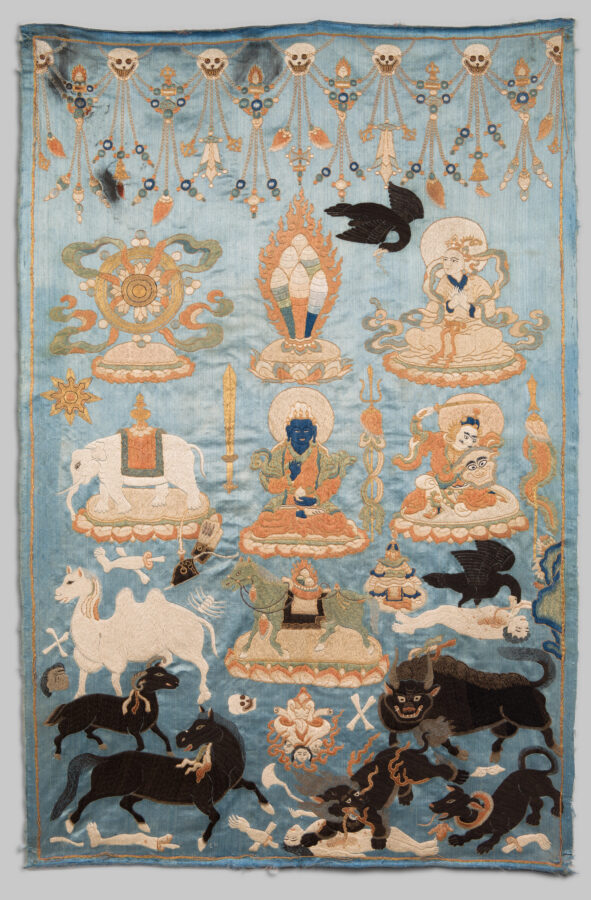
Embroidered white and black animals, two black ravens, and human figures populate a light blue background. Skulls and beaded strings decorate the upper edge, with black animals in the lower portion. A dark, blue-skinned figure sits at center, one of three human figures. There are seven animals, including a white Bactrian camel and a black snow lion devouring a corpse. All represent symbolic offerings.
Symbolic Offerings
Mongolia, 19th century
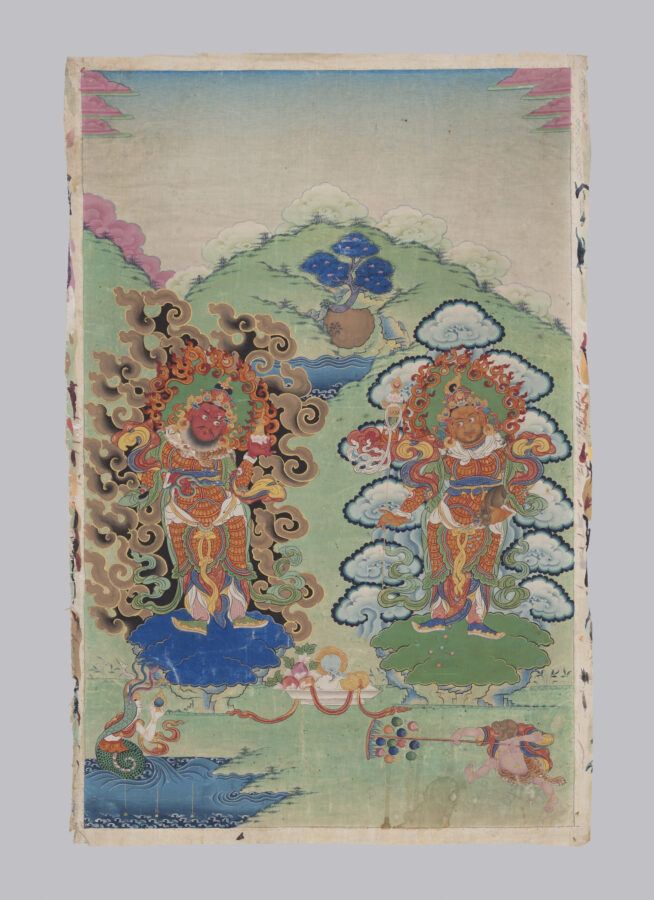
Two richly dressed, bearded figures in armor face each other, both surrounded by swirling cloud motifs, against a backdrop of green hills, trees, and a body of water. Two smaller figures of attendants are placed at lower left and right, and a dish piled high with offerings sits between the two central figures.
Vaishravana and Virupaksha, Guardian Kings of the Northern and Western Directions
Tibet, 19th century
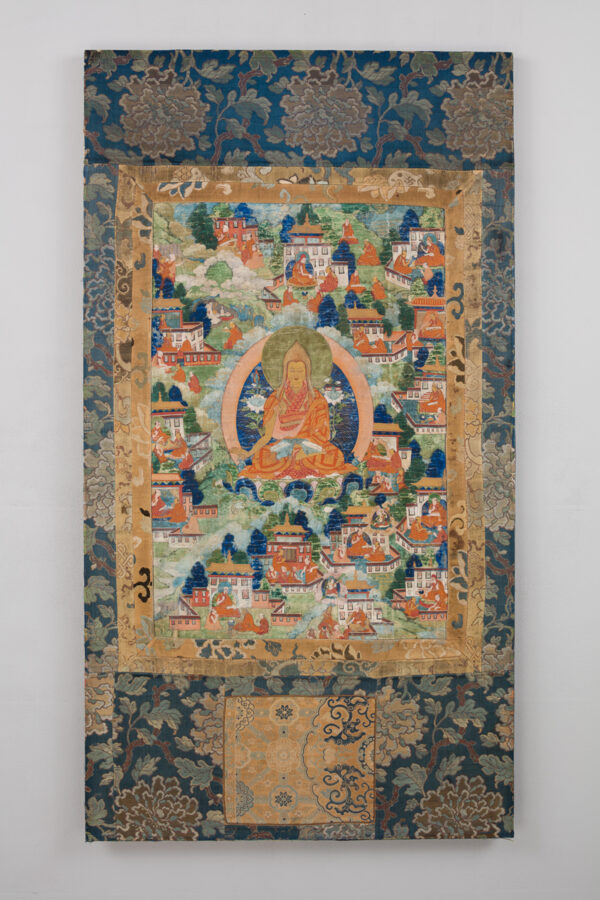
Tsongkhapa (1357-1419) and Scenes from His Life
Tibet, 18th century
Vajravarahi
Tibet, 19th century
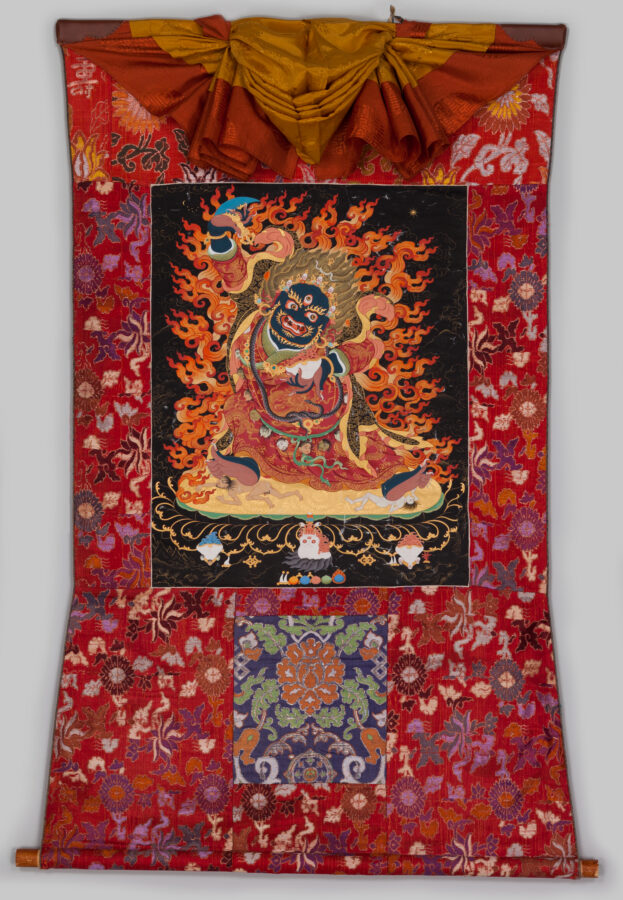
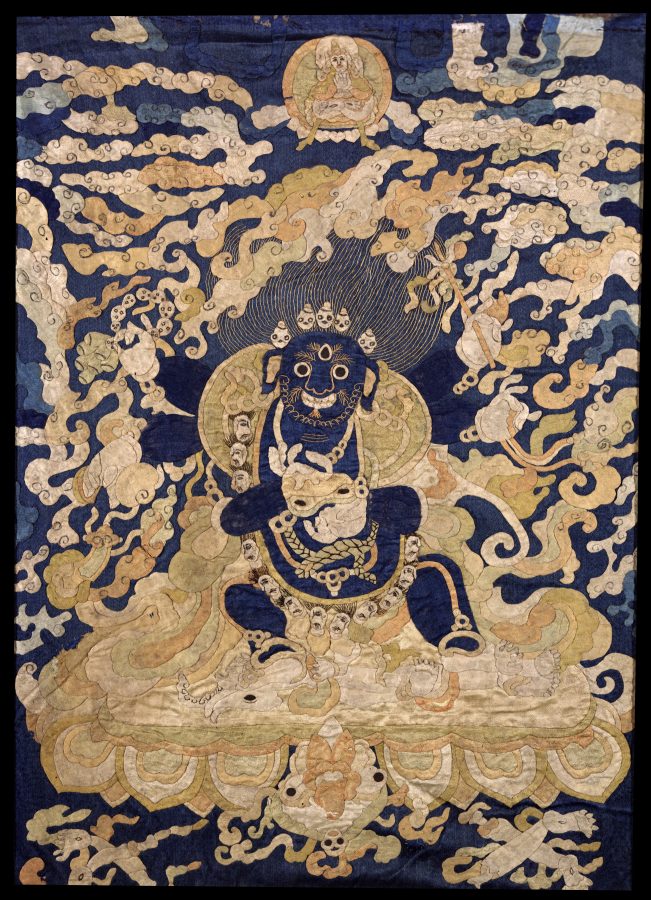
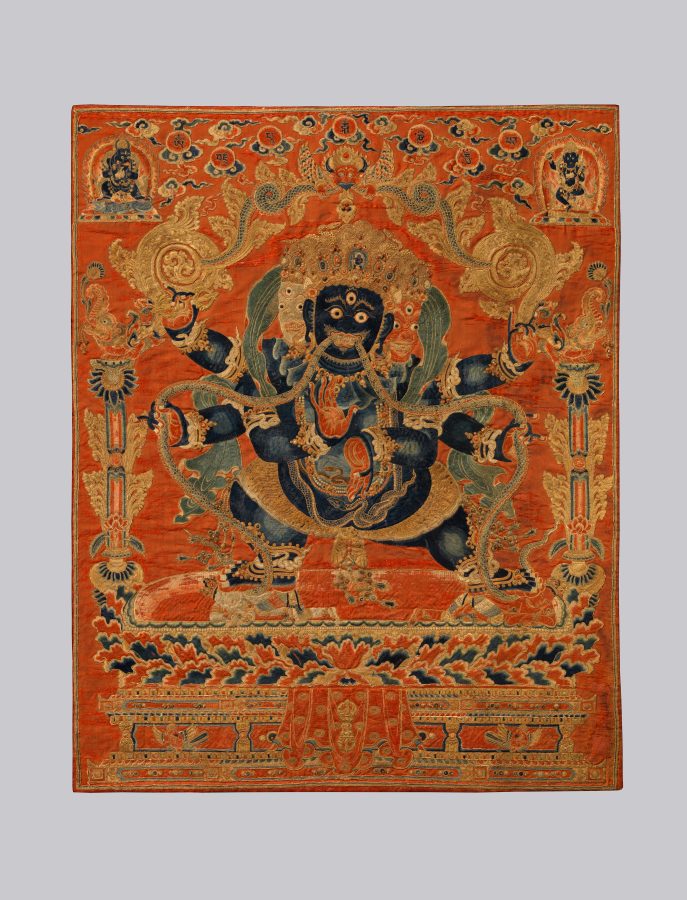
Six-Armed Mahakala
Tibet, 18th century
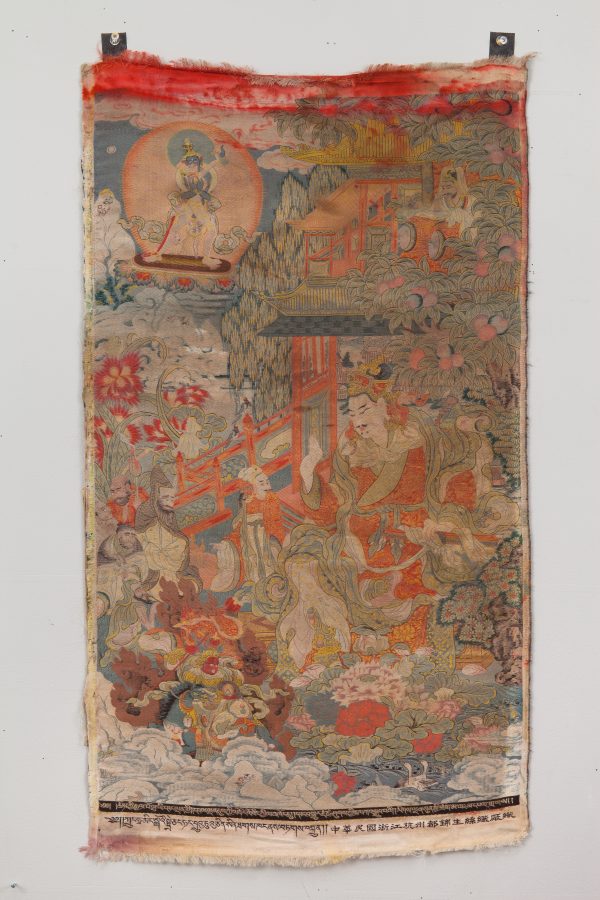
Manjushrikirti, King of Shambhala, From a set of previous incarnations of the Panchen Lamas
Du Jinsheng Silk Factory, Maojiabu, Hangzhou, Zhejiang Province, China, ca. 1922-1937
Mahachakra Vajrapani
China, 15th century
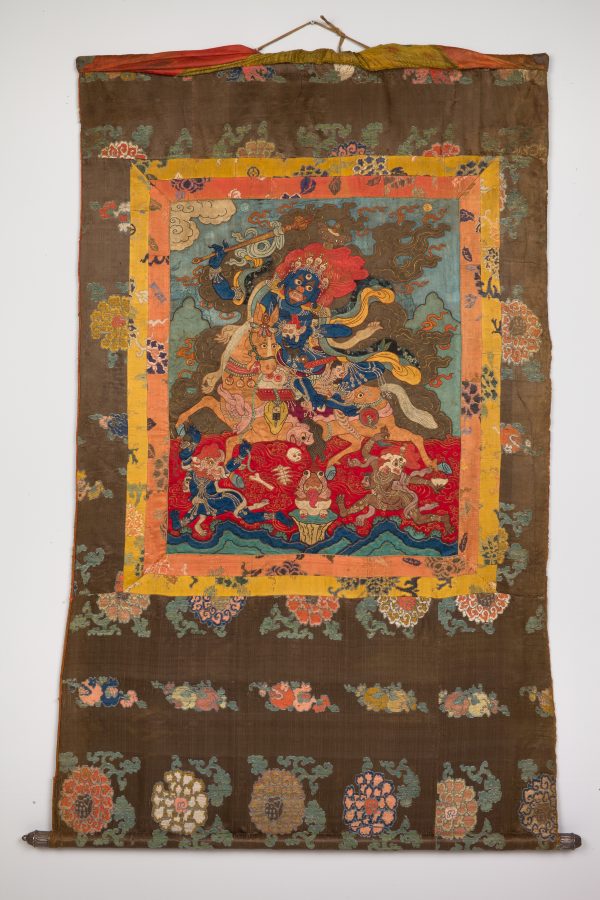
Makzor Gyelmo, Queen Who Repels Armies
Mongolia, 18th century
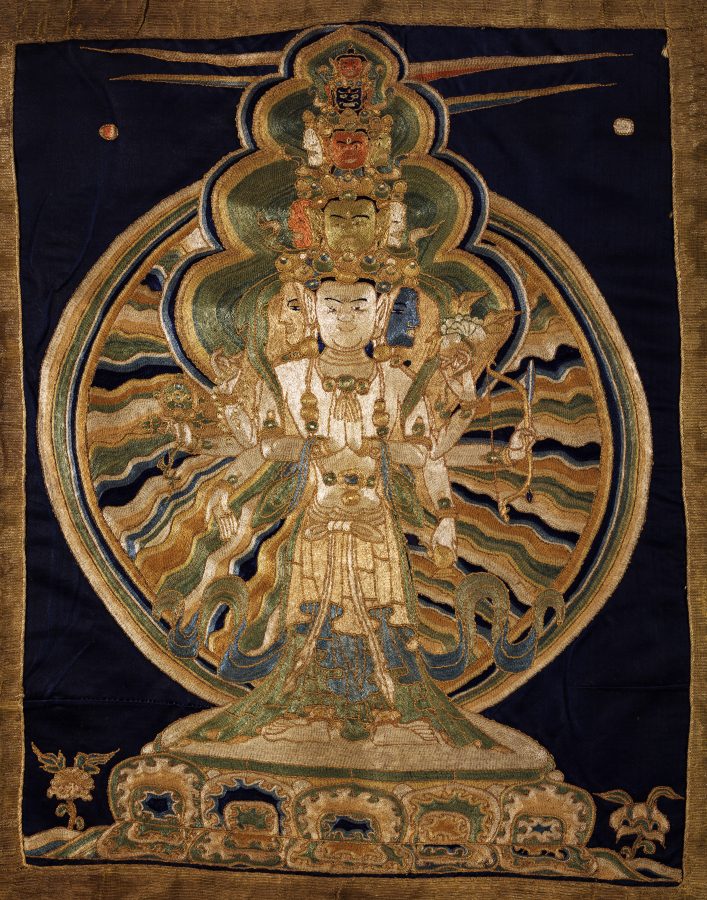
Eleven-headed Avalokiteshvara
China, 18th century
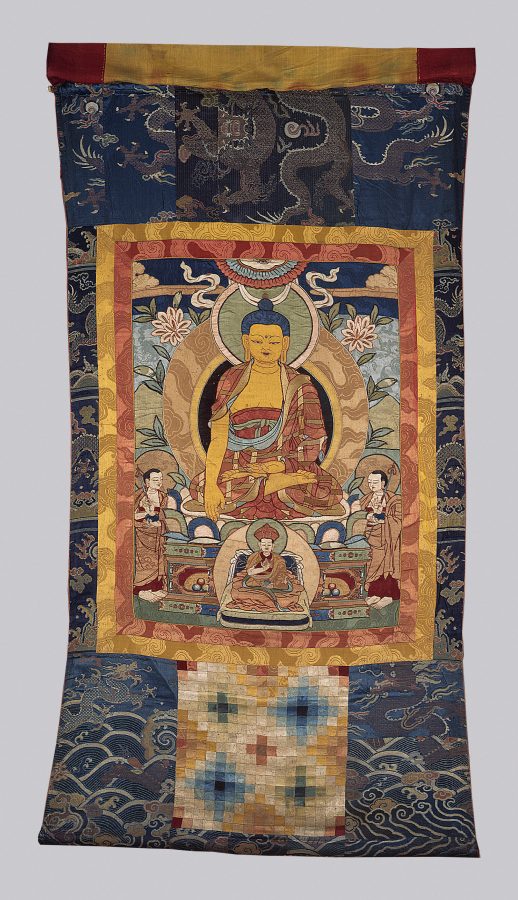
Buddha Shakyamuni
Tibet or Bhutan, late 17th-18th century
Buddha Shakyamuni
Bhutan, 19th century

Sign up for our emails

Get the latest news and stories from the Rubin, plus occasional information on how to support our work.

Discover artworks, articles, and more by typing a search term above, selecting a term below, or exploring common concepts in Himalayan art.