Bhutan
2025
Bhutan
2025
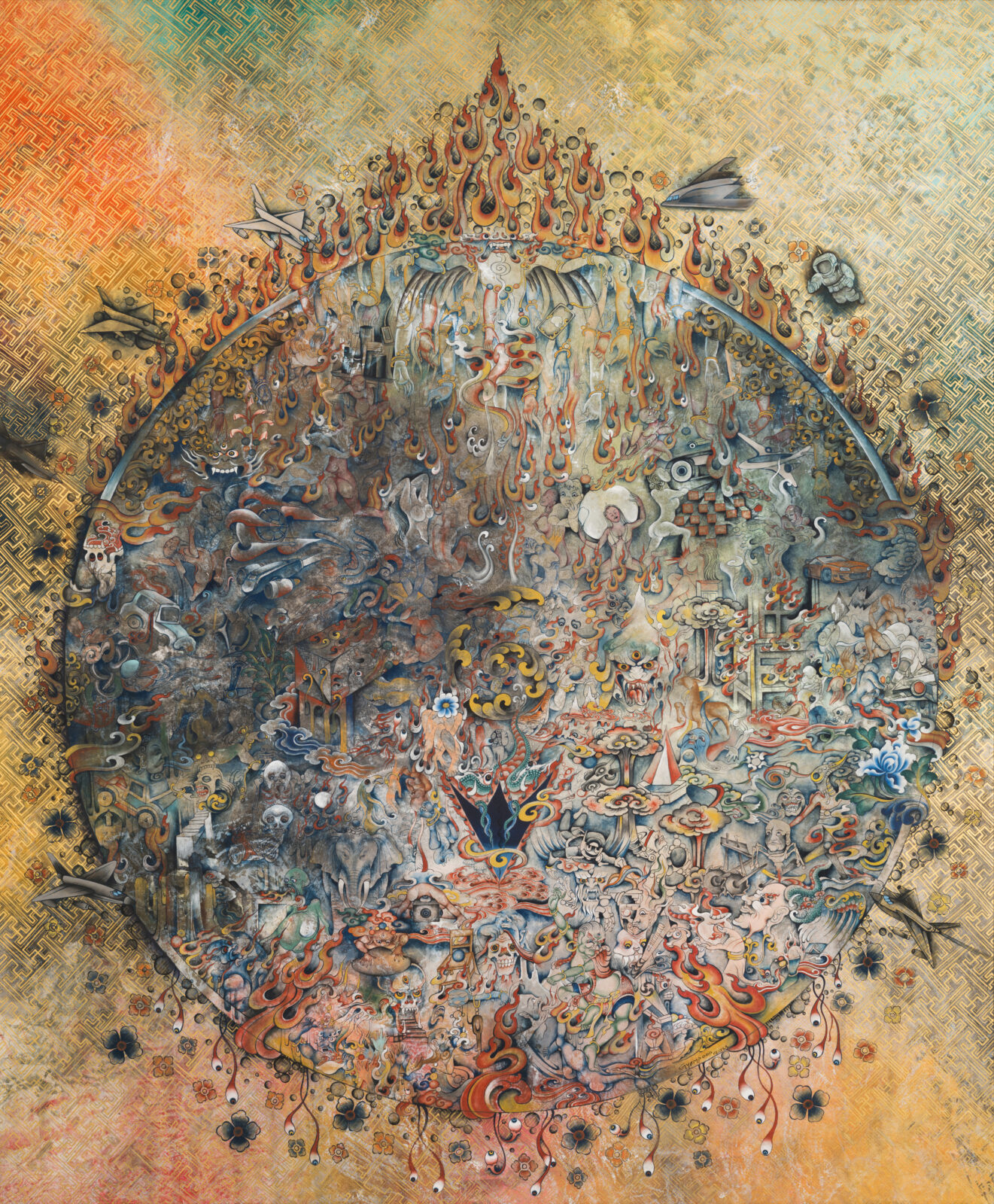
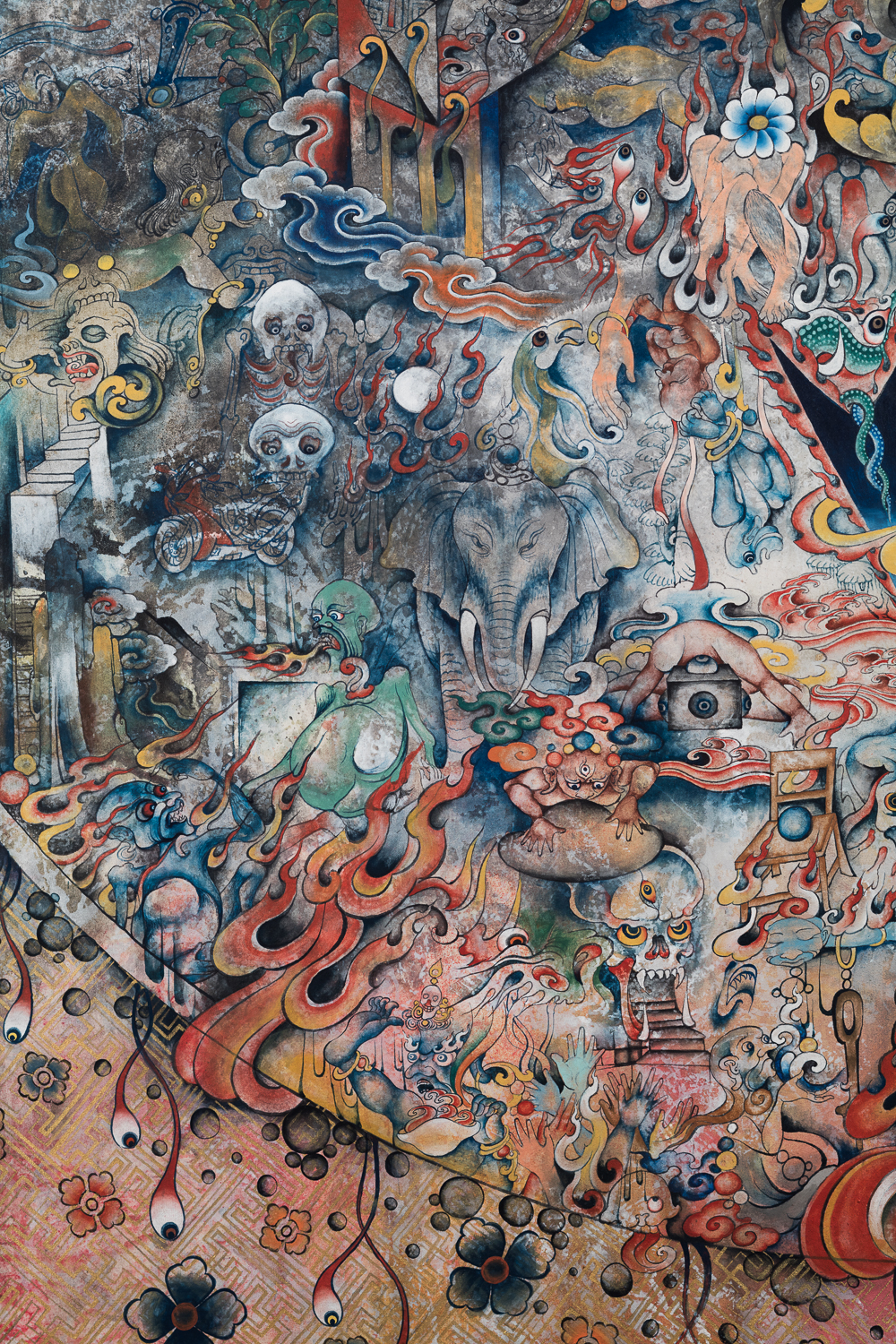
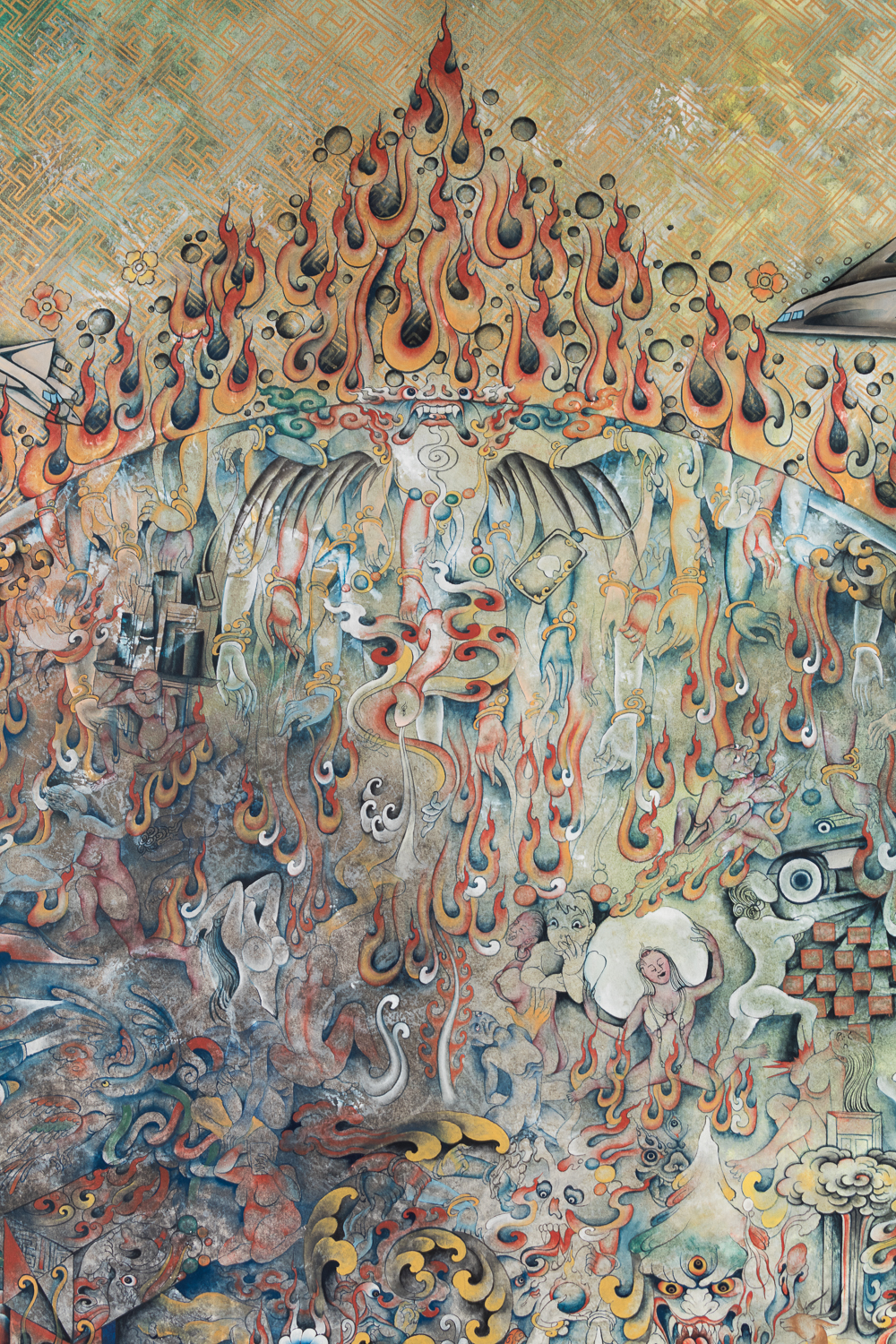
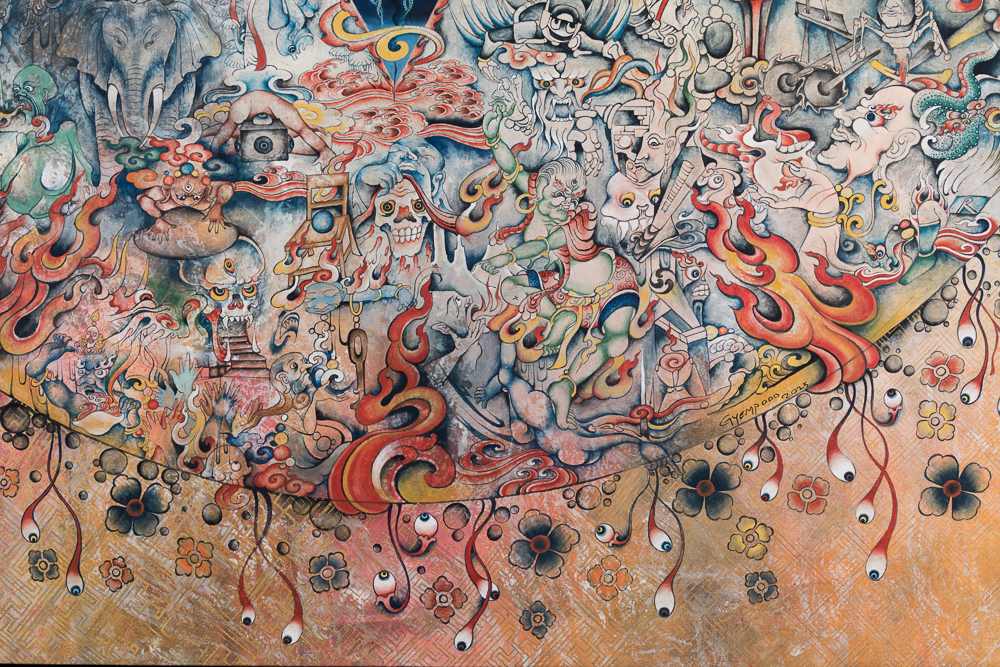
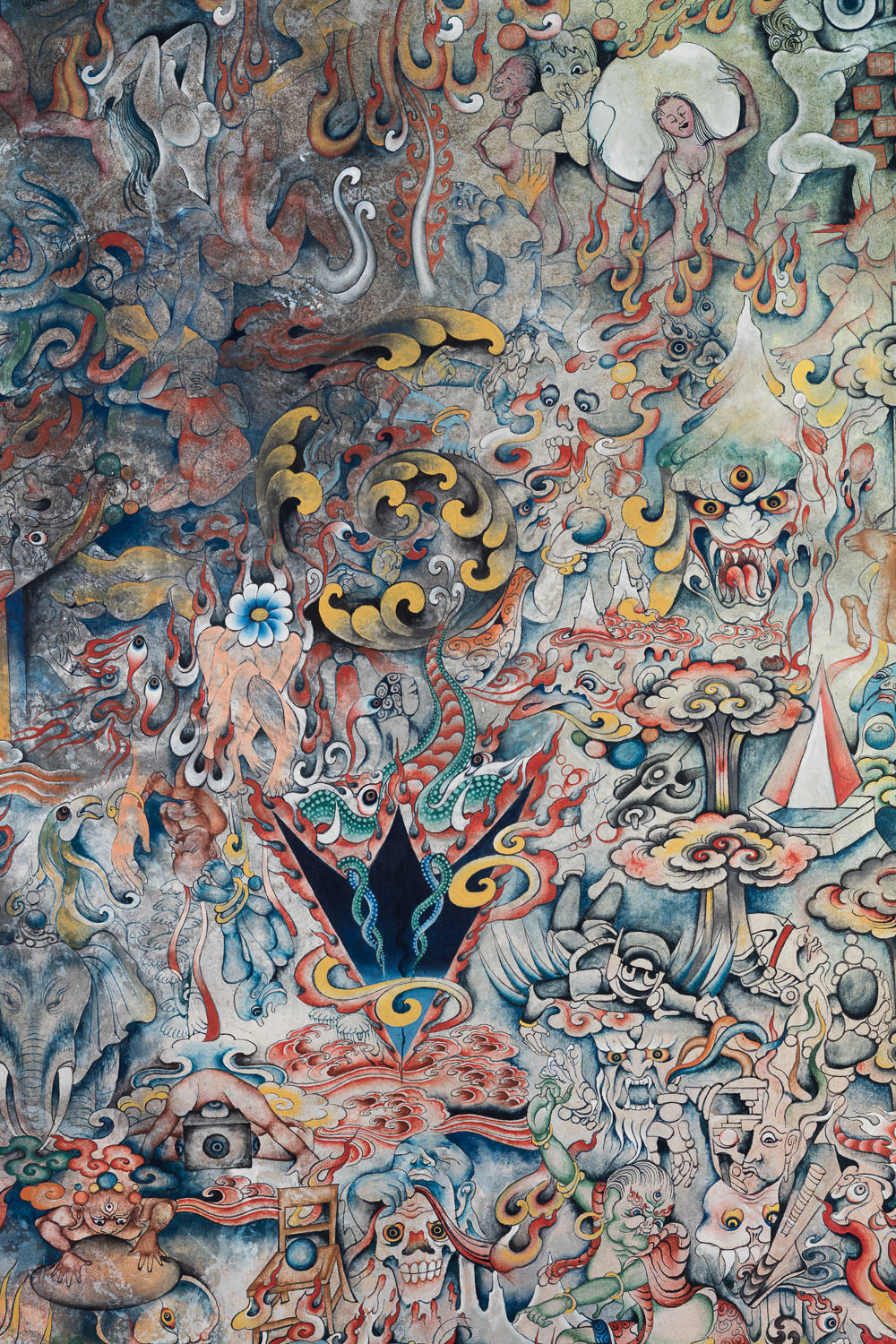
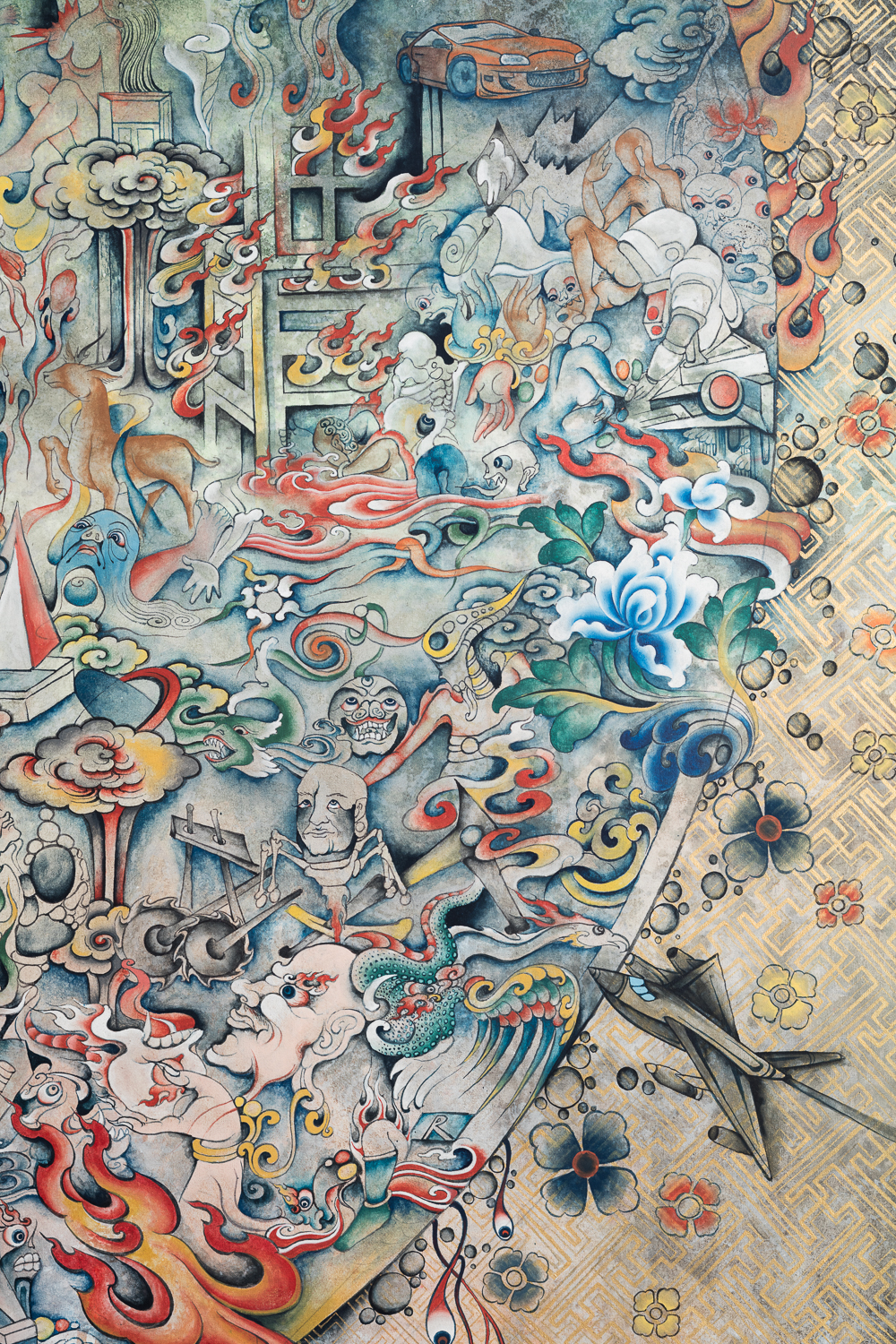
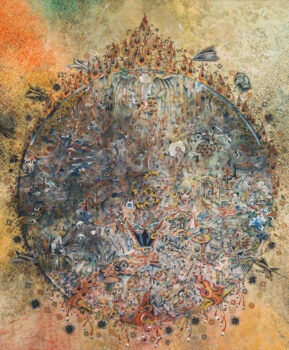
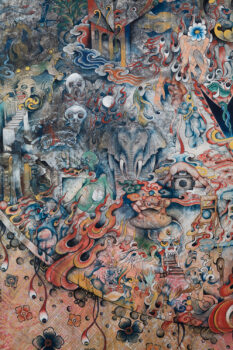
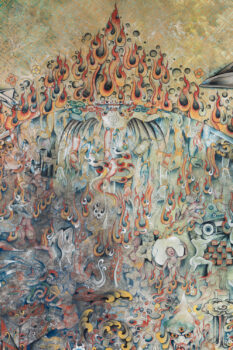
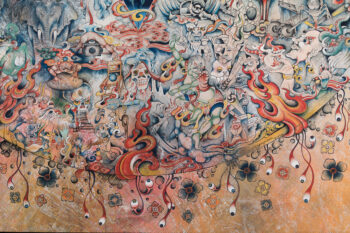
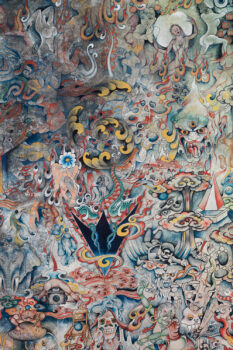
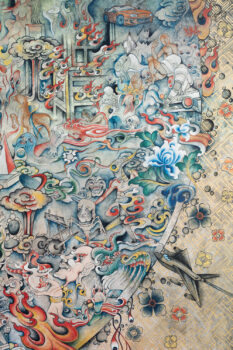
Gyempo Wangchuk’s training in traditional painting clearly comes throughout in his work, both in regard to the subjects, compositions of his paintings, as well as materials and his painting process. This painting is based on traditional Buddhist depictions of the Wheel of Life or Wheel of Existence. Set against a swastika-patterned background in gold, the Wheel of Existence/Wheel of Life presents an astonishing amount of fine and fun-to-explore details.
The painting largely follows traditional composition of the Wheel of Existence paintings while not defining the outlines of the sections for different realms of existence. They can be recognized through the images and details that fill specific areas (fires, skulls, hanging eyeballs for hell realms, hungry ghosts, human figures, buildings, and a car for human realm, etc.). The wheel and its periphery are also sprinkled with various small figures or model-like “set pieces” like cars, airplanes, an astronaut, etc. The artist includes traditional symbolic images as a three-bladed dagger (purba or kila) as well as the flames, dragons, and a garuda (phoenix). The ripples seem to be emanating from the purba plunged into the wheel. The overall intensity of the wheel filled with flowing and merging details denotes life in all its complexity. The artist’s palette contributes to this impression. The quality of Gyempo’s work is revealed foremost in the amazing quality of his linework and color application. This painting is a companion to another Wheel of Life painted in he same year, of the same size, which follows a more conventional rendering with Yama, the Lord of Death holding the Wheel.
The idea that everything is interconnected and arises from both conscious and unconscious interactions and relationships. Thus happiness and suffering are interlinked, dependent, and relative.
Teachings and precepts that offer practical and experiential guidance. In Buddhism instruction is primarily an oral tradition and is often targeted to the specific needs or disposition of a student or disciple.
The main cause of suffering in the endless cycle of death and rebirth known as samsara. A lack of awareness or understanding of the true nature of reality propels sentient beings to hold the wrong view and engage in harmful actions. In Buddhism wisdom is the antidote to ignorance.
A state of “waking up” from illusion and seeing the true nature of reality. Buddha Shakyamuni attained awakening while meditating under the bodhi tree. Buddhist teaching explains that the accumulation of merit and wisdom are essential for achieving awakening, also known as enlightenment.
A distorted mental state that can amplify negative attitudes and lead to impulsive, harmful actions. In Buddhism it is considered one of the three poisons, along with ignorance and desire, that are the main sources of suffering and perpetuate the cycle of death and rebirth known as samsara.
A mental affliction that binds sentient beings to the cycle of death and rebirth, known as samsara, and distorts one’s perception of reality. According to Buddhism, this distortion leads to the formation of desires that result in feelings of pain, frustration, and loss.
Bhutan’s earliest Buddhist temples were built in the 7th century, around the same time Buddhism was introduced in Tibet. In the 17th century, Mongol-backed Geluk authorities drove many Kagyu teachers from Tibet to Bhutanese areas. The Drukpa Kagyu teacher Zhabdrung Ngawang Namgyel (1594–1651) unified these regions and established a system of government.
Get the latest news and stories from the Rubin, plus occasional information on how to support our work.