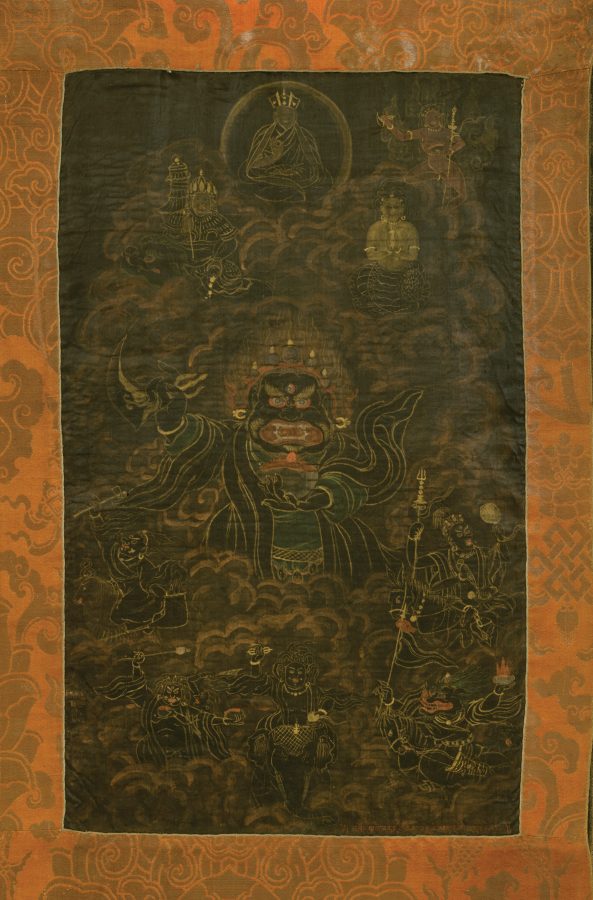
Kham Region, Eastern Tibet
19th century
Rubin Museum of Himalayan Art
C2002.27.5
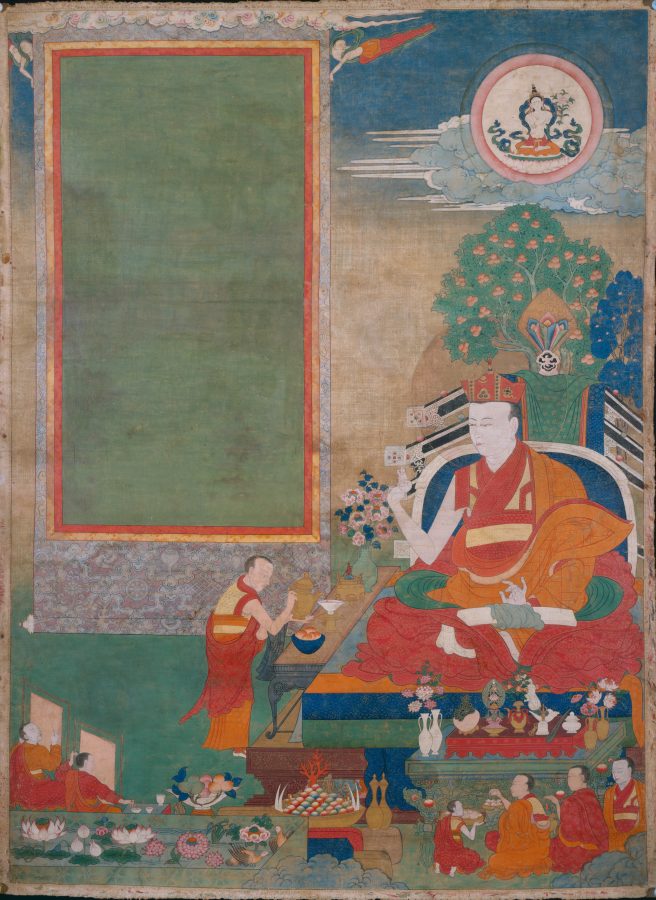
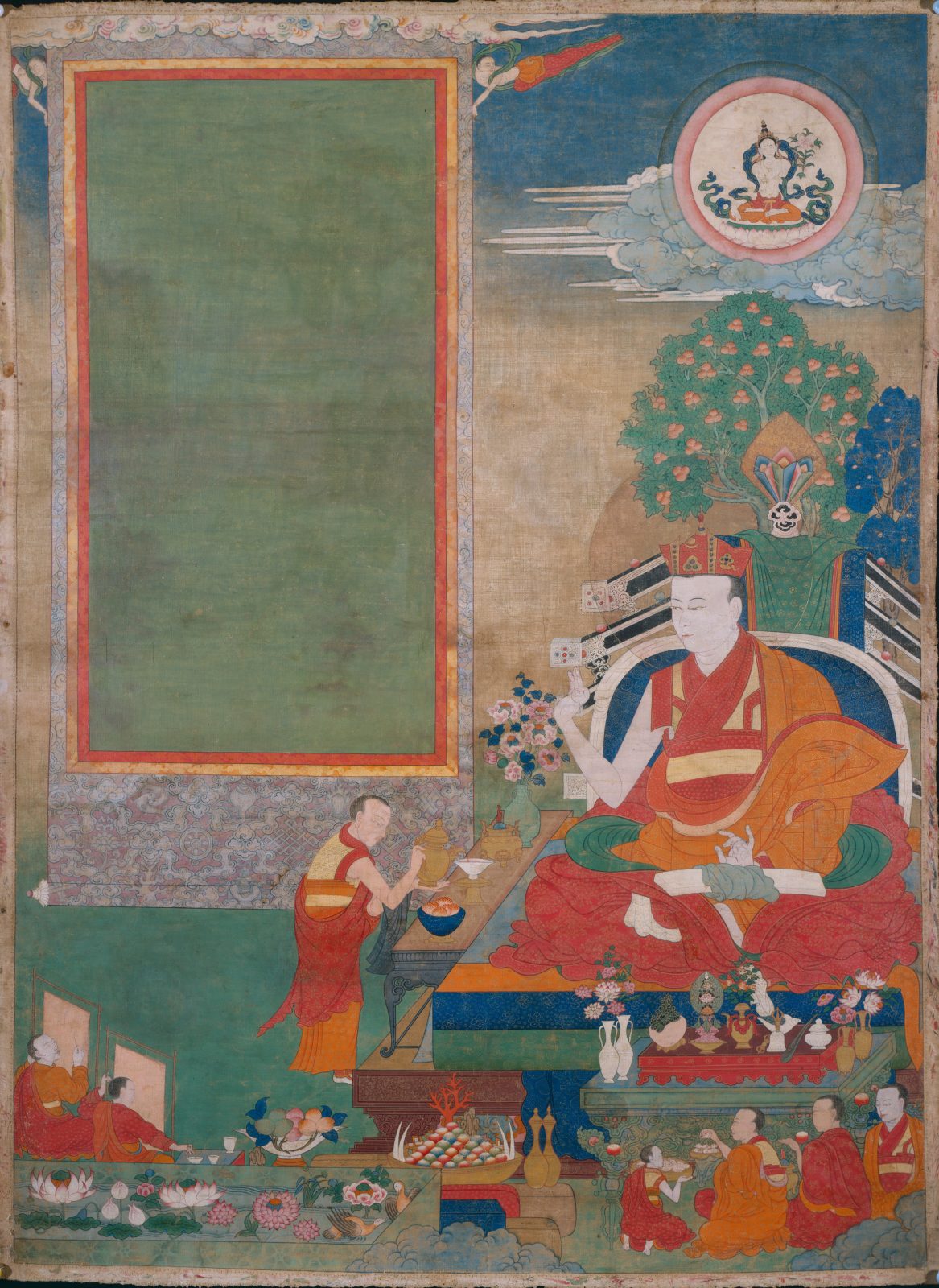
The scholar and artist Situ Panchen (1700–1774) is largely credited with reviving the Encampment Style (Gardri) in his native Kham after it was nearly eclipsed in central Tibet due to civil war. Situ’s role as a commissioner of paintings is commemorated through this portrait of him as patron. In 1736 Situ composed a long inscription, which would have appeared in this painting in the large blank scroll held up by goddesses:
I have followed the Chinese masters in color, in mood expressed, and form, and I have depicted lands, dress, palaces, and so forth as [I have] actually seen in India. Even though all the discriminating skill of Menthang—[both] New and Old—and the Khyen[ri] tradition followers, Jeugangpa and the Encampment masters are present here, I have made [these paintings] different in a hundred thousand [particulars of] style.
Situ names all of the major Tibetan painting traditions (Menri, Khyenri, Jeugangpa, and Encampment) as represented in his work to suggest the all-encompassing nature of his artistic vision. His mention of things he had “actually seen in India” refers to his firsthand experiences with the culture of the Indian subcontinent during his first pilgrimage to Nepal in 1723. Two painters sit in the bottom-left corner, brushes poised, as if awaiting Situ’s instructions.
See full collection record
Learn more about Situ Panchen and his artistic legacy