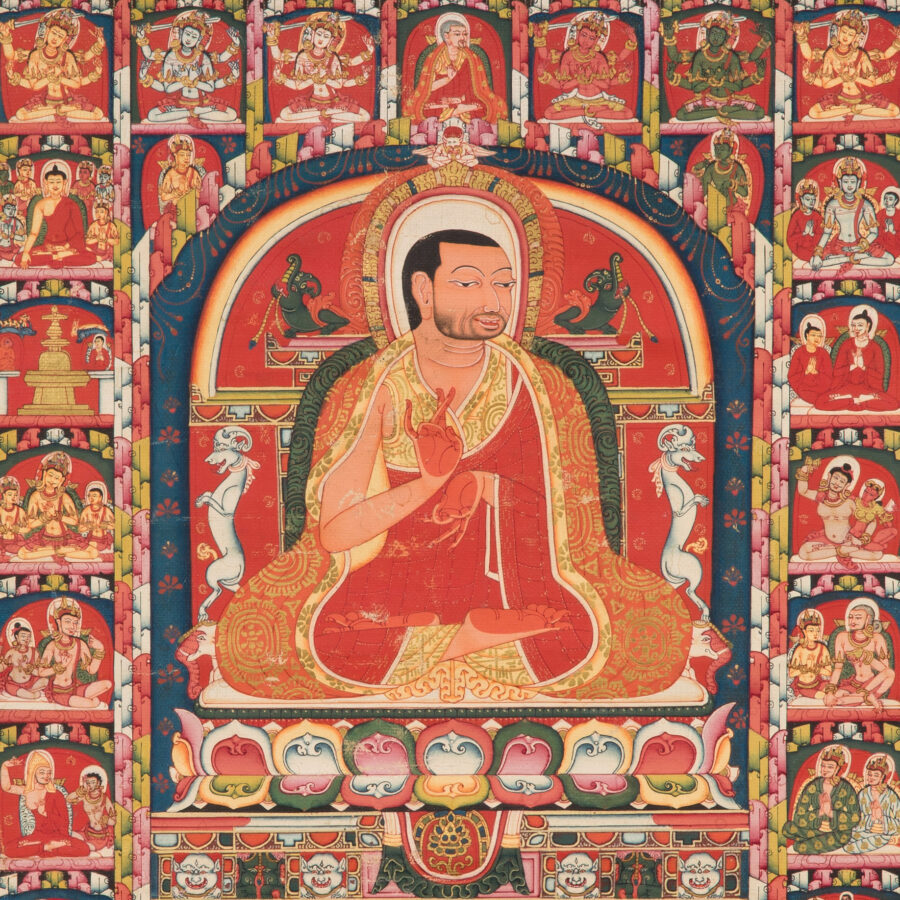
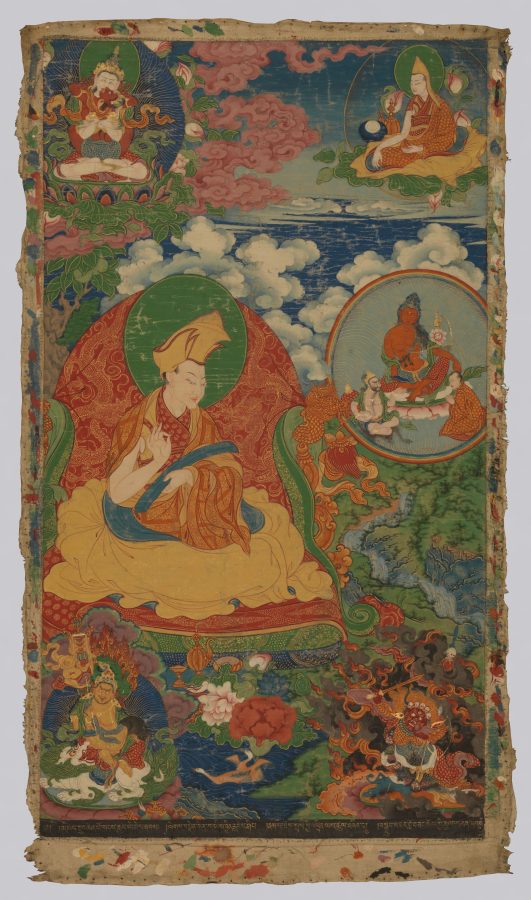
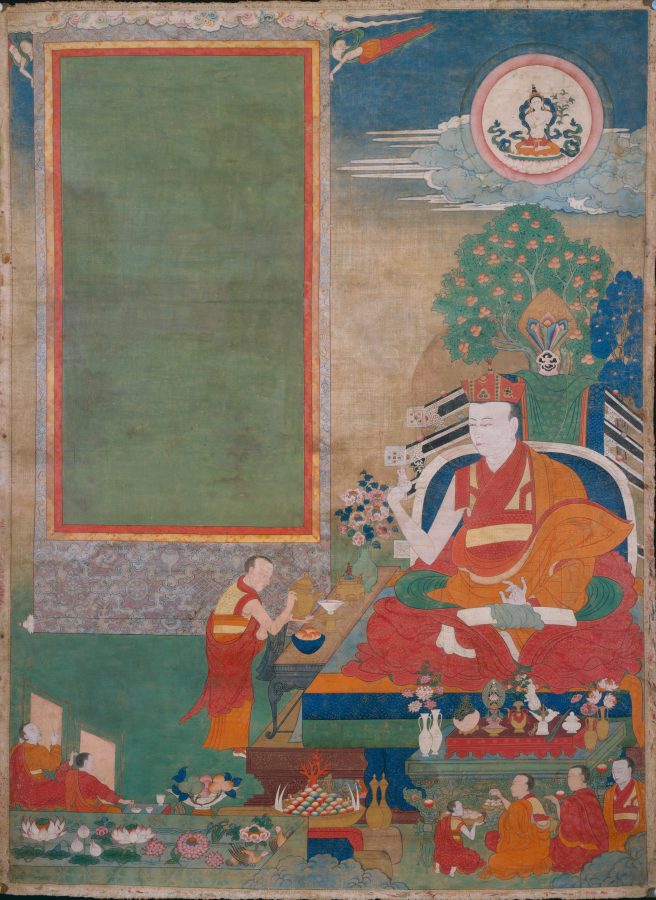
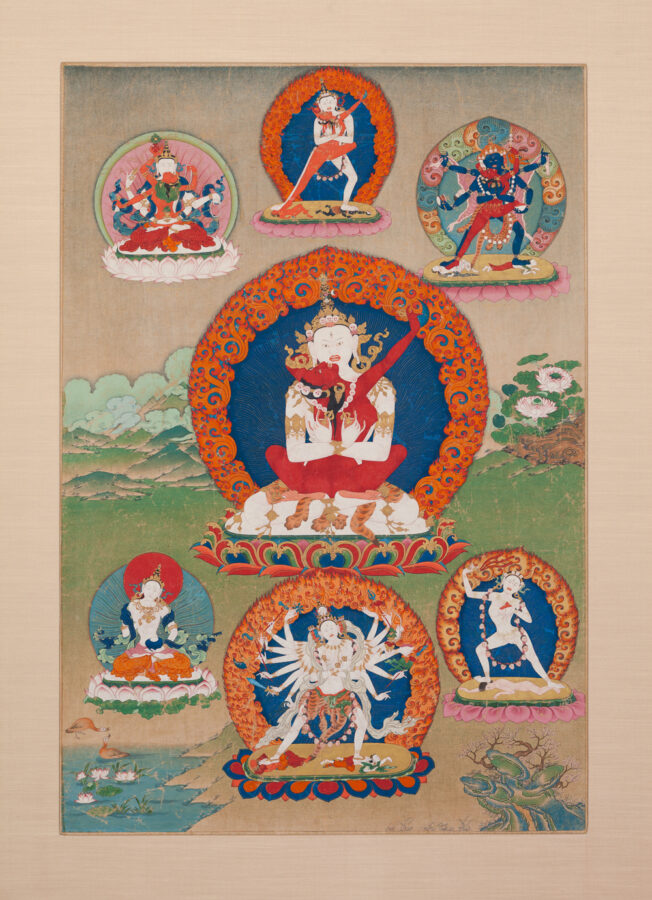
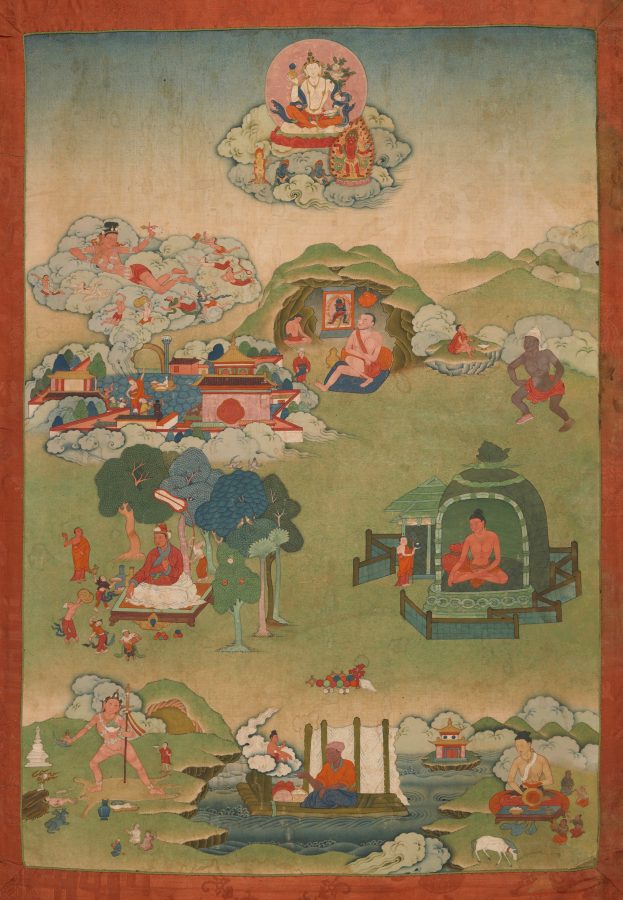
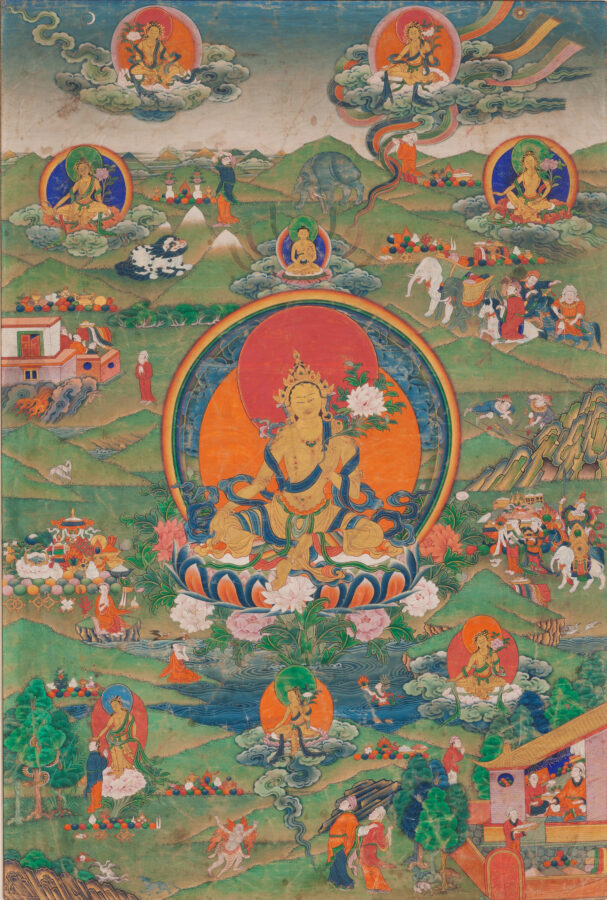
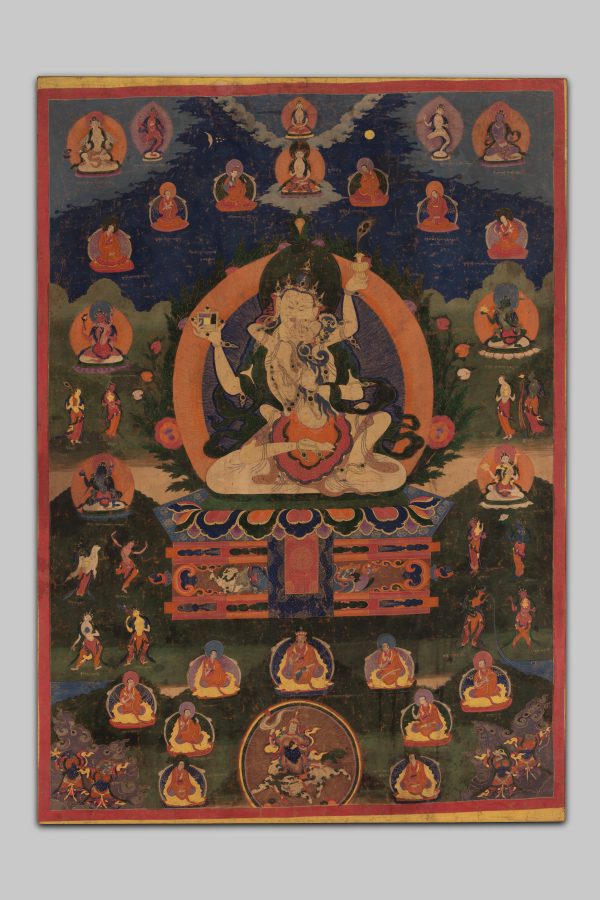
The Kham region in southeastern Tibet gave rise to several artistic traditions, with two prominent ones being the New Gardri, or “New Encampment Style,” and Khamri, or “Kham Style.”

The Kham region in southeastern Tibet gave rise to several artistic traditions, with two prominent ones being the New Gardri, or “New Encampment Style,” and Khamri, or “Kham Style.”
In the eighteenth century, in the New Gardri Style, landscapes gained a greater sense of depth, the relative size of the figures to the landscape became smaller, and large areas of canvas were left unpainted. The Khamri Style is a hybrid of the Gardri and popular Menri styles. Its paintings are usually dominated by the heavily pigmented rich colors of the Menri with certain compositional and landscape elements borrowed from the Gardri Style.
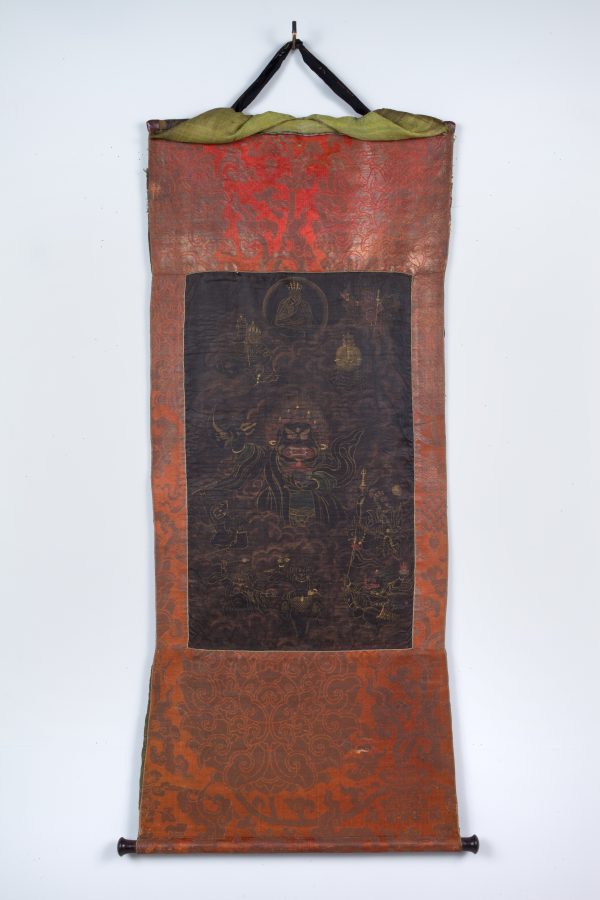
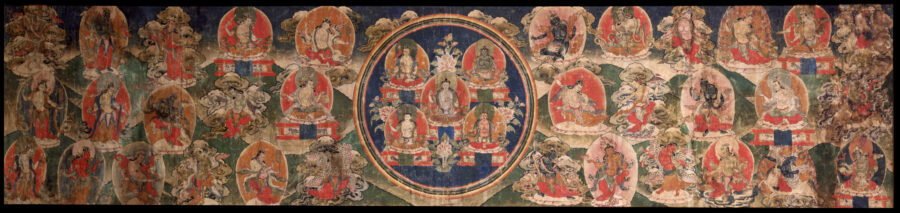
The Amdo region in northeastern Tibet is a large, diverse area that has been home to many artist communities over the centuries. It had five local centers of art, each with its own distinctive traditions. In recent centuries, most of Amdo’s painting styles were derived from the Menri styles rooted in central Tibet. However, over time these styles became distinctively local with their own palette and aesthetic.
To learn more about the cultural region of Tibet, visit Project Himalayam Art.

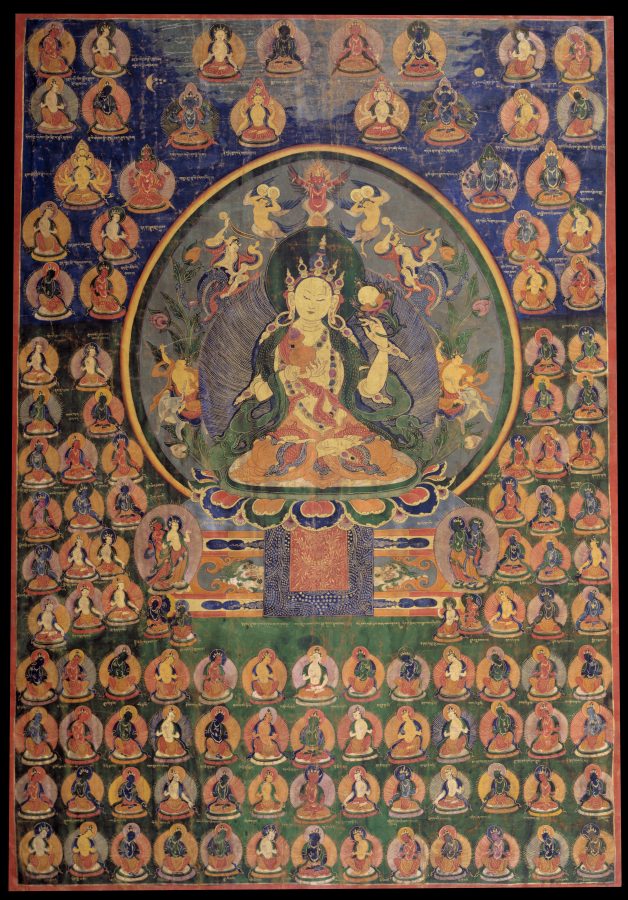



Tenth Karmapa, Choying Dorje
Tibet
17th century
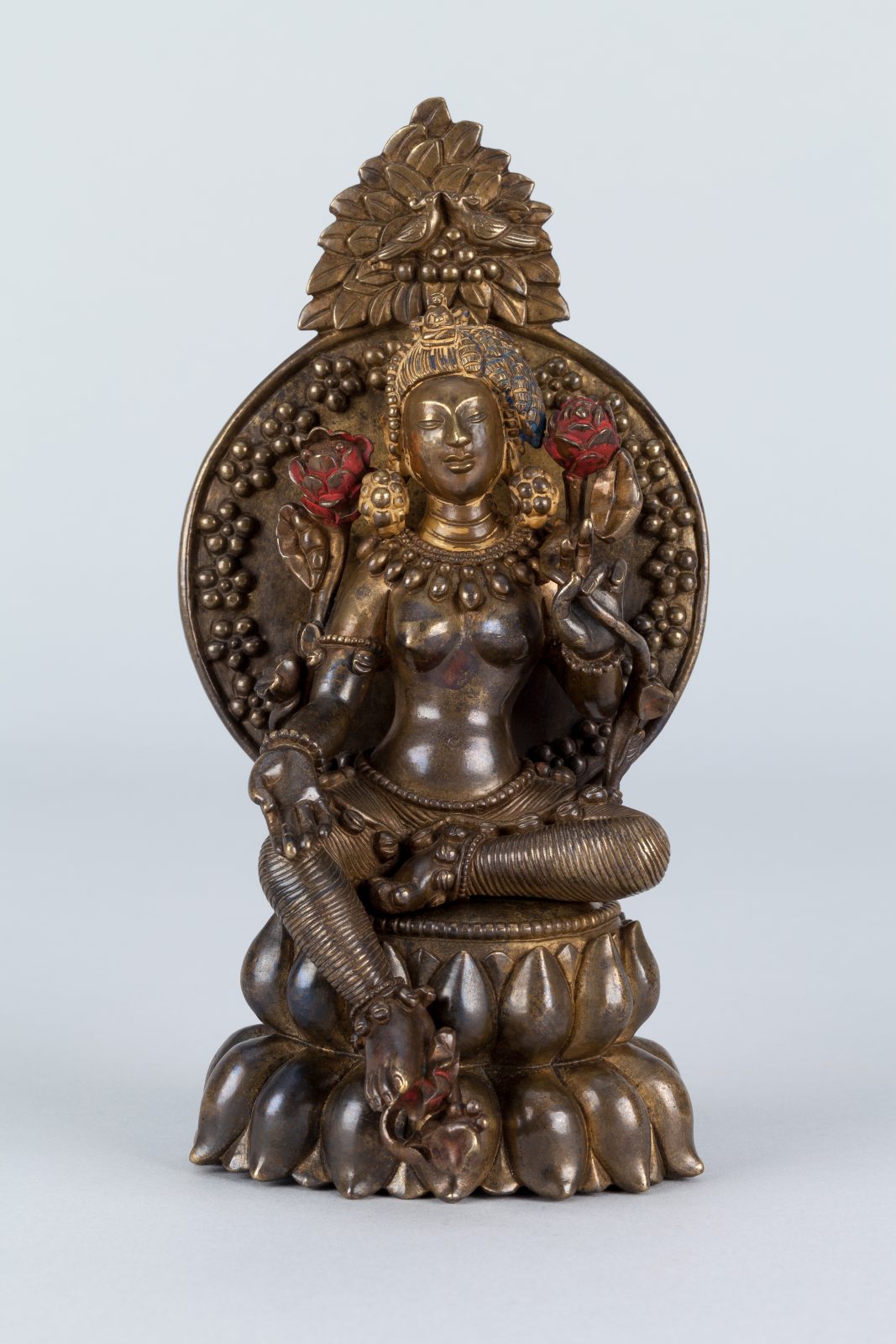


This sculpture is attributed to the hand of Choying Dorje (1604–1674), the Tenth Karmapa, who was head of the Karma Kagyu School of Tibetan Buddhism. An eccentric figure within the history of Tibetan art, the Tenth Karmapa possessed a highly individual style, looking to a range of traditions for inspiration, including ancient metalwork from Kashmir and Swat. These influences can be seen in this sculpture of the goddess Tara in the elliptical shape of the lotus petals that make up her seat and the striated pattern on her tight-fitting clothing, which closely models her form. Other aspects of the Tenth Karmapa’s personal style apparent in this sculpture include the heavy plates of hair piled on the left side of Tara’s head and the plasticity of her ornaments, such as her tremendous earrings and the bulbous bobbles of her necklace. The Karmapa’s love of animals is often subtlety incorporated into his works. Here, a pair of birds can be found nestled in a leafy bower above Tara’s head.
Get the latest news and stories from the Rubin, plus occasional information on how to support our work.