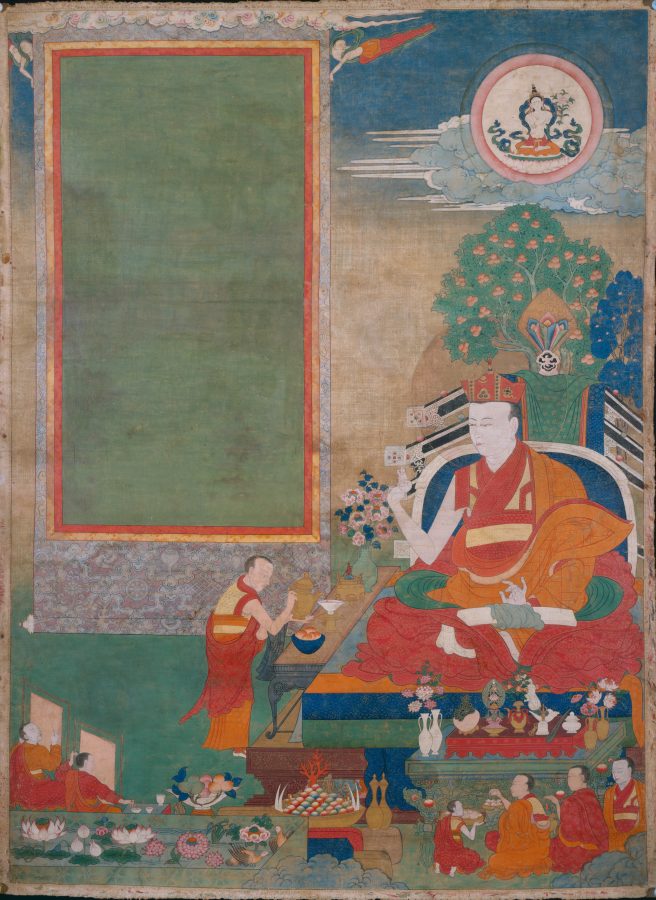
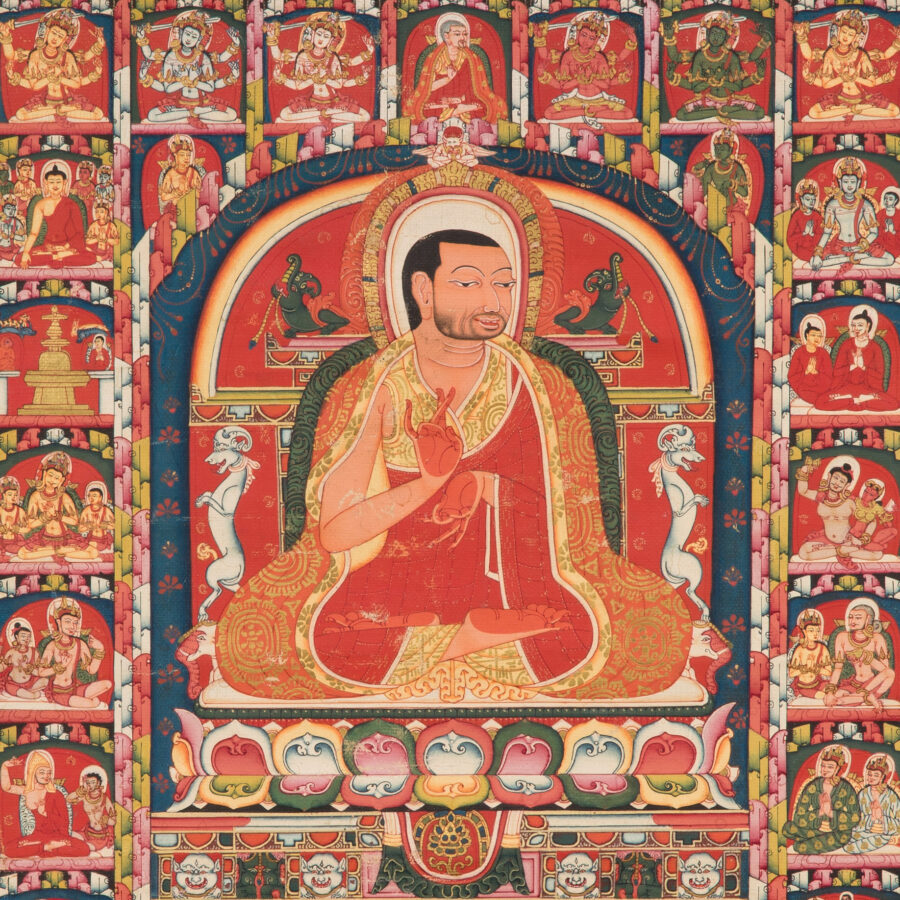
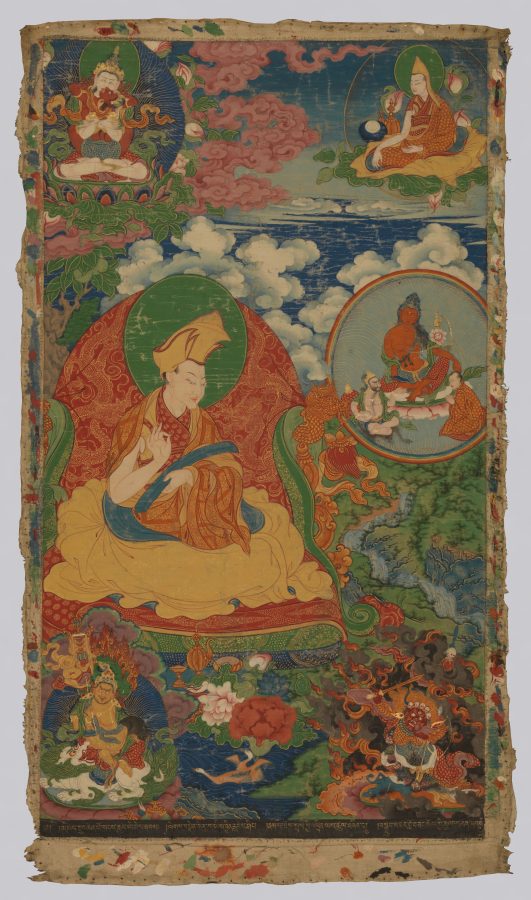
Situ Panchen
Kham Province, Eastern Tibet
18th century
Rubin Museum of Himalayan Art
C2002.8.4
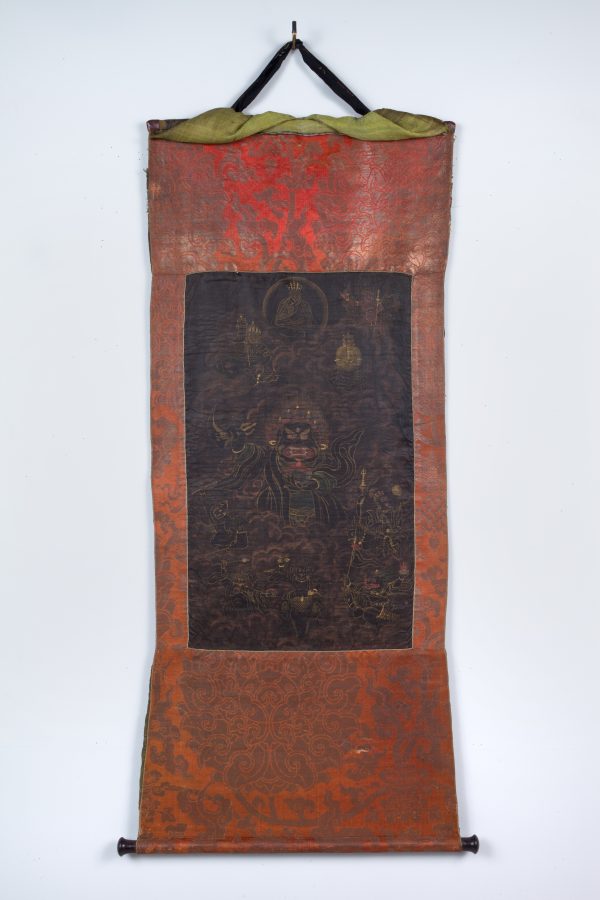
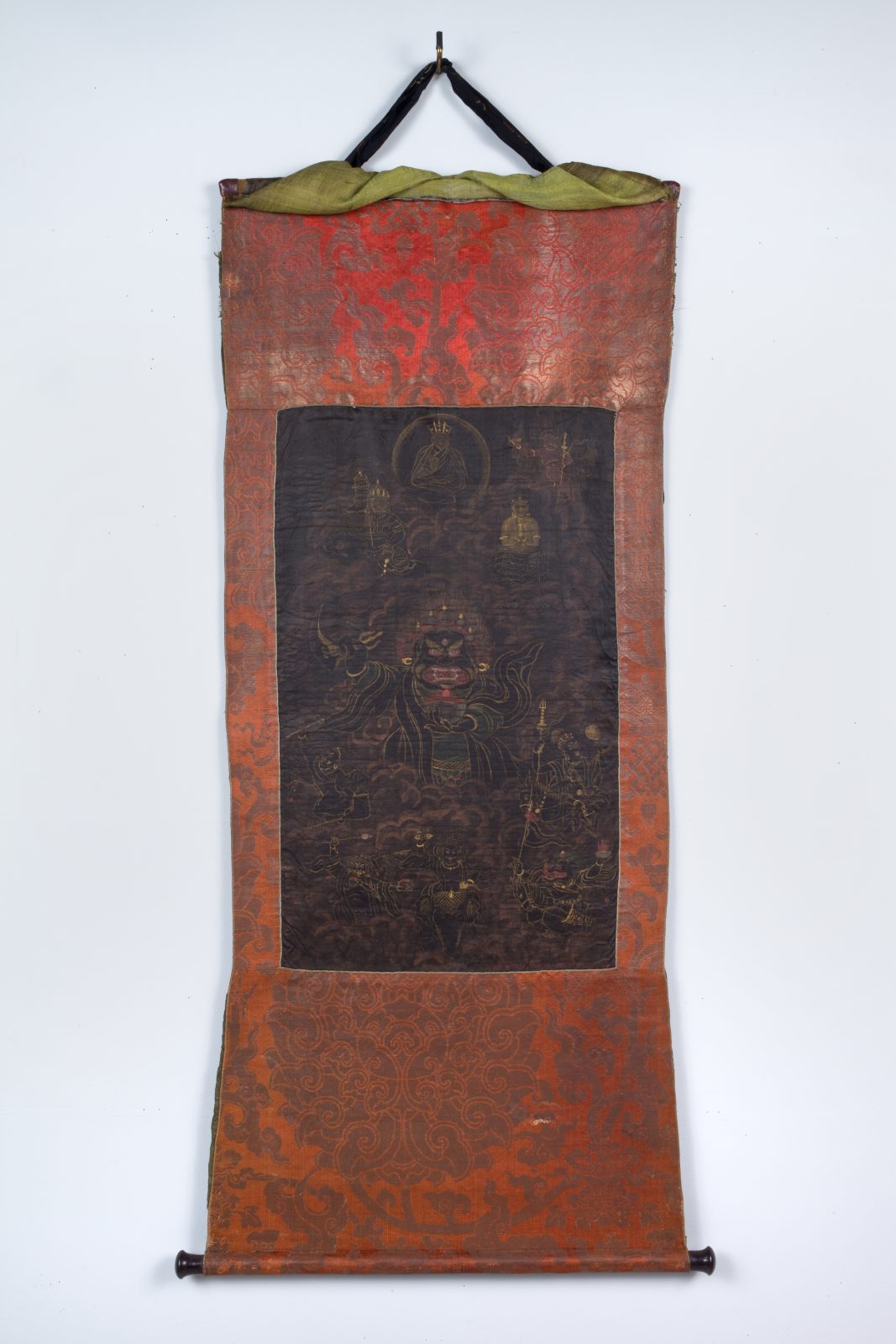
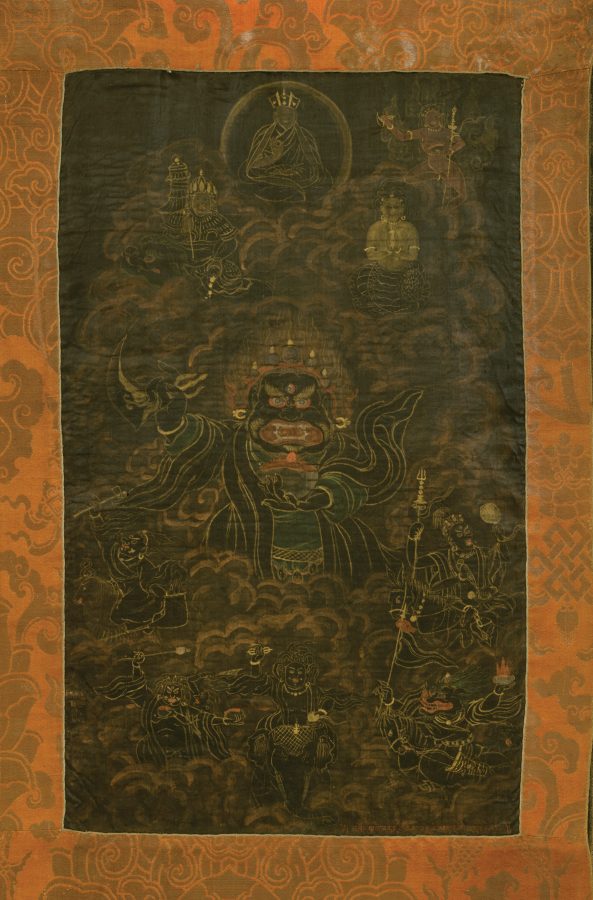
Black Cloak Mahakala is the personal protector of the Karmapas and a special protector of the Karma Kagyu School of Tibetan Buddhism.
Tibetans developed special genres of painting using solid ground colors in black, red, and gold (see for instance the nearby gold-ground painting of Hevajra). They tend to lack solid figural forms or the distinctive green and blue landscape palettes typical of later Tibetan painting. Instead these specialized genres primarily make use of outlines, with energetic lines that emphasize the artist’s brushwork mastery.
Each special format is associated with a specific function and type of deity. Black background paintings are traditionally reserved for wrathful deities and often kept in special chapels dedicated to protector deities. Sometimes black-ground paintings are described in texts as sized with cremation ash and inked with nose blood, but more typically this black effect was achieved with ink made from lamp soot. The gold used to outline the figures and the spare touches of red to create dramatic flames are typical of this genre.
View full collection record