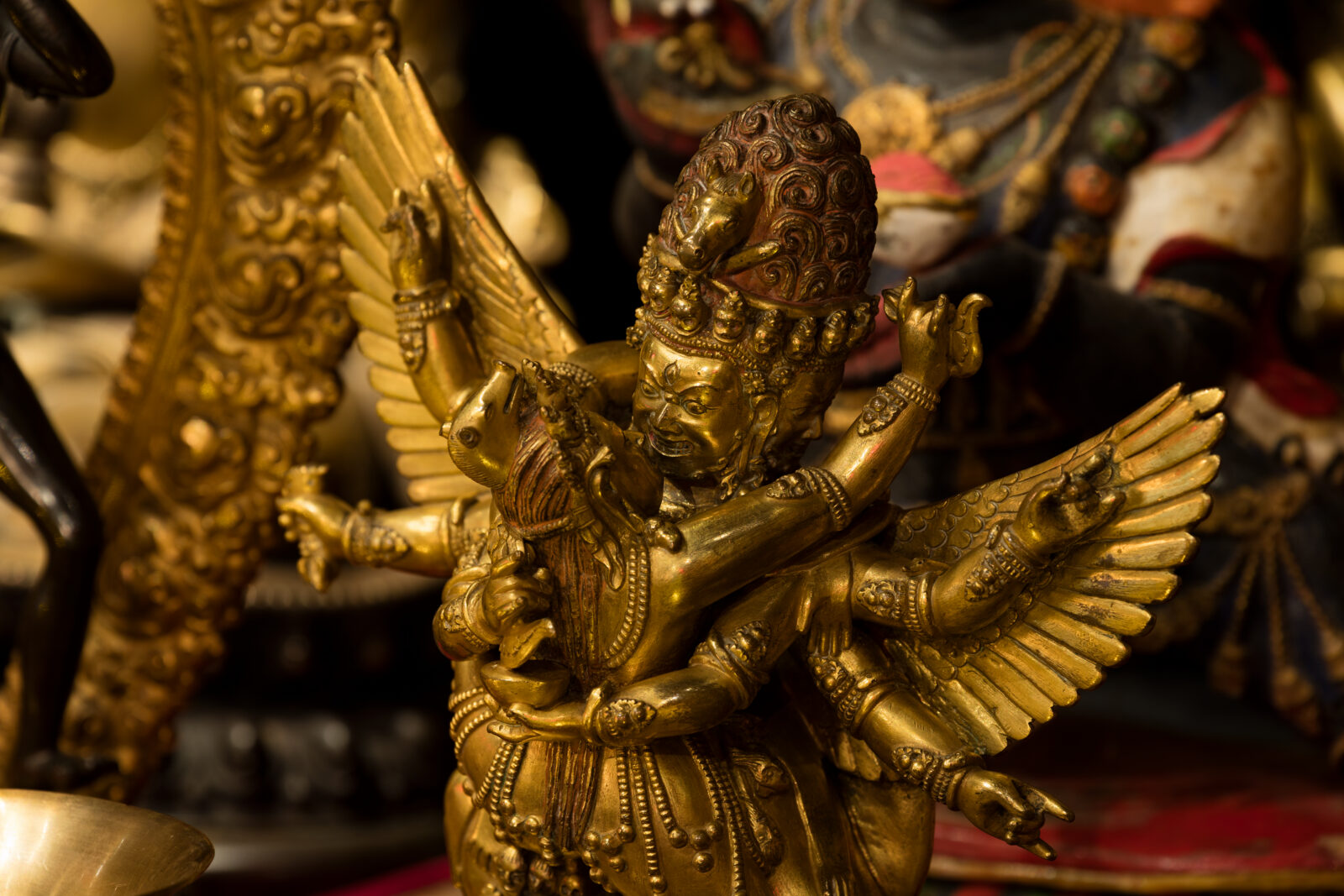
Installation view, Rubin Museum Tibetan Buddhist Shrine Room at Brooklyn Museum, photo by Dave de Armas
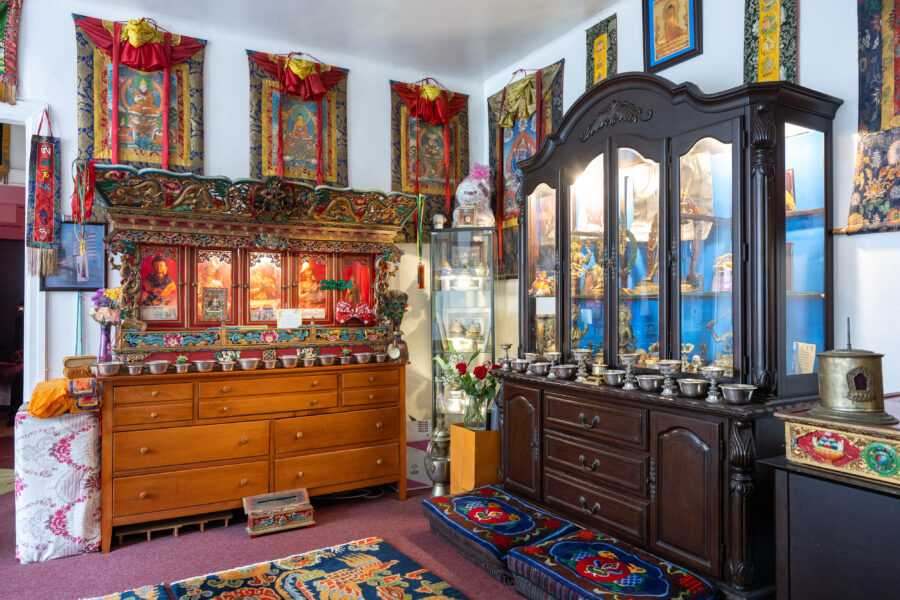
Installation view, Rubin Museum Tibetan Buddhist Shrine Room at Brooklyn Museum, photo by Dave de Armas
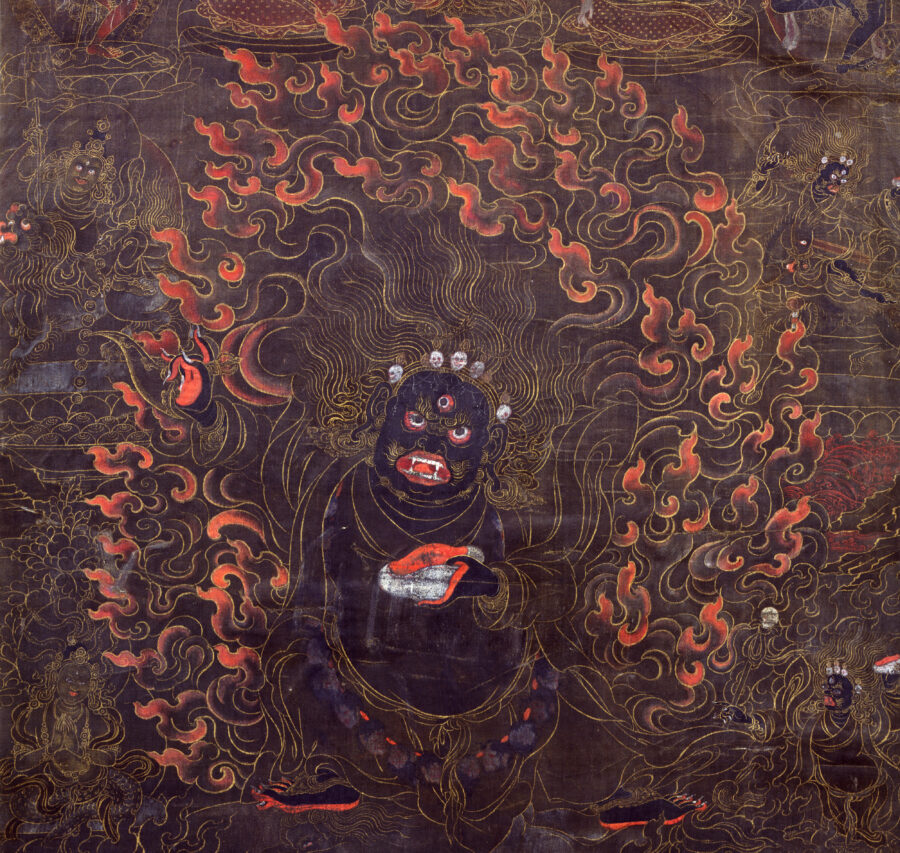
Flaming hair, skull crowns, bared fangs, bulging eyes, and garlands of severed heads are among the frightening features of wrathful deities depicted in Himalayan art. So why are such fearsome figures included in the tranquil space of a shrine room? While these deities might appear scary, some are considered manifestations of wisdom and compassion, and others are protectors and guardians tasked to remove or repel obstacles. The more terrifying and gruesome their appearance, the greater their power.
In Tantric Buddhism, deities can assume a menacing appearance to protect, remove, or overcome mental afflictions blocking practitioners’ path to enlightenment. Others are unenlightened, indigenous gods who are bound by oath to protect Buddhist traditions. In the Bon tradition, similarly to Tibetan Buddhism, wrathful deities can be emanations of or represent local gods and spirits.
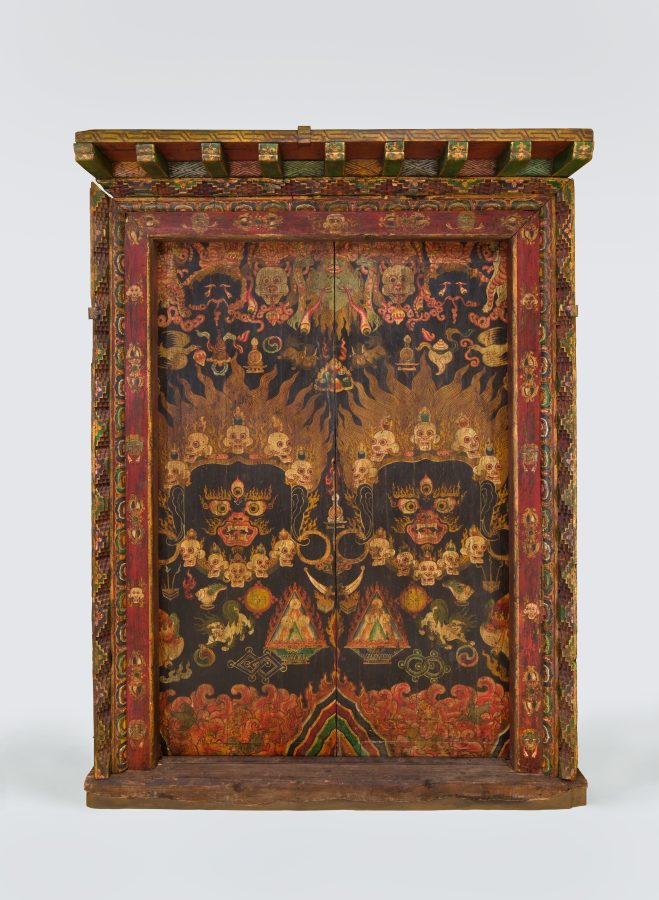
Images of wrathful deities are commonly found at temple entrances, appropriate for guardians of these sacred spaces, or in separate shrines dedicated to their worship. Visitors to the Rubin Museum Tibetan Buddhist Shrine Room installation at the Brooklyn Museum are welcomed by a door bearing depictions of Mahakala—one of the eight great wrathful dharma protectors. The current Shrine Room installation follows the Geluk tradition, one of the four main Tibetan Buddhist traditions.
Explore an art interactive featuring some of these wrathful deities, and read on to learn more about the Rubin’s wrathful objects featured in the Shrine Room.
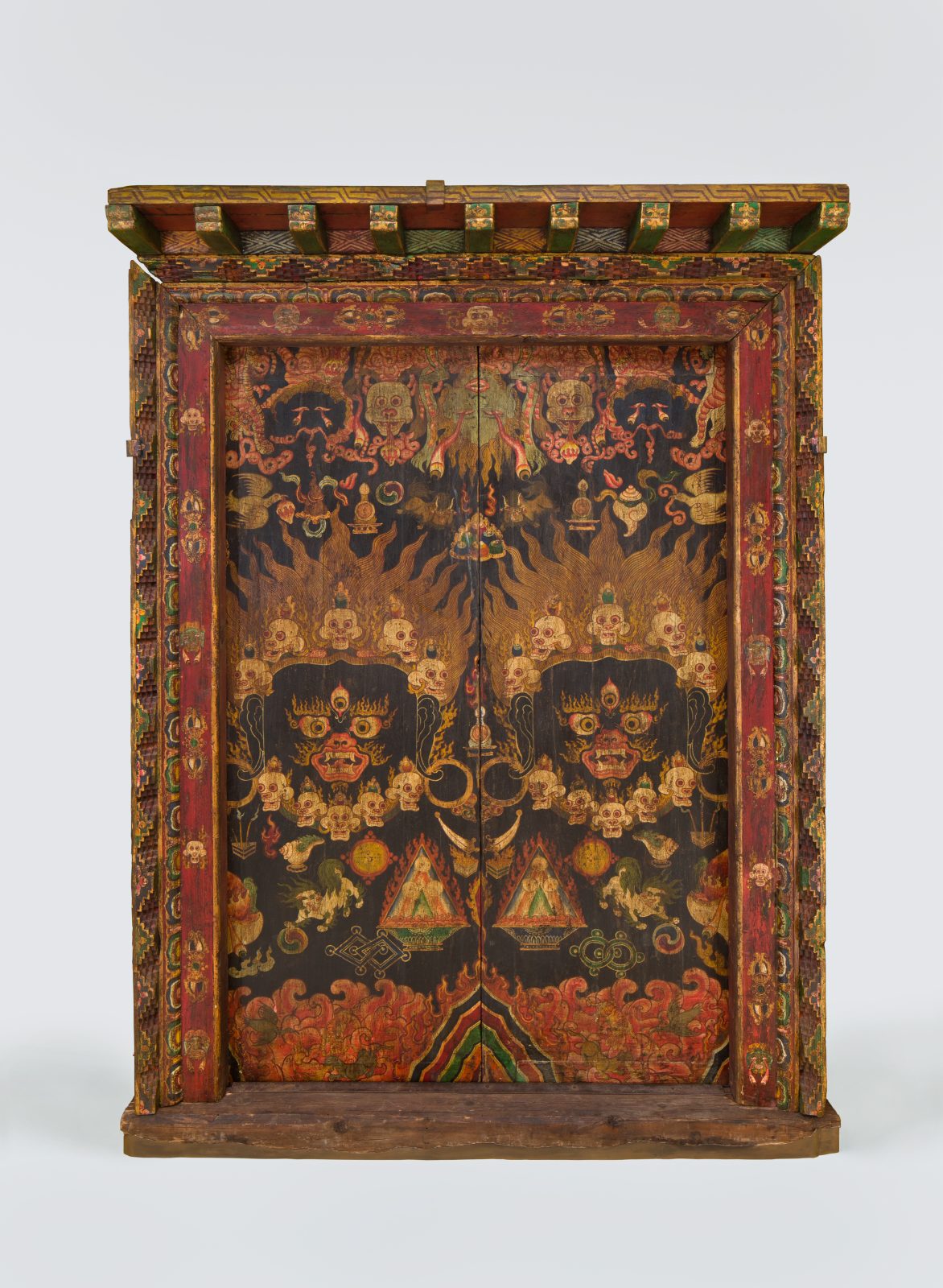
Wrathful Shrine Doors; Kham Region, Eastern Tibet; ca.19th century; Wood, cloth, pigments, gesso, varnish; Rubin Museum of Himalayan Art, Gift of Bob and Lois Baylis; C2014.3a-h
This door probably stood at the entrance to a small shrine dedicated to Mahakala, a fierce protector deity popular in many Tibetan Buddhist traditions. Protector deities often have their own shrines. The door consists of two panels framed by a lintel and jamb with decorations typical of wooden portals to protector chapels. The lintel and jamb have multicolored and layered “checkered” carvings and images of vajras and skulls. The decoration on the panels depicts faces of Mahakala and offerings like barley cakes (tormas). Such images served as offerings to the deity and indicated a restricted access to the chapel.
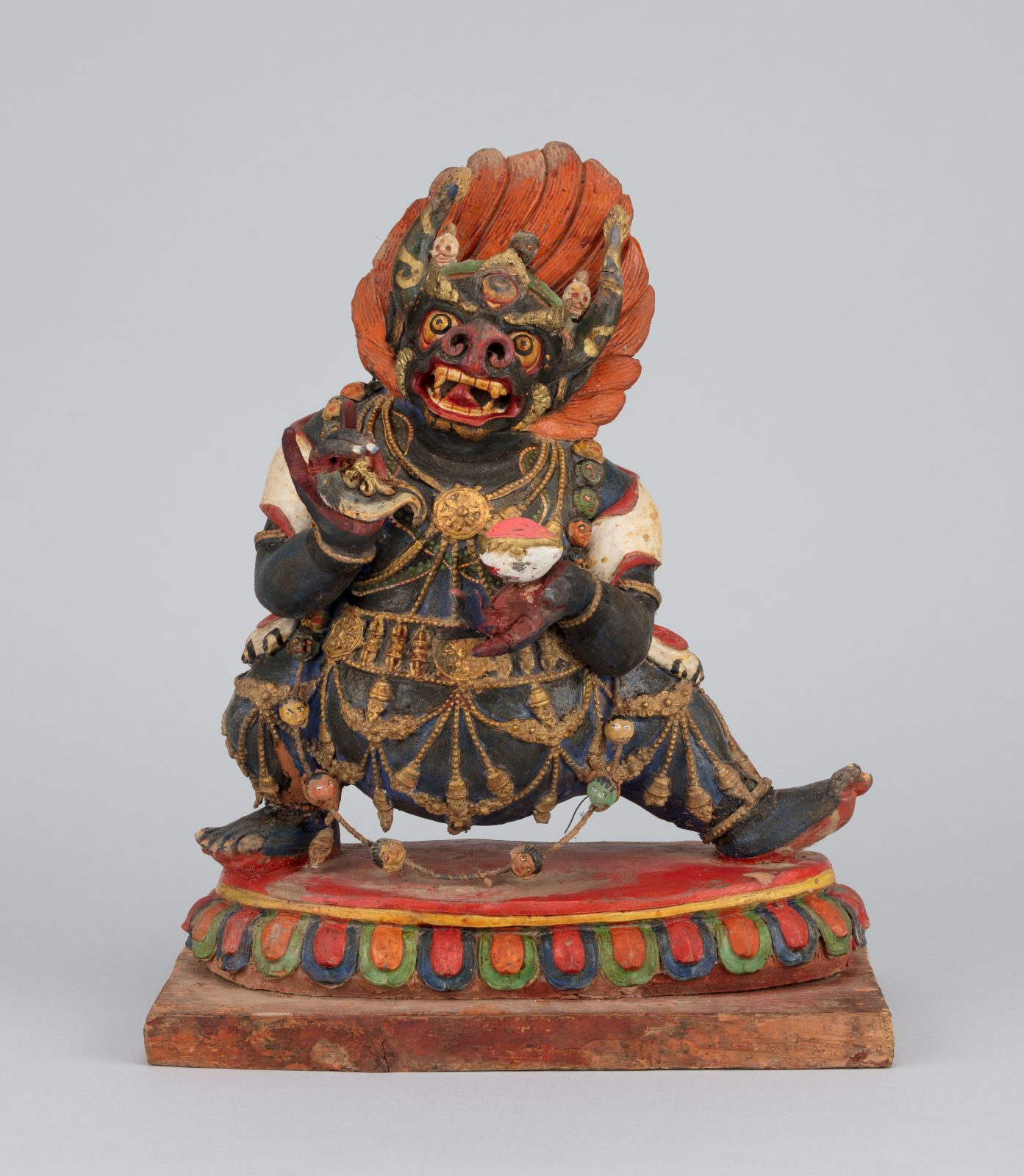
Vajrabhairava; Mongolia; ca. 19th century; Clay with pigments; Rubin Museum of Himalayan Art; C2006.52.8
Vajrabhairava is a prominent deity in the Sakya and Geluk Tibetan Buddhist traditions. He is considered to be the wrathful emanation of Manjushri, the bodhisattva of wisdom. He took on this form by reflecting back the terrifying nature of Yama, lord of death, thus overwhelming and subduing Yama, who became a protector of the Buddhist faith. In Vajrabhairava, Yama’s form is topped by the head of Manjushri, signifying the deity’s true nature.
Explore another sculpture depicting Vajrabhairava with his consort Vajravetali in this art interactive.
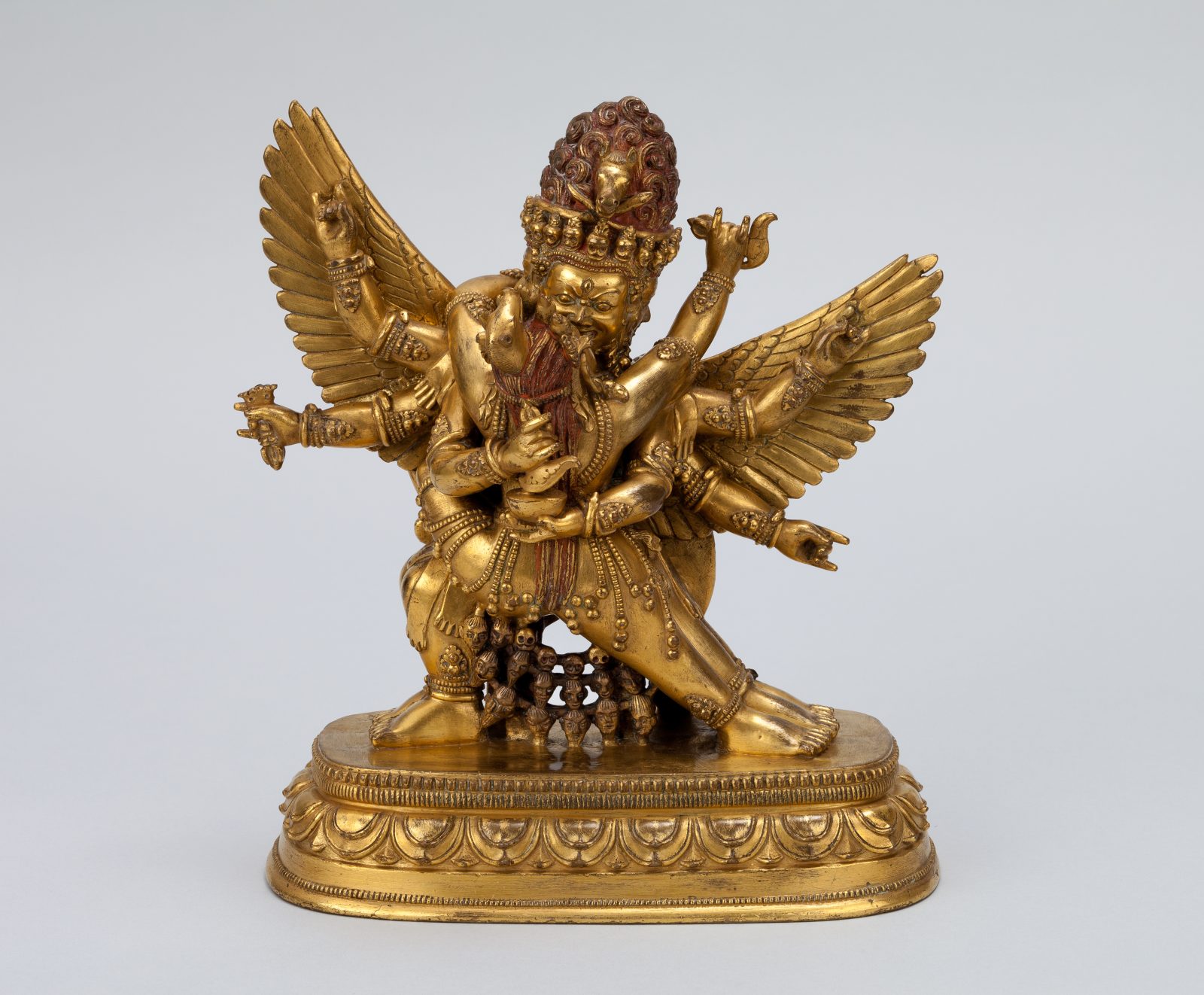
Hayagriva with consort; Mongolia; late 18th - early 19th century; Gilt copper alloy; Rubin Museum of Himalayan Art; C2005.12.2
Hayagriva can be identified by the horse’s head jutting from the top of his main head. This sculpture portrays Hayagriva embracing his consort Vajravarahi, or Diamond Sow, who is distinguished by a sow’s head protruding from the side of her main head. A curved knife in her right hand signifies her power to sever ignorance. Their dynamic composition conveys intense energy and transformative wrath, essential aspects of these deities’ roles as fierce protectors of Buddhism.
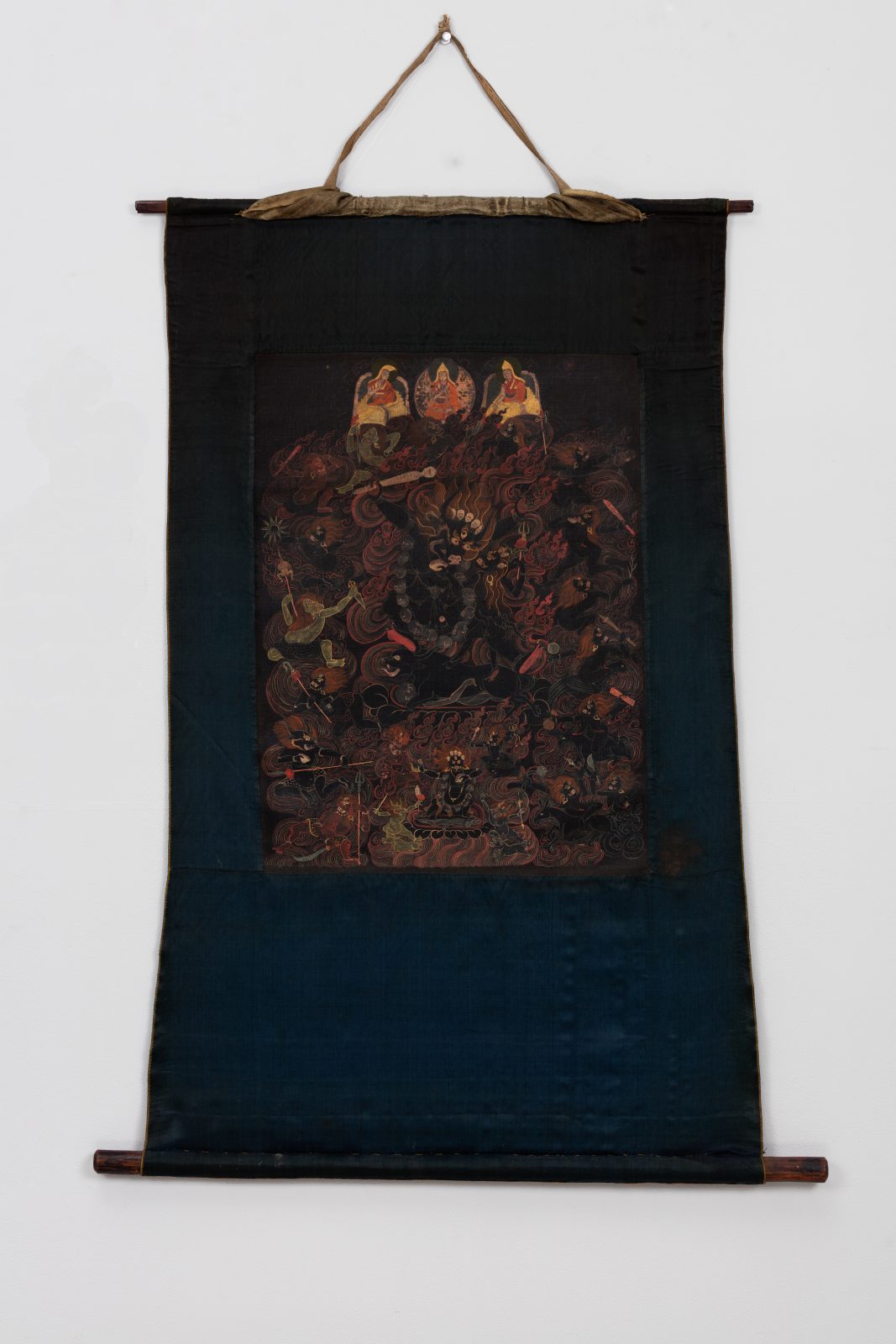
Yama Dharmaraja; Mongolia; 19th century; Pigments on cloth; silk mount; Rubin Museum of Himalayan Art, Gift of Shelley and Donald Rubin; C2003.50.10
Yama, the lord of death, is depicted here in a quintessentially wrathful form, with flaming hair, a garland of severed heads, and a crown of skulls. Yama is one of the primary protector deities of the Geluk tradition, which became popular in Mongolia after the Mongolian ruler Altan Khan (1507?–1582) invited a gifted Gelukpa monk to Mongolia in 1577. The monk, who taught and converted the khan, was given the Mongolian title Dalai Lama. As a protector deity, Yama is considered the defender of the Geluk tradition in particular. The painting depicts him brandishing a skull club and a noose while standing on a buffalo, while another form of Yama, armed with a chopper and a skull cup, stands on a corpse below.
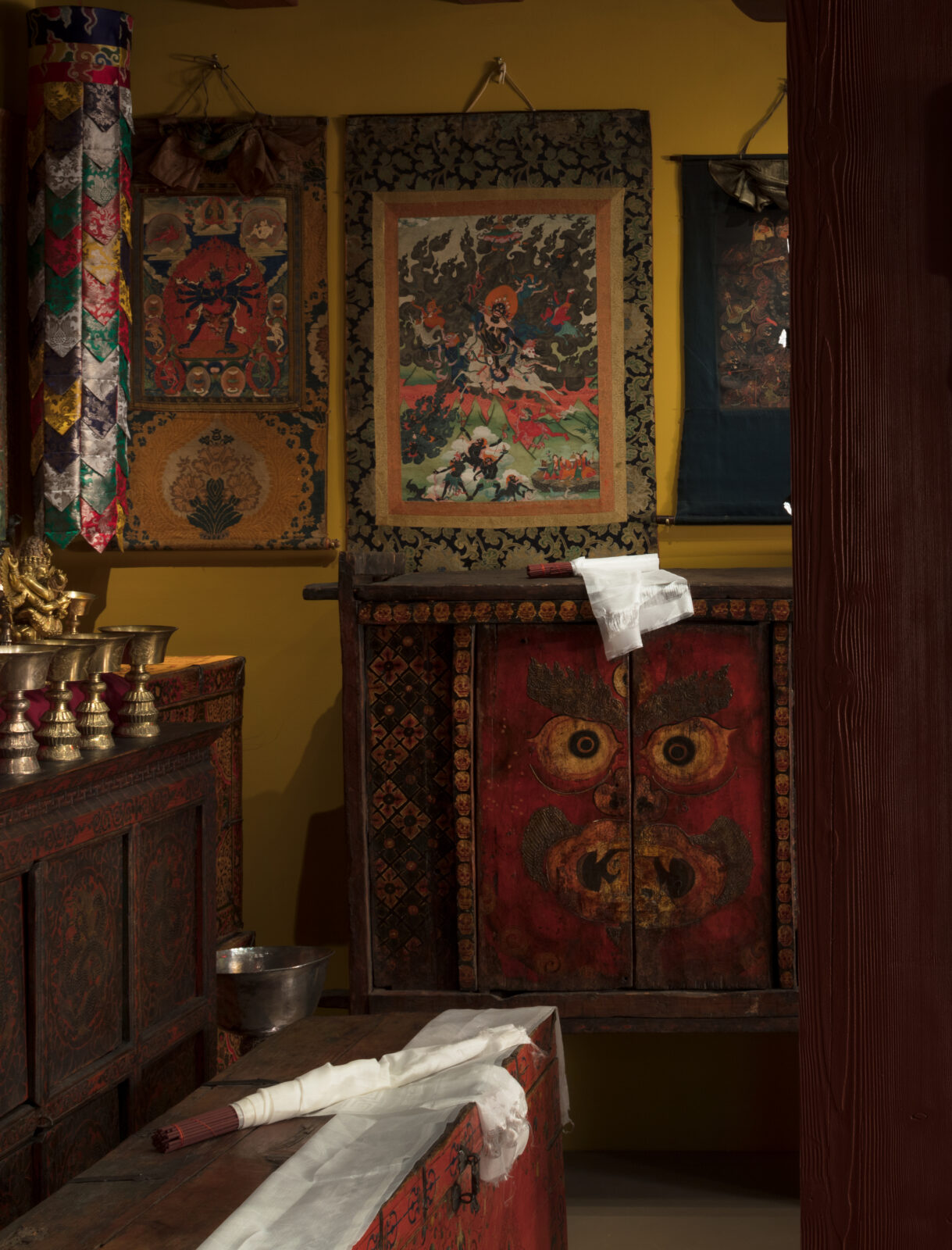
Installation view, Rubin Museum Tibetan Buddhist Shrine Room at Brooklyn Museum, photo by Dave de Armas
Shri Devi in the form of Magzor Gyalmo, or the Queen Who Repels Armies, is a wrathful protector deity popular in Tibetan Buddhist traditions, including the Geluk tradition.
The painting depicts her surrounded by a retinue and enveloped in dramatic smoky flames as she rides a mule with a bridle of snakes and traverses a sea of blood. Adorned with a garland of severed heads, she holds a club in her right hand and a skull cup in her left. In the lower left of the composition, her wrathful attendants have a field day full of gory action, while in the lower-right corner four women relax among peaceful ordinary objects, such as an incense burner, tea or beer pitcher, large plate of food, and various other vessels.
Watch a video with Rubin Senior Curator Karl Debreczeny to learn more about Makzor Gyelmo.

Christina Watson is the digital editor at the Rubin Museum of Himalayan Art.
Get the latest news and stories from the Rubin, plus occasional information on how to support our work.