The Mandala Lab is inspired by a particular mandala in the Rubin’s collection, the Sarvavid Vairochana Mandala.
Our Inspiration

The Mandala Lab is inspired by a particular mandala in the Rubin’s collection, the Sarvavid Vairochana Mandala.
Mandalas are teaching tools that help Buddhist practitioners gain a clearer understanding of their world. With the help of a trusted teacher, some practitioners use mandalas like the one that inspired this interactive experience to learn how to confront and transform five mental states (kleshas). Potentially harmful feelings of pride, attachment, envy, anger, and ignorance can be turned into wisdoms.
This emotional transformation, which we might think of as a series of aha moments, is necessary to reach the Buddhist state of enlightenment and can take lifetimes to achieve. The Mandala Lab draws on one aspect of the rich teachings associated with the mandala to promote a better understanding of ourselves and others. See, smell, touch, and breathe your way through a series of exercises to contemplate your emotions.
Understanding the truth about life—and all of existence—requires a little help.
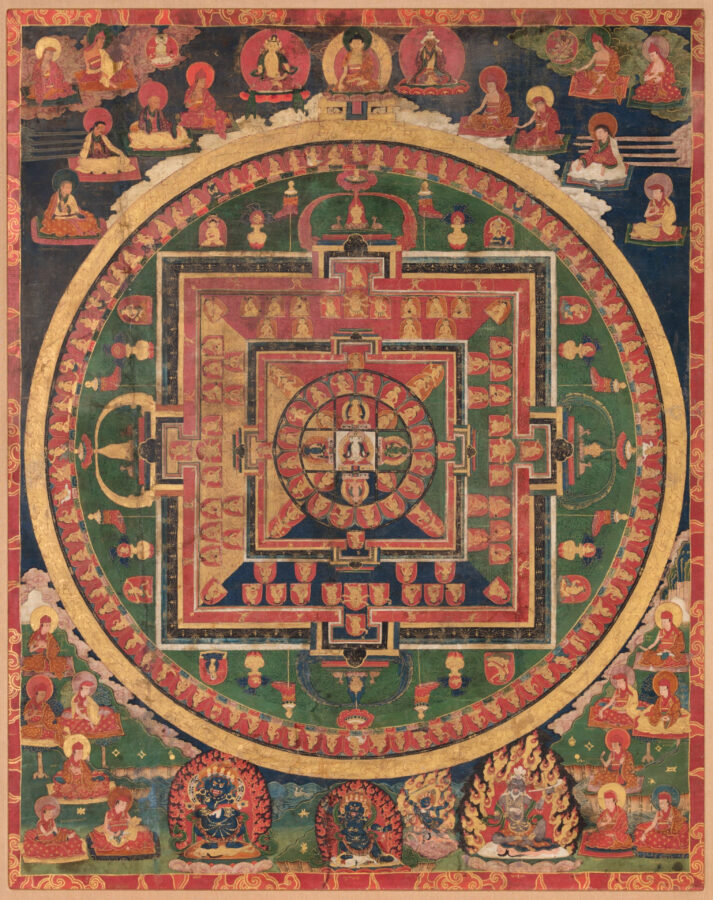
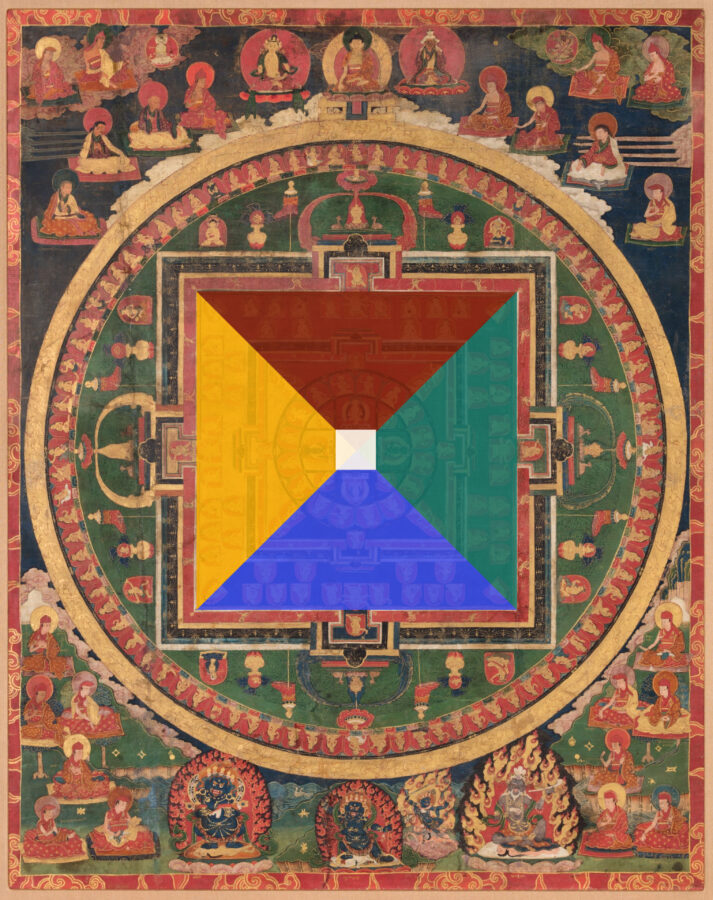
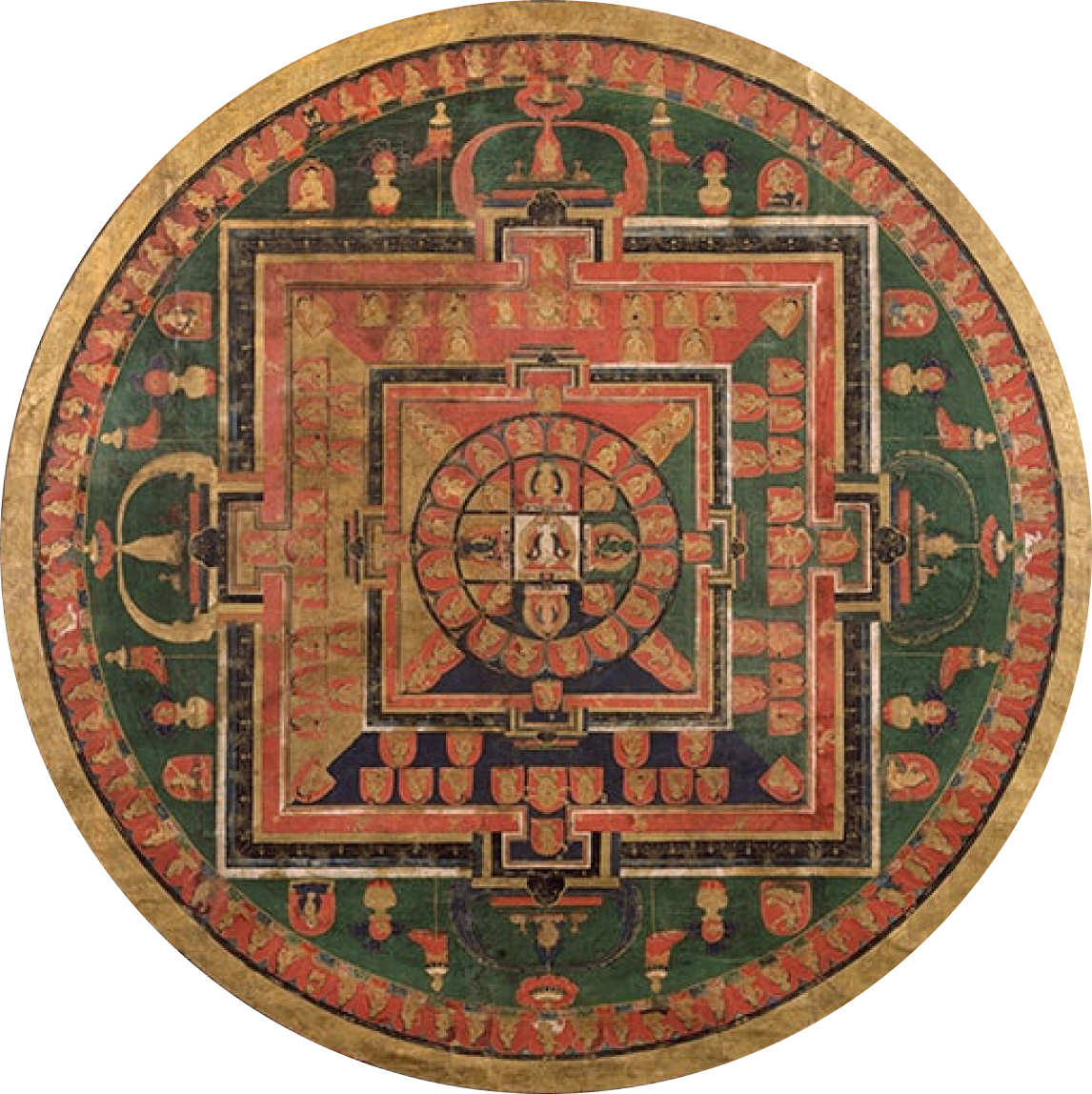
The Sarvavid Vairochana Mandala features an outer circle surrounding a perfect square, and four quadrants placed around an inner circle. Each colored quadrant represents a particular earthly element, cardinal direction, and buddha, or enlightened being. Buddhas sit at the tips of the triangular quadrants, and together with the white central figure of Vairochana they represent the Five Wisdom Buddhas. They help practitioners transform the five afflictive emotions of pride, anger, attachment, envy, and ignorance that cloud our worldview into the wisdoms and skills necessary to reach enlightenment. Each emotion and its corresponding wisdom serve as inspiration for the Mandala Lab.
Sarvavid Vairochana Mandala; Tibet; 17th century; Pigments on cloth; Rubin Museum of Art; Rubin Museum of Art, Gift of Shelley and Donald Rubin; C2006.66.346
Discover the five emotions, or kleshas, that form the foundation of the Mandala Lab and learn the wisdom that practitioners gain from working with them. In order to learn from emotions, it first requires recognizing them.
Recognizing our best qualities can be a source of power, but from a Buddhist point of view, it can translate to an excessive self-focus that stops us from seeing ourselves and those around us clearly. Pride can cause harm when it leads to devaluing others or even oneself.
Imagine someone who believes they are better than everyone else. You might describe this person as self centered. Their sense of self affects their way of interacting with others.
How does your sense of pride impact your behavior?
Changing our behavior or worldview requires work and sustained practice. Buddhist practitioners recognize the potential for harm inherent in pride and try to transform it. They aim to cultivate equanimity, the ability to see all things as equal. From this perspective, accomplishments and failures are one and the same. By shaking pride’s hold on us, we can learn to suspend our judgments and see ourselves and one another with a sense of equality.
According to psychology, attachment can create powerful bonds, but in the Buddhist worldview, attachment is a cause of suffering. It can appear as a sense of infatuation or craving, whether it brings us joy or harm. Imagine a smell that you love or hate—just thinking about it might trigger a memory or emotional reaction. The strong thoughts and feelings you attach to a stimulus—whether new or familiar—may make it difficult to respect someone else’s dissimilar experience.
How do your attachments shape your worldview?
To let go of attachment, Buddhist practitioners cultivate the ability to see the world without bias. With discerning wisdom, they acknowledge how attachment clouds their judgment, and they relinquish its grip on their point of view. They reframe their biased responses to everyday encounters and see things from a new outlook. From this perspective, people can be respected when they have radically different responses to the same stimuli. Empathy grows when we create space for a multitude of reactions and viewpoints.
Envy, or jealousy, is a fear-based stress response in our bodies. It can be spurred by a painful or resentful awareness of an advantage enjoyed by someone else that we want for ourselves, and it might manifest as a sense of competition. We may feel left behind or like underachievers. This mode of comparison can alter our thinking and even stop us from taking steps toward our own success.
How does envy influence the way you treat others?
Instead of coveting another person’s success, Buddhist practitioners learn to acknowledge it as worthy of joy and appreciation. They take swift action in their own lives without making comparisons. This all-accomplishing wisdom shows that replacing envy with positive actions collectively contributes to a greater good. Collaboration becomes possible, leading to a stronger sense of community.
Are you ready to fight? That’s what our brains say when we feel anger. It can arise when we are confronted by something we perceive as unfair, unjust, or unacceptable. Imagine anger as a roaring waterfall; the sound and sight of the water may be all-consuming, obscuring the rock wall behind it. Anger can prevent us from seeing the bigger picture, leading to aggressive, harmful actions.
How does anger fuel your actions?
When properly harnessed, anger can provide crystallizing focus and propel change. In the face of anger, Buddhist practitioners cultivate patience to gain a new perspective. They use the sharp, piercing qualities of the emotion to cut through confusion instead of causing harm to others. This awareness, known as mirror-like wisdom, reveals a clear reflection of the situation or condition.
You don’t know what you don’t know. Ignorance rears its head when we cut ourselves off from our feelings. Lacking awareness can lead to negative actions toward others and limit our personal growth. Whether we willingly choose to disregard the facts or are caught unaware, ignorance prevents us from seeing situations exactly as they are.
How does ignorance limit your ability to grow?
Wisdom itself is the antidote to ignorance. When practitioners achieve all-accommodating wisdom, they experience the beneficial aspects of each emotion and develop an unbiased worldview. They see situations without confusion and are no longer susceptible to the tricks our minds play when clouded by emotion. Without this awareness, it is impossible to attain the other wisdoms explored in the mandala. Becoming more aware of our emotions and their impact can lead to increased empathy.
Get the latest news and stories from the Rubin, plus occasional information on how to support our work.