Originally conceived of as a museum installation and then a traveling pavilion, Mandala Lab Workshops provide five unique activities to offer reflection and contemplation for participants. Blending art and science, each activity is designed to provide playful provocation of the themes explored. Dive into the emotions explored in our workshops.
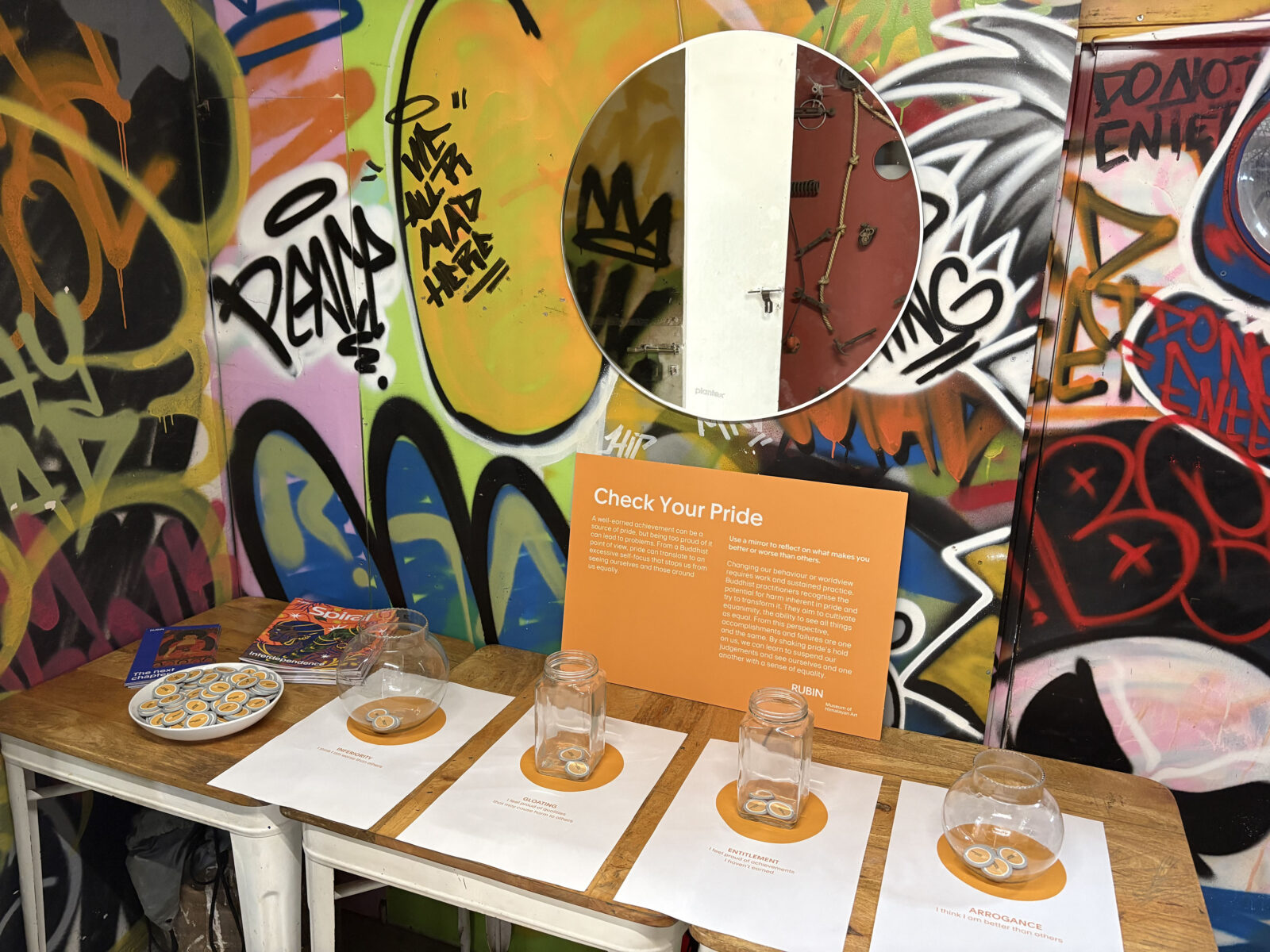
Recognizing our best qualities can be a source of power, but from a Buddhist point of view, it can translate to an excessive self-focus that stops us from seeing ourselves and those around us equally.
Acknowledging our pride can be tough. In the Mandala Lab Workshop, participants can select the form of pride that appears most often in their life by dropping a token into the appropriate receptacle. The noise the token makes when they make this honest acknowledgement alerts them to the fact that we are all the same.
Changing our behavior or worldview requires work and sustained practice. By shaking pride’s hold on us, we can learn to suspend our judgements and see ourselves and one another with a sense of equality.
According to psychology, attachment can create powerful bonds. But in the Buddhist worldview, if we are attached to or conditioned by certain outcomes, it ultimately leads to dissatisfaction.
Attachment can appear as a sense of infatuation or craving, even loathing. Our responses are often habitual, without full awareness of the context.
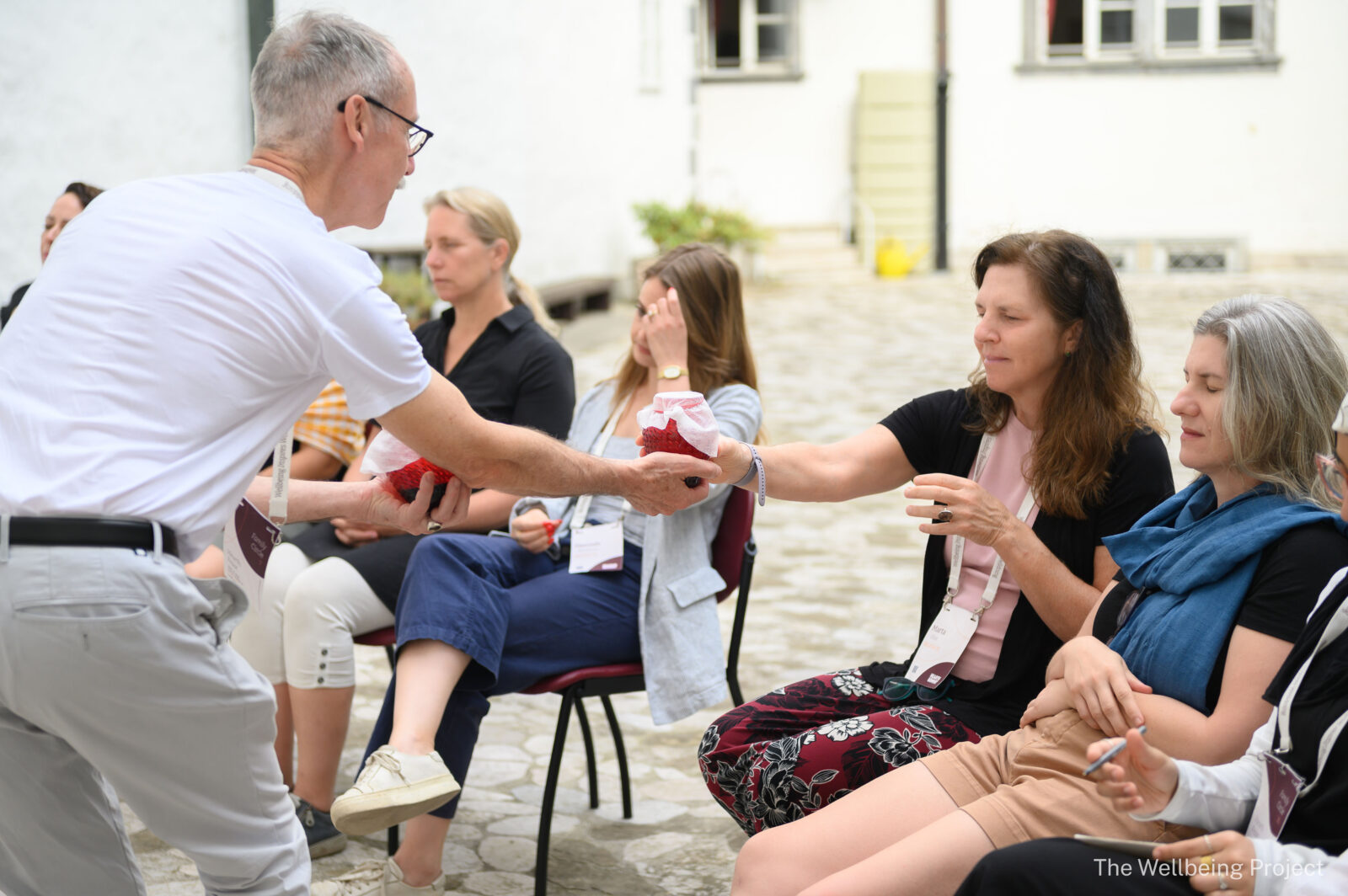
In the Mandala Lab workshop a scent is shared with the participants and they are invited to reflect on the emotions and memories they attach to this smell. What feelings arise? What associations are connected to this smell and these feelings?
Strong thoughts and feelings we attach to a stimulus (like a scent, whether new or familiar) may make it difficult to respect someone else’s differing experience. By appreciating that other people may have very different reactions to the self-same molecular input, we can take the first step toward empathy.
To let go of attachment, Buddhist practitioners cultivate the ability to see the world without bias. With discerning wisdom, they acknowledge how attachment clouds their judgment, and they relinquish its grip on their point of view. They reframe their biased responses to everyday encounters and see things from a new perspective. Empathy grows when we create space for a multitude of reactions and viewpoints.
Envy or jealousy is a fear-based stress response in our bodies.
It can be spurred by a painful or resentful awareness of an advantage enjoyed by someone else that we want for ourselves. We might feel competitive or left behind. This mode of comparison can alter our thinking and even stop us from taking steps toward our own success.
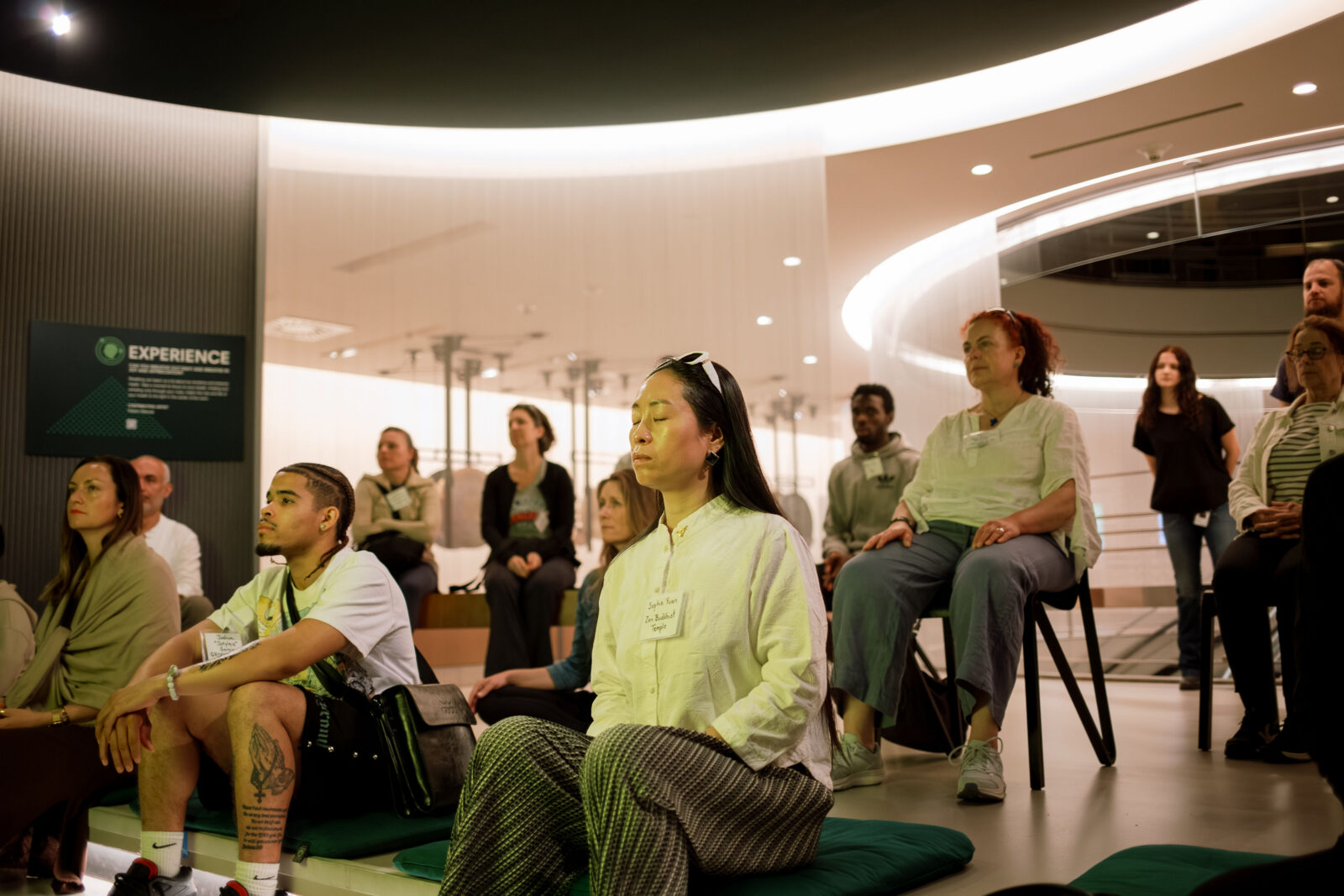
In the Mandala Lab Workshop, participants are invited to synchronize their breathing to feel at one with others. This exercise involves entrainment, a term from psychology that refers to the bonding that occurs when humans gather in the same space and do something together at the same pace–like breathing, singing, or clapping. Our heartrates tend to align, leading to prosocial behavior in members of the group. The alignment can lead us to realize there is power in unity, when we act as one. Then there is no longer room for envy.
When you feel anger do you tend to lash out?
It is what many of us are tempted to do when confronted by something we perceive as unfair, unjust, or unacceptable. Anger can prevent us from seeing the bigger picture, leading to aggressive, harmful actions.
In the Mandala Lab Workshop, participants are provided with a basin of water and a gong and mallet. They are asked to think of something that makes them angry and then strike the gong with purpose and proceed to lower the gong slowly into the water basin. The participant then keeps the gong submerged until the water and the sound are still once more. Within the space of the first action and the return of the gong the participant will have created a distance in which the clarity created by patience has a chance to grow.
Ignorance is depicted at the center of the mandala because it is at the heart of our misunderstanding of ourselves and the world.
Lacking awareness can lead to negative actions toward others and limit personal growth. Ignorance prevents us from seeing situations exactly as they are.
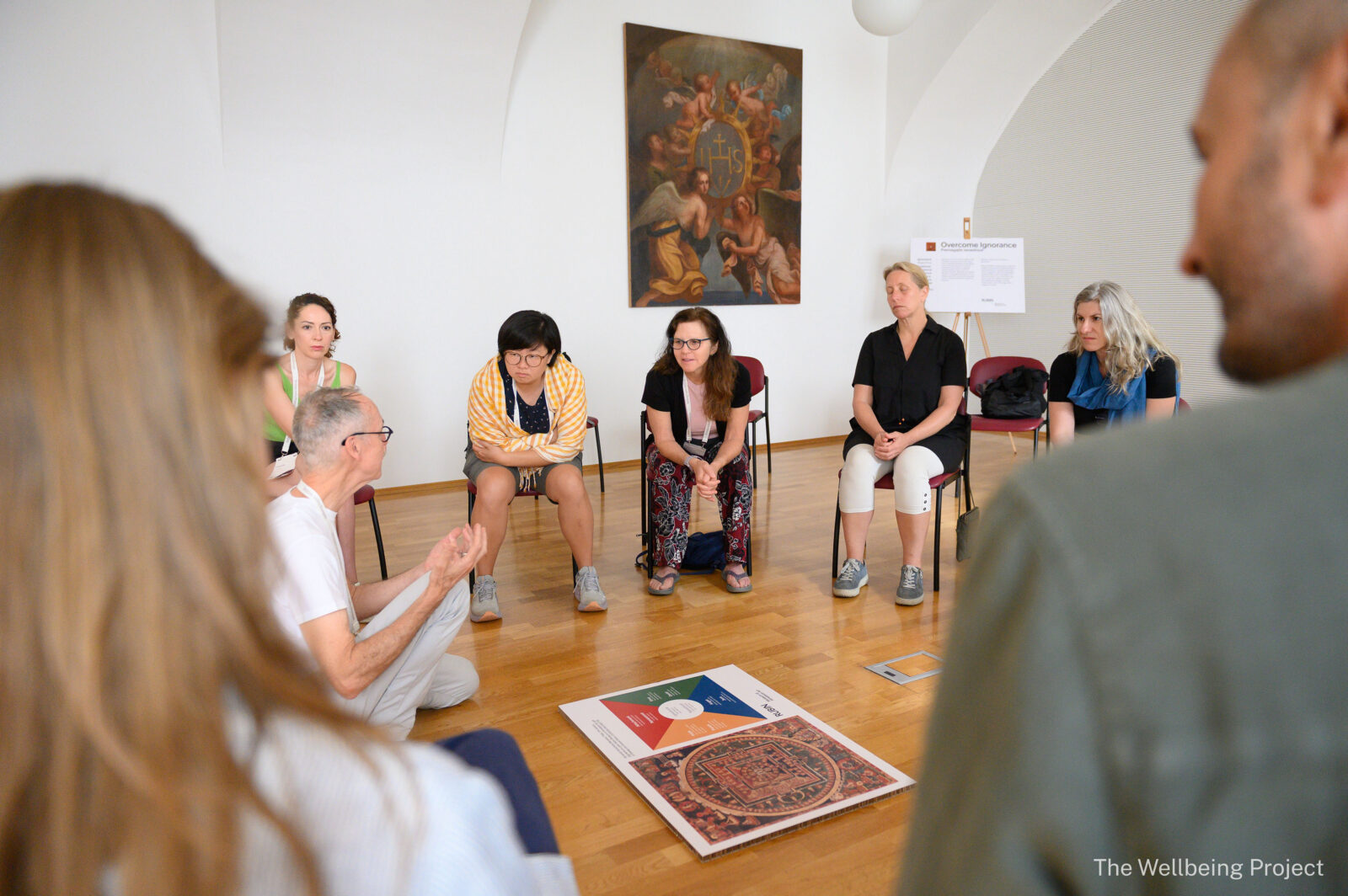
In this final experience of the Mandala Lab Workshop, participants are invited to consider what emotion continues to trouble them most. They are then invited to take a teaching home to remind themselves of how to approach this particular afflictive condition.
When Buddhist practitioners apply the insight of all-accommodating wisdom that resides in the center of the mandala, they have the potential to develop an unbiased worldview and a capacity to see the knowledge residing within them and apply it to the outer world. From this balanced place, they can skillfully harness the energies of pride, attachment, envy, and anger with a newfound clarity.