

Mindfulness Meditation · Compassion
This week’s meditation session is led by Sharon Salzberg and the theme is Compassion. The guided meditation begins at 14:30.
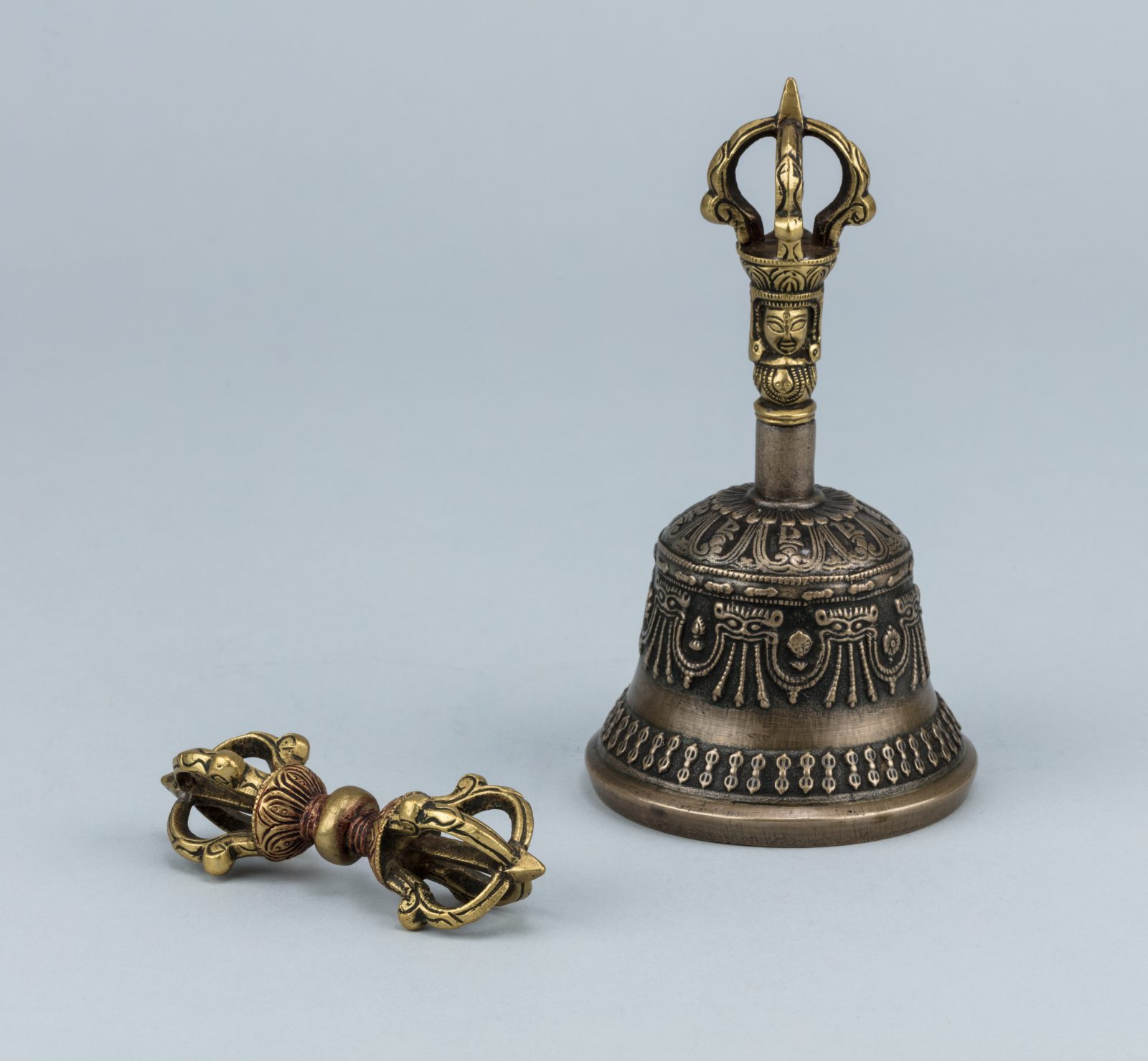
Five-prong Bell & Dorje Set; Probably Urga or Dolonor, Mongolia; ca. late 19th century; Silver, metal (Li, five-metal compound); Rubin Museum of Himalayan Art, Gift of Phillip J. Rudko; C2014.7.4a-b
The vajra and bell are the most important ritual objects of Tibetan Buddhism. Most every lama has a pair and knows how to use them. They represent “method” (vajra) and “wisdom” (bell). Combined together they symbolize enlightenment as they embody the union of all dualities: bliss and emptiness, compassion and wisdom, appearance and reality, conventional truth and ultimate truth, and male and female, etc.
There are many different explanations of the symbolic meanings of the vajra and bell. The meanings can vary depending on the different tantra literature or cycle of Tantric practice. A general explanation describes the five pronged vajra scepter as representing twenty-eight deities and the bell representing twenty-three deities.

Sharon Salzberg is a meditation pioneer, world-renowned teacher, and New York Times bestselling author. She was among the first to bring mindfulness and lovingkindness meditation to mainstream American culture over 50 years ago, inspiring generations of meditation teachers and wellness influencers. Sharon is cofounder of the Insight Meditation Society in Barre, MA, and the author of 14 books, including the New York Times bestseller Real Happiness, now in its second edition, and her seminal work, Lovingkindness. Sharon’s podcast, The Metta Hour, has amassed eight million downloads and features interviews with thought leaders from the mindfulness movement and beyond.
Get the latest news and stories from the Rubin, plus occasional information on how to support our work.