

Mindfulness Meditation · Lasting Happiness
This week’s meditation session is led by Lama Aria Drolma and the theme is Lasting Happiness. The guided meditation begins at 07:12.
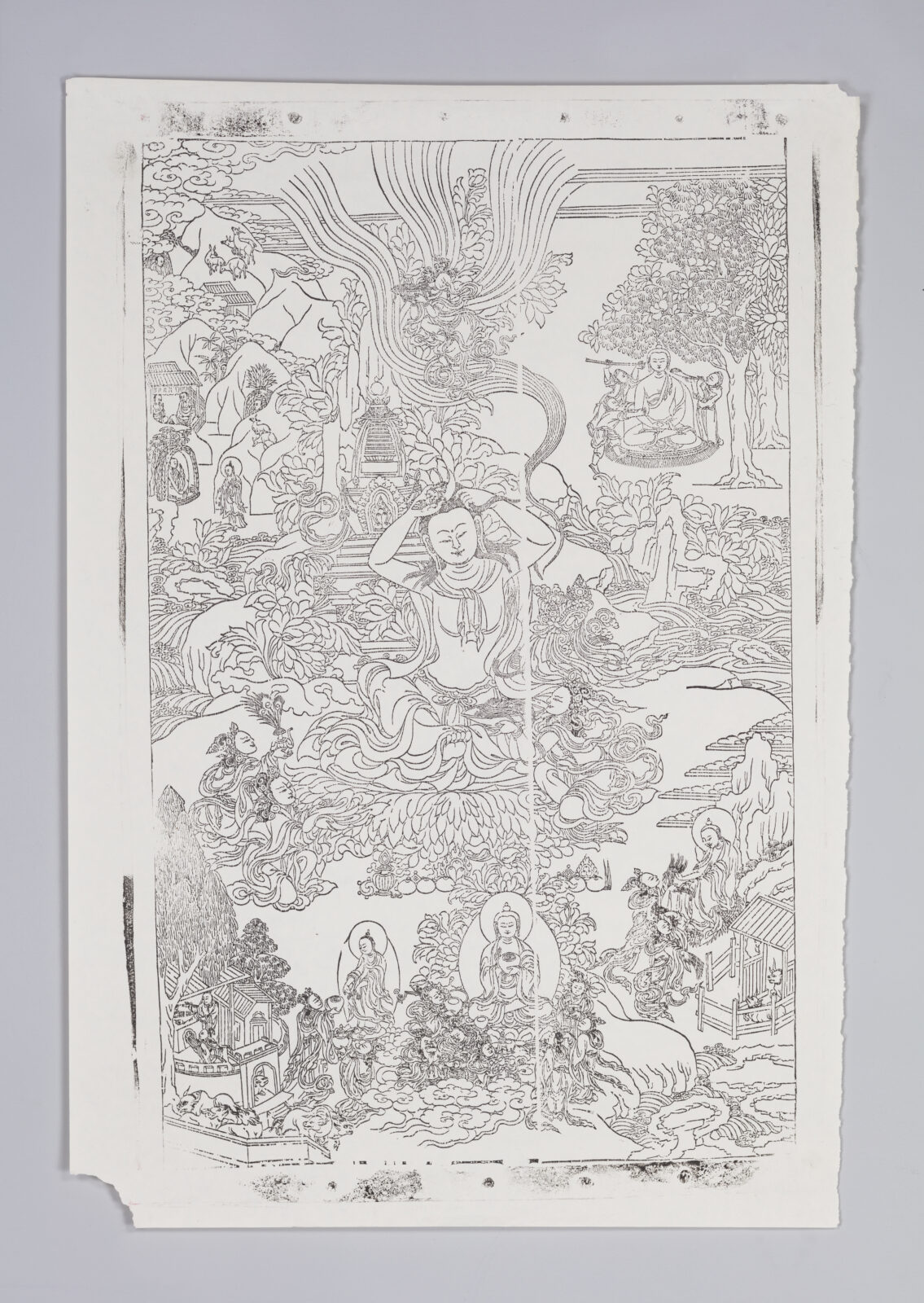
Renunciation and Asceticism; Derge Printing House, Derge, Kham Region, Eastern Tibet; ca. 1979; Xylograph, ink on paper; Rubin Museum of Himalayan Art, Gift of William Hinman; C2001.4.4
The third composition from a set of nine depicting key scenes from the life story of Buddha Shakyamuni, this richly detailed woodblock print depicts the sixth and seventh deeds: “Renunciation” and “Asceticism/Austerities.” This set of the Twelve Deeds of the Buddha was based on compositions attributed to the famous late 19th-century master painter, Purbu Tsering of Chamdo.
The Buddha’s renunciation of the material world is illustrated by the cutting of his hair. It is taught that the Buddha removed his ornaments and cut his hair at the foot of the Immaculate Stupa. Then the Buddha practiced austerities for six years on the banks of the Nairanjana River with five like-minded ascetics who were also striving to awaken.
At the bottom left of the print, the village girl Sujata offers the Buddha a bowl of porridge to restore him to health. This was a moment of revelation for the Buddha when he realized that he could attain lasting happiness through moderation rather than extreme self-denial.
This woodblock print was printed at the Derge Printing House in the Kham region of southeastern Tibet. Founded in 1729, it is one of the largest and most important producers of traditional Tibetan woodblock prints.
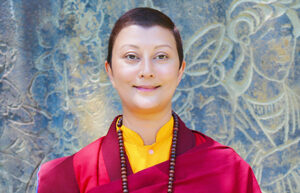
Lama Aria Drolma is an ordained Buddhist teacher in the Karma Kagyu tradition of Tibetan Buddhism, who has completed over a decade of monastic study and meditation training. She is a graduate of the traditional Tibetan Buddhist retreat program spanning three years and three months, an advanced cloistered meditation training program at Palpung Thubten Choling Monastery, New York.
Lama Aria teaches worldwide, leading retreats, workshops, and corporate meditation programs and is a popular guest speaker at universities and organizations. She emphasizes Vajrayana Buddhism and Buddhist principles, making them relevant in our everyday lives, helping us to cultivate loving kindness and compassion, and bringing about a transformation of contentment and a genuine sense of well-being.
Get the latest news and stories from the Rubin, plus occasional information on how to support our work.