

Mindfulness Meditation · Impermanence
This week’s meditation session is led by Michel Pascal and the theme is Impermanence. The guided meditation begins at 21:44.
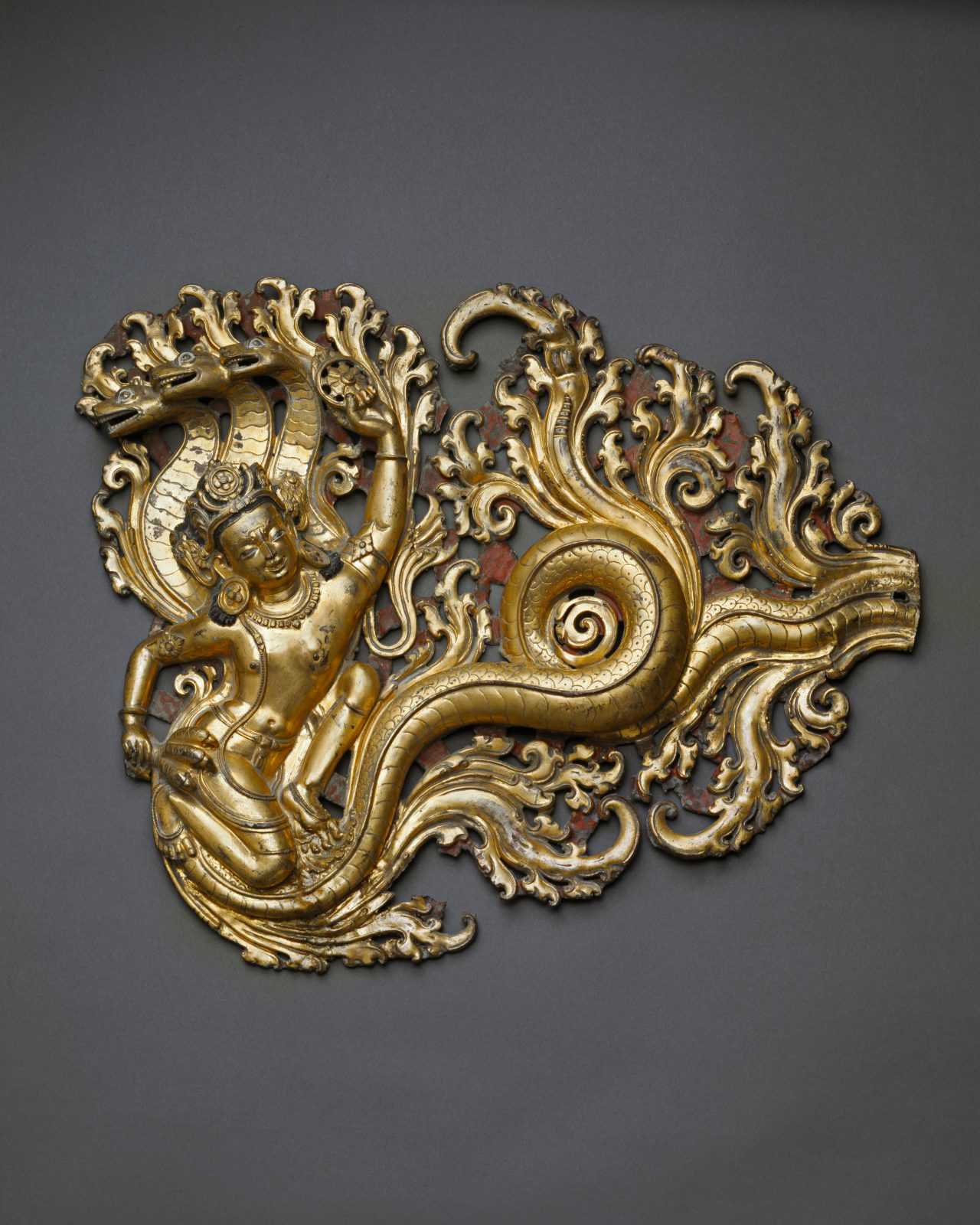
Flying Naga; Nepal or Tibet; 14th century; Gilt copper alloy; repoussé; Rubin Museum of Himalayan Art; C2005.16.18
This ornate sculpture depicts a naga, a serpent spirit associated with bodies of water such as lakes, rivers, and seas. The graceful movement of the figure evokes the flowing of the waves. There are three serpent heads atop the crown of the naga depicted in this sculpture. The slithering serpents juxtaposed with the elegant figure underscore that nagas can be helpful or harmful.
There is a rich tradition of stories and rituals involving nagas within Hinduism and Buddhism. These tales often incorporate indigenous religious understandings of water or serpent spirits. In Indian religions, including Hinduism and Buddhism, nagas are believed to control rain, and therefore agricultural prosperity. A female naga is called a “nagini,” while the kings of the nagas are called “nagarajas.”
The undulating flow of the sculpture reminds us that life is often in a state of flux. By yielding to the ebbs and flows instead of resisting them we attain a greater sense of peace and contentment.

Michel Pascal, a meditation teacher for 25 years, has led successful programs for prisoners, which help prevent suicides and reduce reoffending. He’s written 20 books on spirituality, including Meditation for Daily Stress: 10 Practices for Immediate Well-Being. Known as “The Medicine Voice,” he’s performed at Carnegie Hall and played at the Peace Day Concert in Times Square in September 2023. In December 2023 he presented his methods at the United Nations.
Get the latest news and stories from the Rubin, plus occasional information on how to support our work.