

Mindfulness Meditation · Fluidity
This week’s meditation session is led by Sharon Salzberg and the theme is Fluidity. The guided meditation begins at 16:11.
This episode marks a significant milestone as the 500th episode of the Mindfulness Meditation podcast. Since its launch in 2015, the podcast has been listened to by people around the globe nearly 1.5 million times to date.
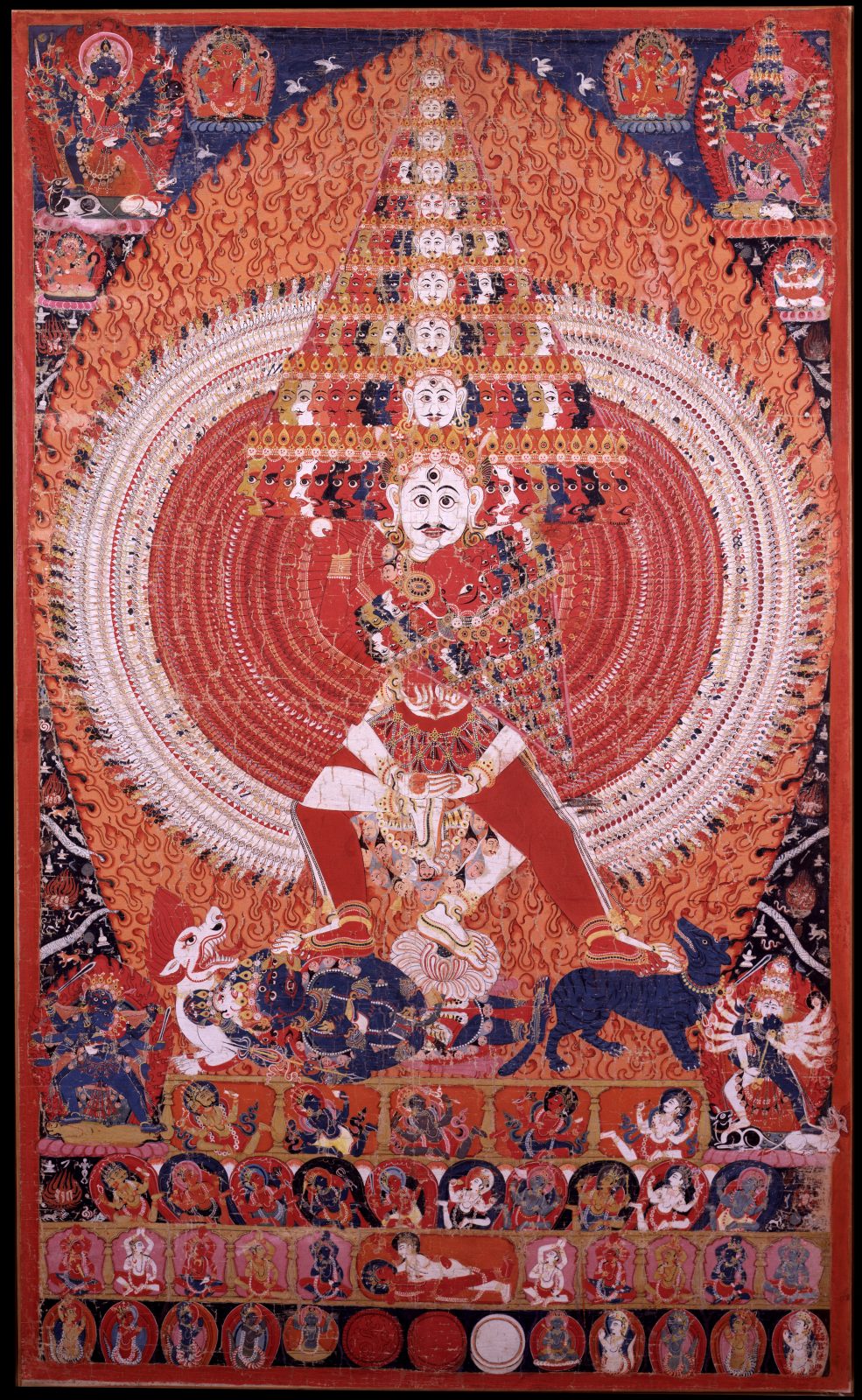
Shiva Vishavarupa, Universal form with Consort; Nepal; mid-19th century; Pigments on cotton; Rubin Museum of Himalayan Art; C2003.20.2
This painting depicts Shiva and his consort Shakti. Shiva is one of Hinduism’s major deities, embodying forms such as an ascetic, destroyer, conqueror of death, and cosmic dancer. This painting presents him as Vishvarupa, “universal form” or “form of the world.” There are a seemingly infinite number of Shivas on the canvas, conveying the principle that the entire world is in motion in an eternal cosmic dance.
Shiva embraces his female consort, Shakti, who is in complete harmony with him. Both have a multitude of heads and arms, indicating their infinite vision and reach. Shiva bears the orbs of the sun and moon in his two main hands, as if the cosmos itself were in his grasp. The interplay of creation and destruction serves as a reminder of the constant fluidity of the universe.

Sharon Salzberg is a meditation pioneer, world-renowned teacher, and New York Times bestselling author. She was among the first to bring mindfulness and lovingkindness meditation to mainstream American culture over 50 years ago, inspiring generations of meditation teachers and wellness influencers. Sharon is cofounder of the Insight Meditation Society in Barre, MA, and the author of 14 books, including the New York Times bestseller Real Happiness, now in its second edition, and her seminal work, Lovingkindness. Sharon’s podcast, The Metta Hour, has amassed eight million downloads and features interviews with thought leaders from the mindfulness movement and beyond.
Get the latest news and stories from the Rubin, plus occasional information on how to support our work.