

Mindfulness Meditation · Interdependence
This week’s meditation session is led by Tracy Cochran and the theme is Interdependence. The guided meditation begins at 17:01.
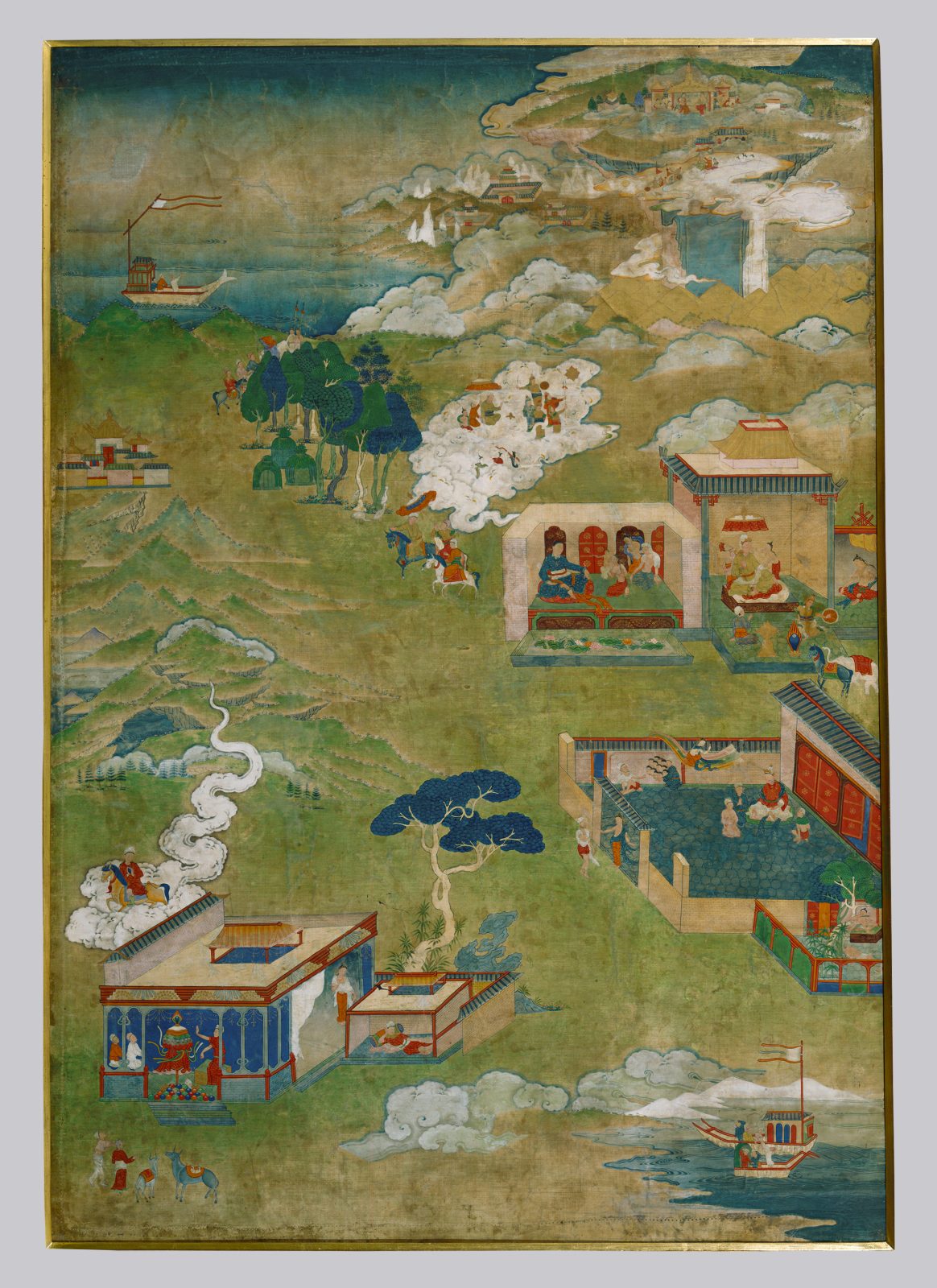
Stories of the Noble Deeds (Avadana), After a Set Designed by Situ Panchen (1700–1774) Illustrating Kshemendra’s Avadanakalpanada; Kham Province, Eastern Tibet; 19th century; Pigments on cloth; Rubin Museum of Himalayan Art, gift of the Shelley and Donald Rubin Foundation; F1996.1.3
This work is based upon one of the most widely acclaimed painting sets commissioned by the renowned artist, Situ Panchen (1700-1774), who was both a great scholar of the Karma Kagyu School of Tibetan Buddhism and an important patron and artist. He is credited with reviving the court style of the Karmapas known as the Encampment style (Gardri), which quickly became popular in his native Kham Province in southeastern Tibet.
The Encampment style is characterized by both Indian and Chinese features. The figures typically have Indic-style proportions while the landscapes have a Chinese influence. In this particular painting the figures are quite small. Elements of the Encampment style include airy landscapes with swirling clouds and steep cliffs that elicit the terrain of Derge in southeastern Tibet.
This painting is part of a set of 23 narrative paintings. The theme of this painting is three of Kshemendra’s 108 Moral Tales (Bodhisattva Avadana Kalpata)—a collection of stories about the laws of cause and effect (karma), merit, and the benefits of giving to and caring for others.
The painting is rife with minute details. Each and every leaf is delineated, which draws the eye into each vignette. These miniature scenes form a unified whole, reflecting the interconnectedness of all beings and our world.
In his dedicatory inscription for this set (dated 1736), Situ Panchen states that he depicted lands, modes of dress, and palaces that he actually saw. He was calling to mind his pilgrimage to Nepal in 1723. As we behold this idyllic landscape may it awaken our sense of awe for the natural world.

Tracy Cochran has taught meditation and spiritual practice for many years. She is a speaker and author whose most recent book, Presence: The Art of Being At Home in Yourself, was published by Shambhala Publications in 2024. Tracy is the founder and leading teacher of the Hudson River Sangha and has taught mindfulness and mindful writing at New York Insight, the Rubin Museum of Himalayan Art, and many other venues. In addition to serving as the editorial director of the acclaimed spiritual quarterly Parabola, her writings have appeared in The New York Times, New York Magazine, Psychology Today, The Best Spiritual Writing series, Parabola, and many other publications and anthologies. For more about Tracy, please visit tracycochran.org.
Get the latest news and stories from the Rubin, plus occasional information on how to support our work.