Reflections and insights from the team behind the Museum’s annual publication
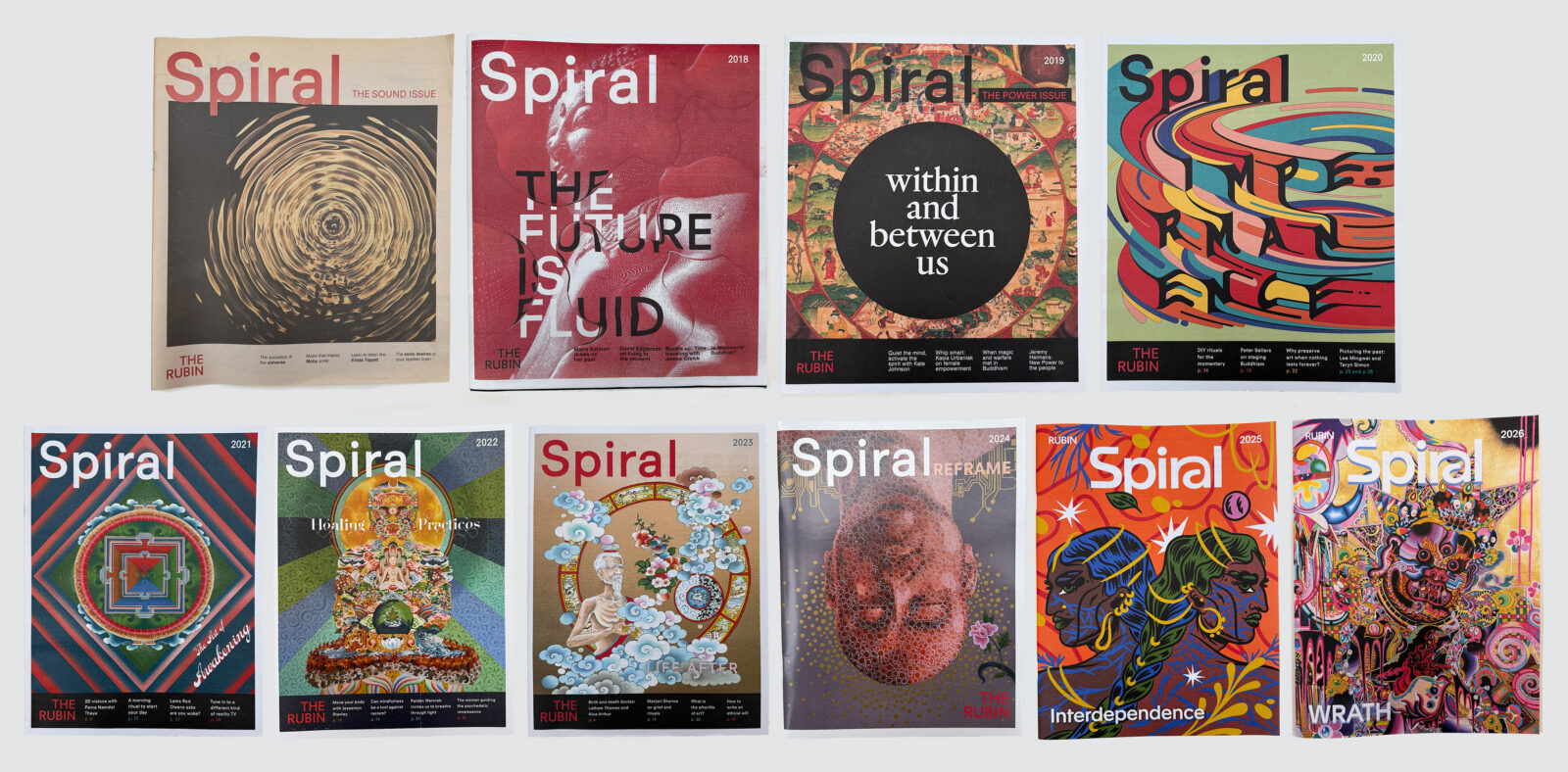
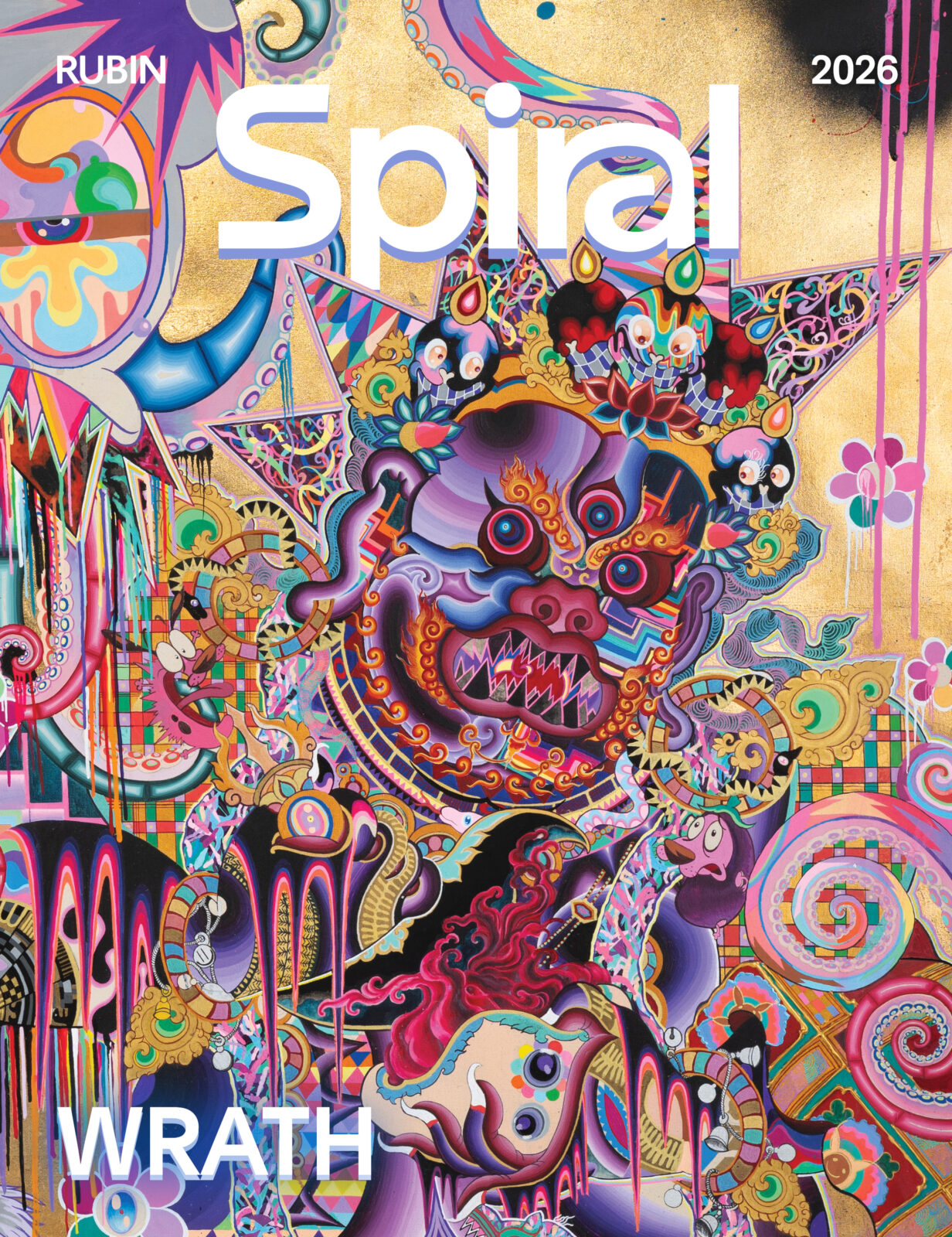
The Rubin is celebrating a significant milestone in 2026—the tenth issue of Spiral magazine, the Museum’s annual publication that offers provocative perspectives at the intersection of art, science, and Himalayan cultures. Since its launch in 2017, Spiral has presented articles, interviews, original art and illustrations, poetry, DIY activities, and more on topics ranging from Buddhism to pop culture, neuroscience to social justice activism.
For the team at the heart of Spiral, this milestone sparks reflections on the past, present, and future of the magazine. Read on for insights from Spiral’s Editorial Director Sarah Zabrodski and Creative Director KJ Bowen, as well as the Rubin’s Executive Director Jorrit Britschgi and collaborator and writer Howard Kaplan, who were there from Spiral’s start.
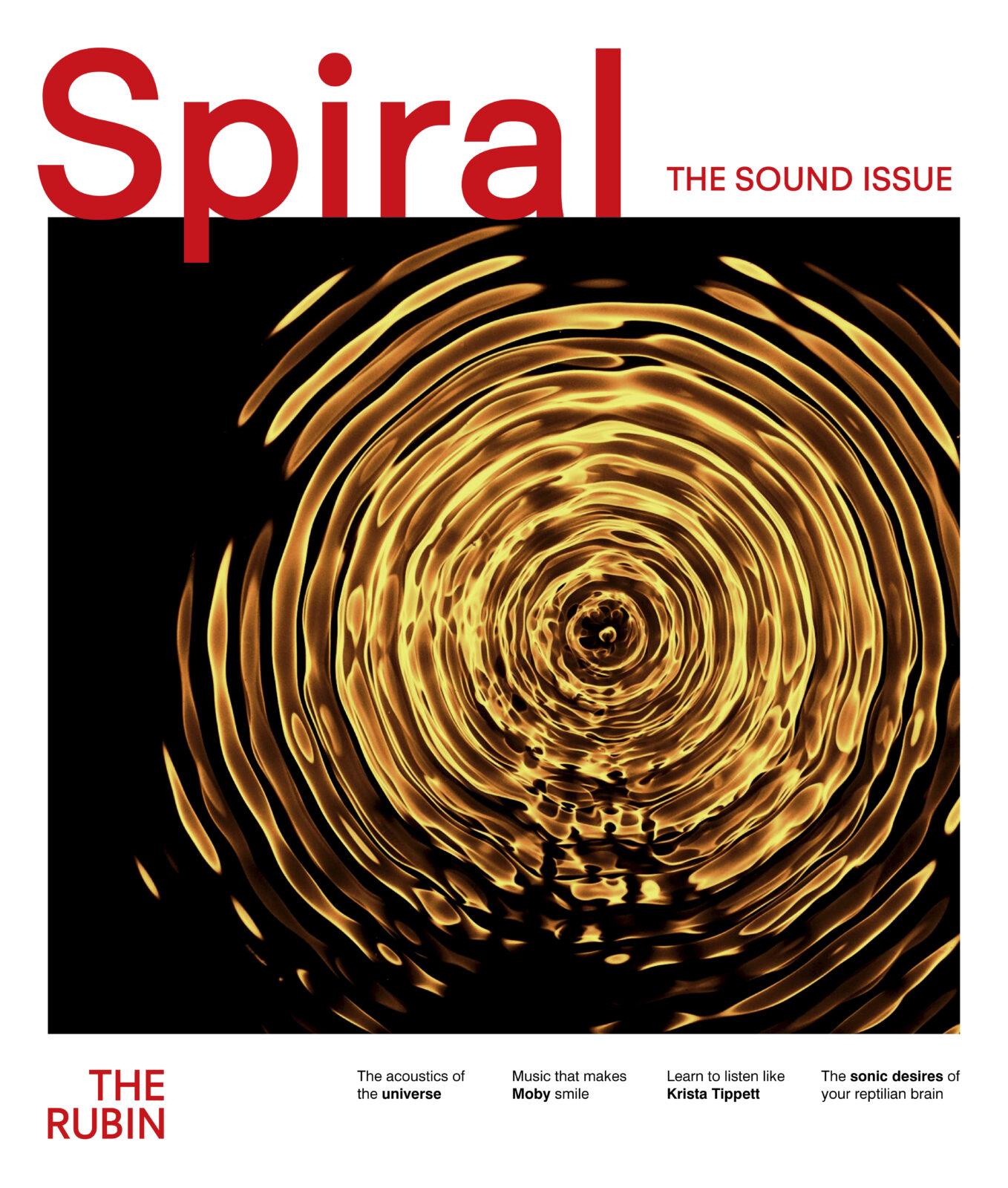
Jorrit Britschgi: In 2016, the idea was to capture the voices of psychologists, artists, sound designers, and technologists that we crossed paths with as we were preparing the The World Is Sound exhibition, but we didn’t have the space to accommodate them as part of the exhibition proper. That’s when the idea of Spiral magazine was born.
Originally it wasn’t conceived of as a series. We thought let’s give it one try and see how it lands with audiences. We distributed over fifty thousand physical copies of the first issue—and it turned out to be a big success.
Howard Kaplan: Our idea, in sync with the goals of the Museum, was to bring the art and ideas of the Himalayas to our Chelsea neighbors and to the larger communities in Manhattan and the surrounding boroughs. Spiral has the heart of a newspaper and the soul of an art or literary magazine. We hoped people would carry it with them and read it on their daily commutes, offering a bit of respite.
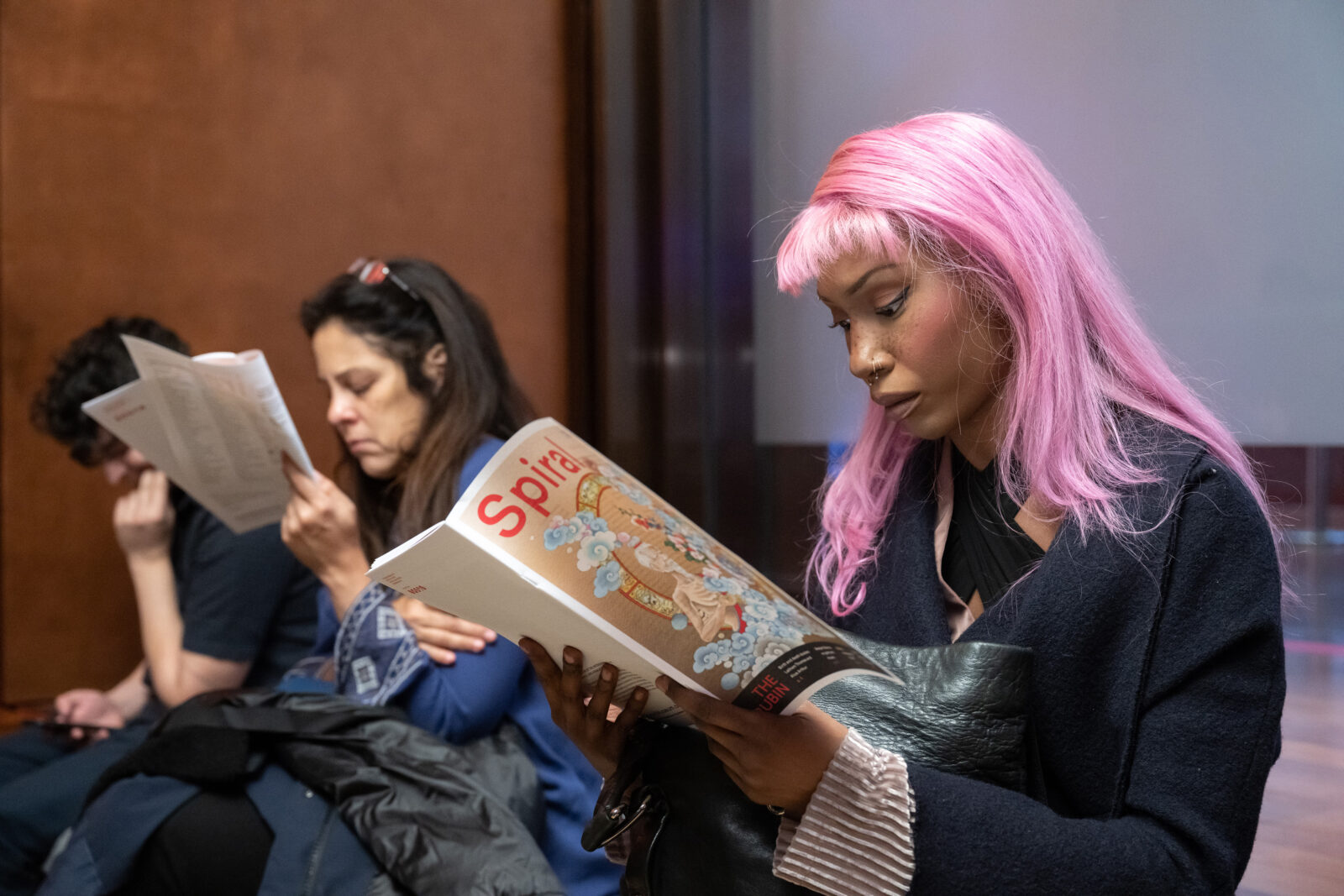
Photo by Filip Wolak
Jorrit Britschgi: When we thought about the name of the magazine, we wanted to reference both what it was covering as a magazine—this idea of circling in on a topic or idea—but also the Rubin as an institution. The name Spiral became a direct reference to the iconic spiral staircase in the former building of the Rubin Museum of Himalayan Art on West 17th Street.
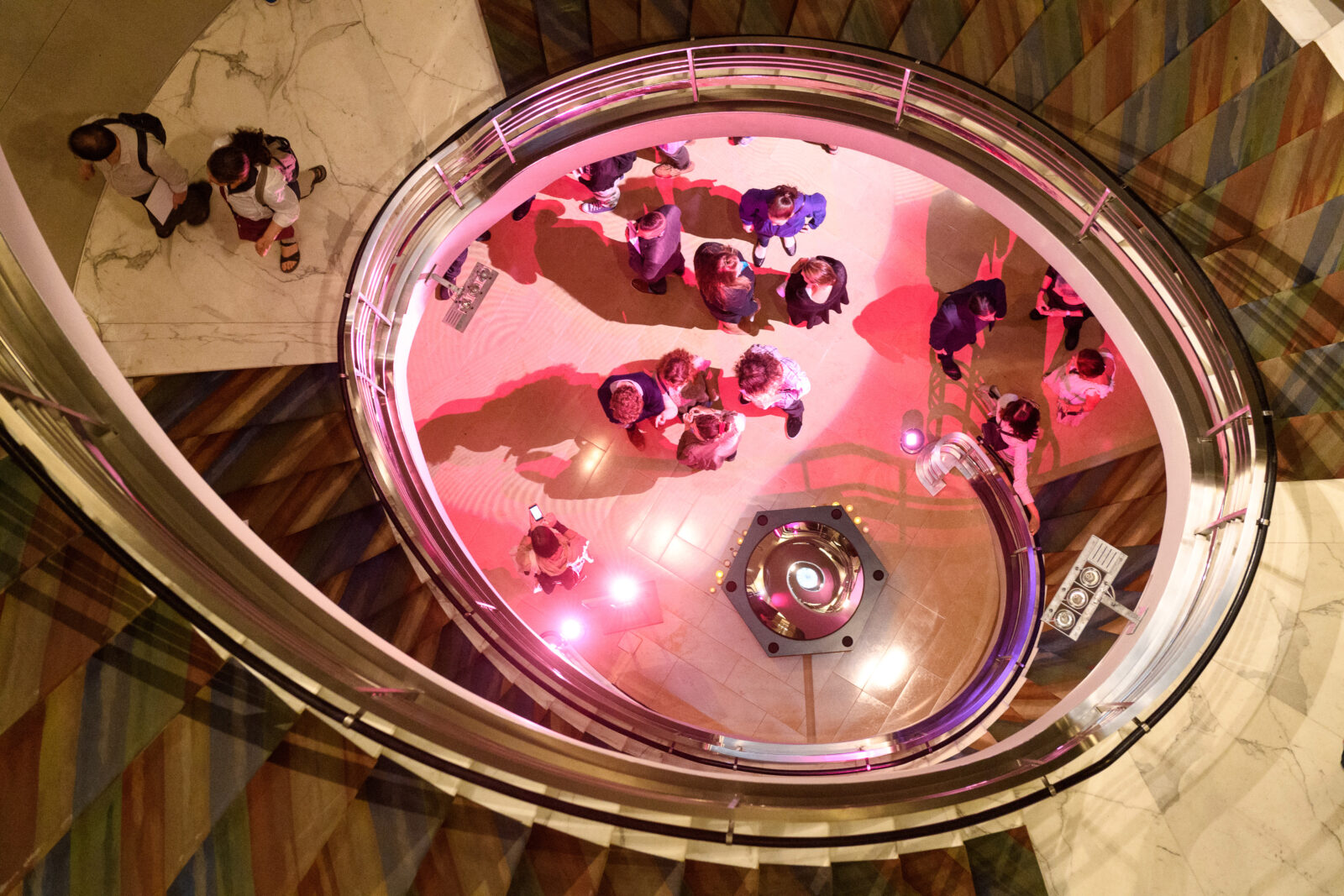
Photo by Filip Wolak
Sarah Zabrodski: We get to explore big universal themes, like interdependence or power, but through all kinds of entry points, whether it’s from more expected contributors—like a Buddhist practitioner or scholar—or unexpected ones, like a physicist, video game designer, or dominatrix.
Jorrit Britschgi: Spiral takes a deep dive into some of the ideas or the concepts that the art is expressive of. Why was it made? What’s the meaning behind it? Oftentimes that means topics related to Buddhism, and Spiral aims to create bridges to contemporary life.
KJ Bowen: We collaborate with authors, scholars, artists, experts, animators, and other media makers. Bringing their visual ideas and words to life gives readers a way to contemplate our themes from different perspectives.
Jorrit Britschgi: Spiral focuses on bigger ideas and sheds light on them from different viewpoints. And that can be through poetry, artistic commissions, comic strips, or more intellectual pieces. It opens up this very interesting, colorful panoply of perspectives.
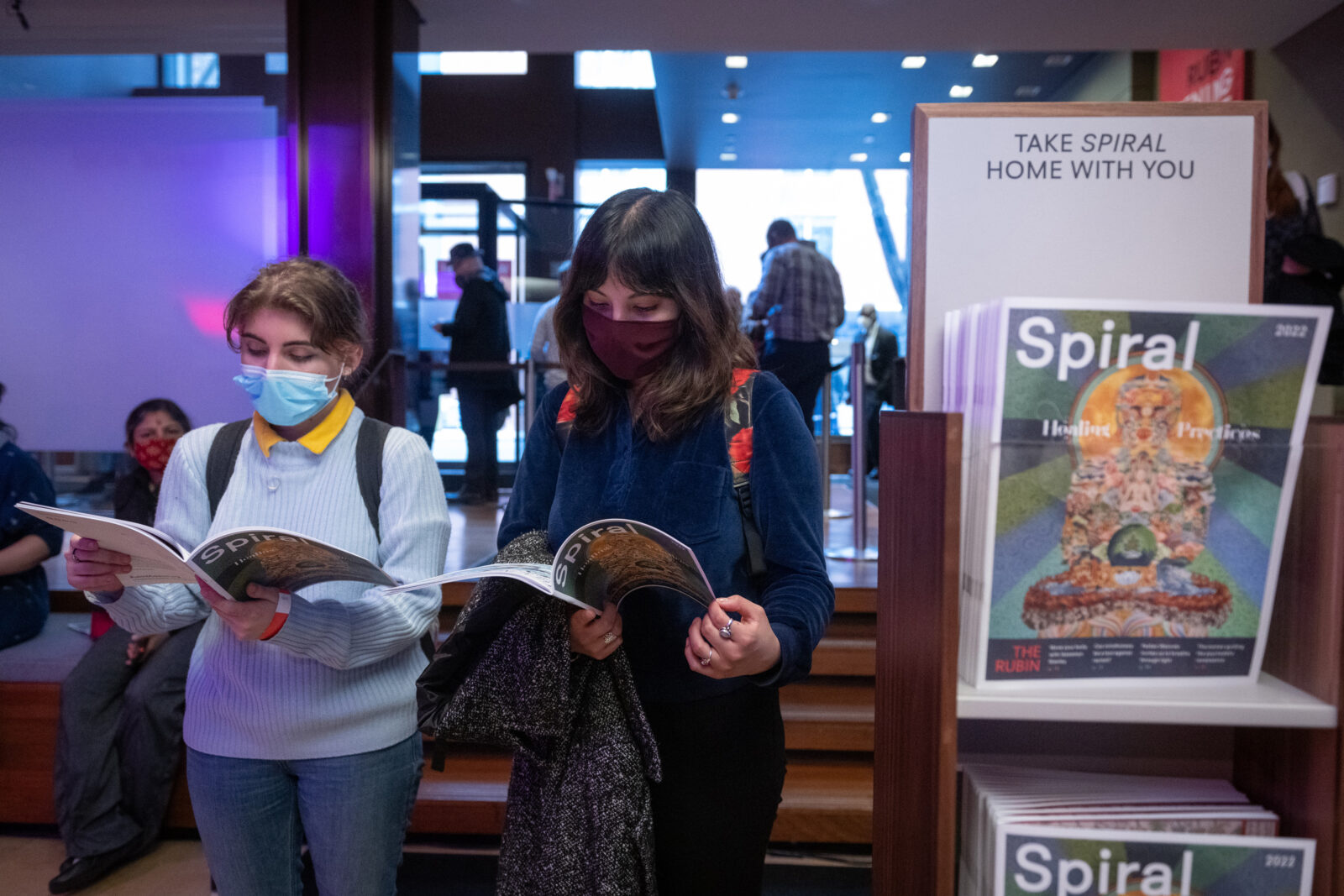
Photo by Filip Wolak
Sarah Zabrodski: Spiral is a multifaceted reflection of ideas at the core of the Rubin’s collection of Himalayan art and therefore touches on the big questions at the center of our shared human experience: life and death, connection to one another and our world, identity, states of consciousness, and the very nature of existence.
KJ Bowen: Spiral’s tagline reflects how the magazine gathers different viewpoints to help illuminate ideas and insights from our collection. You get a more well-rounded and accessible understanding of a concept when you look at it from multiple points of view.
Jorrit Britschgi: It’s not meant to give one specific answer. It’s really intended to open up a lot of different takes and perspectives, inspiring people’s curiosity to learn more or ponder more deeply on their own thoughts on a topic.

Photo by Filip Wolak
Howard Kaplan: The early days combined in-person meetings around a large table with Jorrit and key members of the team. In those pre-pandemic, pre-Zoom days, these meetings moved us forward and were very hands on.
Sarah Zabrodski: There are certain perspectives we always try to include in one way or another (for instance, having a Buddhist teacher, a scientist, etc.), and in addition to expertise, I try to seek out people who have something interesting or unexpected to offer in regards to the theme. Then there is the lengthy process of reaching out to potential contributors and determining the shape and scope of their articles.
The next phase occurs once authors start submitting their pieces. I edit their submissions and we go back and forth until we land on a final version.
KJ Bowen: Then Sarah and I will discuss what might be a complimentary way to visualize a main idea or concept in sync with the words. We may consult our curators. Then we get specific with the visuals. Would a painting be good for this one? Or a collage, a photo, or a drawing? What artist would be best suited?
I am always looking for new artists by searching through multiple sources, from Instagram to Vogue India to art fair contributors in Bhutan. We want the visuals to be dynamic, fresh, and not repetitive. So we look at colors, styles, design motifs, modern versus traditional, and how they all work to make the magazine flow as a whole.
Sarah Zabrodski: In the final stretch KJ and I are in constant collaboration, inputting proofreading edits, pulling the final design together, and polishing all the details.
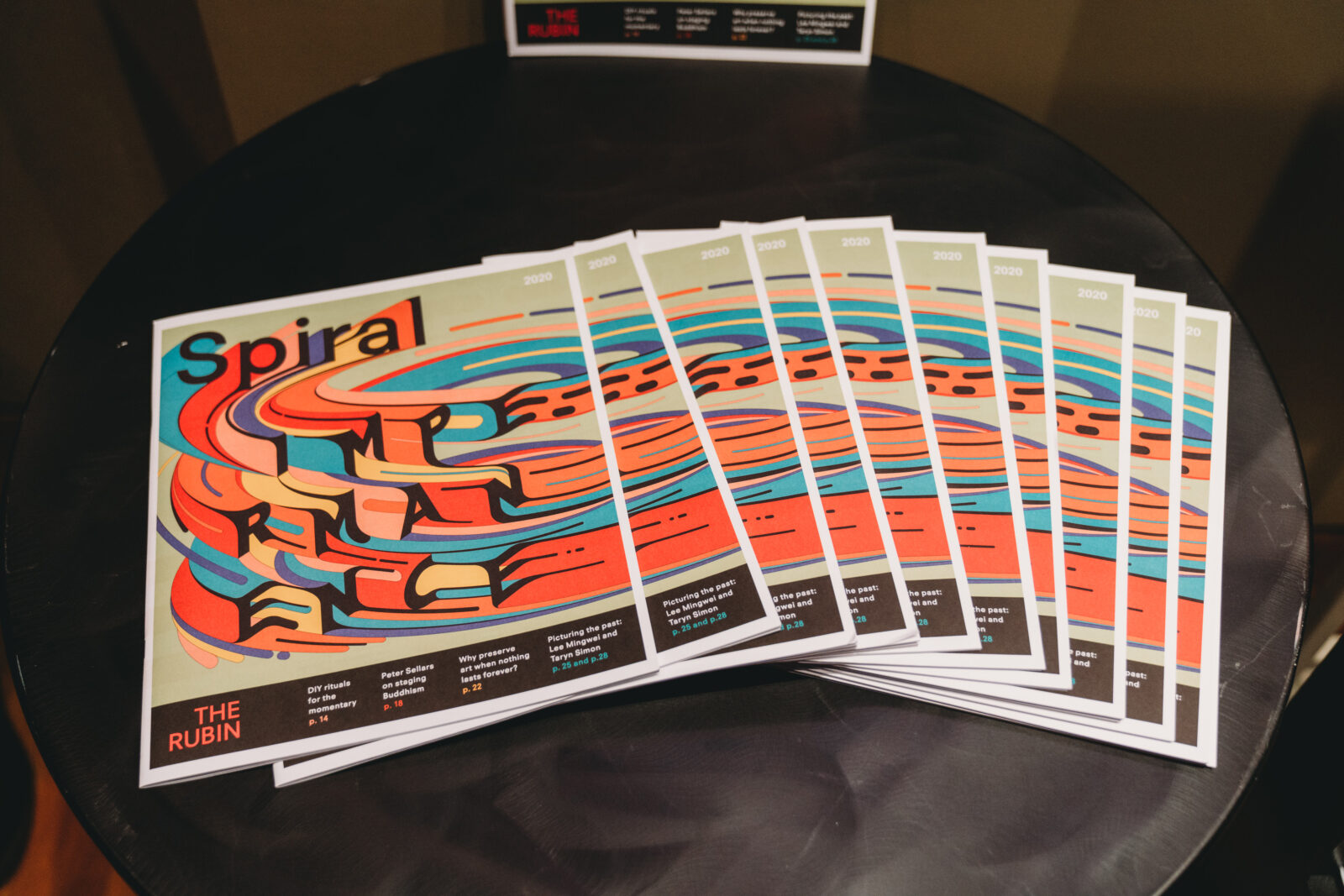
Photo by Asya Gorovits
Sarah Zabrodski: One big challenge is when we map out the order of the articles for the issue. We are considering lots of factors—the format (interview, article, etc.), the content or subject matter, the length, the color scheme of the visuals, etc.—and trying to create a balance and nice rhythm among different types of pieces, while also trying to create a somewhat cohesive, self-contained narrative or message for the magazine as a whole. It can get quite complex and it’s almost like piecing together a puzzle.
KJ Bowen: It becomes a balanced tapestry that unfolds to tell the theme’s story.
Sarah Zabrodski: It also feels quite gratifying when we finally land on an order that feels right.
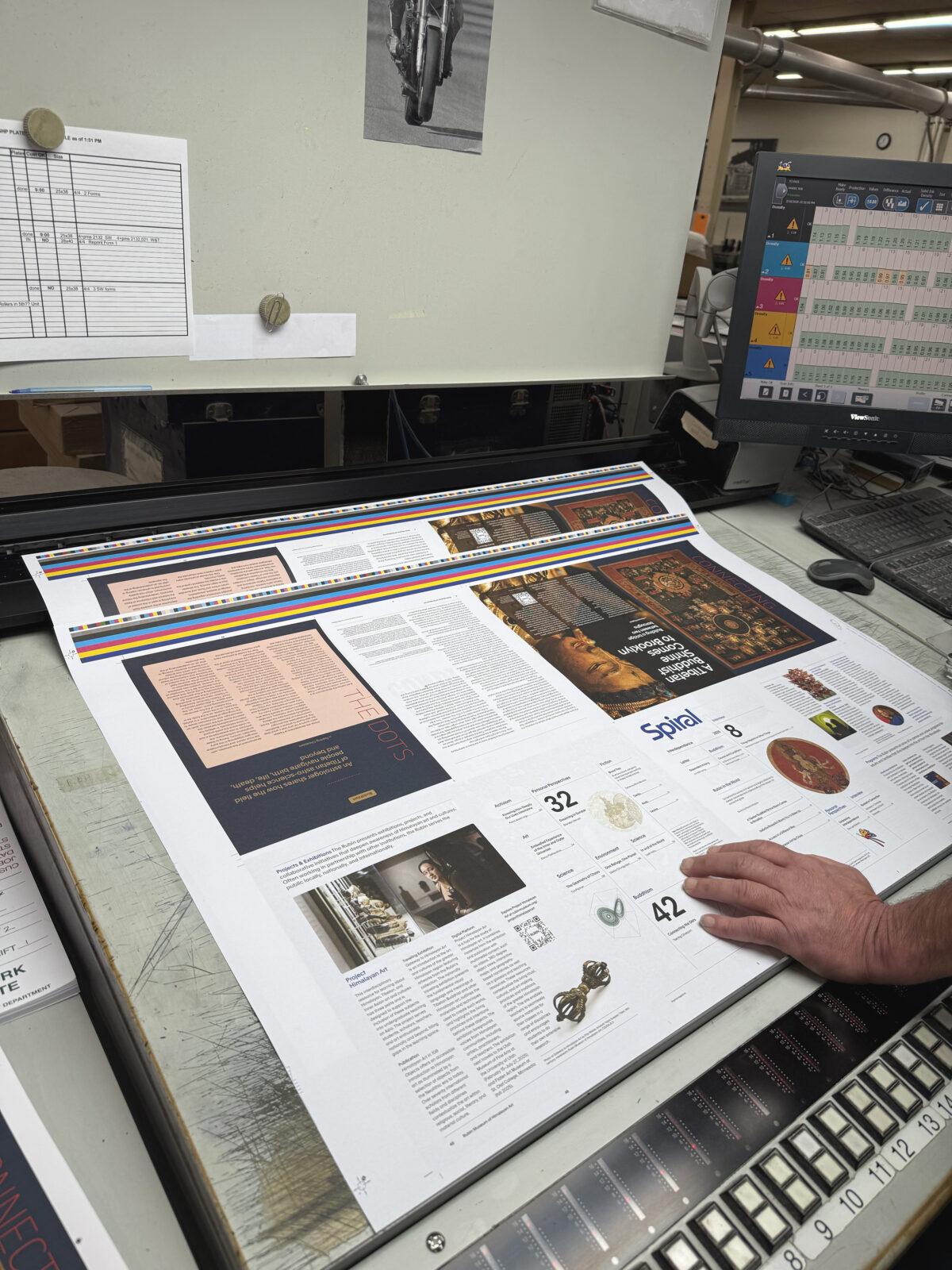
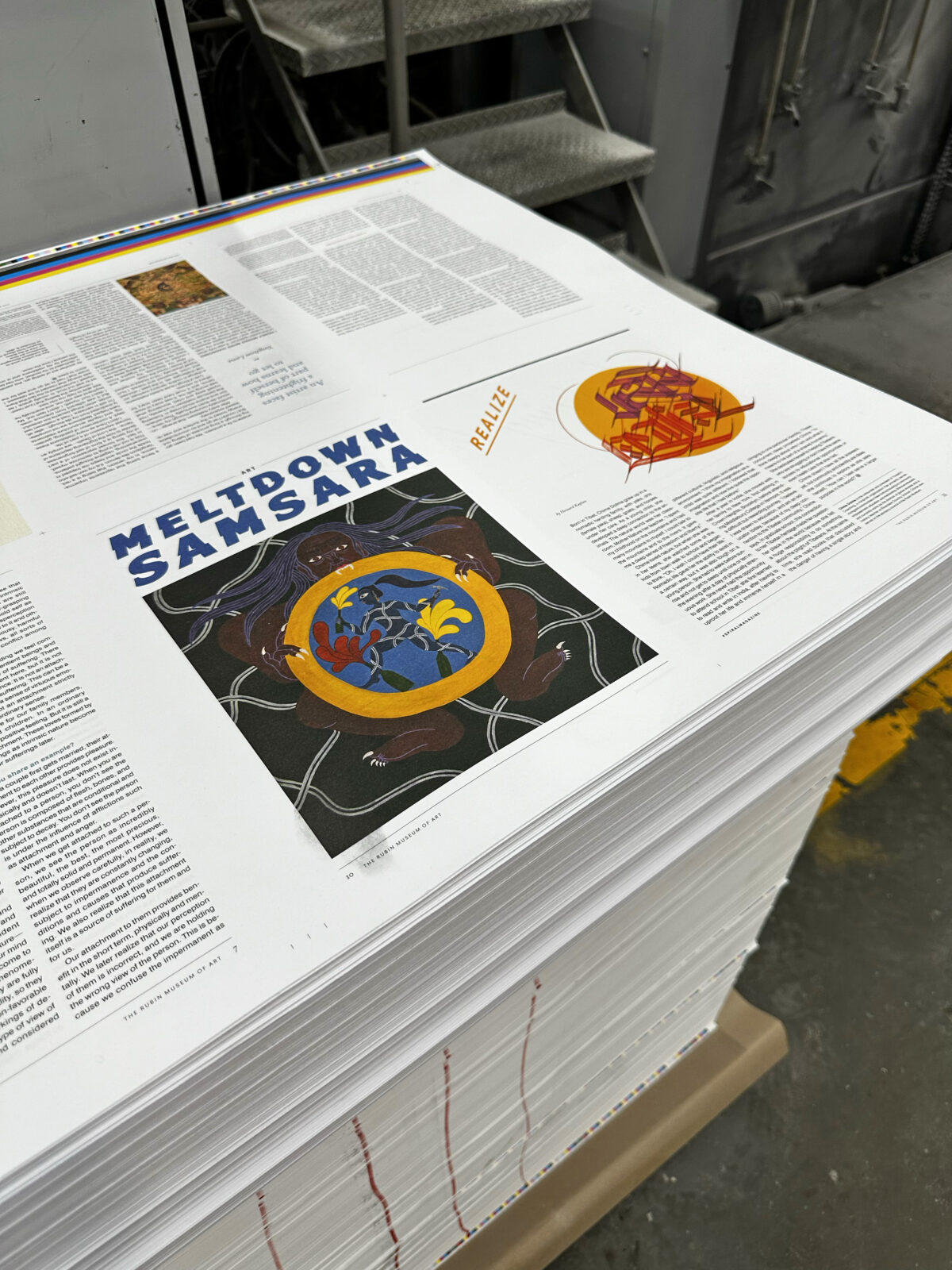
KJ Bowen: Another challenging part is keeping everything on schedule. Sometimes we collaborate with people who have minimal experience working with publishing deadlines, or who do not understand printing processes. So the steps take a little longer. There can be language barriers and learning curves. But it is also part of the fun, working with new people, sharing the joy of bringing an idea to fruition together over a Zoom call on the other side of the world.
KJ Bowen: The first issue in 2017 was newsprint! Those copies are quite yellow now. The magazine used to be a larger, square format. We heard from our readers that it made it difficult to carry around or put in a backpack. So we made it a more typical magazine size in 2021. This changed the design by packing in more content on smaller pages.
Then after we refreshed the Rubin brand in 2024, we had another opportunity to update the design. We’ve also added more pages along the way.
Sarah Zabrodski: The quality of the paper has increased over the years. The first time we did a wraparound cover was in 2024, to make it extra special for the Museum’s twentieth anniversary, but then we loved it so much we continued with subsequent issues.
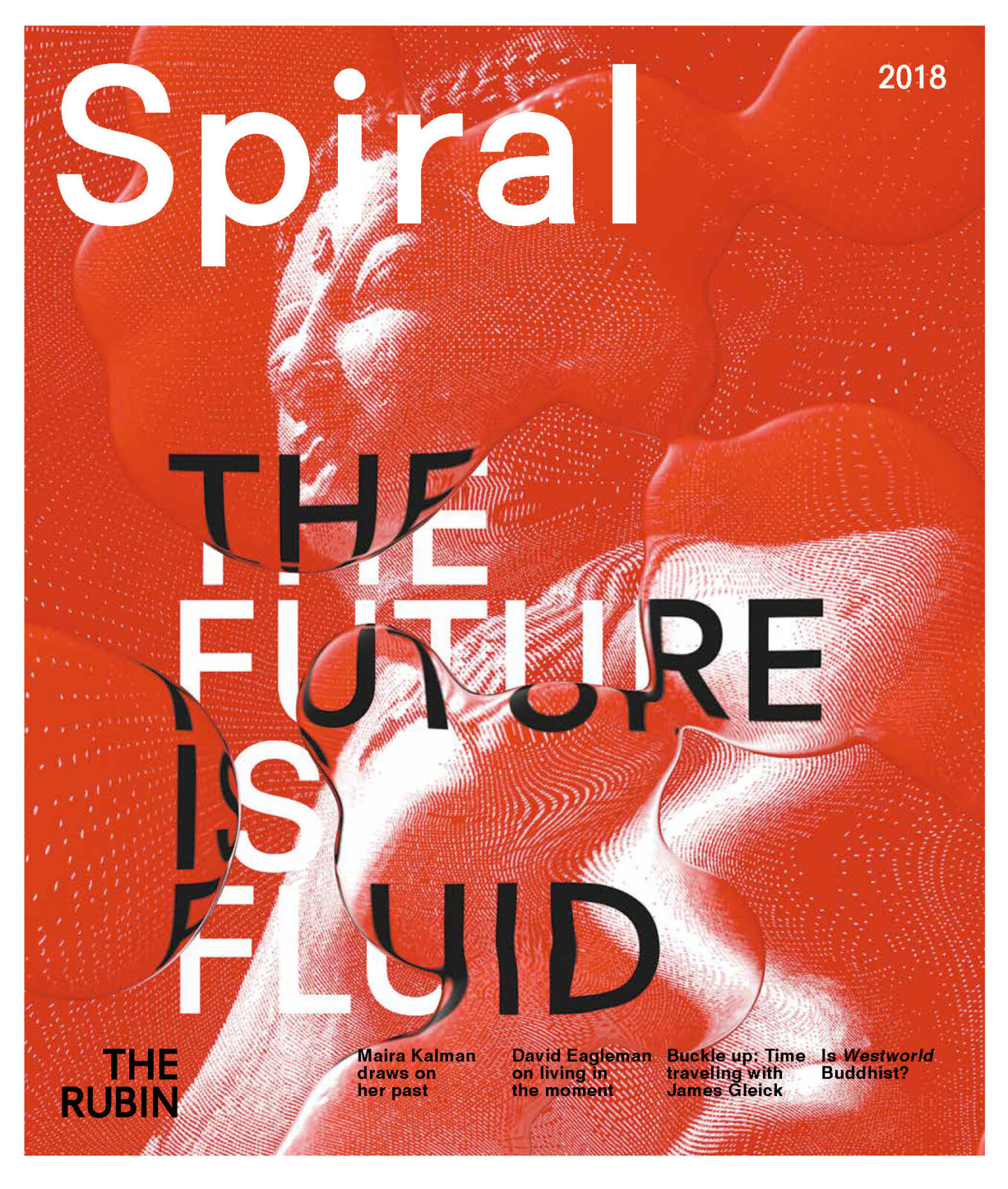
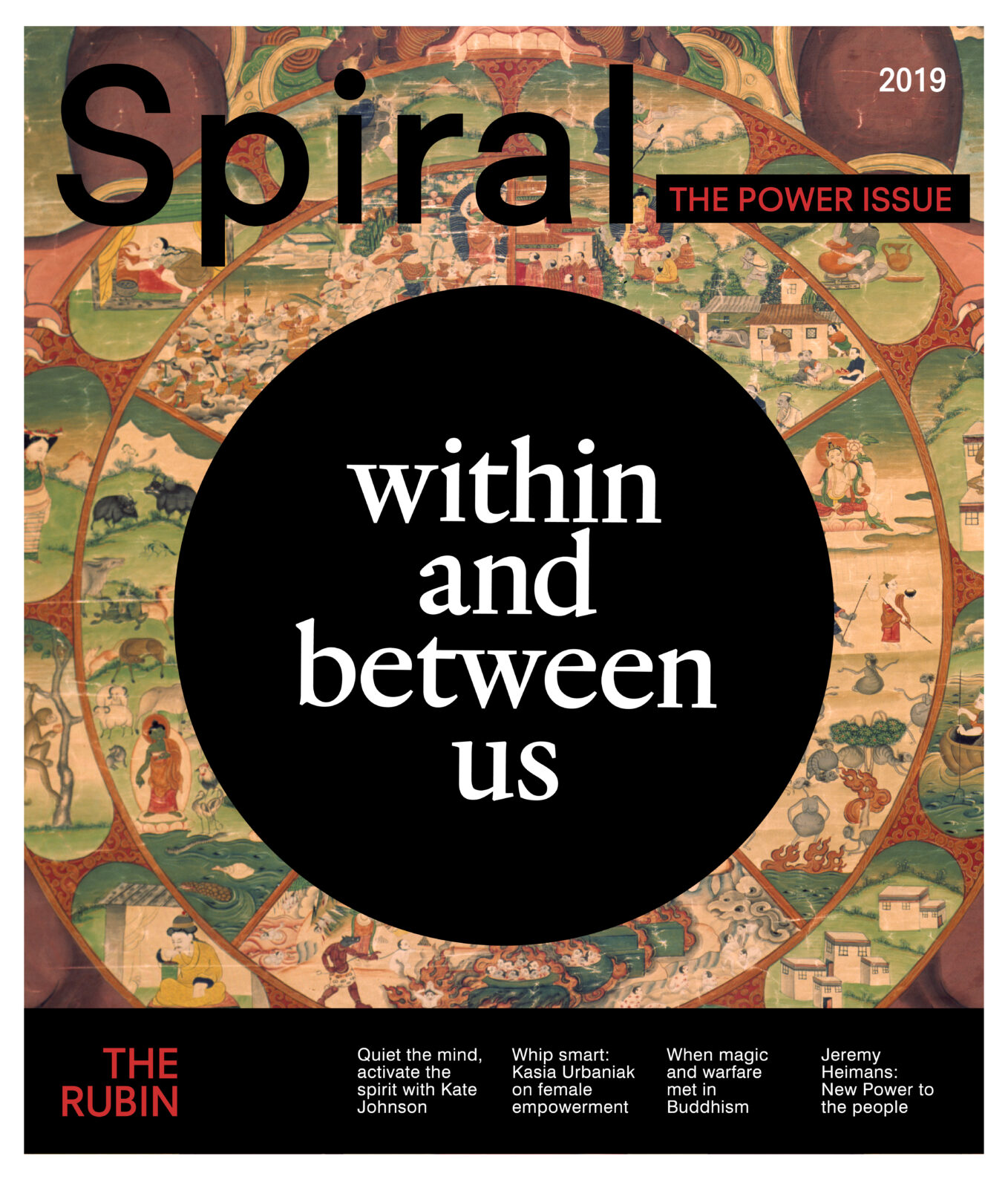
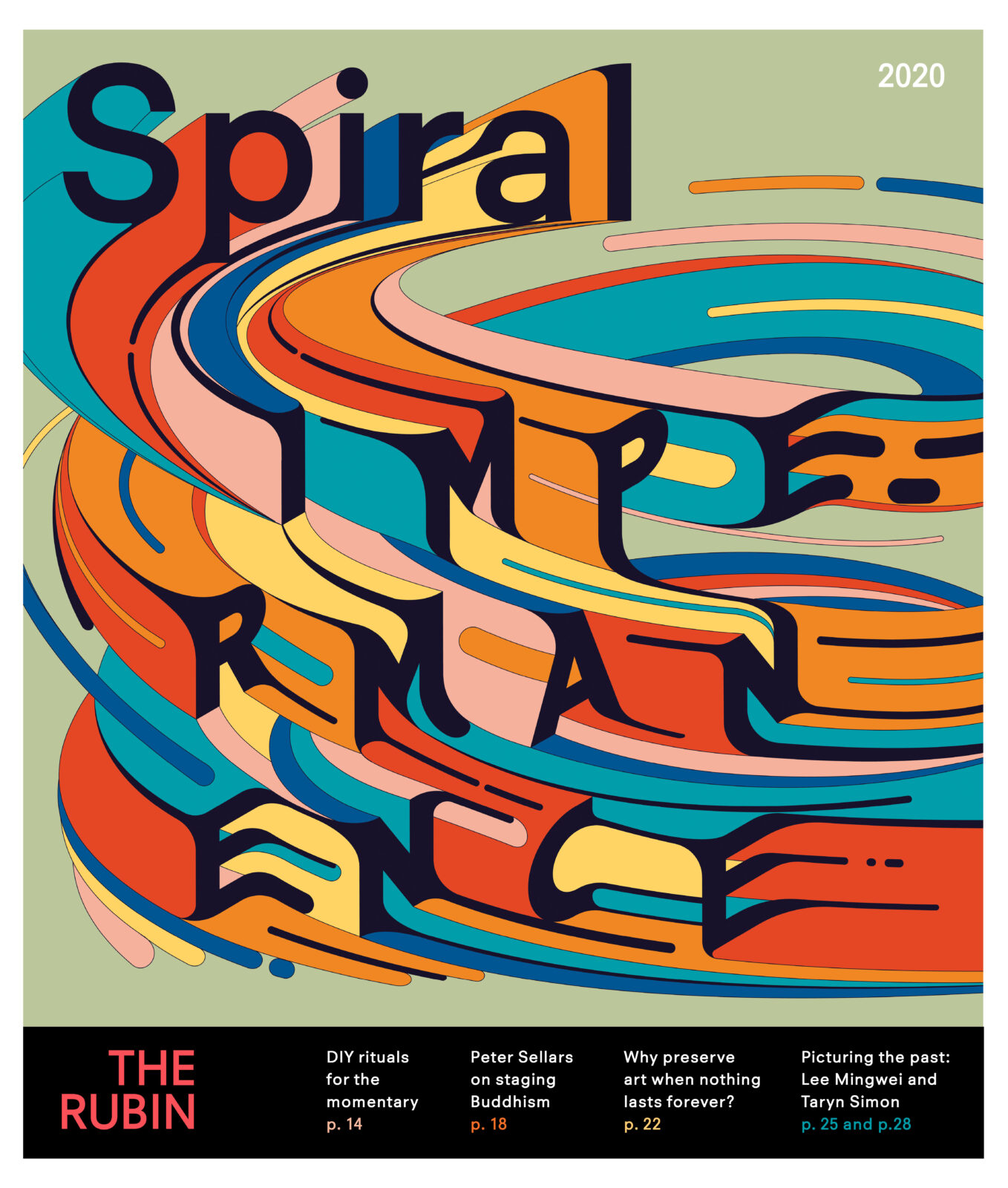
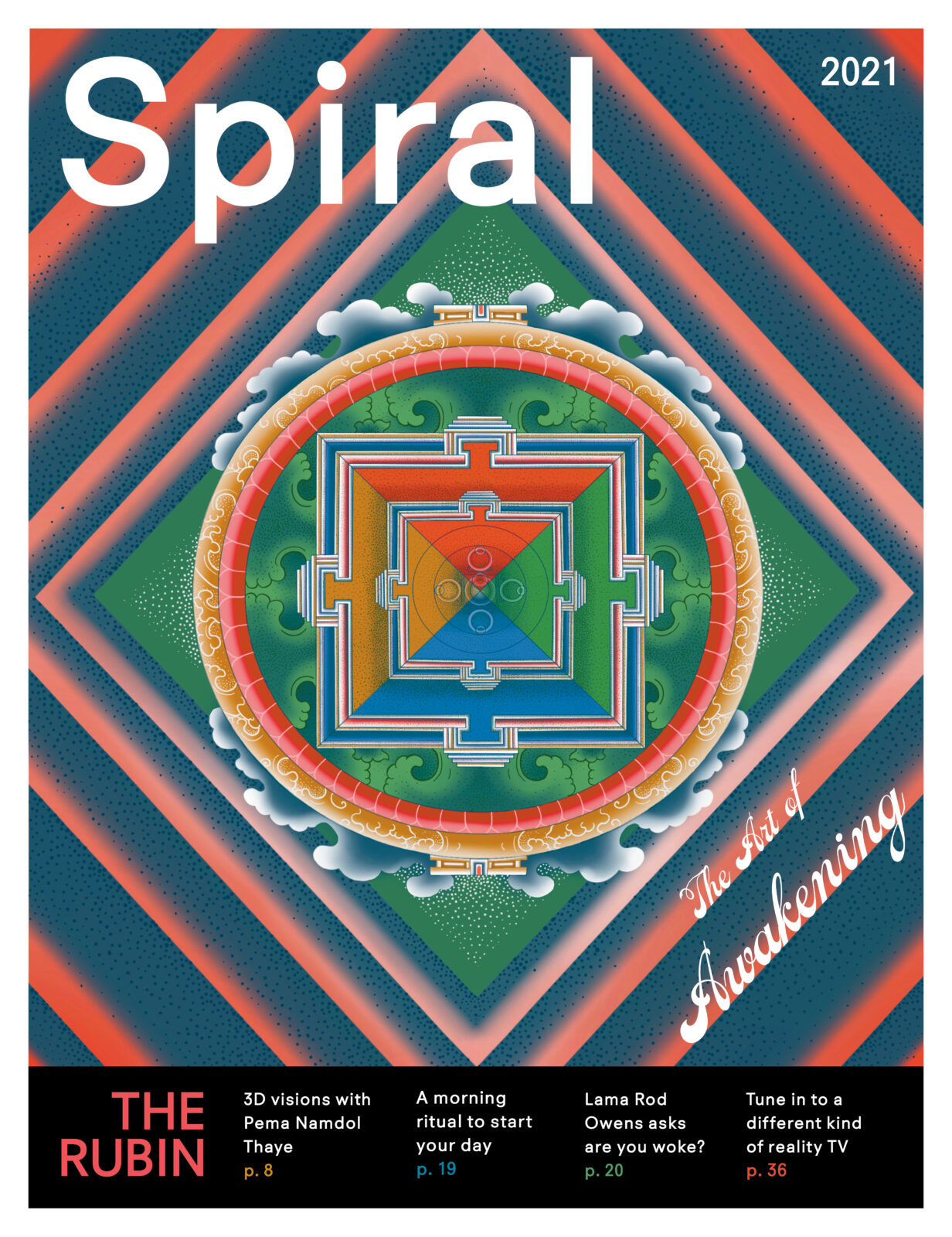
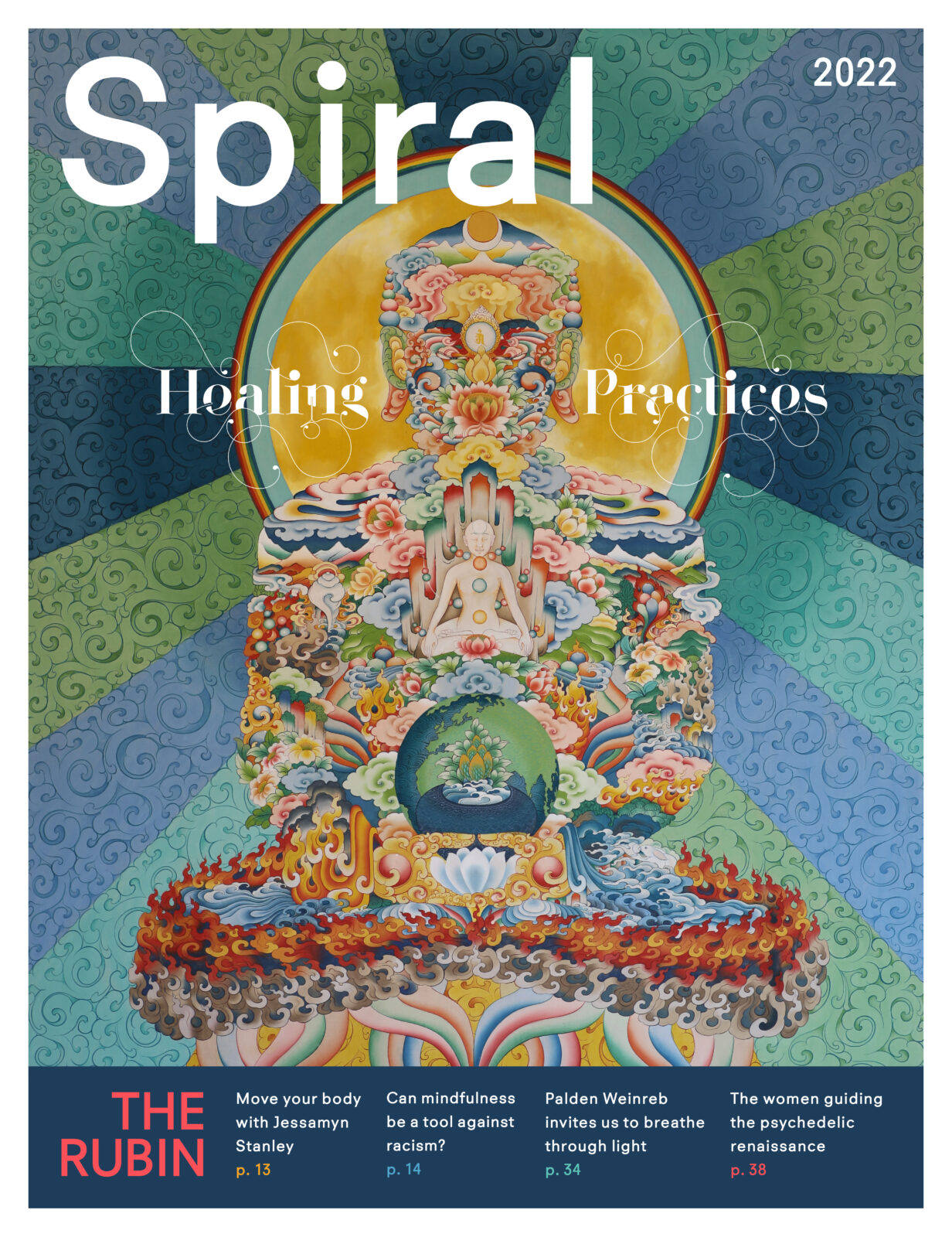
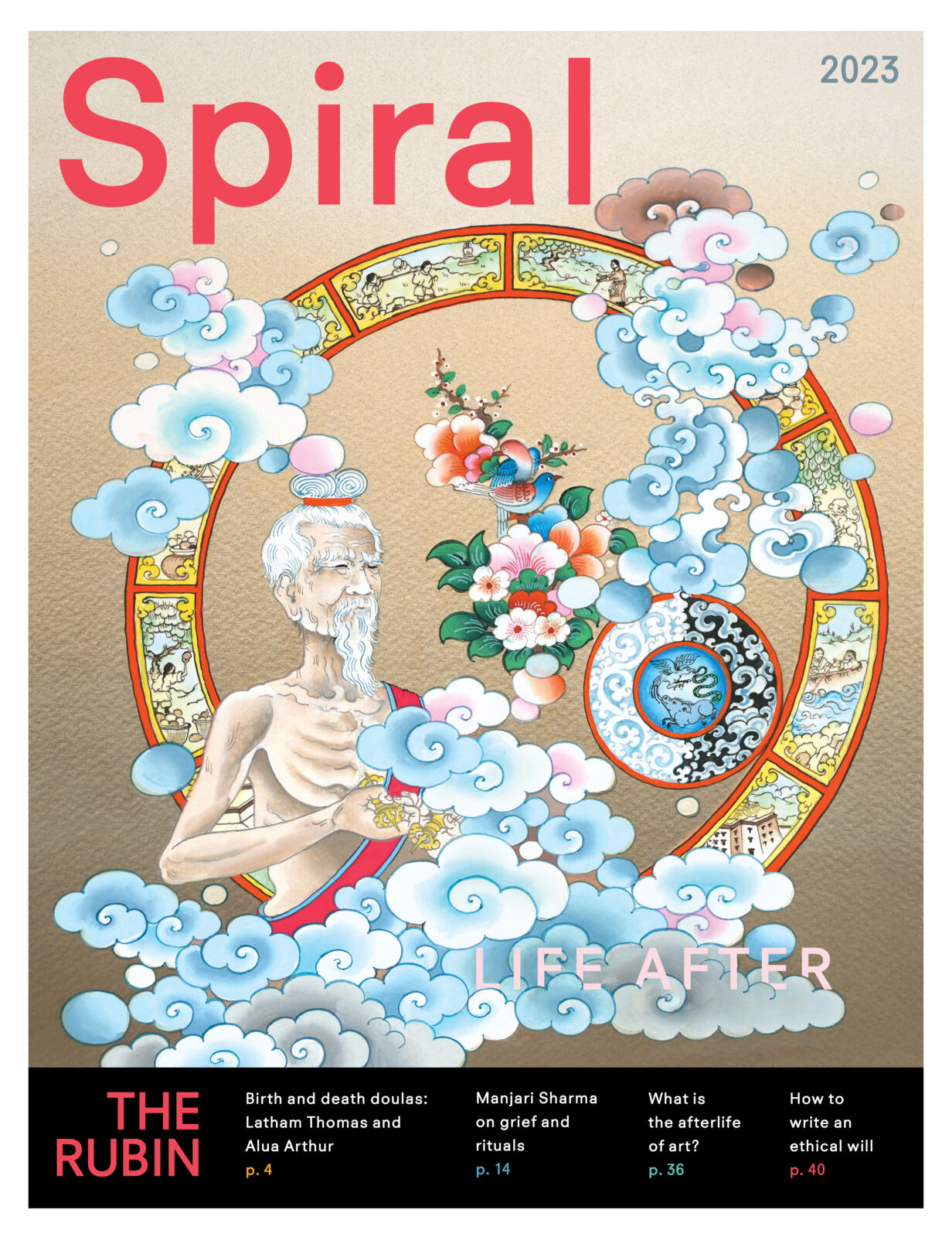
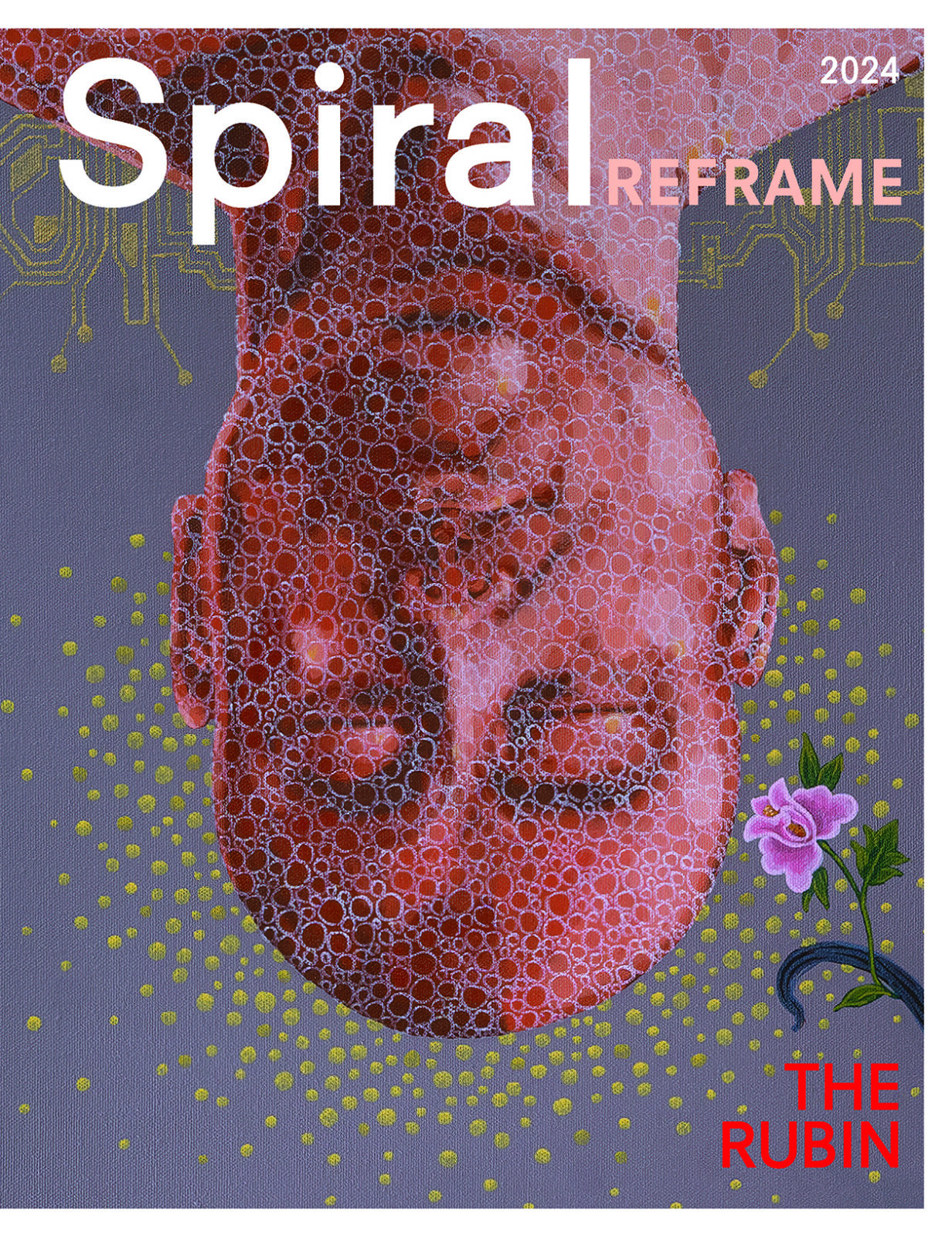
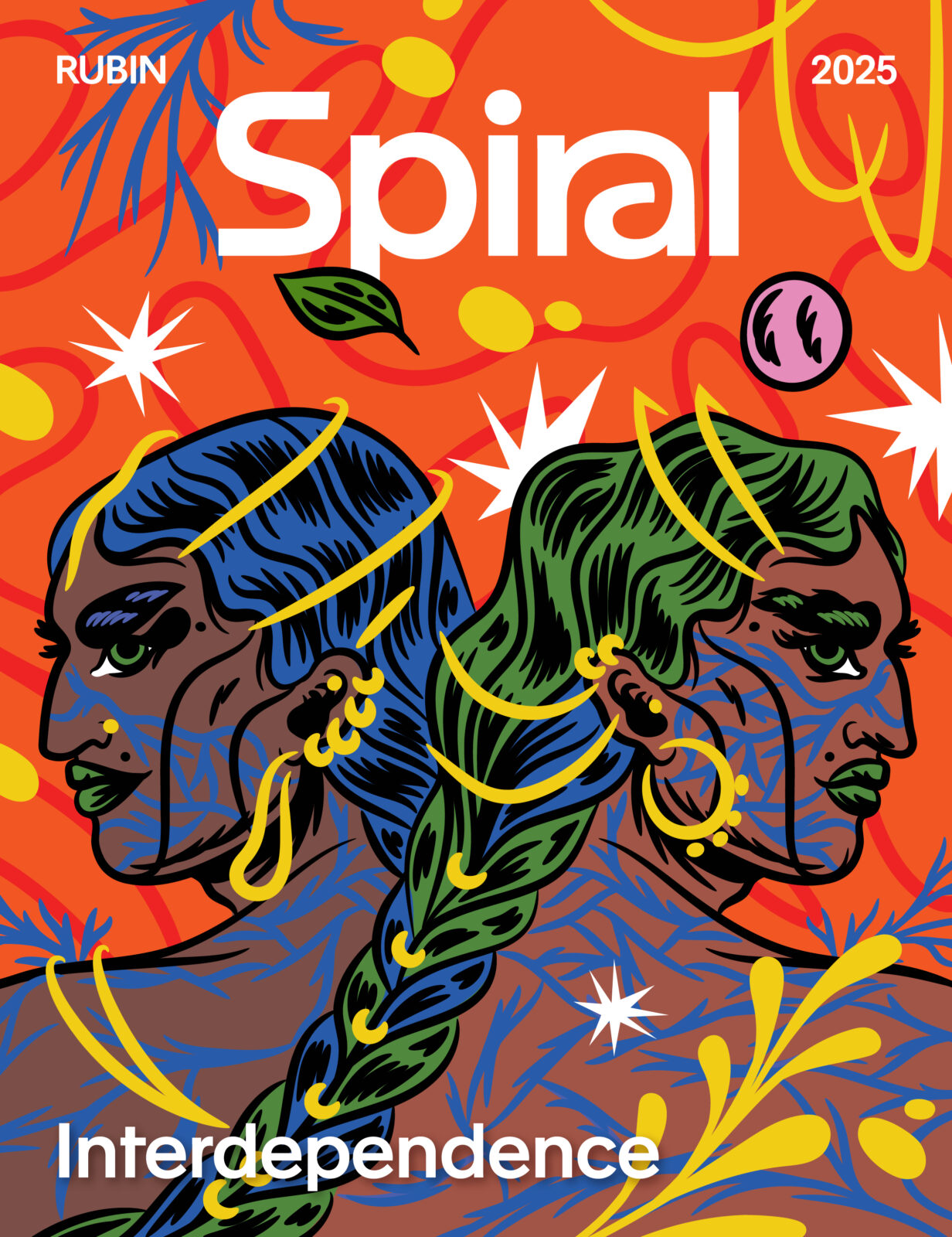
The team is hard-pressed to choose favorites from the many articles published over the history of Spiral, but there are some that have particularly special meaning.
Howard Kaplan: Helping build Spiral and continuing to contribute has brought me in touch with a world of interesting people and ideas. Two standouts are my interviews with musician Moby and innovative theater director Peter Sellars and learning how Buddhist ideas are integral to their lives and creative processes.
Sarah Zabrodski: The first interview I conducted for Spiral was with Lama Allione Tsultrim about female power in Buddhism, and I was blown away by her wisdom and insights. Other favorites include “It Matters How You Are Born; It Matters How You Die,” “Celestial Visions in Three Dimensions,” and “Listening to the Silence.” I tend to love the interviews most.
KJ Bowen: “Ritual Lens” was one of my favorites. It’s deeply moving. I had never seen photographs like that! The subject matter, the documentation, and rituals around the author’s mother’s death really hit me hard. I also always love the interactive activities, like “Draw Bridge.”
Jorrit Britschgi: Spiral magazine highlights a variety of voices—starting with the fabulous cover art, to an article that explains death, the bardo, and the concept of rebirth in Tibetan Buddhism, to a piece by a professor of social and natural science about social networks, all the way to the object-focused centerfold that maps out an artwork and explains it in great detail—what it means and how it’s to be looked at.
I find myself drawn to contributions that are at first unexpected—whether that’s the perspective on a given topic or how it fits into the magazine overall—until one realizes how it relates to the topic that’s at the center of Spiral.
When Spiral debuted in 2017, the world was a very different place—and so was the Rubin. Our transition into a global museum unbound by a physical space expands the possibilities for future issues.
Jorrit Britschgi: What excites me about the next ten issues is how we can continue to provide readers and audiences content that is highly inspiring, thought-provoking, and shows some of the timeless, interesting concepts and ideas expressed in Himalayan art.
Howard Kaplan: Spiral’s role has grown even more important as the Museum has closed its doors on West 17th Street, and we find ourselves in an uncertain world. Over the next ten years I see the magazine as a primary messenger of the Museum’s mission. A museum without walls needs a magazine with pages that illuminate, investigate, and inspire. We’ll continue to explore themes that illuminate our lives and shine light on darkness and wake us up on a personal, spiritual, and community level.
KJ Bowen: There are so many insightful concepts to explore within the Rubin’s artworks. We often say it is like a “layer cake.” So many things are revealed with each layer you delve into. It is delightful to see how the authors approach the theme through material that is education or practical, or formats like fiction and creative writing. Perception and perspective are different for everyone, so having different ways to take in the theme is helpful.
Sarah Zabrodski: On a personal level, I always find going so deeply into each theme such a revelatory process. I have learned so much from working on this magazine—whether about non-attachment (the Reframe issue), death (the Life After issue), or wrath—and I’m excited to see what future themes arise and what new learnings will emerge from them.

Photo by Filip Wolak
Howard Kaplan: Spiral filled a need and continues to do so, especially for those of us who still believe in the power and beauty of print and the tactile pleasure we get from holding a magazine in our hands. Spiral helps translate Buddhist ideas found in the Rubin’s vast collection of Himalayan art for people who may have been unfamiliar.
Sarah Zabrodski: My greatest hope is that Spiral gently provokes people to see something from a new, perhaps unexpected angle—a new idea, perspective, or connection that strikes something in them and inspires a new insight about themselves or the world.
KJ Bowen: It gives a microphone to those we don’t usually hear from, presenting thoughts and perspectives in ways that might not have been previously considered. I hope it opens up dialogue for people, and I hope people seek Himalayan art and Spiral as a means to understand the human condition, to foster connection and well-being.
Jorrit Britschgi: I really hope one of the legacies of Spiral is for people who may have never heard of or seen Himalayan art to find through this type of publication an entryway into a world that is highly intriguing, that allows us to learn about the world—and perhaps ourselves—in a new way. It fosters the curiosity to look beyond the surface, to ponder deeply, and consider different perspectives.

KJ Bowen is the head of graphics and branding at the Rubin Museum of Himalayan Art.
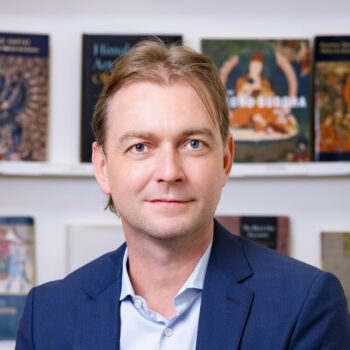
Jorrit Britschgi has served as the Rubin Museum’s Executive Director since 2017. Before joining the Rubin, he served as Head of Exhibitions and Publications at the Museum Rietberg in Zurich, Switzerland, where he was manager of the exhibitions program and curated numerous exhibitions. Mr. Britschgi also served as publisher of Artibus Asiae, one of the leading scholarly journals in Asian art and archaeology, for over a decade.
Jorrit Britschgi graduated from Zurich University with an MA in art history and Sinology (2005) and a PhD, with highest honors, in East Asian Art History (2009). Besides his research activities, he’s taken part in archaeological excavations in Eastern China and Bhutan, and curated numerous exhibitions on paintings from the Indian Himalayan region. Mr. Britschgi has received grants from federal and private foundations to pursue his studies and research. He is a 2017 alumni of the Getty Leadership Institute, and shares his expertise in an advisory capacity with other museums and individuals.

Howard Kaplan is an editor and writer who helped found Spiral magazine in 2017. He currently works at the Smithsonian and divides his time between Washington, DC, and New York City.
Christina Watson is the digital editor at the Rubin Museum of Himalayan Art.
Sarah Zabrodski is the senior editor and publications manager at the Rubin Museum.
Get the latest news and stories from the Rubin, plus occasional information on how to support our work.