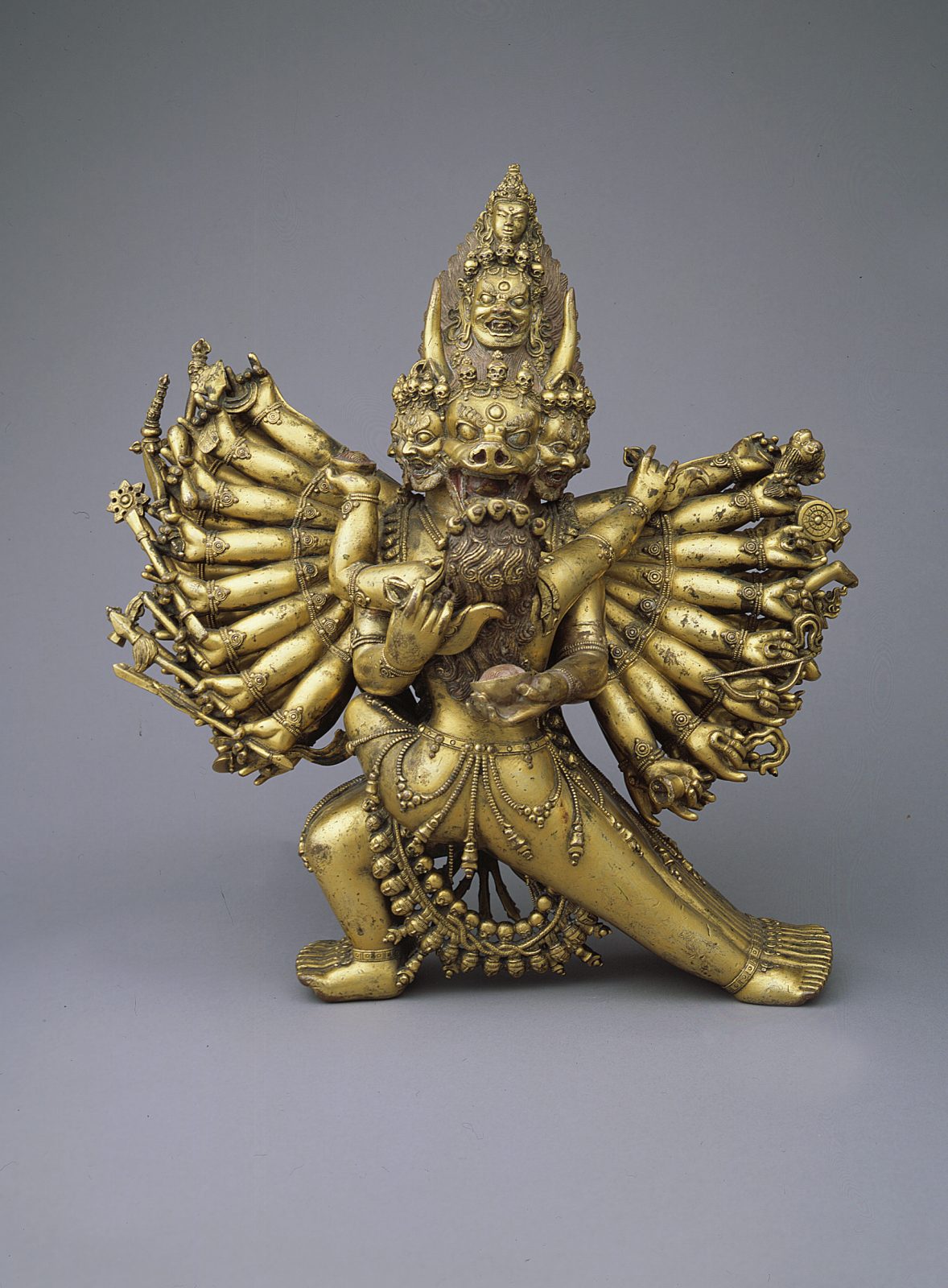
Vajrabhairava with Consort Vajravetali; Mongolia; 18th–19th century; gilt copper alloy; Rubin Museum of Himalayan Art; C2005.25.1 (HAR 68853)
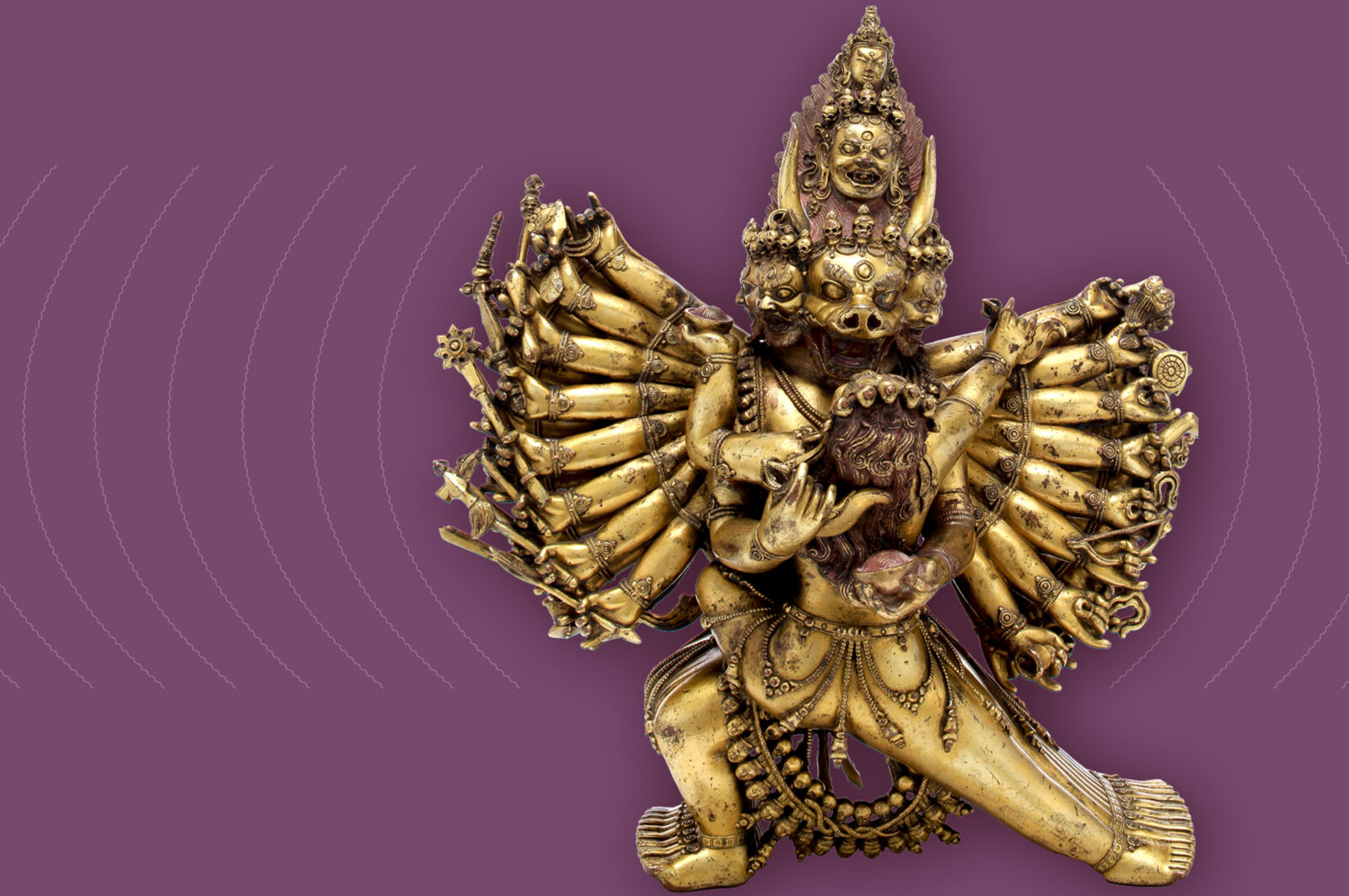
Vajrabhairava with Consort Vajravetali; Mongolia; 18th–19th century; gilt copper alloy; Rubin Museum of Himalayan Art; C2005.25.1 (HAR 68853)
This terrifying deity is armed with the skillful means to transform
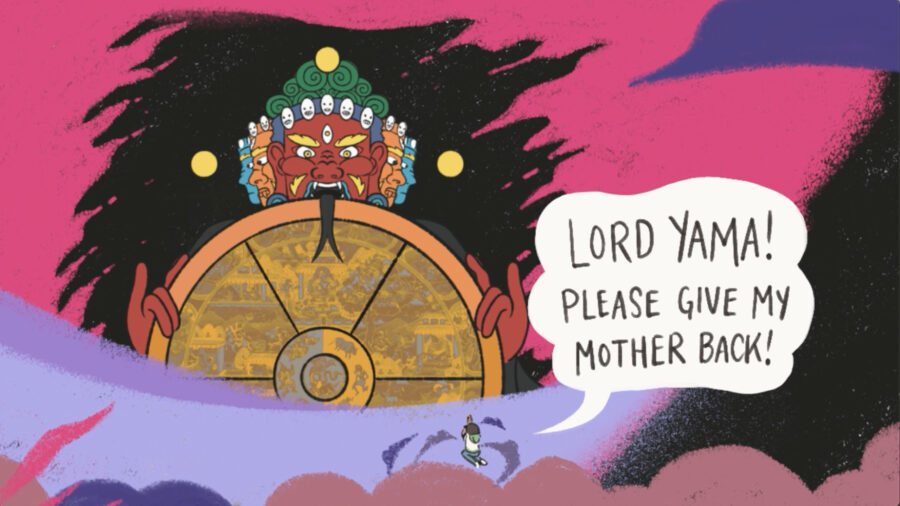
Vajrabhairava is considered the wrathful emanation of Manjushri, the bodhisattva of wisdom. He assumed this form to mirror back the terrifying appearance of the Lord of Death, Yama. Overpowered and subdued, Yama became a protector of the Buddhist faith. Vajrabhairava is also known as Yamantaka, the Destroyer or Slayer of Yama, in reference to his power to transform even the Lord of Death.
Vajrabhairava is a prominent deity in the Sakya Tibetan Buddhist tradition and one of the most important meditation deities in the Geluk tradition, which is prevalent in Mongolia. This form is based on a vision of the tradition’s founder, Tsongkhapa (1357–1419). In Mongolia Vajrabhairava’s practices helped supplant indigenous shamanistic exorcism rituals.
Vajrabhairava’s union with consort Vajravetali symbolizes the confluence of the compassionate method and the wisdom of perceiving ultimate reality, two aspects necessary for enlightenment, as explained in Tantric Buddhist texts and practices. Vajravetali is equally wrathful in appearance with three bulging eyes, head adorned with skulls, and the curved knife and skull cup in her hands. Her left leg hooks around and grips the male deity.
Vajrabhairava has nine heads, thirty-four arms, and sixteen legs. His buffalo head is topped by the head of Manjushri, signifying the deity’s true nature. His other wrathful heads have three eyes and are adorned with crowns of skulls. A garland of severed heads drapes from his shoulders almost down to the ground. These features mirror the terrifying appearance of the Lord of Death, Yama, but are transmuted by wisdom and symbolize overcoming obstacles on the path to liberation from fear, attachment, and anger toward full awakening.
Vajrabhairava’s thirty-four hands wield various implements. The two hands that embrace the consort hold a skull cup (kapala), a reminder of impermanence symbolizing wisdom, and a curved knife, symbolizing cutting ignorance at Vajrabhairava is considered the wrathful emanation of Manjushri, the bodhisattva of wisdom. He assumed this form to mirror back the terrifying appearance of the Lord of Death, Yama. Overpowered and subdued, Yama became a protector of the Buddhist faith. Vajrabhairava is also known as Yamantaka, the Destroyer or Slayer of Yama, in reference to his power to transform even the Lord of Death. Vajrabhairava is a prominent deity in the Sakya Tibetan Buddhist tradition and one of the most important meditation deities in the Geluk tradition, which is prevalent in Mongolia. This form is based on a vision of the tradition’s founder, Tsongkhapa (1357–1419). In Mongolia Vajrabhairava’s practices helped supplant indigenous shamanistic exorcism rituals.
Vajrabhairava with Consort Vajravetali; Mongolia; 18th–19th century; gilt copper alloy; Rubin Museum of Himalayan Art; C2005.25.1 (HAR 68853)

Elena Pakhoutova is senior curator, Himalayan art, at the Rubin Museum of Himalayan Art and holds a PhD in Asian art history from the University of Virginia. She has curated several exhibitions at the Rubin, including Death Is Not the End (2023), The Power of Intention: Reinventing the (Prayer) Wheel (2019), and The Second Buddha: Master of Time (2018). More →
This article appears in issue 10 of the print edition of Spiral magazine under the title “Wrathful Wisdom.”

Get the latest news and stories from the Rubin, plus occasional information on how to support our work.