Kathmandu, Nepal
2023
Kathmandu, Nepal
2023
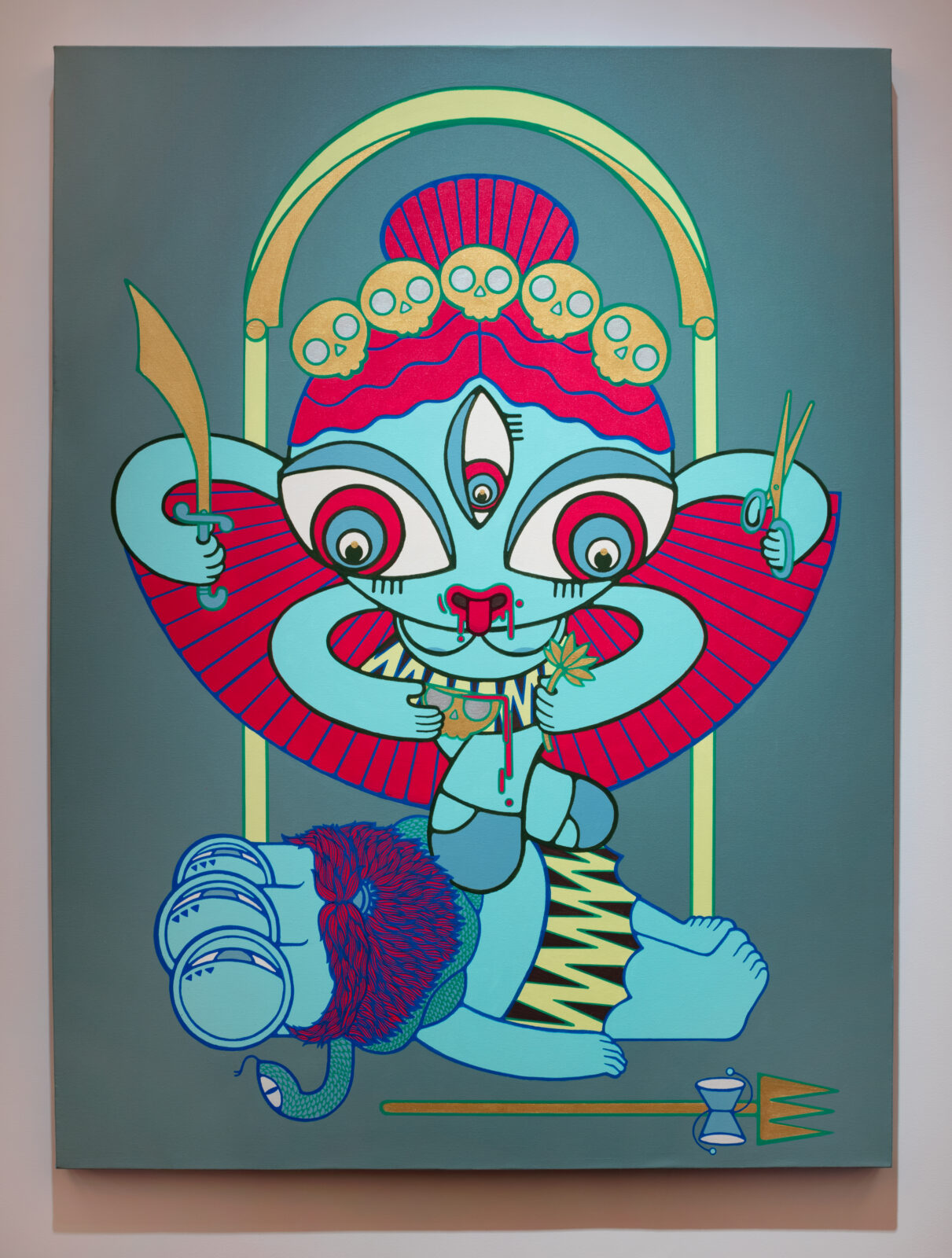
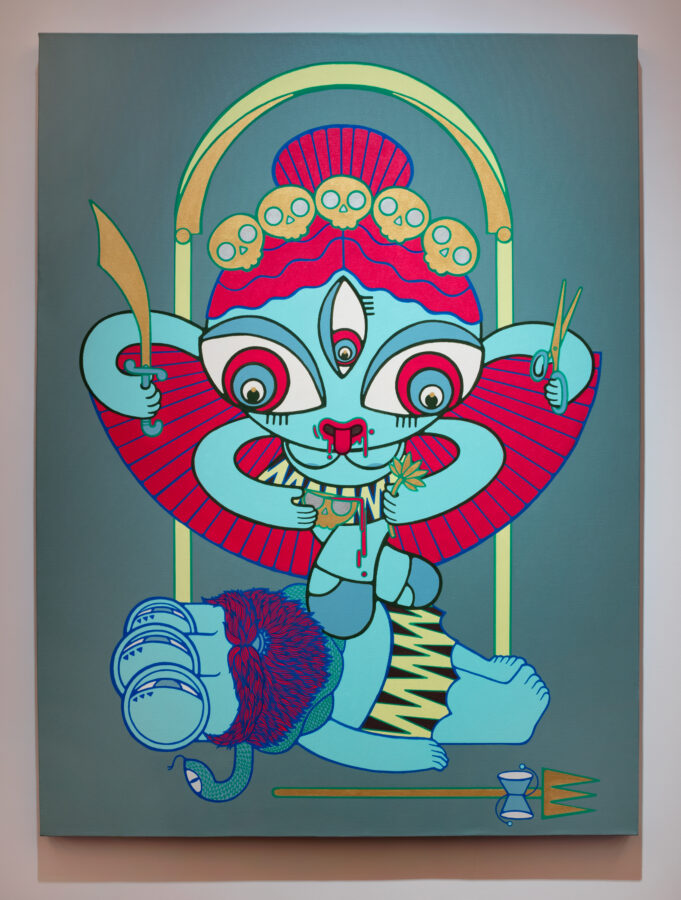
This painting is one in a series created by the Nepalese artist Shraddha Shrestha who is an independent muralist and illustrator based in Kathmandu. Growing up in the aesthetically rich city of Patan, she was inspired by its culture and traditional architecture. Much of her art features fantastical characters. Shraddha is one of the artists in the illustrators collective Virangana Comics, which published the first all-women comics anthology in Nepal. In this series she pays tribute to the powerful, wise, capable, and infinitely amazing Hindu goddesses called Mahavidyas.
This painting depicts the tantric Hindu goddess Tara, not to be confused with the Buddhist form of Tara. She derives her name from “star.” She is the goddess of all sources of energy, as it is believed that the energy of the sun emanates from her. Acting as a maternal figure, she shielded Lord Shiva when he consumed poison churned from the sea. In a realm where men typically assume the role of protectors, she stands as a guide, protector, and grantor of salvation for humanity.
A religious movement that originated in India around the fifth to seventh century with sacred writings and esoteric teachings and practices transmitted from teacher to student through initiation. These remain an important part of Hinduism and Buddhism today.
A kind of energy that can be used, individually and collectively, to effect change.
In Buddhism gender is considered more fluid compared to some other religions. Certain traditions emphasize the importance of all genders in achieving enlightenment. The feminine is considered an embodiment of wisdom and the masculine is an embodiment of method.
Buddhist practitioners in some traditions believe that cutting through ordinary perceptions that keep us in the endless cycle of death and rebirth, known as samsara, can create a powerful and enhanced divine identity that leads to enlightenment.
The antidote to ignorance, with the highest form of wisdom being an understanding of the true nature of reality and all phenomena. In Buddhism studying the nature of interdependence and emptiness is considered an important step for attaining wisdom.
The cultivation of a strong aspiration to help sentient beings overcome suffering. In Buddhist Mahayana teaching, compassion is the seed for attaining full enlightenment.
Hindu gods (deva) are thought to be manifestations of the absolute, or Brahman. The goddesses (devi) are considered manifestations of the Great Mother Goddess (Mahadevi), who is seen as the counterpart to Brahman.



Get the latest news and stories from the Rubin, plus occasional information on how to support our work.