Nepal
19-20th century


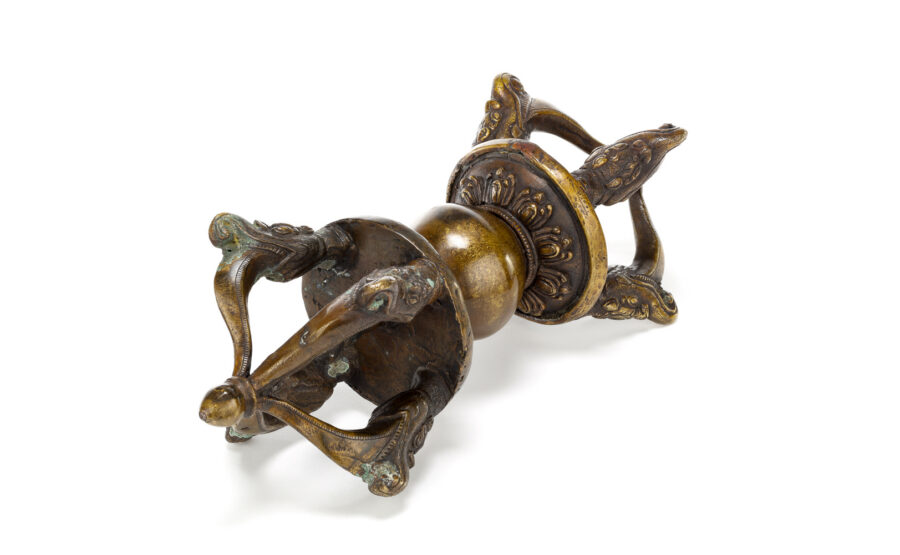

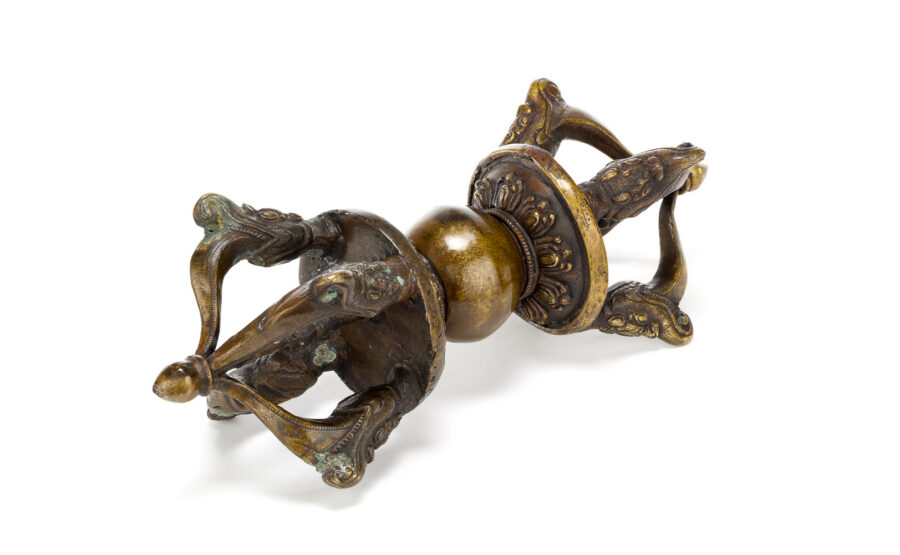


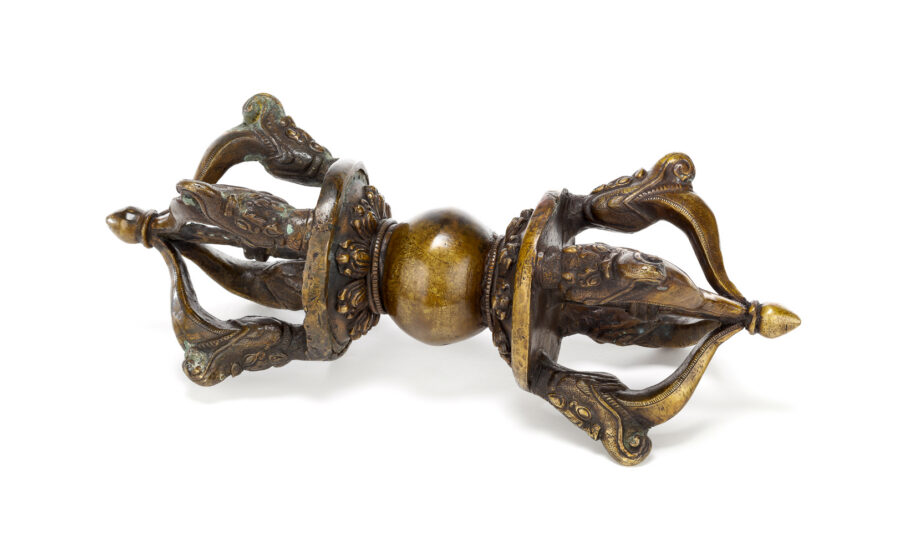
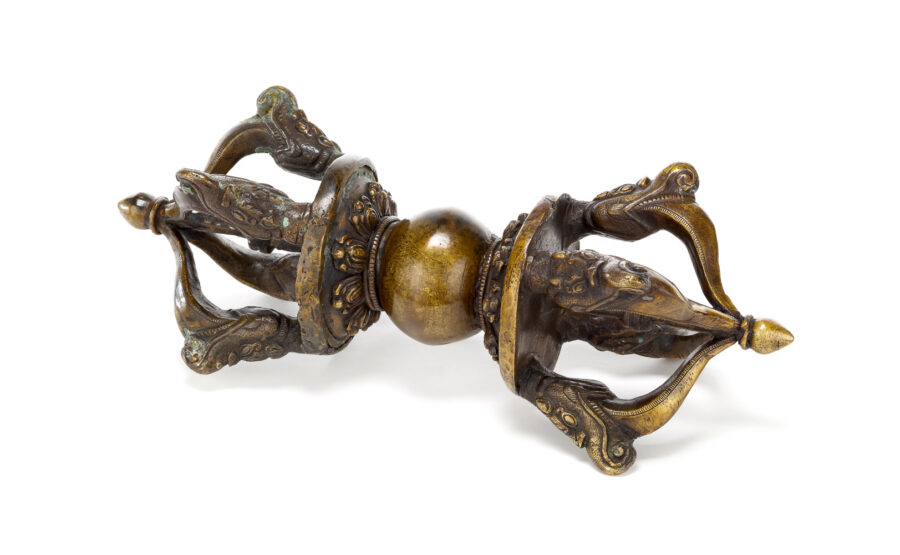
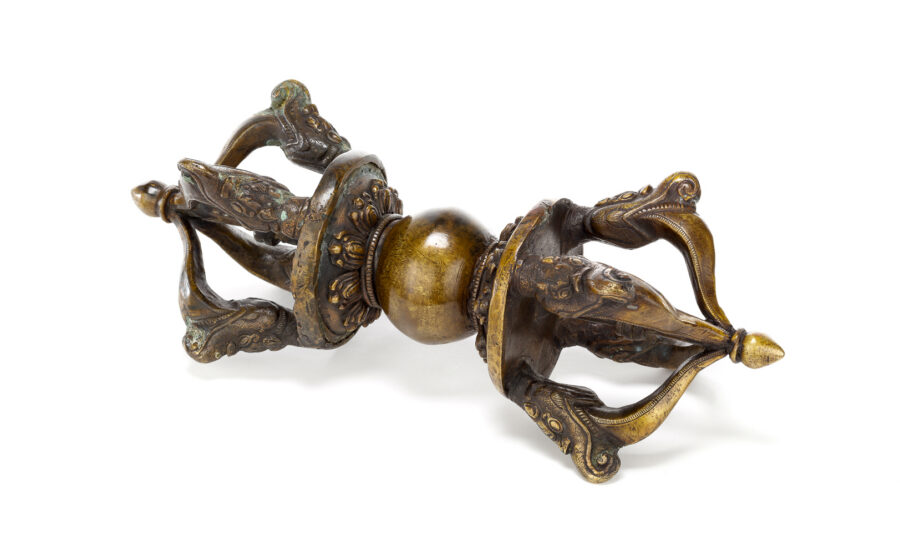


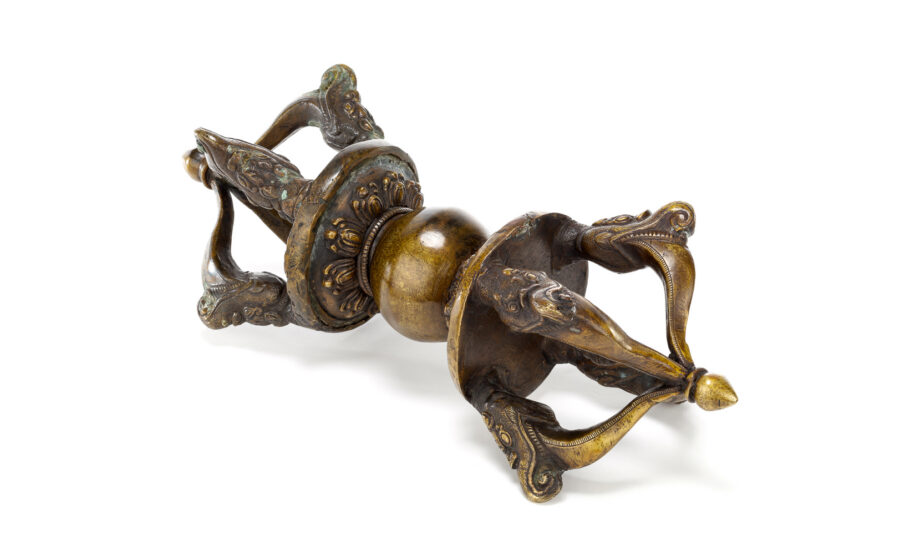


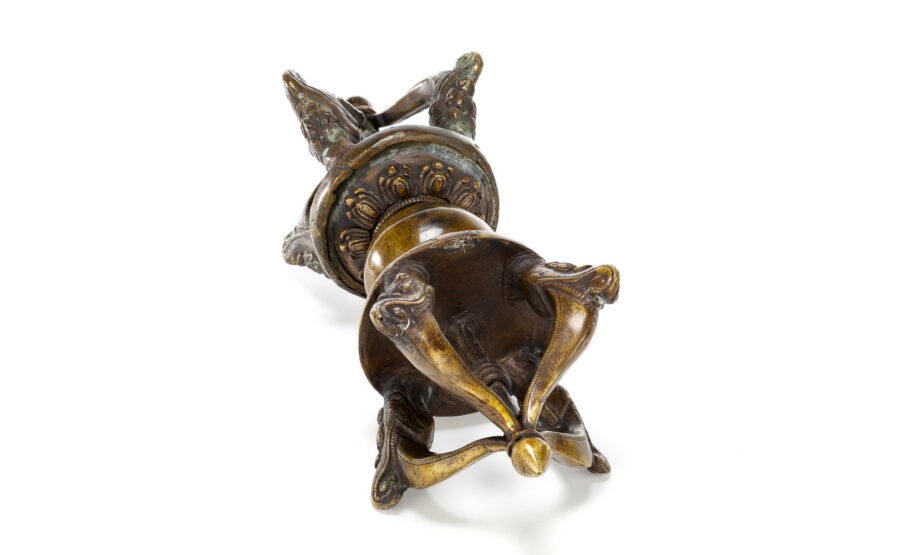


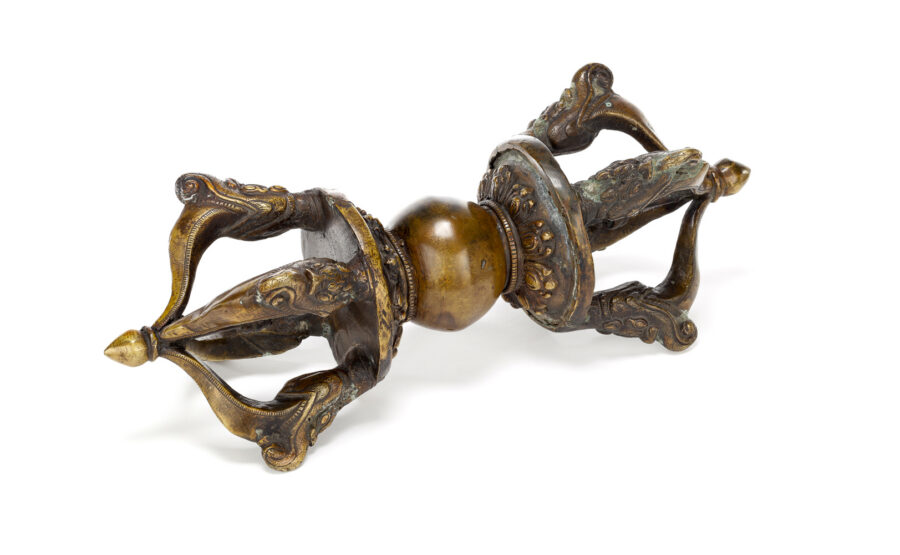


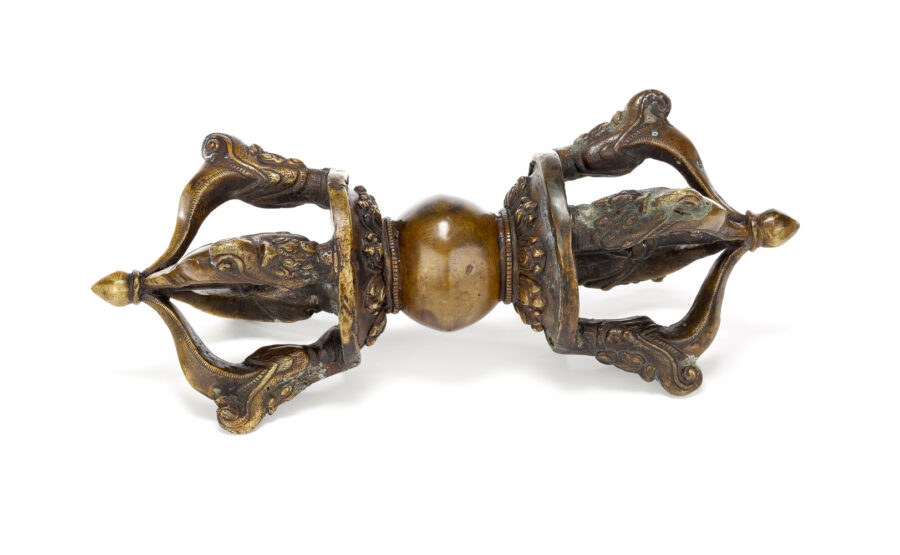


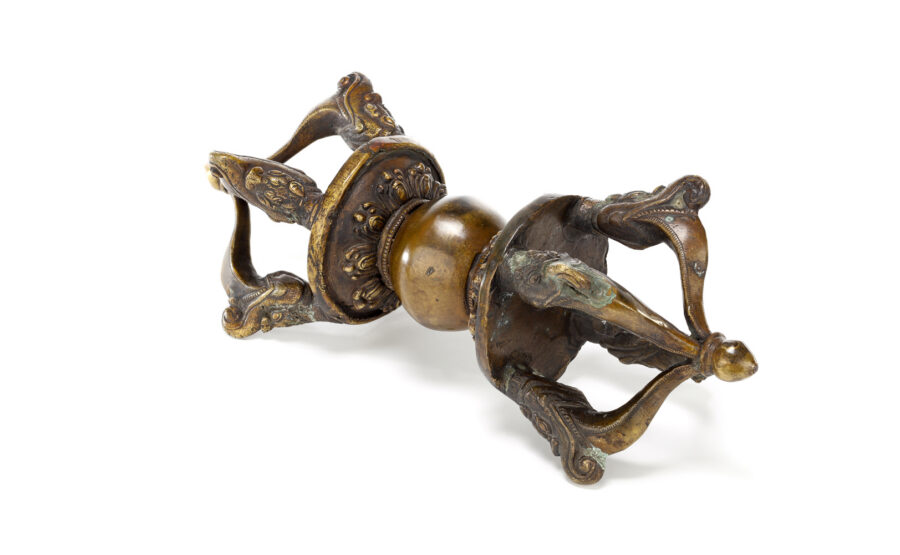


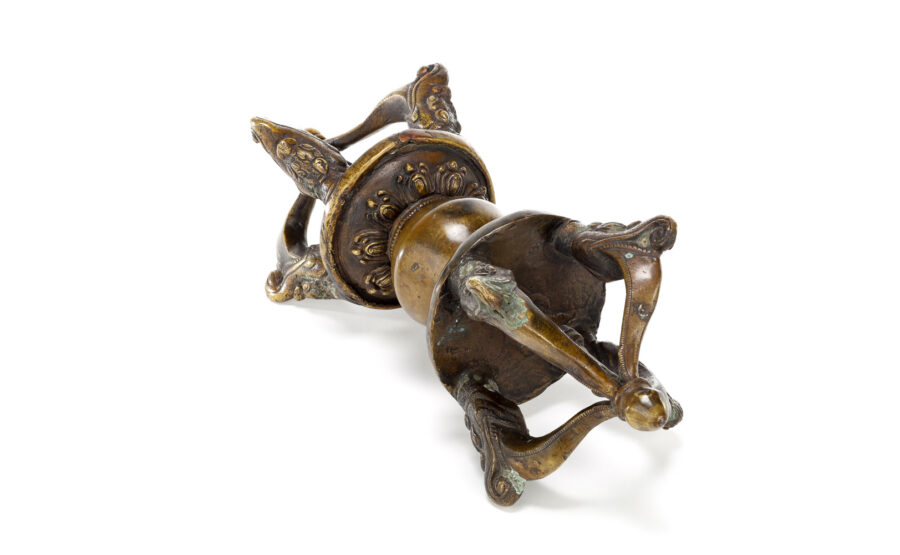


A vajra is a ritual scepter used in tantric practices and an attribute of tantric masters and deities. It generally symbolizes method, the male aspect of enlightenment.
Nepal
19-20th century

This object is a ritual implement called a vajra, usually described as an adamantine, or indestructible, thunderbolt scepter. This symbolic ritual implement is used in tantric, or Vajrayana Buddhist, practices and rites. Practitioners often use a vajra paired with another tantric implement, the hand-held bell (gantha). The two represent the union of wisdom and method in these practices. In tantric iconography, deities and Buddhist teachers often hold a vajra and bell.
This large-scale, five-pronged vajra is representative of the Newar Buddhist tradition. Being too large for hand-held use, it may have been used as a symbol sanctifying the ground for a tantric mandala laid out during rituals. Heads of the mythical sea creature makara adorn the bases of each of the vajra’s prongs, while lotus petals decorate its grip. These iconographic elements are commonly found on vajras of all sizes. This vajra was cast in several parts and assembled.
None found

A vajra is a ritual scepter used in tantric practices and an attribute of tantric masters and deities. It generally symbolizes method, the male aspect of enlightenment.
A religious movement that originated in India around the fifth to seventh century with sacred writings and esoteric teachings and practices transmitted from teacher to student through initiation. These remain an important part of Hinduism and Buddhism today.
A kind of energy that can be used, individually and collectively, to effect change.
Holding two opposing views—like good and evil, suffering and happiness, self and other—and believing that they exist intrinsically. Non-duality collapses these distinctions to reveal the unity of all things.
Prescribed practices that carry symbolic meaning and value within a specific tradition and are intended to attain a desired outcome. Rituals are usually done as part of a ceremony or regular routine.
The Himalayan kingdoms of the Kathmandu Valley were significant centers of Buddhist culture. Nepalese kings, Buddhist institutions, and ordinary people patronized the vibrant art guilds. The artistic traditions of the regions are well-known in Tibetan areas and beyond, and Newar artists have always been in high demand throughout Tibetan regions and Inner Asia.
Get the latest news and stories from the Rubin, plus occasional information on how to support our work.