Amrit Karki (b. 1990) is one of 26 artists participating in the 2026 sā Ladakh Biennale, a regenerative art biennale unfolding over 3,000 meters above sea level, focusing on themes of climate, culture, and community. Amrit, the first artist from Nepal to participate, has developed new work in Lamaruyu, Ladakh, following a monthlong residency.

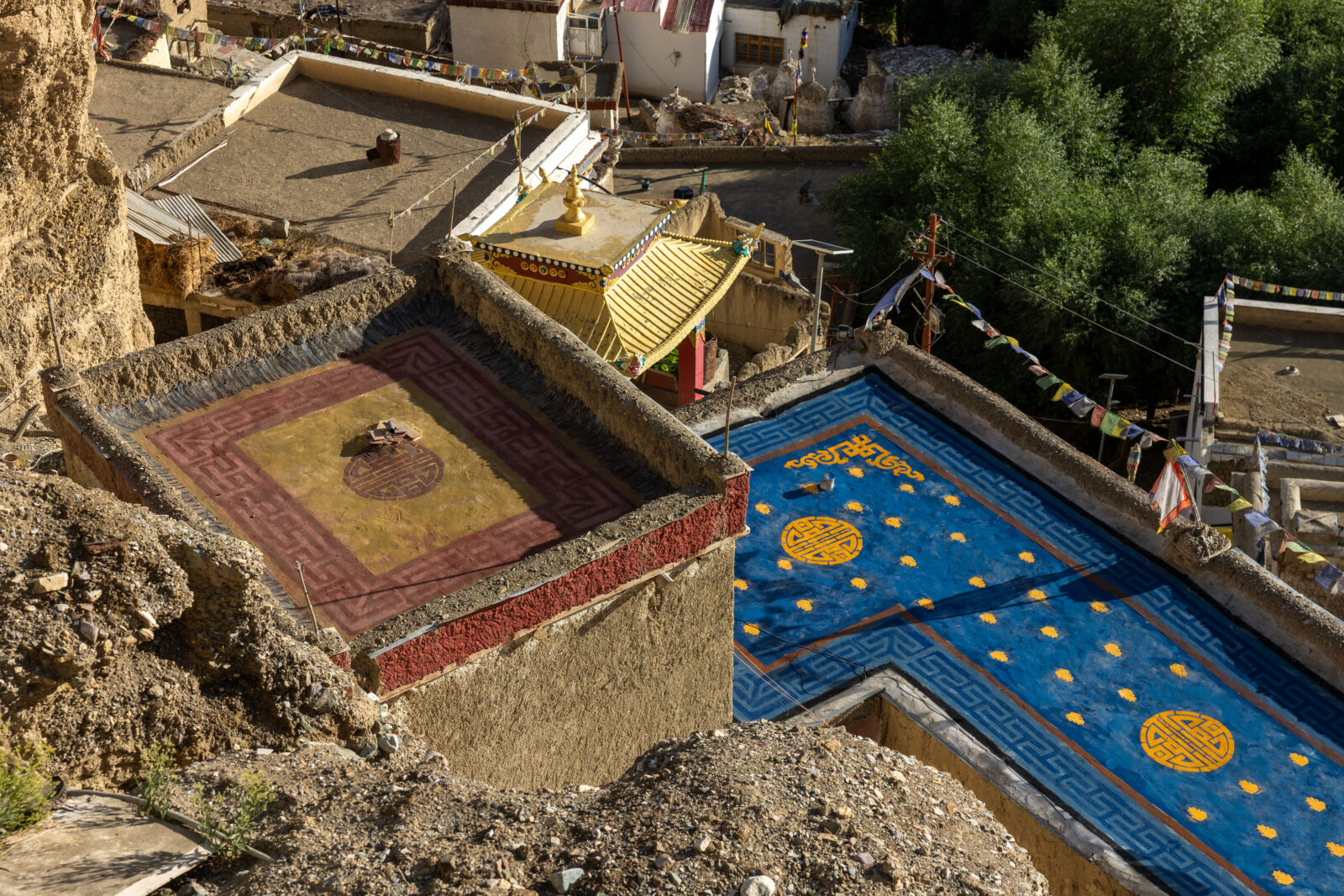
Covering a total area of 1,008 square feet across the adjacent roofs of a houses, Rising from the Soil, Soaring to the Sky utilizes natural soil to recreate local carpet designs which have been woven by people across Himalayan cultures. By creating large, colorful rugs that are woven from strands of local soil, the artist invites visitors to test the fragility of familiar spaces and begin to feel the threat posed to their homelands by natural and human forces.

Viewers become participants by mindfully walking around and into the artwork, physically initiating the slow dissolution of the soil back into the earth from where it arose. The wind and possible rain will also gradually erase the work, asking the viewer to meditate on the idea of impermanence, and bringing them to experience repeated encounters with the ephemeral.

Both a visual and performing artist, Amrit lives and works in Pokhara, Nepal, and has achieved international recognition for his thought-provoking and often durational works that interrogate the bridge between the ephemeral and the eternal and the formulation of the formless. In 2024 he created a five-day performance, What You Have Given Me, I Set Free Forever, at the Nepal Art Council gallery, commissioned by the Rubin as part of the exhibition Reimagine: Himalayan Art Now and made possible through the Marina Abramović Institute.
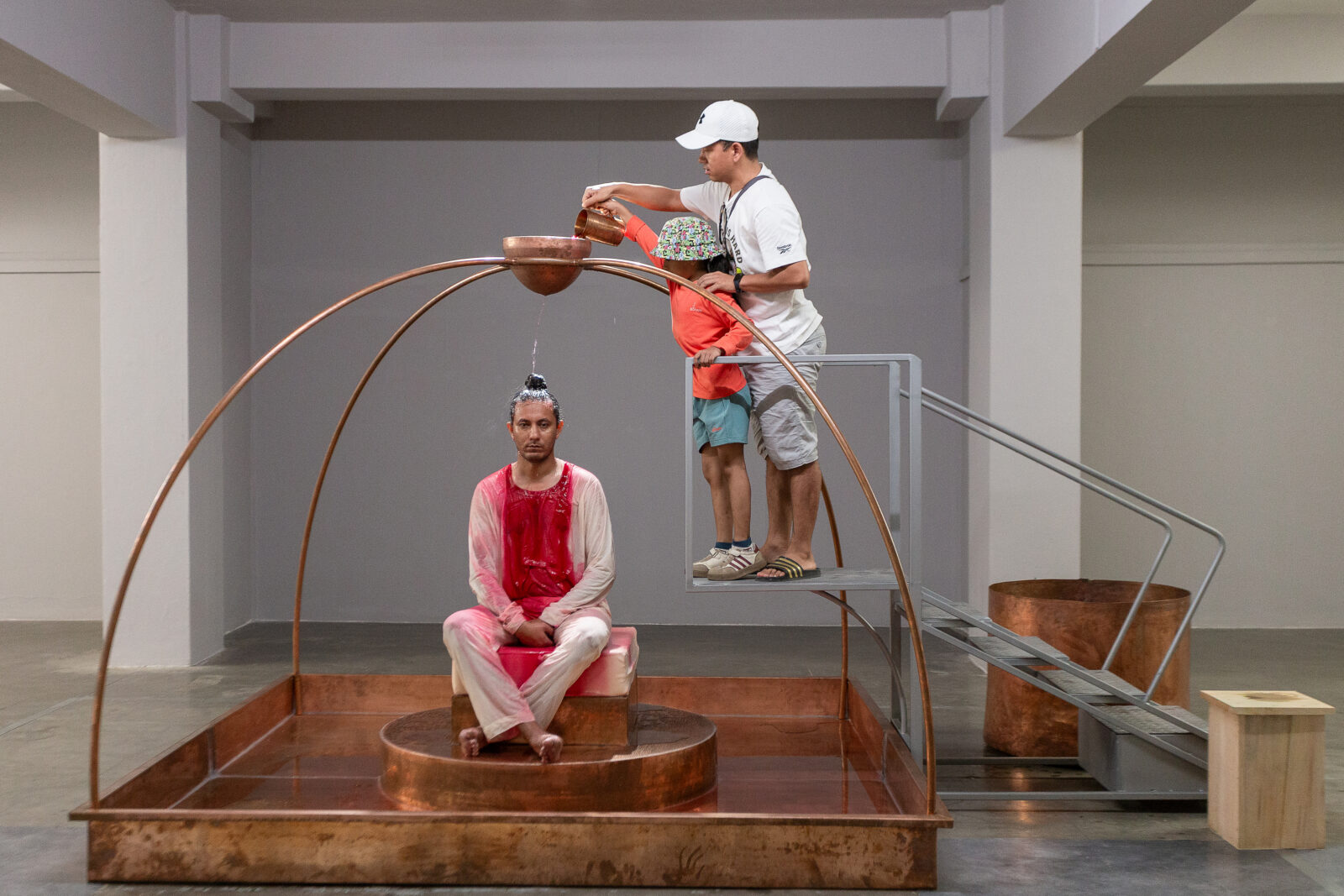
An adult and a child pour liquid into a suspended bronze bowl over a seated man who has red liquid running down his white shirt and pants

What You Have Given Me, I Set Free Forever
Photo by Sumit Dangol, courtesy of the Rubin Museum of Himalayan Art

The 2026 sā Ladakh Biennale, themed Signals from Another Star, brings together artists from Ladakh and around the world to foster meaningful exchange between local knowledge systems and global contemporary practices. The biennale foregrounds regeneration, learning, and ethical engagement, inviting artists and audiences to attune themselves to the frequencies of land, memory, climate, and lived experience.

Learn more about the biennale and participating 2026 artists at sabiennale.com/biennale2026.

Learn more about the partnership

Read more in the press release

ArtistArtist

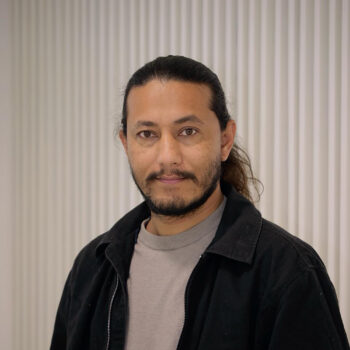
Adult man with long black hair tied back, a black mustache and beard, standing in front of a gray wall

As a visual and performing arts professional from Nepal, Amrit Karki has achieved international and national recognition for his thought-provoking works that interrogate the bridge between the ephemeral and the eternal and the formulation of the formless.

He was awarded the prestigious 2019–2020 UNESCO Madanjeet Singh Institute of Asian Arts Scholarship by the South Asian Foundation (SAF) at the School of Visual Art and Design, Beaconhouse National University, Pakistan. He was also awarded the 2020 Creative Young Artist Award in Nepal. The artist’s solo performance exhibitions include Breathing Through the Stillness (2022) at Nepal Art Council, and Undefiled (2021) at Beaconhouse University Gallery in Lahore, Pakistan. His work was also exhibited in South Korea at the Anyang Public Art Project (APAP7) 2023, Anyang, and at Fantasy Island 2023, Incheon. Amrit Karki previously exhibited at the 2019 Islamabad International Art Festival, the 2018 Asian Art Biennale, Bangladesh, and the 2017 Kathmandu Triennale.

SupportSupport

The Rubin Museum of Himalayan Art’s programs are made possible by generous donations from the Museum’s Board of Trustees, individual donors, foundations, corporations, and Friends of the Rubin.

Sign up for our emails

Get the latest news and stories from the Rubin, plus occasional information on how to support our work.

Discover artworks, articles, and more by typing a search term above, selecting a term below, or exploring common concepts in Himalayan art.