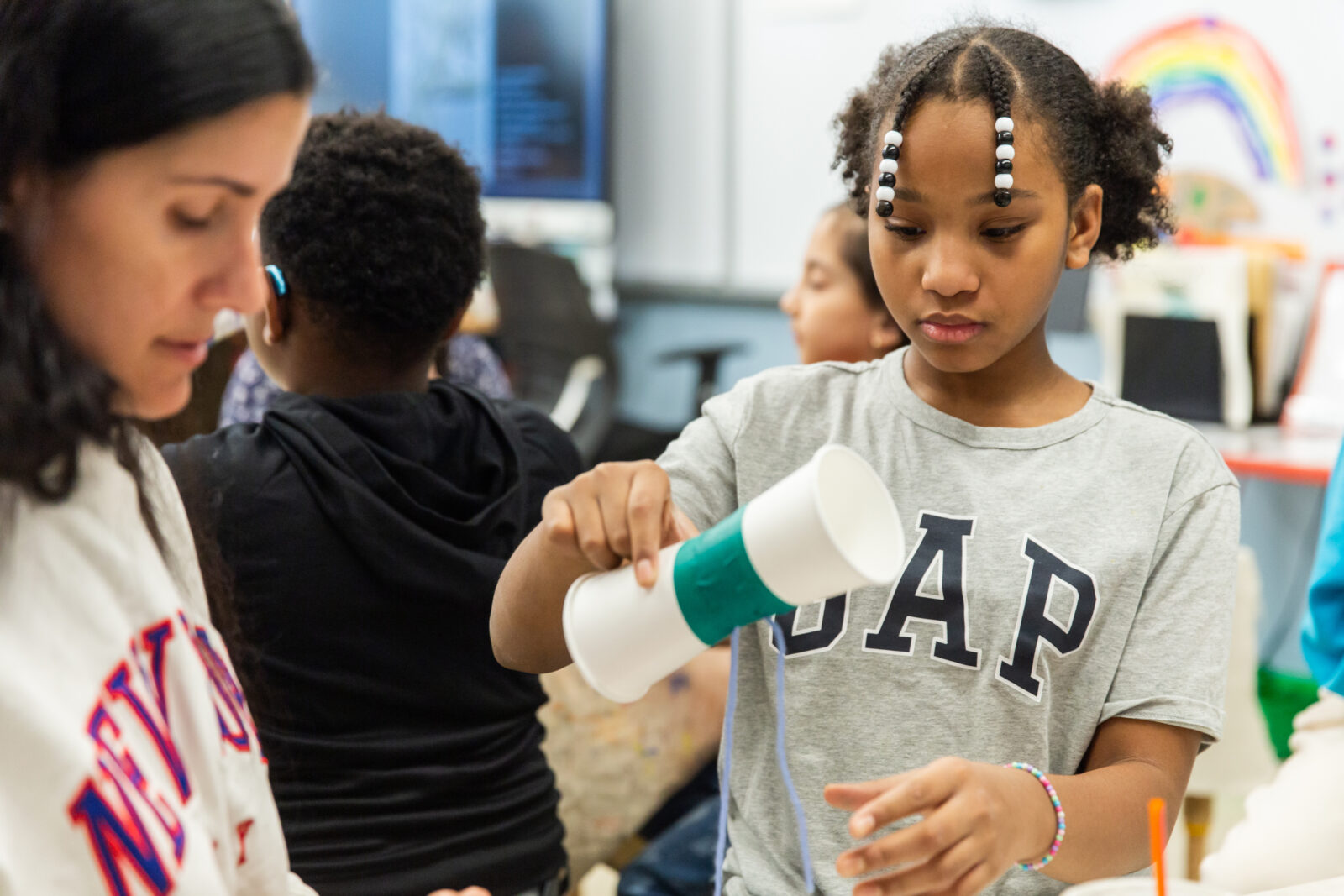
Photo by Jessica Bal
Photo by Jessica Bal
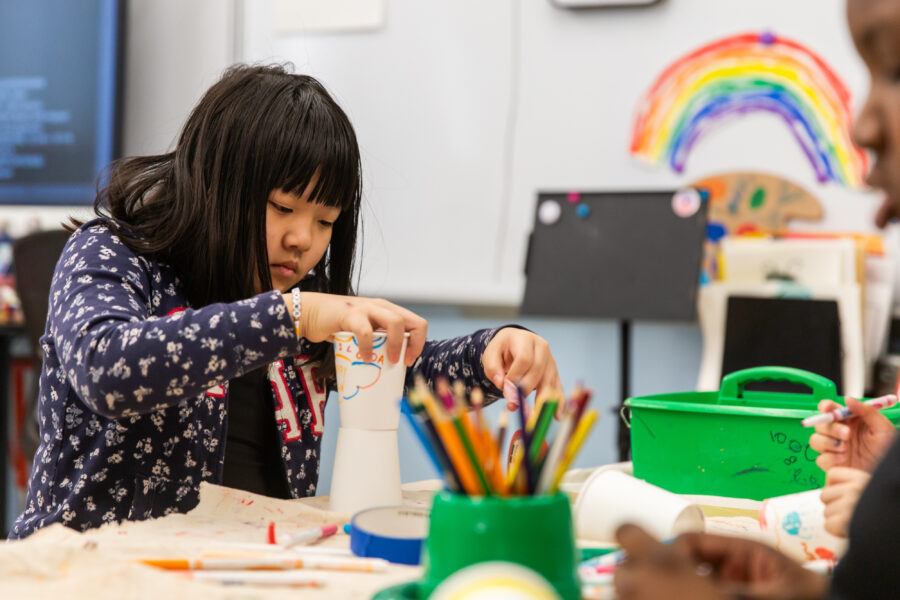
Mandala Lab in Your Classroom is a free program available to New York City schools that aims to cultivate emotional awareness and compassion through Himalayan art and its insights. Art-making activities, guided discussions, and engagement with objects from the Rubin’s collection help students tackle challenging emotions and navigate the complexities of the modern world using Social, Emotional, and Ethical (SEE) Learning® principles. While the in-school program serves New York City students (nearly 800 as of February 2026), the lessons are available to teachers worldwide for use in their own classrooms.
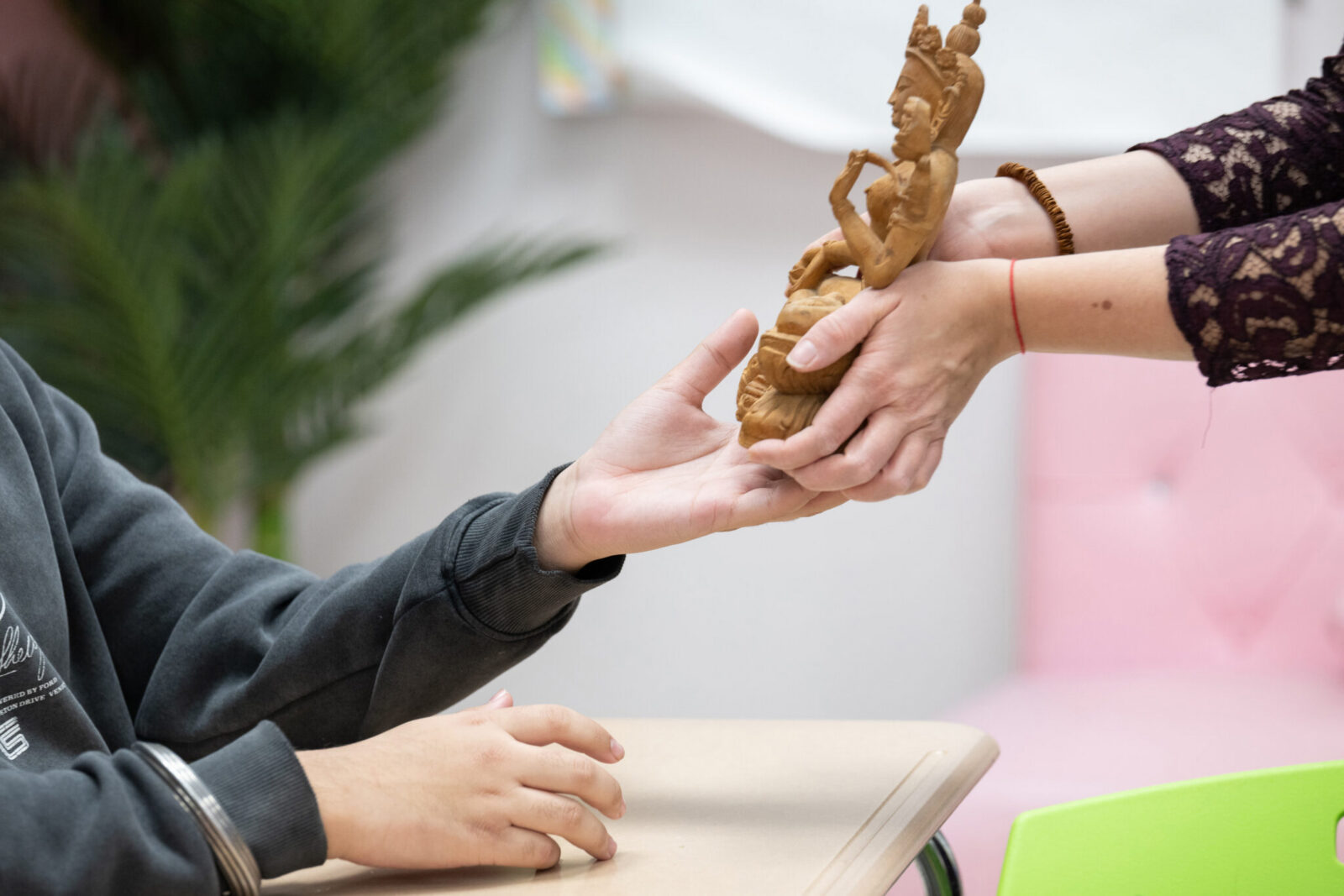
Photo by Filip Wolak
The program is rooted in the Mandala Lab installation, which invites people to get curious about their emotions. The Mandala Lab experience and associated classroom curriculum take inspiration from the Vairochana Mandala. In fact, the first lesson introduces students to the mandala—a teaching aid that Buddhist practitioners use to explore the five difficult mental states (kleshas).
Students learn about the association between the colors of the mandala and different emotions. Then they create board games to illustrate that—despite not having control over external circumstances—they do have a choice in how they respond. One former participant, a middle schooler named Anna, said the board game activity “pushed my imagination out of the box.”
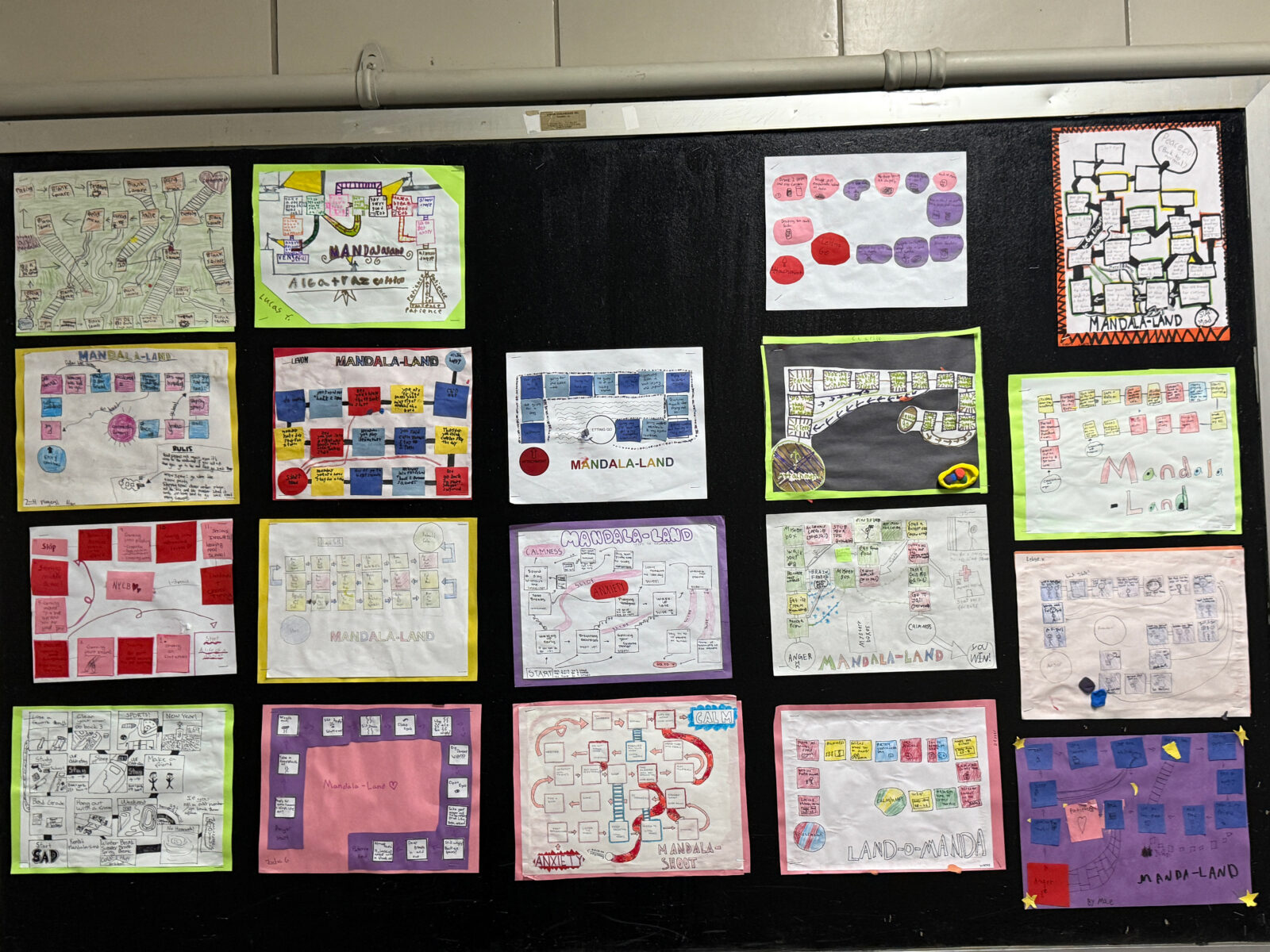
Photo by Jacqueline D. Smith
In the pride section of the Mandala Lab installation, visitors learn how egocentricity distorts our view of reality. This concept is translated into the classroom in the second lesson, The Power of Perception, by having students create their own optical illusions to emphasize how it’s possible to feel two conflicting emotions simultaneously. A different emotion is revealed depending on how the optical illusion is oriented, demonstrating that a change in perception can help in overcoming challenging situations. Ethan, an 8th grader, learned that “depending on your perspective your thoughts would change.”
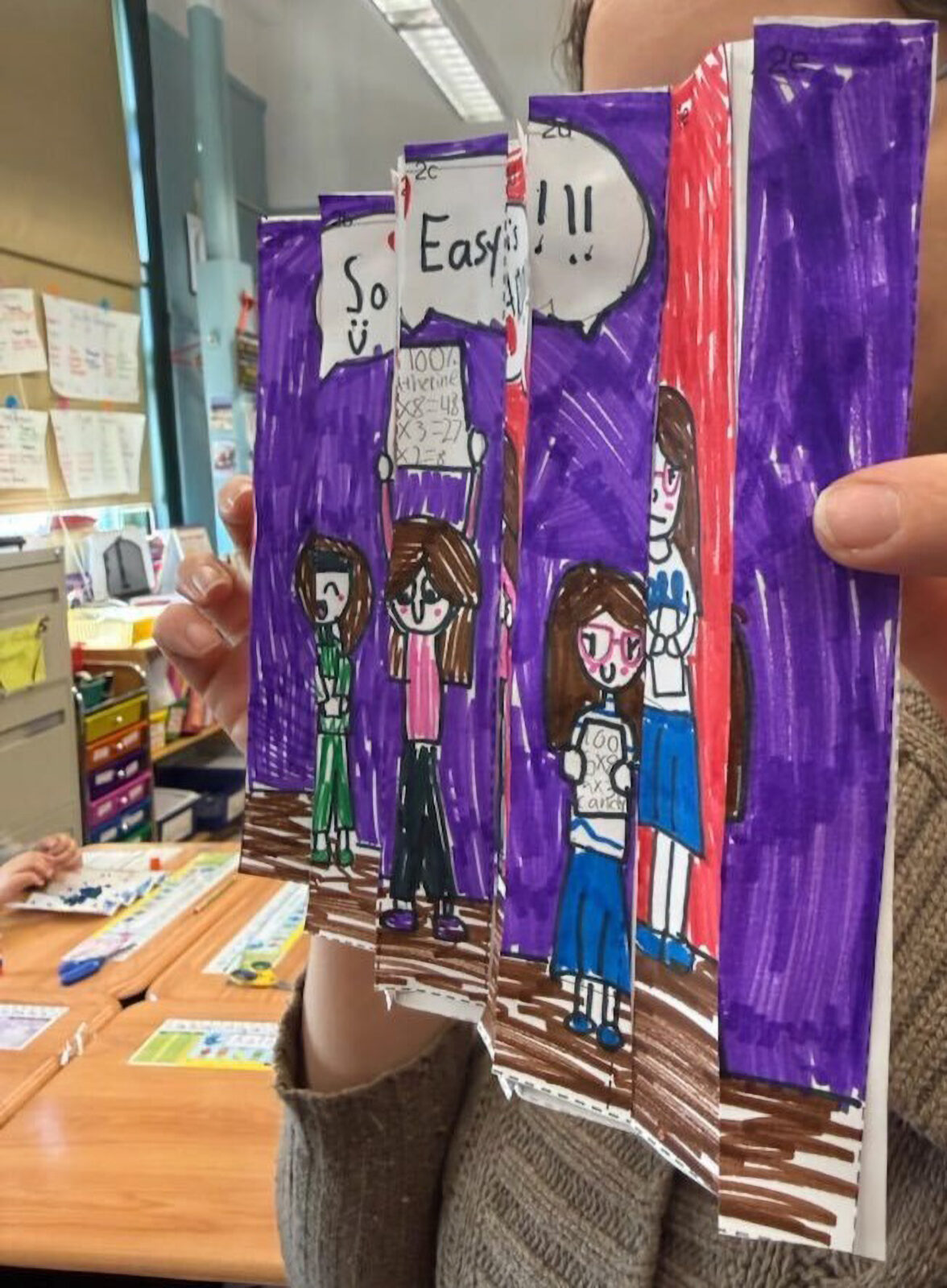
Photo by Jacqueline D. Smith
Each lesson is tailored to the particular needs of the classroom, as the program serves students from grades 3 to 12. The Rubin’s Senior Manager of Curriculum Development and Education Jacqueline D. Smith had an enriching experience working with advanced placement psychology students in a high school. “We were able to explore the philosophical and psychological underpinnings of the program at length,” she says. “We related the Power of Perception lesson to neuroplasticity, discussing how the brain changes over time as we prune synapses and create new neural pathways. Therefore, our repetitive thought patterns have an influence on how we perceive the world around us.”
For younger students, it’s key to devote instructional time to reflecting on the array of human emotions. As Jacqueline frames it, “They often have difficulty articulating their emotions, so by discussing what proactive steps to take when faced with a difficult emotion—such as taking deep breaths, counting backwards from five to one, or talking to a friend—students are better able to regulate difficult emotions when they surface.”

Photo by Filip Wolak
The program also serves alternative schools and students who have a wide range of learning and developmental needs. Many teachers in these settings deeply value social and emotional learning,” says Jacqueline. “The art activities are central to each lesson, like making a crown reflecting one of their stellar attributes to help students boost their self esteem.” A visual arts teacher in a New York City Department of Education District 75 school for students with special needs remarked, “The kids wore the crowns ALL day! Even on the bus.”
Mandala Lab in Your Classroom lessons incorporate actual objects from the Rubin’s collection of Himalayan art. For example, a damaru drum is used to teach how rumination can take us away from the present, and the sound of the drum acts as a reminder to return to this moment. Jaqueline has observed that “students are fascinated by the damaru drums. They appreciate the opportunity to hold an object from the Rubin’s collection in the palm of their hand. They find it thrilling to practice sounding it.”
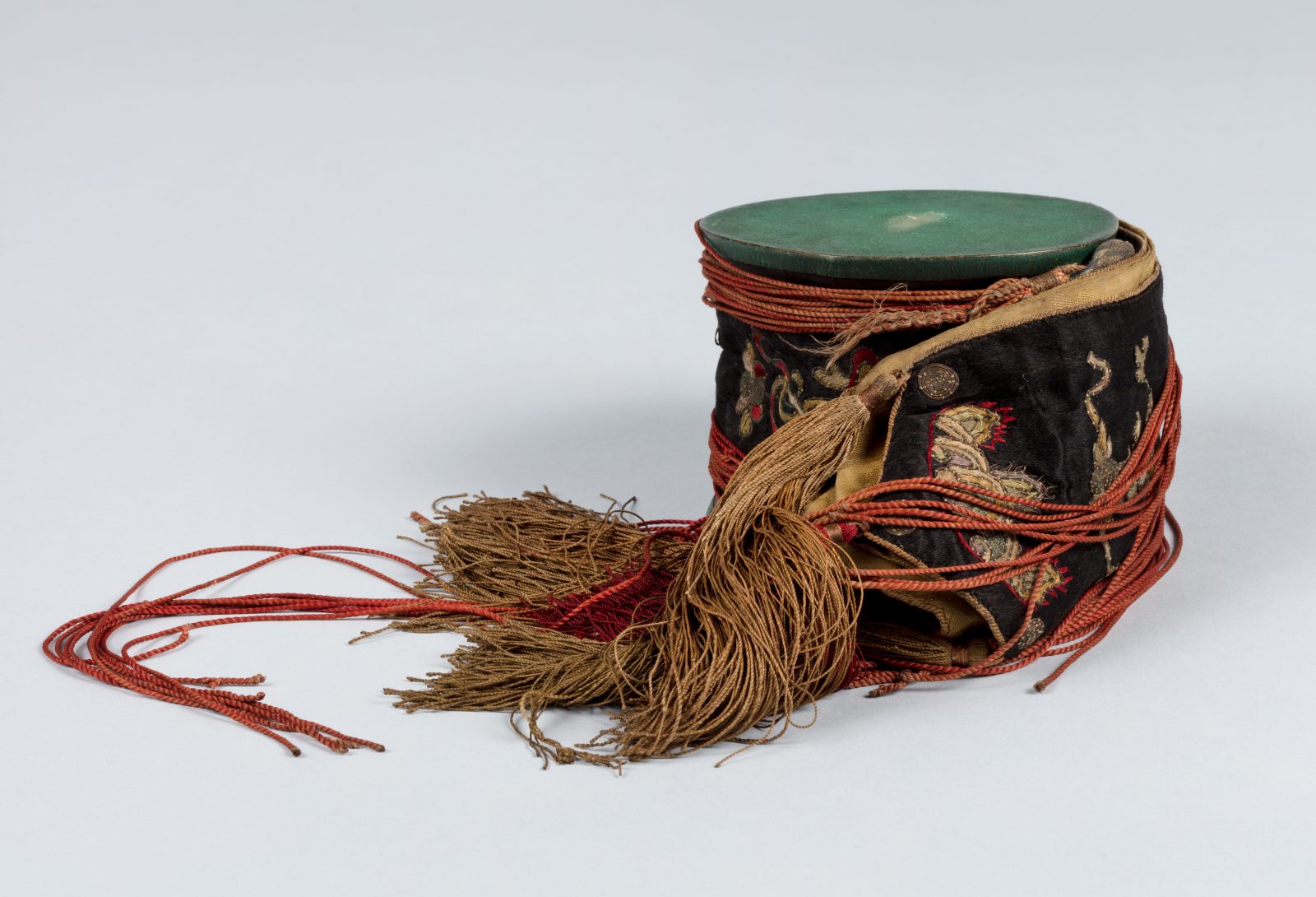
Hand-held Drum (Damaru); Tibet or Mongolia; early 20th century; Wood, silk, leather, cornelian; Rubin Museum of Himalayan Art, Gift of Robert and Lois Bayils; SC2019.3.5
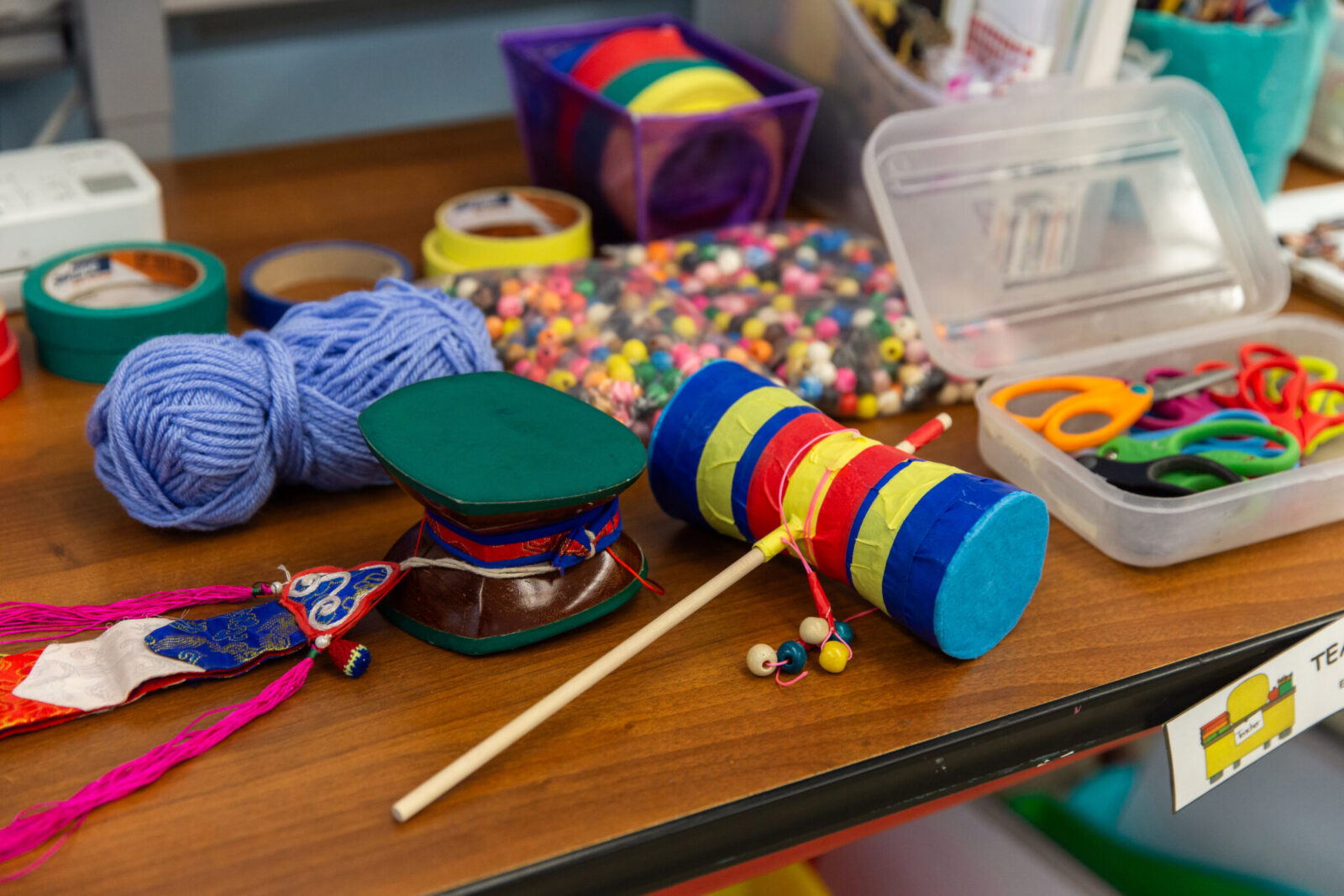
Photo by Jessica Bal
The recurrent themes of mindfulness, compassion, and interdependence reflected in the Rubin’s collection dovetail powerfully with the Mandala Lab in Your Classroom’s vision of creating a more harmonious classroom community and wider world. According to one middle school teacher, the program “offered students an intentional pause in their very busy school day to think about their emotions, their sense of self, and the way they perceive the world around them.”

Photo by Jacqueline D. Smith
Reflecting on her hopes for Mandala Lab in Your Classroom, Jacqueline says, “We aim for students to emerge from the program with a heightened sense of emotional awareness, better equipped to respond to life’s challenges with balance and clarity. Yongey Mingyur Rinpoche served as an advisor in the development of the Mandala Lab. We return to his quote again and again: ‘You don’t have to change your emotions. You don’t have to control them. Just be aware. It is the awareness that is the first step to wisdom.’”

Jacqueline D. Smith is the senior manager of curriculum development and education at the Rubin Museum of Himalayan Art. She began her career teaching social and emotional learning in New York City public schools and has over a decade of experience in museum education. Jacqueline is deeply committed to connecting museum audiences with art through social and emotional learning principles.
Christina Watson is the digital editor at the Rubin Museum of Himalayan Art.
Get the latest news and stories from the Rubin, plus occasional information on how to support our work.