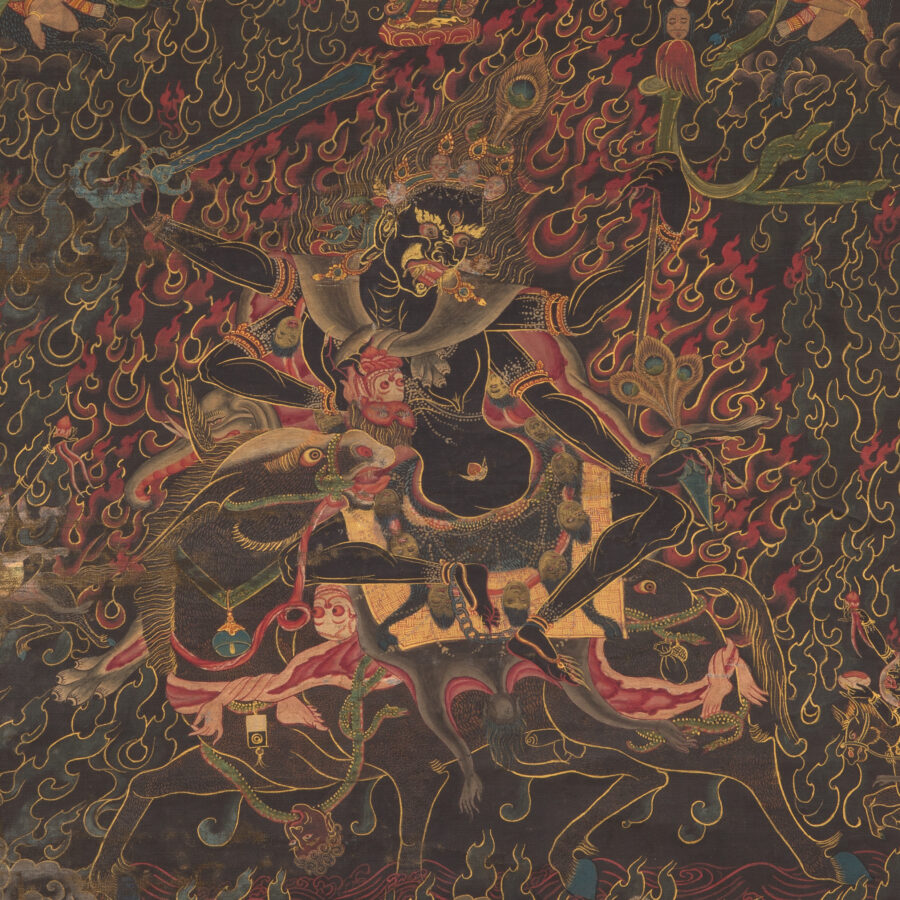
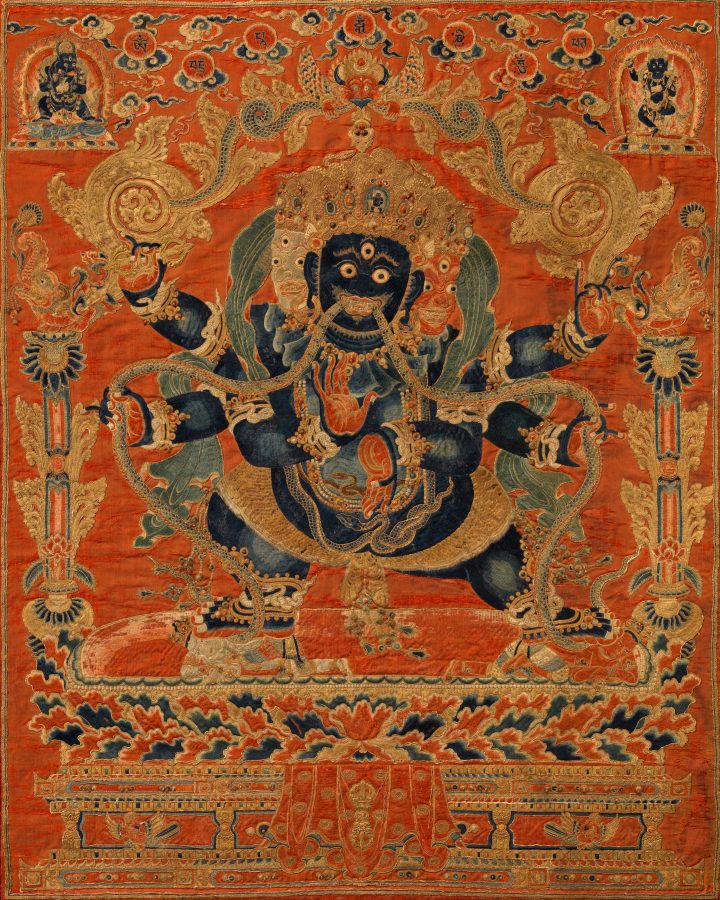
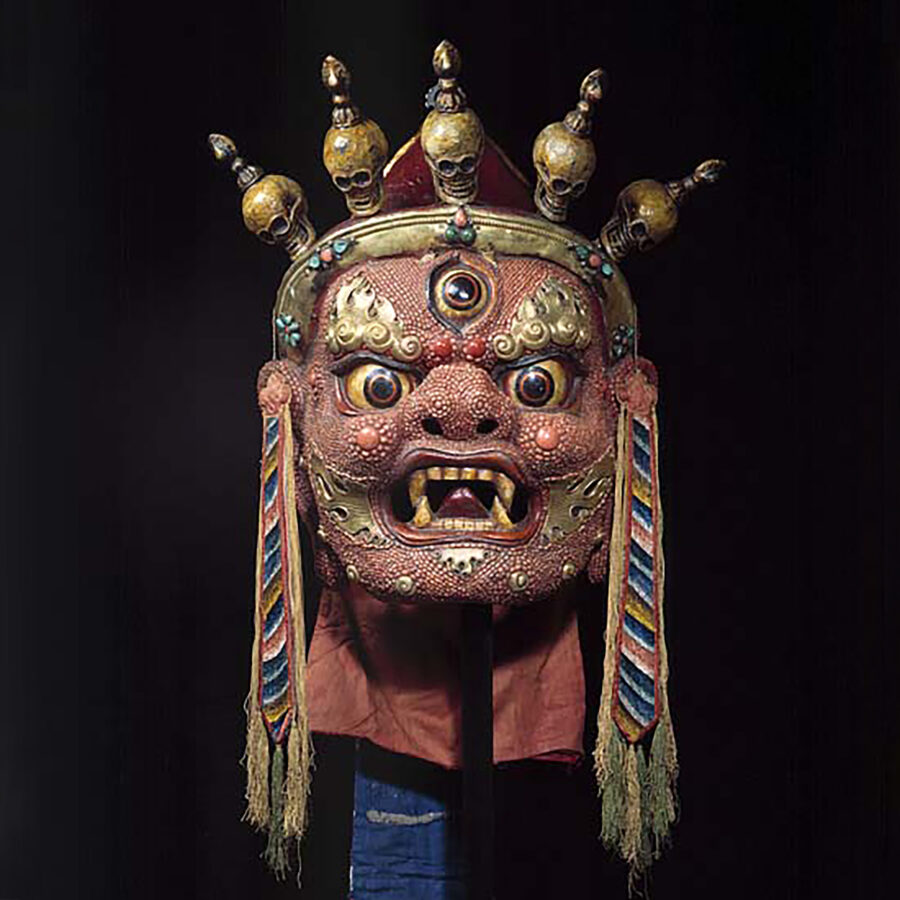
Mongolians have been widely active in the political, religious, and artistic life of the Tibetan Buddhist world.
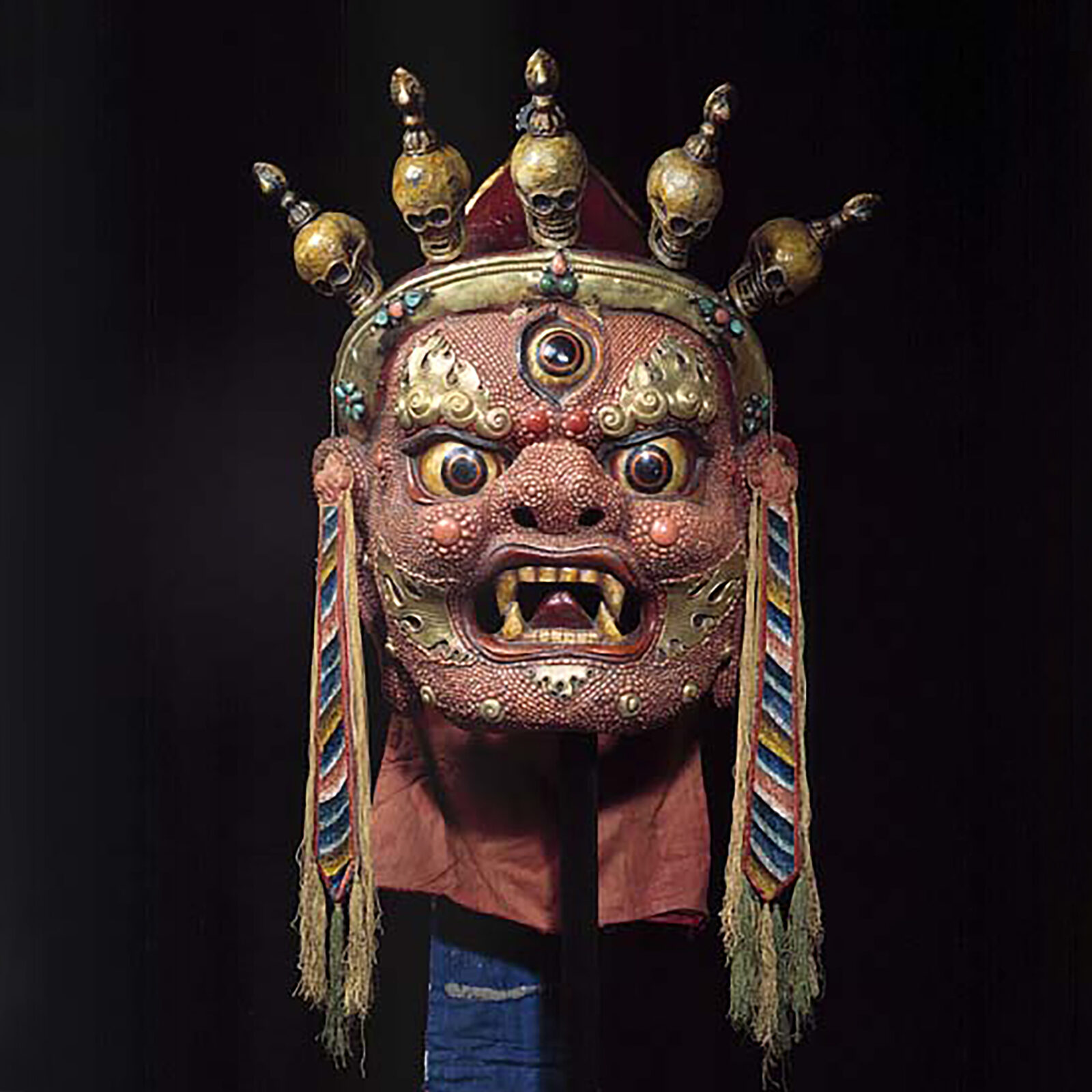
Mongolians have been widely active in the political, religious, and artistic life of the Tibetan Buddhist world.
In the thirteenth century, the Mongols conquered most of Asia and established the largest contiguous empire in world history. They ruled both Tibetan and Chinese regions, facilitating the spread of Tibetan visual culture to the Chinese heartland.
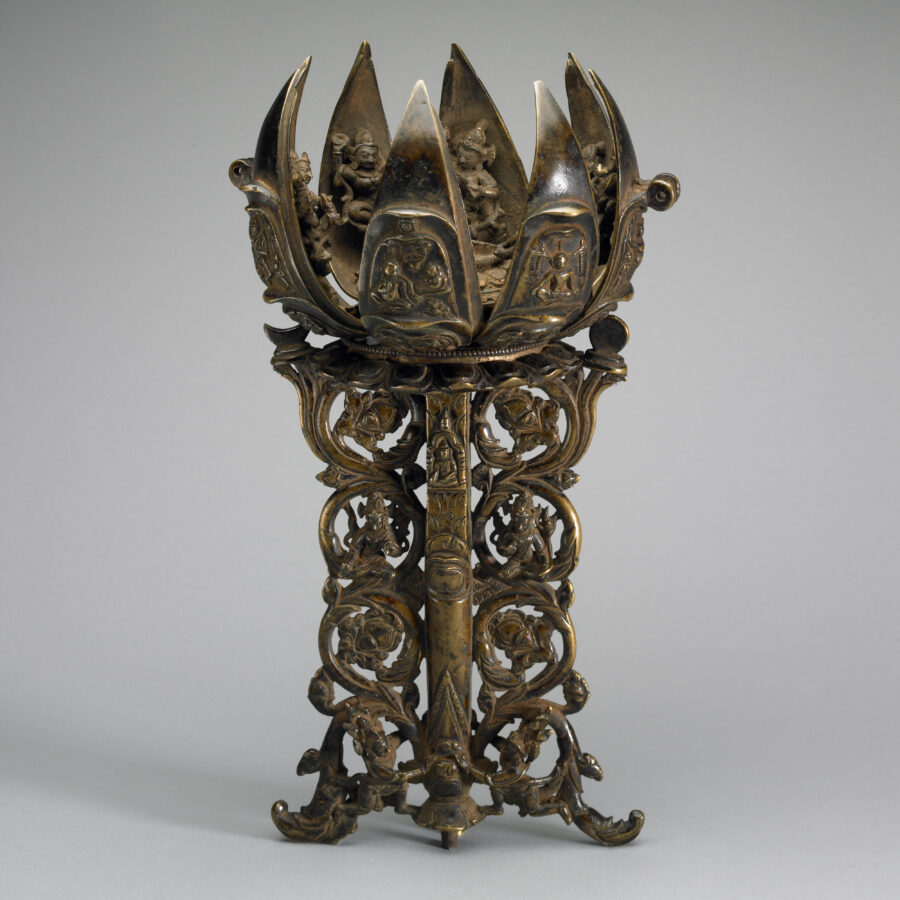
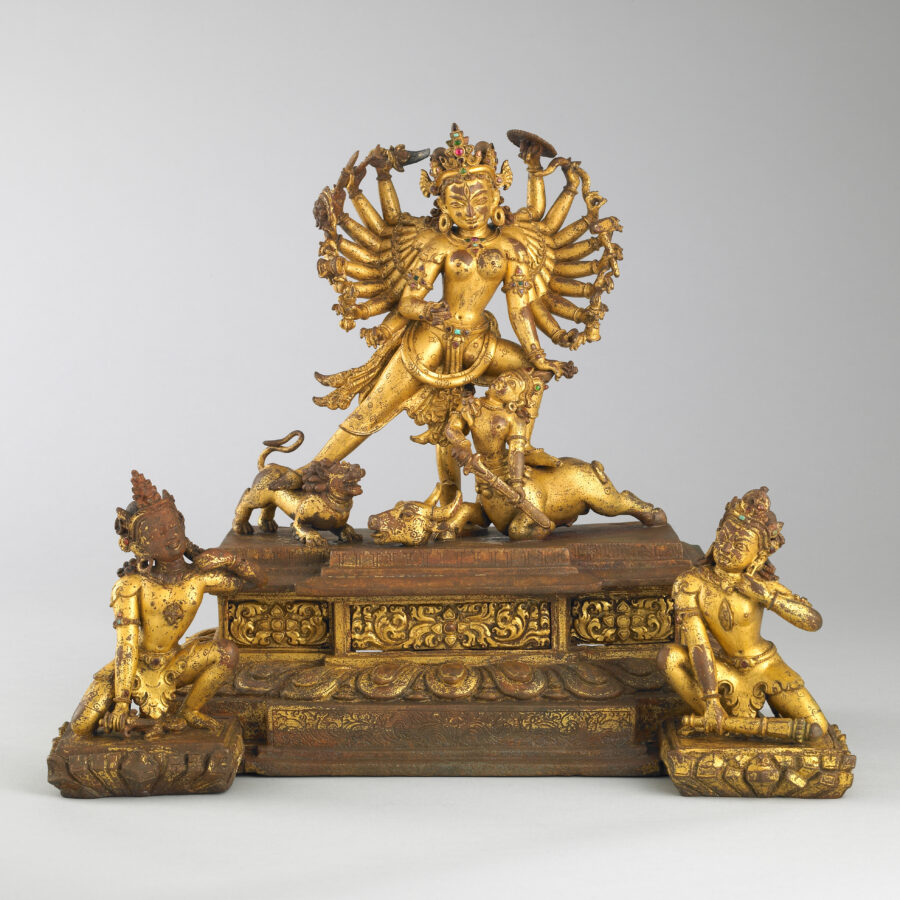
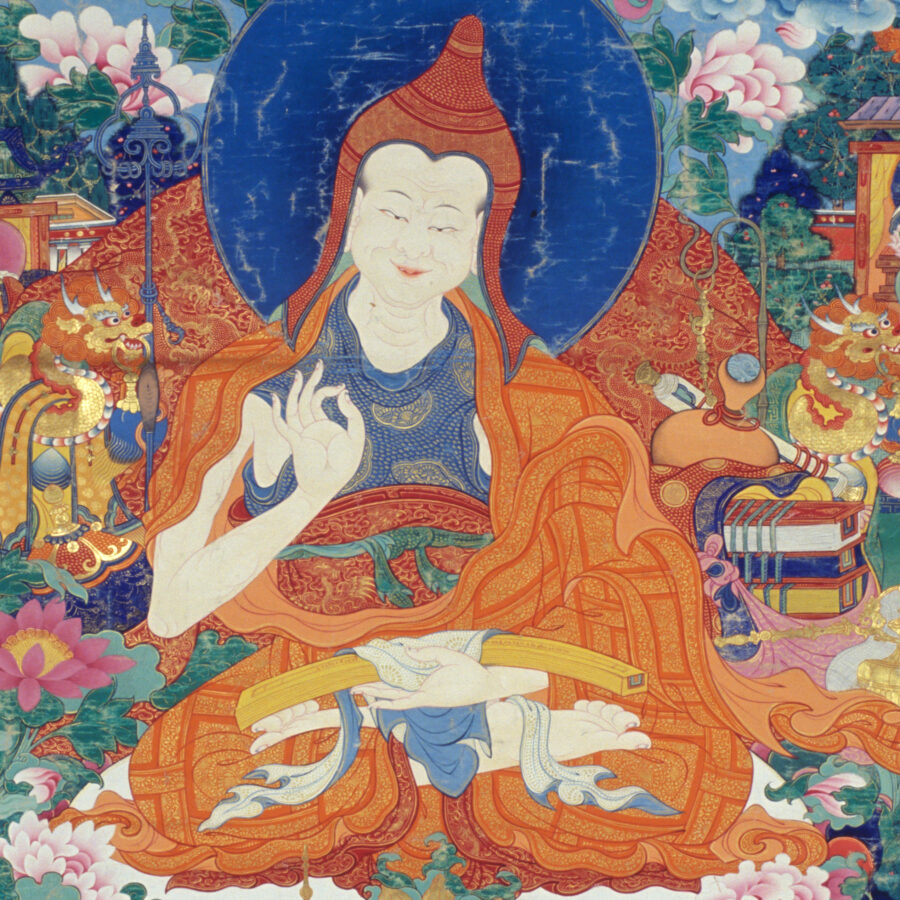
Later, in the sixteenth century, a massive second conversion of the Mongols to Tibetan Buddhism was more deeply rooted, a conversion so thorough that the religion became essential to Mongolian identity. Mongolian Buddhist art is thus similar to Tibetan art, but distinctive in certain subjects, materials, and styles. Deities took on new narratives and meanings in Mongolian contexts as they were integrated into local cosmologies. In the eighteenth and nineteenth centuries, Mongolian language gradually replaced Tibetan as the liturgical language.
Select each work to learn more.

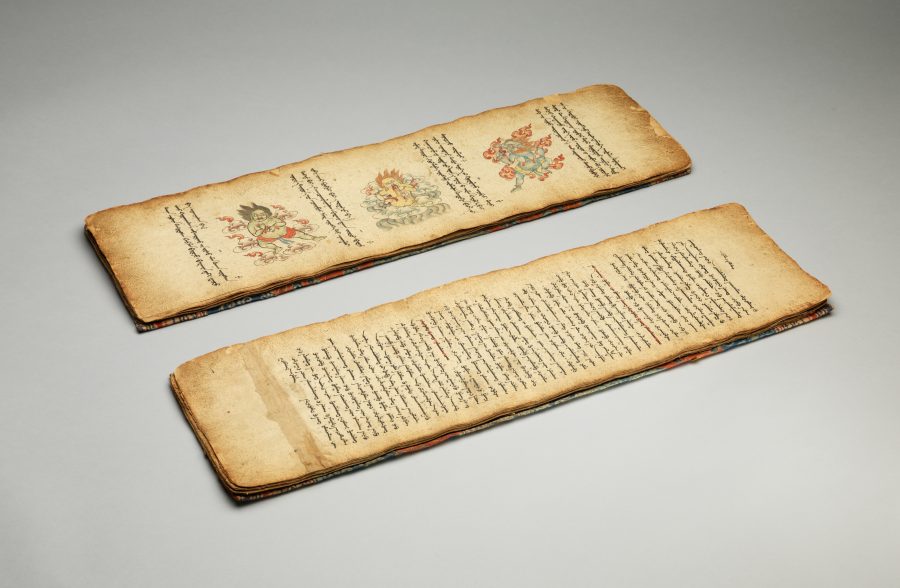
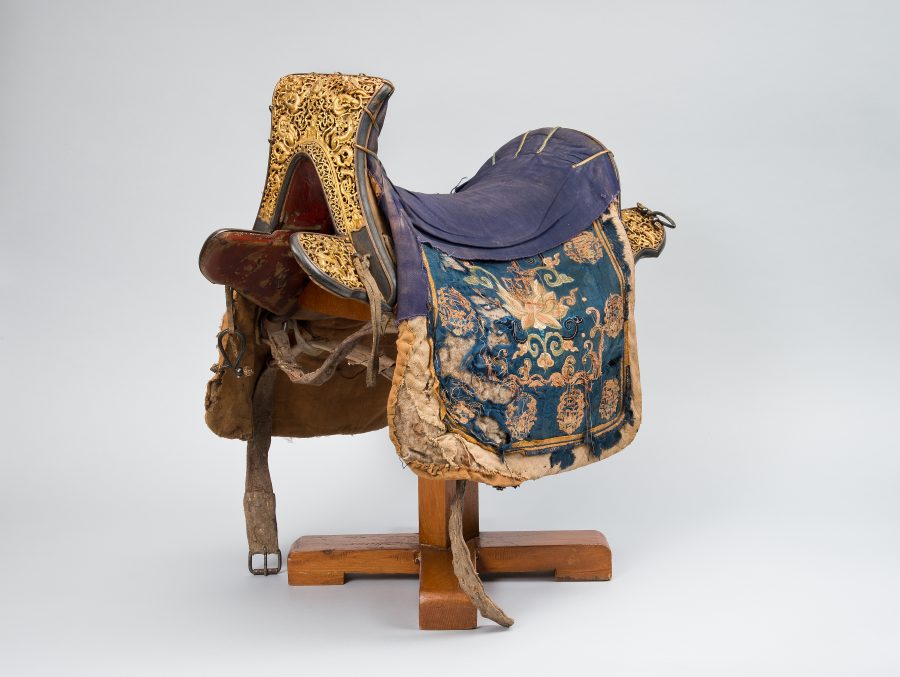
Tibet or Inner Mongolia
18th - early 19th century (ca 1757-1804)
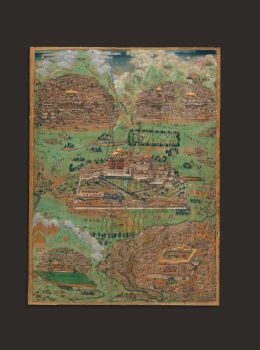
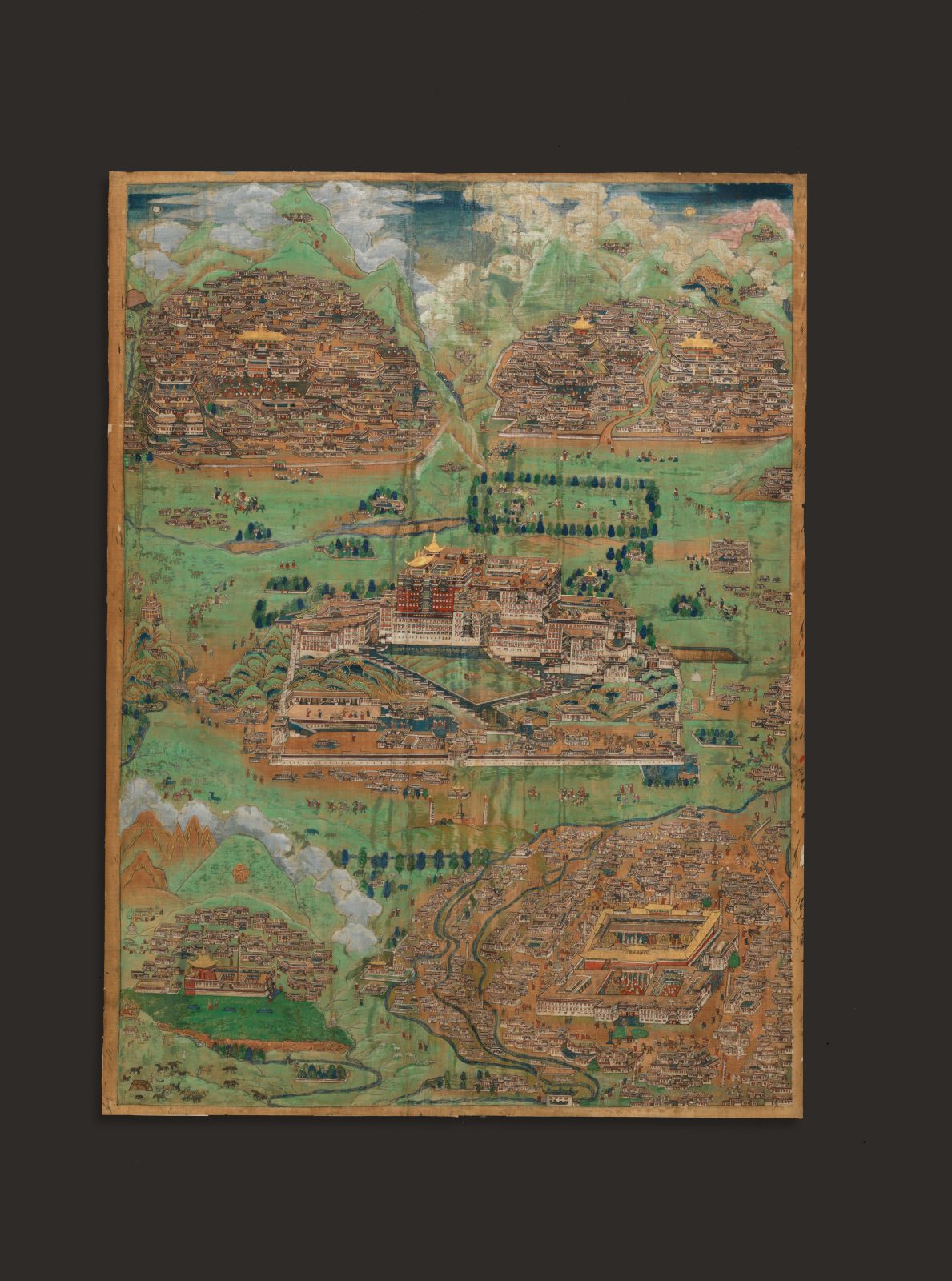
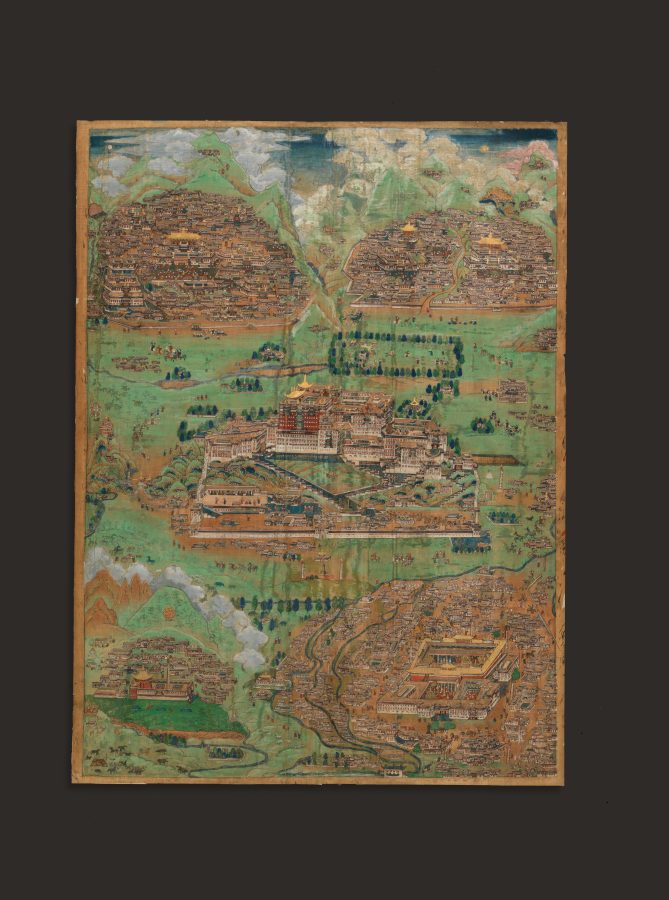
The Potala Palace, epicenter of Tibetan political and religious governance, centers key monuments in Lhasa and the surrounding area. Remarkably accurate depictions of buildings emphasize their distinctive architectural features. Yet rather than create a simple recording of their appearance, the artist chose an oblique aerial view, making subtle adjustments to perspective, as well as repositioning structures in order to both increase recognizability and allow the viewer to see key components of these monuments. For instance, the roof of the Jokhang Temple (lower right), a focus of pilgrimage and devotion in Tibetan Buddhism, has been removed to reveal its principal image, the Jowo Shakyamuni sculpture.
Such paintings served as substitutes for places visited on pilgrimage or personal remembrance, here suggested by the inclusion of a lesser-known monastery, Sangpu Neutok (lower left), located south of Lhasa. Mongolians became frequent pilgrims to Lhasa starting in the seventeenth century, also traveling for higher education at the great Geluk monasteries of Sera (top right) and Drepung (top left) or the Chakpori Medical College (left center). Numerous vignettes of pilgrimage and ritual activity depict Tibetans and Mongolians traveling, performing devotional acts, attending teachings, engaging in philosophical debates, and practicing archery.
Get the latest news and stories from the Rubin, plus occasional information on how to support our work.