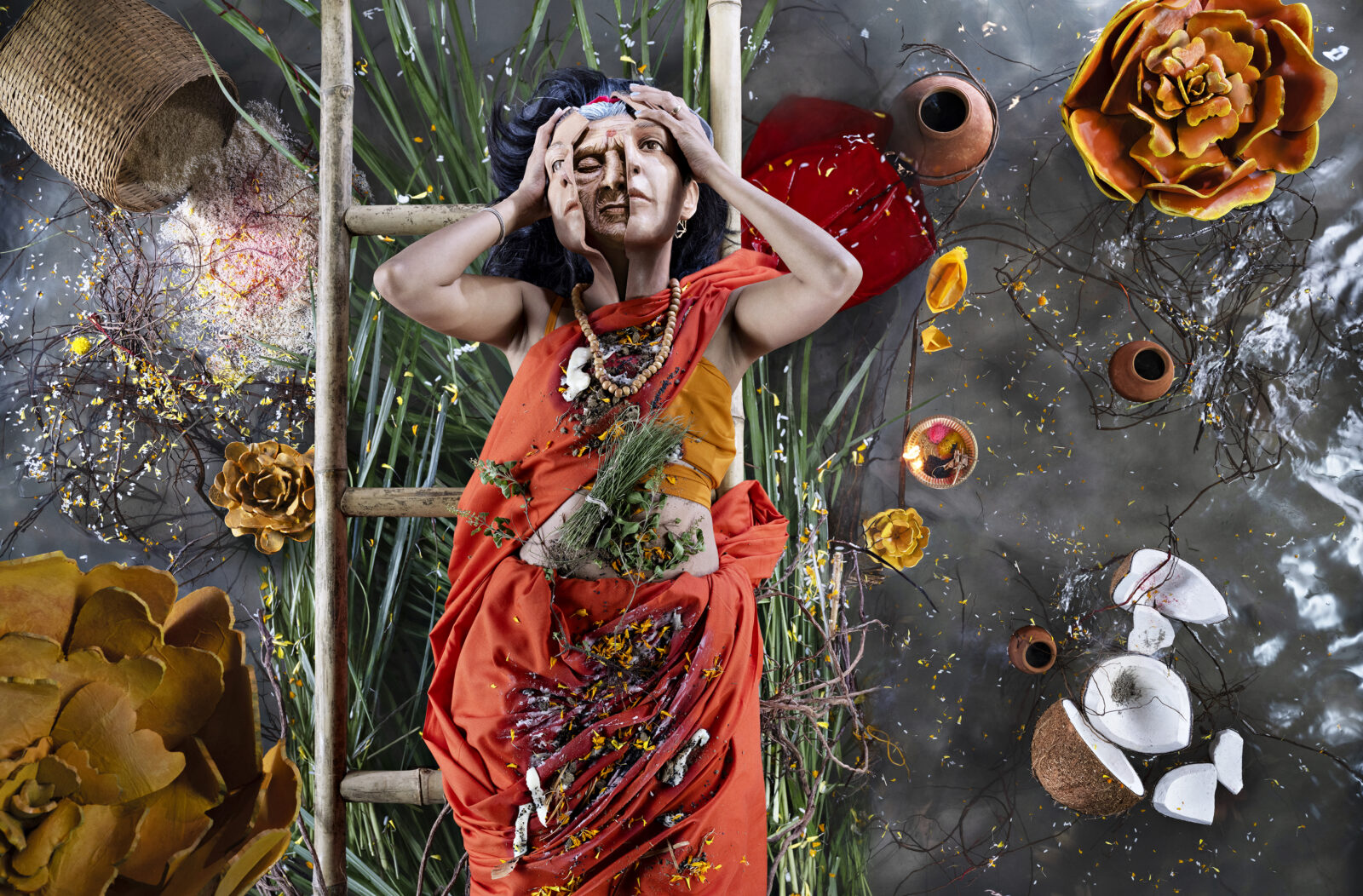
Courtesy of Manjari Sharma
Courtesy of Manjari Sharma
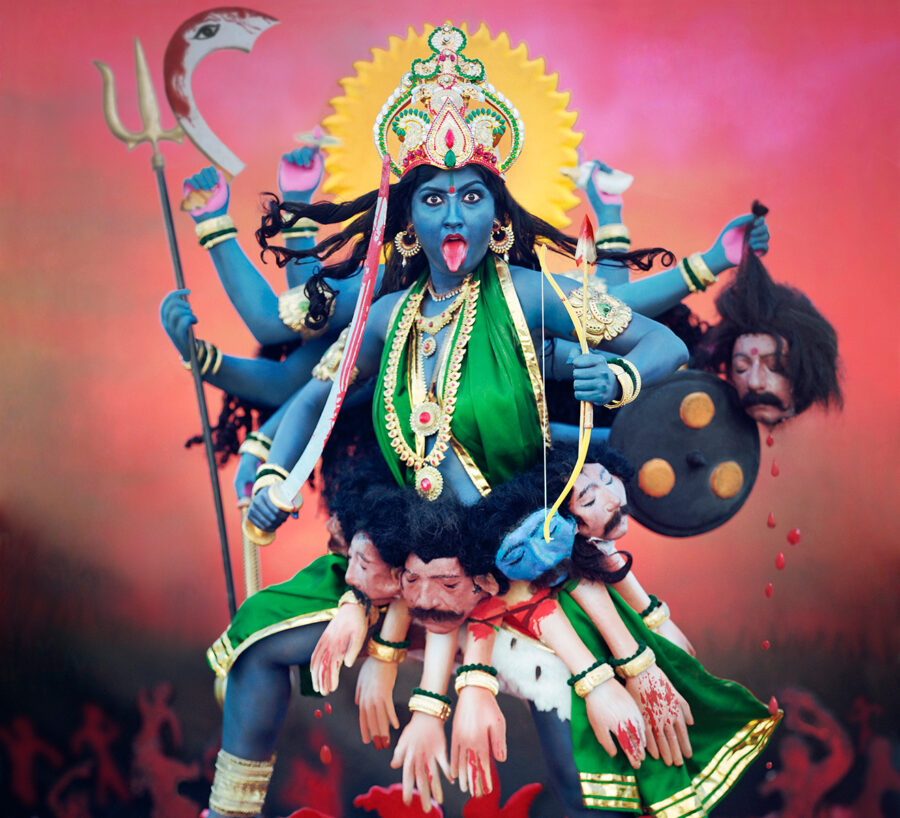
Manjari Sharma explores ritual, identity, memory, and mythology through photography, sound, motion, projection, and collage. She is a previous contributor to Spiral magazine; her essay “Ritual Lens” also features her photographs and appears in the life after issue, and her artwork of Kali accompanies the article “The Divine Wrath of Hindu Goddesses” in the wrath issue.
Manjari Sharma: I’m definitely very interested in history and mythology, especially when I see something mythological play out in life. I see an echo of something that I’ve always known, but I see it become alive in today’s day and age. Myths are forever and they might get challenged or reshaped, but they form the basis of so much of what we believe in. And so, if I’m walking through life and I meet a woman and she feels like a Kali (one of most revered Hindu goddesses), it affirms what I understand and know about Kali.
I hope that it inspires people to be more curious, ask more questions, and have more conversations, because that is the way in which I learn. When I meet somebody whose manner of speaking or storytelling is so powerful that it transports me, takes me away from the worries of my own life, and makes it about a different place, time, or mise-en-scène, it allows me to depart from what I consider my world and learn something new. So I hope that my art becomes a portal for people to be more curious.
Courtesy of Manjari Sharma
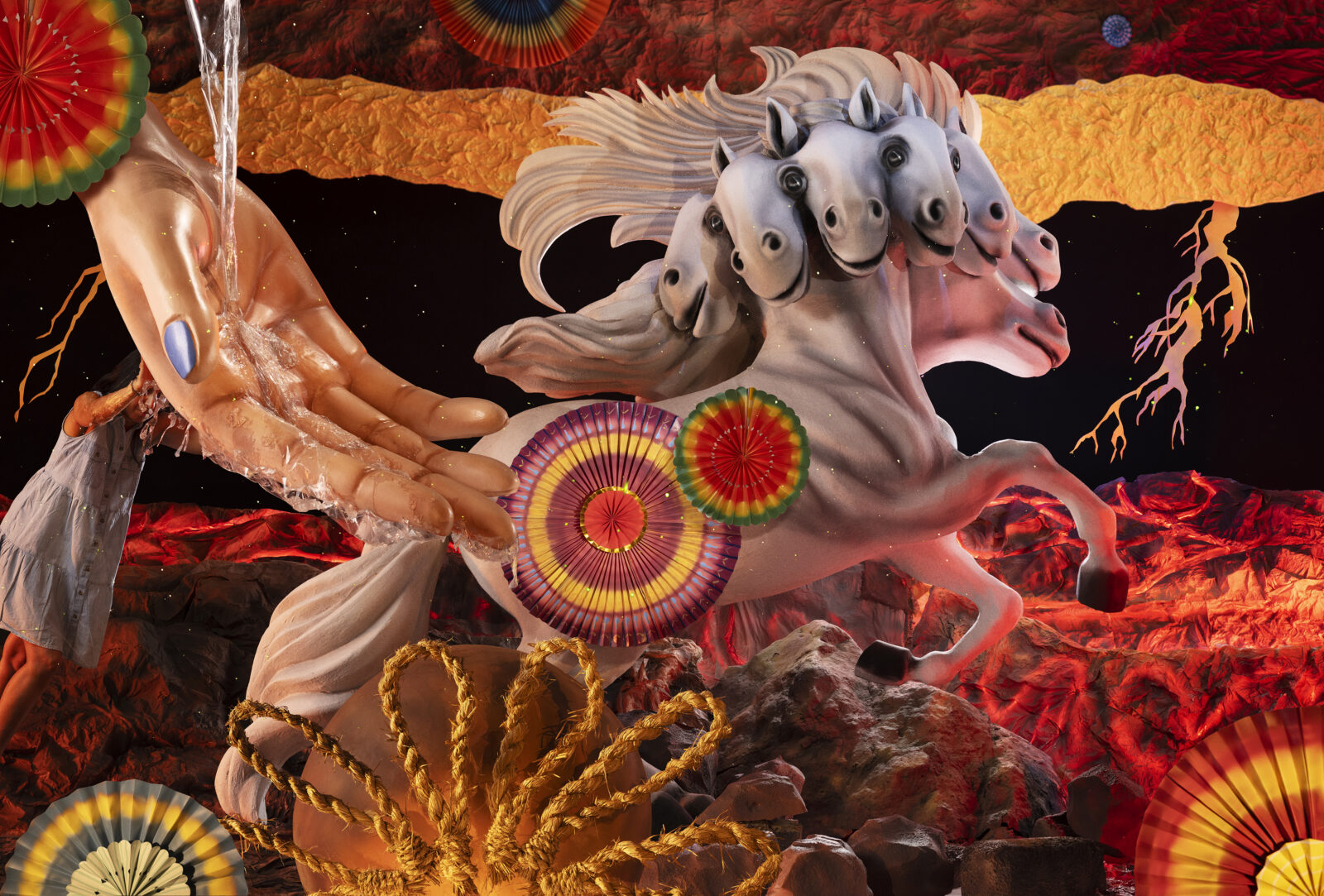
I consider myself a collaborative artist. Conversations, people, and emotions inspire me. Finding a group of people who are interested in working together toward a shared goal is exciting to me. The life of an artist is often a lonely life—and is chosen. I like quiet contemplation. I also like being completely alone with my camera and my thoughts, with my writing or my planning, but when it comes to execution, I do really enjoy a collaboration.
When I create these constructed worlds, I’m often working with layers. I kind of determine my layers before I shoot, and then we construct these layers. They’re often a combination of materiality, all in conversation with each other. So whether it’s vinyl or paint or sculpture or wood or rubber, it’s all talking to each other, and it’s layered inside a studio space. Then a human element enters it, and together it becomes an artwork.
Wrath has a bad rap. But if you’re a passionate person, to feel fully and feel deeply is a gift.
I think my work is born because of creative blocks. There are two kinds of creative blocks. One is a creative block where you’re paralyzed and you can’t create because your mind is foggy. That’s different than when you know what you want to make, but you haven’t solved it yet. Every work for me is a creative block in that sense, because I feel like I’m trying to go after making something that hasn’t really been fashioned or born yet. The question of how to give it a form—from the mind to reality—is in itself a block.
Now, a creative block where you can’t really put your thoughts down on paper because you’re stopped or stymied by something—I don’t think anything can solve that better for me than music. Music helps me dream. It’s not until I dream that I create. So if I’m ever in a place where I’m stopped, music brings me back to zero. I’m the person that I’m meant to be because I’m listening to the music that brings me back to that.
I’m very drawn to the sounds of Southeast Asia. Certain instruments really speak to me, but I love it when mashups come alive. Music that represents a certain kind of fusion of East and West is always wonderful to me. I consider myself a mashup because I was in India until I was 21 and then I moved to the United States for art.
Courtesy of Manjari Sharma
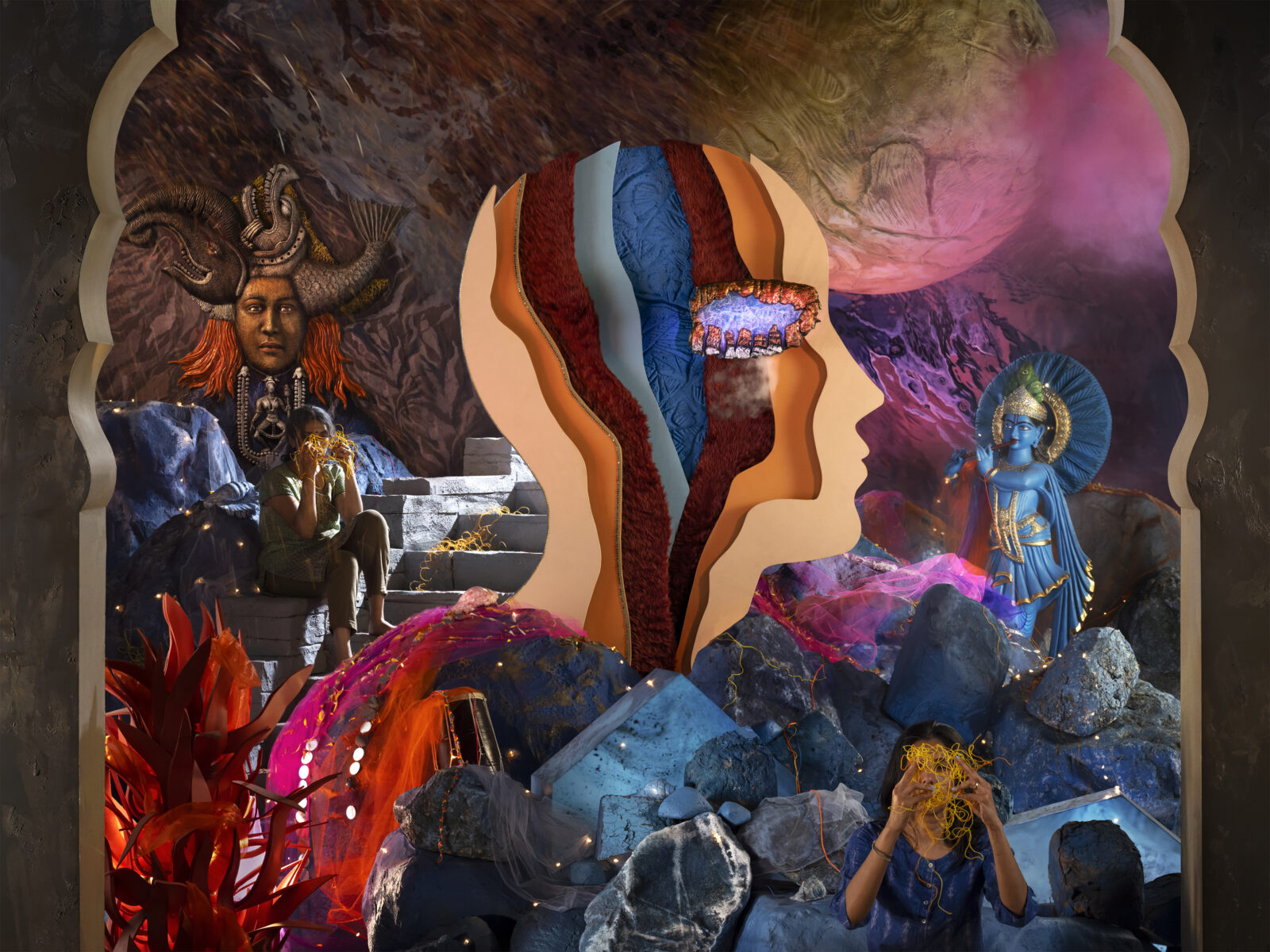
The earliest picture that comes to my mind is this woman—she was a vegetable vendor—sitting on the street in Bombay. She was really beautiful. I remember her having this nose ring, and she was extremely colorful, but I took a black-and-white picture in that moment. I never photographed her looking into the camera, but I was very moved by how absorbed she was in what she was doing. I enjoy portraiture a lot. A portrait is often at the center of my works, or at least the human story is very important to my work.
I’m a real fan of Marina Abramović. I’m very conceptual in my thinking and in what animates my work, so I like the way she thinks.
I think wrath is necessary. Wrath has a bad rap. But if you’re a passionate person, to feel fully and feel deeply is a gift. It’s not the job of art to make it comfortable. The job of art is to highlight every artist’s own truth. In my truth, people get angry and they react.
Courtesy of Manjari Sharma
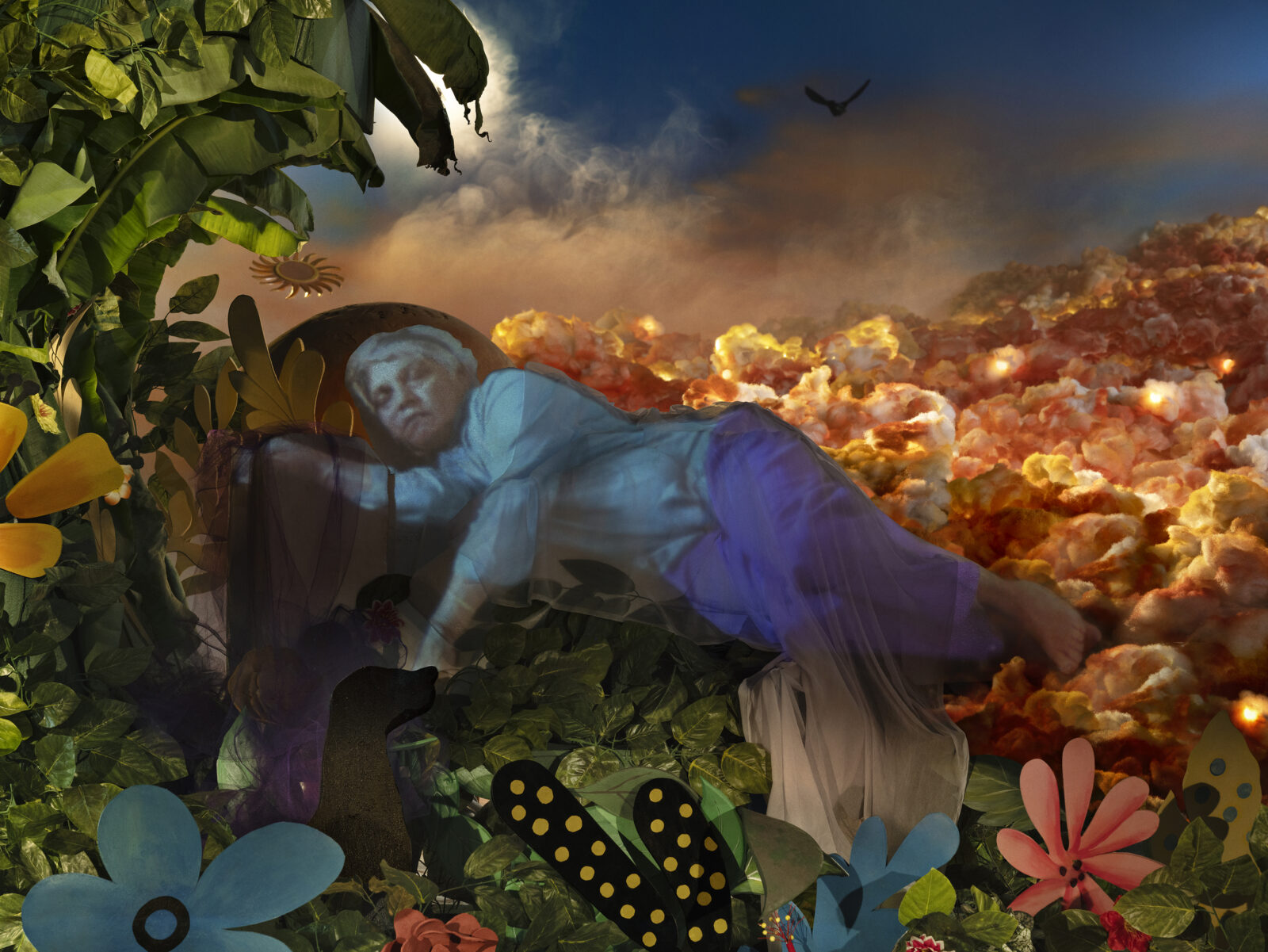
I lost my mother, and I was asked to write a piece about my experience. Honestly, I really fought putting it out there, but it became a gateway. Sharing the pictures meant looking at the pictures, and I wasn’t ready to look at them. I was still very turbulent, very shaken by how recently that event had taken place. But it also meant I was feeling deeply.
Now I’m so grateful that I put it down in words, because maybe if I didn’t write it for Spiral, I wouldn’t have written it at all. I was too afraid. But what came out of it was me digging more deeply into the myths that surround the soul’s journey in the afterlife. There’s a lot written about that in Hindu mythology. I took all of that as fodder to read. Some of it brought me a lot of peace, and the rest turned into material that I wanted to create from.
What it spawned was the making of many new worlds—worlds our souls traverse. It also became a collaboration between myth and science, because the search for life after death felt akin to mankind’s search for life on other planets. So there was a very interesting parallel between myth and science that resulted in the work.
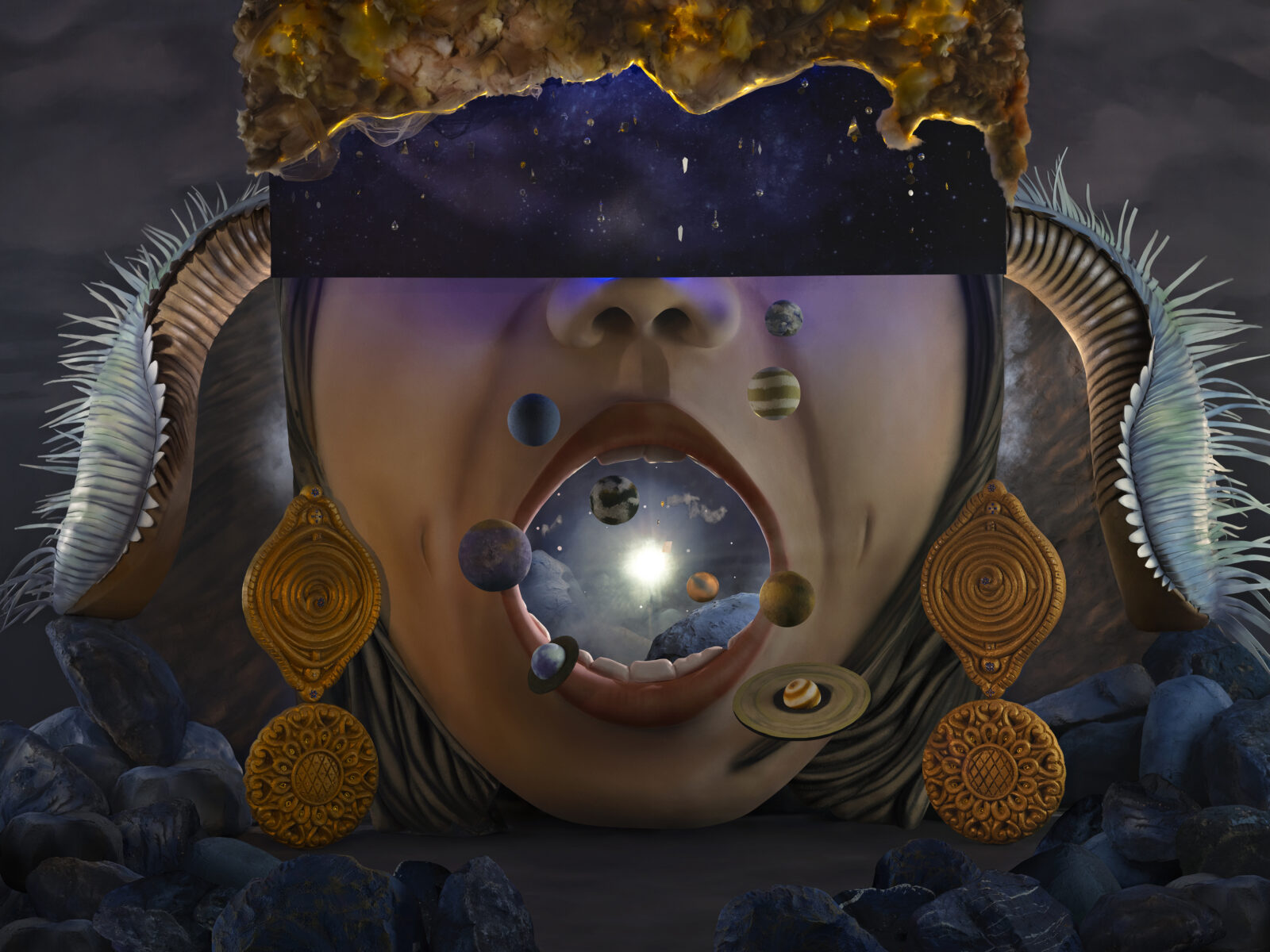
Courtesy of Manjari Sharma
I’m interested in activities that center a human, that bring a human to a point of reflection—because that’s how I learn. When people reflect, they give you a synopsis of who they are. That’s what I feel happens when you read mythology—these stories become metaphors for what your life might hold, or the people around you, or how people overcome difficult realities. My work has addressed that in one form or another, whether through portraits or constructed worlds that refer to stories that highlight rituals and the things we do that save us.
It’s like a live collage. It consists of paintings and sculptures. It’s not so much about which part is the leader, but how they all come together to most effectively tell the story.
At the end of the day, though, I do think through lenses. As someone introduced to the camera as a tool—the tool that stole my heart—the lens is very important. How I’m looking at something, how I freeze a moment, how I capture it—those are still central to my storytelling. But ultimately, art imitates life—and life is not just a frozen moment.
Manjari Sharma makes art that addresses issues of memory, identity, multiculturalism, and personal mythology. Her work has been featured in the New York Times, Vice, Los Angeles Times, Huffington Post, CNN, and NPR, and her art is in the permanent collections of the Metropolitan Museum of Art, Museum of Fine Arts, Houston, Carlos Museum, and Birmingham Museum of Art. Originally from Mumbai, she now lives in Los Angeles.

Christina Watson is the digital editor at the Rubin Museum of Himalayan Art.

Get the latest news and stories from the Rubin, plus occasional information on how to support our work.