

Mindfulness Meditation · Open-Mindedness
This week’s meditation session is led by Lavina Shamdasani and the theme is Open-Mindedness. The guided meditation begins at 11:00.
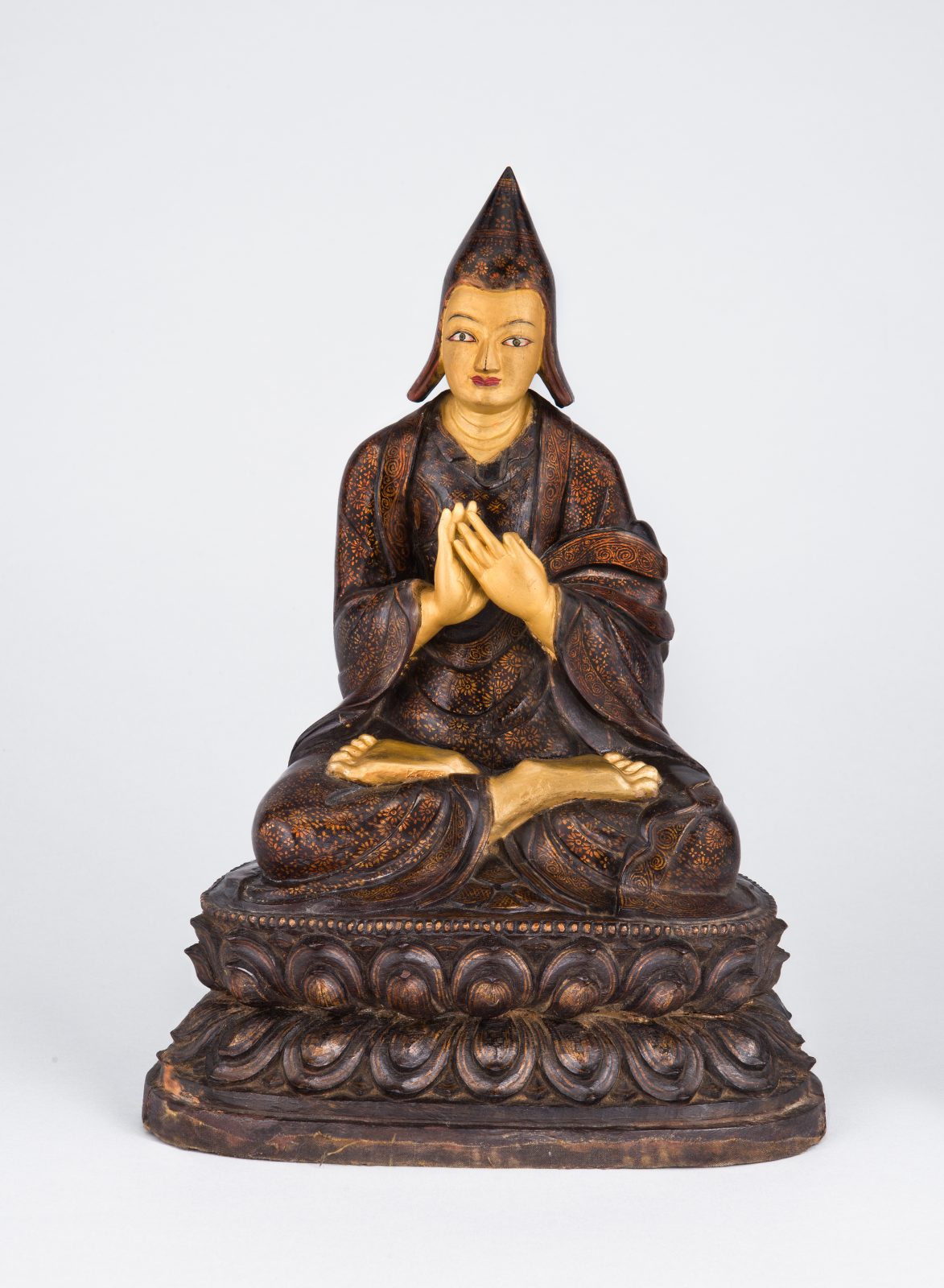
Atisha (982-1054); Tibet; ca. 18th-19th century; Wood, pigments, lacquer; Rubin Museum of Himalayan Art, Gift of Shelley and Donald Rubin; C2013.12.6
This sculpture depicts Atisha, a well-respected Buddhist master, who demonstrated open-mindedness by embracing the path of the dharma. Atisha was born in India to a royal family, but he relinquished his noble lifestyle because of his deep spiritual curiosity. He searched far and wide to find spiritual mentors, eventually becoming a pivotal figure in Tibetan Buddhism. His teachings are encapsulated in the Bodhipathapradīpa, Lamp for the Path to Enlightenment.
Atisha is portrayed wearing his signature attribute, the hat of a scholar (pandita’s hat). His garb does not appear to be that of an Indian monk as the collared vest is a standard part of Tibetan monks’ robes. The expression on Atisha’s face, painted in golden pigment, is thoughtful. He is gazing forward, apt for a teacher giving a discourse, as indicated by his hands held in a teaching gesture (dharmachakra mudra).
This remarkable example of Tibetan wooden sculpture was made with a combined method of solid wood carving and composite construction similar to its pair, a sculpture of Atisha’s principle disciple, Dromtonpa. Both have the same size and painted decoration and were probably part of a larger set that represented the teachers of the Geluk tradition.

Lavina Shamdasani is a certified compassion teacher through the Compassion Institute and Stanford University. She has taught programs focused on mindfulness, compassion, joy, and gratitude and led book club discussions and meditations for over five years.
Lavina studied positive psychology coaching at the Wholebeing Institute and helps clients transform their lives and meet their personal and professional goals.
Get the latest news and stories from the Rubin, plus occasional information on how to support our work.