

Mindfulness Meditation · Open-Mindedness
This week’s meditation session is led by Tracy Cochran and the theme is Open-Mindedness. The guided meditation begins at 13:07.
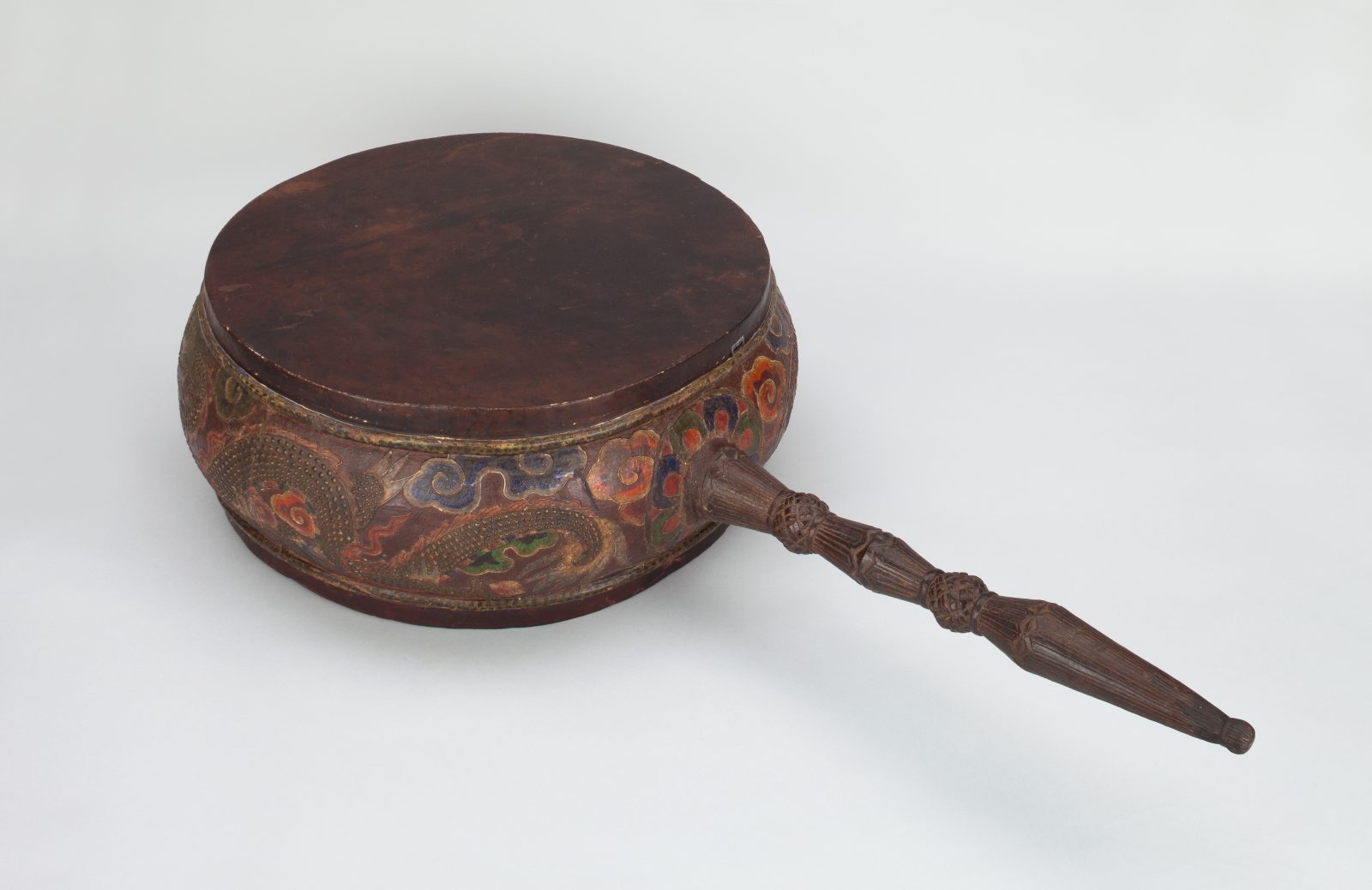
Drum (Nga); Tibet; Mid-19th century; Wood, pigments, leather, metal; Rubin Museum of Himalayan Art, Gift of Robert and Lois Baylis; SC2019.3.1a-b
The sound produced by this large, double-headed frame drum varies according to the type of ritual it is used for. It can be peaceful or wrathful, depending on the character of the deity invoked. The drum’s dual nature mirrors the Buddhist understanding of open-mindedness as an ability to hold seemingly opposite truths simultaneously.
This instrument is frequently used in rituals for wrathful deities, religious dances, and processions. A musician holds the long handle in their left hand and strikes the middle of the drum with a curved stick using their right.
The drum takes on metaphorical meaning within Buddhism, in which sharing the Buddha’s teachings is called “sounding the drum of the dharma.” This type of drum is often associated with the sound of rolling thunder, alluded to by the clouds and dragons painted on its frame.

Tracy Cochran has taught meditation and spiritual practice for many years. She is a speaker and author whose most recent book, Presence: The Art of Being At Home in Yourself, was published by Shambhala Publications in 2024. Tracy is the founder and leading teacher of the Hudson River Sangha and has taught mindfulness and mindful writing at New York Insight, the Rubin Museum of Himalayan Art, and many other venues. In addition to serving as the editorial director of the acclaimed spiritual quarterly Parabola, her writings have appeared in The New York Times, New York Magazine, Psychology Today, The Best Spiritual Writing series, Parabola, and many other publications and anthologies. For more about Tracy, please visit tracycochran.org.
Get the latest news and stories from the Rubin, plus occasional information on how to support our work.