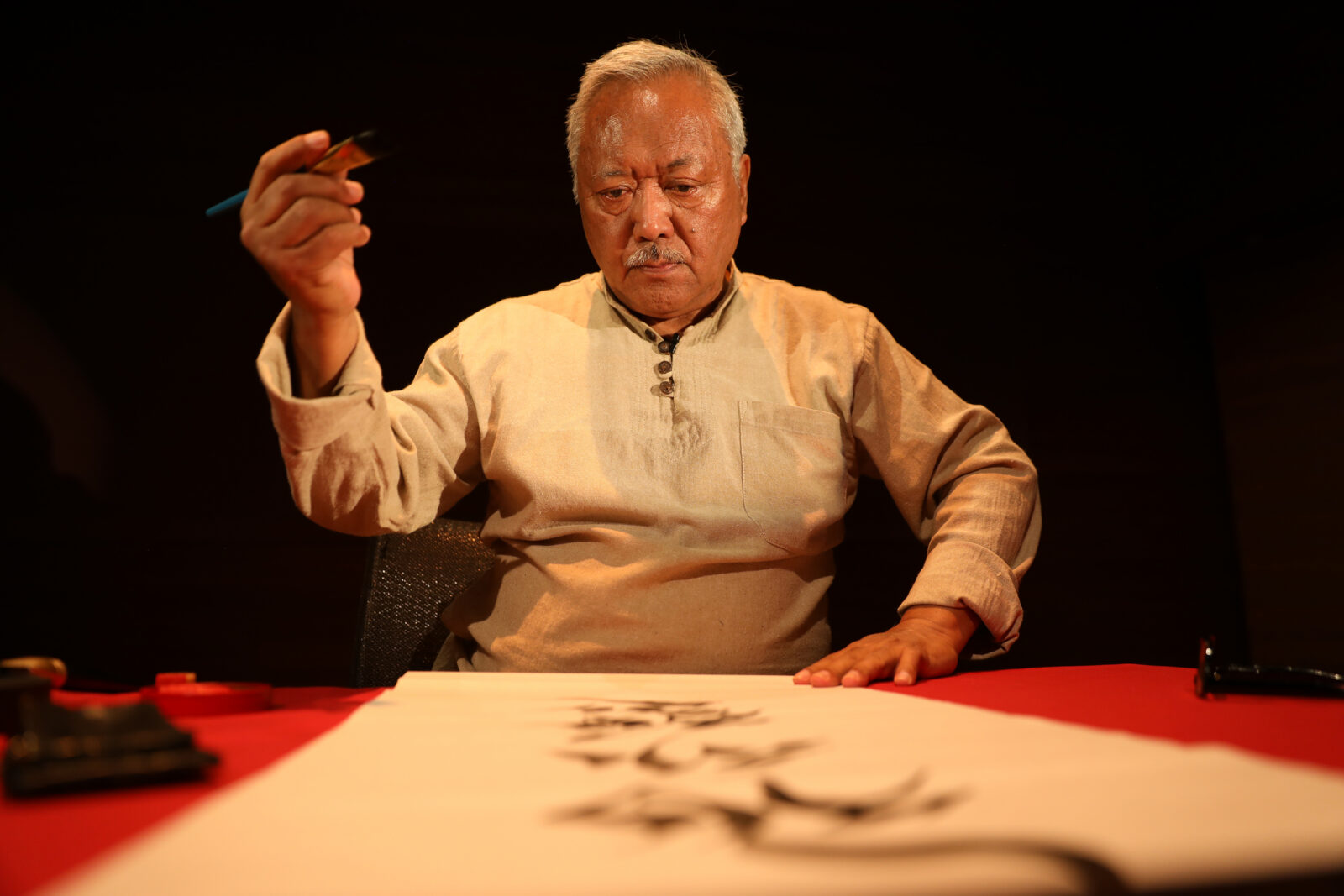
Jamyang Dorjee Chakrishar; photo by Jess Y Lee
Jamyang Dorjee Chakrishar; photo by Jess Y Lee
Jamyang Dorjee Chakrishar is a master calligrapher dedicated to preserving Tibetan language and cultural heritage. His signature calligraphy style, he terms “Dharma Art,” represents a unique fusion of Buddhist imagery and linguistic artistry. Jamyang Dorjee holds the world record for longest calligraphy scroll, measuring 163 meters long. Watch a calligraphy demonstration he filmed with the Rubin.
Jamyang Dorjee Chakrishar: In the sixth century, when the great university of Nalanda, India, started losing royal patronage—during the time of the last Buddhist emperor, Harsha—the king of Tibet, Songtsen Gampo, sent his most capable minister Thonmi Sambhota to India to learn the Gupta script, and based on that created a Tibetan script basically to translate Buddha Dhamma (Dharma) into the local language of Tibet.
Therefore, Buddhism and Tibetan calligraphy are closely linked. In fact, when Buddhism disappeared completely from the land of its birth by the 14th century, all the teachings of the Buddha and commentaries by Nalanda Pandits were saved and nurtured in Tibet.
As a part of my Buddhist practice, I found that not much was done to explore the artistic expression of Tibetan calligraphy, so I took it up.
Animation by Regina Cervantes Ellis; video footage shot by Jess Y Lee
Courtesy of Jamyang Dorjee Chakrishar
During the very initial stages of my life up to grade five, I was fortunate to have teachers like Lharam Geshi Lobsang Tharchin and professor Samdhong Rinpoche in the Tibetan school, Shimla, whose guidance was a solid foundation. After I completed my graduation, I served as a senior administrative officer of the Government of Sikkim, and went on deputation to serve the central Tibetan administrations as director of the Tibetan Institute of Performing Arts. I liked what I was doing, but I was not necessarily doing what I liked—meditation and calligraphy.
In 2006 I sought voluntary retirement and started working on calligraphy, and today I am only doing this. It took almost 20 years to reach this stage.
Does Tibetan calligraphy have a meditative aspect for you?
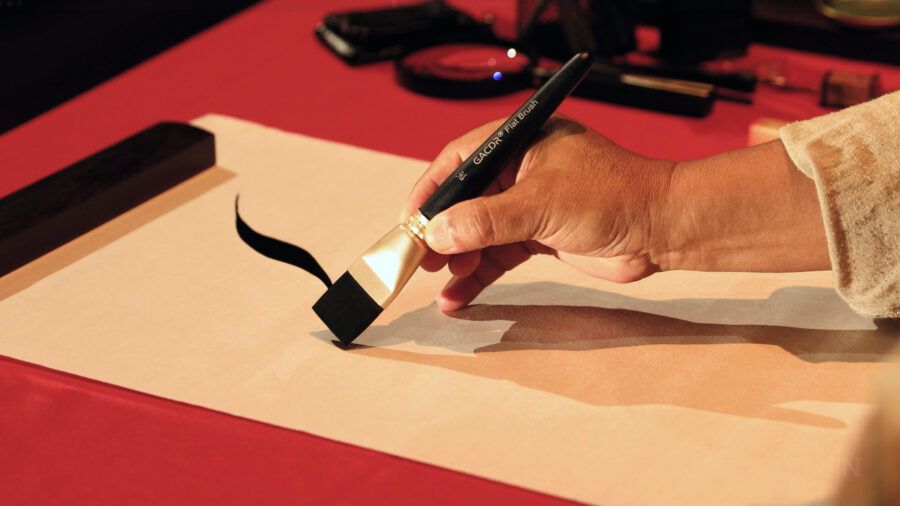
Meditation basically helps calm down your mind by remaining focused on an object or breathing, ultimately to find the true nature of mind that exists within each of us. Calligraphy practice involves all these processes and hence a form of meditation. The process of looking at the paper, mentally planning the art, mindfully pouring the ink into the inkpot, dipping the brush, and with one stroke, without hesitation, creating a balanced beautiful artistic expression of a word, readable and without spelling mistakes and uninterrupted flow.
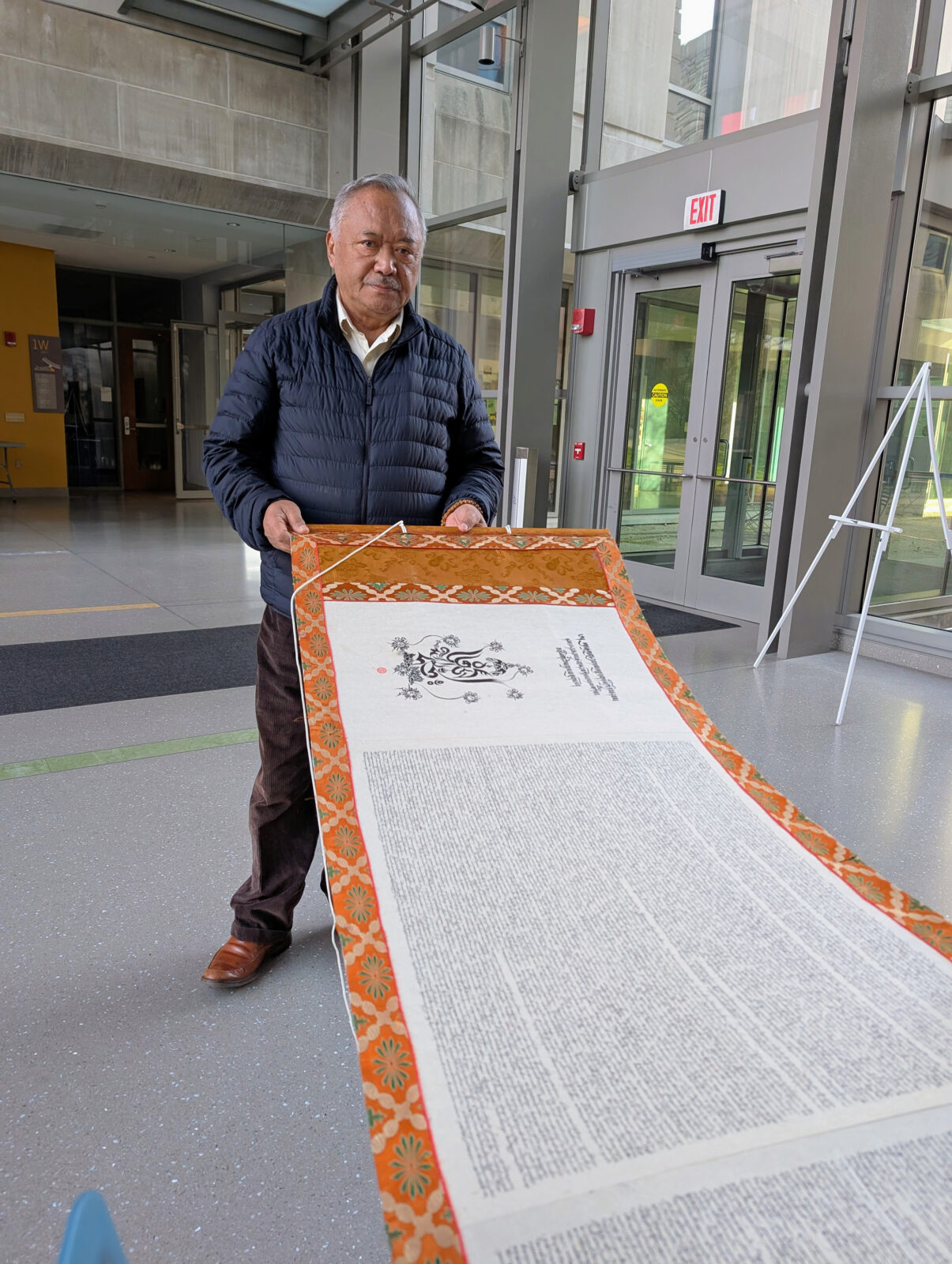
Jamyang Dorjee Chakrishar holding his scroll of the Pema Khatang; photo by Kristina Dy-Liacco
When I began working on Tibetan calligraphy in 2005, I looked around for the status of other calligraphy disciplines of the world. There are so many materials on Chinese, Japanese, and Persian calligraphy, but not a single page on Tibetan calligraphy! Therefore, I thought that I have to make the phrase “Tibetan calligraphy” popular and something big has to be done. So in winter of 2009, I finished writing a 165-meter-long scroll on handmade Nepali paper in four different Umed styles of Tibetan calligraphy, consisting of long life prayers for His Holiness the Dalai Lama. In 2010 the World Record Academy announced that I set a new record for the longest calligraphy scroll in the world. Thus, Tibetan calligraphy spread in the virtual world and sent waves in Tibet. It took seven months of writing every single day!
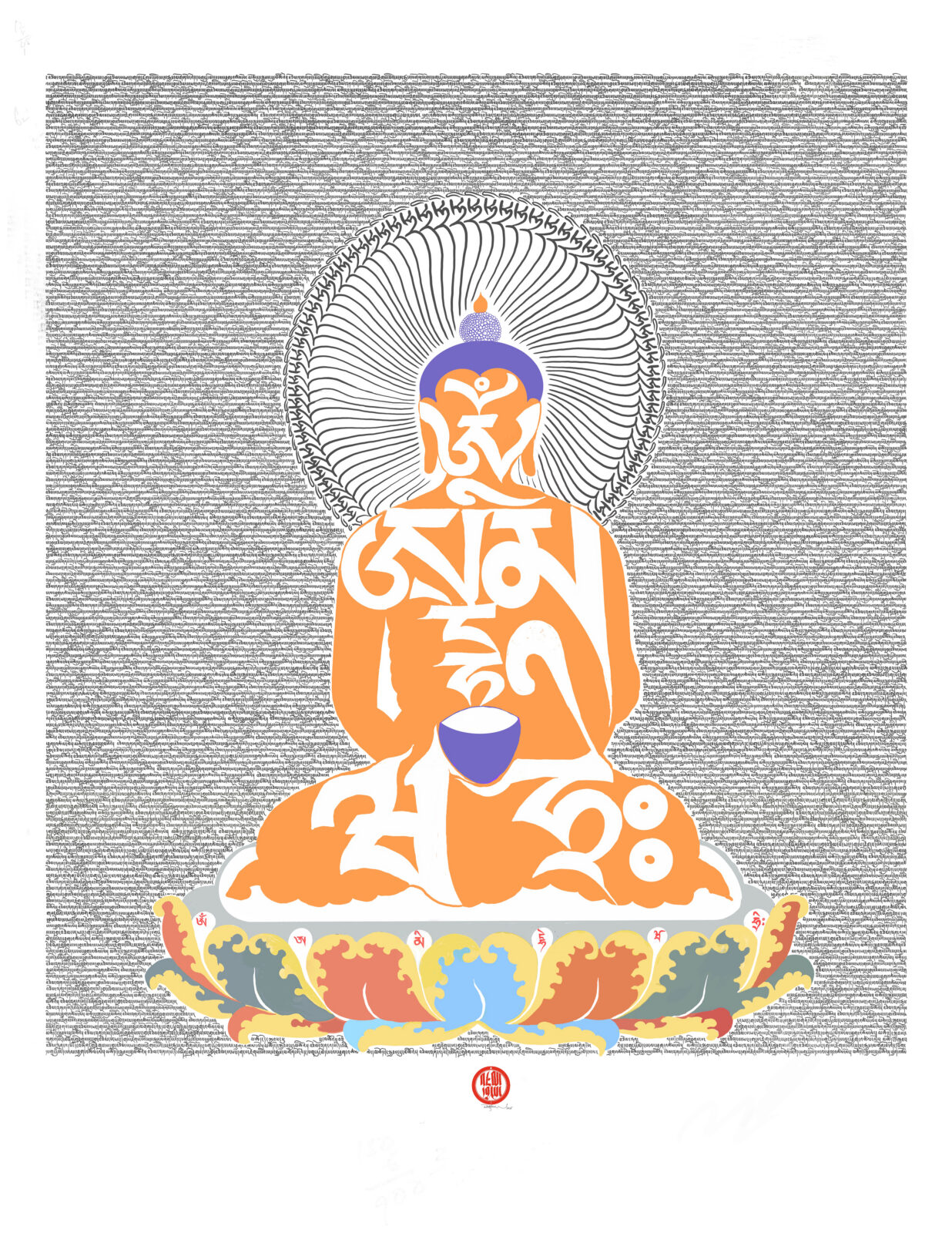
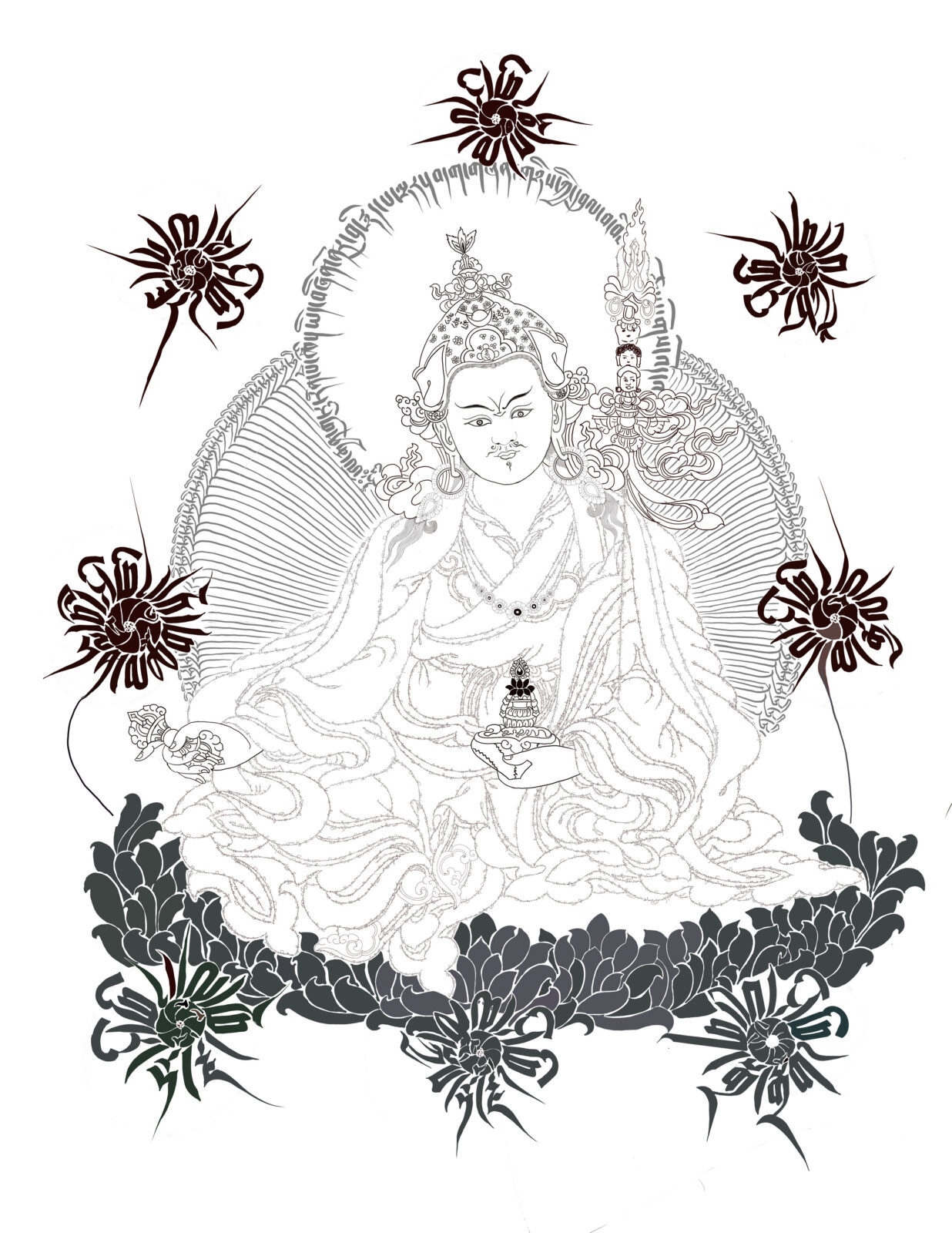
After writing the world’s longest scroll, I ventured further and realized that Buddhist families usually have three different objects of worship on their altars that represent the mind, body, and speech of Buddha: a statue to represent body, a scripture to represent speech, and a stupa to represent mind. I began developing a new artform that combines all three in one using miniature writing to create a figure of a body and writing the essence of the mantra of his teaching into that drawing.This is neither a thangka painting nor scripture writing. While in Nepal, I showed this to one of our very respected spiritual masters, Lama Soepa Rinpoche, who said “call this Dharma Art,” thus the name.
Courtesy of Jamyang Dorjee Chakrishar
While going through my research, I saw that in the 1980s Chogam Trungpa Rinpoche did some work on Tibetan calligraphy and wrote a beautiful book called Dharma Art. So I can say that he is the father of contemporary Tibetan calligraphy art. I read the book after many years since I’ve called my art Dharma Art. I think there are some cosmic connections.
Besides perfecting the centuries-old tradition of calligraphy writing, I created two new forms. One is brushstroke art, like the Sufa of China and Shodo of Japan, and the other one is figures of deities. While the brushstroke art takes spontaneous creation, the miniature art takes several days depending on the complexity of the deity.
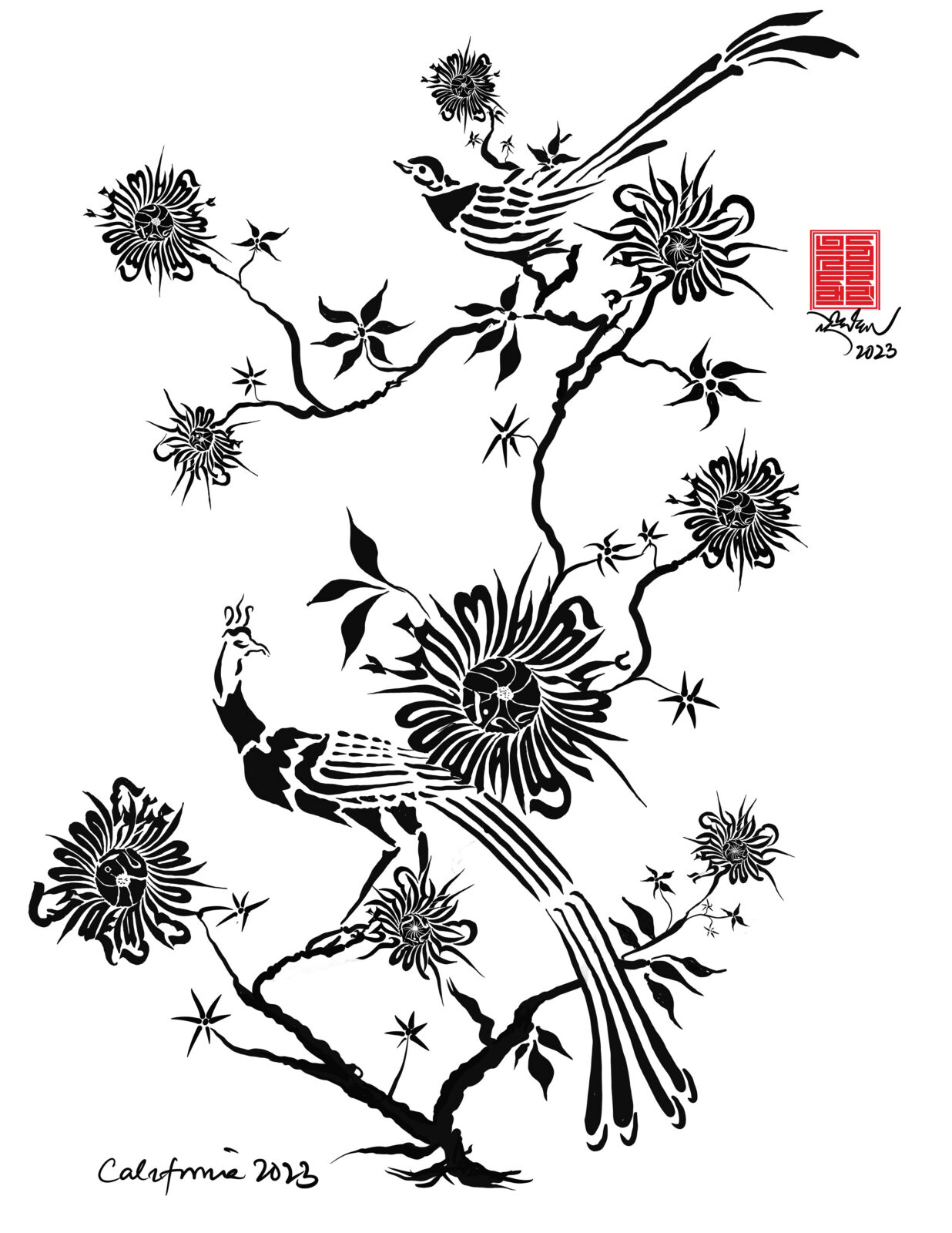
Courtesy of Jamyang Dorjee Chakrishar
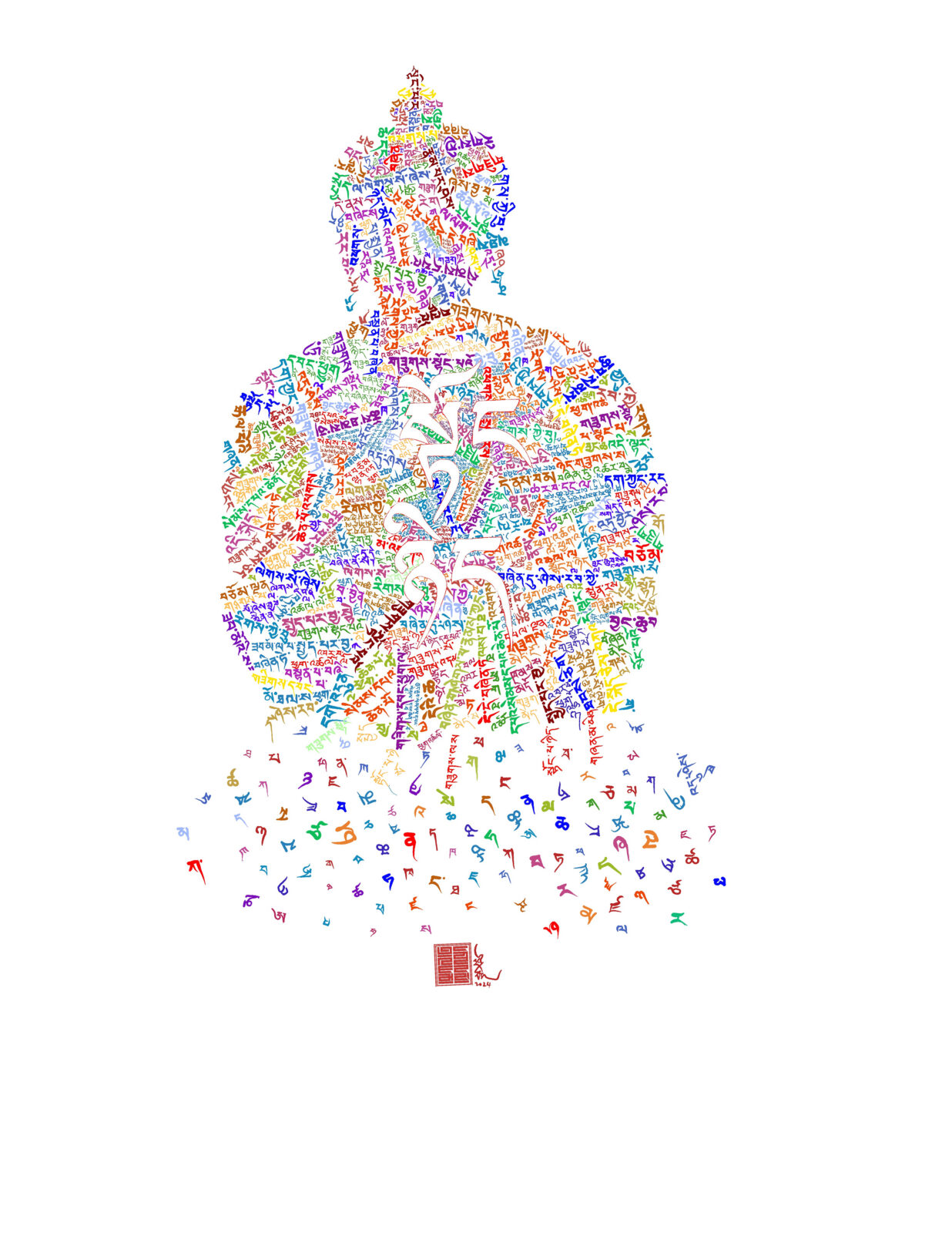
Scattered letters of the Heart Sutra (Sherab nyingpo) form words, describing shunyata (Tongpa nyi), or emptiness. Artwork by Jamyang Dorjee Chakrishar; courtesy of the artist
There are countries like China and Japan who have a history of calligraphy so they need no explanations. They only look at the beauty of Tibetan calligraphy and appreciate it. There are others who think that it is just handwriting written differently, and others who compare it with thangka painting. For them it takes some time to explain that it is an artform.
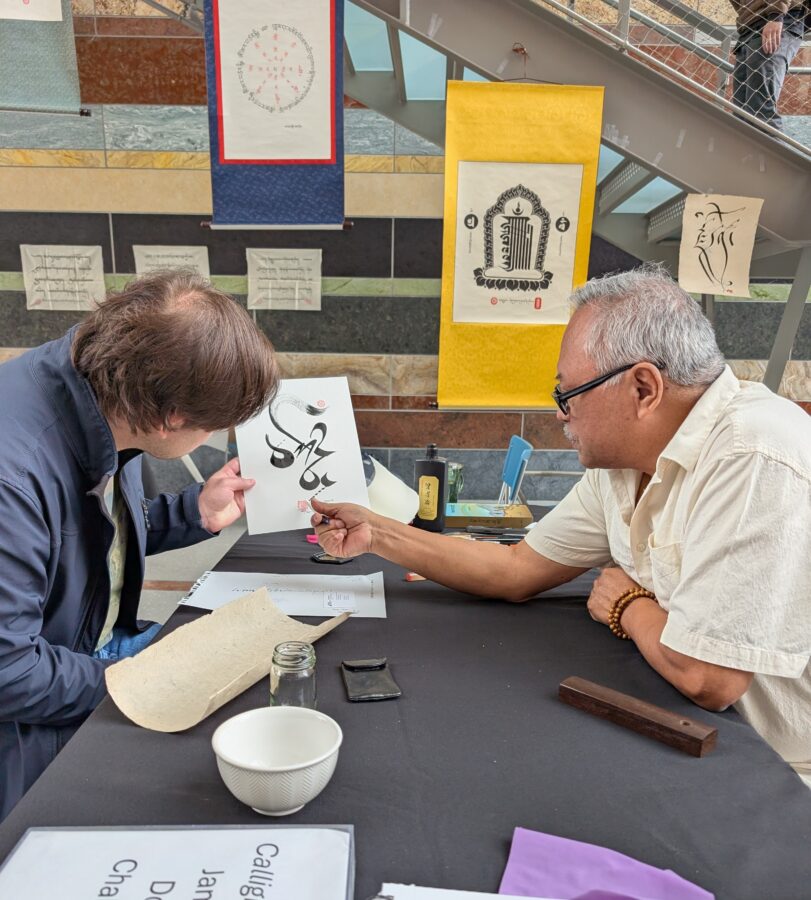
What is common whether in the West or East is that everybody loves their own name created in Tibetan calligraphy. I often have long lines of people patiently waiting and big smiles on their faces once they see their own name.
Art is universal and beautiful art is appreciated by anybody.
I hope that they understand the existence of a very rich and unique script that today holds the entire teaching of the Buddha and the spiritual masters of Nalanda intact. That it is facing existential threat both within Tibet and outside. That the loss of the same is a loss of a global treasure. Although today Buddhism can be studied in different languages, if one wishes to practice, one must understand the details rooted in Tibetan text which holds the core knowledge.
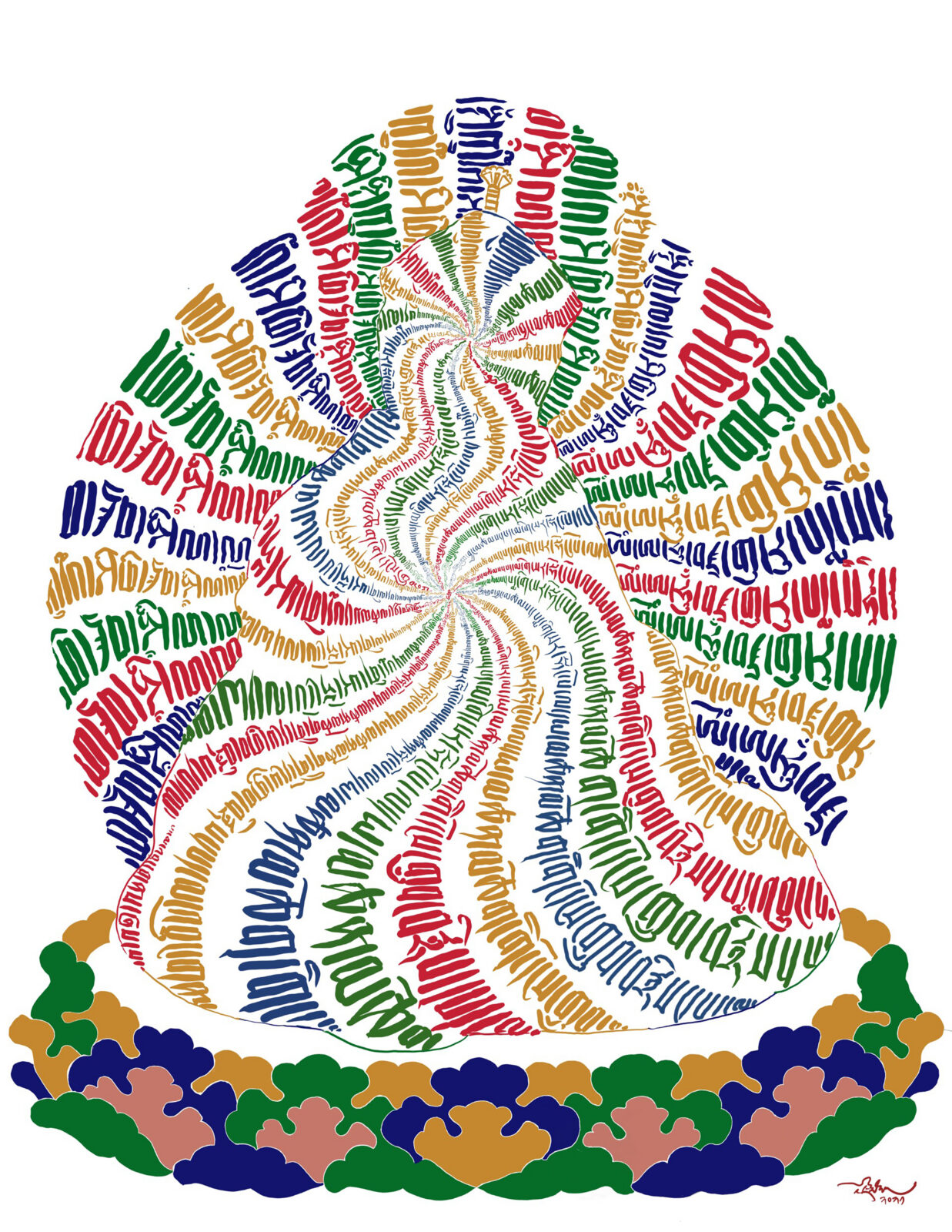
Courtesy of Jamyang Dorjee Chakrishar
Every work of art becomes my favorite until I create the next one which becomes my favorite. In this way all my works have a unique philosophical meaning and uniqueness.
The very creation of the script was for the purpose of translating the sacred texts of Buddhism and the mantras. Therefore, they are all sacred and precious. The mantras, written on paper or cloth, which are called prayer flags and posted on hills and house tops, are believed to possess the power to enhance luck and avoid hurdles.
Many people frame my works and put them on their altar or display in an important spot in their living room with respect, which shows that they carry the same sacredness.
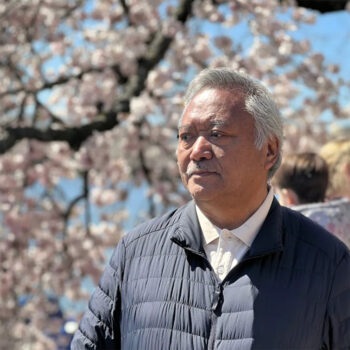
Jamyang Dorjee Chakrishar is a calligrapher based in Gangtok, Sikkim. During his career, he worked for the Government of Sikkim, the Tibetan Government in Exile, and the Tibetan Institute for the Performing Arts. More recently, he served as regional coordinator for the Conservancy for Tibetan Arts and Culture, and he founded the Lhatsun Dharma Centre. Celebrated for his “Dharma Art” and miniature calligraphy in umé, his works have been exhibited internationally, and can be found in private collections worldwide. Learn more about Jamyang Dorjee’s work at tibetancalligraphy.com

Christina Watson is the digital editor at the Rubin Museum of Himalayan Art.
Get the latest news and stories from the Rubin, plus occasional information on how to support our work.