
Photo by Smagview
Photo by Smagview
Mariia Khas’s work melds traditional metalworking techniques with Buddhist symbolism and personal storytelling. Her jewelry often resembles armor, reflecting themes of protection, healing, and inner strength. She created a video for the Rubin, which showcases her process and explores connections between her jewelry making and the energy of wrath.
Mariia Khas: It all began almost by accident. Since childhood, I’ve always felt drawn to working with my hands—to expressing an inner state through materials. I tried wood, clay, fabric . . . but I came to metal while searching for something more durable and eternal. At the time, I was in a depression I didn’t yet understand. There was a strange emptiness—and this itching in my hands to dive into a new material.
It started as a hobby, but quickly turned into a necessity, a way to speak without words. My first pieces were raw and far from perfect, but they carried emotion. Over time, that emotion became intention.
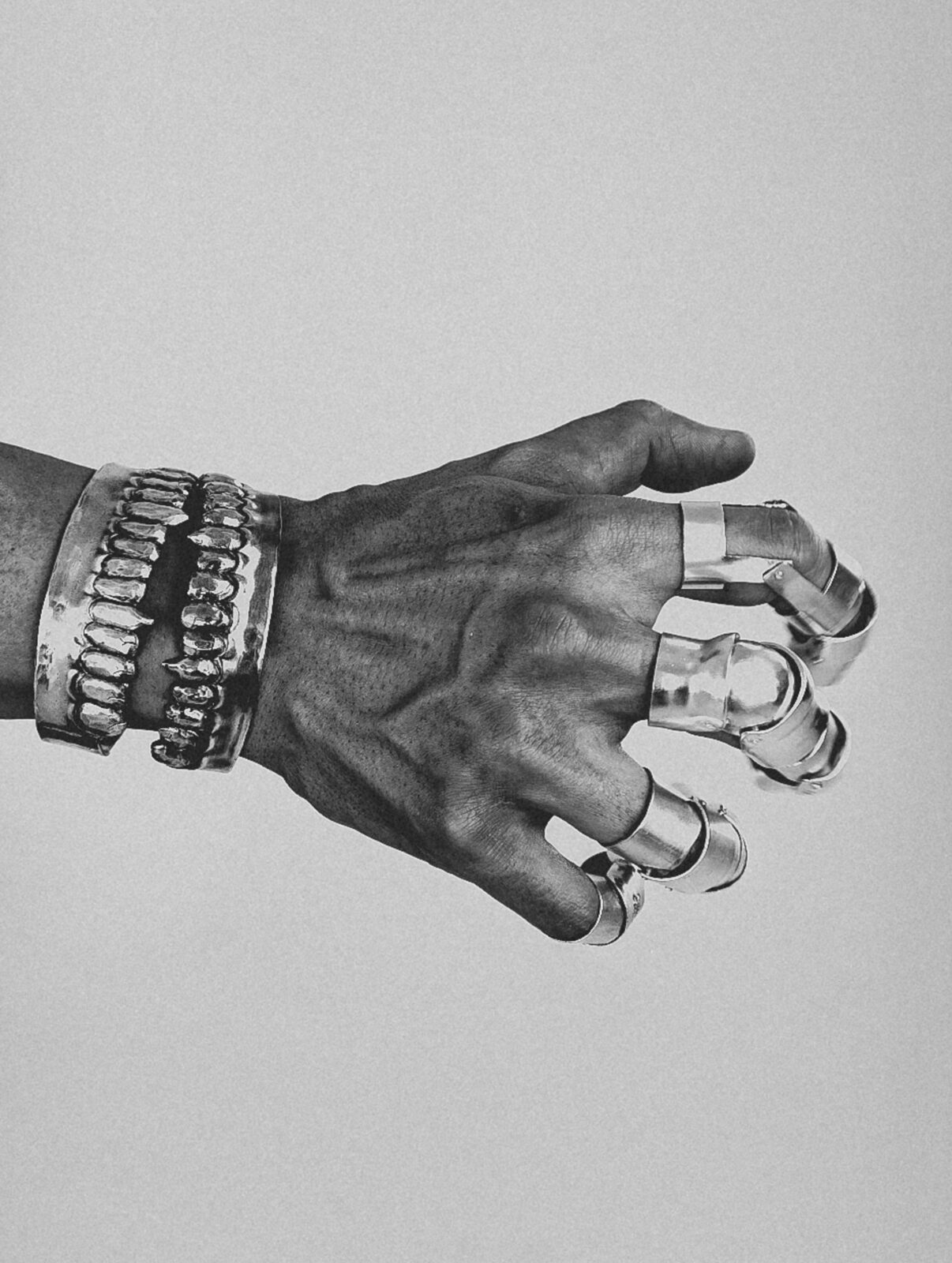
Photo by Ana Pupina
I start with a feeling, not a sketch. It’s important for me to understand what I want to say—or what needs to be said through the metal. I let the material guide me. I use traditional techniques—wax carving, forging, chasing—but always leave space for improvisation. A piece must feel alive, as if it carries its own story.
I create and then let the piece go. No attachment. It has to live its own life in the world.
I never intended to sell anything. I just kept making, sharing my pieces on Instagram—basically using it as my personal diary, which it still is. Then people started messaging me, asking to buy things.
At that time, I had no money to buy new tools, because I had previously worked in my teacher’s studio back in Mongolia. I sold my first pieces at a symbolic price just to save up and buy my own basic tools. I even went into serious debt. I’m glad that chapter is over—it was a stressful time.
Maybe the real moment was when someone told me they felt something just by holding one of my pieces. I give the shape and form, but people fill it with meaning. They wrote to me saying it felt like protection, or something familiar, even if they couldn’t explain why. I simply create what I love, and these pieces somehow find their humans and become personal relics.
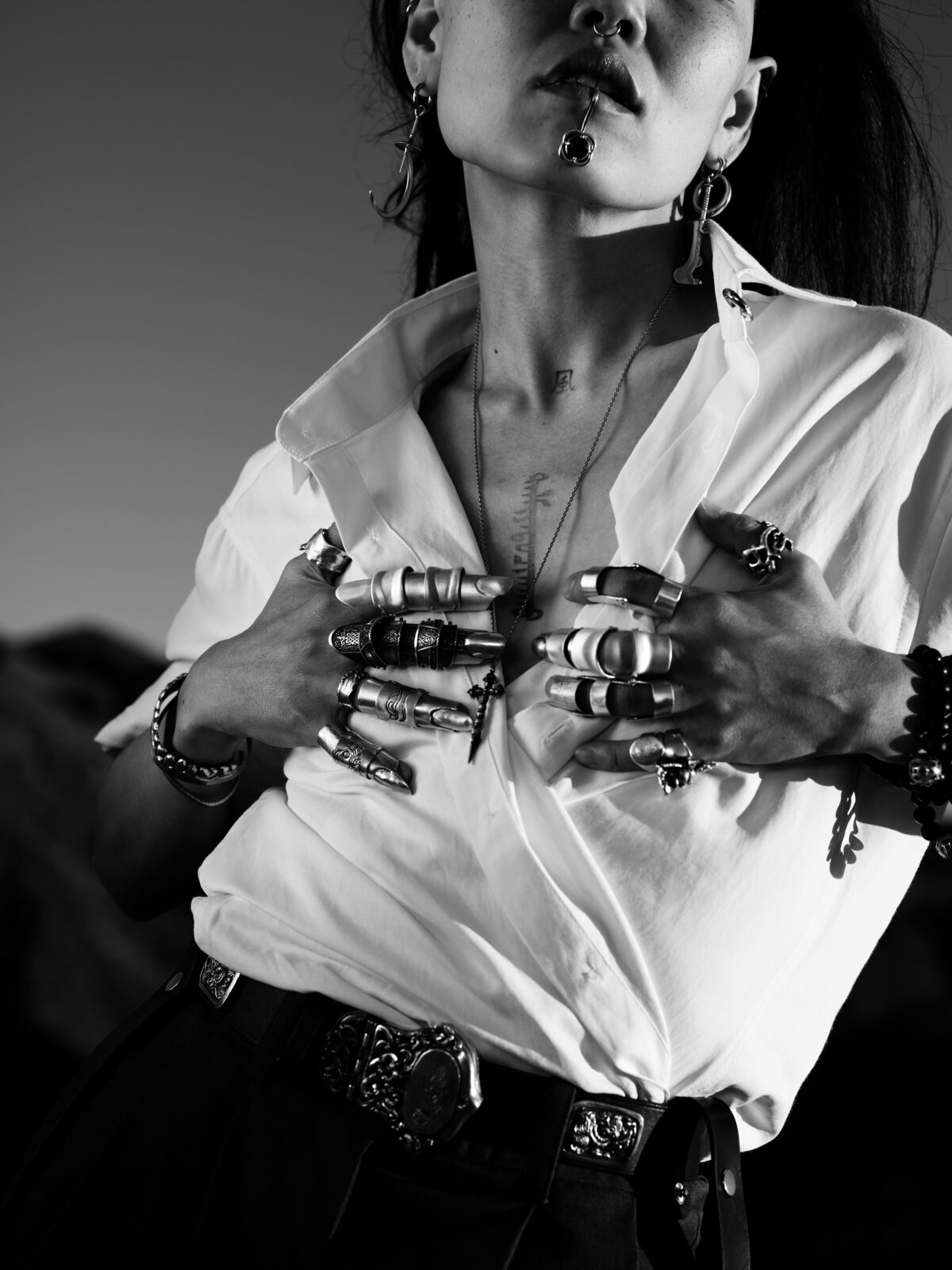
Photo by Smagview
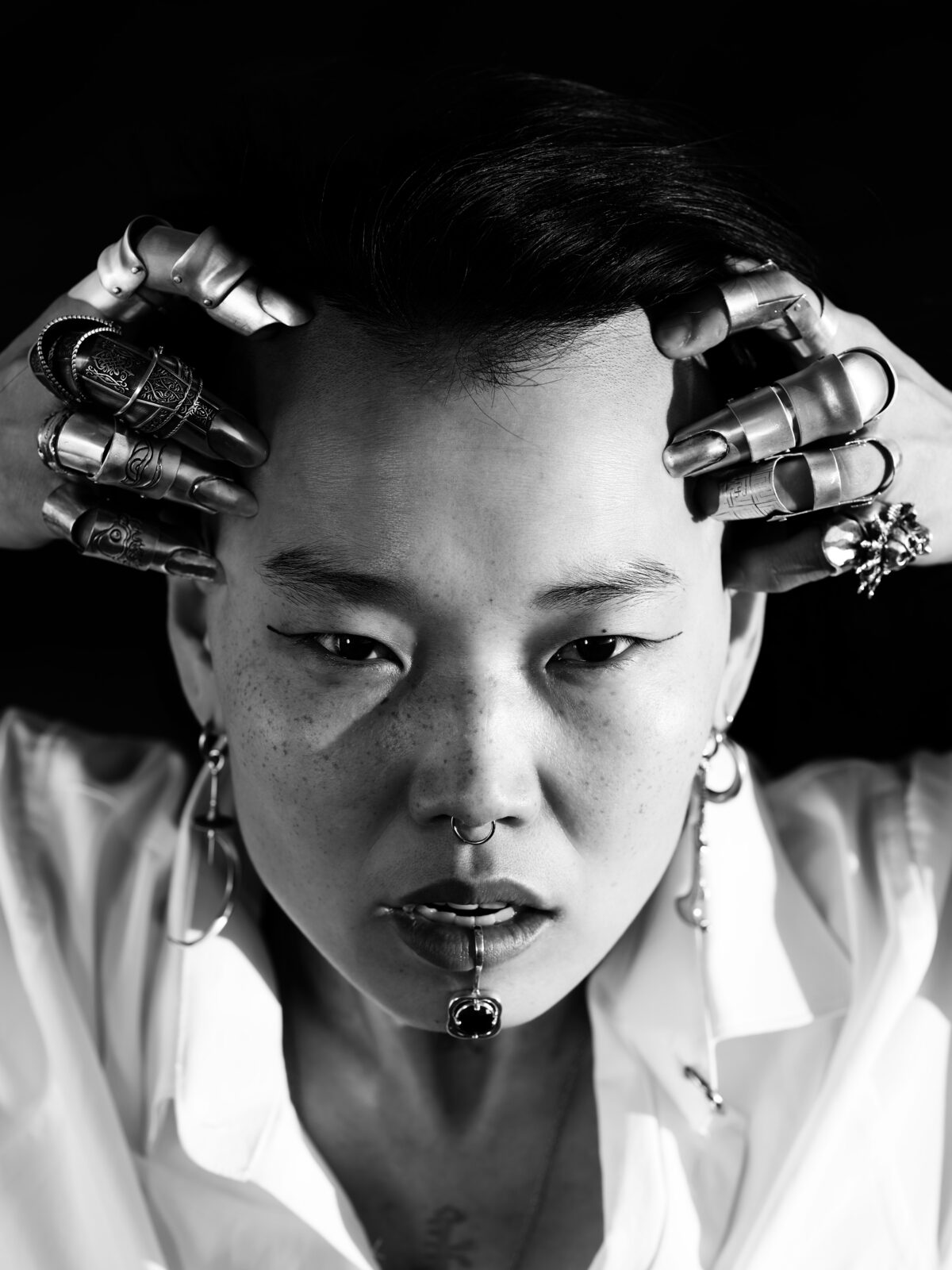
Photo by Smagview
Both.
I love when something heavy and solid becomes a form of protection.
But more deeply—I think I’ve spent my whole life unconsciously searching for the kind of protection I never had as a child. That’s why my pieces often take on this armor-like quality. The forms, imagery, and meanings I embed in each one are what I wish I could have given to myself back then, and what I now want to offer to others. Each piece is a quiet gesture of strength, care, and safety for anyone who might need it, just like I once did.
Yes. That ring is her presence. My mom wrote to me saying that my lifelong companion had passed away, and I grieved for weeks. But even the sharpest pain eventually softens.
Creating the ring was like pouring grief into a tangible form. I wear it every day, as if she’s walking beside me, guarding and supporting me. It truly is a healing piece.
Wrath isn’t rage. It’s fire. A natural process of the brain’s limbic system. It’s the impulse that won’t let you stay silent when something’s wrong—the power to defend your rights and your boundaries.
I was raised within Buddhism and shamanism. But it was only in adulthood that I began to truly ask questions and search for my own answers. The symbols I choose—vajras, deities, lions, fire—they’re not just about spirituality. They’re about memory, roots, meanings I try to find within myself.
These symbols have surrounded me my whole life. I may look like a punk—boundaryless, ruleless—but inside I carry a strong spine built on a love for tradition and ancestral reverence. I adore my culture and my family. I want to share it with the world—and hopefully help preserve it and breathe new life into it.

Photo by Smagview
Wrath isn’t rage. It’s fire. A natural process of the brain’s limbic system. It’s the impulse that won’t let you stay silent when something’s wrong—the power to defend your rights and your boundaries.
It’s important to feel and understand yourself. Only through self-awareness can you create something that carries the right energy for others. I always tell my small group of students that the most important thing in your work is being full—healthy, fed, and in the right mental space. Otherwise, the metal won’t respond. It absorbs everything.
When I ignore that and slip into my toxic overworking self—the one ready to die at the bench—things fall apart. Solder won’t flow, the wax won’t cast properly, tools break. I’ve learned to protect my boundaries, even from myself.

Photo by Bato Buiantuev
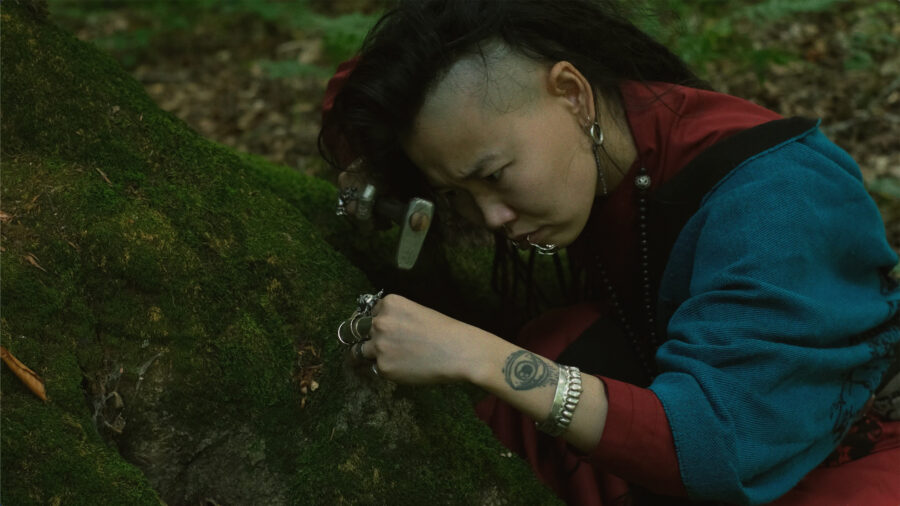
Absolutely. It’s a ritual. A bodily meditation. Total focus. Precision. Attention to safety and detail. Every hammer strike is a way to process something wordless. It’s physical alchemy.
This project was deeply personal. For the first time, I was able to share not just the form of what I do, but the feelings behind it—my love and admiration for the world I was born into.
We combined footage from my studio and from nature. It was both powerful and tender. I’m thrilled with the result and can’t wait to share it. A special thank you to the musical band Namgar. I’ve long been a fan of their work and was overjoyed when they gave permission to use their music in the piece.

Mariia Khas is a silversmith and artist dedicated to exploring and preserving her cultural roots through contemporary design. Her work blends ancient Mongolian symbolism with modern forms, carrying tradition through the lens of global change. Each piece tells a story of identity, strength, and transformation—a dialogue between past and present. Through her craft, Mariia seeks not only to create beauty but to keep her culture alive and evolving in today’s world.” See her work @khasomari and @shuwuu_silver

Christina Watson is the digital editor at the Rubin Museum of Himalayan Art.
Get the latest news and stories from the Rubin, plus occasional information on how to support our work.