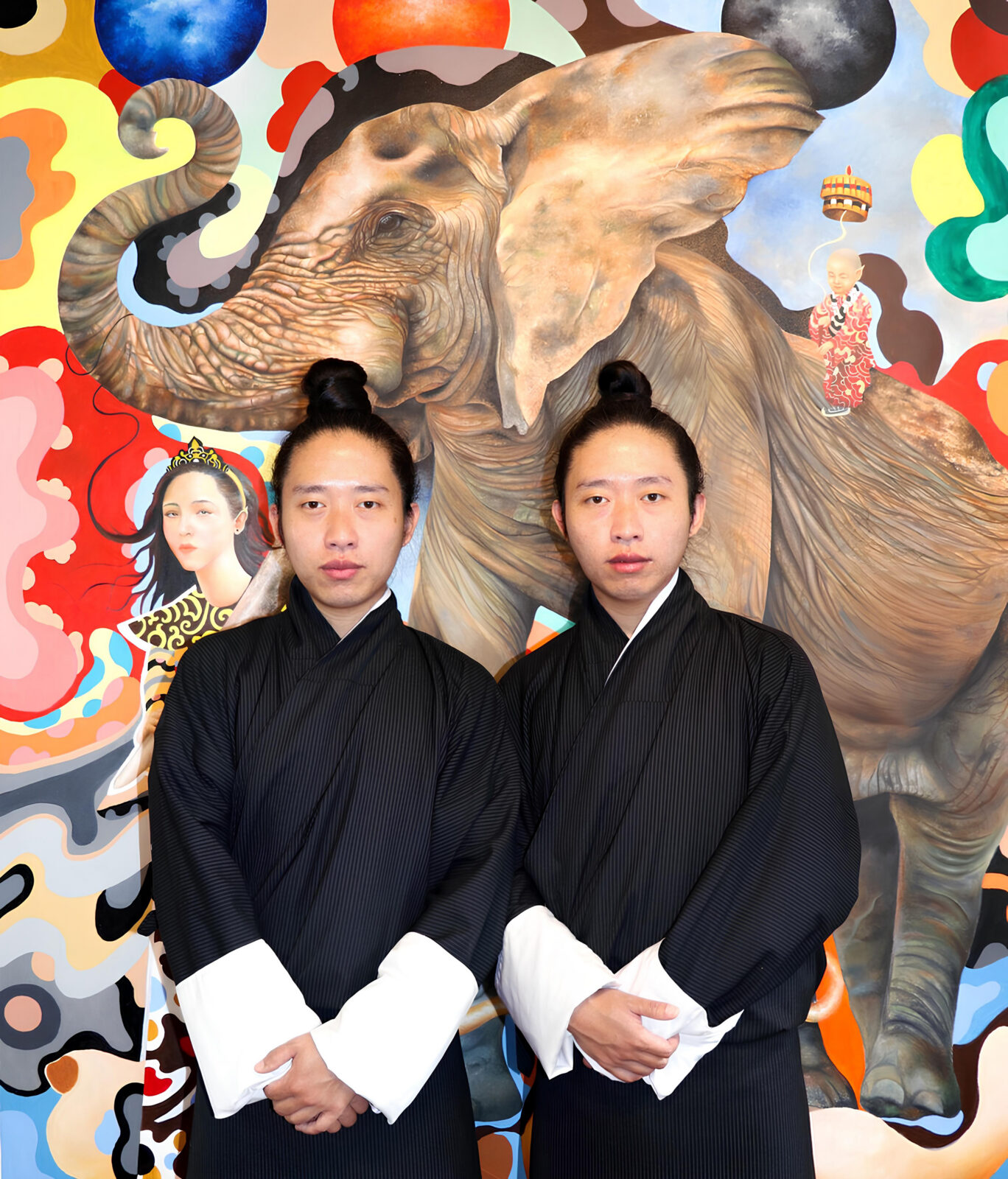
Twinz Artists pose with their illustration
Twinz Artists pose with their illustration
Twinz Artists: The article helped us see wrath not as anger but as compassion in a fierce form. It explains how wrathful deities aren’t violent for the sake of violence—they use intensity to protect and transform negativity. That idea really stayed with us and directly shaped how we approached this painting.
In Buddhism wrath isn’t personal anger but a powerful compassionate force, embodied by wrathful deities like Vajrabhairava and Mahakala who destroy ignorance, attachments, and obstacles to enlightenment.

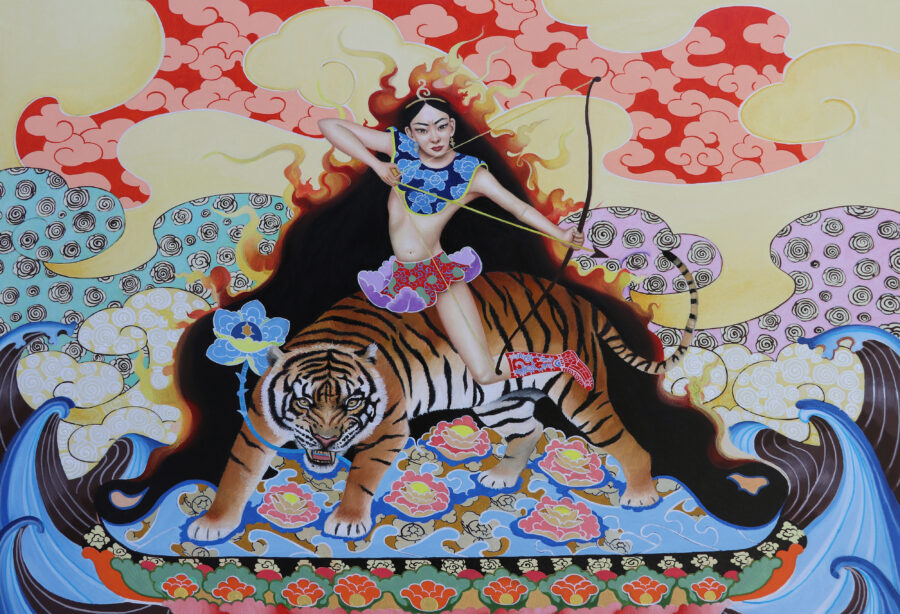
Illustration by Twinz Artists
We represent Buddhism through icons and symbols inspired by the tangible and intangible culture of Bhutan.
We work directly on canvas—no layouts or sketches. We take inspiration from different faces, visualize the layout, and draw.
In our first solo exhibition, most of the works portrayed human faces with plain backgrounds. Over the years, we incorporated colorful freestyle patterns and designs, as well as animal depictions with spiritual iconography.

Illustration by Twinz Artists
We work out and enjoy nature. We also watch and listen to podcasts, read, pray, and spend time with dogs.
Yes, we do. We enjoy different genres, from pop, hip-hop, and R&B to classical (Mozart, Beethoven). But our favorite genre is heavy metal, especially extreme metal like black metal, death metal, death core, etc.

Illustration by Twinz Artists
Leonardo da Vinci, Rembrandt, Gustav Klimt, Gustav Moreau, Hokusai, Lucian Freud, William Bouguereau, and James Jean.
We hope that our art evokes spiritual warriorship, which is discovering the basic goodness. It’s about living a life of fearlessness, gentleness, and intelligence.
Tashi Dendup and Ugyen Samdrup, together known as Twinz Artists, were born in 1988 in Thimphu, Bhutan. They have degrees in fine arts from Lovely Professional University Jalandhar in India. Buddhism, consciousness, psychedelics, the human warrior spirit, shamanism, and the tangible and the intangible culture of Bhutan influence their subject matter, which they express through the use of traditional and nontraditional icons and symbols.

Christina Watson is the digital editor at the Rubin Museum of Himalayan Art.
Get the latest news and stories from the Rubin, plus occasional information on how to support our work.