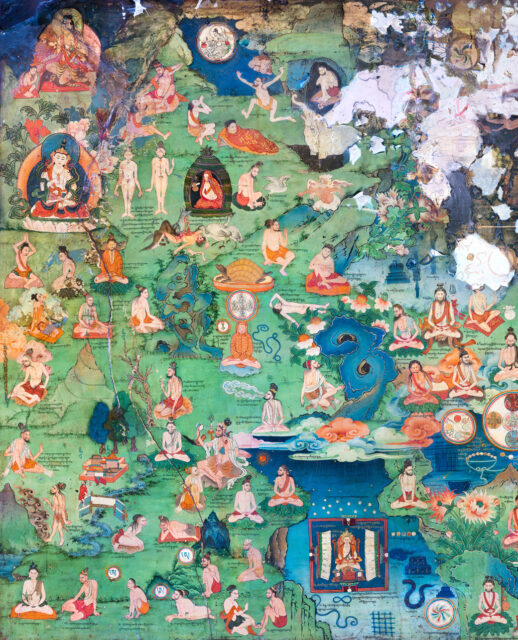
An 11th-century Sanskrit text reveals the practice’s lesser-known Buddhist past
Yoga has evolved over a long journey from ascetic practice to global wellness phenomenon. Yet behind today’s familiar postures lies a complex and sometimes surprising history. One part of this history involves hatha yoga, the postural form of yoga popular today, which incorporates techniques like meditation, breath control, and the manipulation of vital energies and substances within the body. Throughout its early history, yoga was primarily a meditation practice of the mind. Hatha yoga introduced a greater emphasis on the yogic body and complex postures, known as asanas, that most people now associate with the word yoga.
Hatha yoga was once assumed to be an exclusively Hindu tradition, but the story and teachings of Virupa, a Tantric Buddhist accomplished master (siddha), reveal insights into the practice’s cross-religious past.
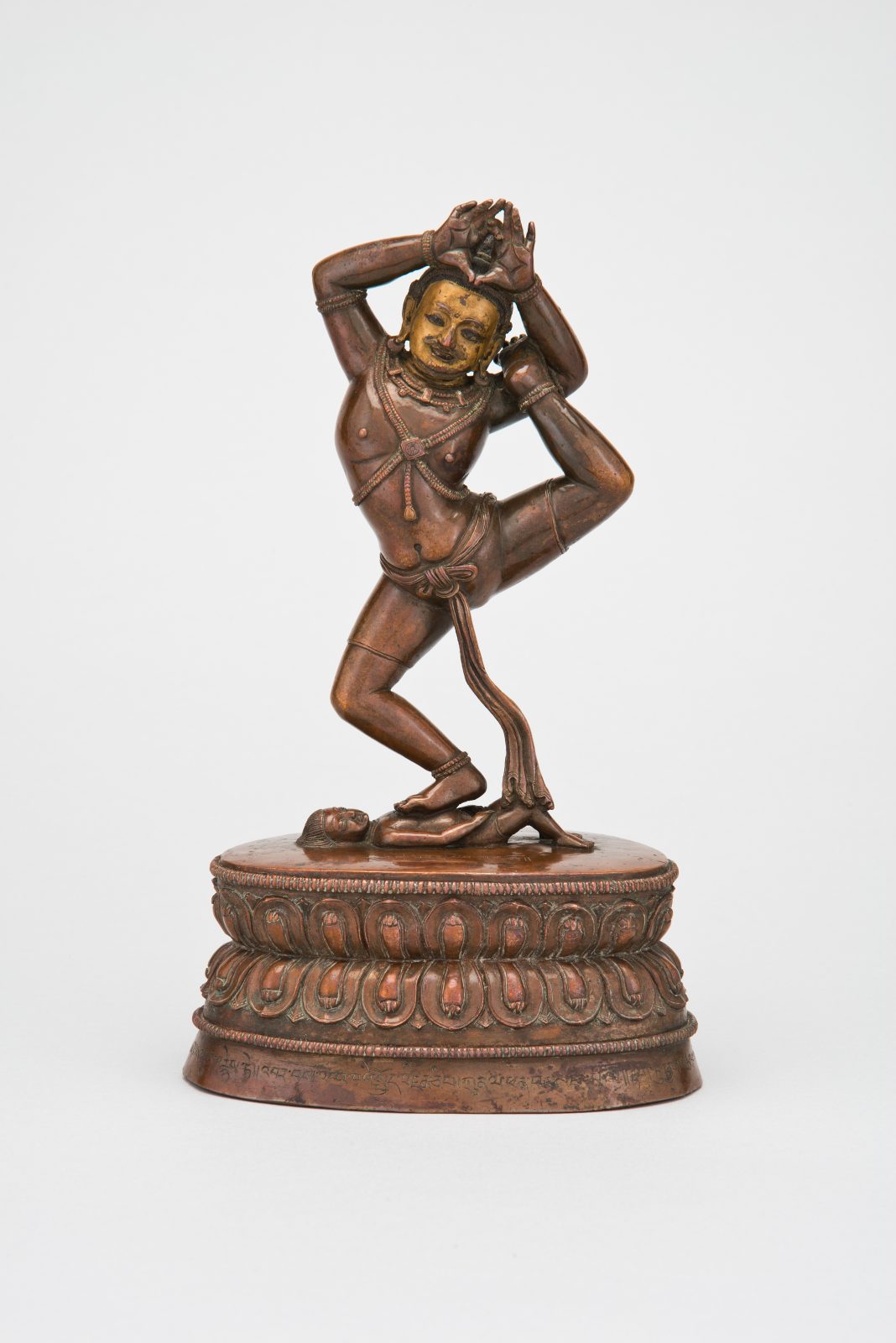
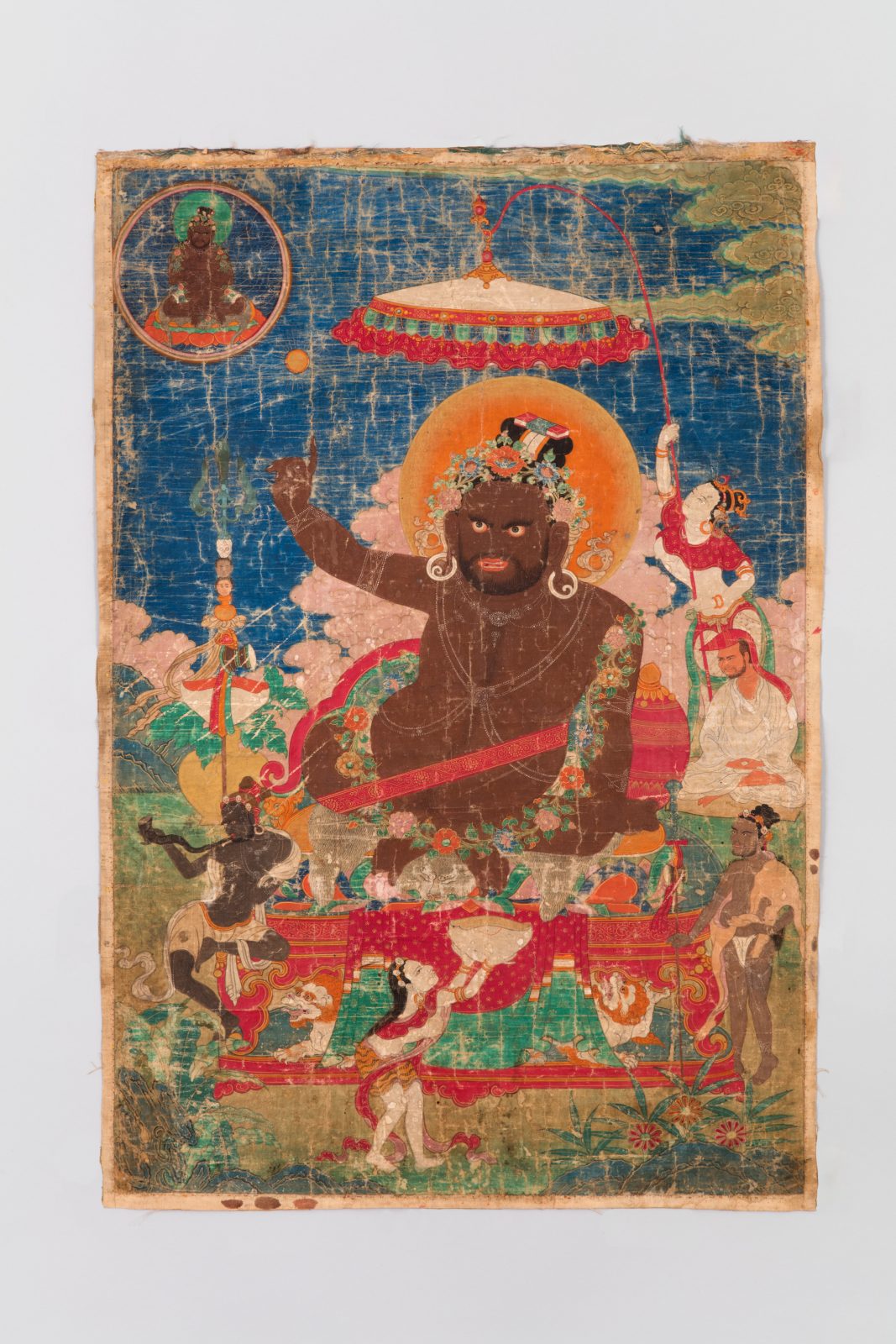
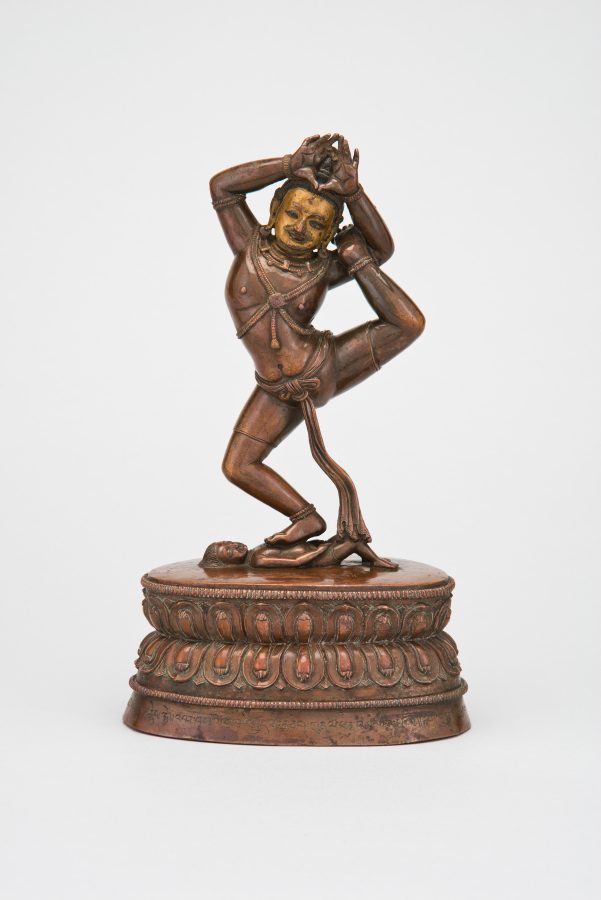
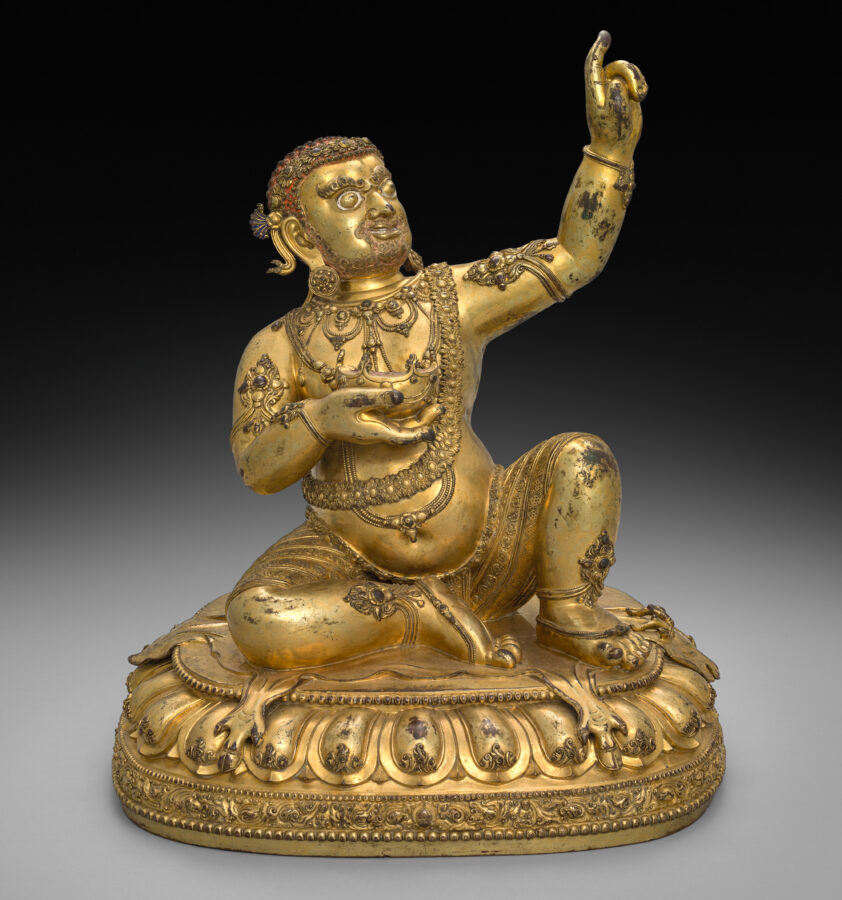
Virupa’s life stories present him as an almost comedic character known in Himalayan religious traditions for miraculous feats: stopping the sun in the sky, drinking entire taverns dry, and wandering as an unpredictable holy figure who breaks all the rules. But beyond the legends, Virupa is associated with a body of teachings that eventually shaped what we now call hatha yoga.
One clue to this more complex history lies in an 11th-century Sanskrit text called the Attainment of Immortality (Amritasiddhi). Both Buddhist and Hindu traditions recognize Virupa (or a disciple of his) as the text’s author, and recent studies by scholars Dr. Kurtis Schaeffer, Dr. James Mallinson, and Dr. Péter-Dániel Szántó have drawn attention to its importance. For decades, this text circulated within the study of yoga, assumed to be an early Hindu source of hatha yogic techniques.
What Mallinson and Szántó have revealed, however, is that the Attainment of Immortality was almost certainly composed and first transmitted within Buddhist communities. It contains technical vocabulary, ideas, and practices specific to Tantric Buddhism. For this reason, Mallinson has dubbed the Attainment of Immortality “haṭha yoga’s tantric Buddhist source text.”
This finding matters because the Attainment of Immortality contains some of the earliest known descriptions of hatha yogic practices. These are the building blocks of later Hindu hatha yoga manuals. And yet, here they appear in a Tantric Buddhist context, closely associated with Virupa and other siddhas.
What does this mean for how we understand yoga?
First, it suggests that hatha yoga did not emerge within a single religious tradition. Instead, it developed through dialogue, borrowing, and experimentation across communities—including Buddhists and Hindus, yogis and monks, ascetics and householders. The Himalayas and greater South Asian world are not divided into isolated religious territories, but are alive with shared practices and overlapping ideas.
Second, it invites us to reconsider figures like Virupa not as marginal or eccentric but as participants in a broader history of embodied practice. In Buddhist narratives, Virupa’s dramatic actions are often interpreted symbolically. His ability to “stop the sun,” for example, is read as mastery over time, perception, and the inner workings of the yogic body. In this sense, the siddha’s legendary feats mirror the goals of early yogic practice—to transform ordinary human experience into a vehicle for liberation and immortality.
Finally, the rediscovery of the Attainment of Immortality as a Buddhist text challenges modern assumptions about yoga’s identity. Today, yoga is often framed as a unified tradition with a single origin story. But the historical record tells a different story—one of entanglement and traditions shaping one another in dynamic, unexpected ways.
This layered history also offers a new way of seeing Himalayan art. Images of siddhas like Virupa offer a window into a shared yogic culture that cuts across religious, geographic, and linguistic boundaries. The same is true of ritual objects, manuscripts, and paintings that relate to practices of the body, breath, and mind.
Virupa reminds us that yoga has always been more than a set of techniques. It is a living tradition shaped by centuries of exchange. To embrace yoga today—whether on a mat, in meditation, or in scholarship—is to participate, knowingly or not, in this long, shared history.
To learn more about Tibetan Buddhist hatha yogic traditions as depicted in a spectacular collection of mural paintings in the private chambers of the Dalai Lamas, see this essay on Project Himalayan Art.