
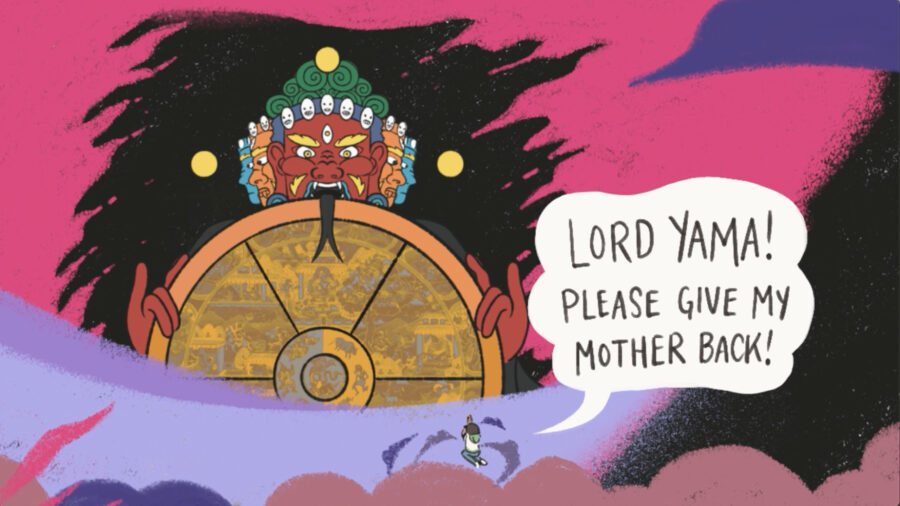
Illustration by Twinz Artists
Illustration by Twinz Artists
An activist and filmmaker learned how to access her anger to heal and overturned some long-held beliefs about the relationship between rage and love along the way
I always thought that the opposite of love was rage, the extreme, irrational, uncontrollable expression of anger, the force that drove people to hurt others with their words or weapons. Rage was to be tamed and wrestled down like a wild animal within us. We were only as evolved or spiritual or good as our ability to subdue it. Only when our rage was subdued could we unlock our human potential to love others, even our opponents.
This was a lie.
The opposite of love is not rage. The opposite of love is indifference. Love engages all our emotions: Joy is the gift of love. Grief is the price of love. Anger is the force that protects that which is loved. We cannot access the depth of loving ourselves or others without our rage.
Neurobiologists call oxytocin the love hormone: The more oxytocin in the body, the more care and nurturing mammals show for their babies. Oxytocin decreases aggression in a mother’s body overall with one exception—in defense of her young. When babies are threatened, oxytocin actually increases aggression. For mothers, rage is part of love: It is the biological force that protects that which is loved.
When I learned this, I thought of my mother and the ferocity in her eyes when she had fought for me. I did not know that she had that kind of rage roaring inside her. She couldn’t access it for herself. But she could access it for me. It took me a long time to learn how to access it for myself.
My rage showed me that I was worth protecting, that racism and sexism were not abstract oppressions but flesh-and-blood violations that lived in the body, and that the body had to find a way to unleash all of its mighty ferocity to protect itself in order to know itself to be alive. The tiger had always been with me, inside me; I just had to find a way to release it and ride it. And where did it deliver me? To a place where my assailants no longer had psychological power over me, because I had reclaimed the sovereignty of my body.
Rage is a healthy, normal, and necessary response to trauma. It is a rightful response to the social traumas of patriarchy, white supremacy, misogyny, homophobia, transphobia, and poverty. But we live in a culture that punishes us when we show our teeth—we are called hysterical when we raise our voice; we are less likely to be believed when we tell our story with fury; and, if we are anything other than deferential with an officer, we might get hurt or shot, and even then, our deference might not make a difference. Black and brown people have been schooled in the suppression of our emotions as a matter of survival. “We learned when we were very little that black people could die from feeling rage and expressing it to the wrong white folks,” says bell hooks. “We learned to choke down our rage.” We now have the data to prove what community healers know well: Repressing anger comes at a cost to our health. It results in high rates of autoimmune diseases. It amplifies our perception of physical pain.
The opposite of repression is also dangerous. Too many men have been socialized to unleash rage without apology. For men, rage is often a secondary emotion that masks sadness or shame. Violence is the socially conditioned default for male rage, and the proliferation of guns has made male aggression deadlier than ever: Mass shooters are typically men, and the majority of these men have physically abused the women in their lives. We might think that the solution is teaching our boys not to show aggression. But suppressed anger always finds a way to explode. For women and girls, it is more likely to explode internally as self-hatred or stress or illness. For men and boys, it is more likely to erupt as violence against others.
The solution is not to suppress our rage or let it explode, but to process our rage in safe containers—emotional spaces safe enough to express our body’s impulses without shame and without harming ourselves or others. Safe containers take many forms: shaking, weeping, venting, writing, art, music, dance, drama, meditation, trauma therapies, rituals, and ceremonies of all kinds. Only when we give rage an external expression outside our bodies can we be in relationship with it. We can then ask: What information does my rage carry?
The solution is not to suppress our rage or let it explode, but to process our rage in safe containers.
One summer while visiting Kolkata, India, my friend Deonnie took me to the Kalighat Temple and introduced me to the subject of her academic study—the Hindu goddess Kali. We walked through the temple barefoot, our feet stained red from crushed flowers and the blood of goats. Kalighat is one of the only major temples in India where animal sacrifices are performed daily. In Hindu practice, you give the deity what they desire. Krishna, the god who dances with his flute, is offered milk-based sweets. In this temple, Kali, the mother of life, is offered blood. The goat meat is then distributed to the homeless, sold to devotees, or donated to Mother Teresa’s Home for the Dying next door. I began to watch the goat sacrifices, one clean cut of the head after another. The bleating filled my ears and the drums beat in my chest and the smell of blood filled the air. It smelled like menstrual blood. The crowd pressed my body into the garba griha—the “house of the womb” or innermost sacred shrine—until I was thrust in front of her: a black stone, draped in sari cloths of all colors, three large eyes that penetrated me. I saw Kali, and she saw me. A priest pressed a red dot on my forehead with such mighty force that I almost fell back. As the bells rang out I stumbled outside and sat on the cool stone for a long time.
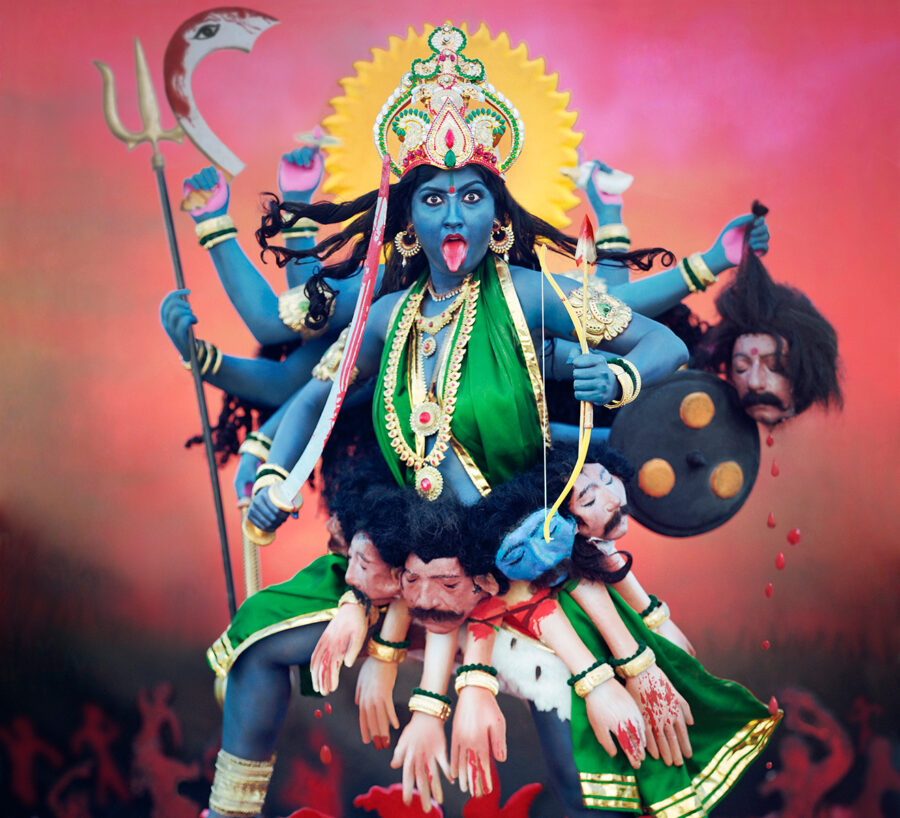
I thought about Kali’s origin story in the Hindu tradition. According to one famous story, all the gods were in battle against a great demon, Mahisha, who could not be defeated, so they poured their energies together to create the goddess Durga. When Durga went to battle with the demon, her ferocious energy concentrated in her forehead and out sprang Kali. She was the fiercest form of the goddess, clad in a tiger skin, wearing a garland of skulls, mouth agape, tongue rolling out as she drank the blood of life. Kali in her many forms was most beloved as the Divine Mother, to be revered and feared and loved, because she protected us. The rage of Kali made me wonder: Can we see our own rage as animal and divine?
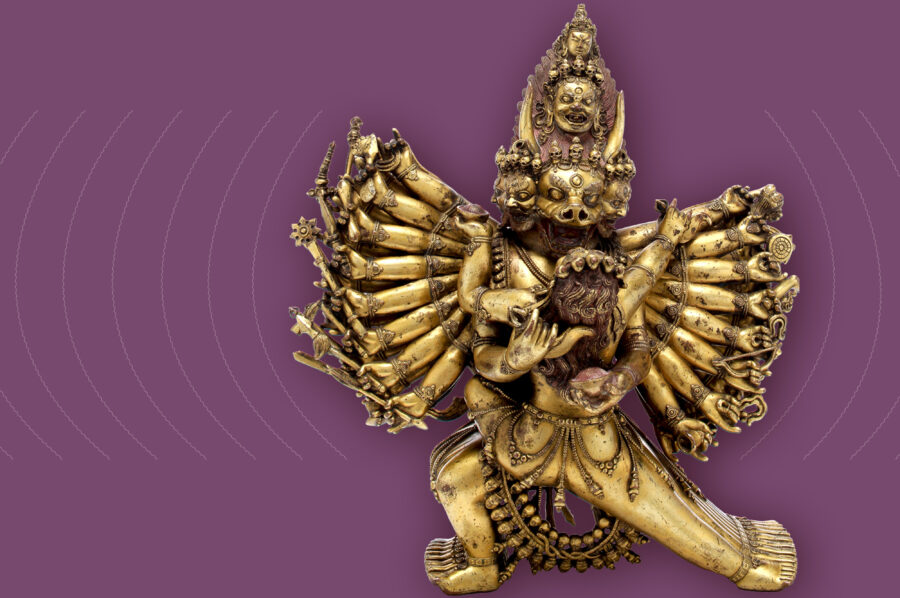
Divine rage is fierce, disciplined, and visionary. It is the fearsome wrath of Ekajati, or Blue Tara, when she fought demons in Tibetan Buddhist legends. Or the fury of Jesus when he overturned the tables of the money changers in the temple in Christian scripture. The aim of divine rage is not vengeance but to reorder the world. It is precise and purposeful, like the focused fury projected into the world from the forehead of the goddess. It points us to the humanity of even those who we are fighting. Kali is clad in a tiger skin: It is only through accessing her ferocity that divine rage can take form in the world. Perhaps our task as human beings is to find safe containers for our raw reactionary rage—and then choose to harness that energy in a way that creates a new world for all of us.
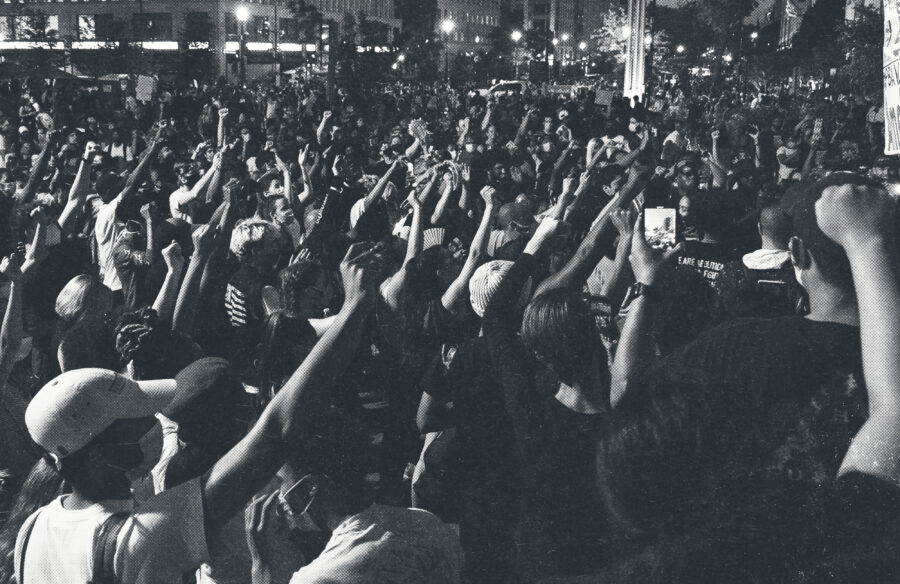
Now I see instances of divine rage everywhere. I see it in the activists who storm the stage at political rallies, disrupt confirmation hearings, and confront senators in elevators. I see it in people who stand up to tell the truth at school board meetings, in workplaces, on social media, and at their kitchen tables. There are many ways to confront one’s opponents without anger. But in the case of ongoing social injustices, expressing outrage is often the only way to be heard.
Divine rage can make people uncomfortable: It can feel disruptive, frightening, and unpredictable. There are those who wish to police such rage in the name of civility. But civility is too often used to silence pain that requires people to change their lives. Rather than taming public expressions of moral outrage, perhaps it is up to the rest of us to train our ears to “hear beyond hearing,” in the words of theorist Judith Butler, so that we can discern the truth of the pain of injustice and confront our own complicity and responsibility. Just as we need accomplices to hold protected spaces where the most traumatized among us tend to our grief, so, too, do we need accomplices to stand by us when we express our rage, and help others to understand it.
“Anger is loaded with information and energy,” said Audre Lorde. “Every woman has a well-stocked arsenal of anger potentially useful against those oppressions, personal and institutional, which brought that anger into being. Focused with precision it can become a powerful source of energy serving progress and change.” Lorde asks us to tend to the rage within us as a symphony, “to listen to its rhythms, to learn within it, to move beyond the manner of presentation to the substance, to tap that anger as an important source of empowerment.” It is a rhythm: Step away to rage, return to listen, and reimagine the solutions together. It becomes a kind of dance—to release raw rage in a safe container, in order to send divine rage into the world, like focused fury. The way of the warrior-sage is not only loving-kindness but loving-revolution, or revolutionary love.
From the book SEE NO STRANGER: A Memoir and Manifesto of Revolutionary Love by Valarie Kaur, published by One World, an imprint of Random House, a division of Penguin Random House LLC. Copyright © 2020 by Valarie Kaur.

Valarie Kaur is a renowned social justice leader, lawyer, award-winning filmmaker, faith leader, mother, and bestselling author of See No Stranger, Sage Warrior, and World of Wonder. She leads the Revolutionary Love Project, building a movement to reclaim love as a force for justice. A daughter of Punjabi Sikh farmers in California, Valarie earned degrees at Stanford University, Harvard Divinity School, and Yale Law School and holds several honorary doctorates. She lives in Los Angeles in a multigenerational family.
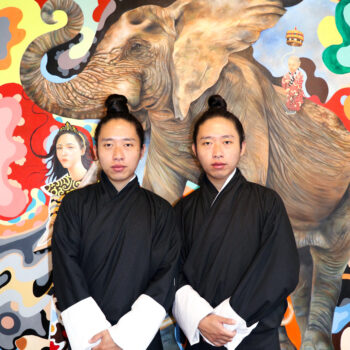
Tashi Dendup and Ugyen Samdrup, together known as Twinz Artists, were born in 1988 in Thimphu, Bhutan. They have degrees in fine arts from Lovely Professional University Jalandhar in India. Buddhism, consciousness, psychedelics, the human warrior spirit, shamanism, and the tangible and the intangible culture of Bhutan influence their subject matter, which they express through the use of traditional and nontraditional icons and symbols.
Get the latest news and stories from the Rubin, plus occasional information on how to support our work.