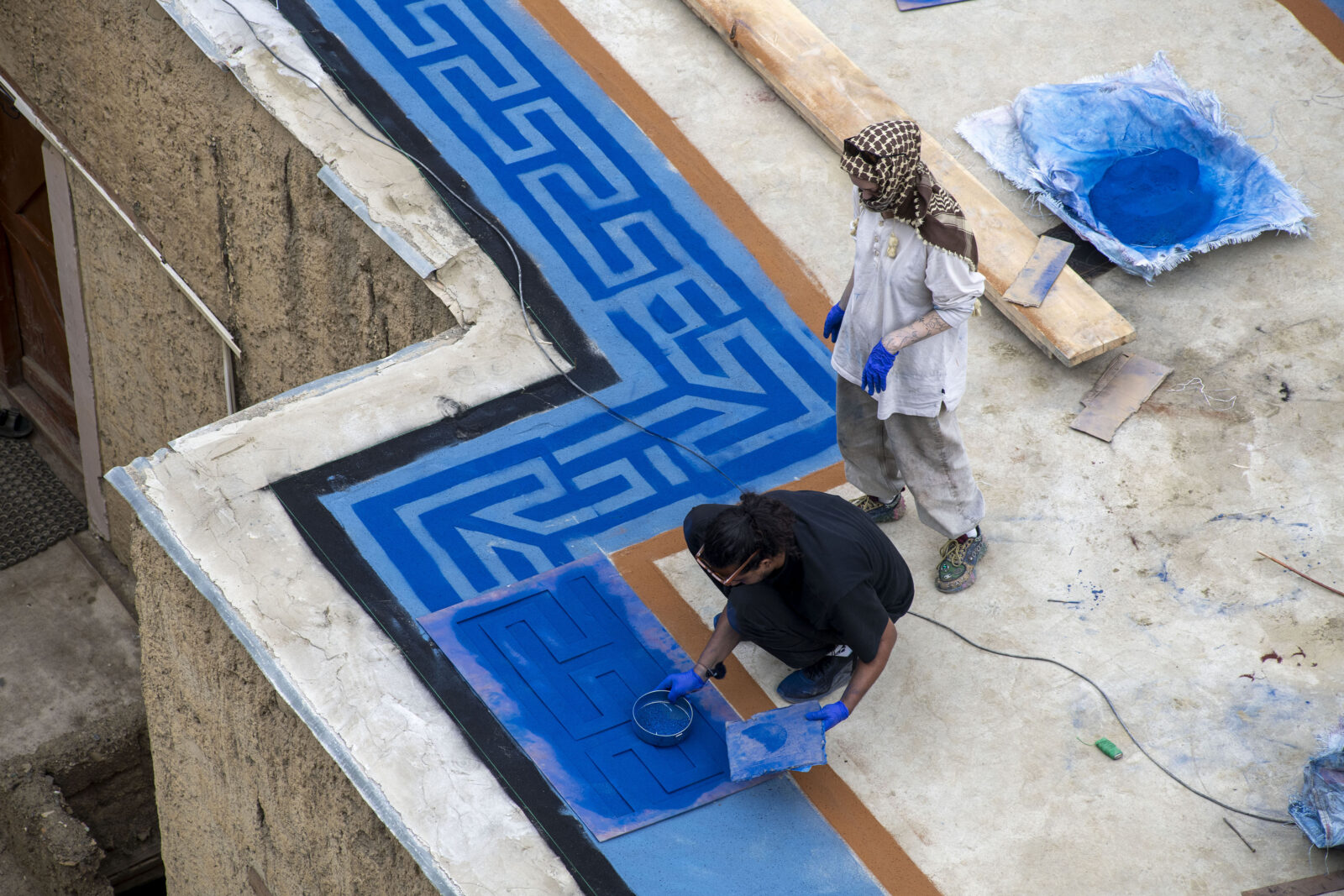
Installation process of Rising from the Soil, Soaring to the Sky; photo by Jorrit Britschgi
Installation process of Rising from the Soil, Soaring to the Sky; photo by Jorrit Britschgi
This summer the Rubin Museum of Himalayan Art participated in the inaugural edition of the sā Ladakh Biennale—the world’s highest regenerative contemporary art biennial—supporting the local residency of Nepalese artist Amrit Karki and his site-specific work created for the event. It’s only the beginning of the Museum’s participation in the biennale, as the Rubin has also partnered with the event to support artist commissions in the next two editions in 2028 and 2030.
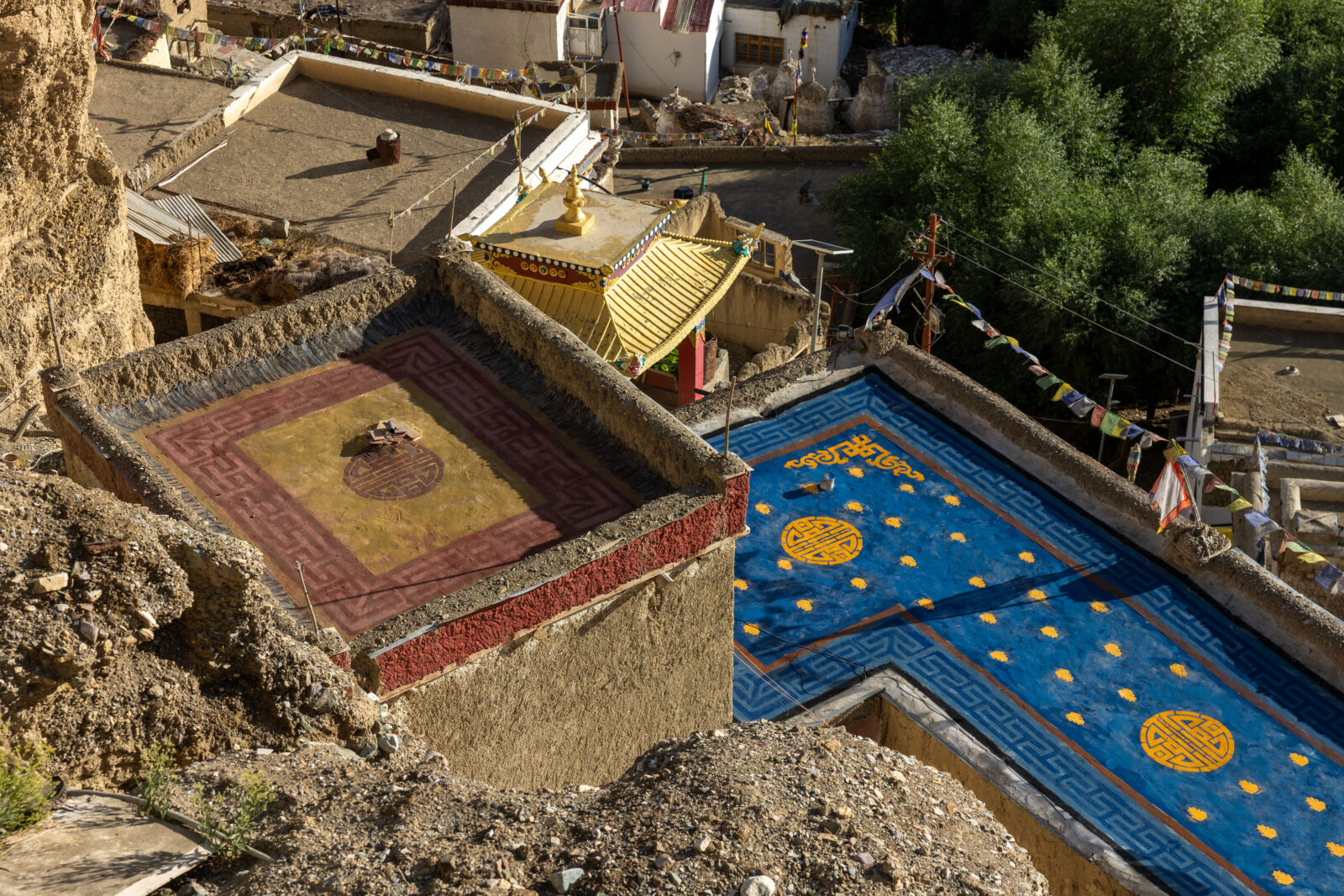
Amrit Karki (b. 1990, Pokhara); Rising from the Soil, Soaring to the Sky; Lamayuru, Ladakh; 2026. Photo by Manan Sheth, courtesy of sā Ladakh Biennale
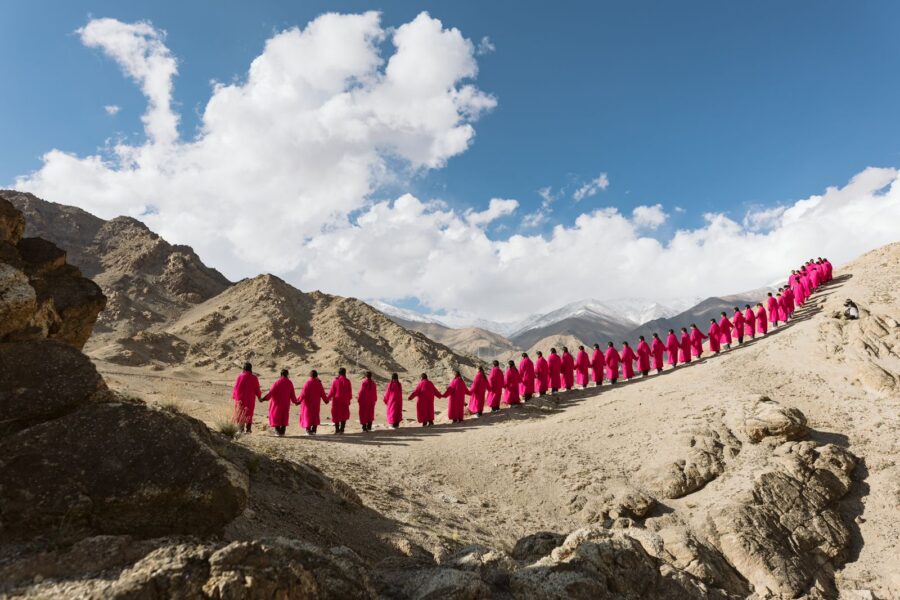
The sā Ladakh Biennale is held along the scenic and historically significant Leh-Kargil corridor in Ladakh, India, where artists have created site-specific installations with zero-to-minimal environmental impact at an elevation of 3,000 meters above sea level. Ladakh, part of the western Himalayan region, is located in the northwestern corner of India in a geopolitically complex area bordering Pakistan and China. With its high altitude, strong sunlight, and rocky landscape, it’s a complicated place to live—and to stage a biennale.
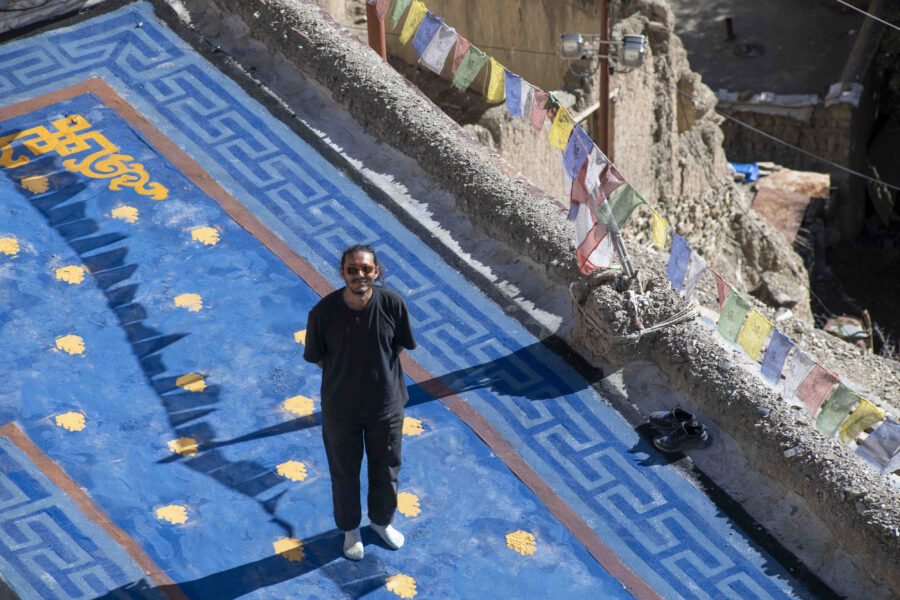
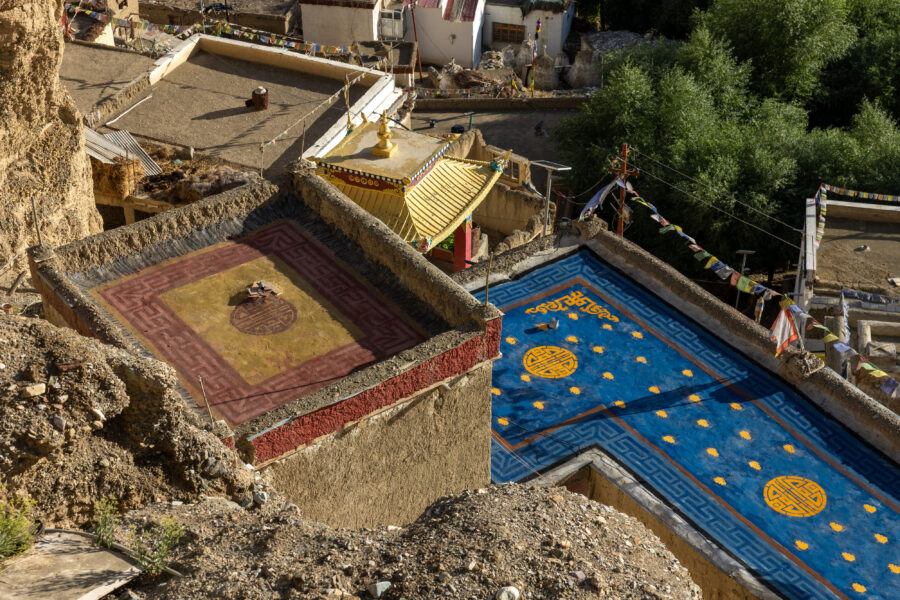
In July 2026 Karki had a monthlong residency in the village of Lamayuru, located beneath the 11th-century Tibetan Buddhist Lamayuru Monastery, to conceive and plan his monumental installation, Rising from the Soil, Soaring to the Sky. The colorful work, which references traditional Himalayan textiles and patterns, was made of local soil and pigments spread across the flat roofs of two historic buildings situated just below the monastery (with a small addition on the nearby ground to bring the total surface area to 1,008 square feet, an auspicious number in Buddhism and Hinduism.)
In addition to its visual presence, the ephemeral work functioned as a sort of performance piece in which the landscape, local history, community, and even weather all played a role. Volunteers came from Ladakh’s capital, Leh, to support the artist, and community members watched as Karki laid out the installation with the help of a local architect who was working on a construction site nearby. The installation process had to wait until the day the biennale opened on August 1 due to rain.
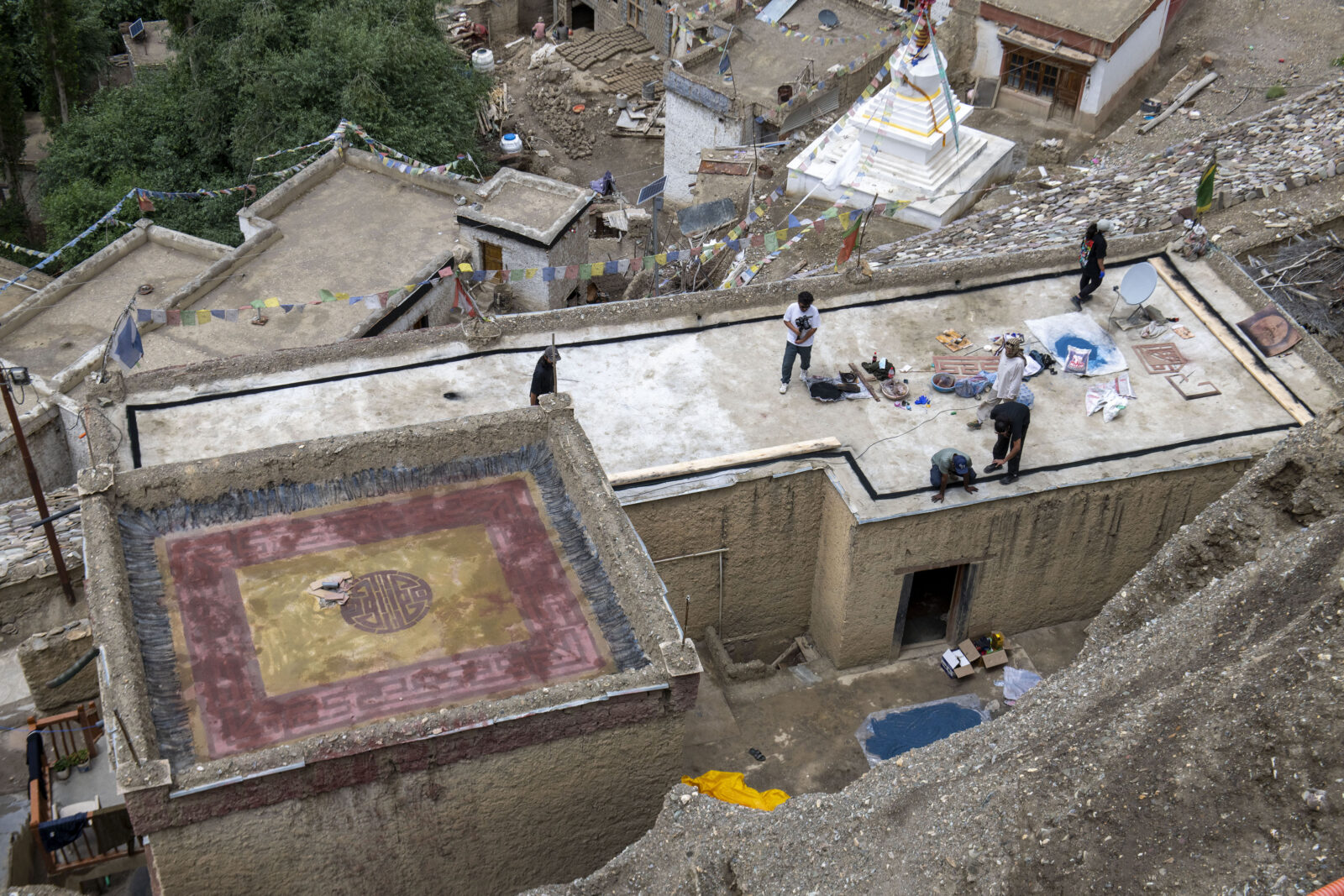
Installation process of Rising from the Soil, Soaring to the Sky; photo by Jorrit Britschgi
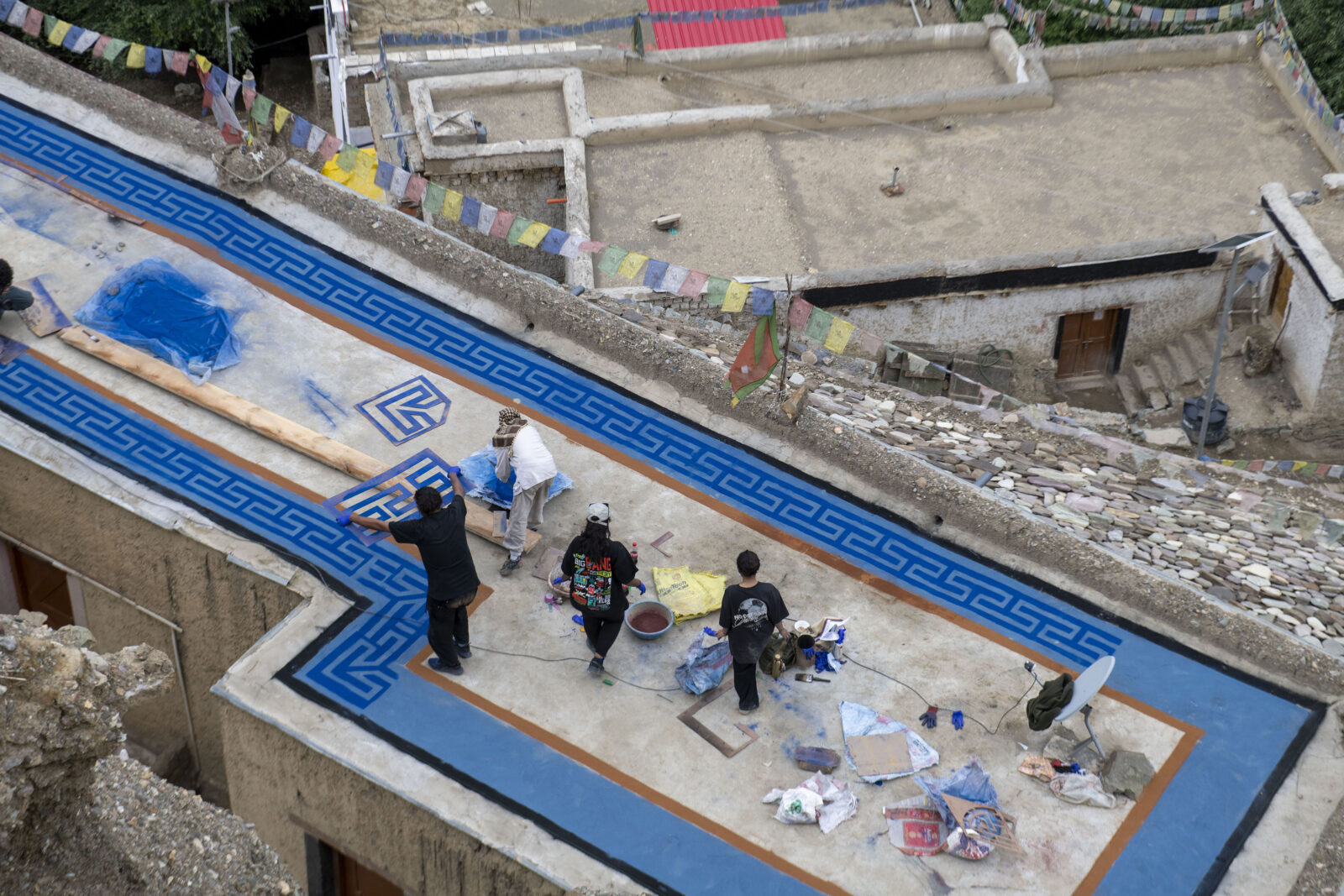
Installation process of Rising from the Soil, Soaring to the Sky; photo by Jorrit Britschgi
“The performative character of the work—its genesis, and eventual dissolution long beyond the biennale’s closing—was aptly steered by natural forces, and showed that we’re but a part of a much larger, very fragile system,” says Jorrit Britschgi, the Rubin’s executive director, who traveled to the region to watch the work in progress and familiarize himself with Lamayuru for future editions of the biennale. (He also noted a joyful, colorful connection to the region and its culture: Karki’s work resembles the practice of drying the famously flavorful local apricots on rooftops in the bright sunlight.)
“This idea of impermanence really struck me—the rising and soaring, the creation and destruction was unfolding in real time as I observed Amrit’s work being created, and was a powerful reminder of how these Buddhist notions apply to life,” Britschgi says. Karki’s work helps people make sense of key concepts in Buddhism, like interconnection and cyclicality—not in the abstract, but as “things governing our very existence,” he adds.
The Rubin’s support for Amrit Karki’s work in the biennale exemplifies its wide-ranging mission to both support living artists and partner with organizations in the Himalayan regions, which also includes initiatives like the Rubin Museum Himalayan Art Prize and grants for artists and researchers. The Museum is also exploring potential partnerships with other cultural organizations in Ladakh, part of its work as a globally operating museum that cultivates a portfolio of collaborations with researchers, artists, and local communities.
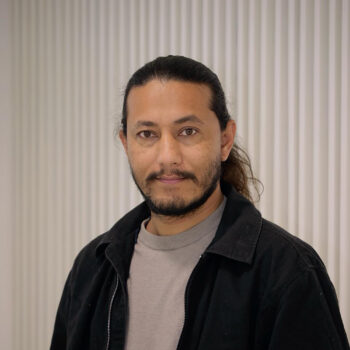
As a visual and performing arts professional from Nepal, Amrit Karki has achieved international and national recognition for his thought-provoking works that interrogate the bridge between the ephemeral and the eternal and the formulation of the formless.
He was awarded the prestigious 2019–2020 UNESCO Madanjeet Singh Institute of Asian Arts Scholarship by the South Asian Foundation (SAF) at the School of Visual Art and Design, Beaconhouse National University, Pakistan. He was also awarded the 2020 Creative Young Artist Award in Nepal. The artist’s solo performance exhibitions include Breathing Through the Stillness (2022) at Nepal Art Council, and Undefiled (2021) at Beaconhouse University Gallery in Lahore, Pakistan. His work was also exhibited in South Korea at the Anyang Public Art Project (APAP7) 2023, Anyang, and at Fantasy Island 2023, Incheon. Amrit Karki previously exhibited at the 2019 Islamabad International Art Festival, the 2018 Asian Art Biennale, Bangladesh, and the 2017 Kathmandu Triennale.
Ladakh, India
Get the latest news and stories from the Rubin, plus occasional information on how to support our work.