Photo by Jorrit Britschgi
Photo by Jorrit Britschgi
sā Ladakh Biennale takes place across the lived landscapes of Ladakh, India, focusing on the themes of climate, culture, and community. As an art partner at the 2026 sā Ladakh Biennale, the Rubin Museum supported a residency and the creation of a new work by Nepalese artist Amrit Karki.
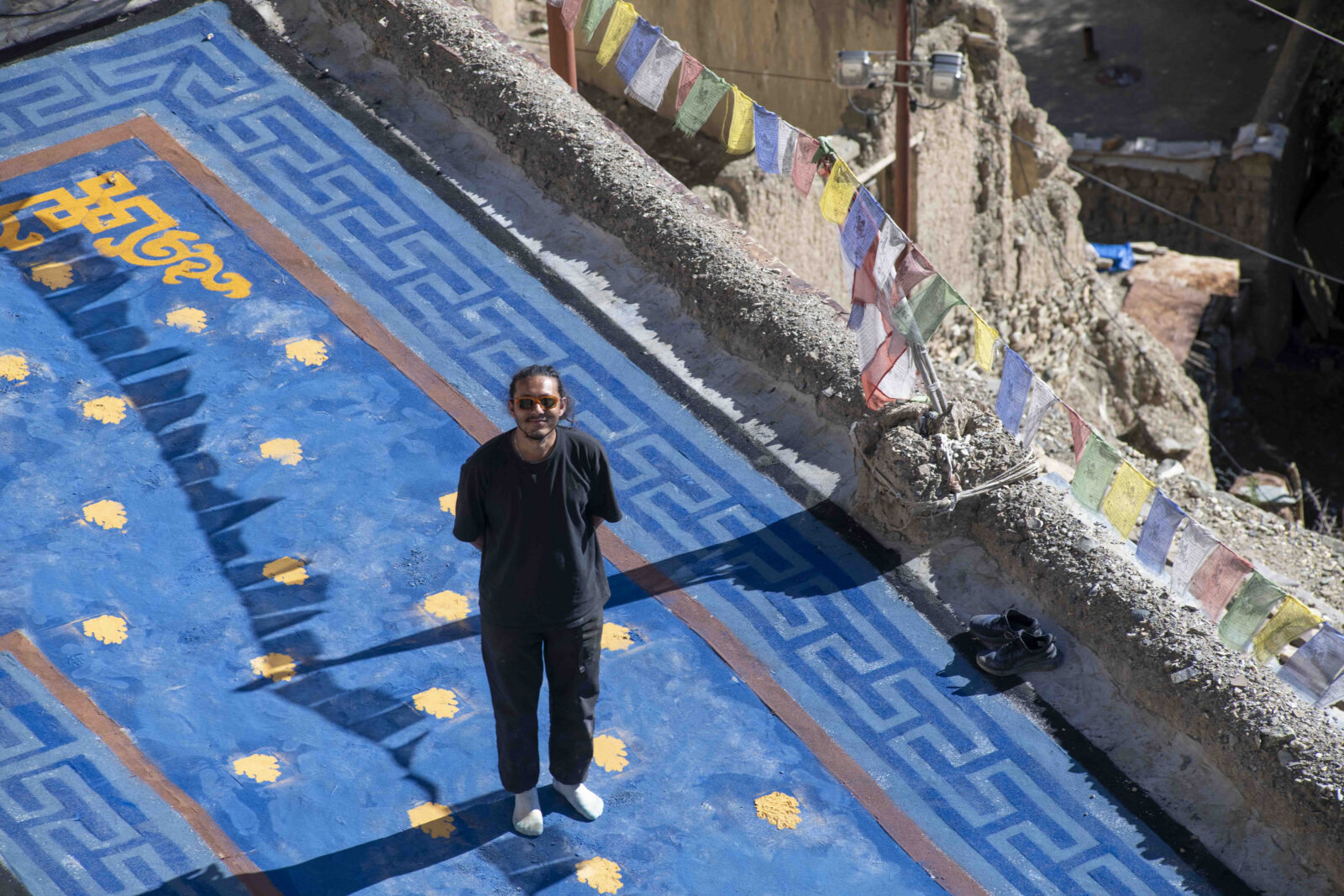
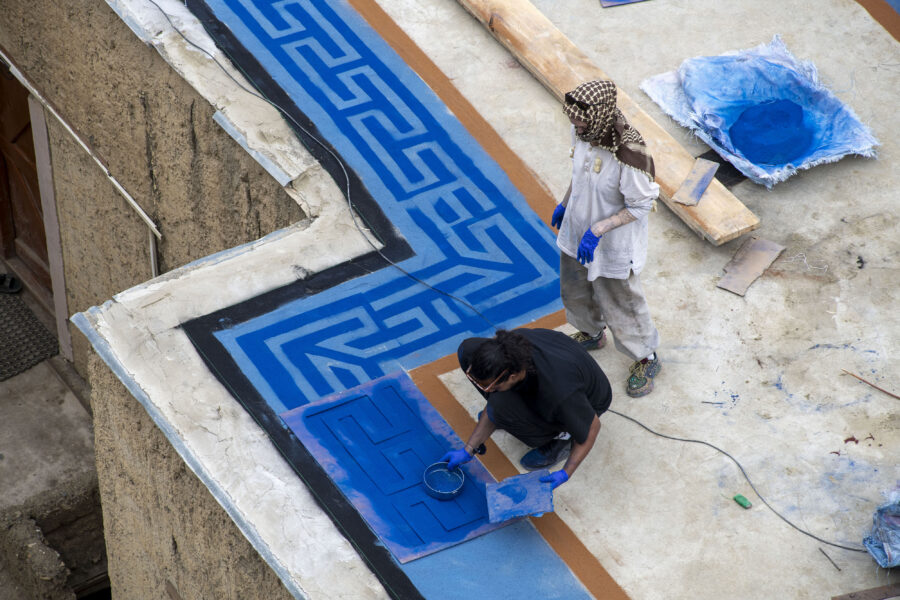
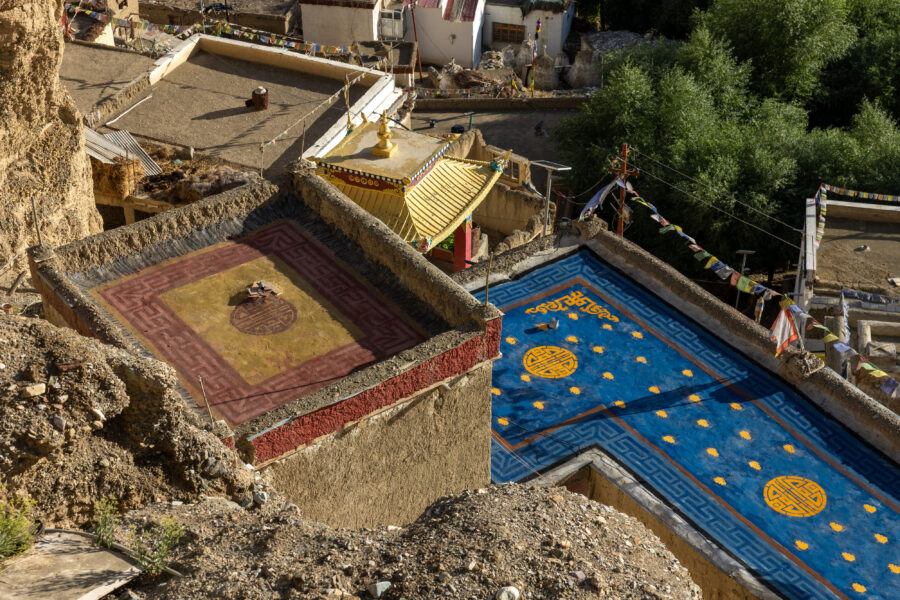
Rising from the Soil, Soaring to the Sky covers a total area of 1,008 square feet across the adjacent roofs of local houses. Made with soil and pigments, it recreates carpet designs woven by people across Himalayan cultures.
The Rubin’s Executive Director Jorrit Britschgi met with Amrit during the Biennale in Ladakh for a conversation about his installation and its commentary on ephemerality.
Amrit Karki: It is fantastic to be able to represent my home country here and connect with another corner of the great Himalayan landscape and culture. I have always felt a deep sense of community with other peoples and places in the region. I have really enjoyed making new friends here, being greeted in Nepali, and even hearing anecdotes about my hometown of Pokhara!
There are great similarities between us and also subtle differences that are insightful and inspiring. But I also wish this connection between Ladakh and Nepal had been there from the very beginning. This is a good start, but we should strive for greater connectivity between our artistic communities. One idea would be to include artists from Ladakh in programs in Nepal.
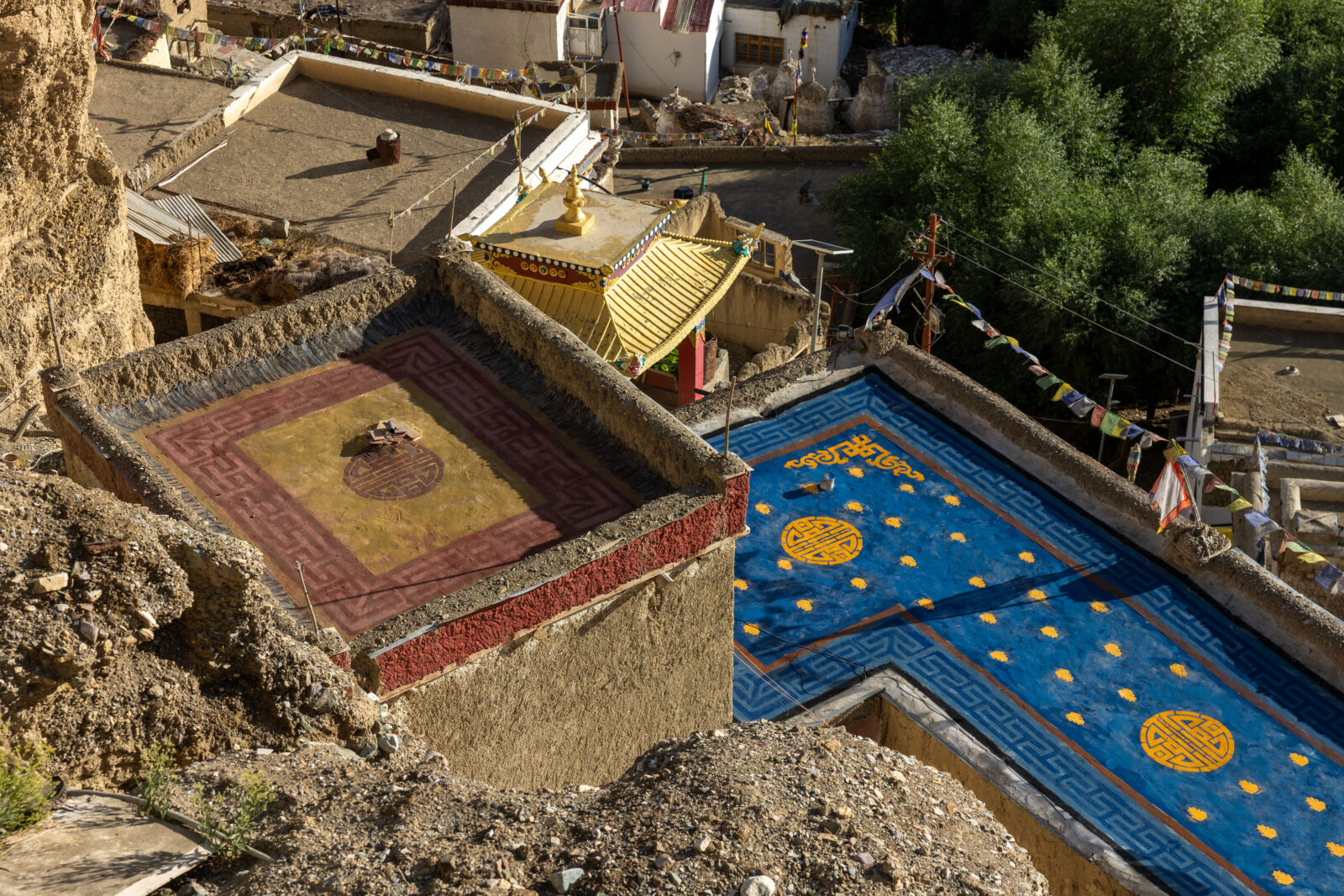
Amrit Karki (b. 1990, Pokhara); Rising from the Soil, Soaring to the Sky; Lamayuru, Ladakh; 2026. Photo by Manan Sheth, courtesy of sā Ladakh Biennale
Brightly dyed and intricately patterned carpets are a specialty across the Himalayas, where ancient motifs float across political and geographical boundaries. I believe in our carpets more than in any other artifact—in them the full chromatic experience of our ancestors’ lives continues to echo into the present. I wanted to transpose something that is usually on the floor in the privacy of people’s homes to their roofs, where everybody can see them and where strangers are welcome to walk on them.
I was also intrigued by the shifting shades of colors in the soil of Ladakh. I wanted my work to be vibrant and inviting, but at the same time ephemeral and in danger of being destroyed by the same people who want to admire it. The title also alludes to how we aren’t limited by our circumstances.
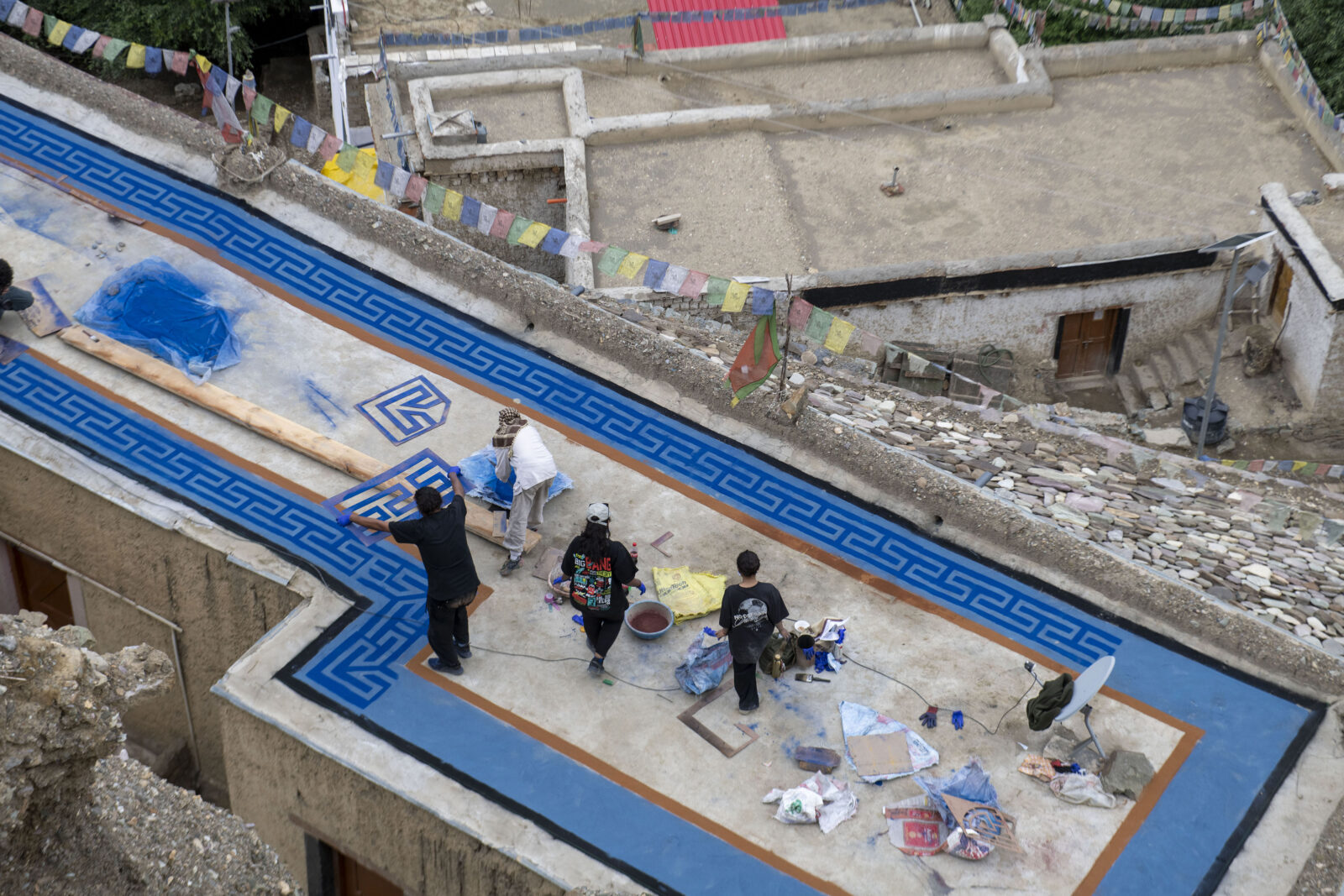
Photo by Jorrit Britschgi
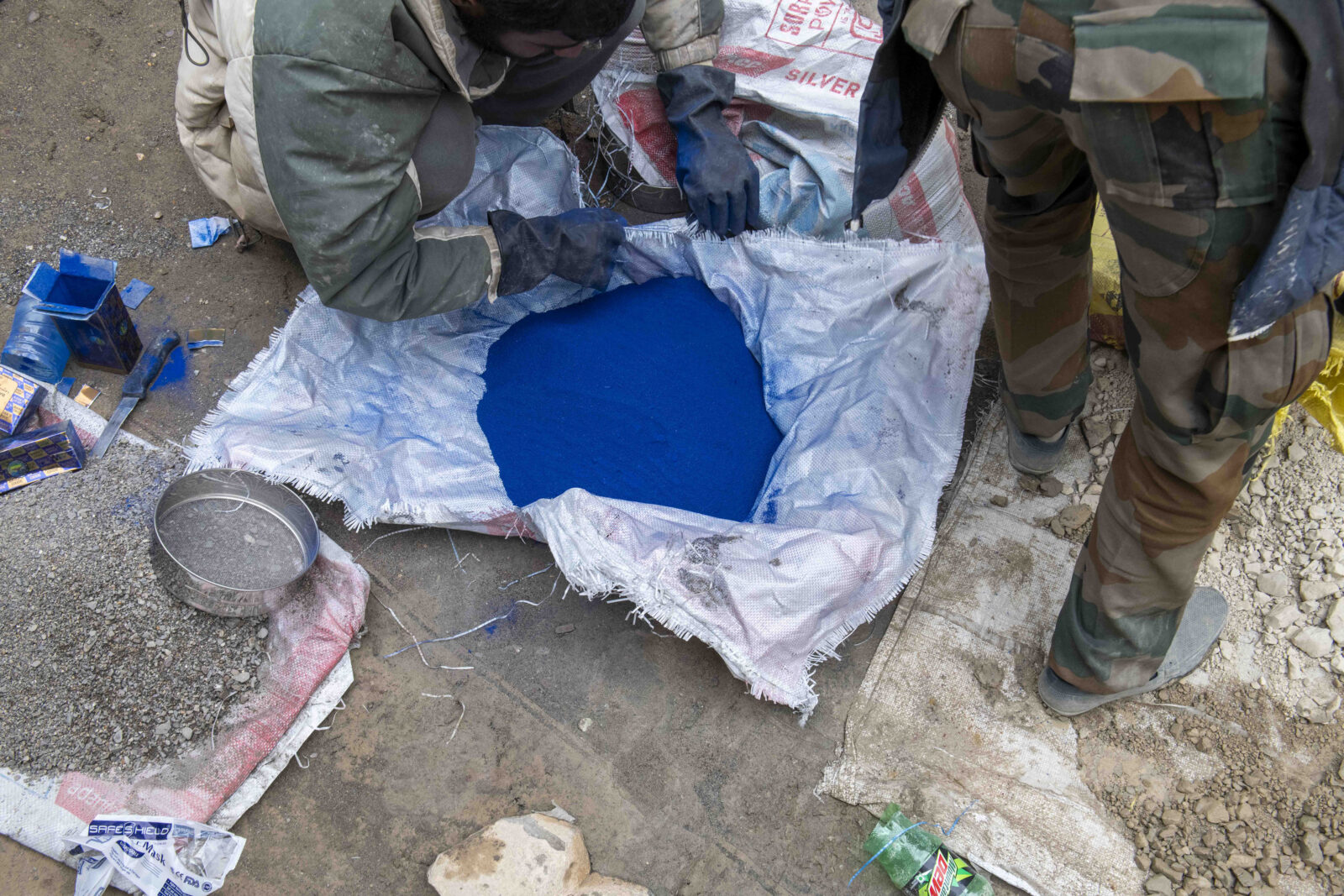
Photo by Jorrit Britschgi
I tried to find local samples of the soil—there is a dizzying variety of colors in the soil of this region. During my drive from Leh in Ladakh to Lamayuru [a village about 70 miles west of Leh], I recognized that the terrain around Lamayuru resembles the moon—barren and pitted, washed in a beautiful yellowish color. There are also places where the soil is purple and magenta. These colors shift subtly from one shade to another. I wanted to gather soil in these different colors to create the motifs in the carpets.
But Ladakh is a fragile and sensitive landscape, in terms of ecology, culture, and politics. It wasn’t so easy to gather the different kinds of soil I wanted. Instead, I asked for help from some local friends who helped me gather soil. Then I added different oxides to enrich the color of the soil samples. With sand and some other pigments I created a palette with which to create the colors and texture of the carpets I wanted to recreate.
Ladakh, its terrain and soil, were my first inspiration. I tried to imagine these colors as important parts of the lives of people who live here, the community that has welcomed me and given me permission to practice my art in their surroundings.
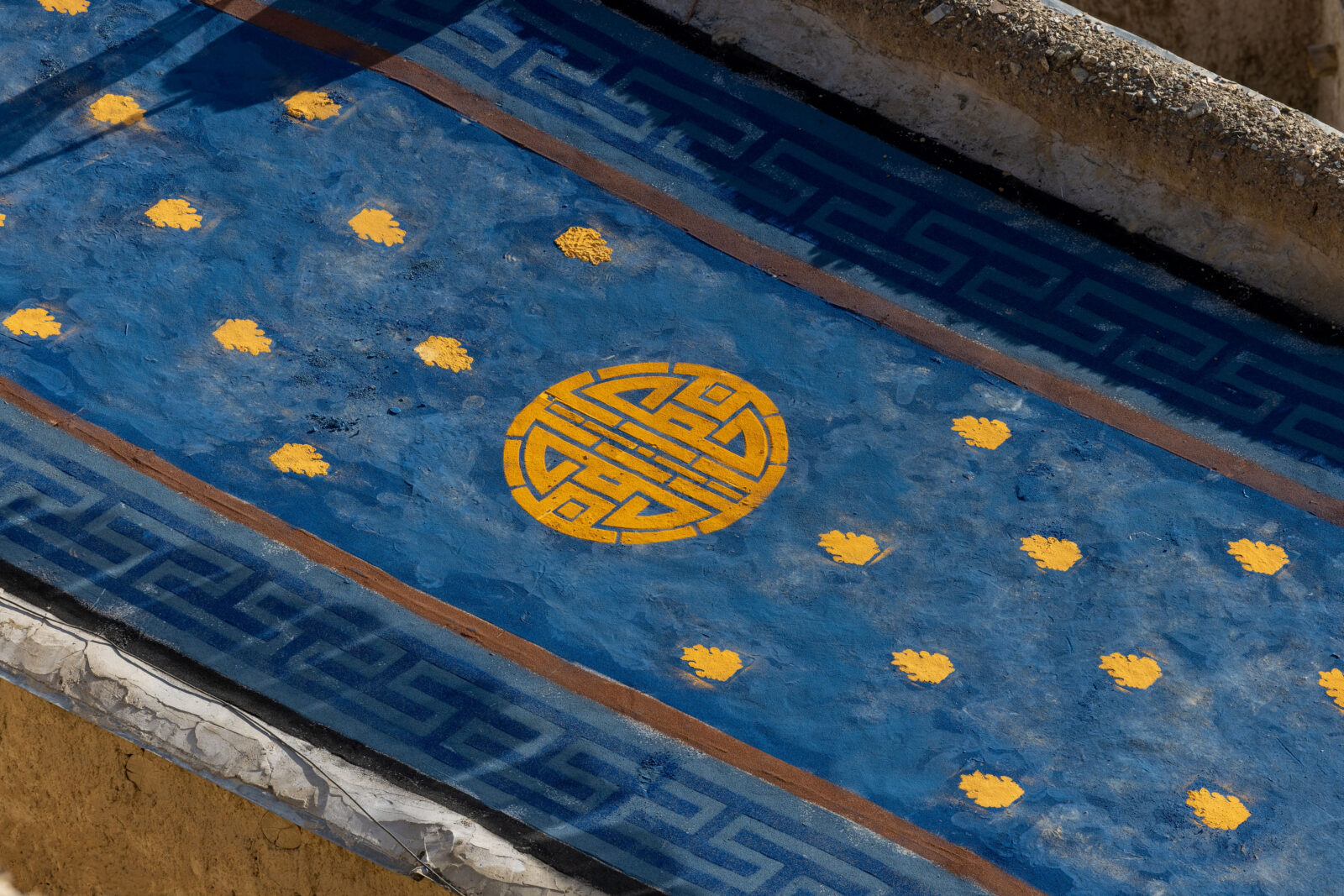
Amrit Karki (b. 1990, Pokhara); Rising from the Soil, Soaring to the Sky; Lamayuru, Ladakh; 2026; photo by Manan Sheth, courtesy of sā Ladakh Biennale
Lamayuru is a special place. Did you know that the main seismic fault line between the Indian and Eurasian continental plates passes through here? This landscape experiences regular cataclysmic events, and yet it is an oasis of calm and culture. I learned from my visits to Lamayuru that the village was submerged in water thousands of years ago. Then the lake slowly disappeared, and now we have a village full of people and a beautiful monastery.
Everything here changes, cycles of time pass, and what was buried comes to the surface and is then taken away elsewhere. We see that today in how people are leaving the village to find new beginnings in faraway cities, and we see that in how the homes they have left behind now slowly crumble back into the ancient lake bed. The continuous action of change is pushed forward by impermanence.
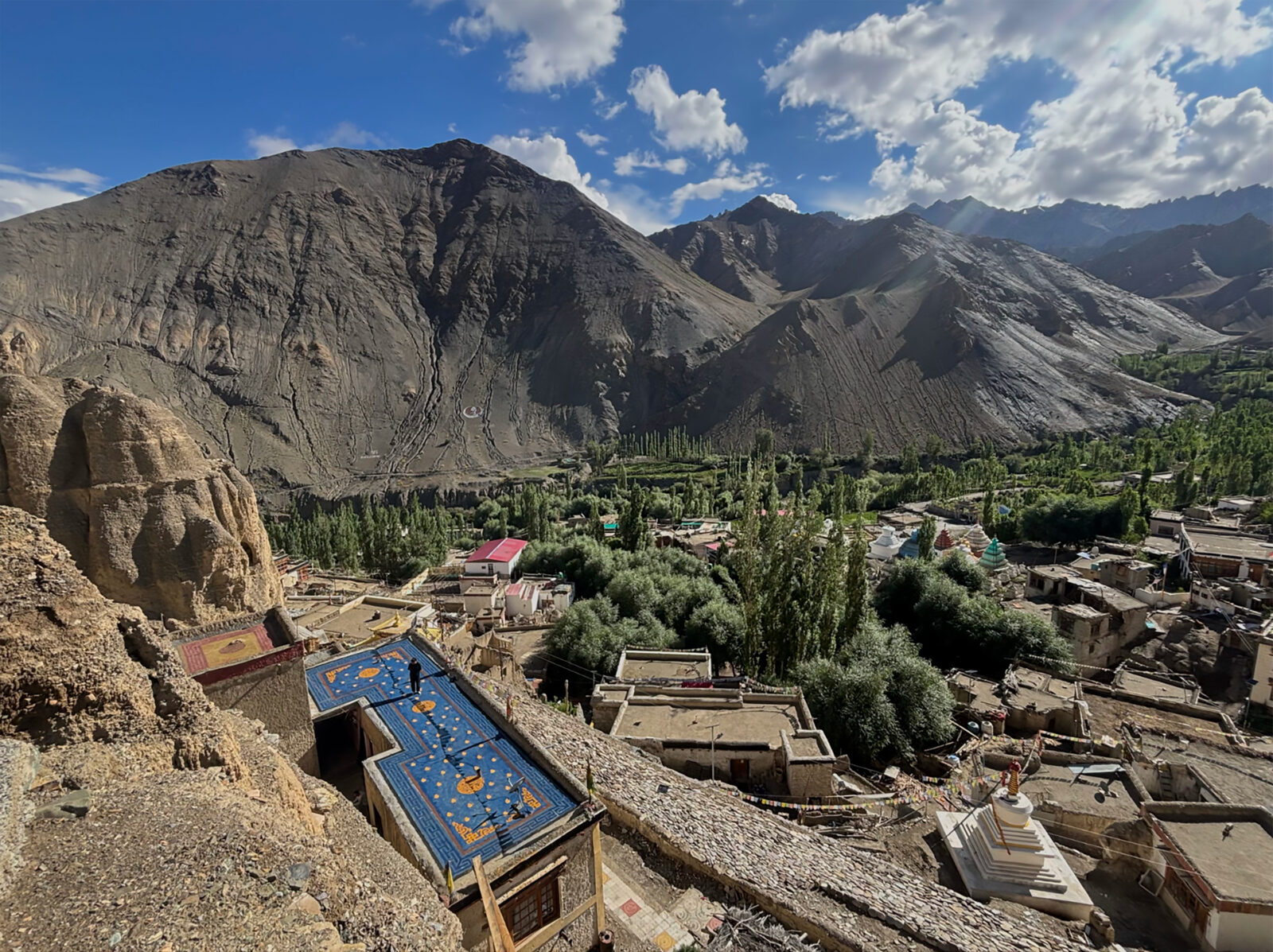
Photo by Jorrit Britschgi
It speaks to the materials with which I have created the work, but also how earth and sky act as metaphors. Is it truly possible to hold on to the solidity of the earth? And is it possible to really disappear into the void of the sky? We all rise from the soil, and we all vanish into the sky. It is only a matter of time.
While creating the work I also thought about the community in which I was making it. The house with the yellow carpet on its roof has a shrine on one corner of the roof. The residents of that house had to walk across my carpet each day to worship at their shrine, to offer water and incense. Their footsteps scattered some of the soil, but they also pressed down on the design and made it last a little longer. Then it rained, which made the color seep into the soil of the roof. I felt that the living world and nature were laughing a bit at my artistic ambition of illustrating impermanence on a small roof in a little village in Leh.
I have left a part of my vision and my physical labor there. The work is, I hope, changing in each moment, slowly becoming a memory.
The two roofs together total exactly 1,000 square feet. Adding an additional 8 square feet brought the total area to 1,008, an auspicious number in Hinduism and Buddhism.
Sometimes it makes sense to work big, sometimes it doesn’t. The addition of a small gesture can bring everything together. For me, that 8-square-foot addition worked. The works on the roofs are flat, but taken together the three parts of this installation create another dimension.
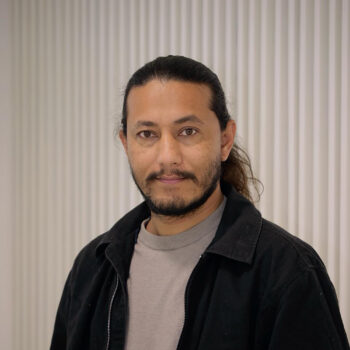
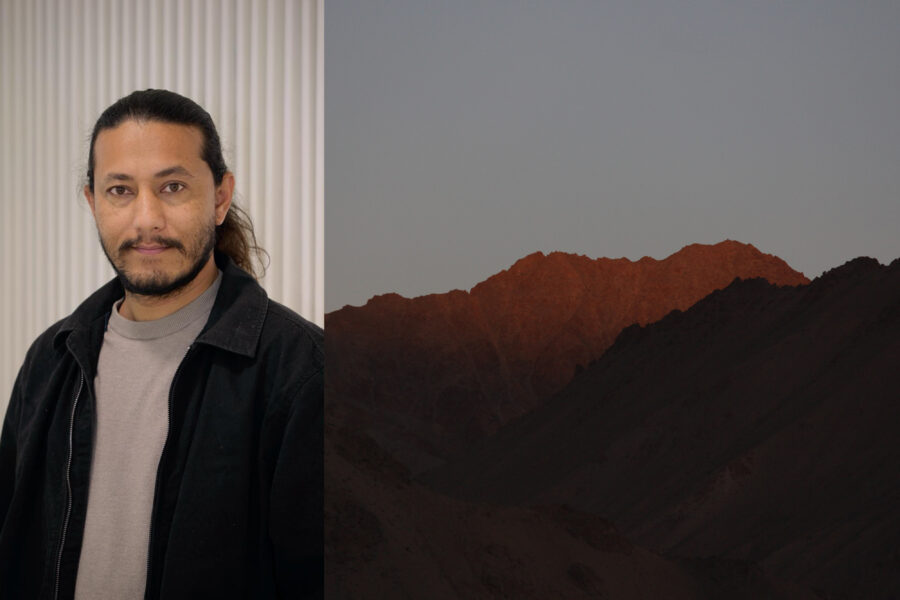
As a visual and performing arts professional from Nepal, Amrit Karki has achieved international and national recognition for his thought-provoking works that interrogate the bridge between the ephemeral and the eternal and the formulation of the formless.
He was awarded the prestigious 2019–2020 UNESCO Madanjeet Singh Institute of Asian Arts Scholarship by the South Asian Foundation (SAF) at the School of Visual Art and Design, Beaconhouse National University, Pakistan. He was also awarded the 2020 Creative Young Artist Award in Nepal. The artist’s solo performance exhibitions include Breathing Through the Stillness (2022) at Nepal Art Council, and Undefiled (2021) at Beaconhouse University Gallery in Lahore, Pakistan. His work was also exhibited in South Korea at the Anyang Public Art Project (APAP7) 2023, Anyang, and at Fantasy Island 2023, Incheon. Amrit Karki previously exhibited at the 2019 Islamabad International Art Festival, the 2018 Asian Art Biennale, Bangladesh, and the 2017 Kathmandu Triennale.
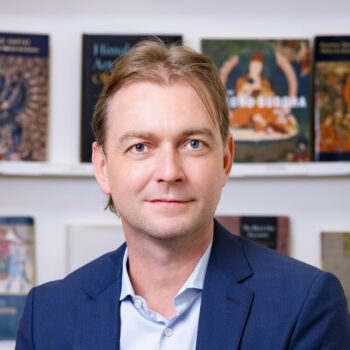
Jorrit Britschgi has served as the Rubin Museum’s Executive Director since 2017. Before joining the Rubin, he served as Head of Exhibitions and Publications at the Museum Rietberg in Zurich, Switzerland, where he was manager of the exhibitions program and curated numerous exhibitions. Mr. Britschgi also served as publisher of Artibus Asiae, one of the leading scholarly journals in Asian art and archaeology, for over a decade.
Jorrit Britschgi graduated from Zurich University with an MA in art history and Sinology (2005) and a PhD, with highest honors, in East Asian Art History (2009). Besides his research activities, he’s taken part in archaeological excavations in Eastern China and Bhutan, and curated numerous exhibitions on paintings from the Indian Himalayan region. Mr. Britschgi has received grants from federal and private foundations to pursue his studies and research. He is a 2017 alumni of the Getty Leadership Institute, and shares his expertise in an advisory capacity with other museums and individuals.
Ladakh, India
Get the latest news and stories from the Rubin, plus occasional information on how to support our work.