Tibet
17th century
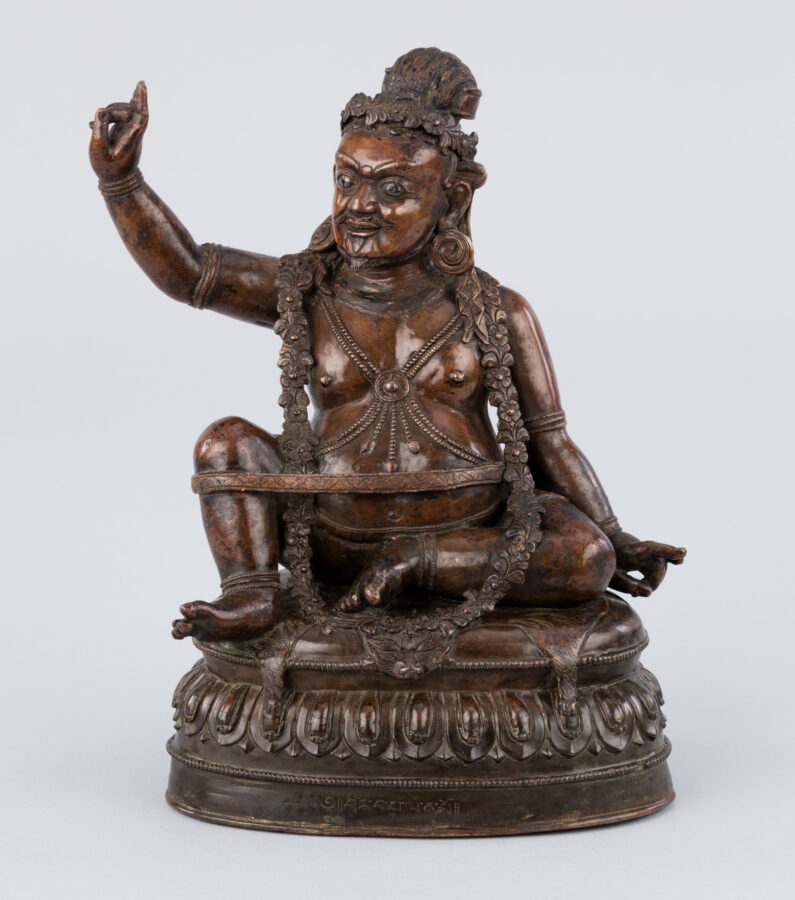
This relaxed posture is commonly associated with regal leisure.
Tibet
17th century
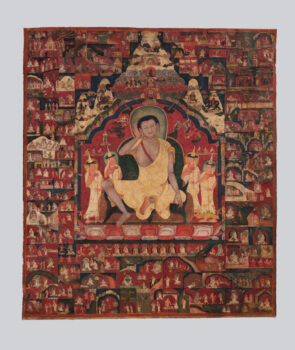
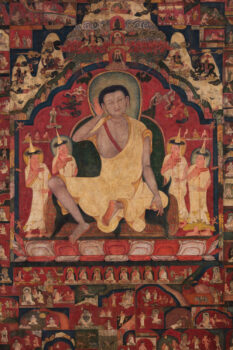
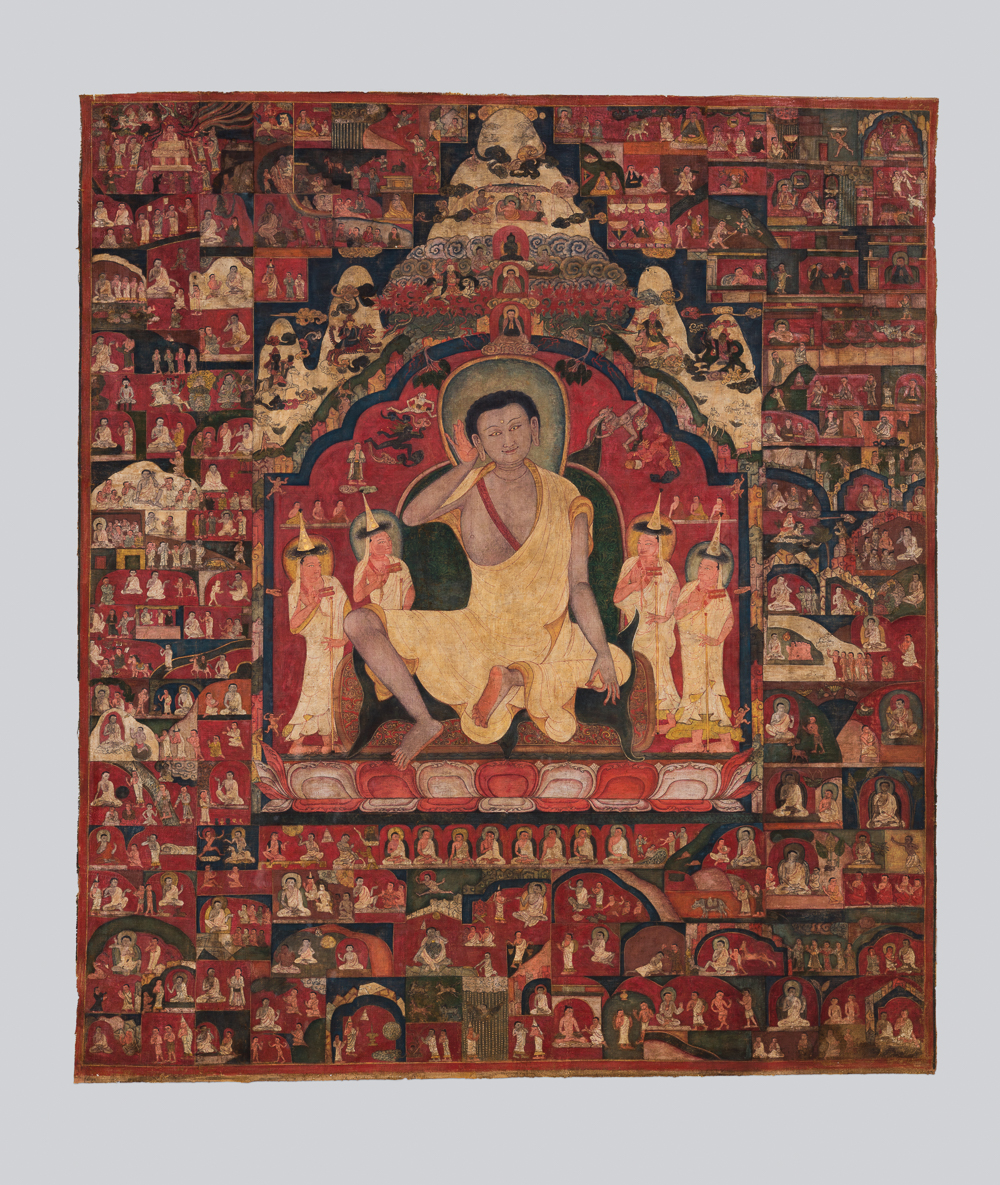
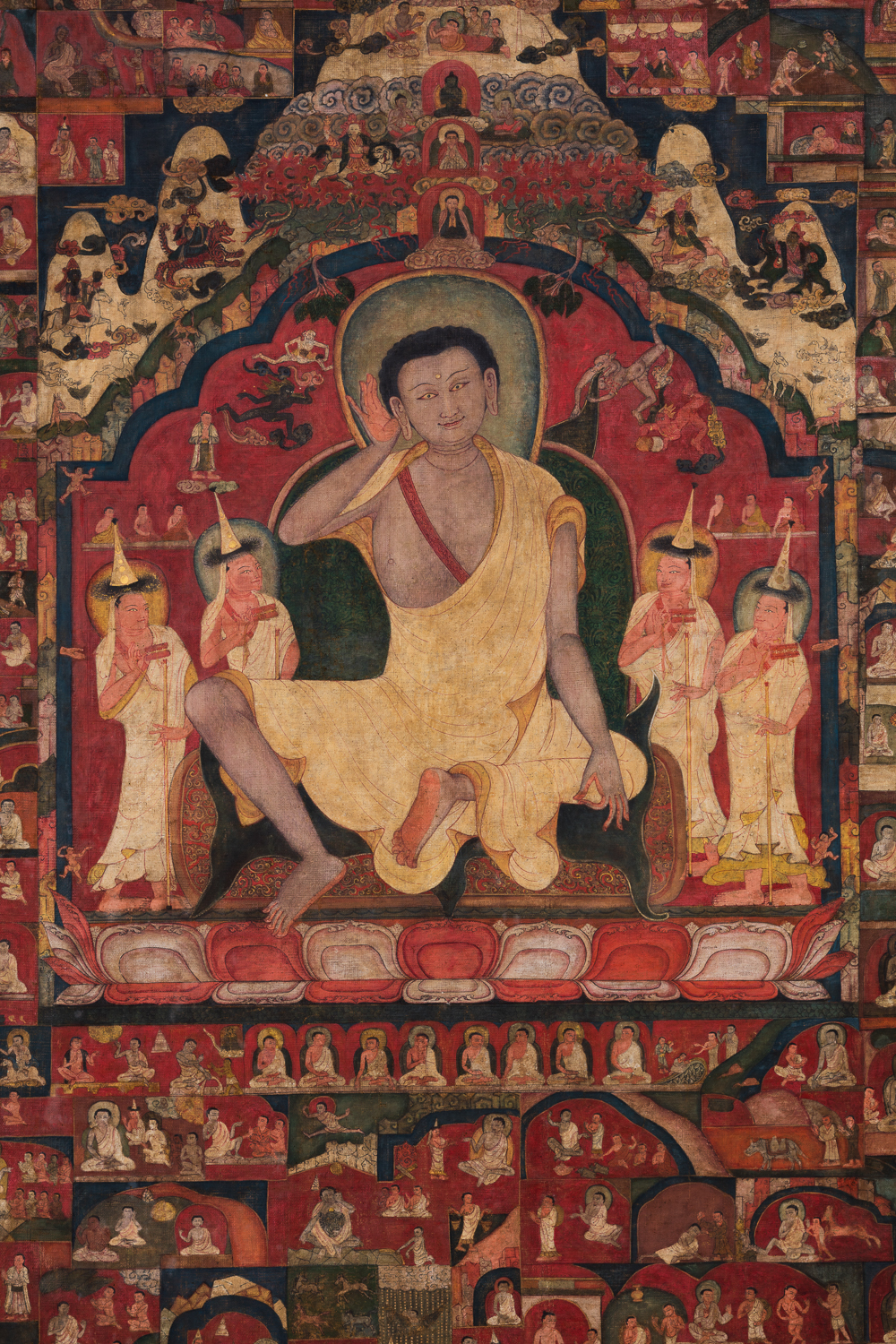
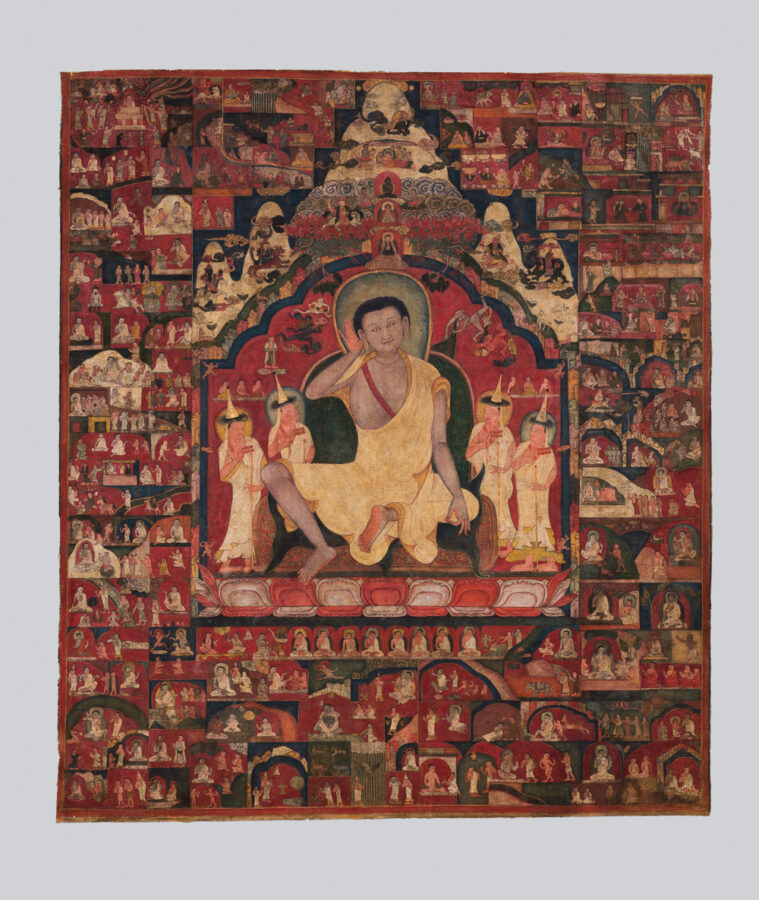
Milarepa is the most famous and recognizable Tibetan yogi and poet, a cultural hero who meditated in snowy mountain caves wearing nothing more than a white cotton robe, his name “repa” meaning “cotton-clad one.” His skin is a greenish hue due to a diet of nothing but a broth of nettles. He wears a meditation strap, to keep proper posture during long periods of meditation. His right hand is cupped to his ear, as if listening to the spontaneous songs he famously sung to convey his inner realizations and yogic experiences.
Milarepa is depicted sitting in a mountain cave made up of highly stylized multi-colored vertical rocks which have their roots in ancient Northeast Indian painting, topped by the snow-covered peak of Mount Kailash.
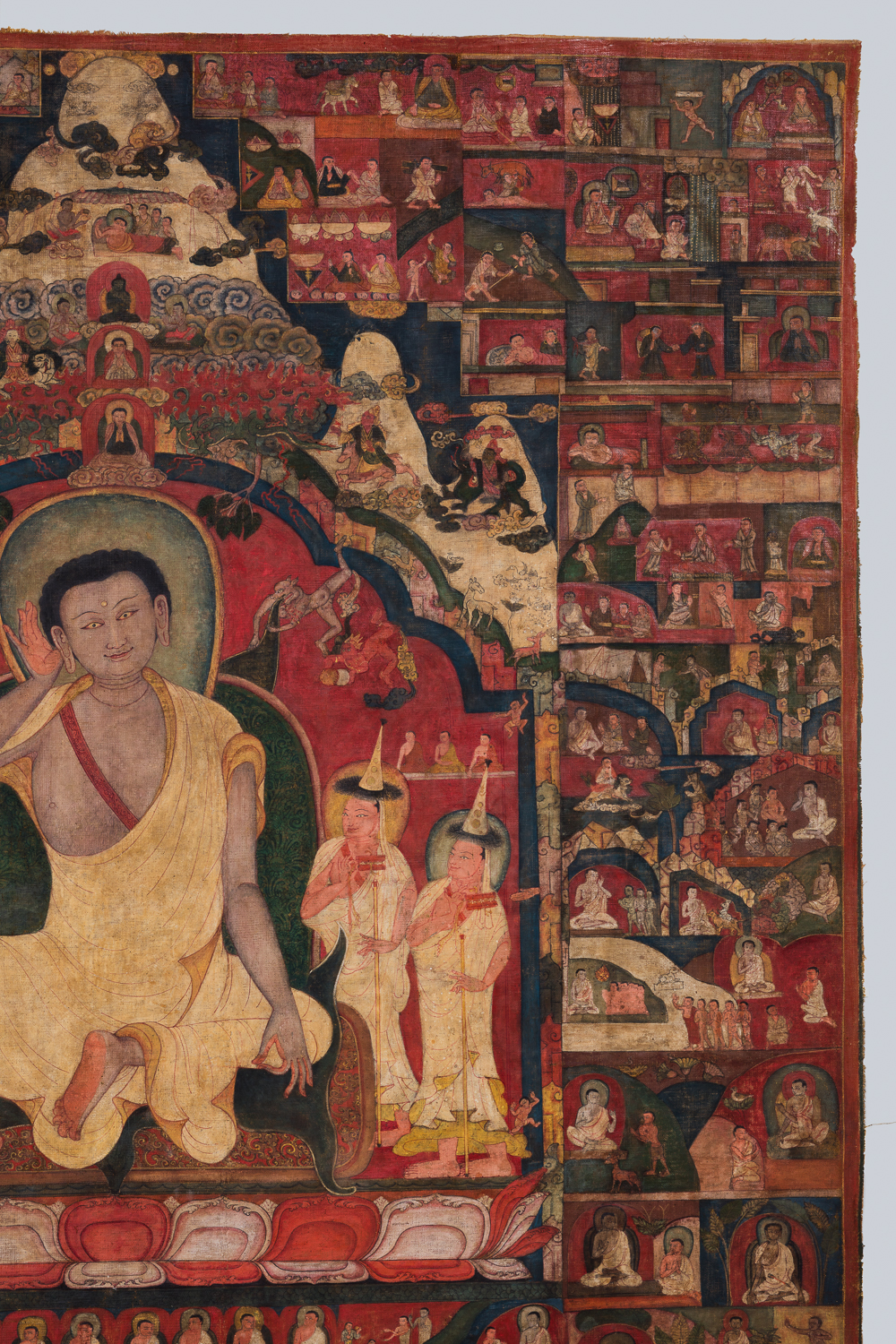
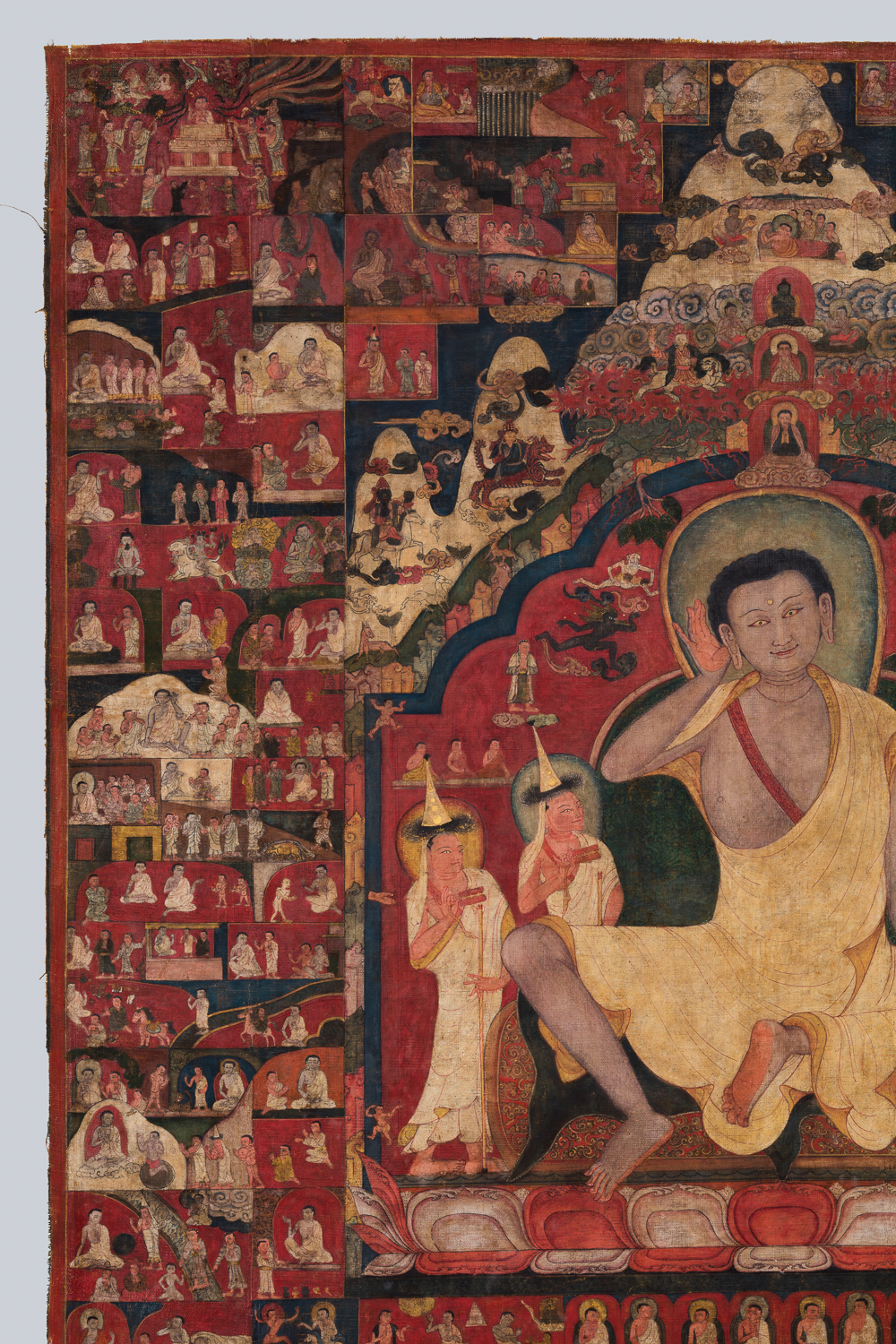
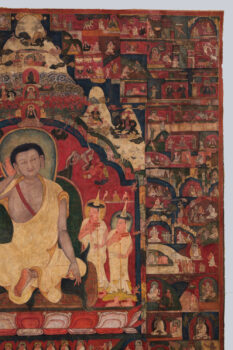
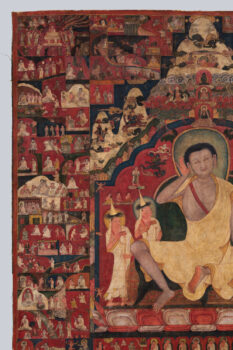
Surrounding him are scenes from his life story, one of the most beloved narratives in the Tibetan cultural world. Milarepa was born into a wealthy family, but a greedy aunt and uncle stole everything. Suffering greatly at their hands, his distraught mother urged him to study black magic to take revenge. He cast a destructive spell on the them, killing many people. Stricken with remorse, Milarepa sought the Buddhist teacher Marpa, who put him through great trials of hardship to cleanse him of the negative karma he had accumulated through his bad deeds. By persevering through adversity, devotion to his guru, and dedicating himself to solitary meditation, he attained awakening in one lifetime.
Famous scenes include a magical contest of flight with a Bön master, and giving teachings to a hunter, his dog, and a deer they pursue. The narrative scenes end with his cremation and the stupa reliquary being carried away by flying goddesses (dakinis).
Despite significant over-painting, possibly due to restoration, this work preserves early conventions for depicting narrative in enclosed vignettes in Tibetan painting.

This relaxed posture is commonly associated with regal leisure.
The passing down of authentic Buddhist teachings from a teacher to a disciple or student, often in the form of a text in a ritualistic context.
A vehicle for the preservation and transmission of knowledge. The Buddha’s teachings were originally passed down through oral transmission and storytelling, and stories of the Buddha’s past lives are considered an important source of inspiration and guidance.
The transmission of teachings from one generation to the next, from teacher to student, traced all the way back to the Buddha without interruption. A complete lineage is essential in Tantric Buddhist practices as it makes the blessings of the teaching more powerful.
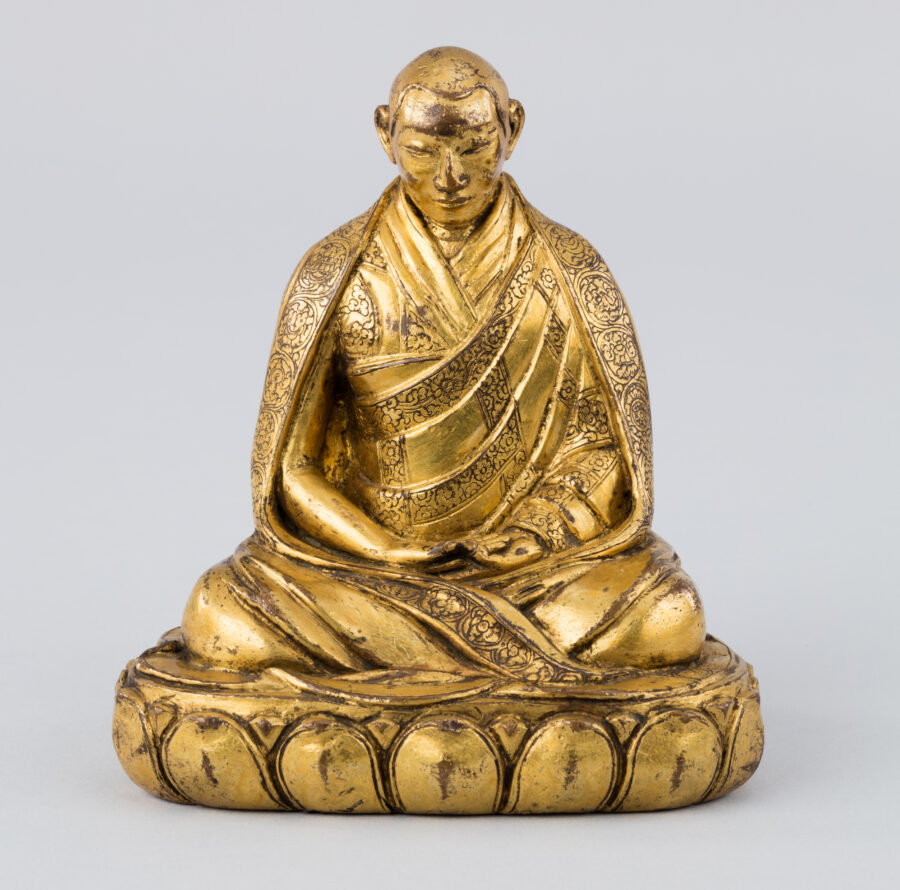
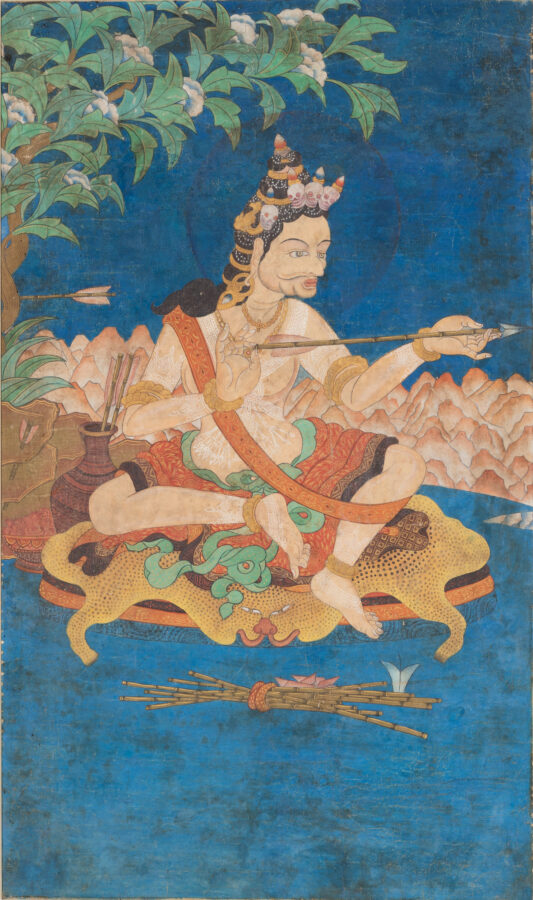
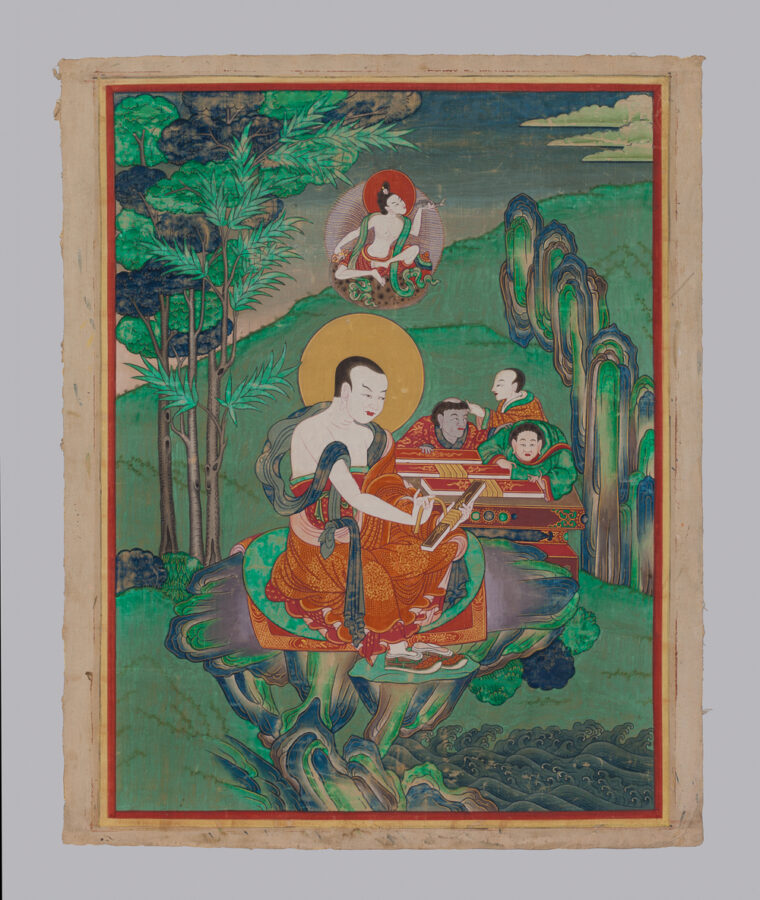
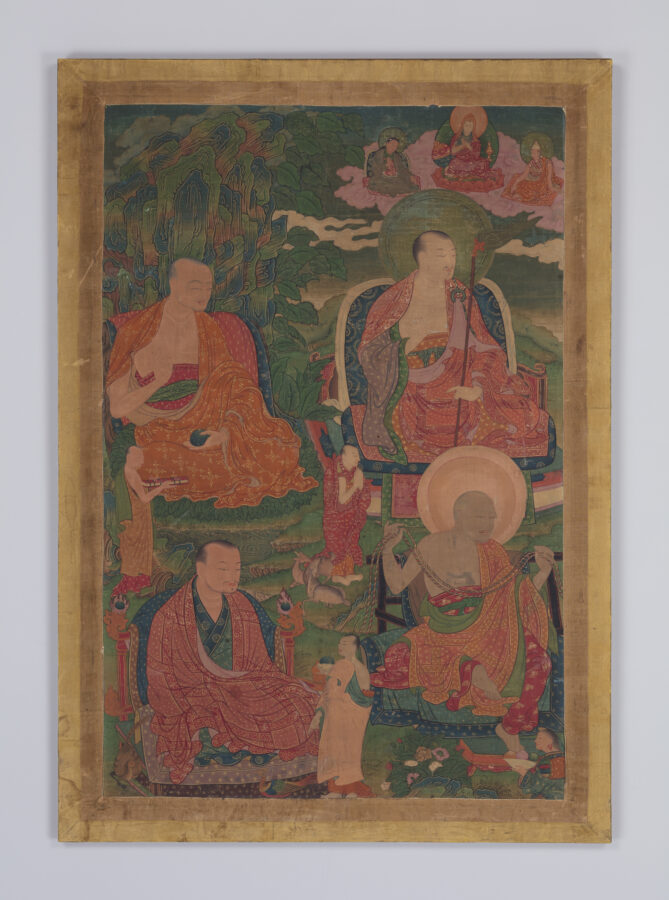
Himalayan art includes portraits of legendary and historical humans, including accomplished religious teachers (lamas), the Buddha’s original disciples (arhats), and spiritually accomplished tantric masters (mahasiddhas).
Today, Tibetans primarily inhabit the Tibetan Plateau, situated between the Himalayan mountain range and the Indian subcontinent to the west, Chinese cultural regions to the east, and Mongolian cultural regions to the northeast. During the 7th to 9th century, Tibetan rulers expanded their empire across Central Asia, and established Buddhism as the state religion.
Get the latest news and stories from the Rubin, plus occasional information on how to support our work.