Tibet
17th century


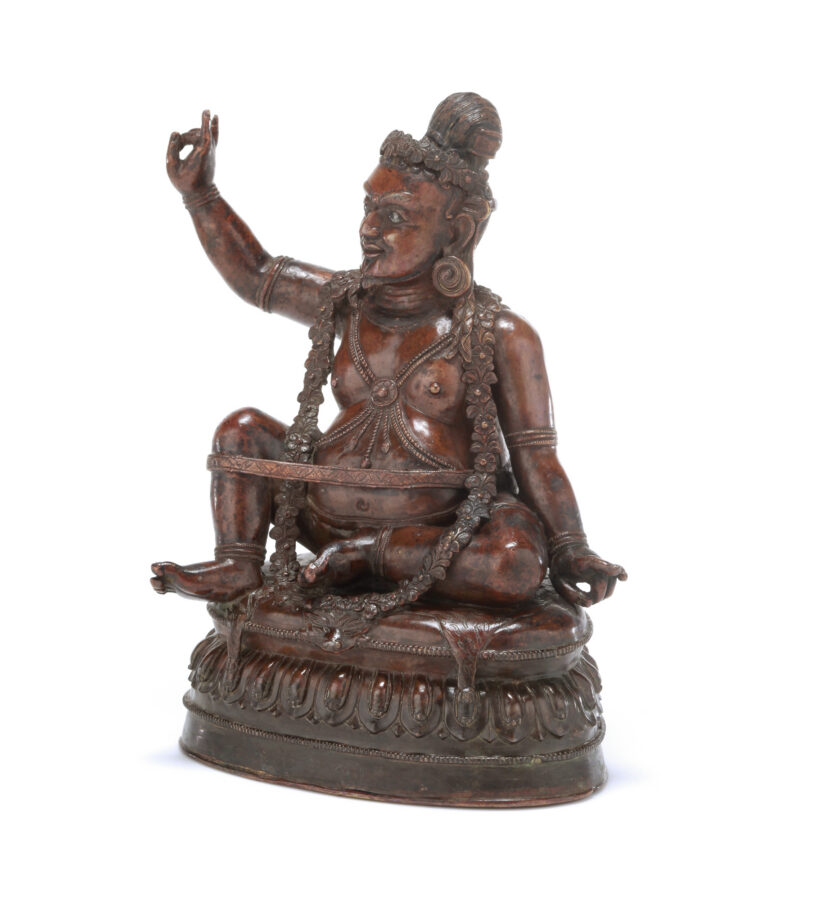

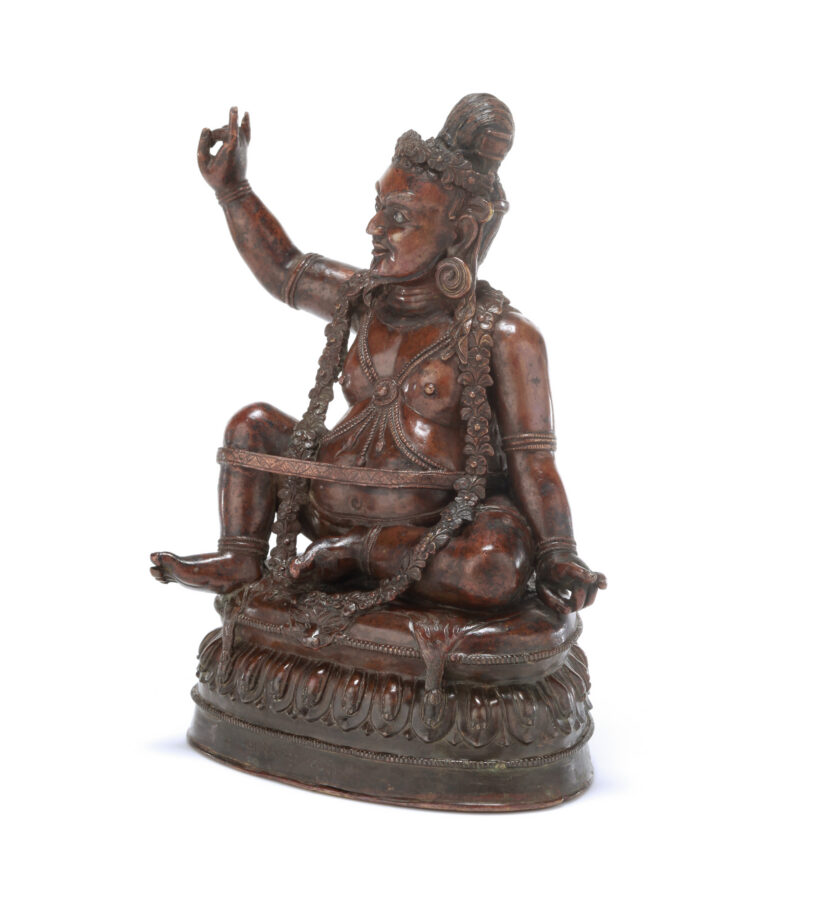
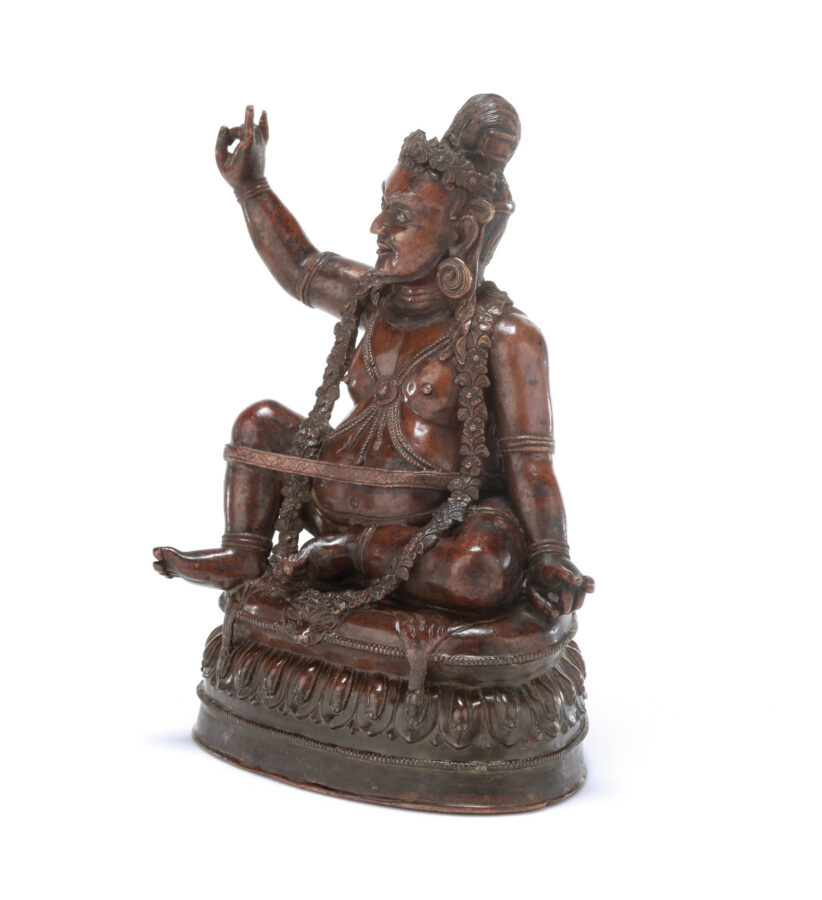

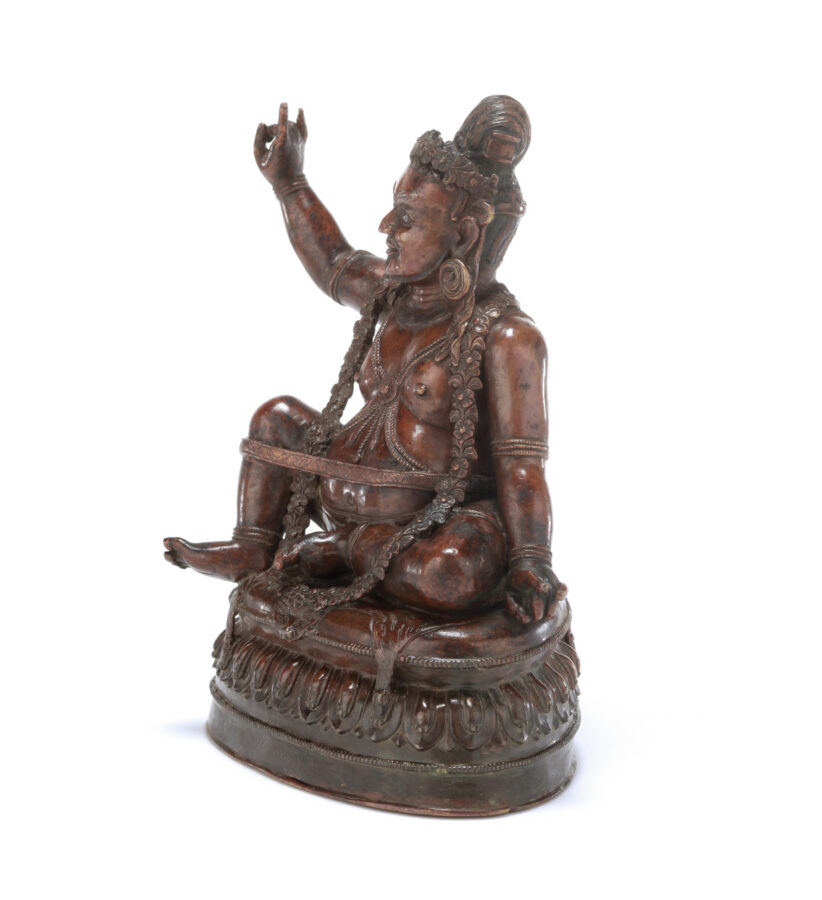


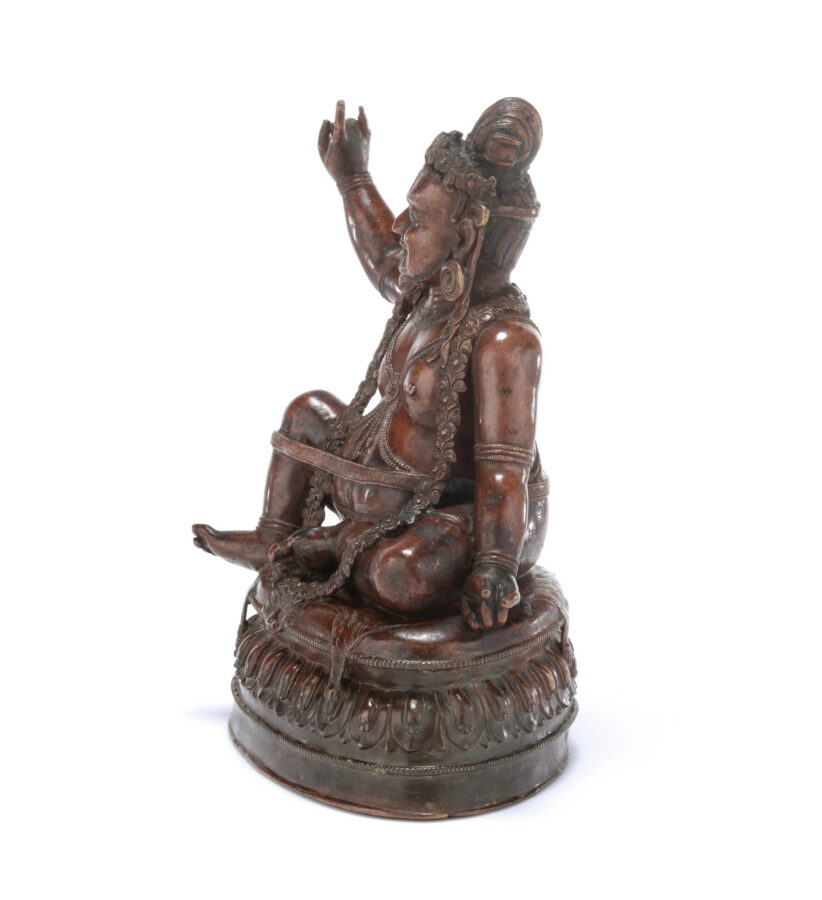

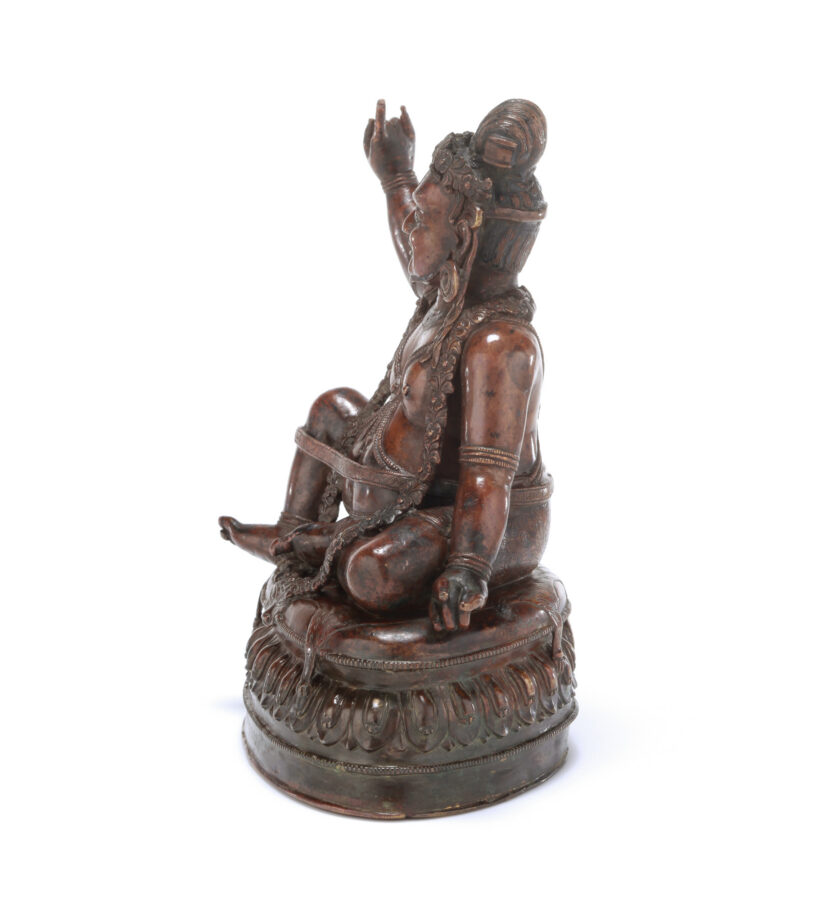

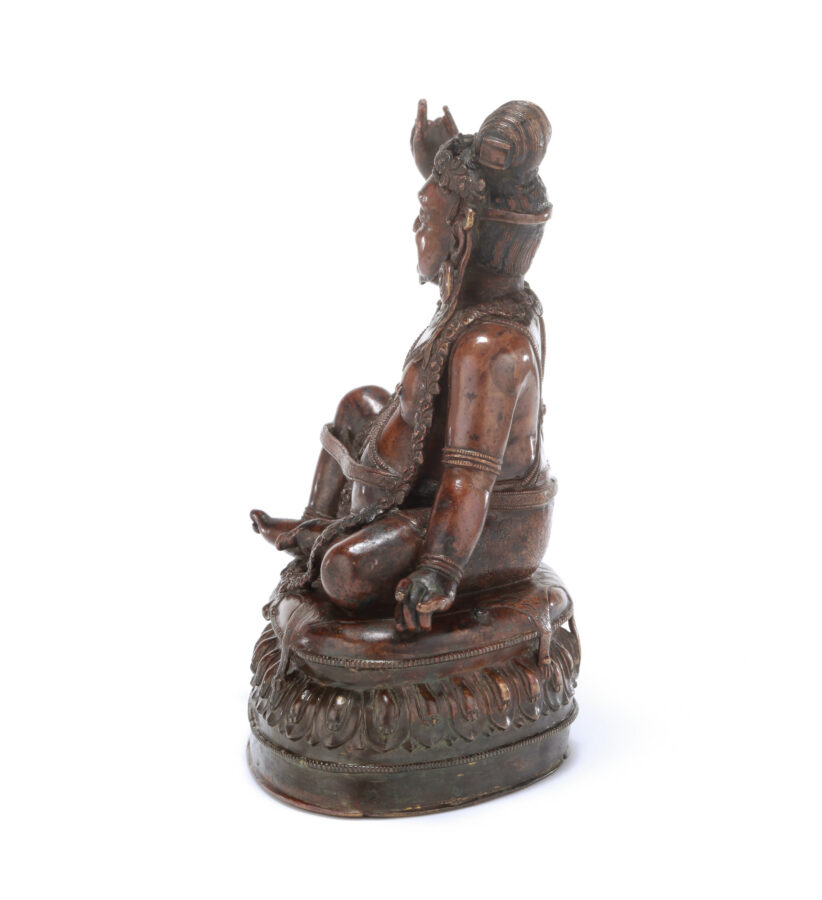


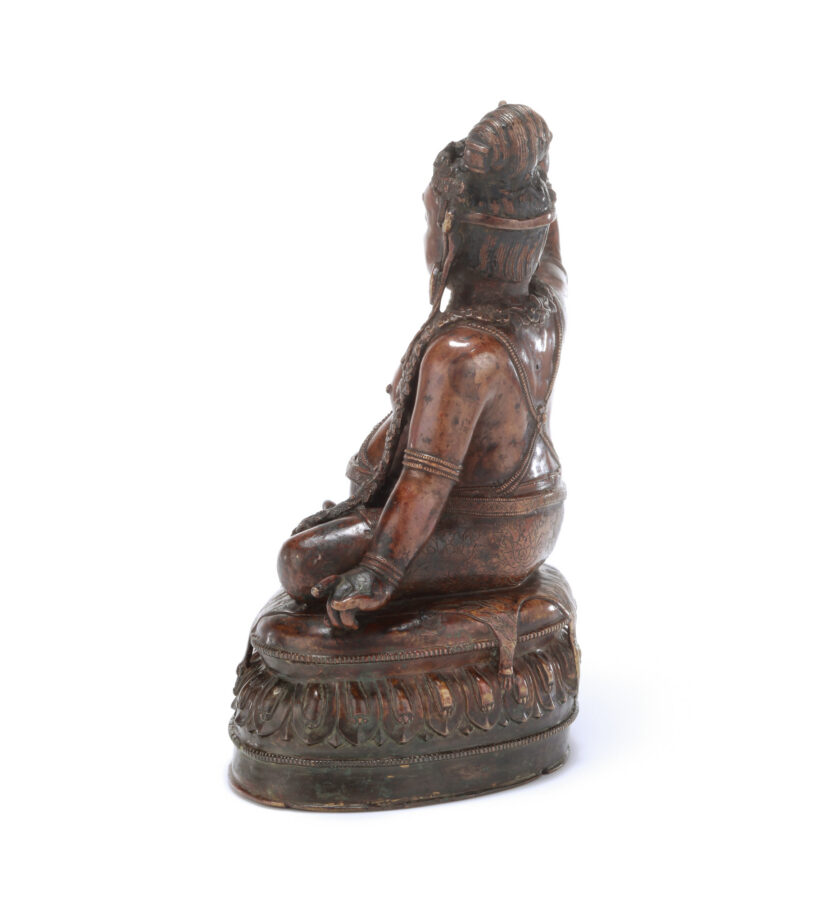

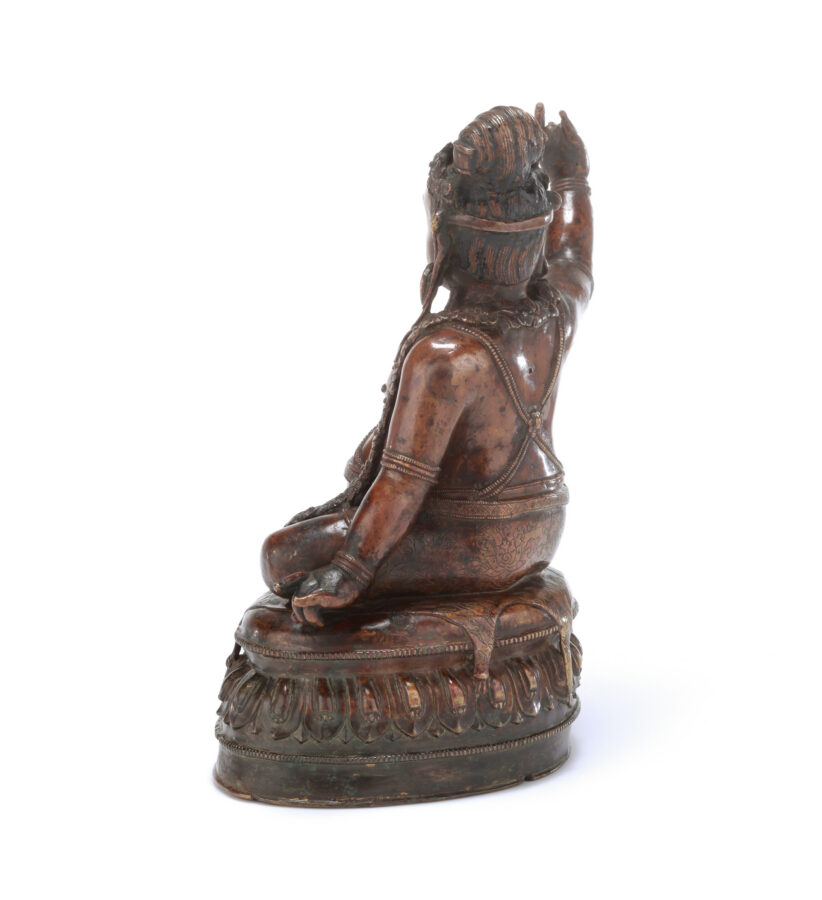

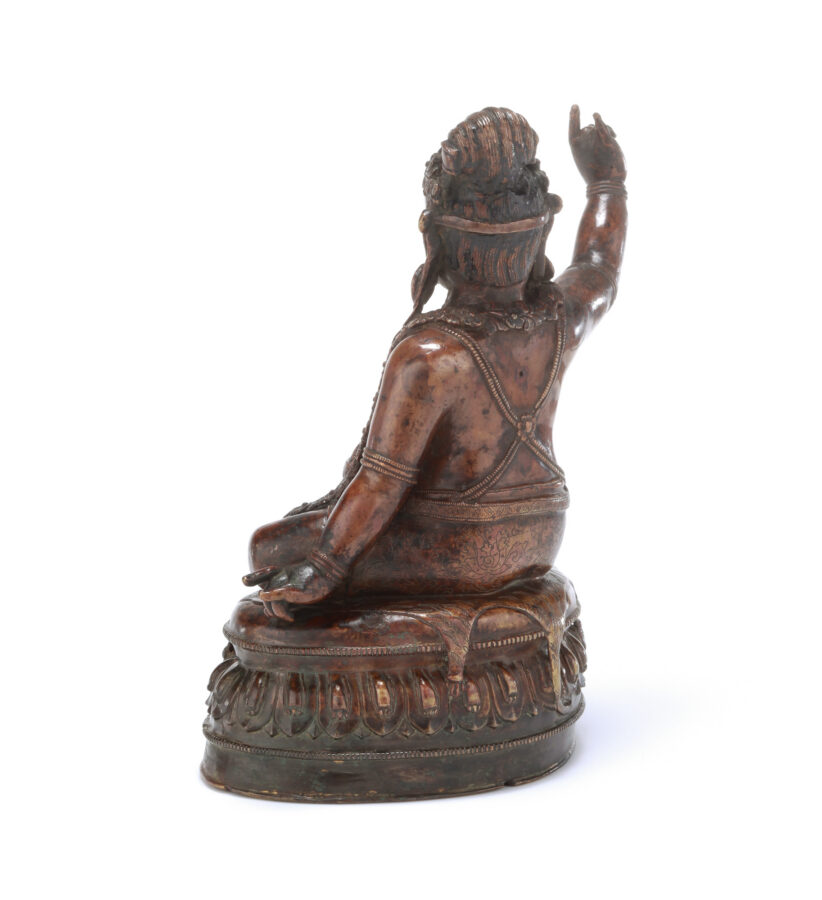


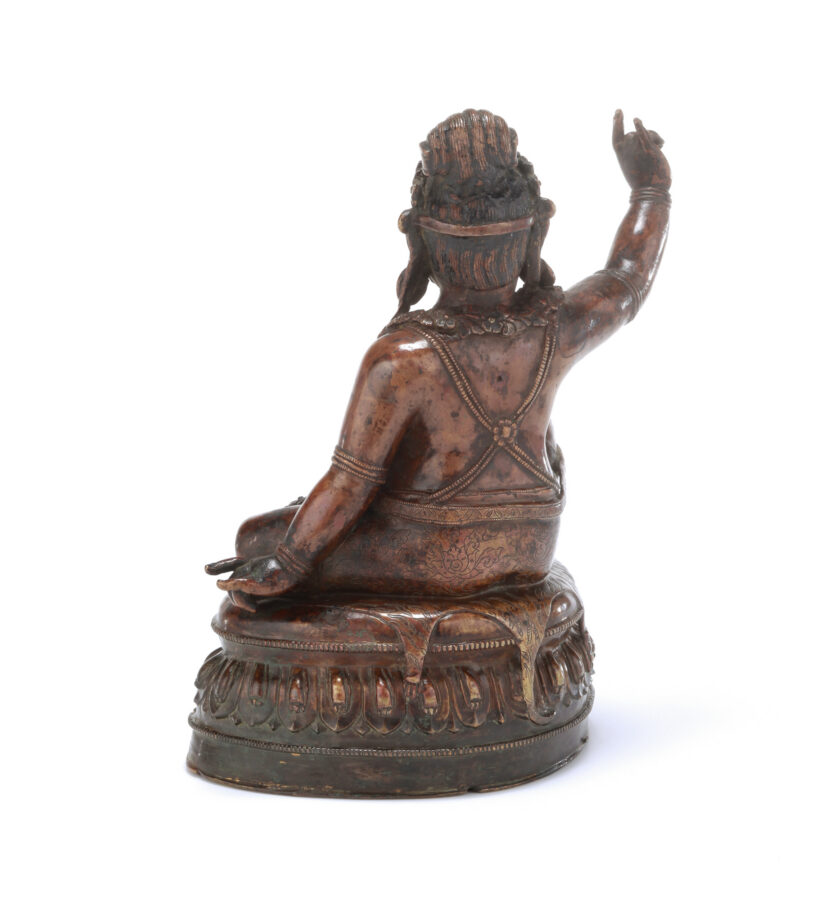
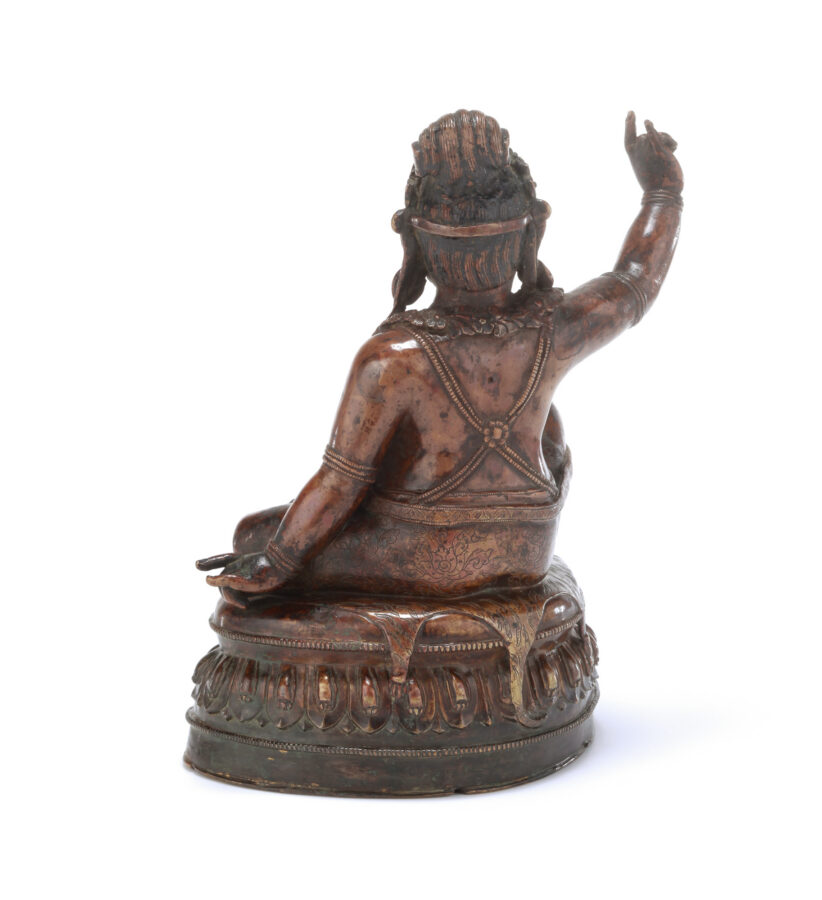
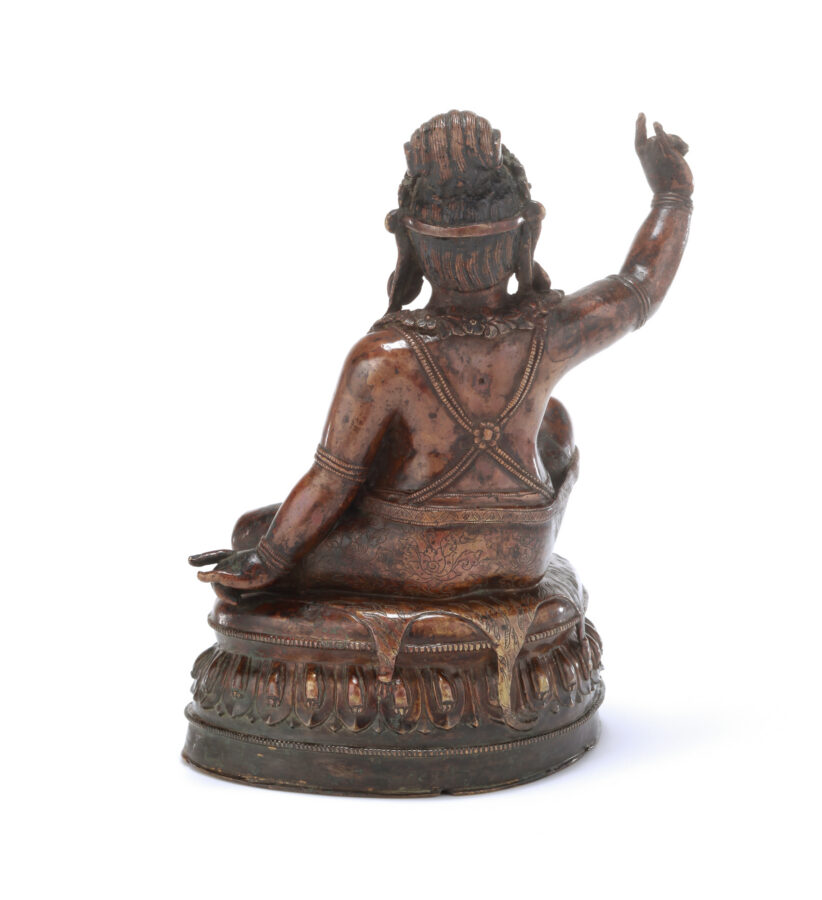

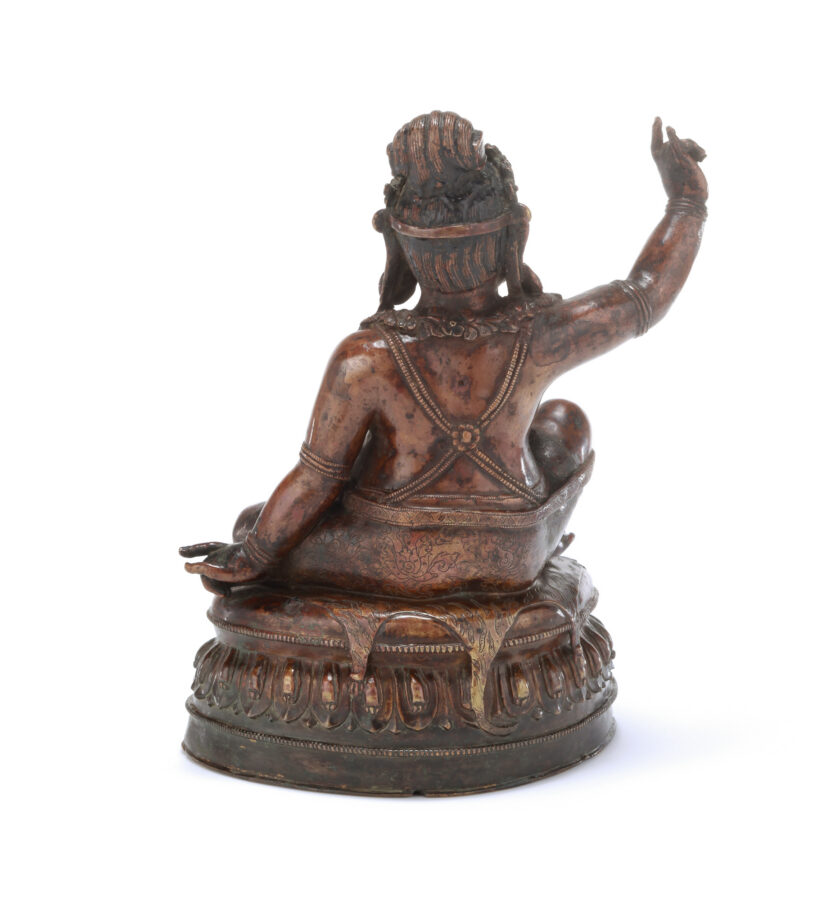


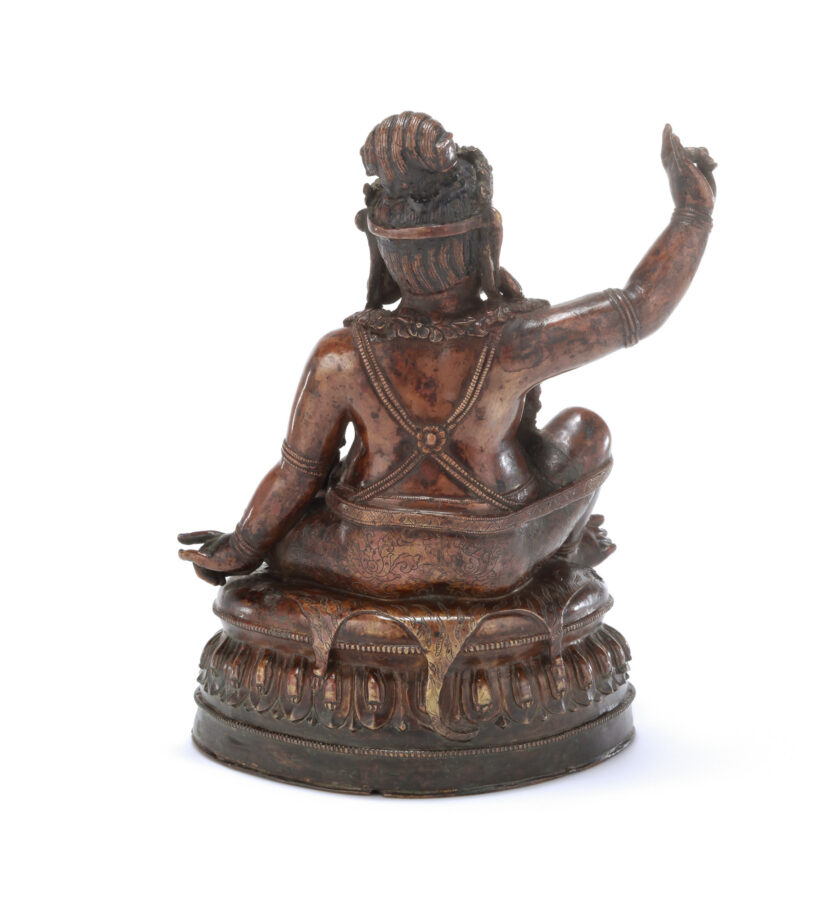
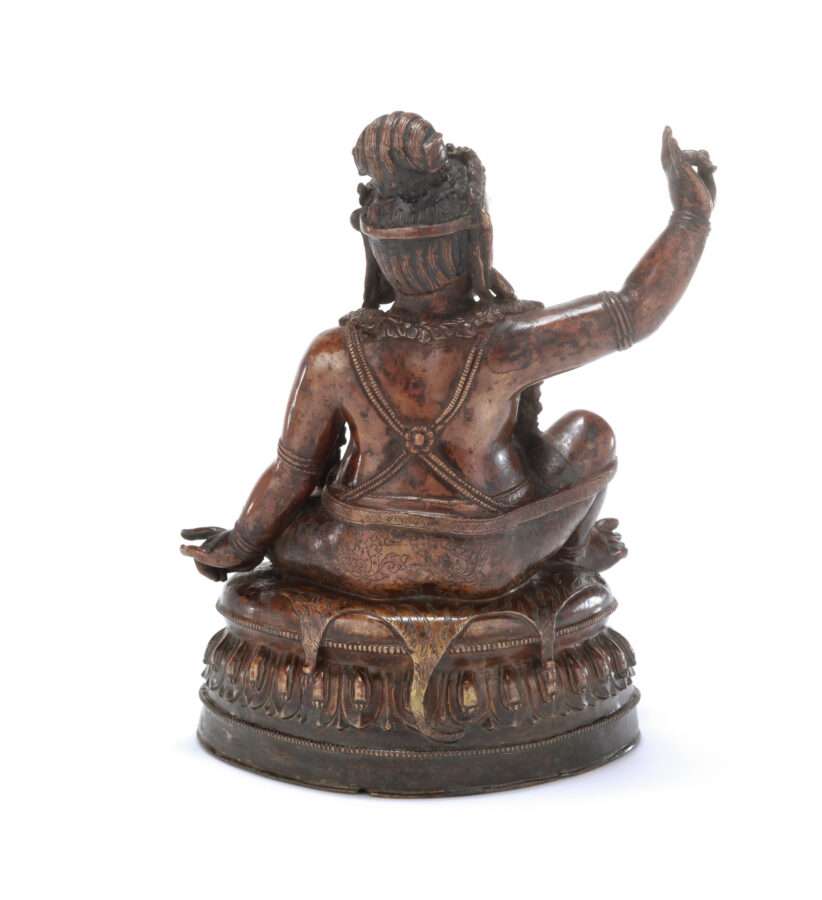
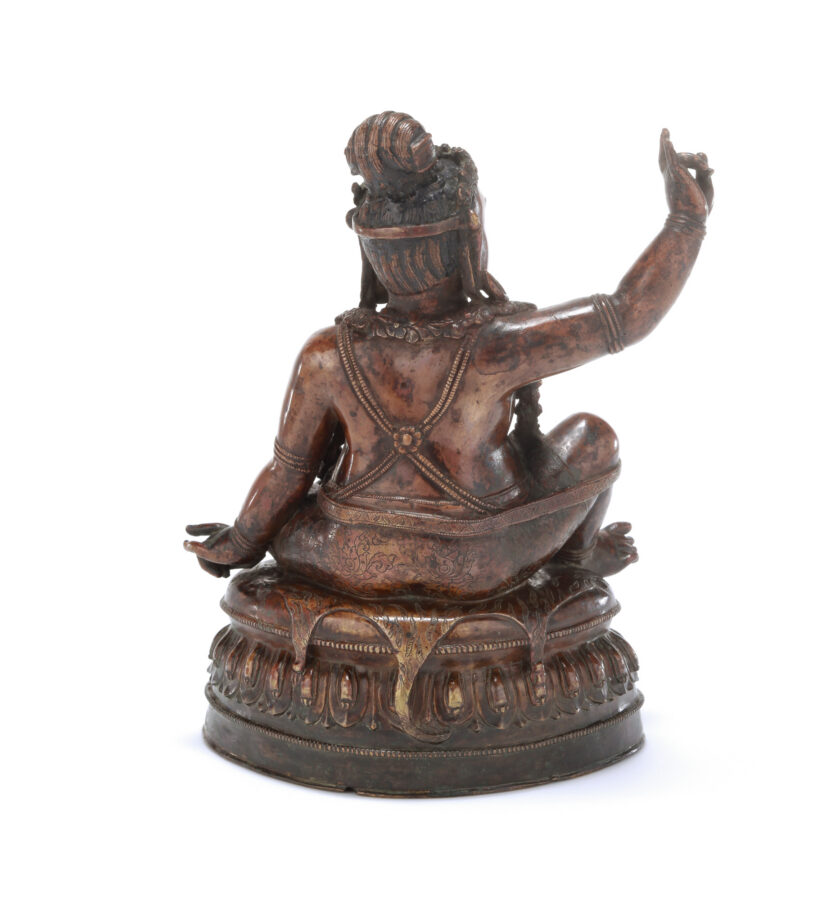
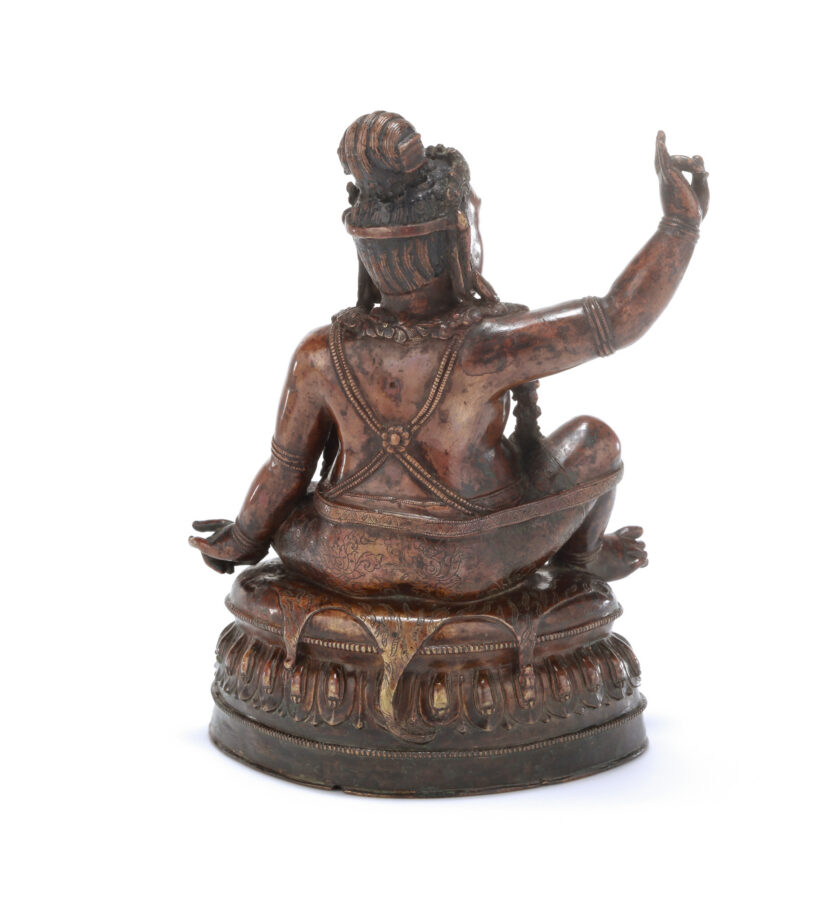


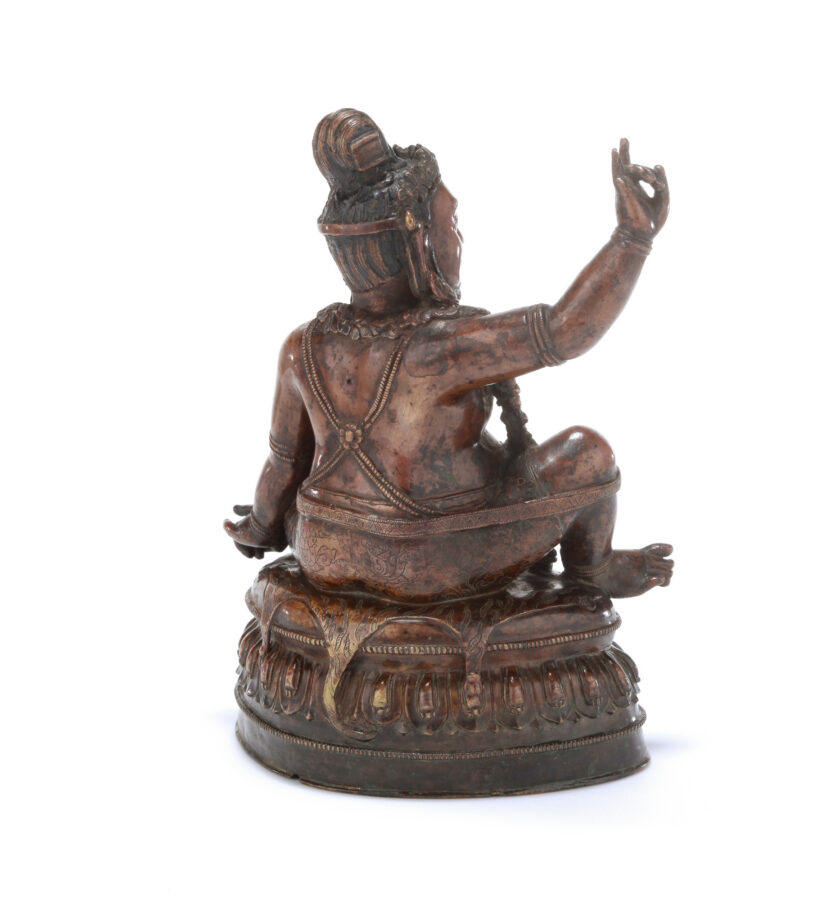


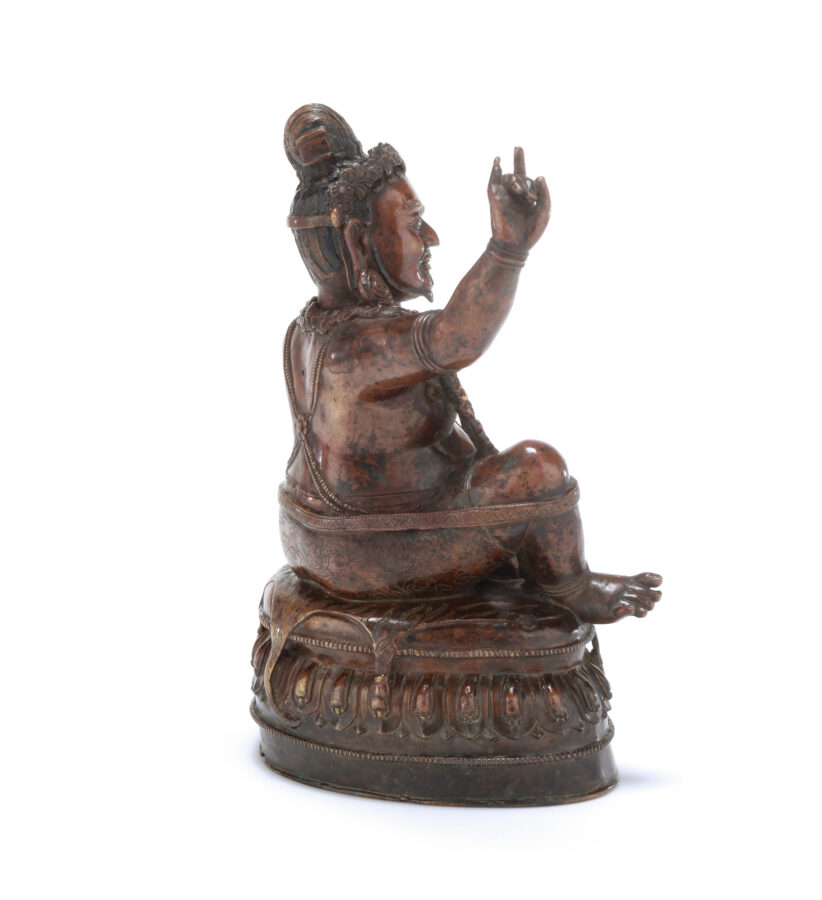
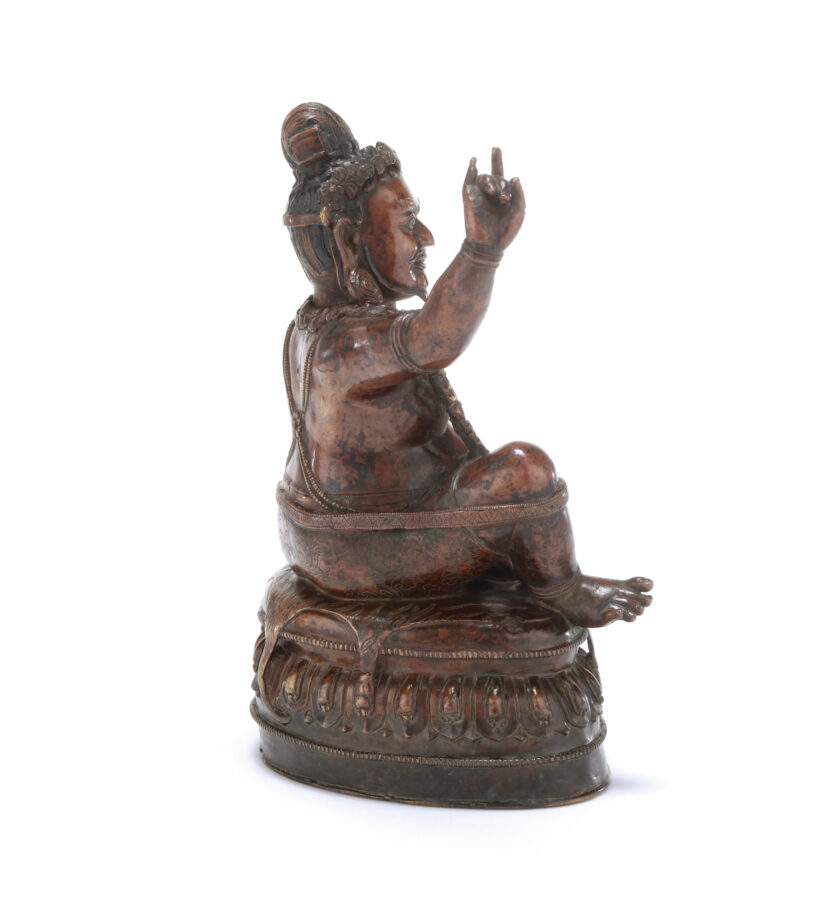
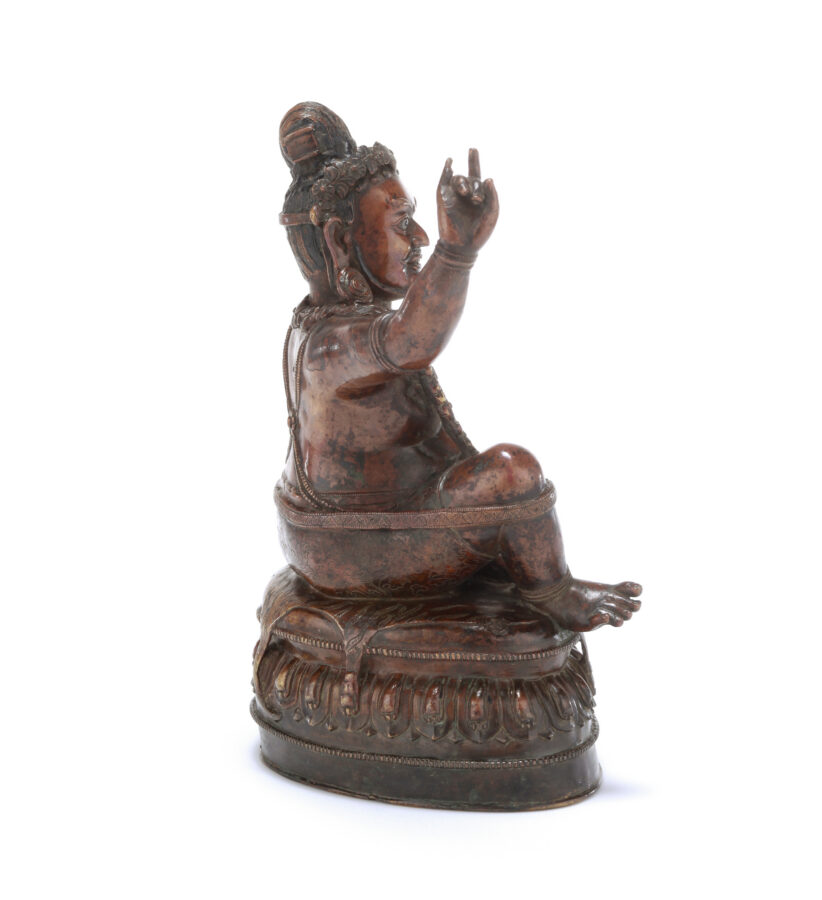
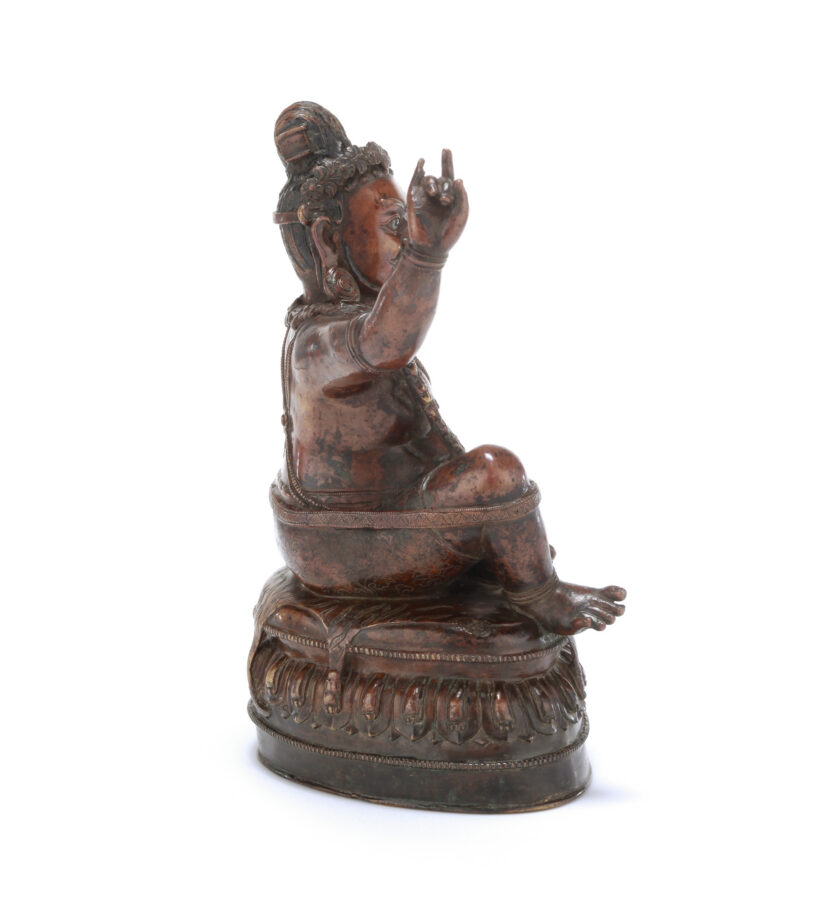


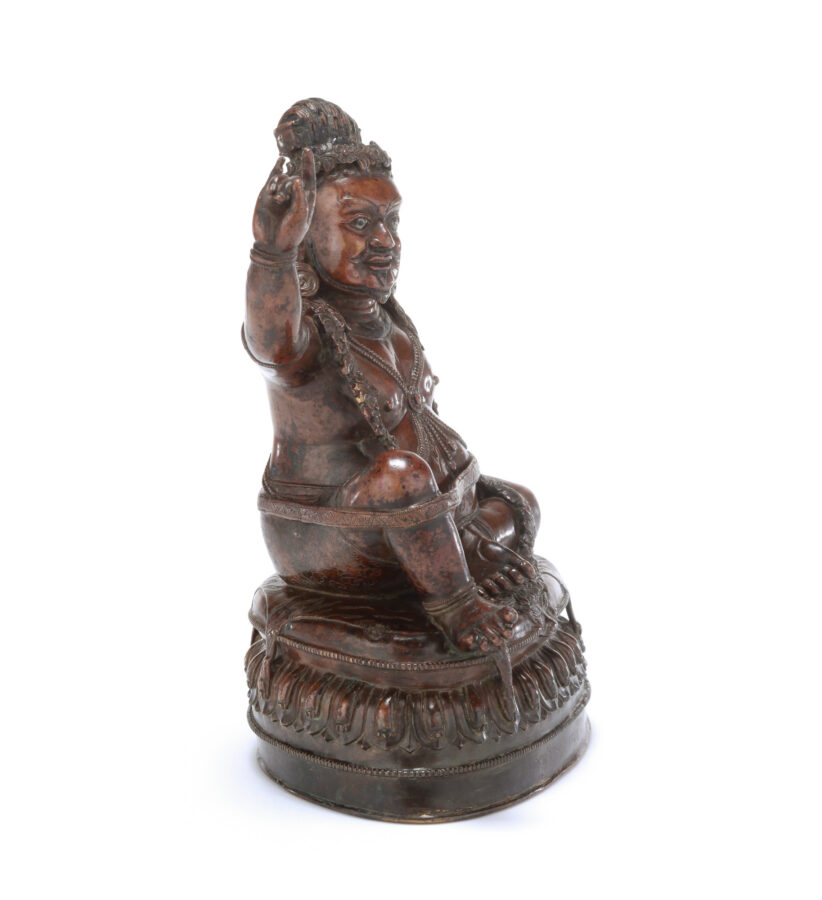


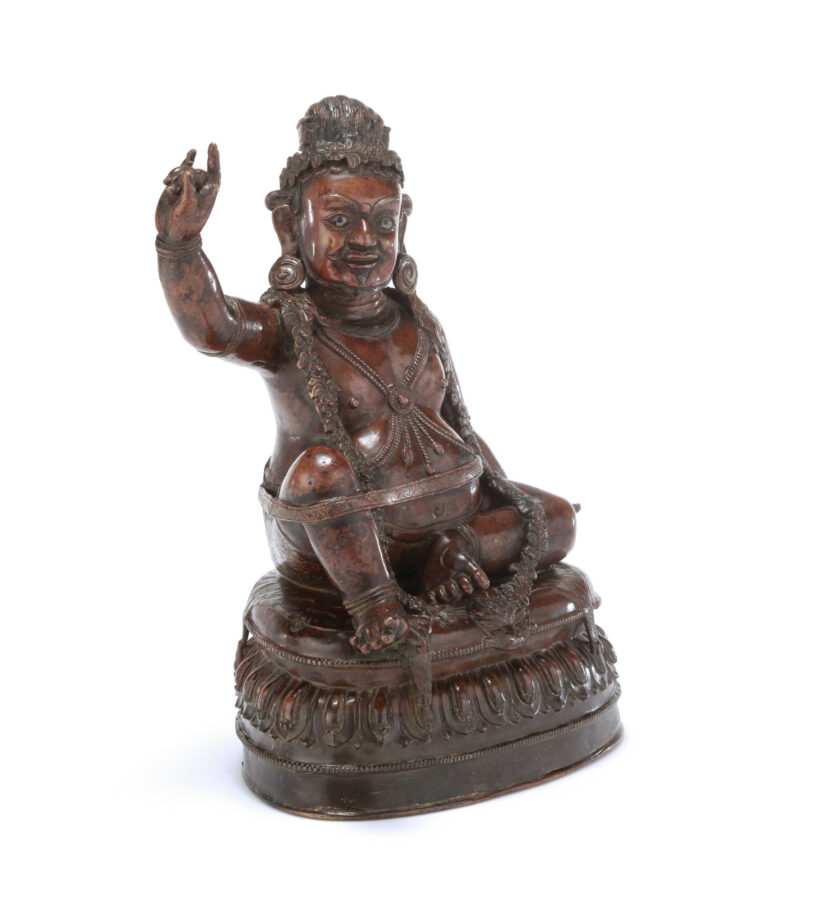


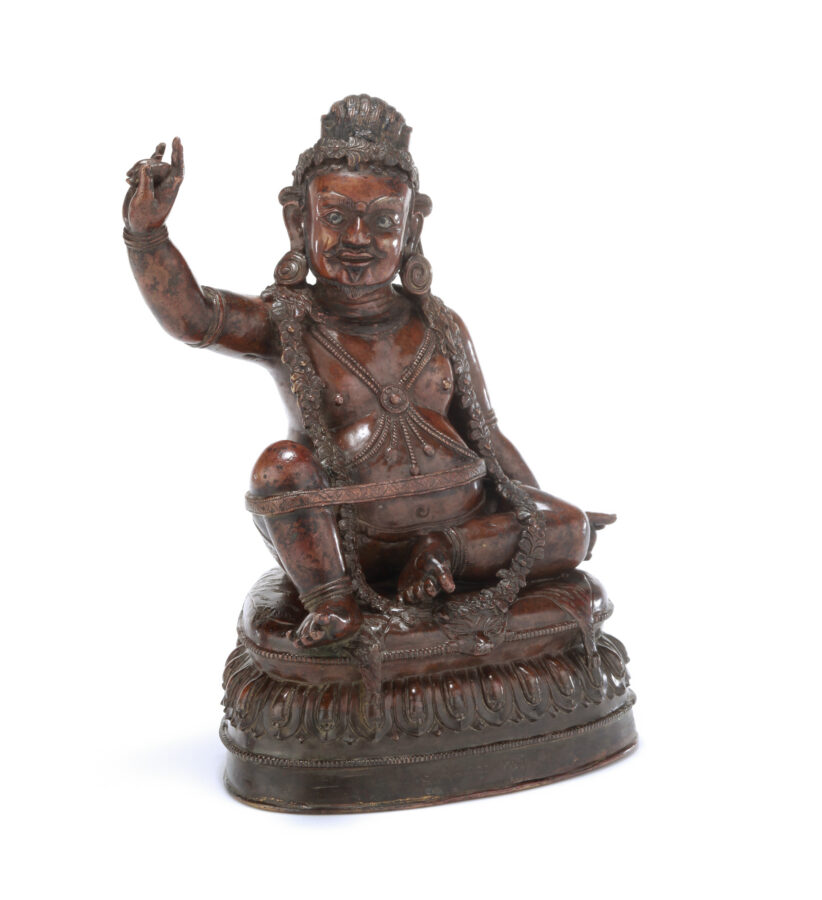


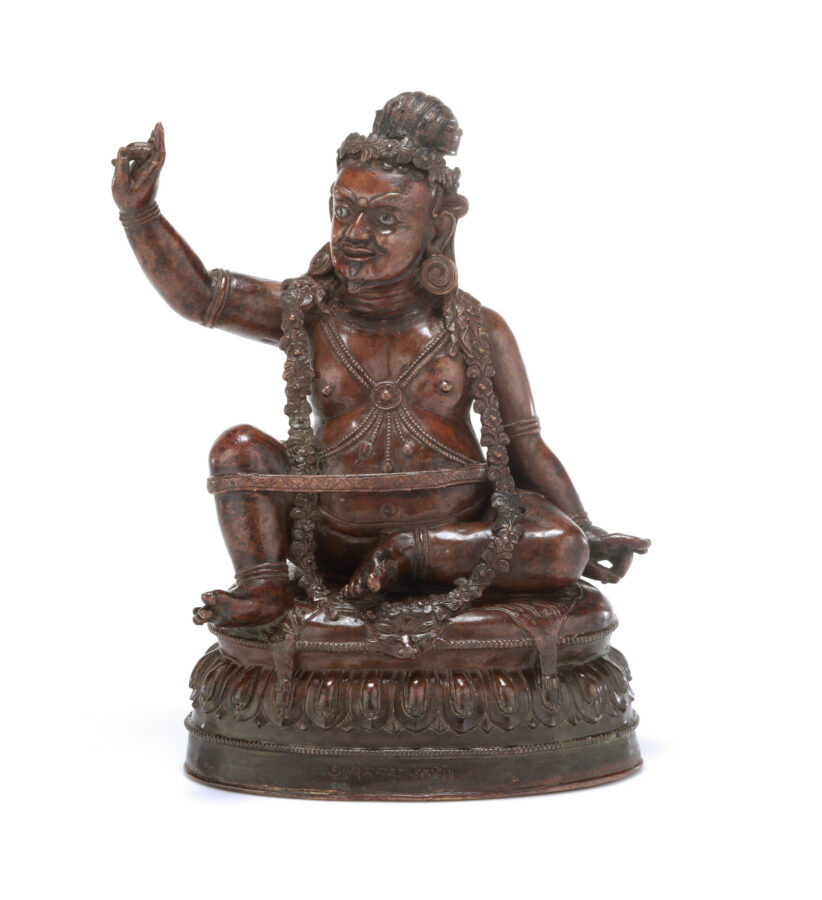


This relaxed posture is commonly associated with regal leisure.
Tibet
17th century



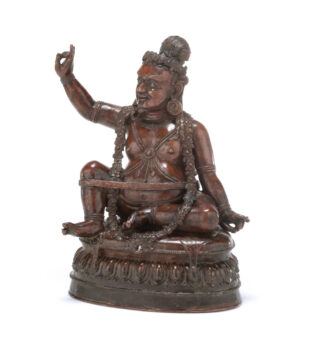
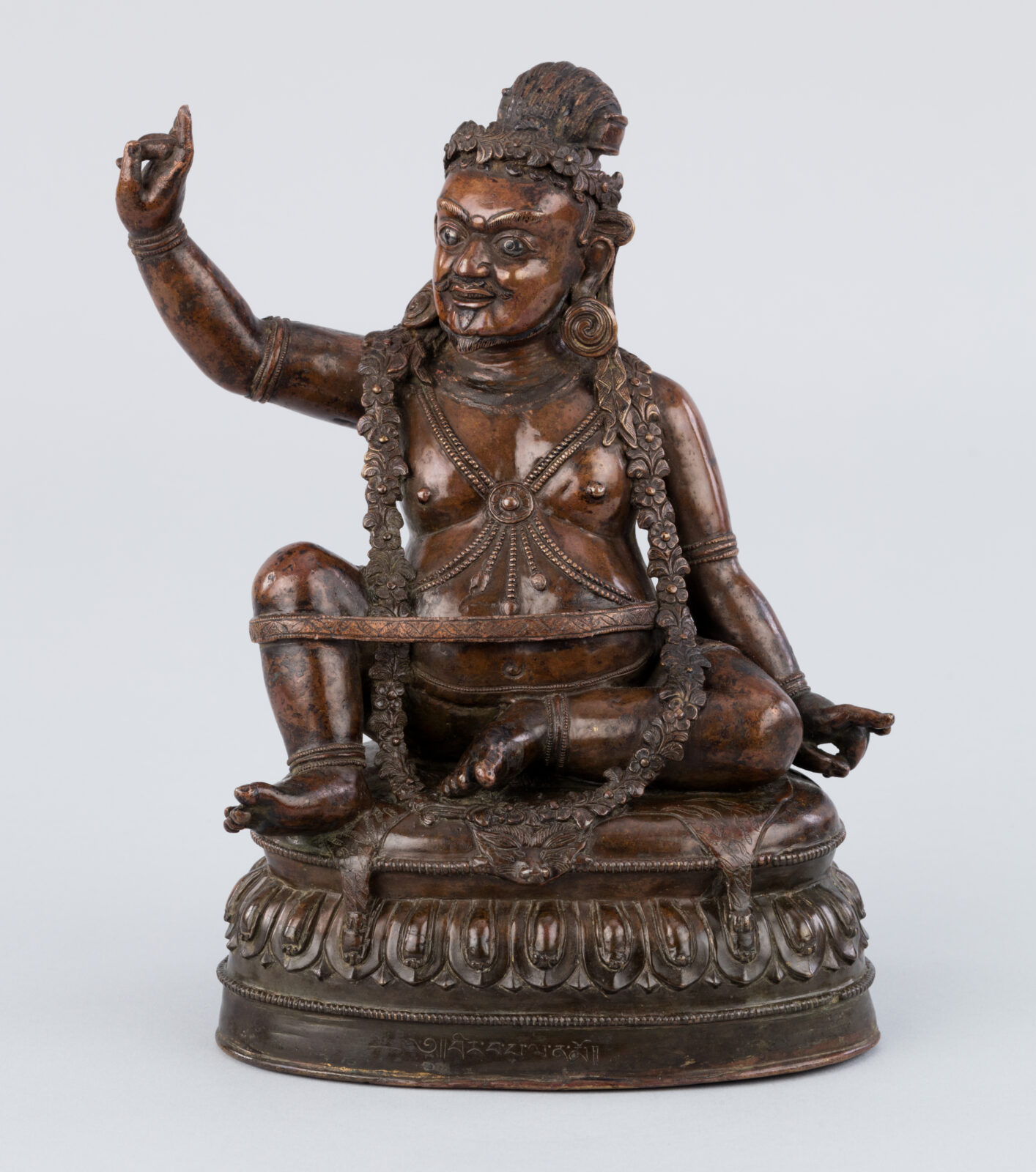
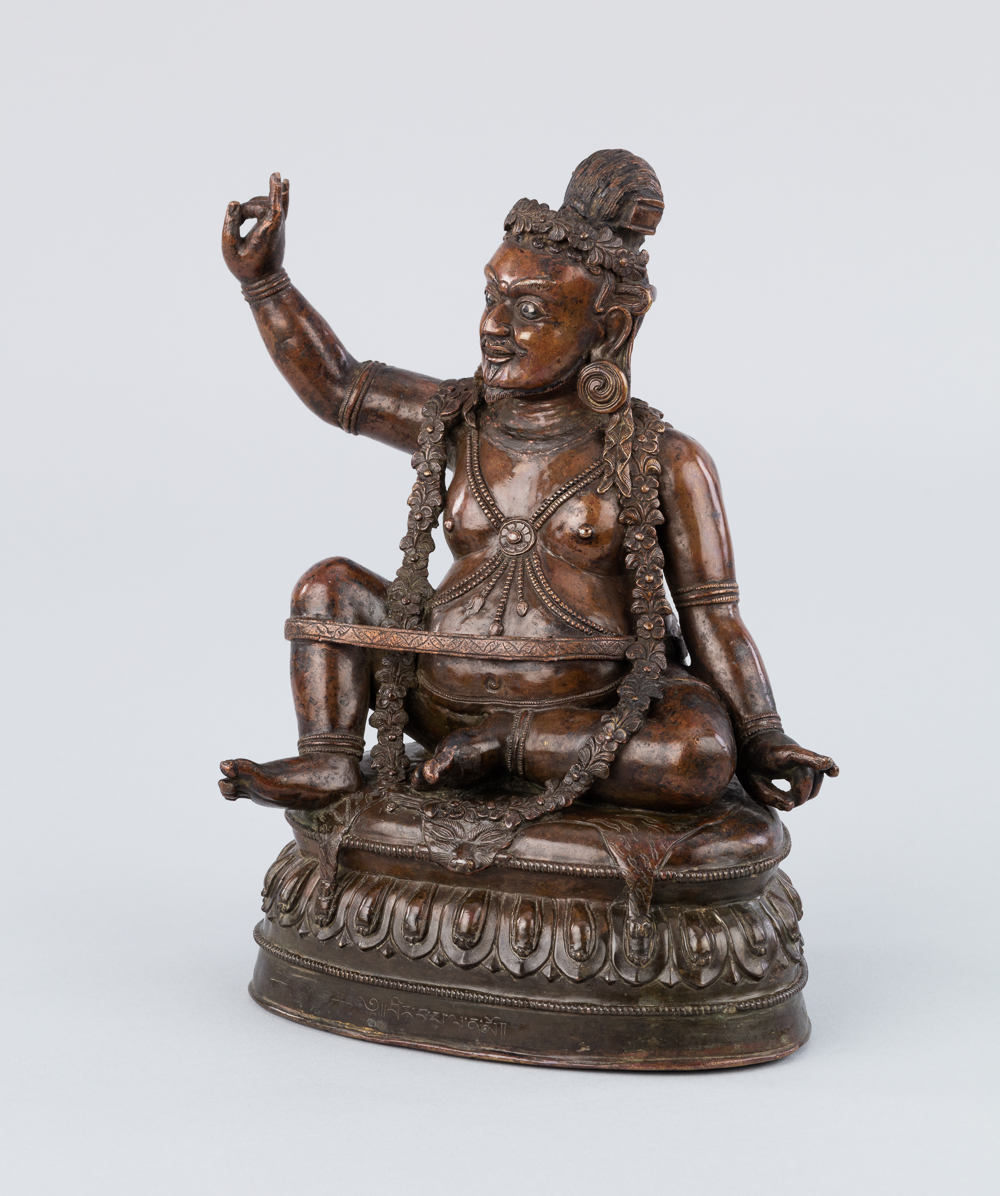
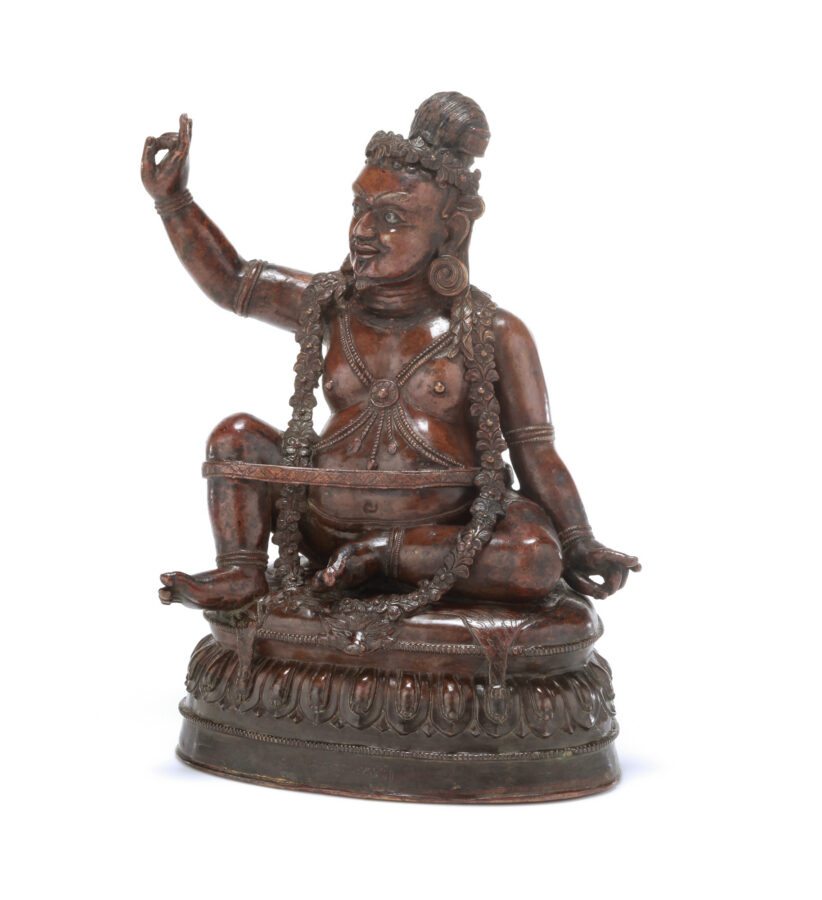
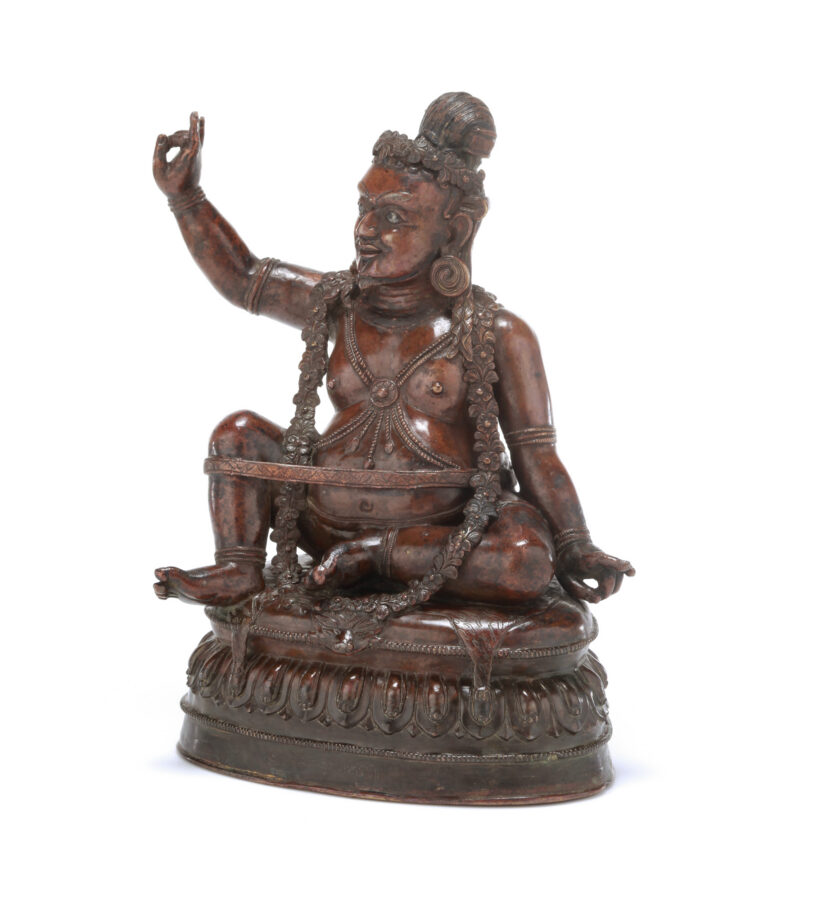
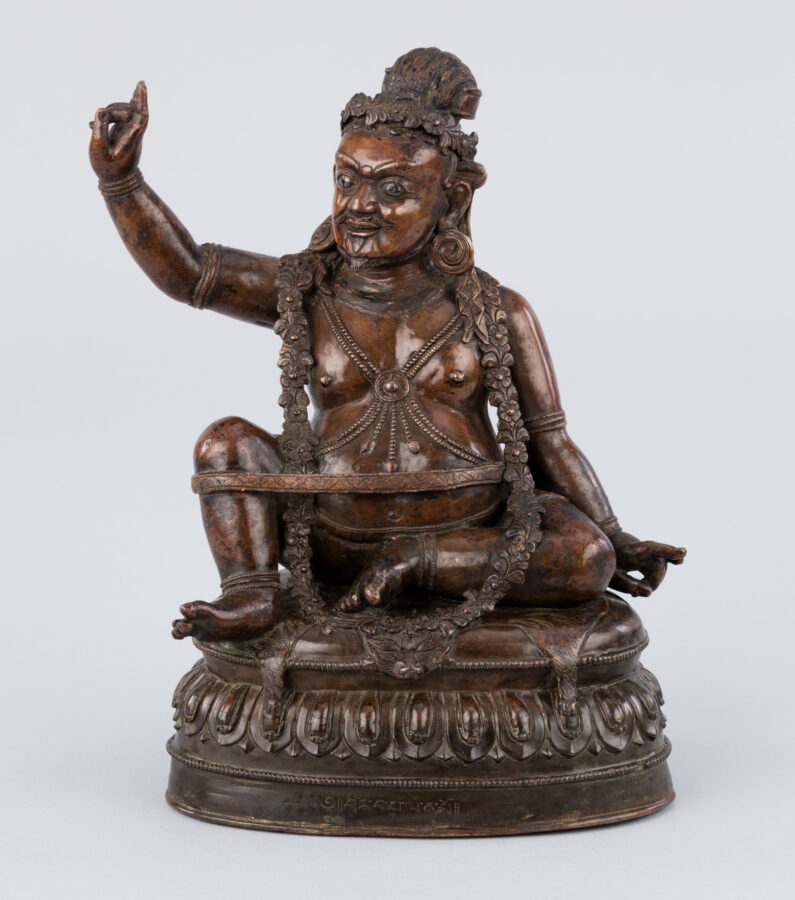
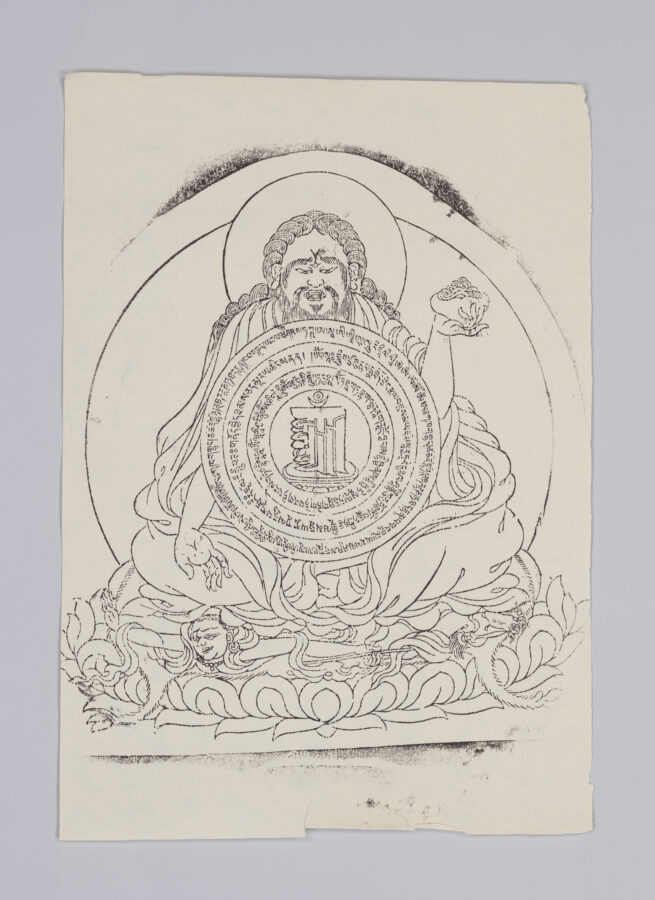
Virupa, or the Ugly One, is a famous mahasiddha, or greatly accomplished tantric adept/yogi, who is said to have lived sometime between the seventh to eleventh century. He was an abbot of Somanatha Monastery in eastern India before he was ejected for his unconventional behavior and became a wandering ascetic(yogi). Mahasiddhas are thought to have attained magical powers (siddhi) due to their mastery of yogic practices. Here, Virupa’s distinctive pose captures an iconic monument from his life story when it is said he pledged to pay his bar tab when the sun set, so he stopped the sun in the sky so he could continue to drink wine without interruption. Virupa is especially important to the Sakya tradition of Tibetan Buddhism, which traces several of their practices back to this siddha.
Virupa is depicted here as the quintessential siddha, with wild, wide-open eyes enhanced by silver inlays that intensify the power of his gaze. He is seated on a tiger skin, and a meditation band holds his right leg in place for extended yogic practices. He wears flower garlands and bone ornaments of the charnel grounds where siddhas dwell, and whorl earrings made of conch shells hang from his ears, while his long hair conceals a sacred Buddhist text, identified as either the Prajnaparamita Sutra or Hevajra Tantra.

This relaxed posture is commonly associated with regal leisure.
A religious movement that originated in India around the fifth to seventh century with sacred writings and esoteric teachings and practices transmitted from teacher to student through initiation. These remain an important part of Hinduism and Buddhism today.
In Buddhism time is perceived as relative, dynamic, and conceptual. This outlook highlights important principles of interdependence within Buddhist philosophy.
A kind of energy that can be used, individually and collectively, to effect change.
A state of “waking up” from illusion and seeing the true nature of reality. Buddha Shakyamuni attained enlightenment while meditating under the bodhi tree. Buddhist teaching explains that the accumulation of merit and wisdom are essential for achieving enlightenment, also known as awakening.
A state of “waking up” from illusion and seeing the true nature of reality. Buddha Shakyamuni attained awakening while meditating under the bodhi tree. Buddhist teaching explains that the accumulation of merit and wisdom are essential for achieving awakening, also known as enlightenment.
The transmission of teachings from one generation to the next, from teacher to student, traced all the way back to the Buddha without interruption. A complete lineage is essential in Tantric Buddhist practices as it makes the blessings of the teaching more powerful.
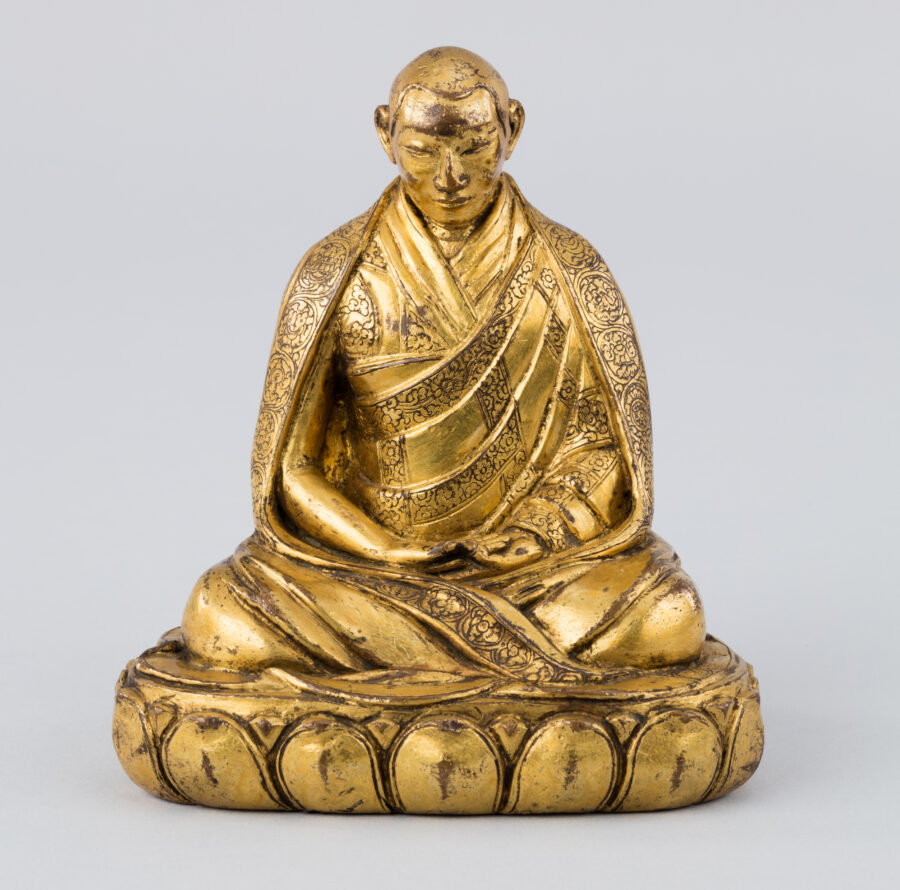
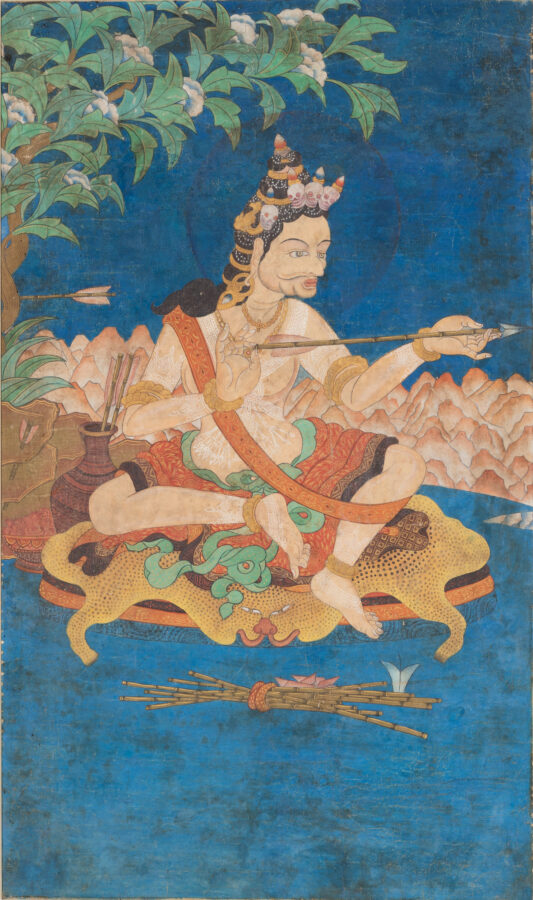
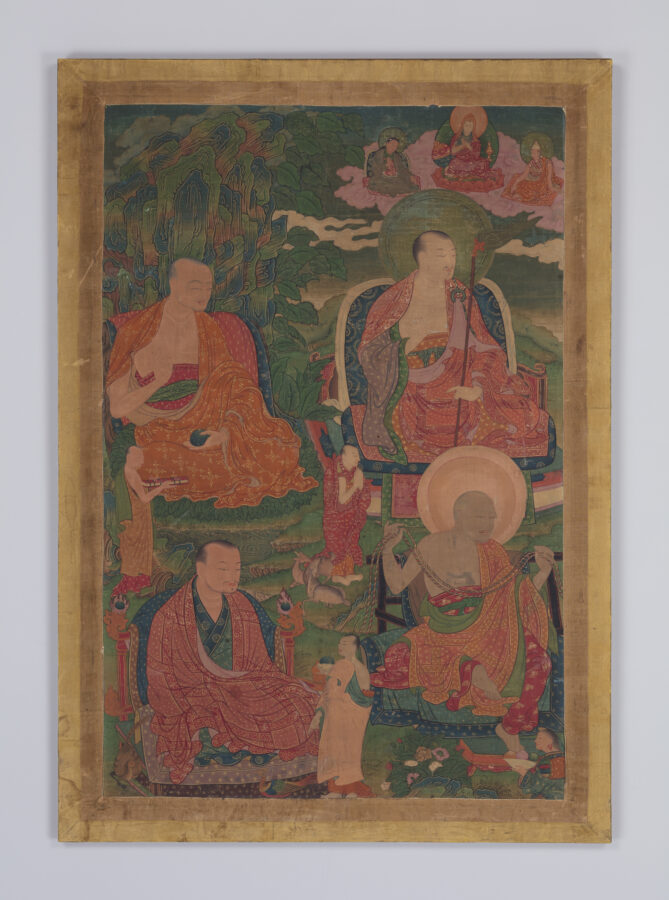
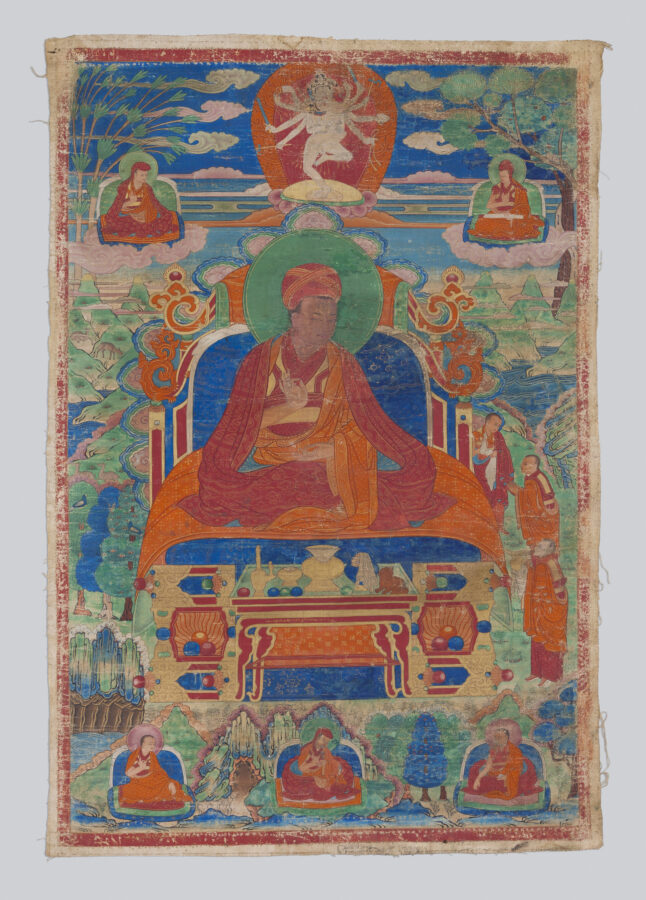
Himalayan art includes portraits of legendary and historical humans, including accomplished religious teachers (lamas), the Buddha’s original disciples (arhats), and spiritually accomplished tantric masters (mahasiddhas).
Today, Tibetans primarily inhabit the Tibetan Plateau, situated between the Himalayan mountain range and the Indian subcontinent to the west, Chinese cultural regions to the east, and Mongolian cultural regions to the northeast. During the 7th to 9th century, Tibetan rulers expanded their empire across Central Asia, and established Buddhism as the state religion.
Get the latest news and stories from the Rubin, plus occasional information on how to support our work.