Kashmir or Western Himalayas
ca. 1000
Kashmir or Western Himalayas
ca. 1000
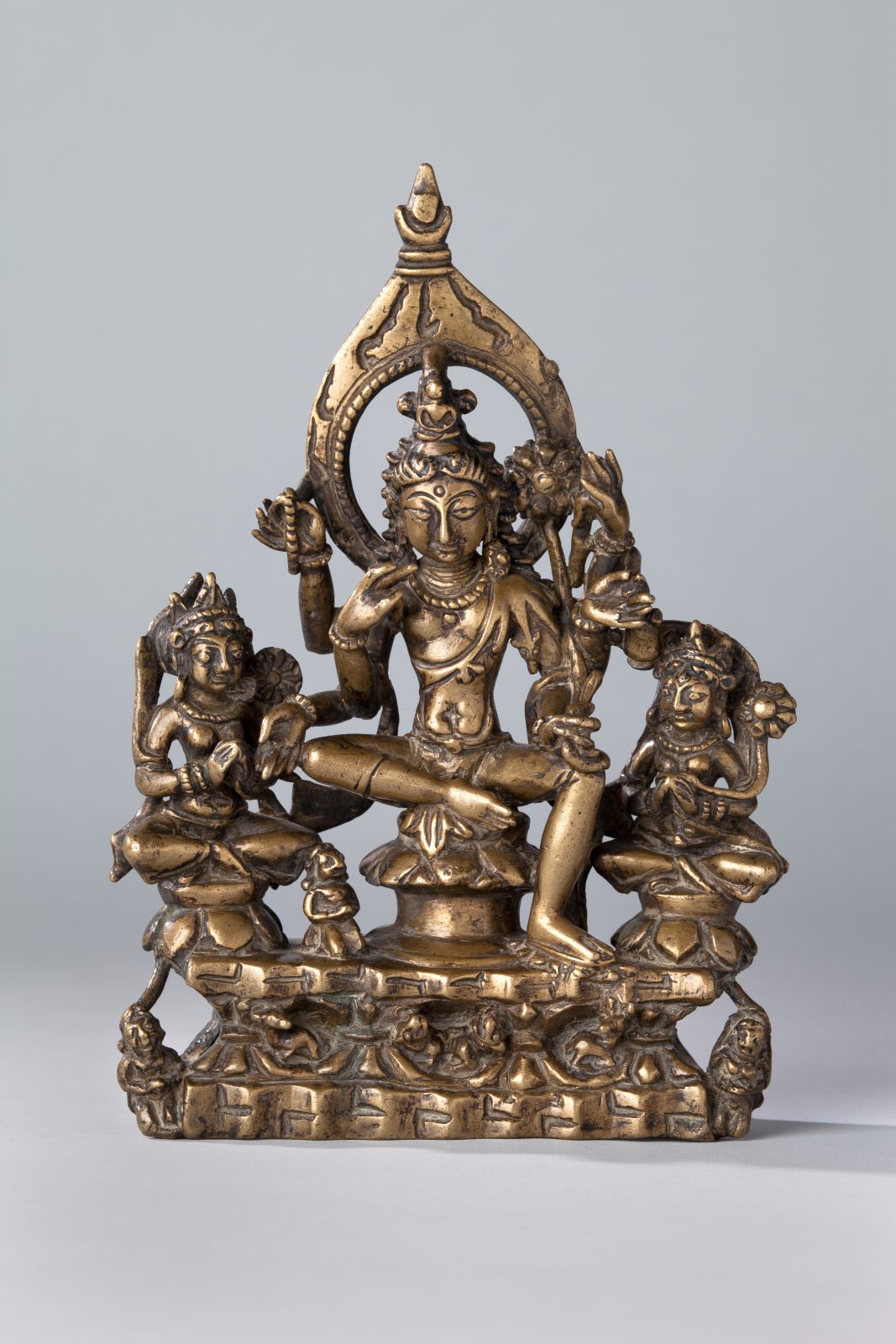
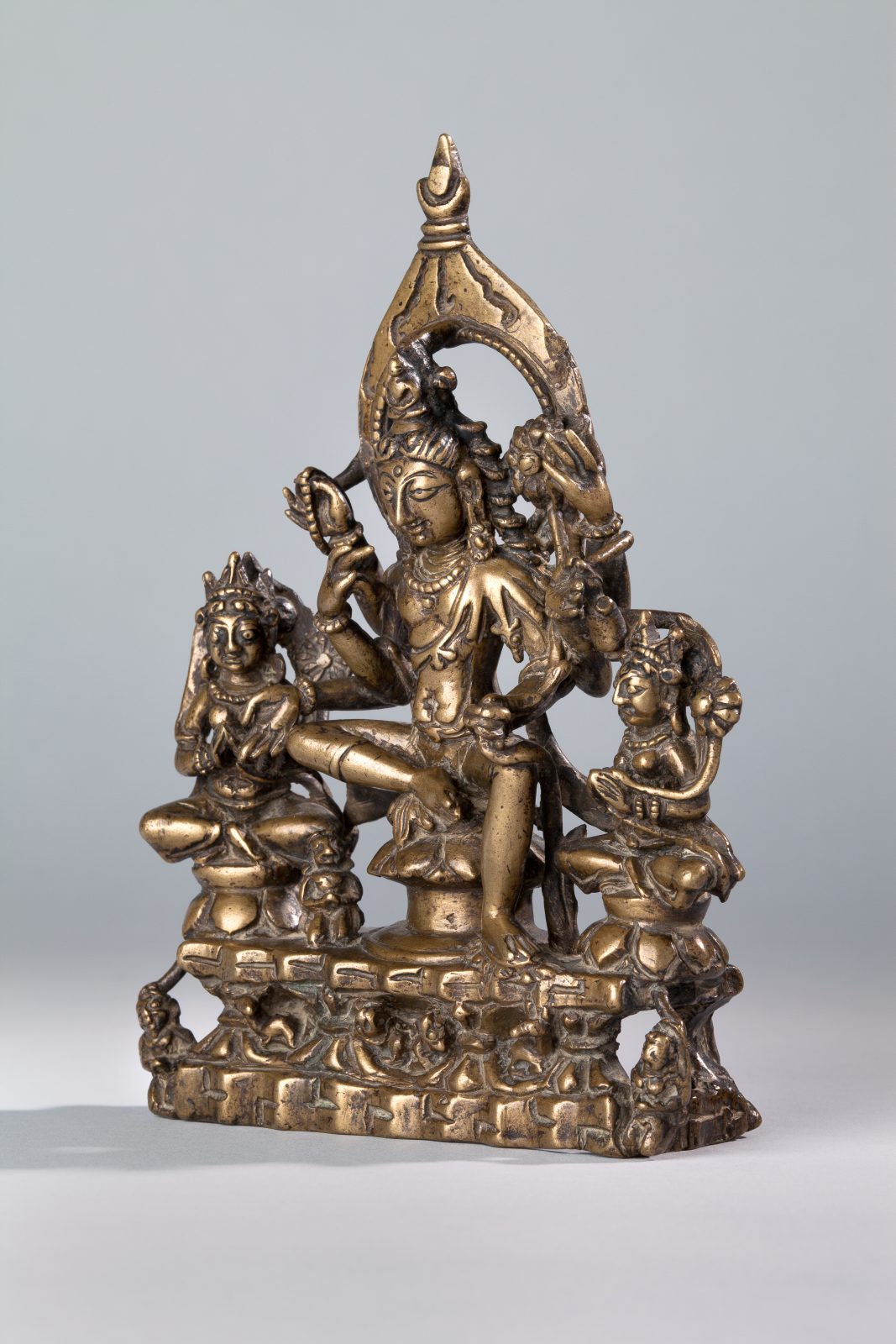
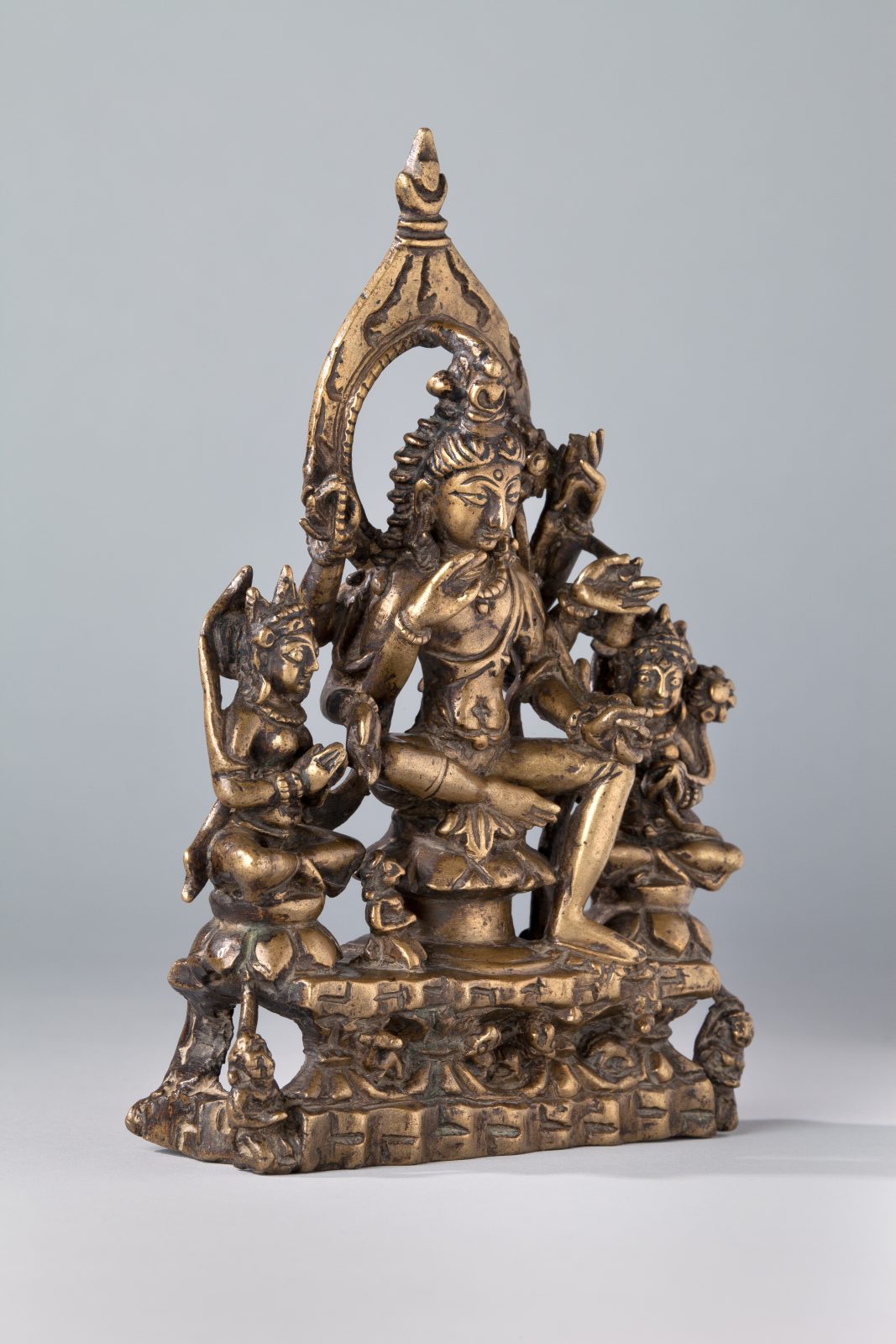
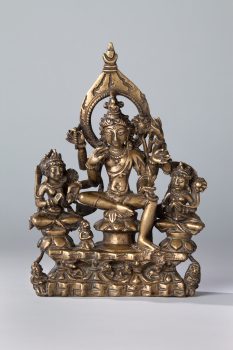
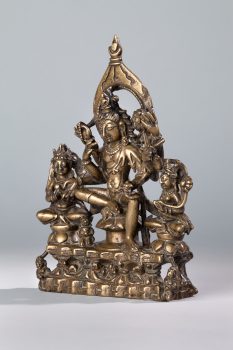
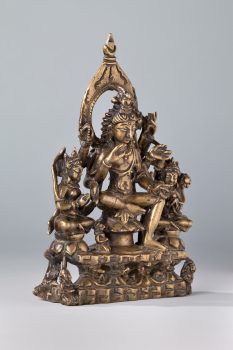
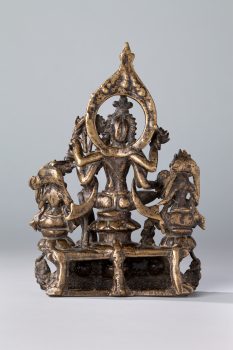
At the center of this triad is the bodhisattva of compassion Avalokiteshvara as Amogaphasha, “Unfailing Lasso.” The name refers to his unfailing compassion, like a lasso that rescues all sentient beings from suffering. He is seated with one leg pendant on a high lotus seat, and he holds a mala and performs the pensive and giving gestures with his right hand while holding a broken haft (likely originally a hook), flask, and lotus in his left hand. Based on descriptions of similar triads in the Aryamoghapashakalparaja, the two goddesses who flank him with their hands forming veneration gestures and holding lotuses are likely Tara (right) and Shveta (left).Three kneeling donors are also depicted. The male and female flanking the rock base are in their normal positions for a Kashmiri sculpture. Another is unusually placed atop the rock base between the lotuses of the deities.
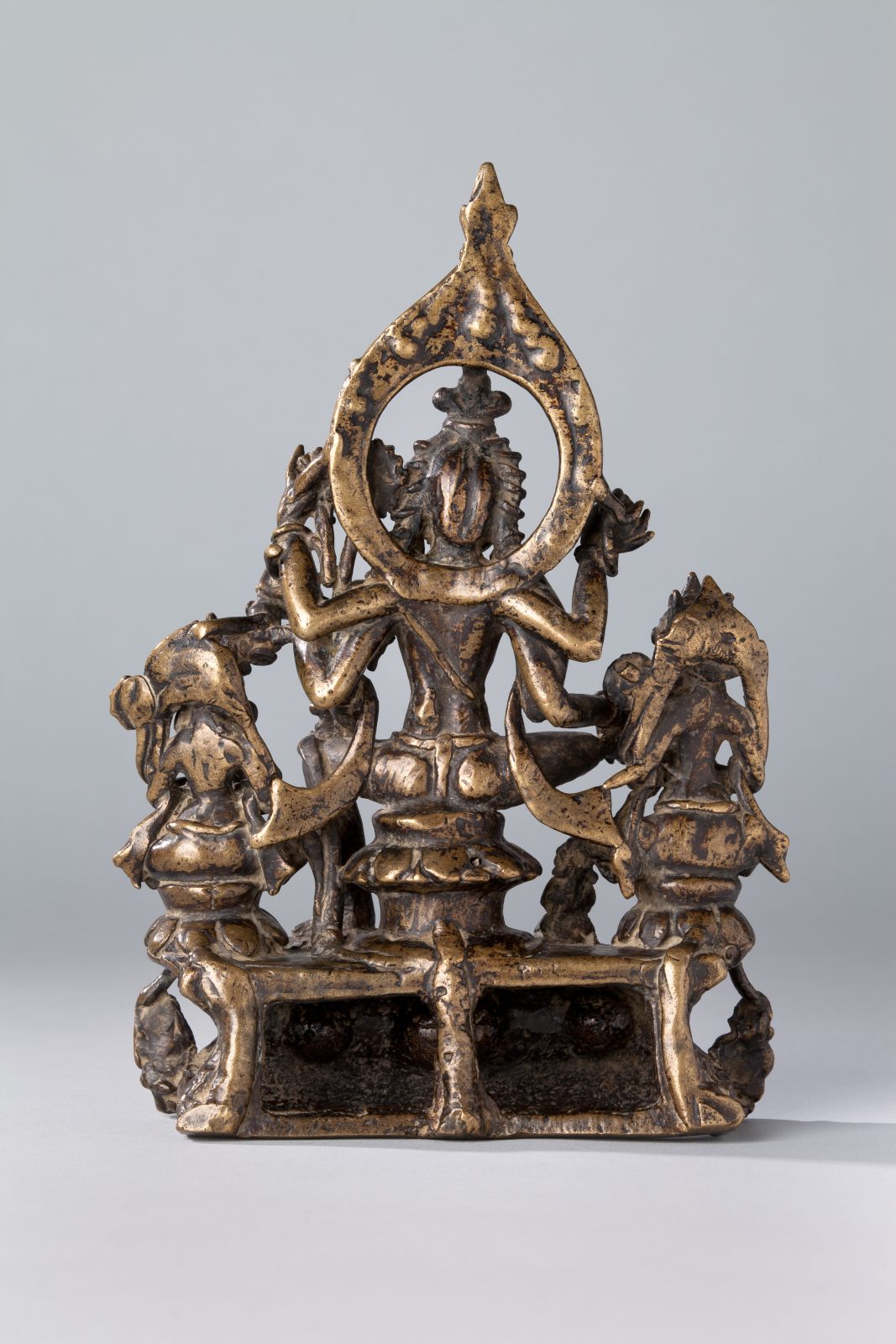
The art of Kashmir had a great influence on Tibetan Buddhist art, not only in terms of style but also for its development and depiction of early esoteric, or tantric, deities. Many of the earliest Himalayan bronzes depicting multi-headed and multi-limbed tantric deities are from this region, as is this six-armed form of the bodhisattva. Typical for late Buddhist productions from the region are the pointed flaming halo, the curled hair to the sides of the head, the set-back chin best visible in profile, and the pointed veils behind the heads of the female figures.
Buddhist practitioners in some traditions believe that cutting through ordinary perceptions that keep us in the endless cycle of death and rebirth, known as samsara, can create a powerful and enhanced divine identity that leads to enlightenment.
The cultivation of a strong aspiration to help sentient beings overcome suffering. In Buddhist Mahayana teaching, compassion is the seed for attaining full enlightenment.
Beings who aspire to become fully awakened like the Buddha and are dedicated to helping others on the path to enlightenment.
From the 8th to 13th century, Kashmir was a renowned center of Buddhist learning, arts, and culture. This fertile valley was a major source of artistic production for the western Himalayan kingdoms, which spanned parts of northern India and the Ngari region of western Tibet.


Get the latest news and stories from the Rubin, plus occasional information on how to support our work.