Central Asia
16th century
The hands form the shape of a wheel, symbolizing the “turning of the wheel of dharma,” a reference to teaching the Buddha’s doctrine.
Central Asia
16th century
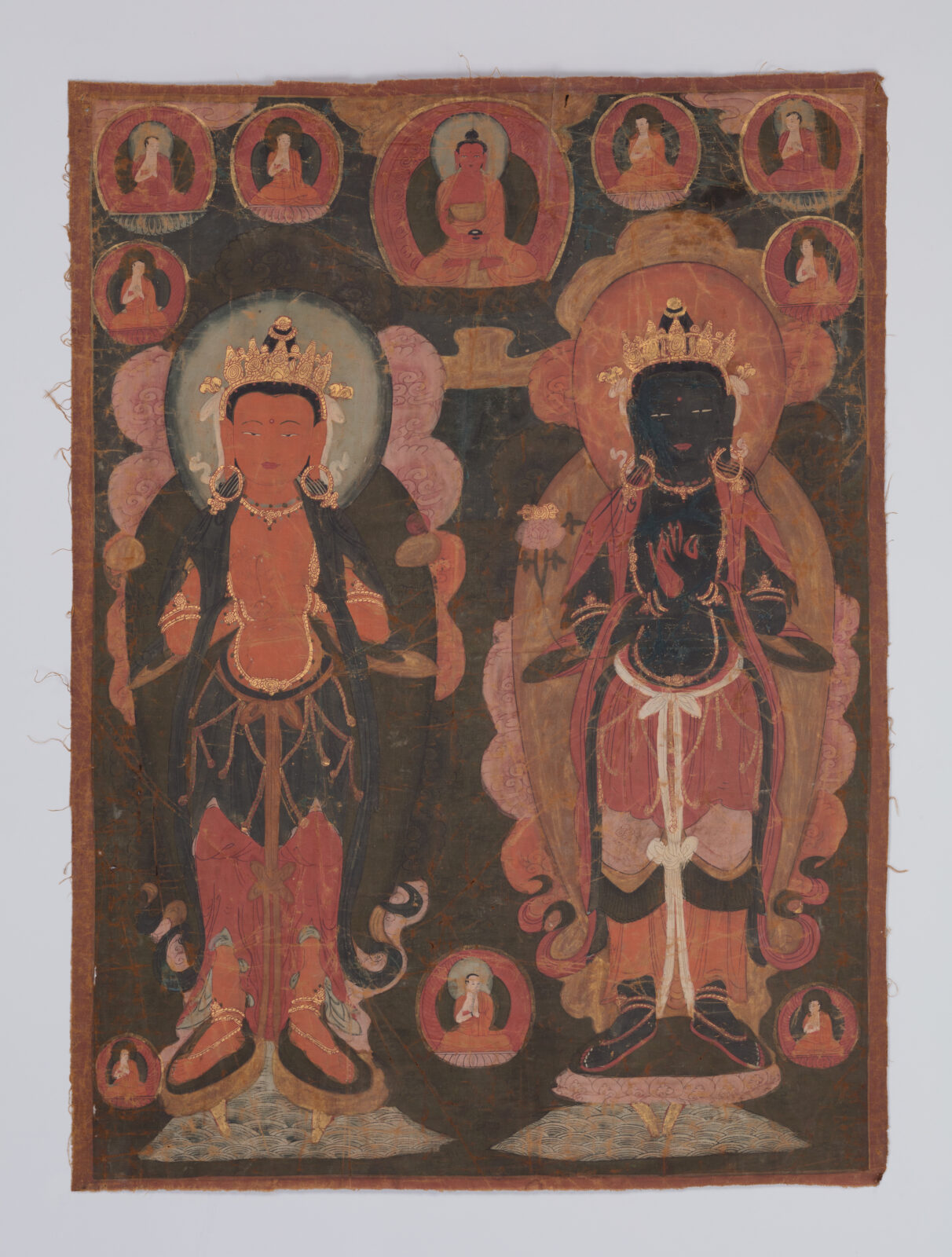
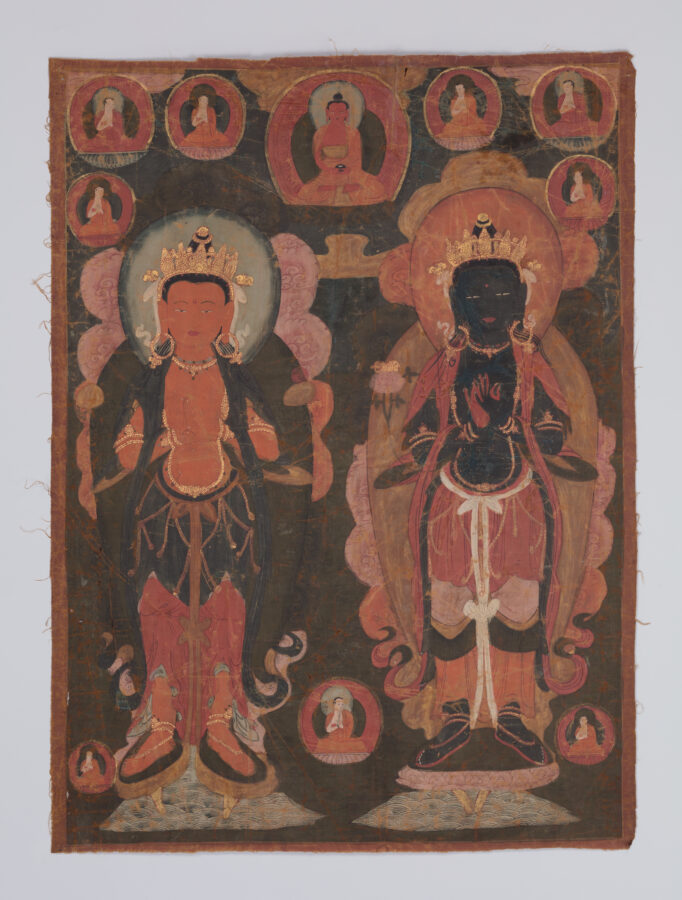
This painting depicts two bodhisattvas, beings who aspire to reach awakening and act for the benefit of all beings so they too can achieve Buddhahood. Writhed in clouds and set against a dark green background, they both stand on lotuses emerging from small ponds. A seated buddha is at the top-center of the composition, and smaller images of monk-teachers surround and face him. Three figures of monks in the lower portion of the painting may refer to donors who contributed to the painting’s production or students in the lineage of masters depicted in the top.
The two main figures that dominate the painting are among the eight great bodhisattvas. Both are presented in Central Asian garb reminiscent of images of bodhisattvas found across Inner Asia and China. The execution of the painting is rather schematic, although there is evidence of skilled draftsmanship under the applied pigments, most notably in the rendering of lotus flowers by the shoulders of the left figure. The moon and the sun on top of the lotuses suggest this figure could be Samantabhadra. The figure on the right is dark blue in color, and a vajra on a pink lotus is located by their right shoulder, suggesting this bodhisattva is Vajrapani. The area between the halos of the two bodhisattvas appears to be colored over. It may have once contained an inscribed syllable or composite mantra.

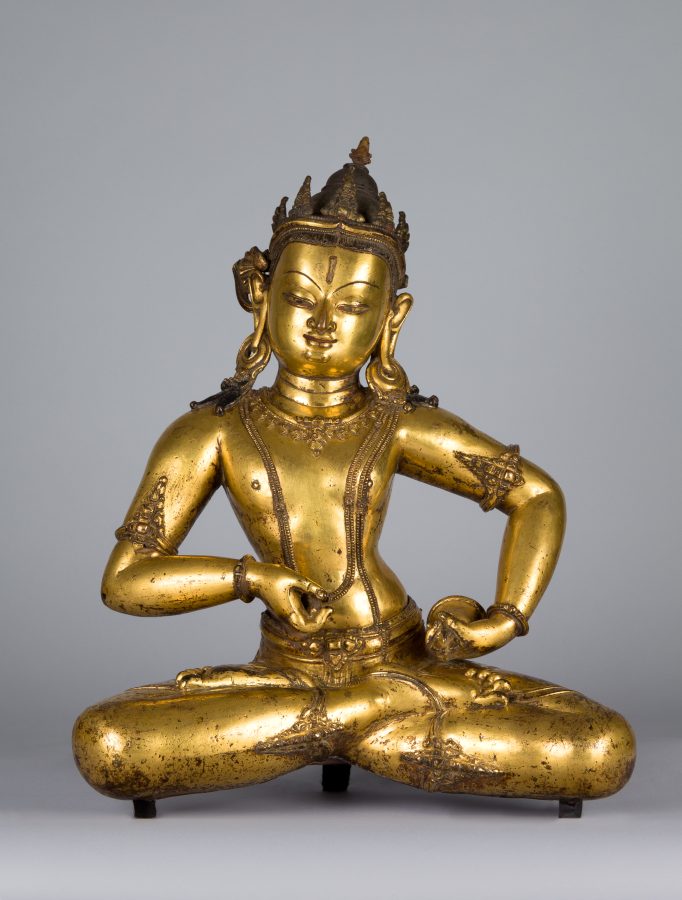
The hands form the shape of a wheel, symbolizing the “turning of the wheel of dharma,” a reference to teaching the Buddha’s doctrine.
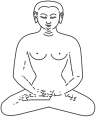
Also known as vajra position, this posture is associated with meditation.
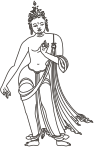
This posture features a triple- bend of the body at the knee, hip, and waist.

A vajra is a ritual scepter used in tantric practices and an attribute of tantric masters and deities. It generally symbolizes method, the male aspect of enlightenment.
Buddhist practitioners in some traditions believe that cutting through ordinary perceptions that keep us in the endless cycle of death and rebirth, known as samsara, can create a powerful and enhanced divine identity that leads to enlightenment.
The antidote to ignorance, with the highest form of wisdom being an understanding of the true nature of reality and all phenomena. In Buddhism studying the nature of interdependence and emptiness is considered an important step for attaining wisdom.
The transmission of teachings from one generation to the next, from teacher to student, traced all the way back to the Buddha without interruption. A complete lineage is essential in Tantric Buddhist practices as it makes the blessings of the teaching more powerful.
Beings who aspire to become fully awakened like the Buddha and are dedicated to helping others on the path to enlightenment.
The Central Asian oasis centers along the ancient trade routes connecting Asia and the West were intersections of vibrant cultural exchange for traveling merchants, monks, pilgrims, locals, and armies. This is evidenced in the diverse visual traditions, belief systems, and languages preserved in the region’s murals, statues, and texts.


Get the latest news and stories from the Rubin, plus occasional information on how to support our work.