U region, central Tibet
18th century
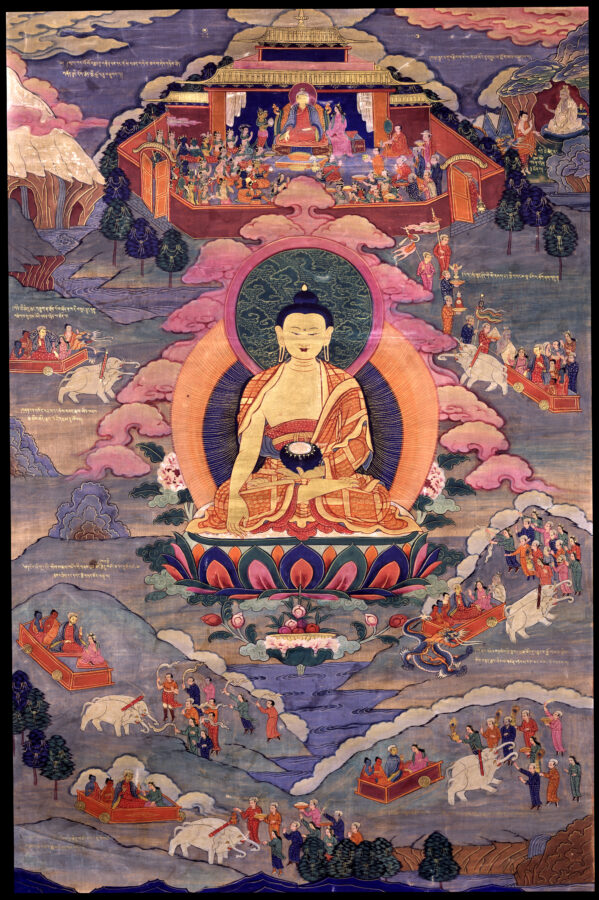
The hands form the shape of a wheel, symbolizing the “turning of the wheel of dharma,” a reference to teaching the Buddha’s doctrine.
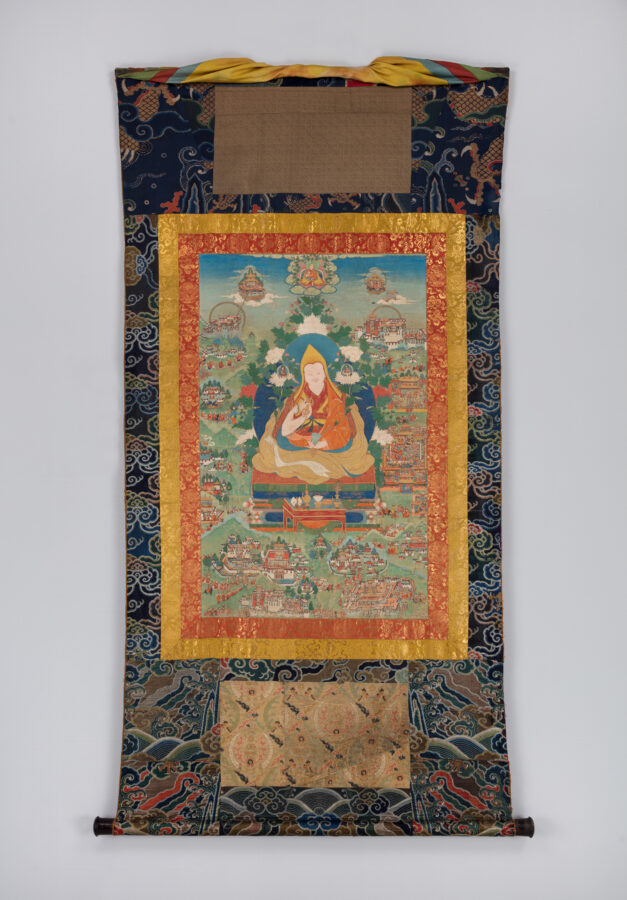
U region, central Tibet
18th century
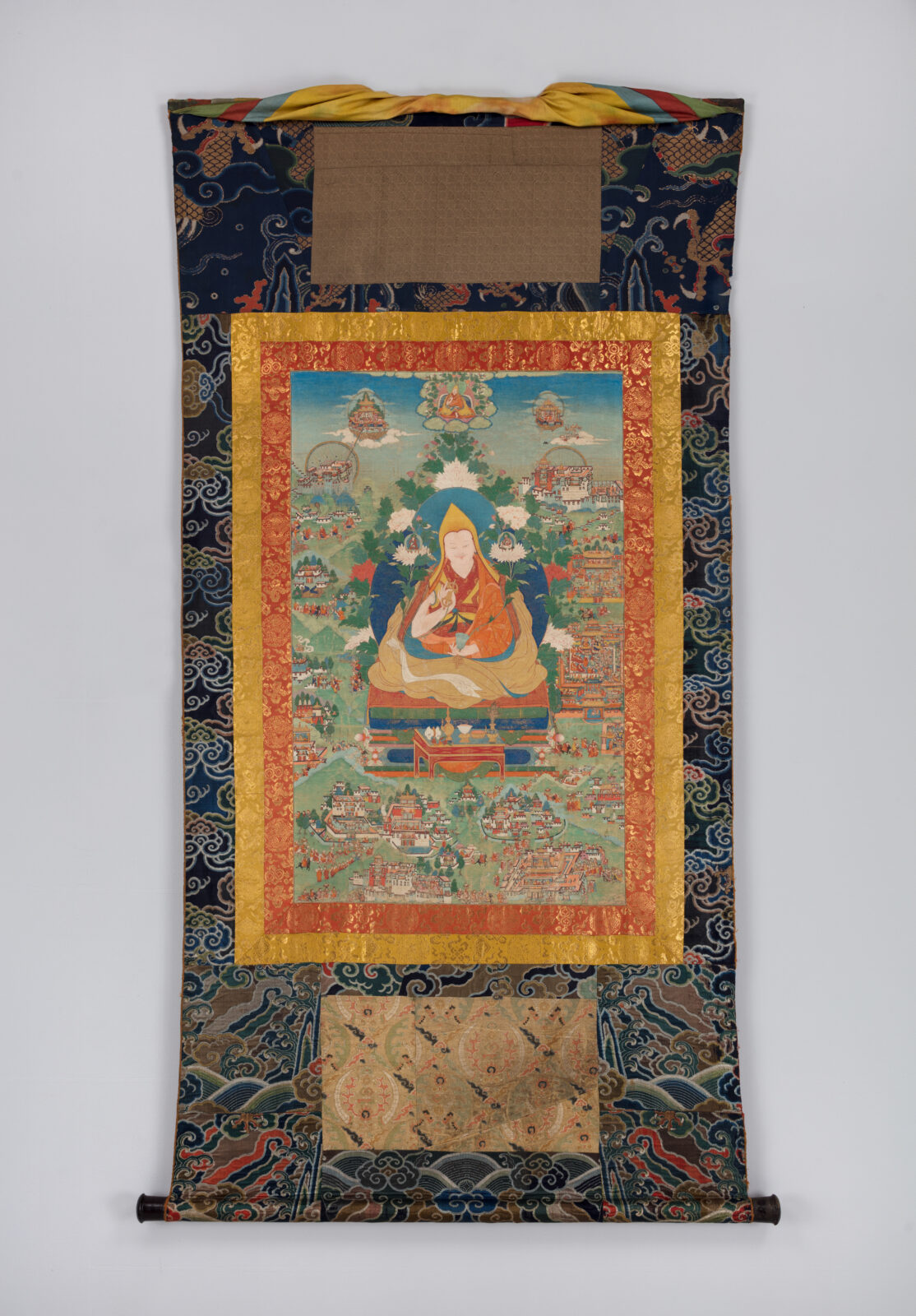
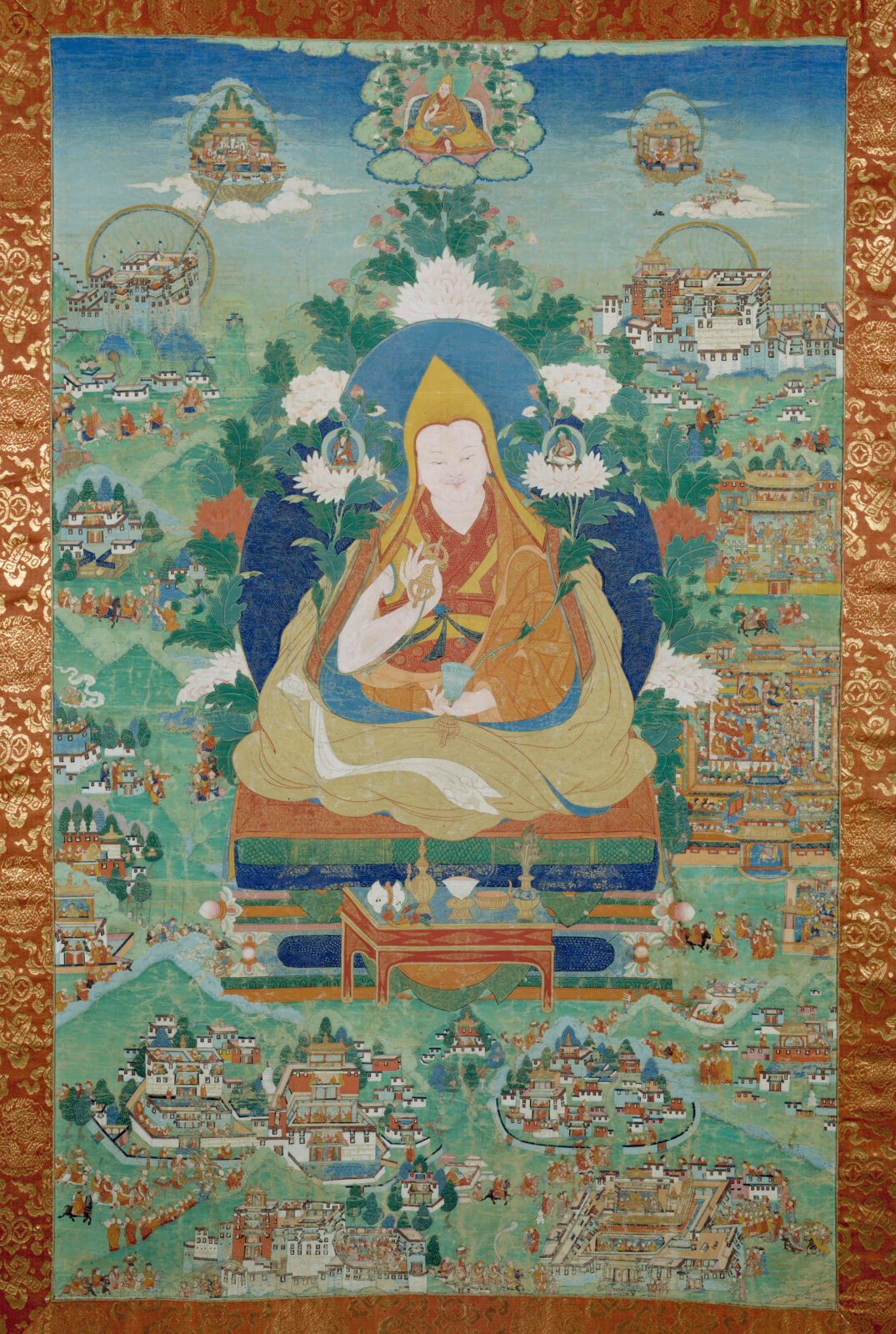
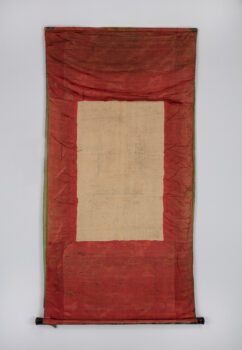
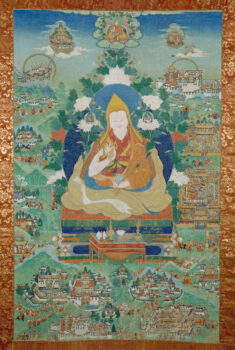
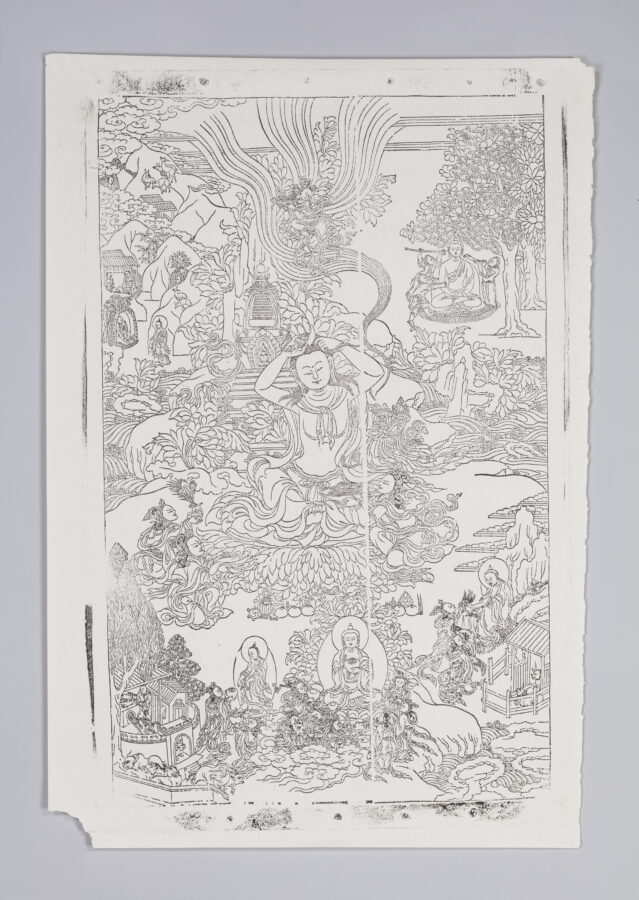
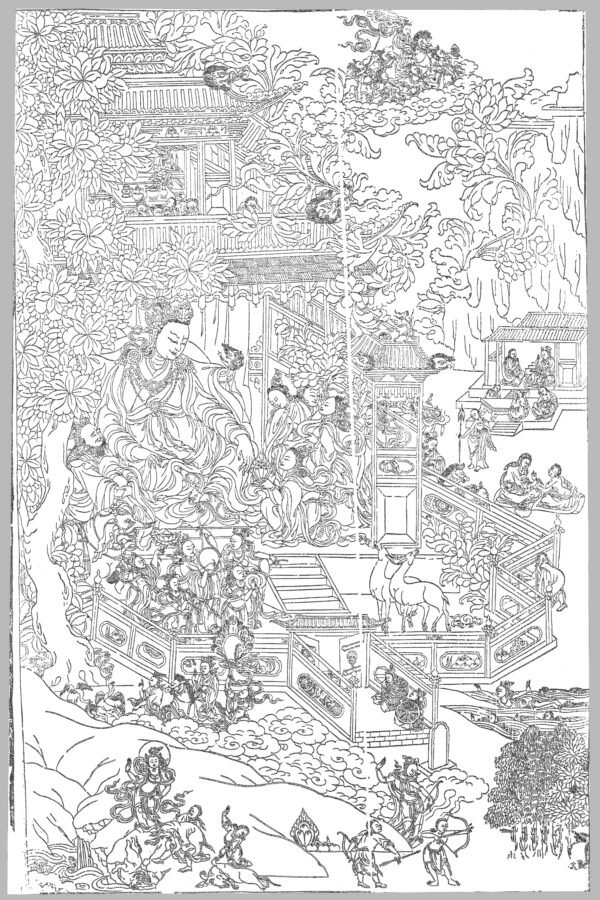
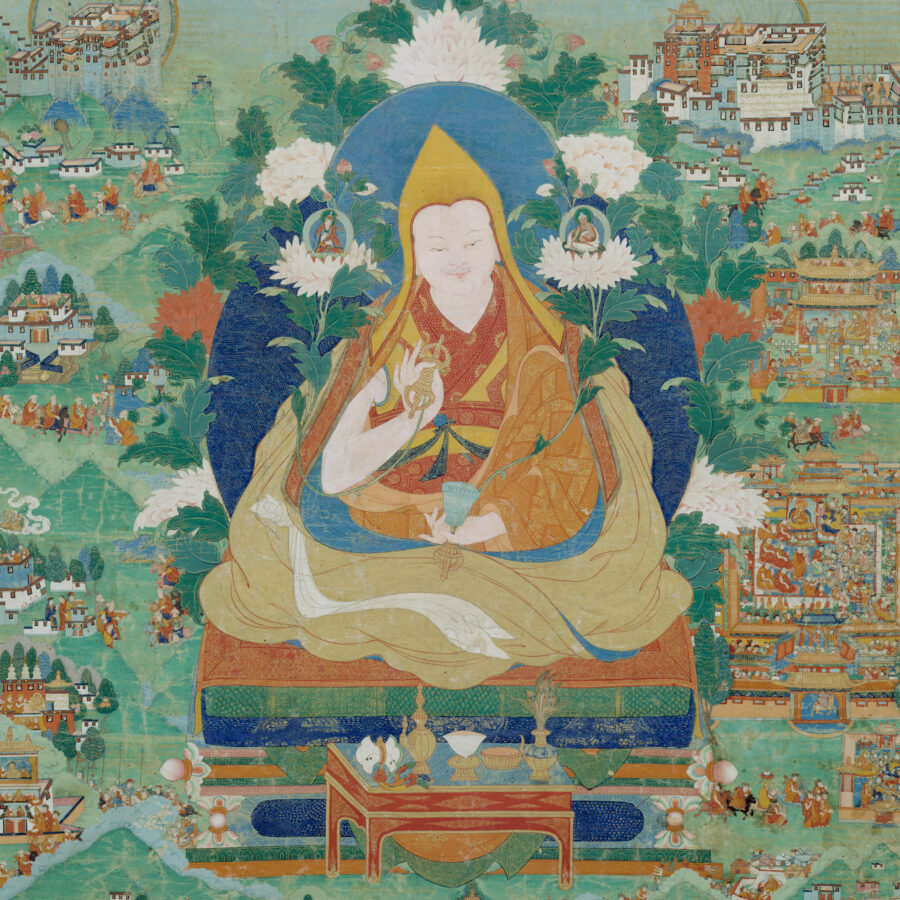
This exquisite painting tells the life story of Ngawang Lobsang Gyatso, the Fifth Dalai Lama (1617–1682). He is renowned for unifying Tibet with Mongolian military backing in 1642. The Great Fifth, as he is known, was integral in the creation of a theocratic government led by the Dalai Lamas, which lasted until 1959.The story begins at the top left with his miraculous descent, highlighted by rainbow light, from the Potala Pure Land of the bodhisattva Avalokiteshvara into his mother’s womb at Chonggye Castle in the southern U region of central Tibet. The biographical episodes continue counterclockwise, and each vignette identified with a golden inscription. Episodes include the construction of Potala Palace (bottom left), his visit to the Qing Emperor Shunzhi (r. 1644–1661) in Beijing in 1653 (center right), and his death (top right). This work is labeled as the twelfth painting on the left, and it is thus the twenty-third painting in a large set of lineage master depictions.

The hands form the shape of a wheel, symbolizing the “turning of the wheel of dharma,” a reference to teaching the Buddha’s doctrine.
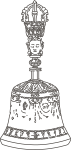
A bell is often paired with the vajra and is another implement used in tantric practices and an attribute of tantric masters and deities. It generally symbolizes wisdom, the feminine aspect of enlightenment, and its ring is said to be the sound of emptiness.
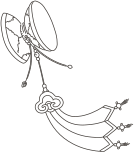
An implement used in tantric practices, the two halves of this drum symbolize the union of the two aspects of enlightenment. When paired with a bell, it represents the male aspect of enlightenment, and its drumming is the sound of the bliss of realizing the true nature of reality. Large hand drums are used in the Tibetan practice of “cutting the ego.” Their sound represents impermanence.

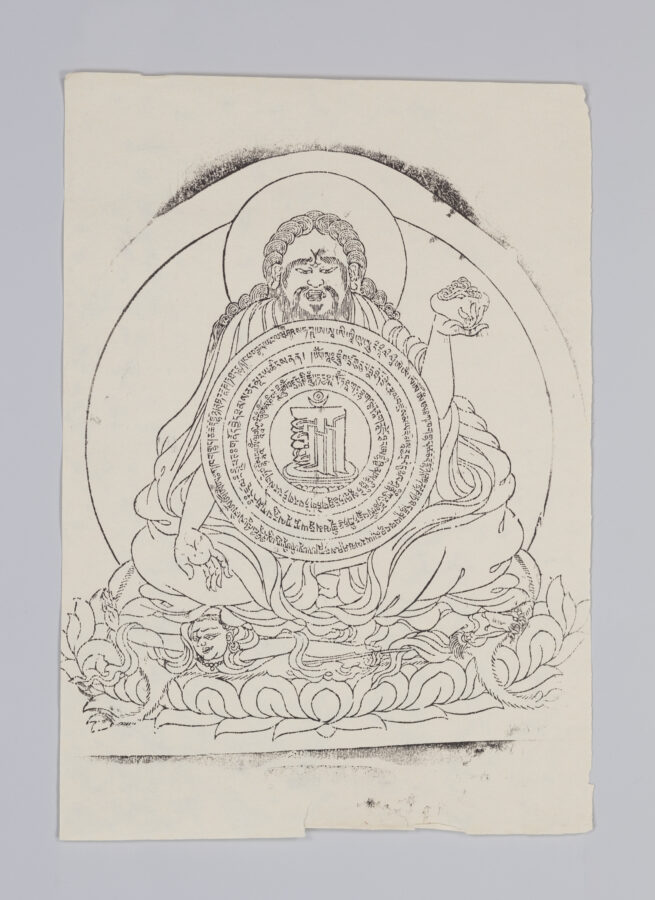
A vajra is a ritual scepter used in tantric practices and an attribute of tantric masters and deities. It generally symbolizes method, the male aspect of enlightenment.
In Buddhism merit is accumulated through engaging in positive actions that lead to positive results, such as better rebirths. Buddhists gain merit by making offerings, donating to those in need, reciting mantras, and other good deeds.
The transmission of teachings from one generation to the next, from teacher to student, traced all the way back to the Buddha without interruption. A complete lineage is essential in Tantric Buddhist practices as it makes the blessings of the teaching more powerful.
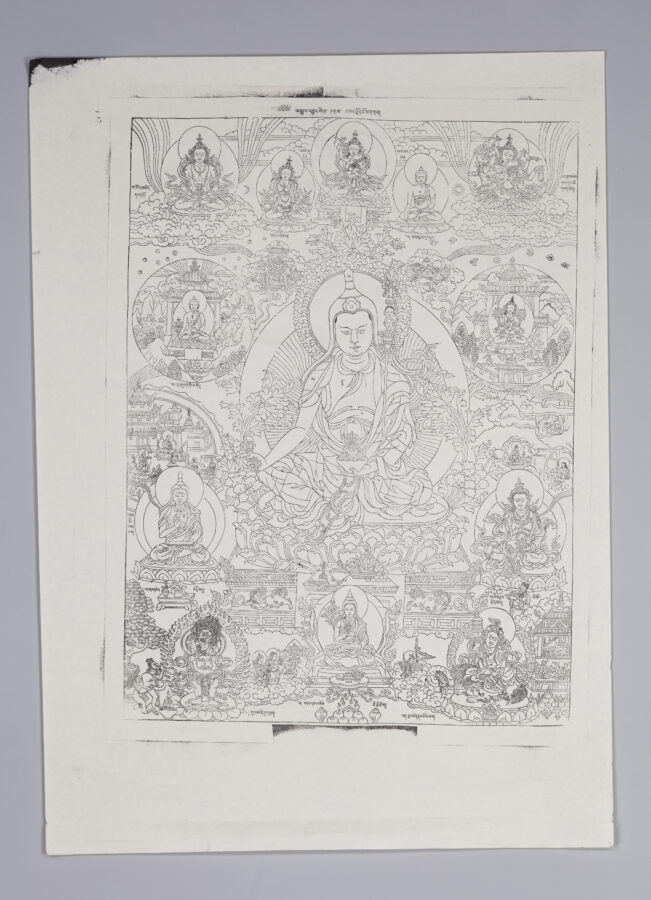
Himalayan art includes portraits of legendary and historical humans, including accomplished religious teachers (lamas), the Buddha’s original disciples (arhats), and spiritually accomplished tantric masters (mahasiddhas).
Today, Tibetans primarily inhabit the Tibetan Plateau, situated between the Himalayan mountain range and the Indian subcontinent to the west, Chinese cultural regions to the east, and Mongolian cultural regions to the northeast. During the 7th to 9th century, Tibetan rulers expanded their empire across Central Asia, and established Buddhism as the state religion.

Get the latest news and stories from the Rubin, plus occasional information on how to support our work.