Western Himalayas
ca. 12th–13th century
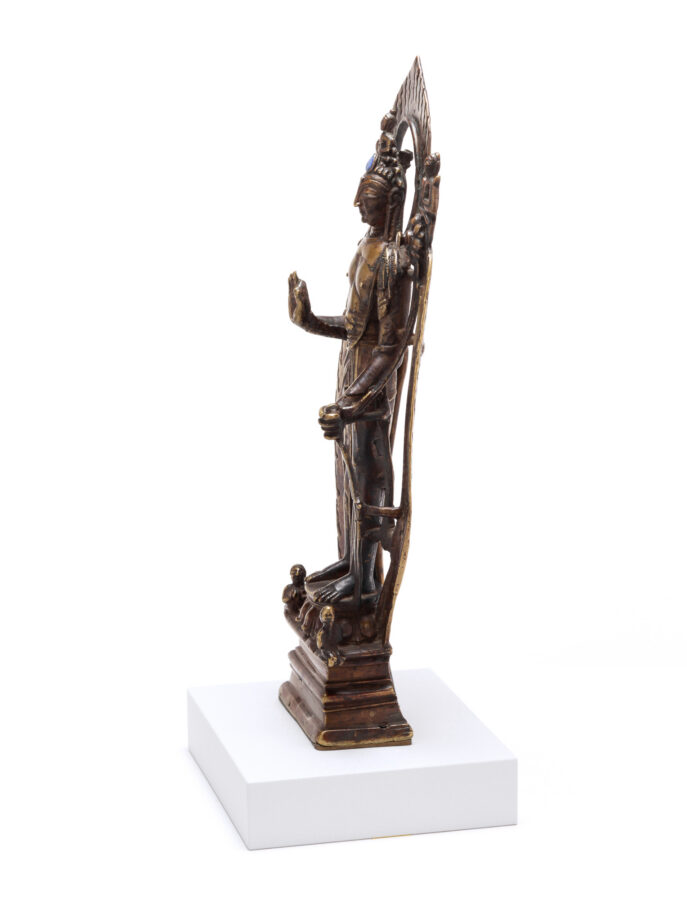
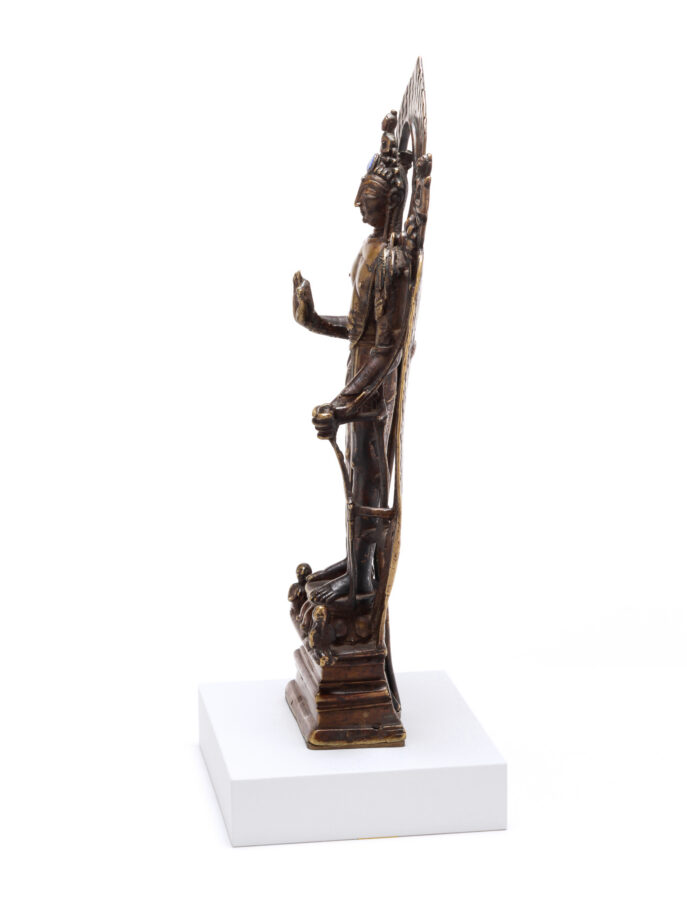

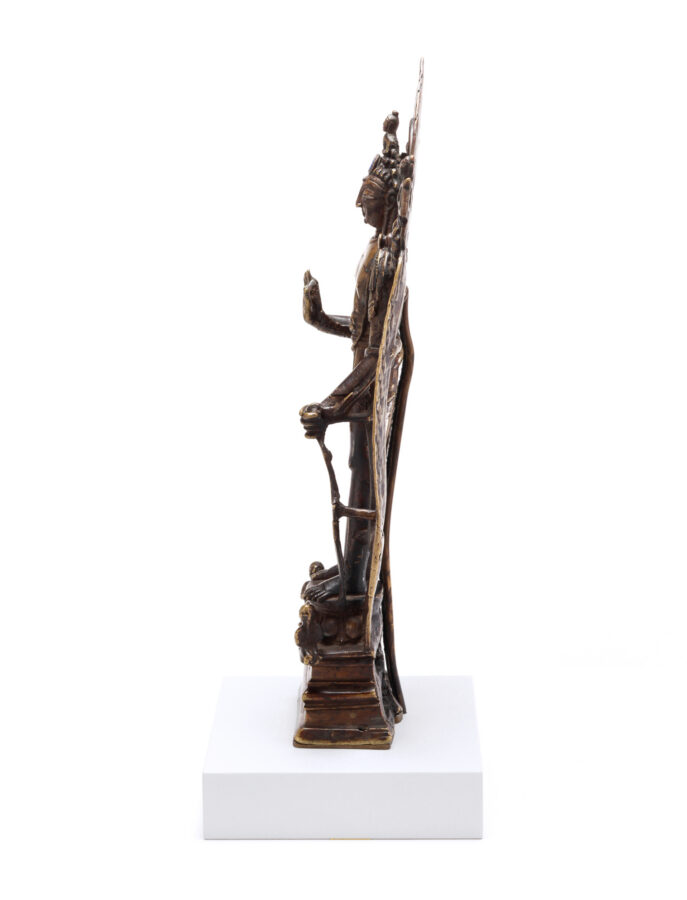
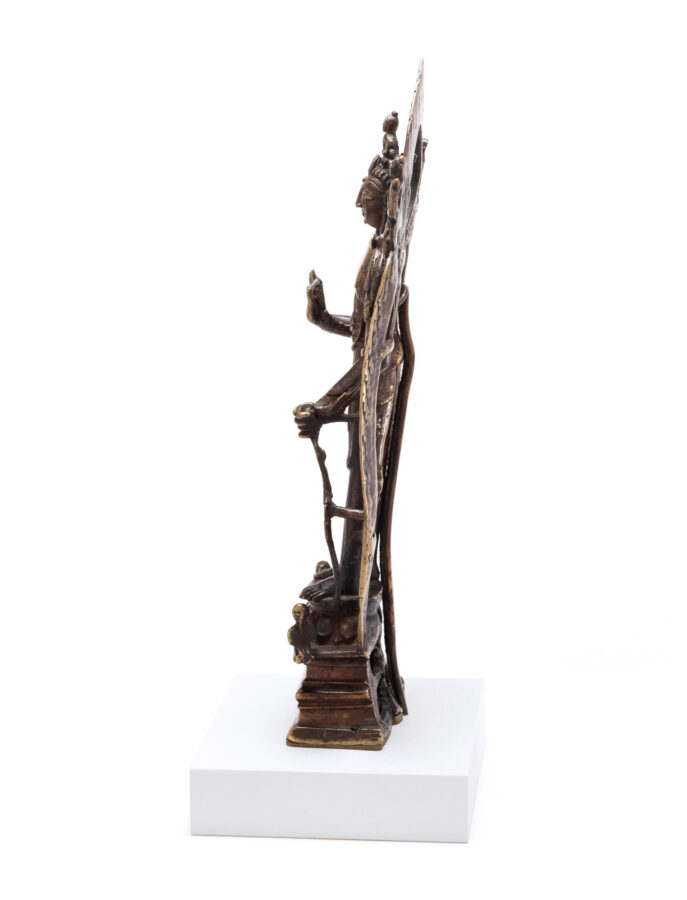
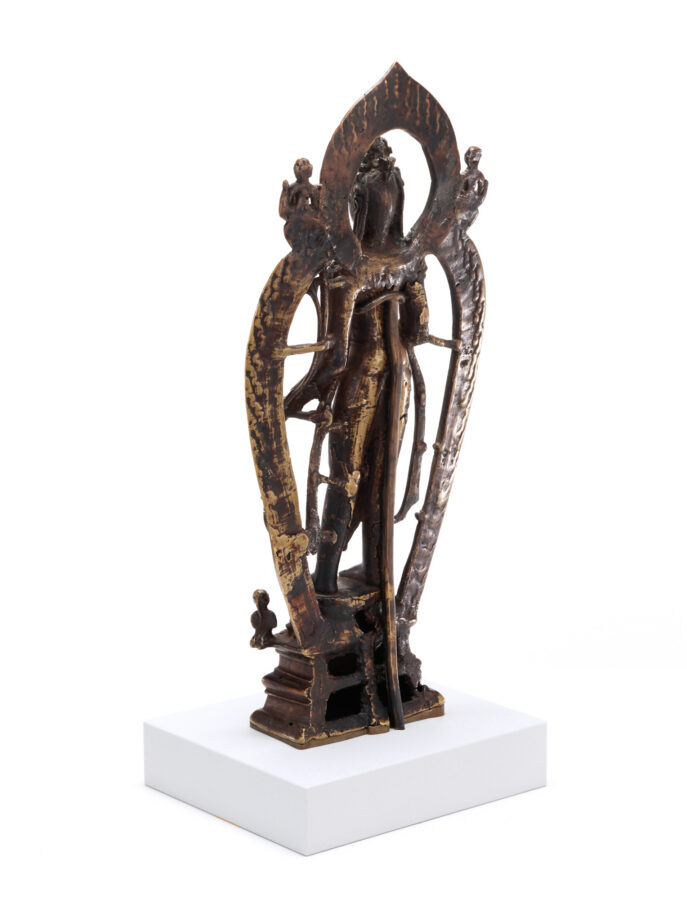
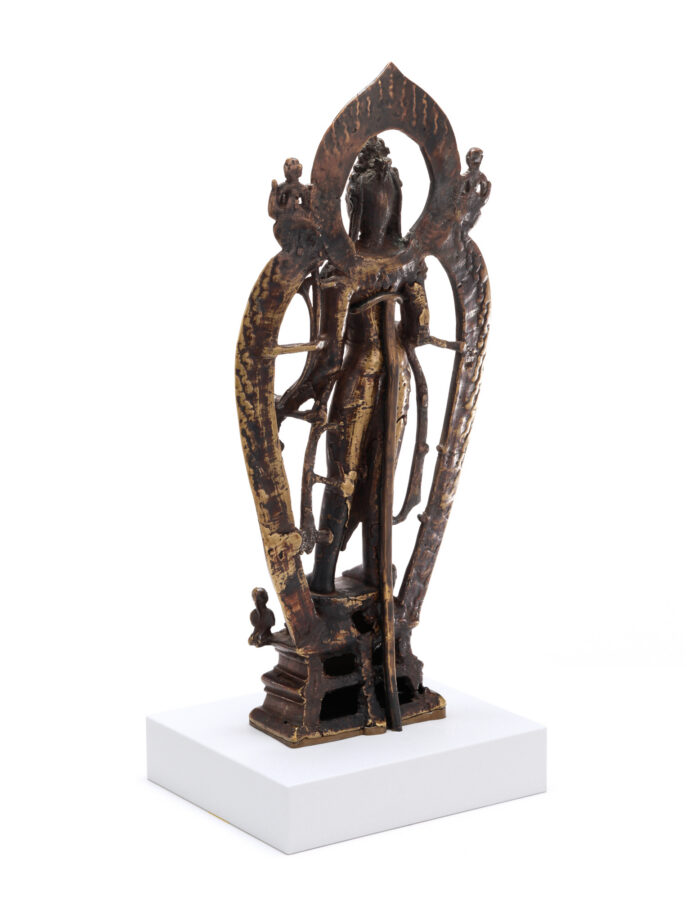
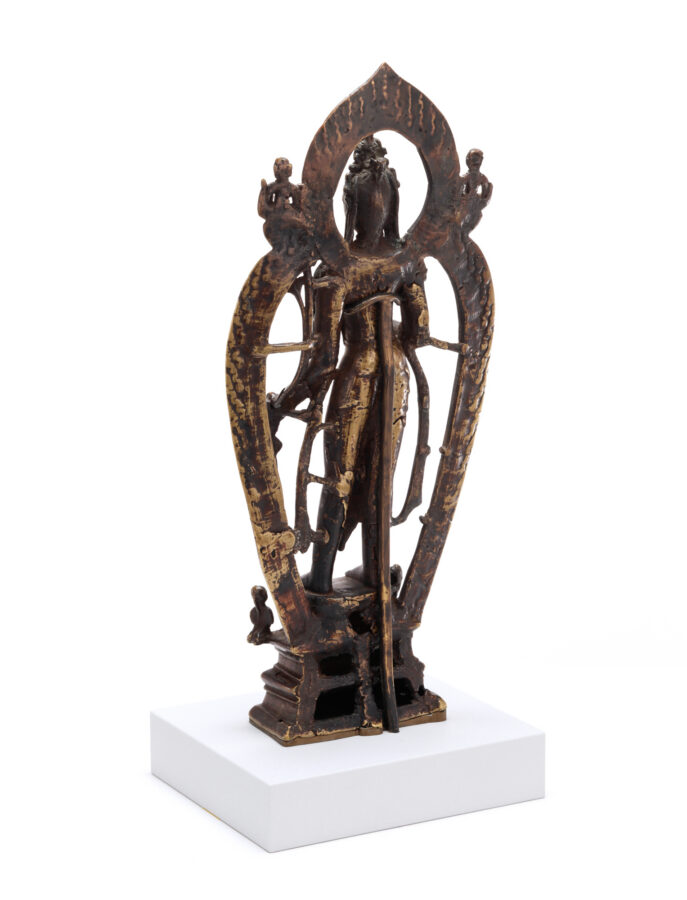
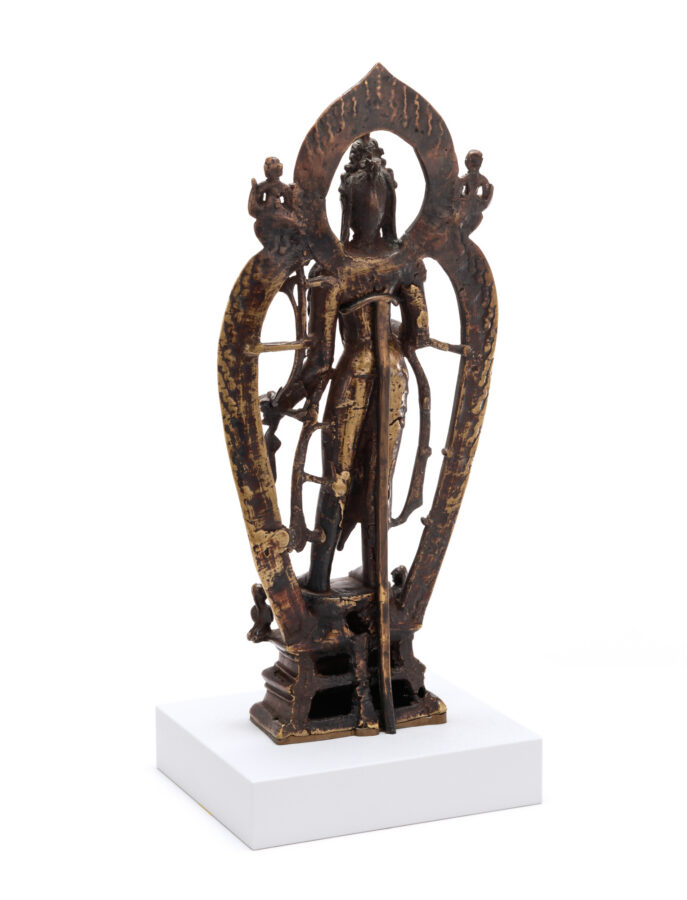
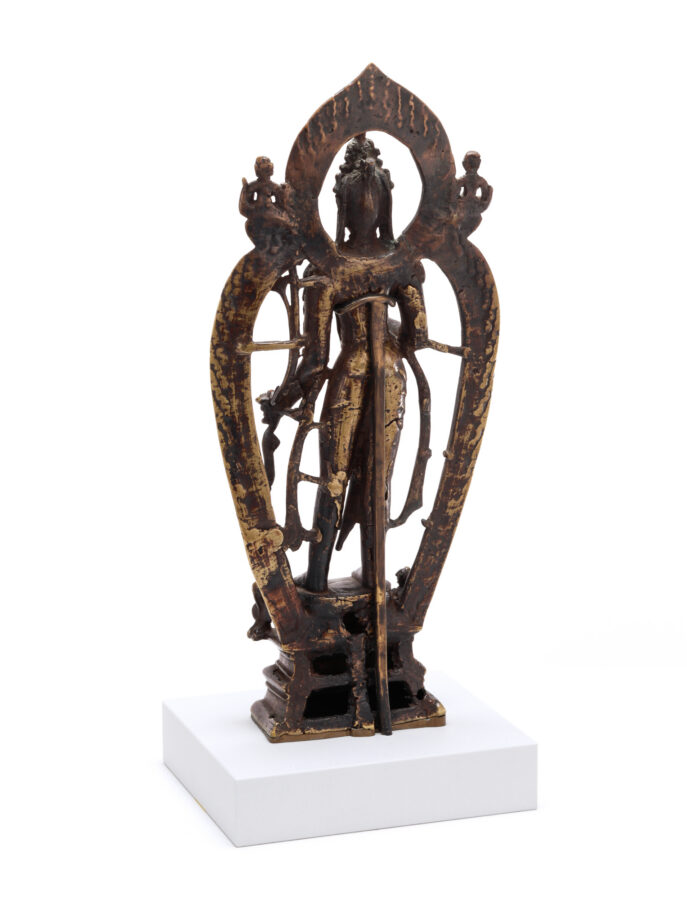
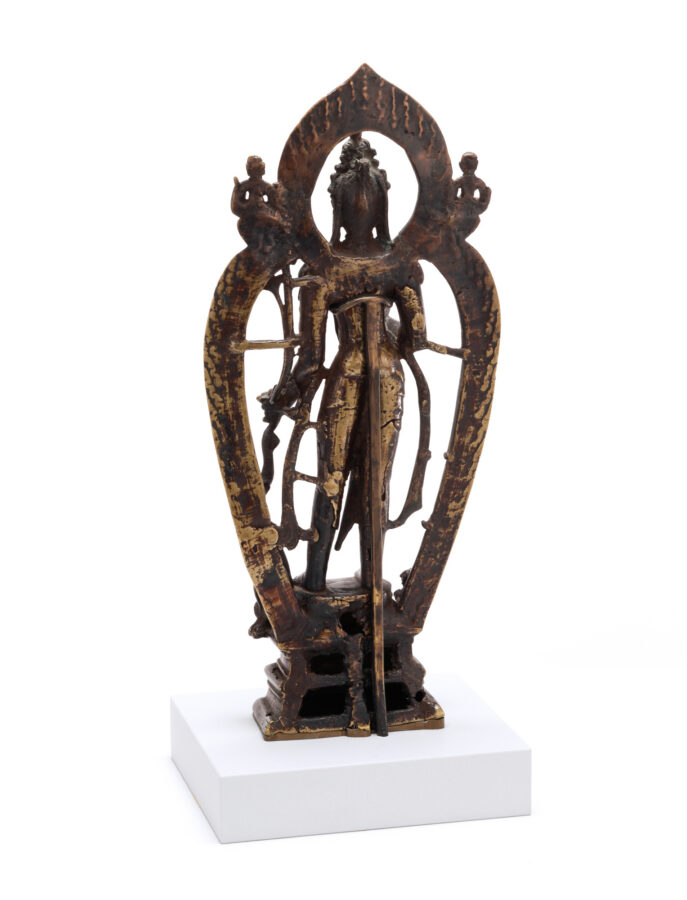
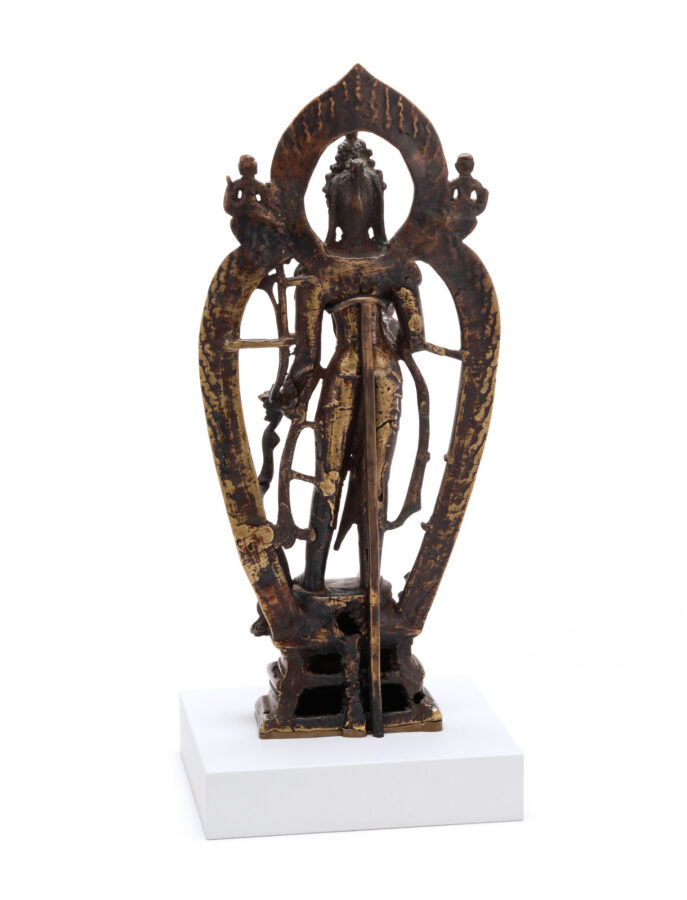
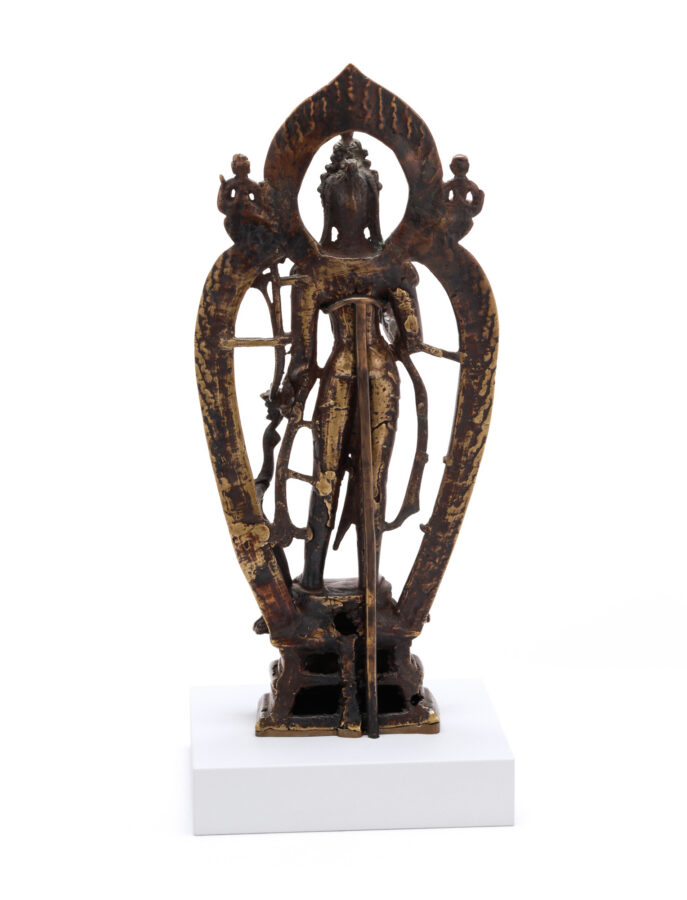
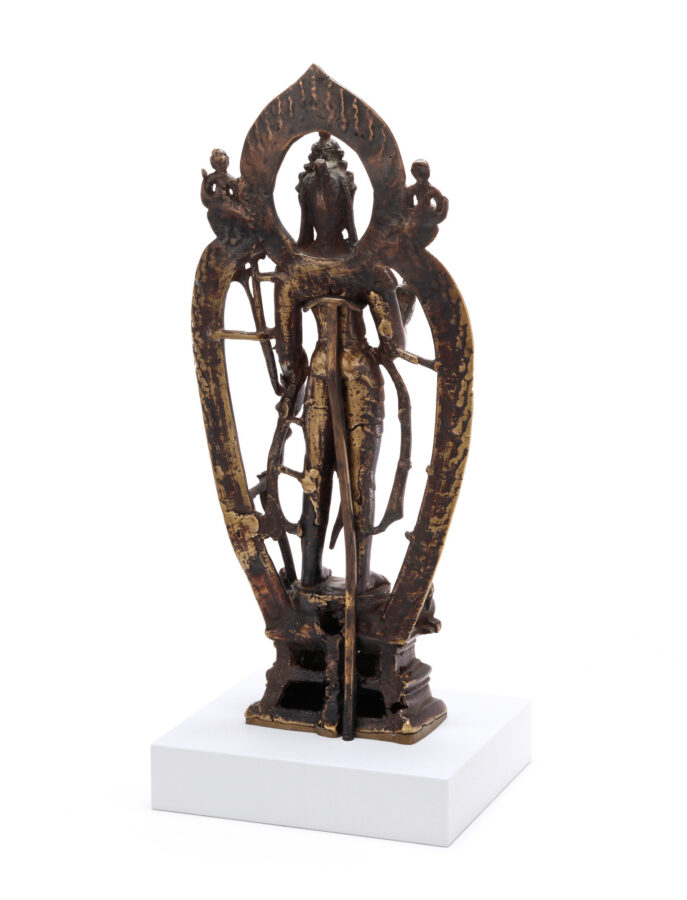
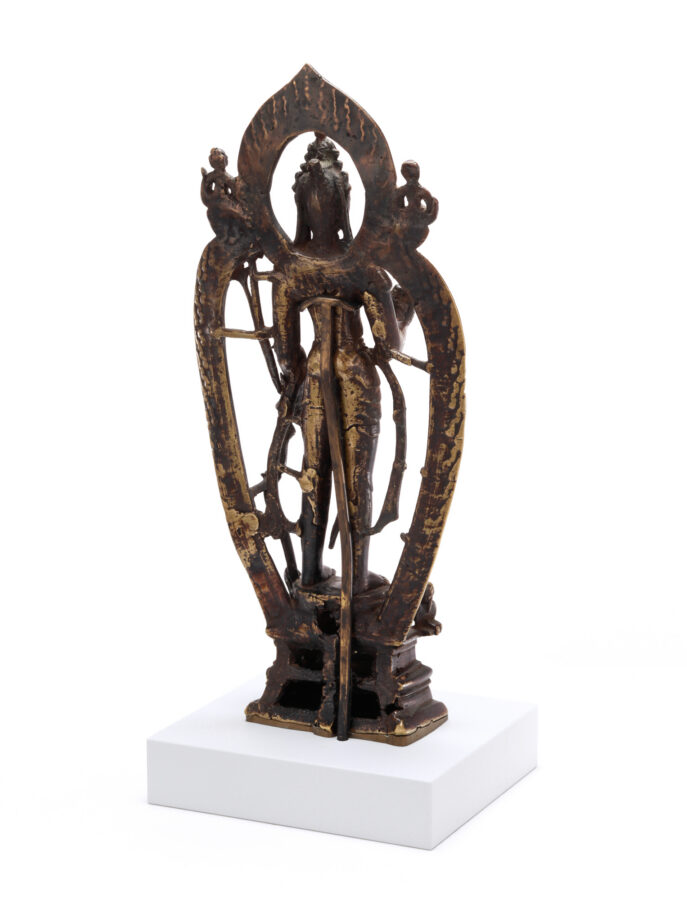
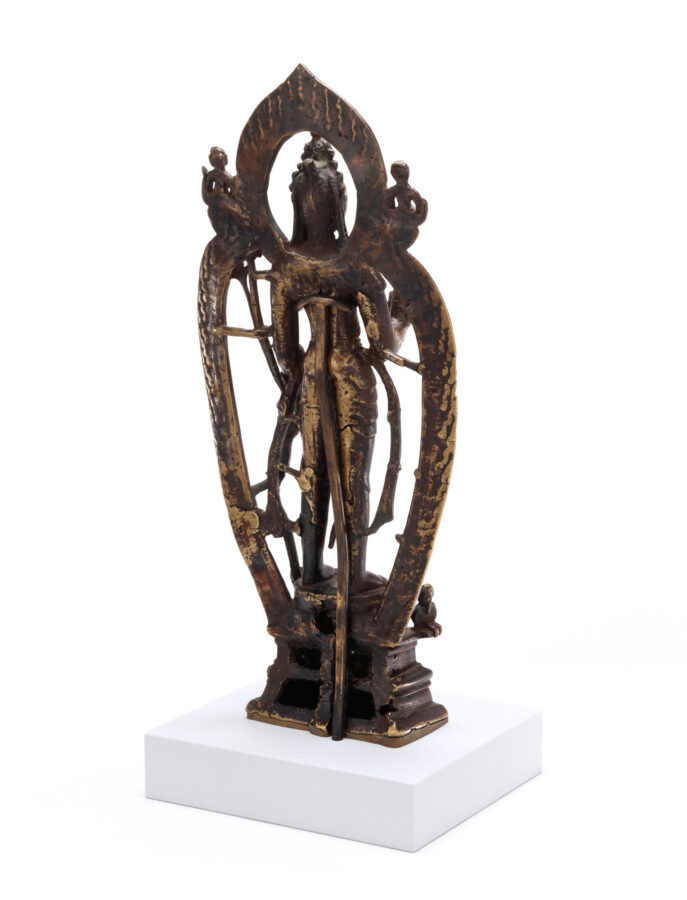
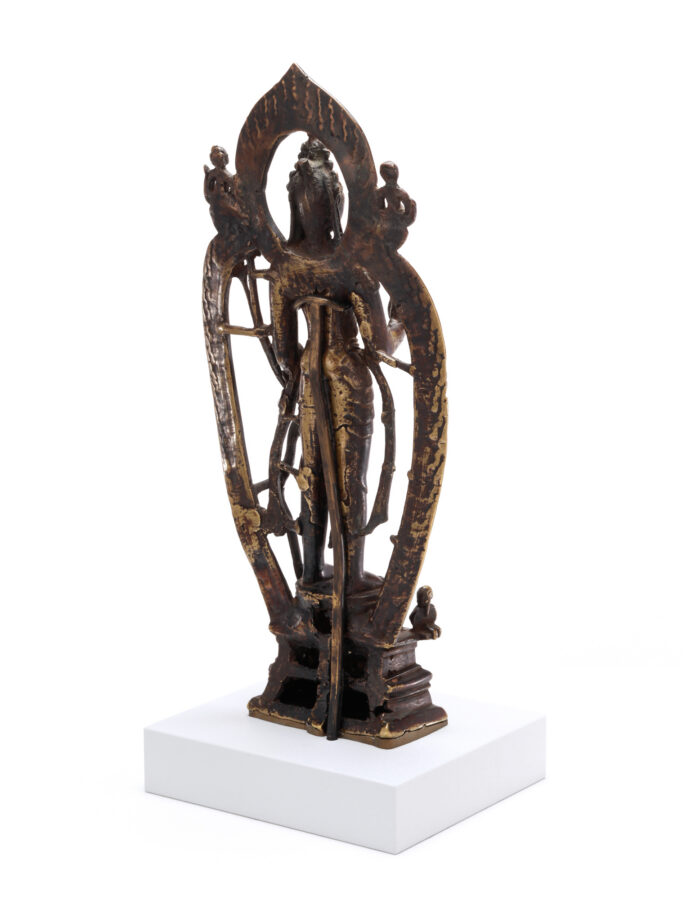
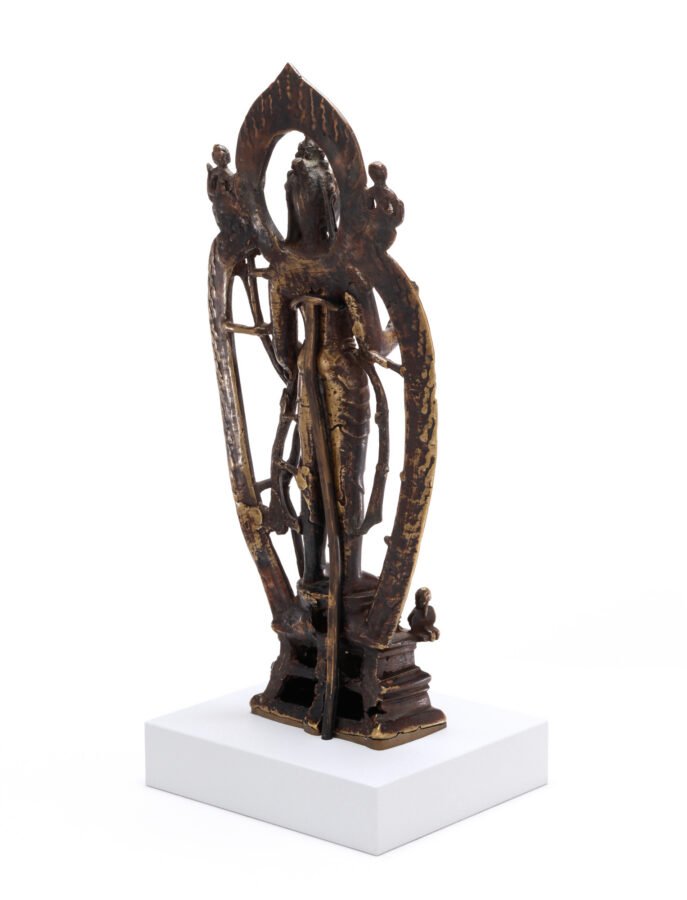
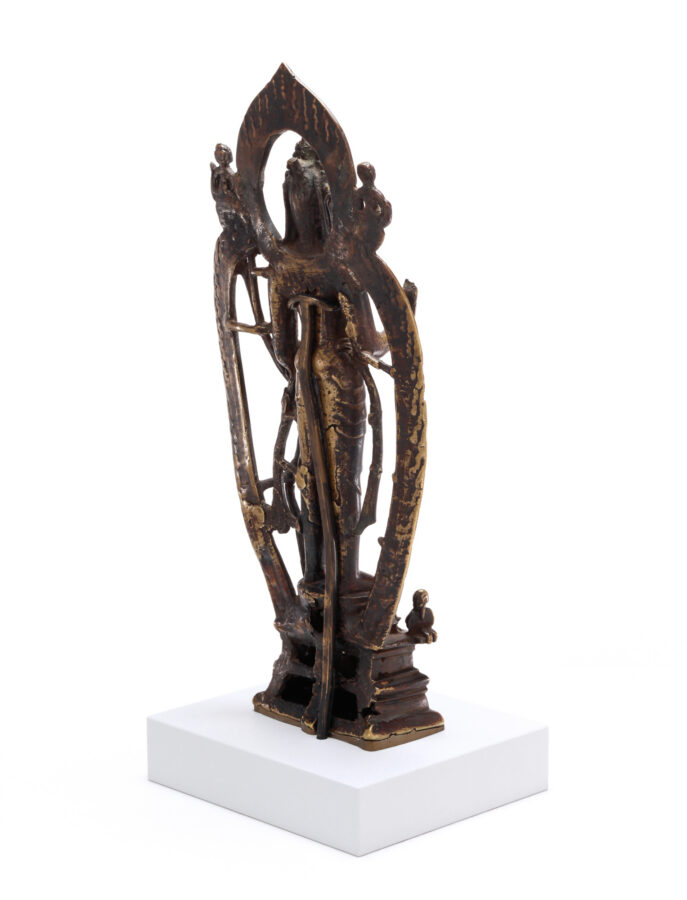
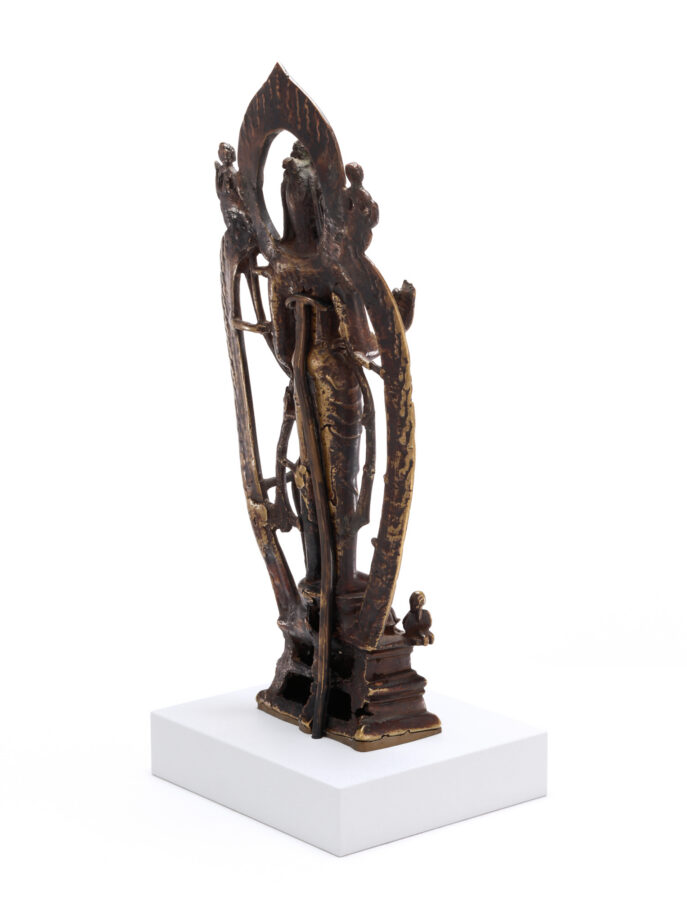
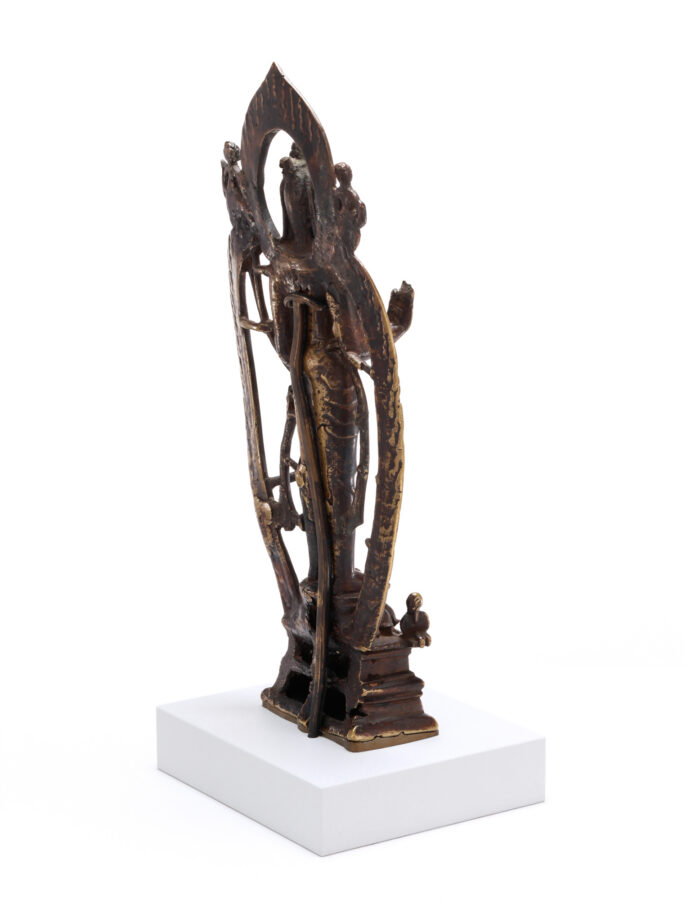
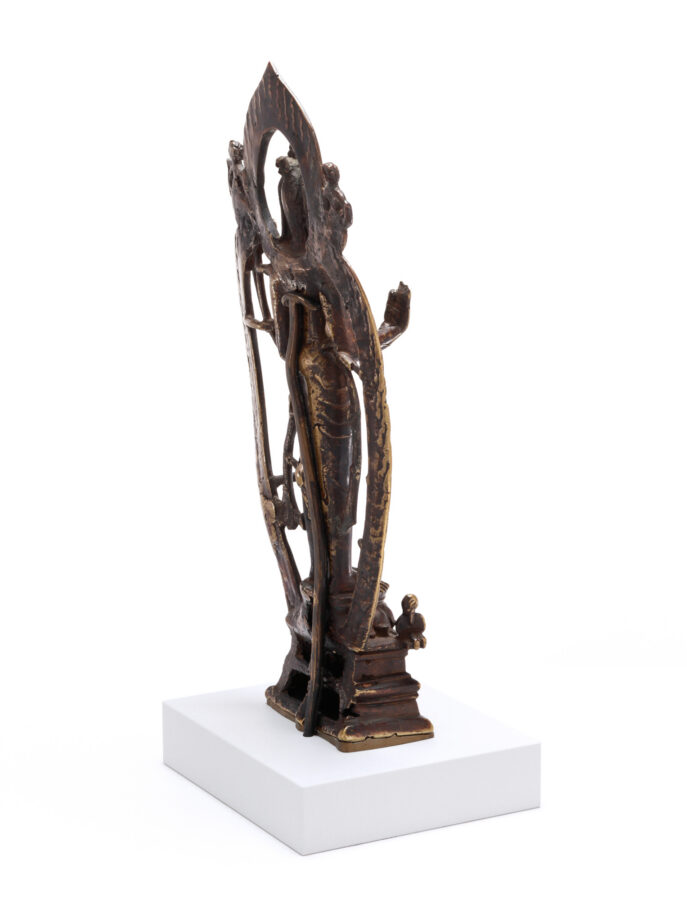
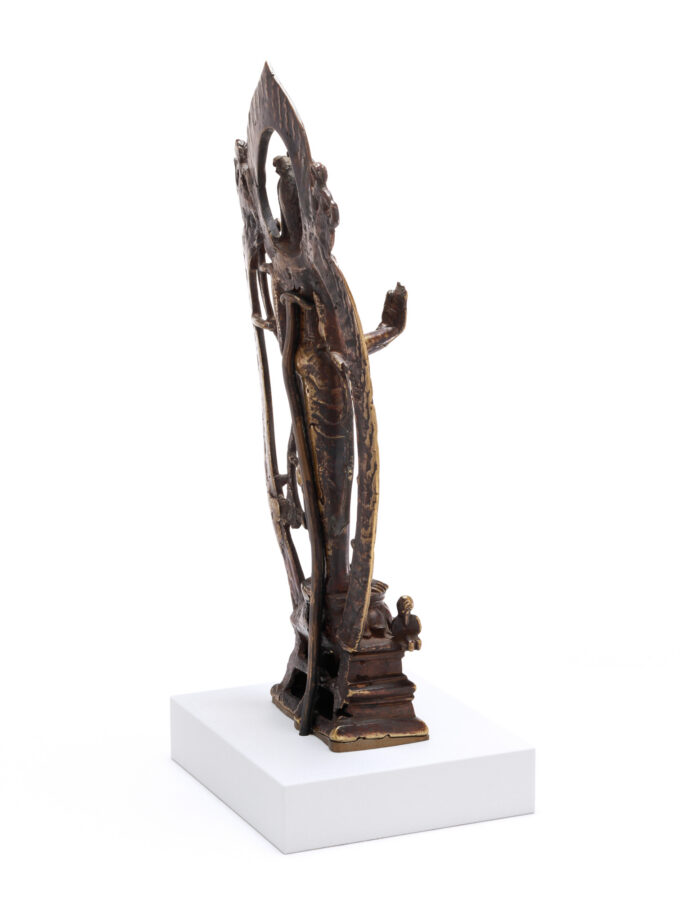
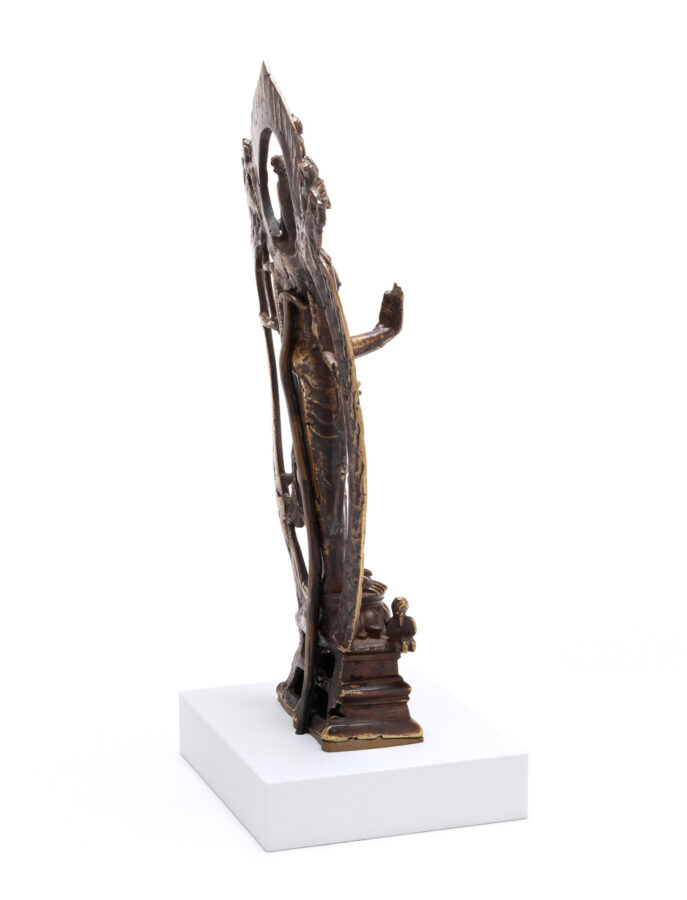
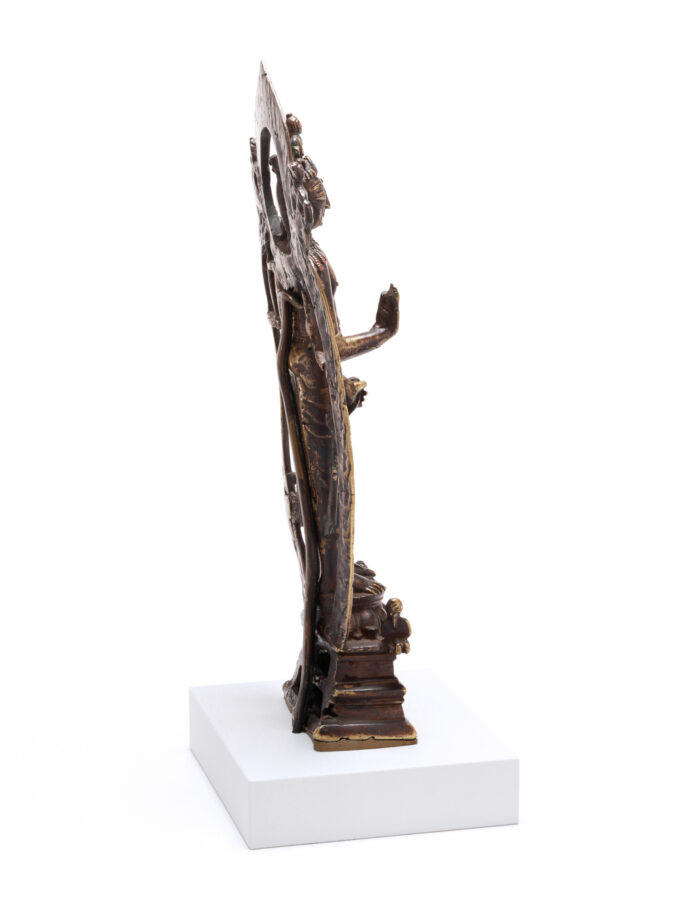
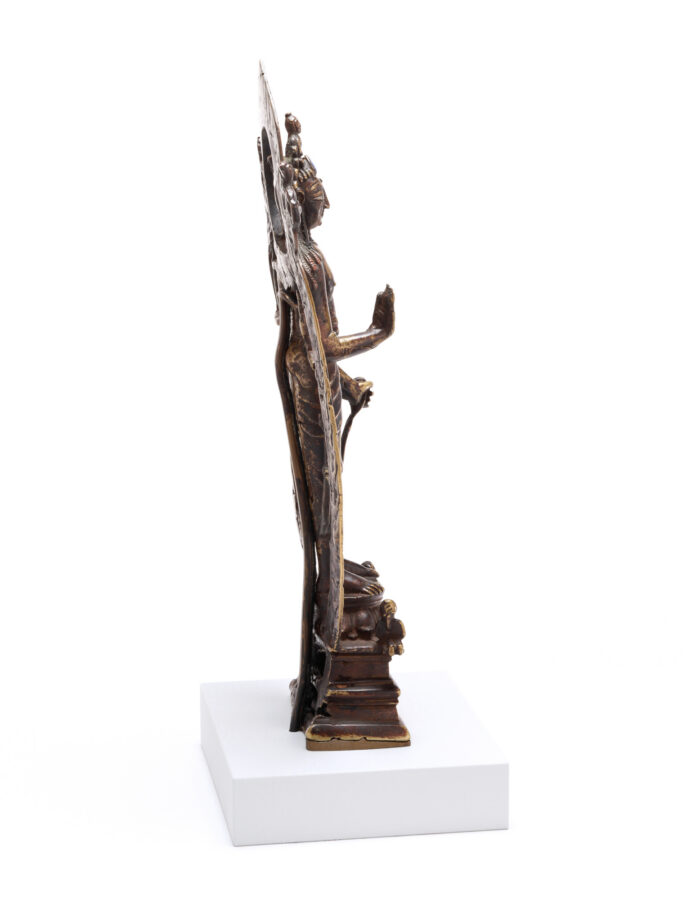
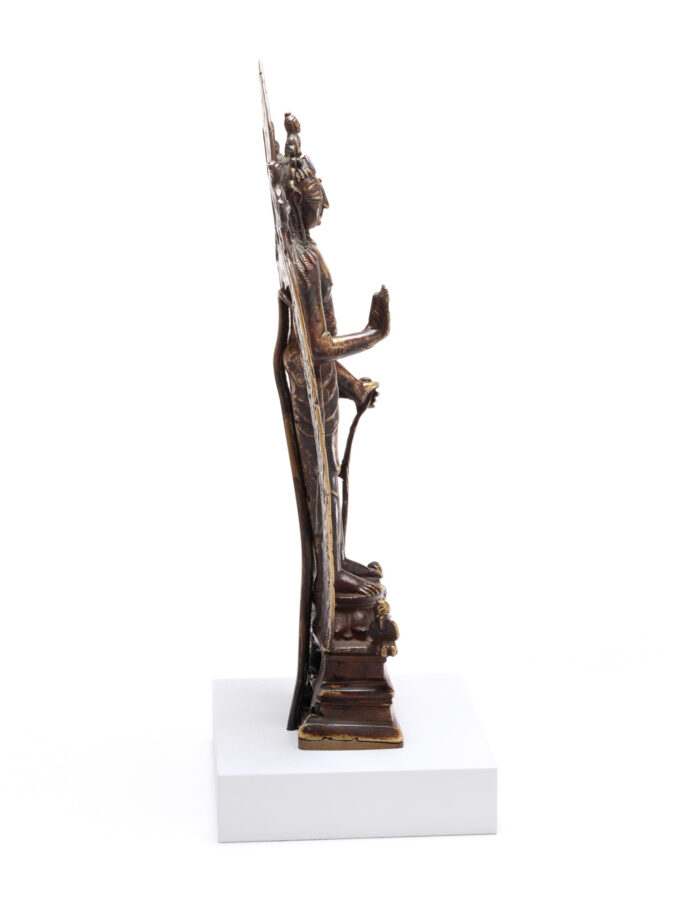
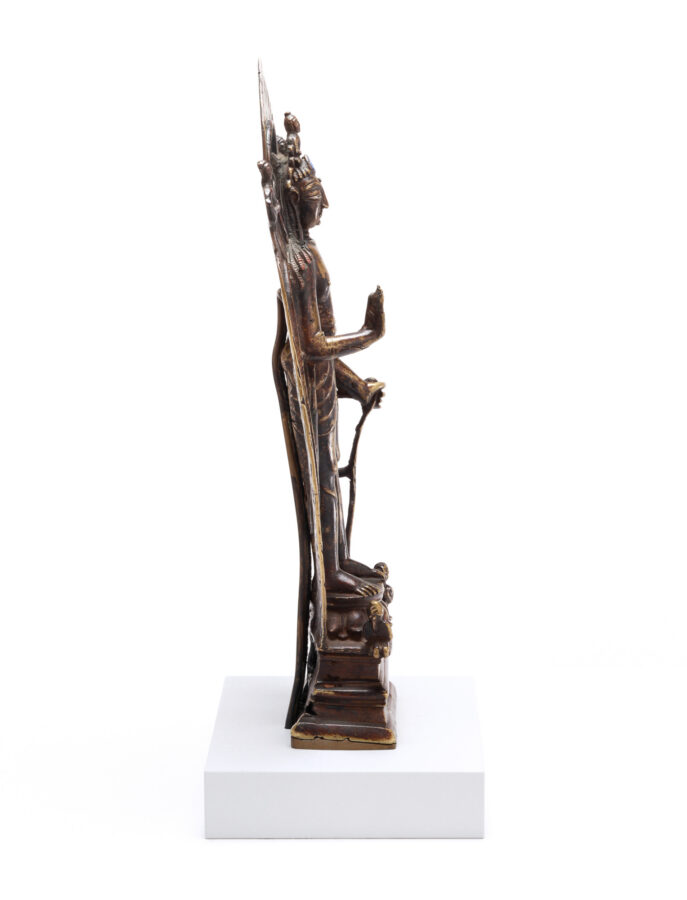
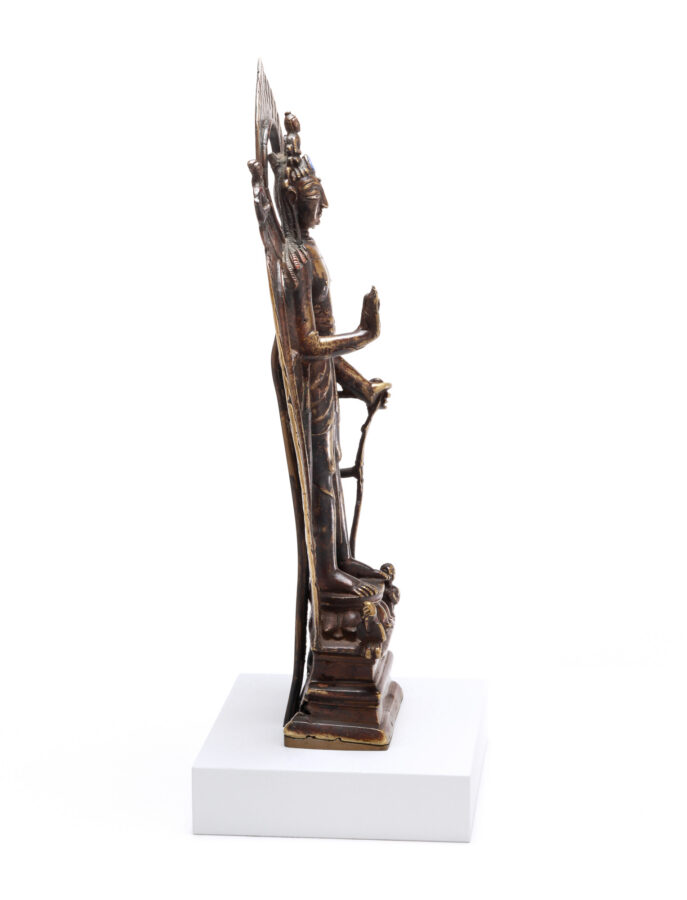
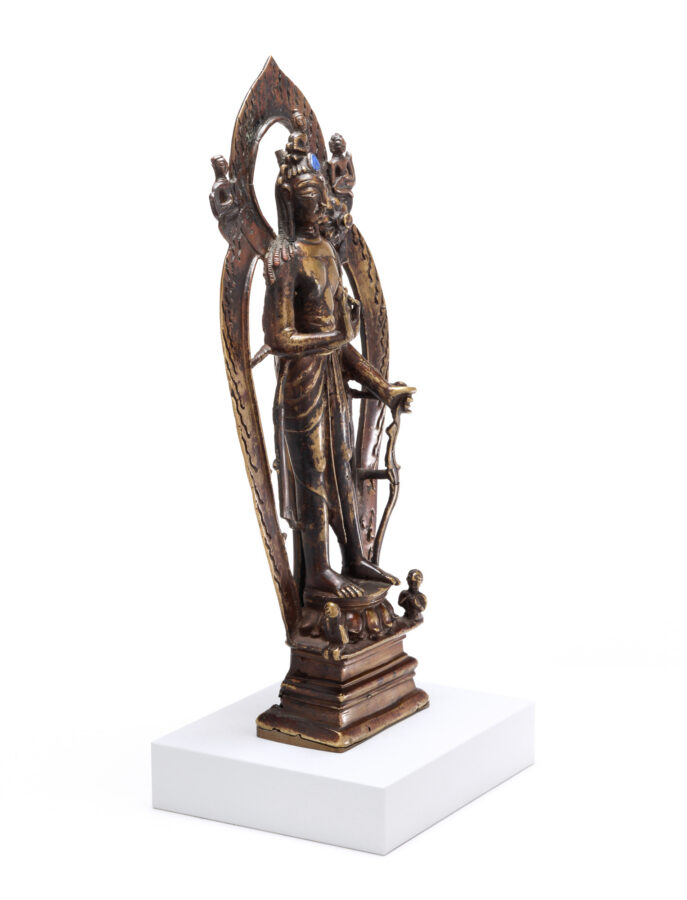
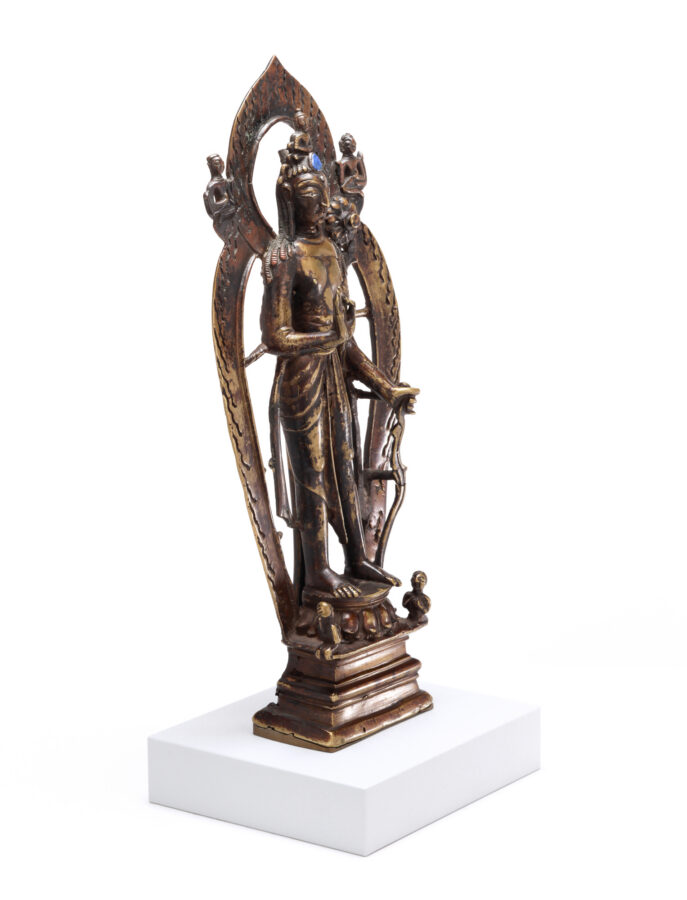
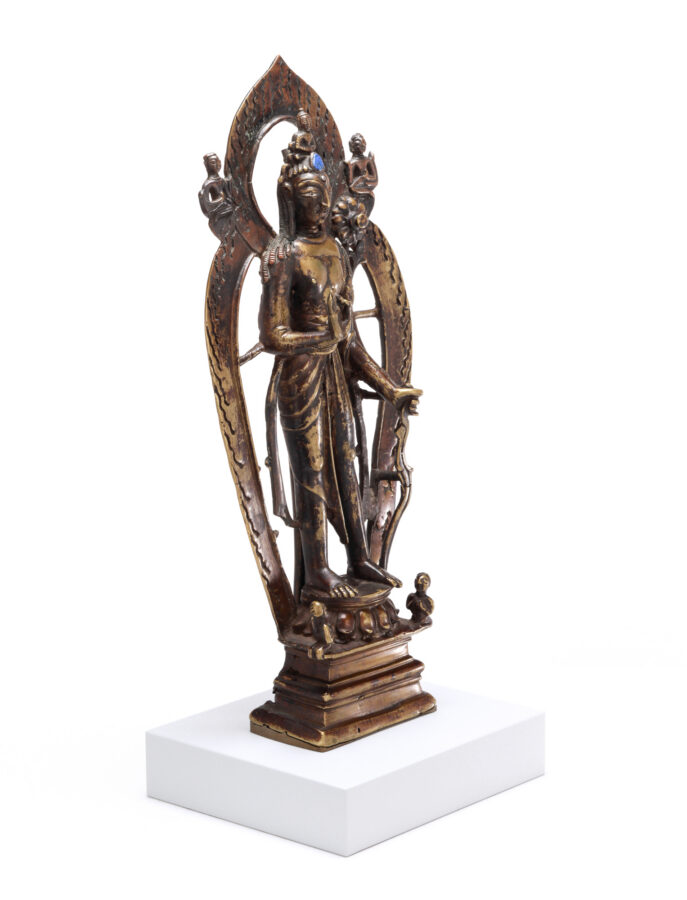
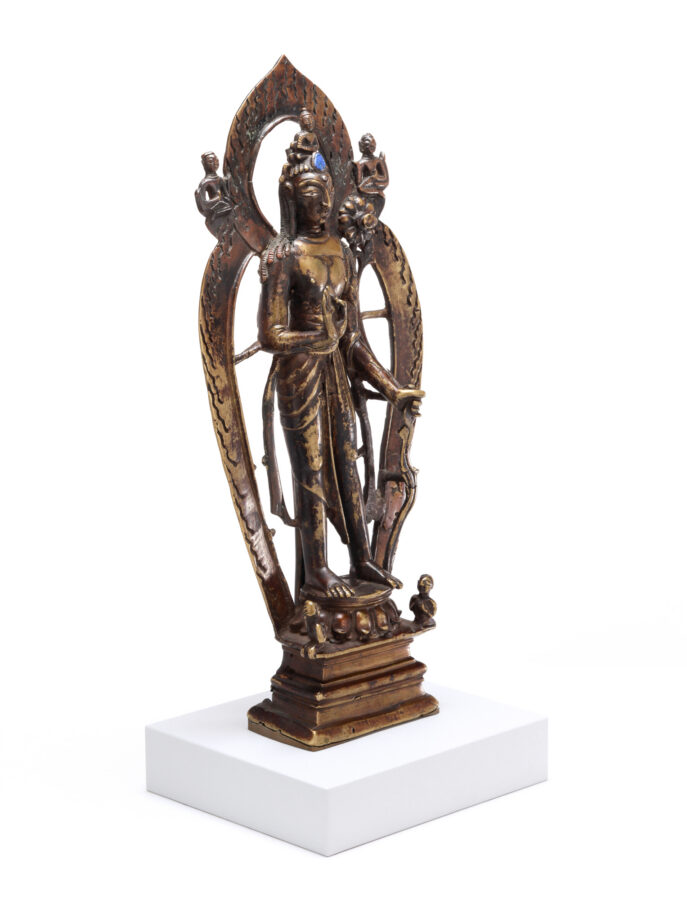
Western Himalayas
ca. 12th–13th century
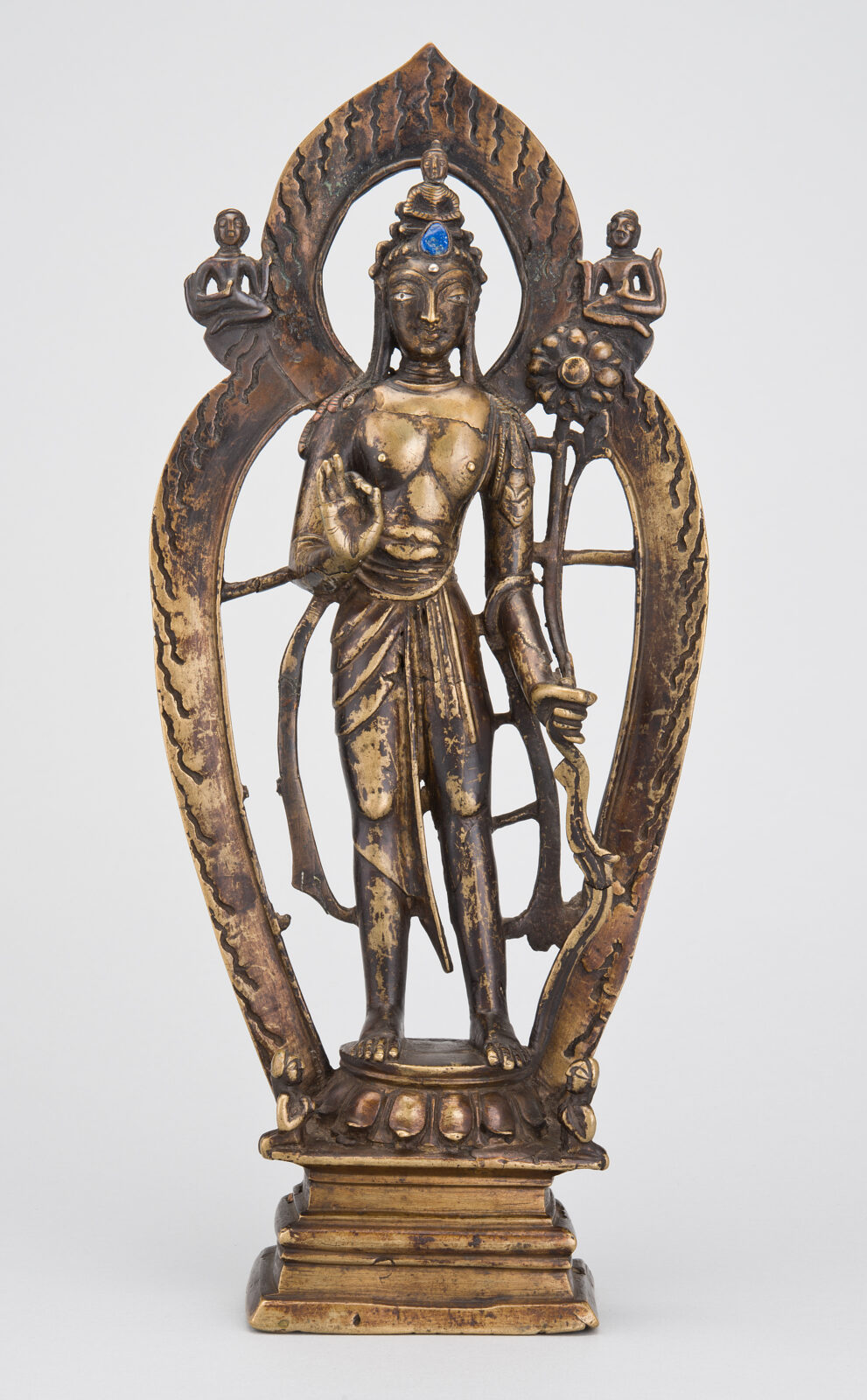
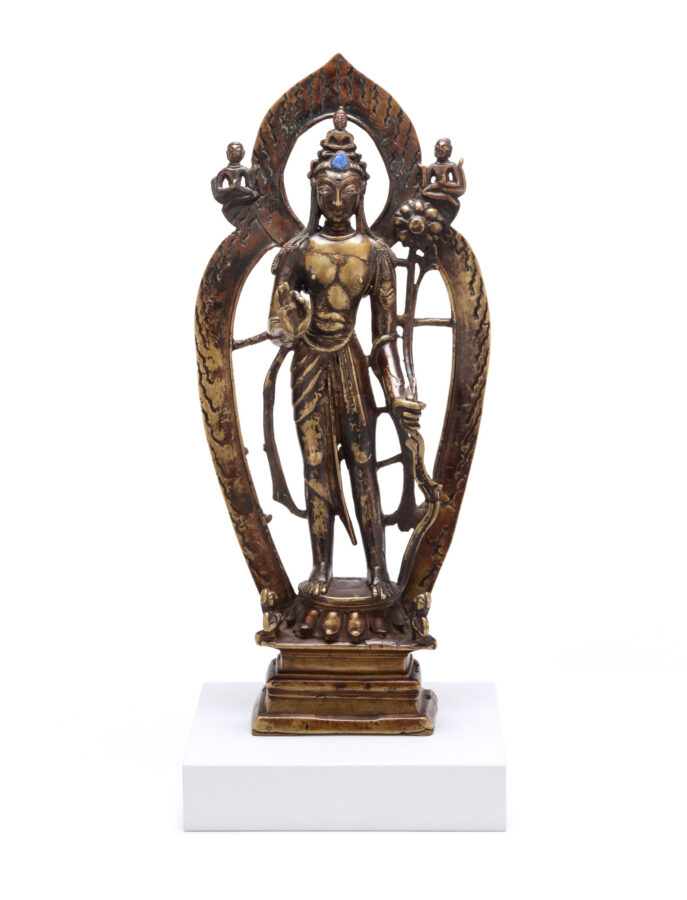
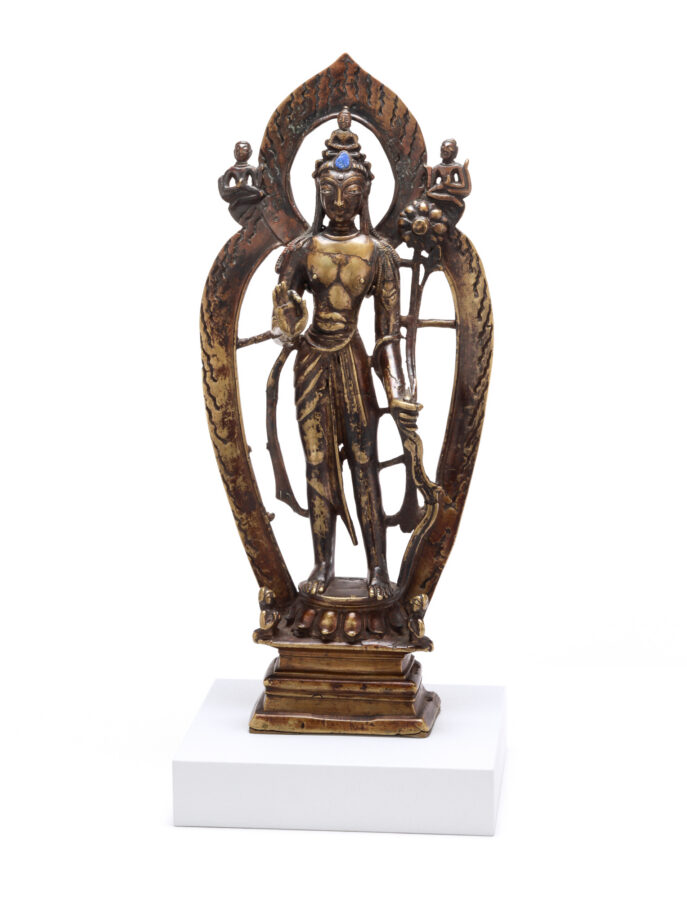
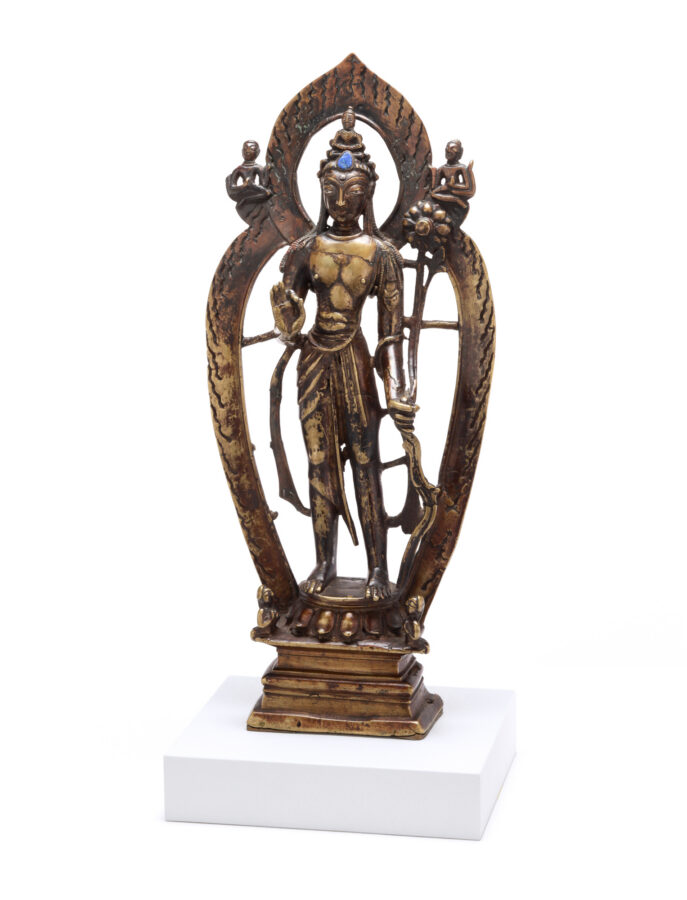
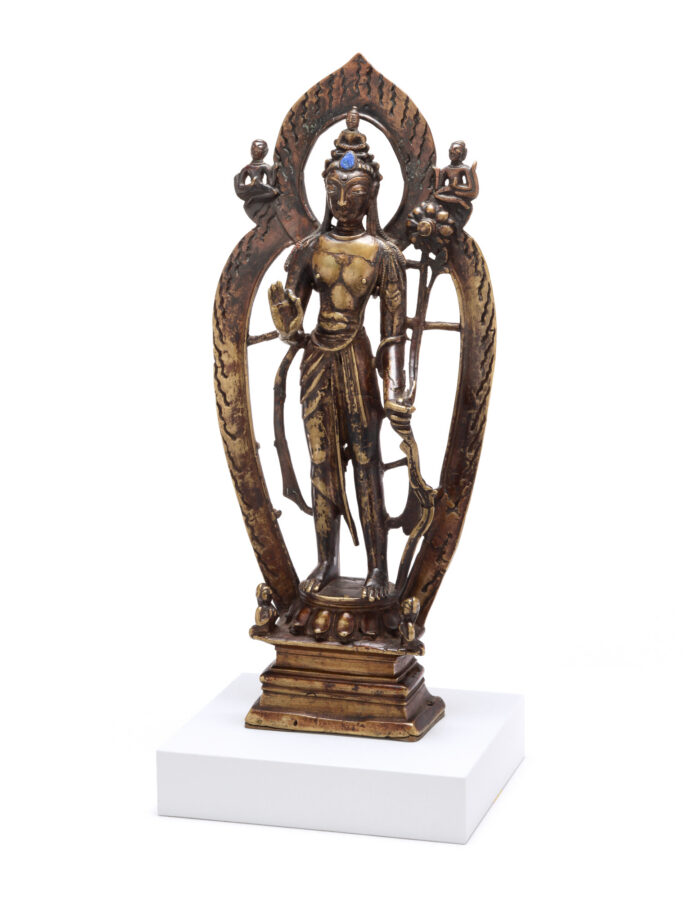
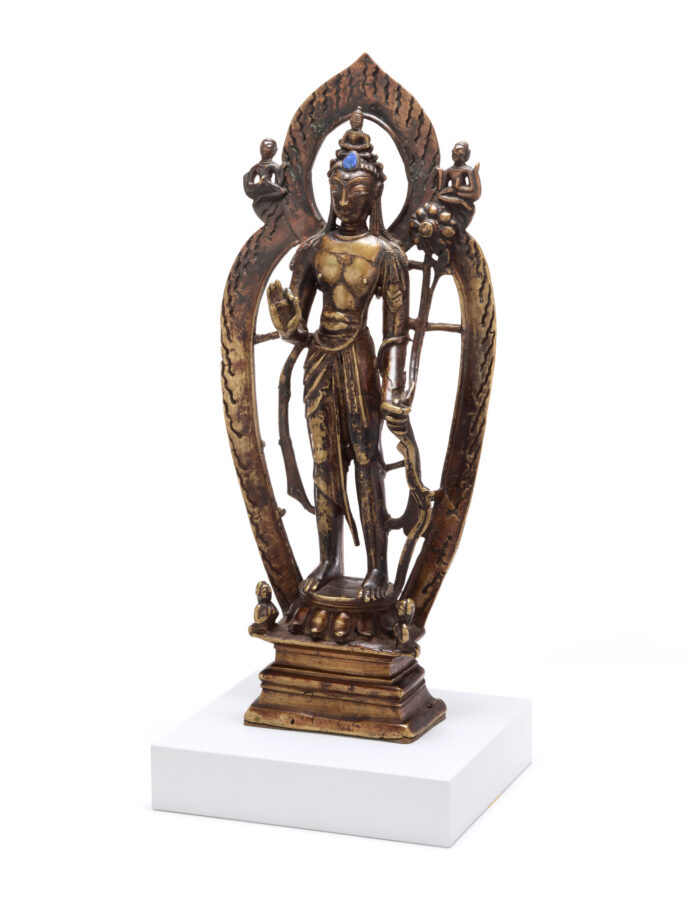
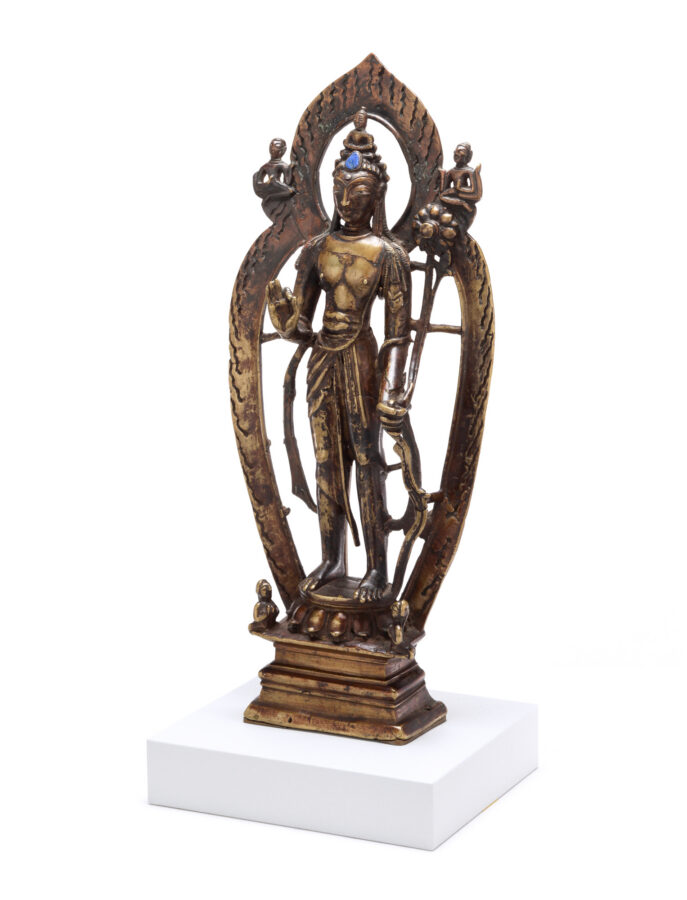
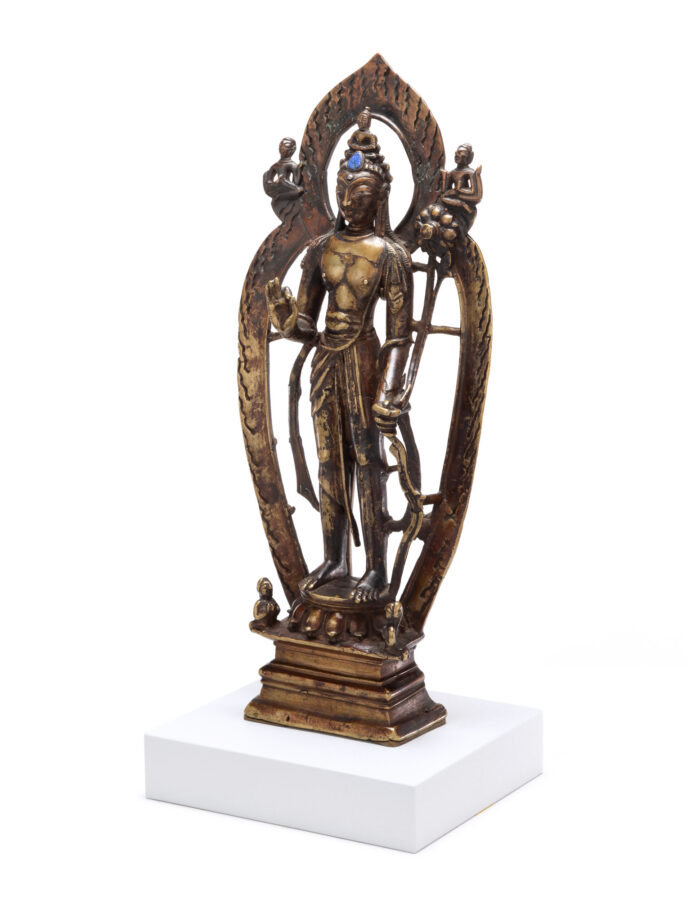
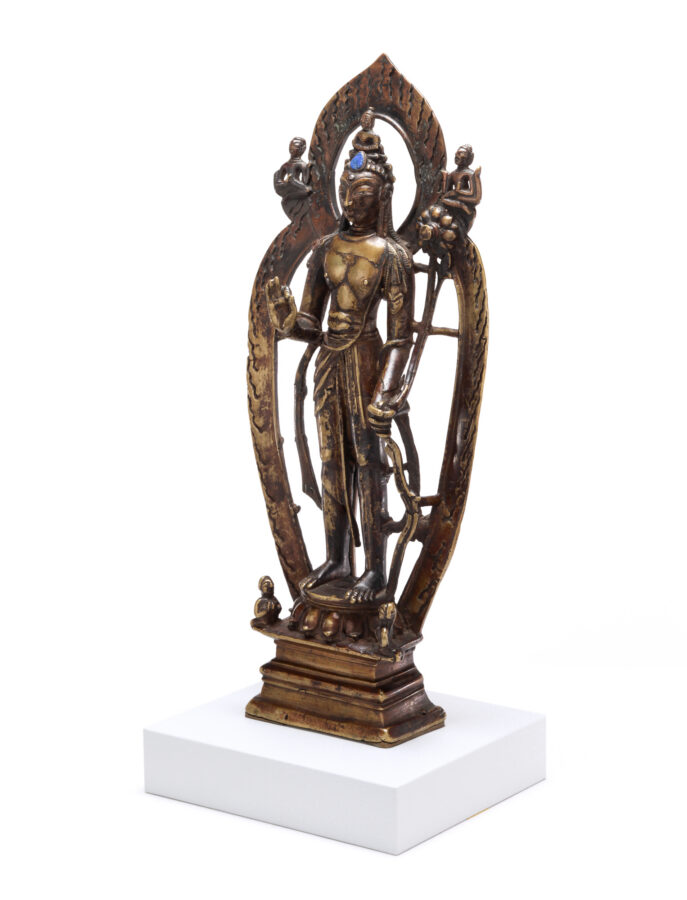
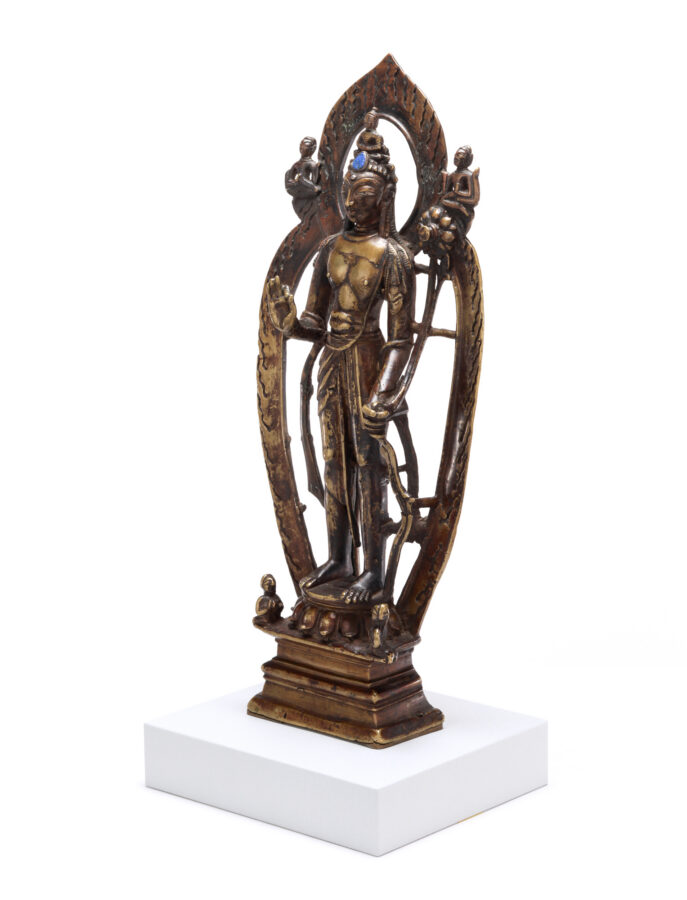
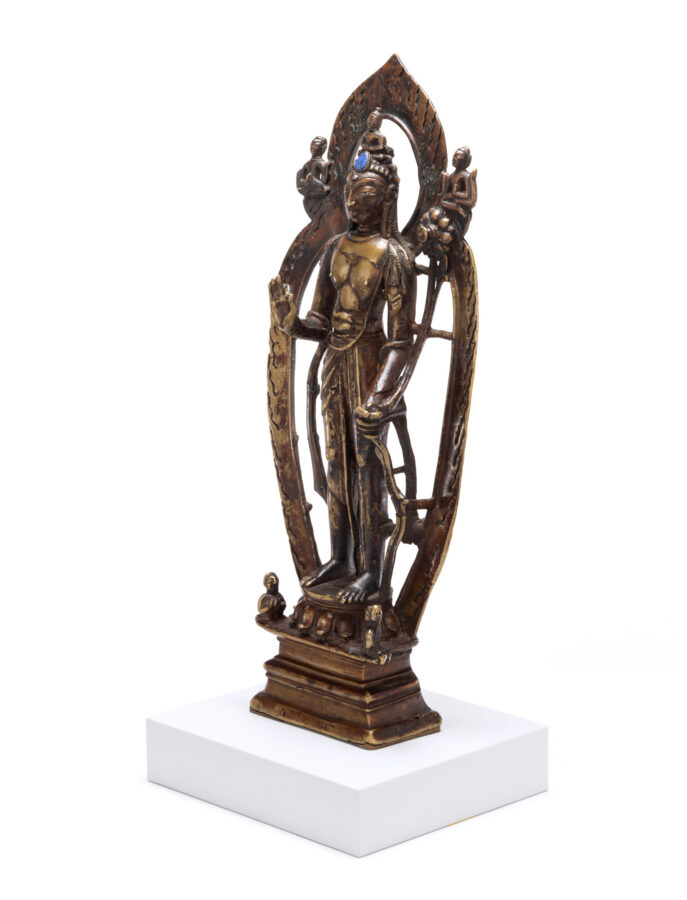
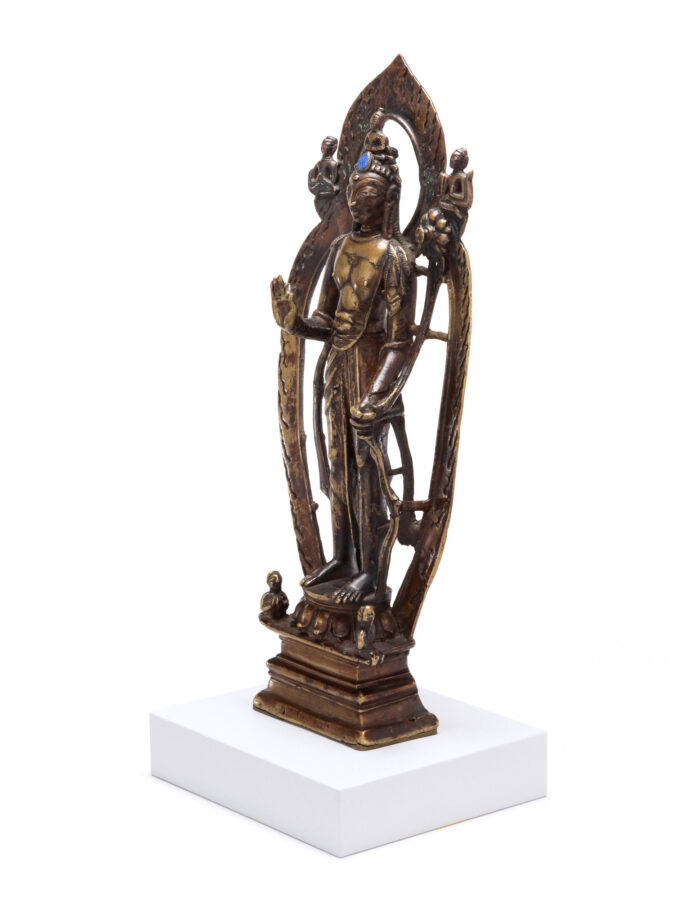
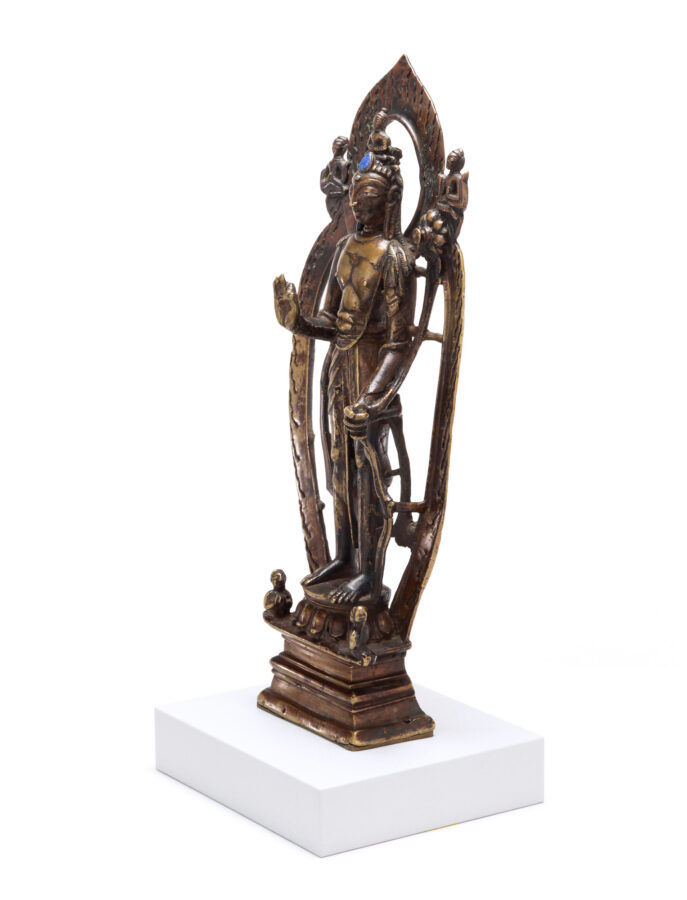
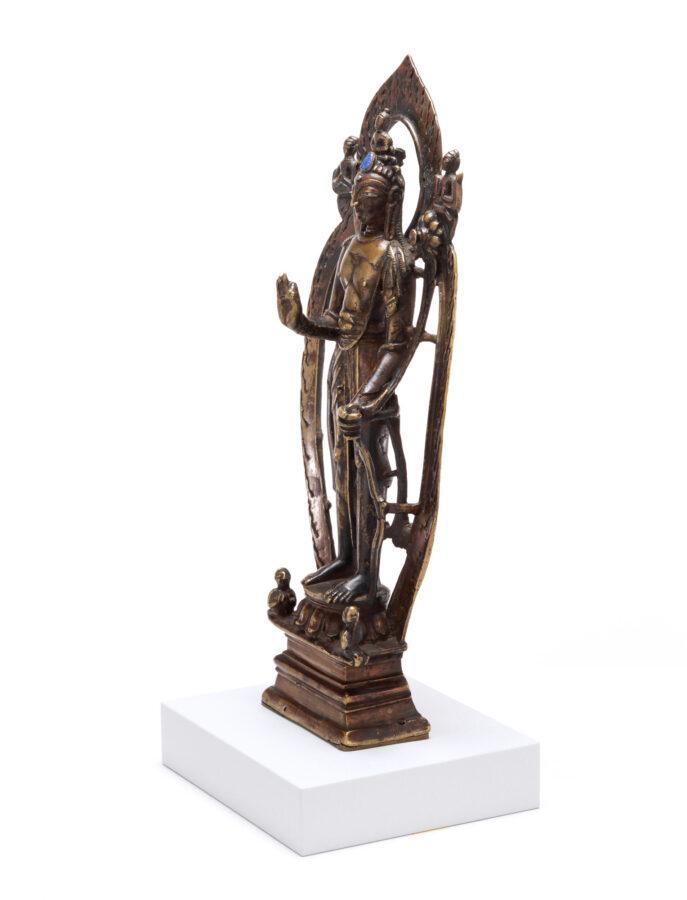
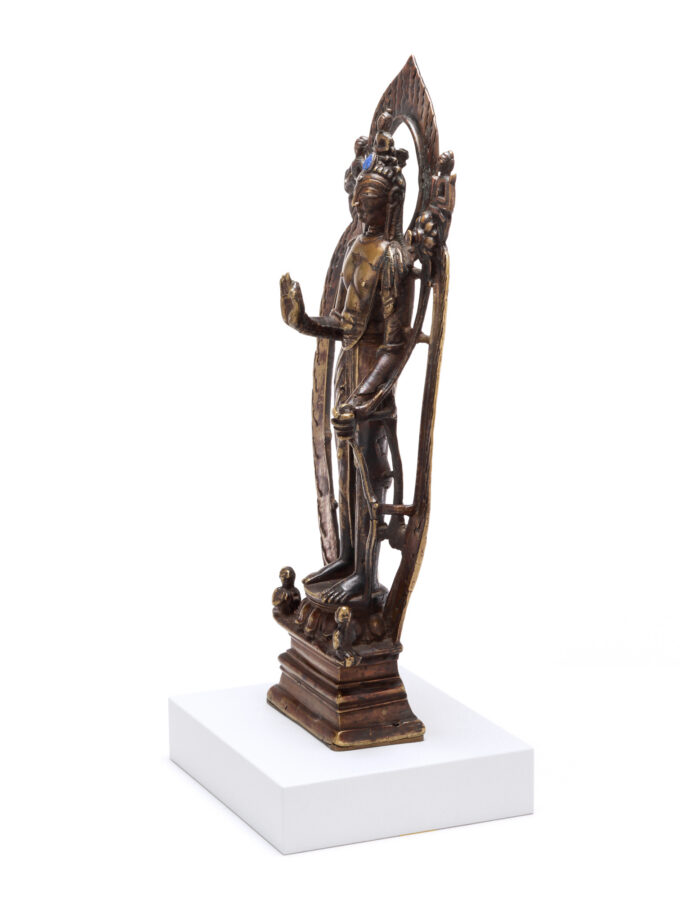
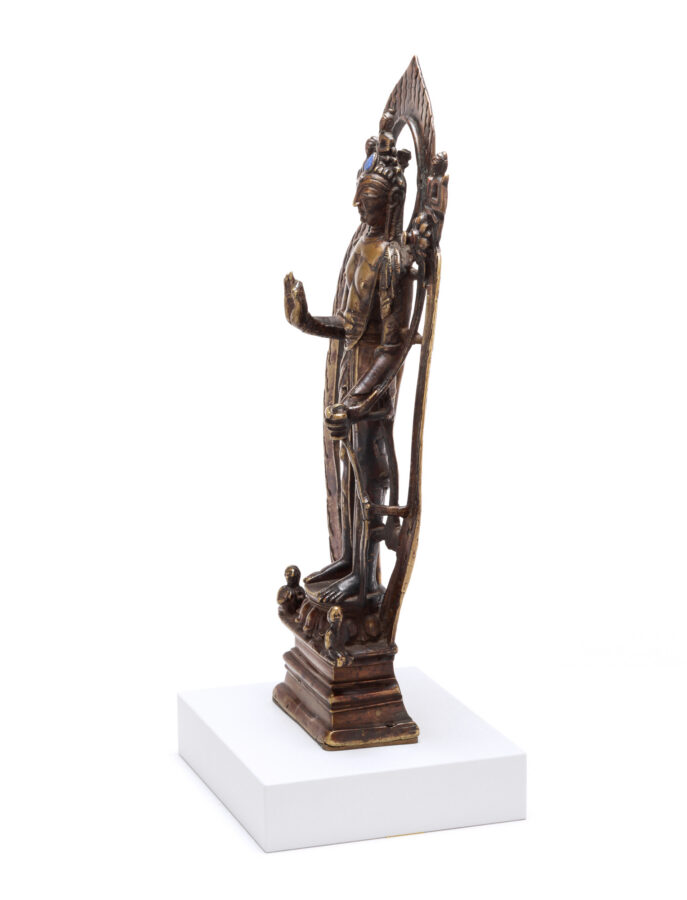
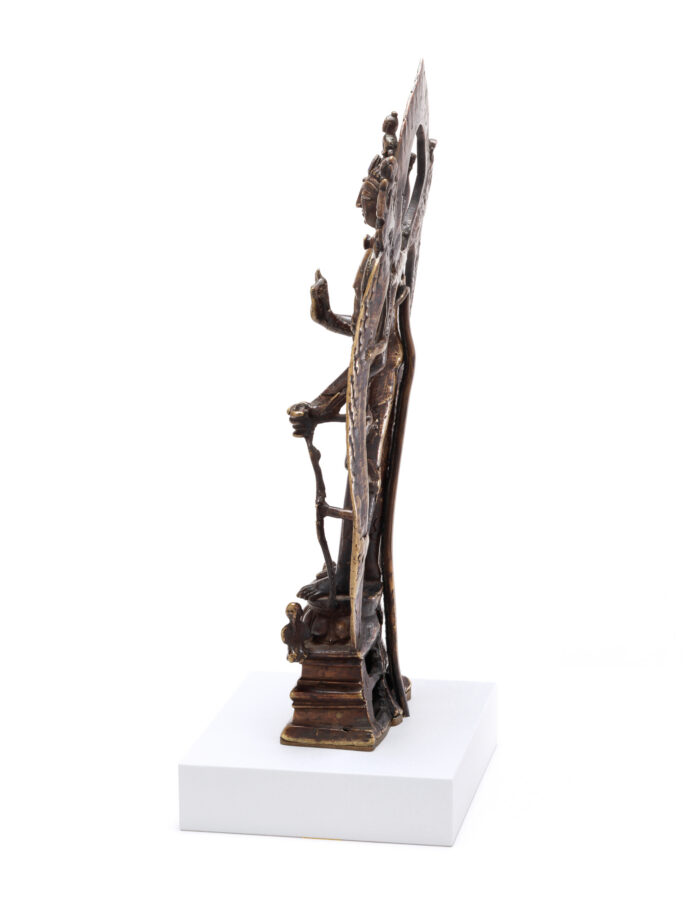
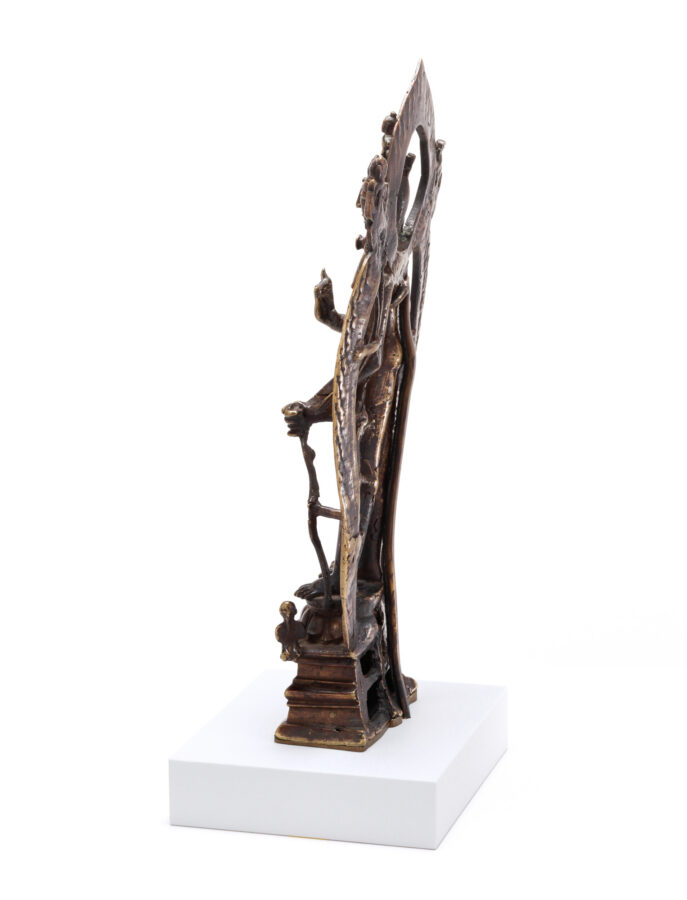
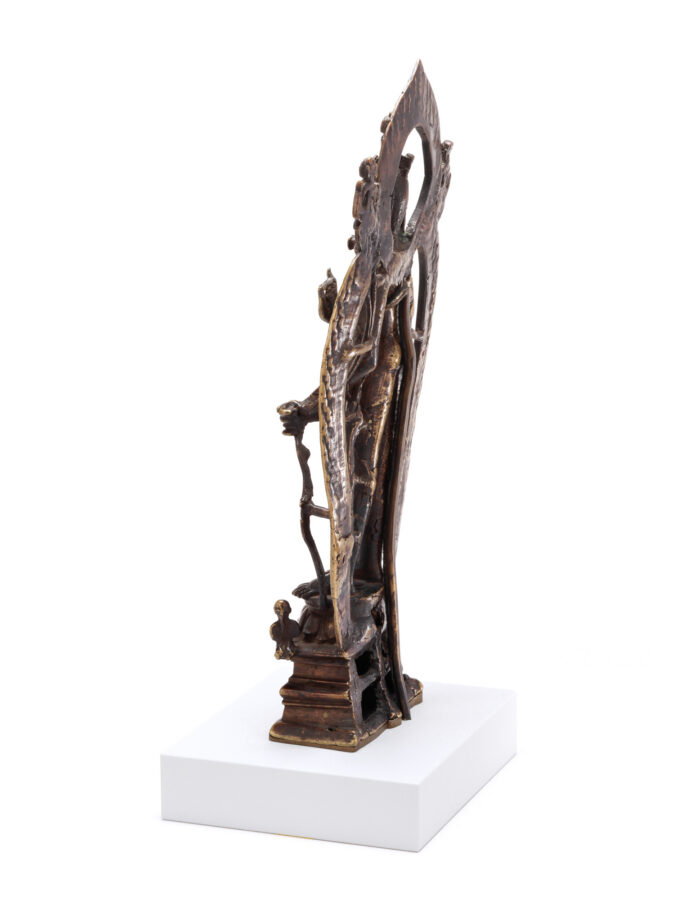
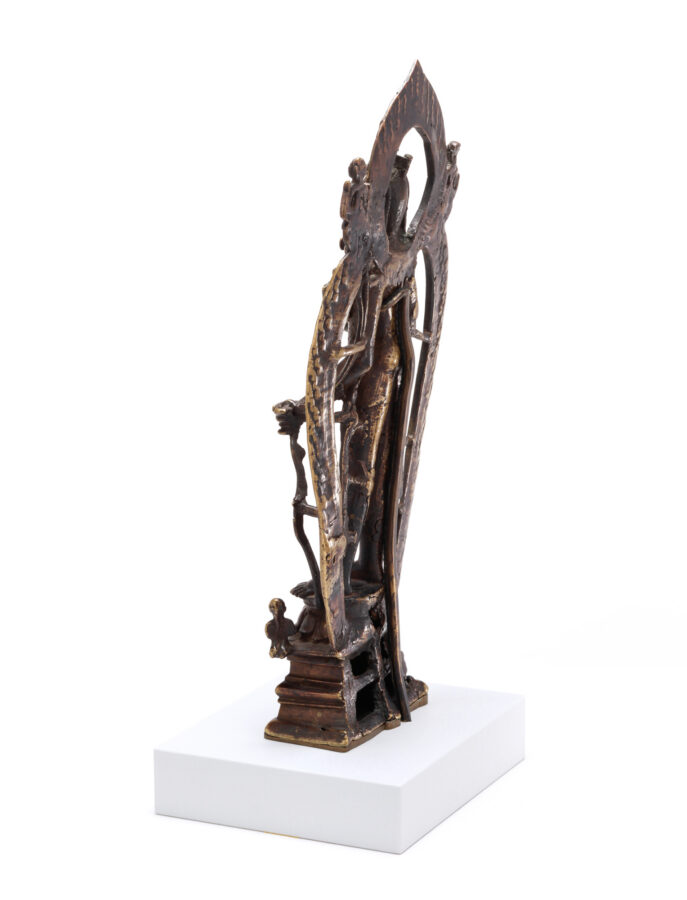
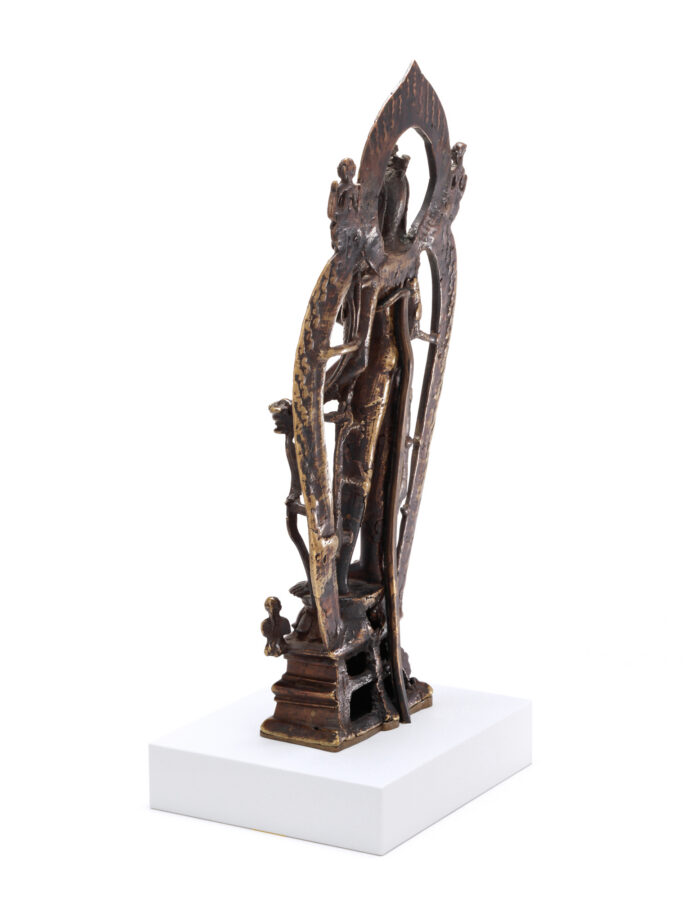
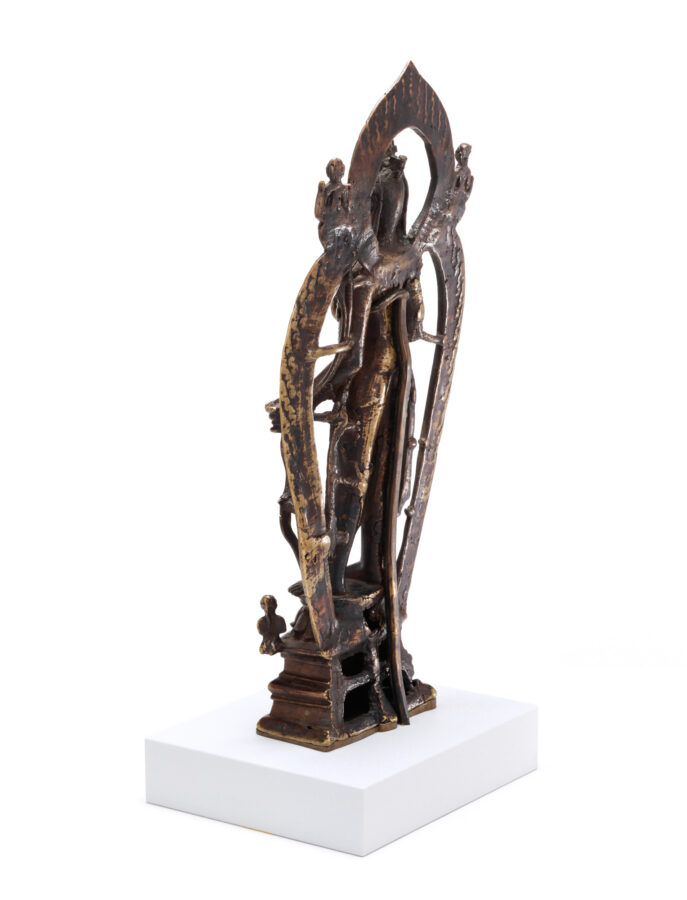
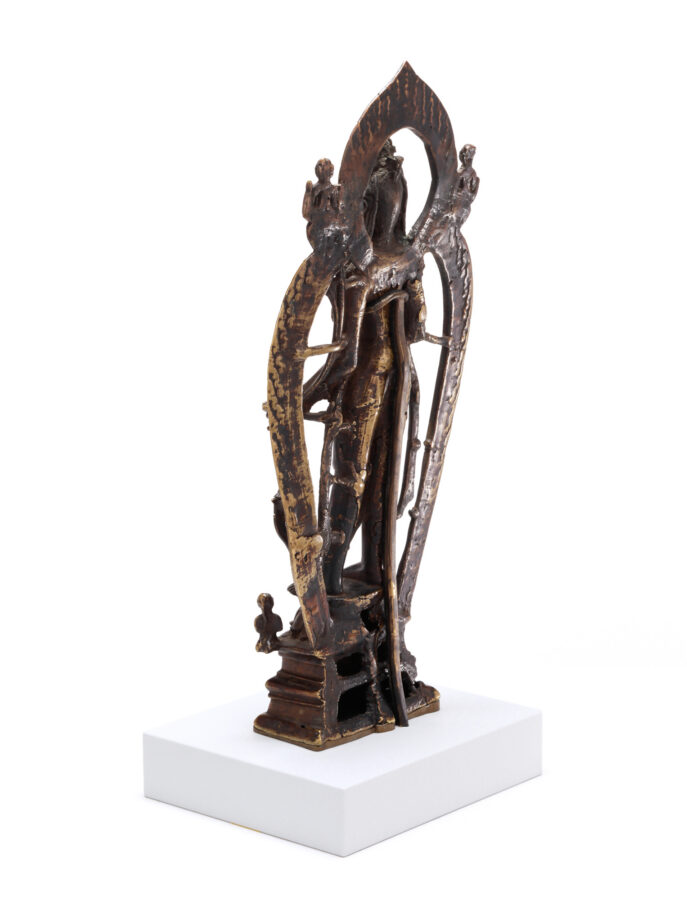
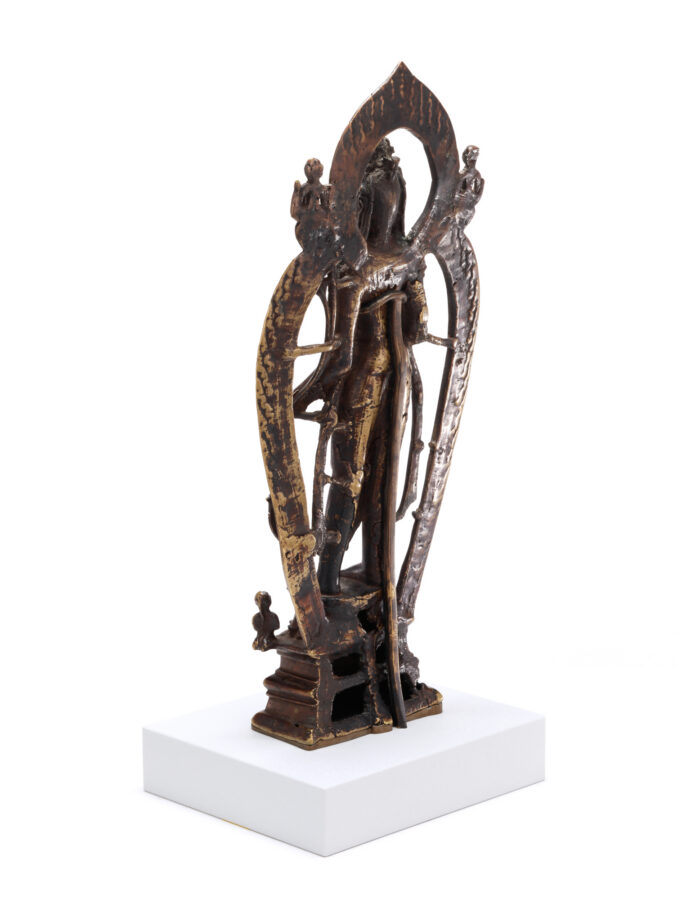
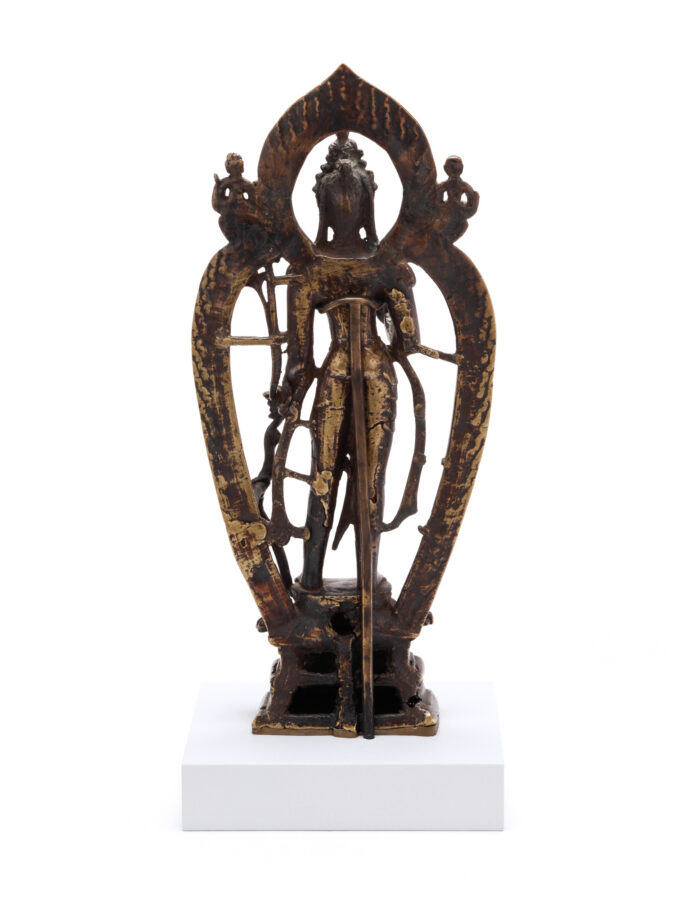
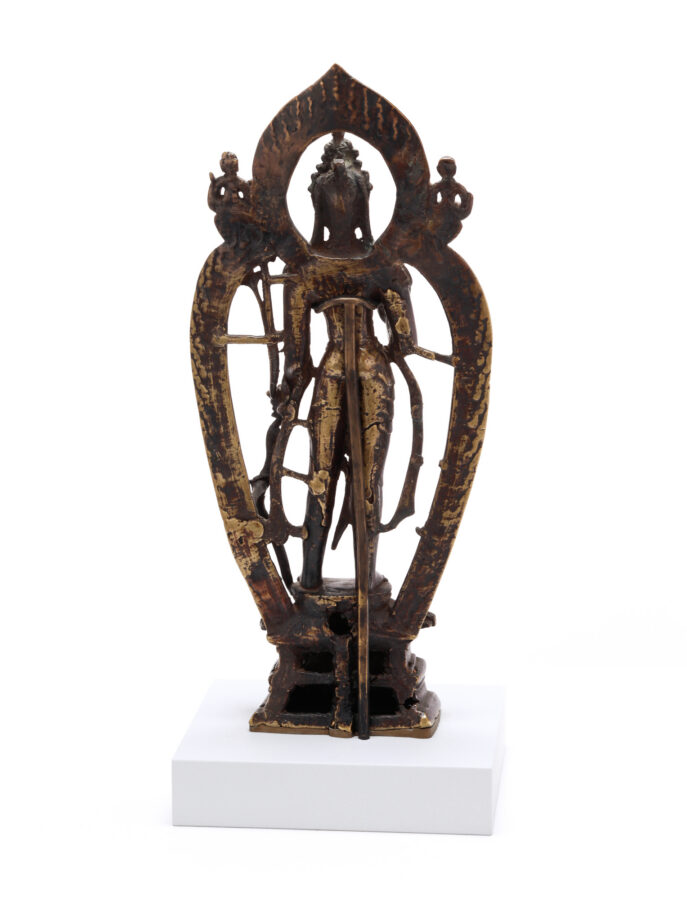
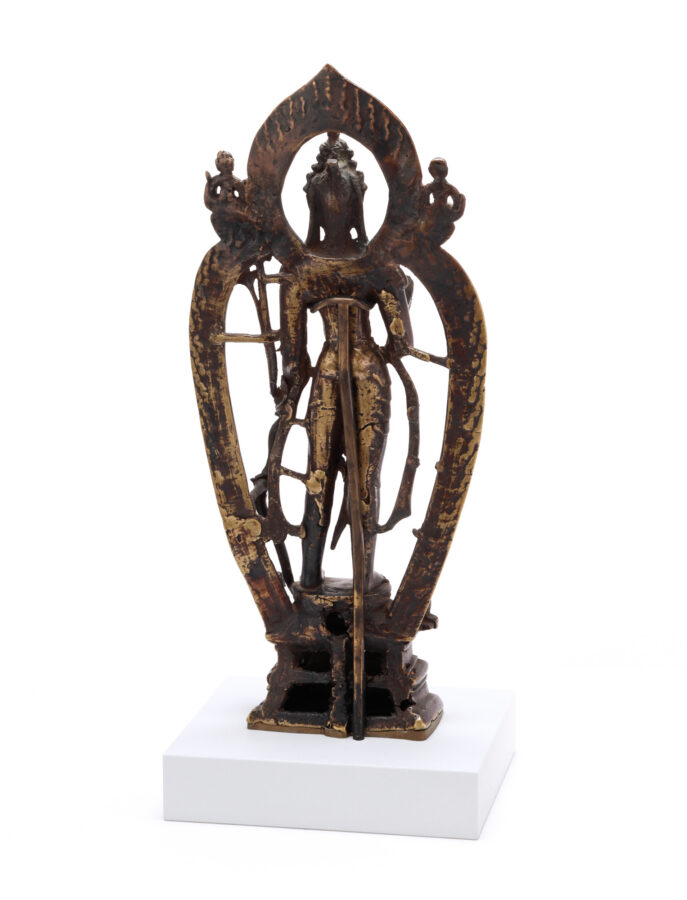
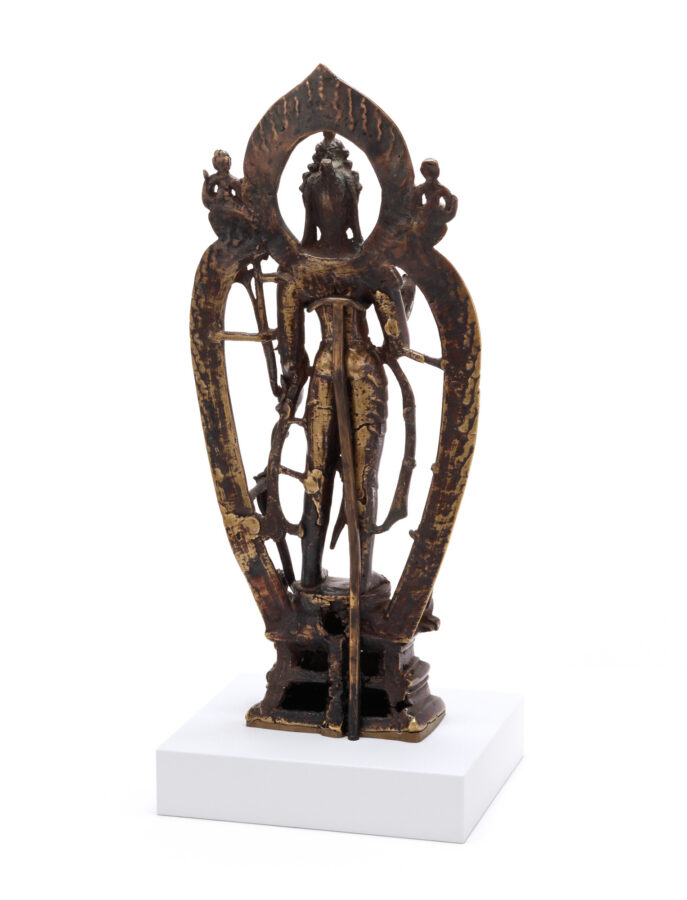
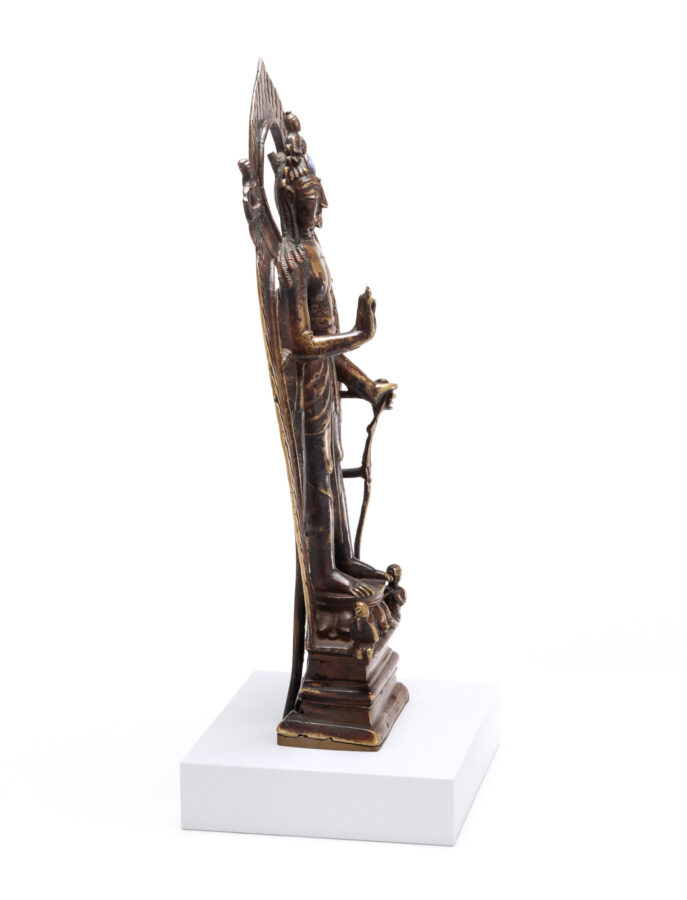
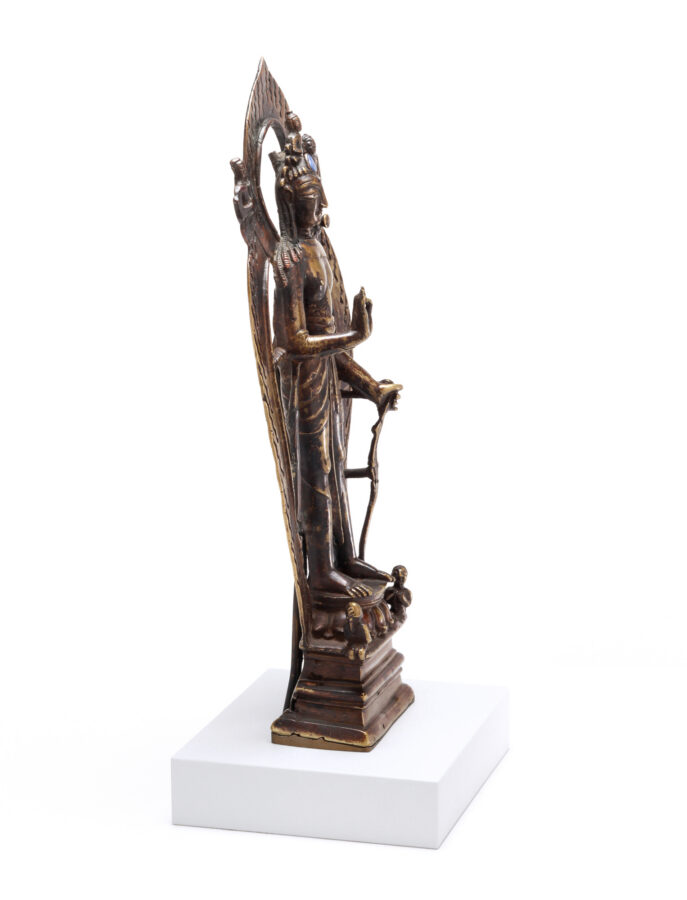
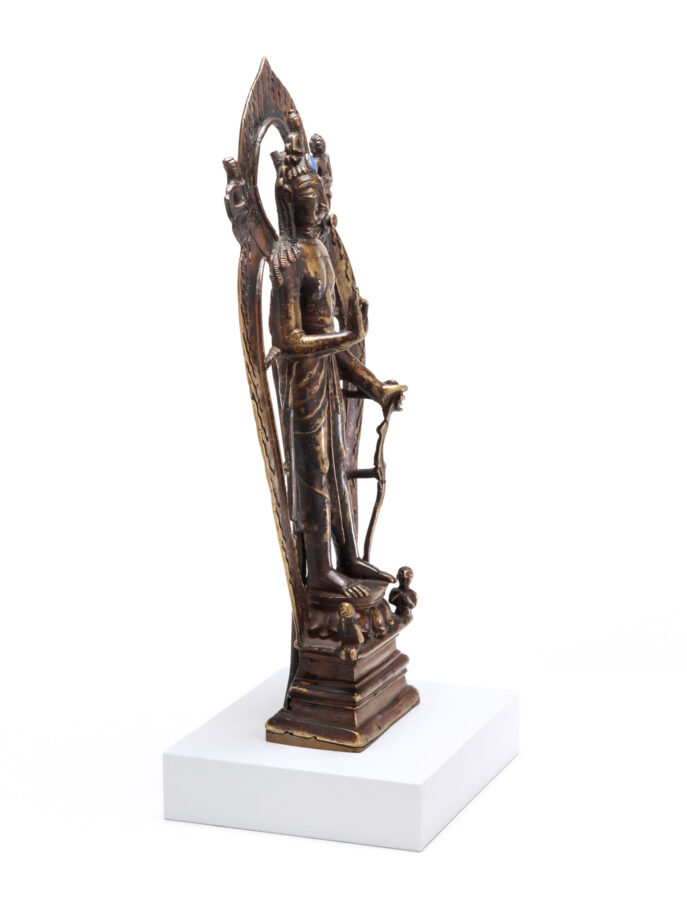
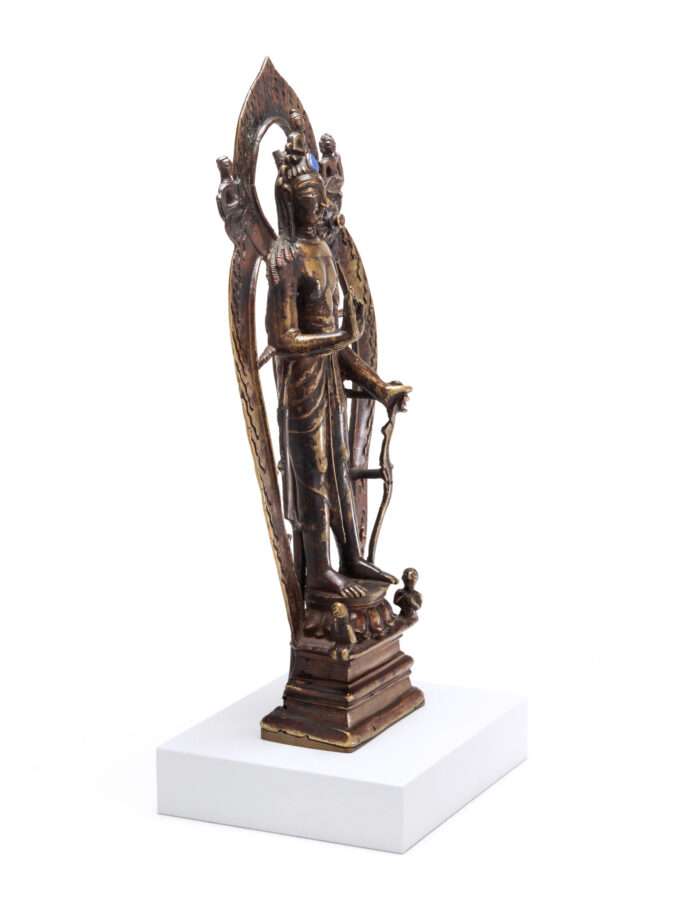
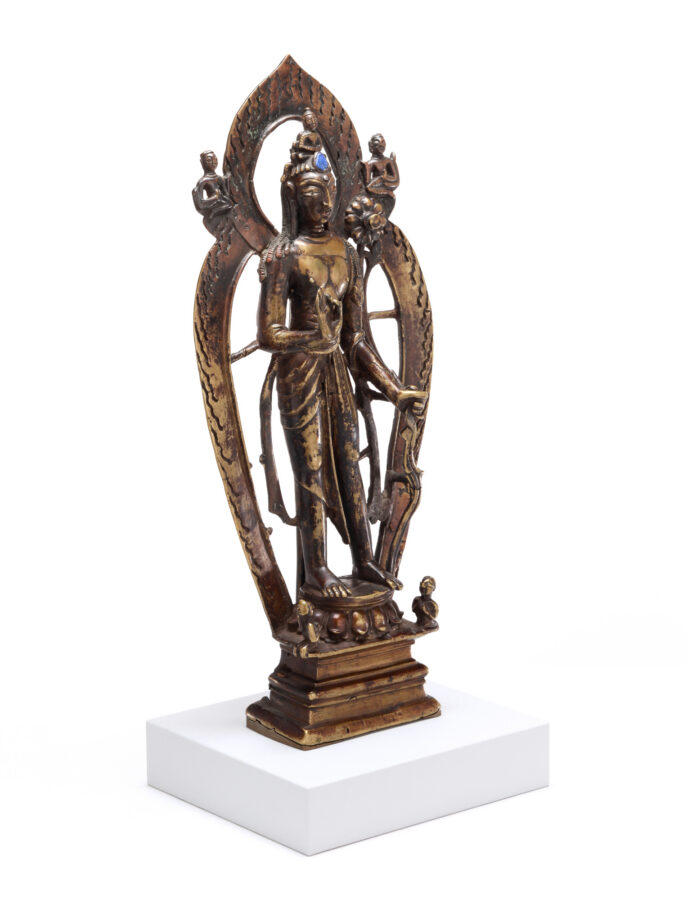
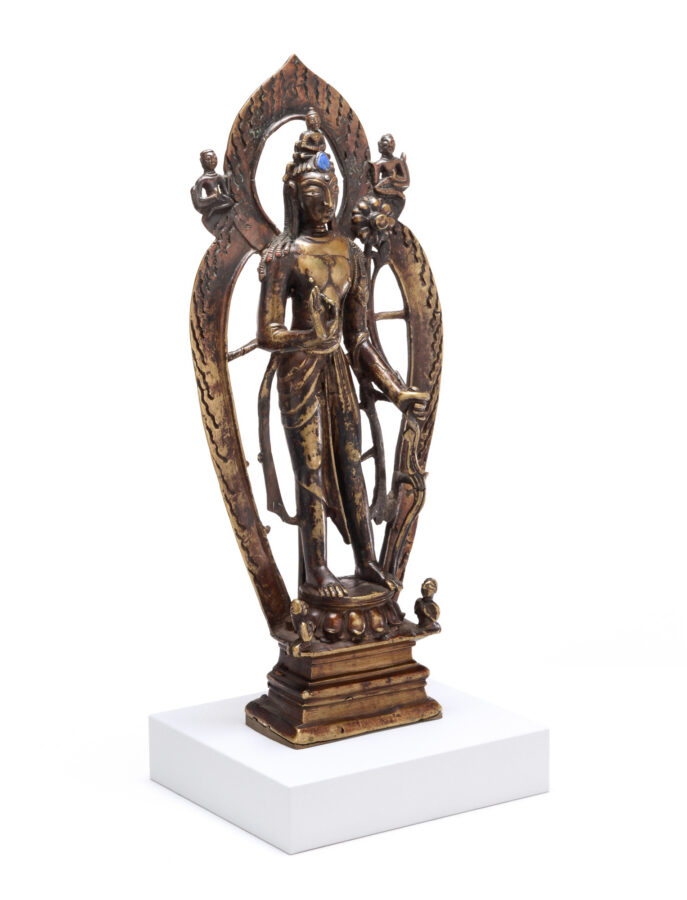
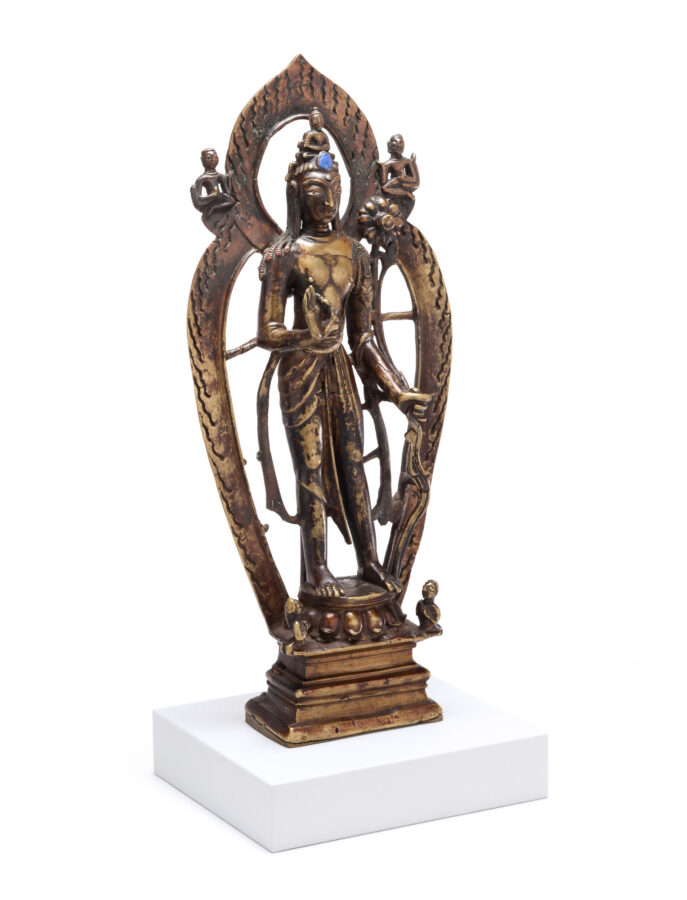
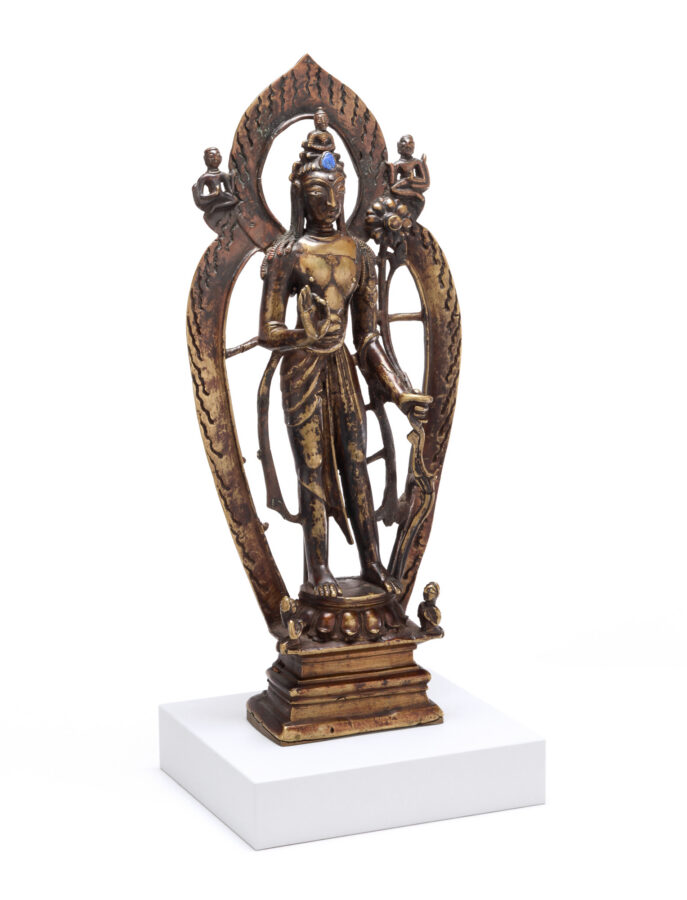
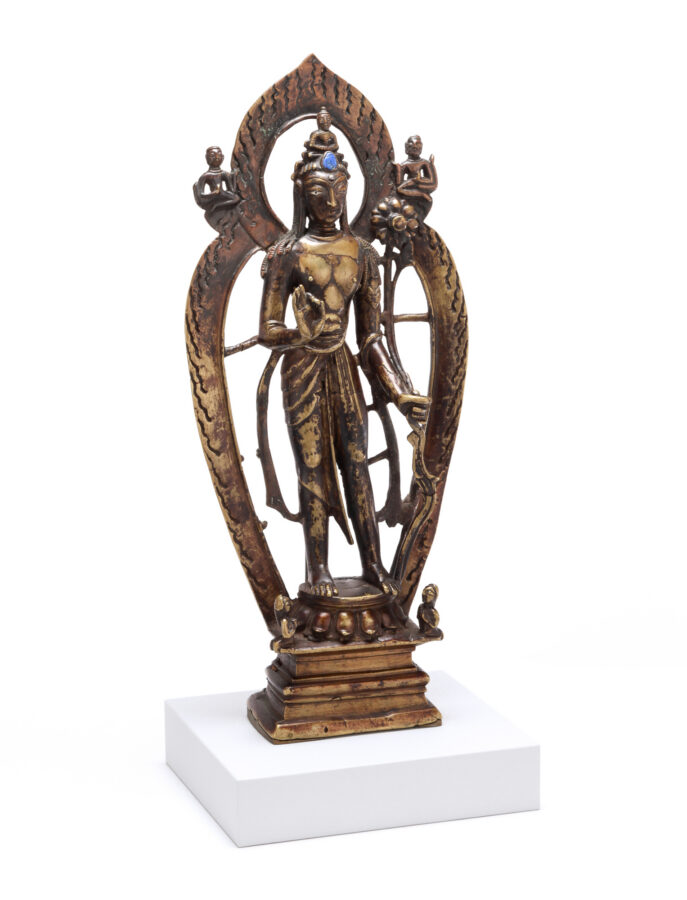
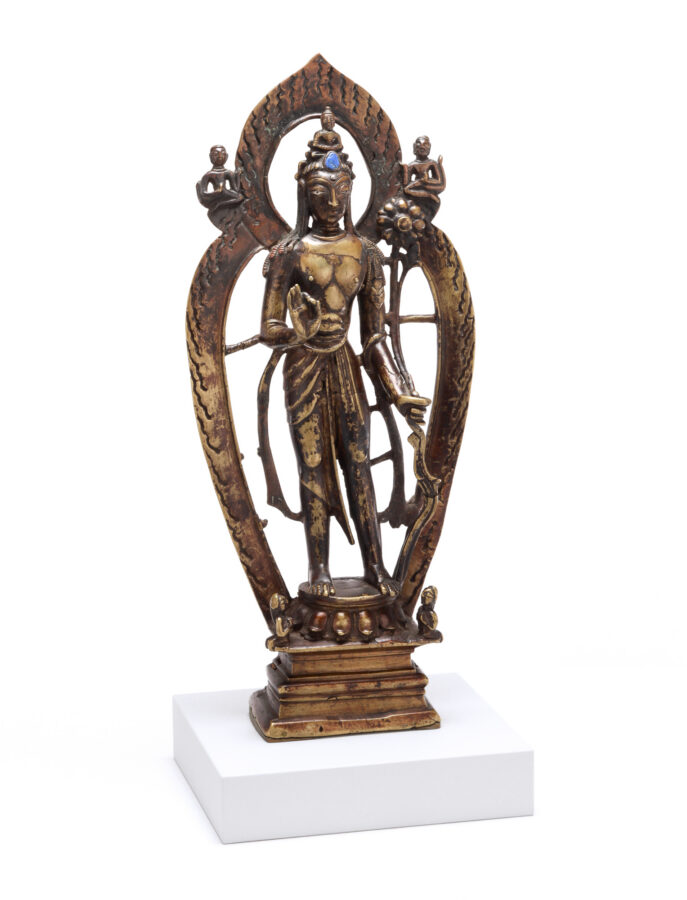
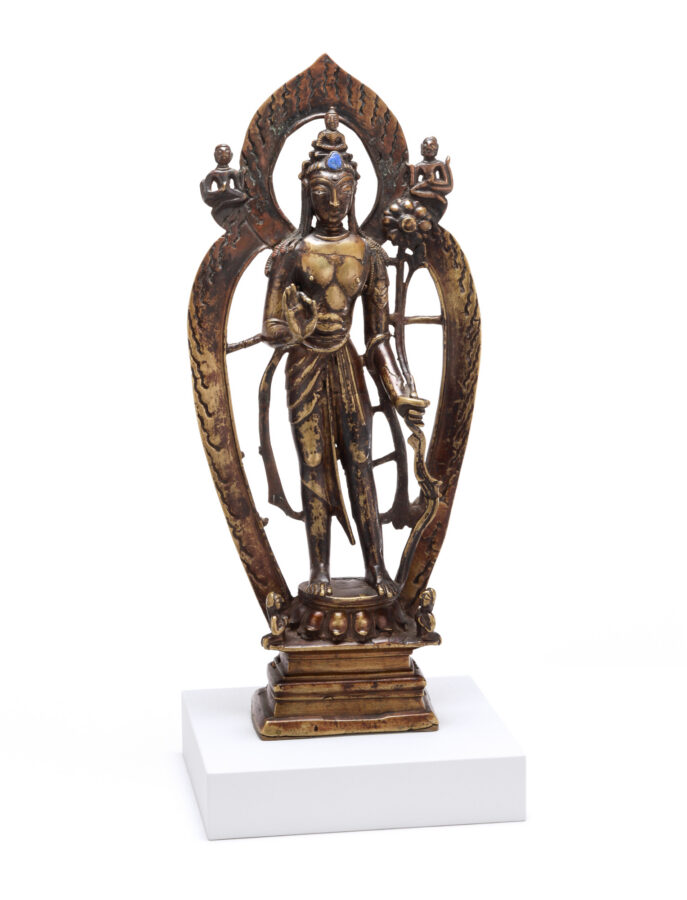
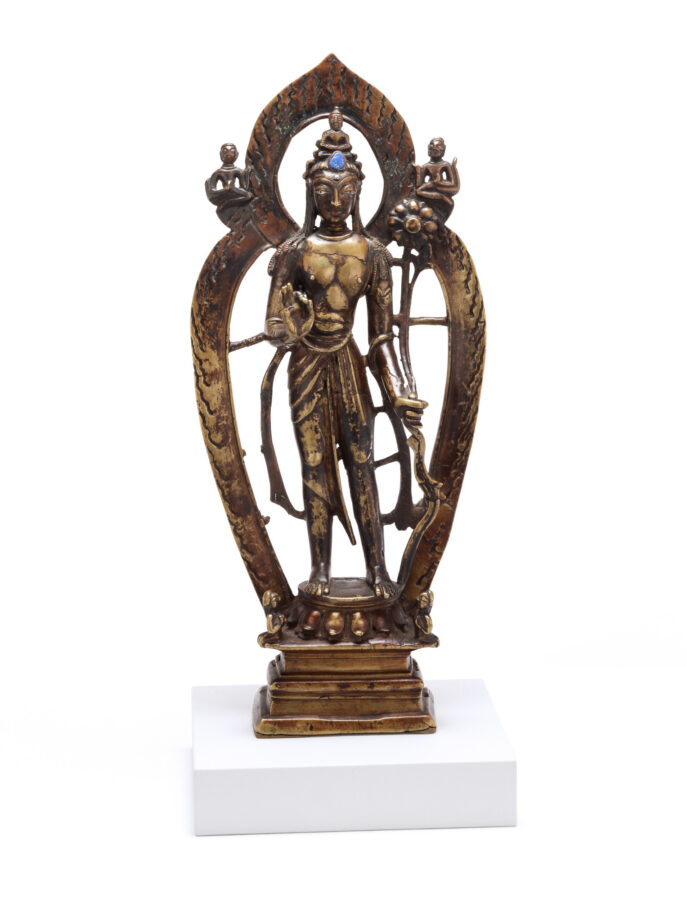
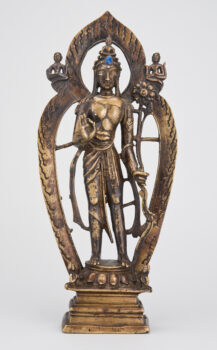
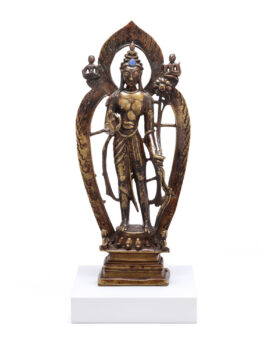
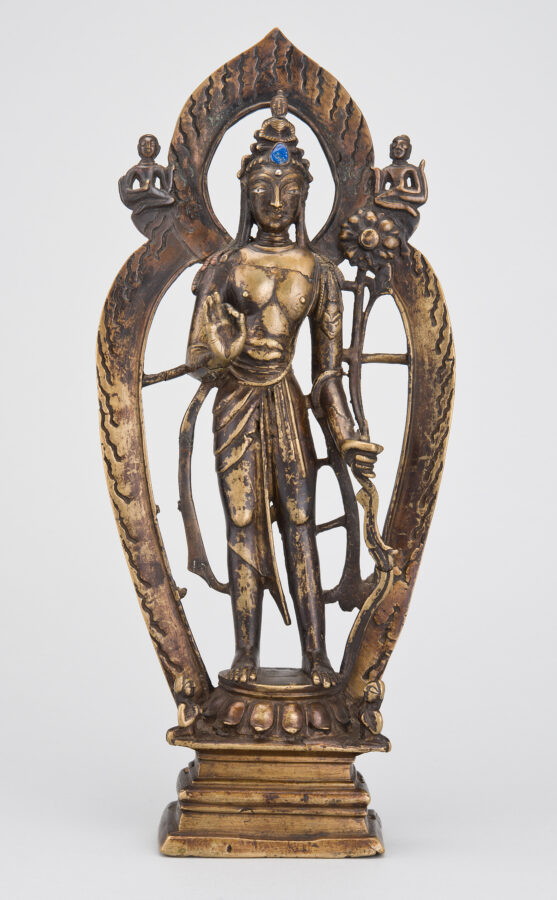
Avalokiteshvara— sometimes called Padmapani, referencing a lotus stem he holds in his left hand— is one of the great bodhisattvas in Tibetan Buddhism and is considered to be the embodiment of compassion. In Tibetan Buddhist traditions rooted in tantric texts and practices originated in India, he is affiliated with Buddha Amitabha, shown here as a small buddha figure in his crown. Two flying figures (apsaras) flank Avalokiteshvara’s head, while two small figures kneel at the base of his lotus throne. They are likely donors who commissioned the sculpture with the mind to seek Avalokiteshvara’s blessings and create merit as well as a good life.
The sculpture represents a popular type of image often found across northern India, the western Himalayas, western Tibet, Nepal, and beyond. However, this sculpture’s stylistic elements indicate a western Himalayan cultural sphere, where artistic production integrated Kashmiri aesthetics not only in painting but also in sculptural forms, in metal, clay and stone. The silver inlaid eyes are among the persistent elements of Kashmiri aesthetics evidenced in western Himalayan metal images. The sculpture displays evidence of repairs that may have been made possibly centuries after its creation.
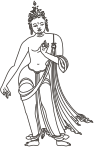
This posture features a triple- bend of the body at the knee, hip, and waist.
A virtuous feeling and deep respect toward an authentic teaching, teacher, or path. Buddhists believe that expansive study, analysis, and meditation are essential steps for cultivating a healthy and enduring devotion.
In Buddhism merit is accumulated through engaging in positive actions that lead to positive results, such as better rebirths. Buddhists gain merit by making offerings, donating to those in need, reciting mantras, and other good deeds.
Beings who aspire to become fully awakened like the Buddha and are dedicated to helping others on the path to enlightenment.
From the 8th to 13th century, Kashmir was a renowned center of Buddhist learning, arts, and culture. This fertile valley was a major source of artistic production for the western Himalayan kingdoms, which spanned parts of northern India and the Ngari region of western Tibet.


Get the latest news and stories from the Rubin, plus occasional information on how to support our work.
