Tibet
ca. 16th century
Tibet
ca. 16th century
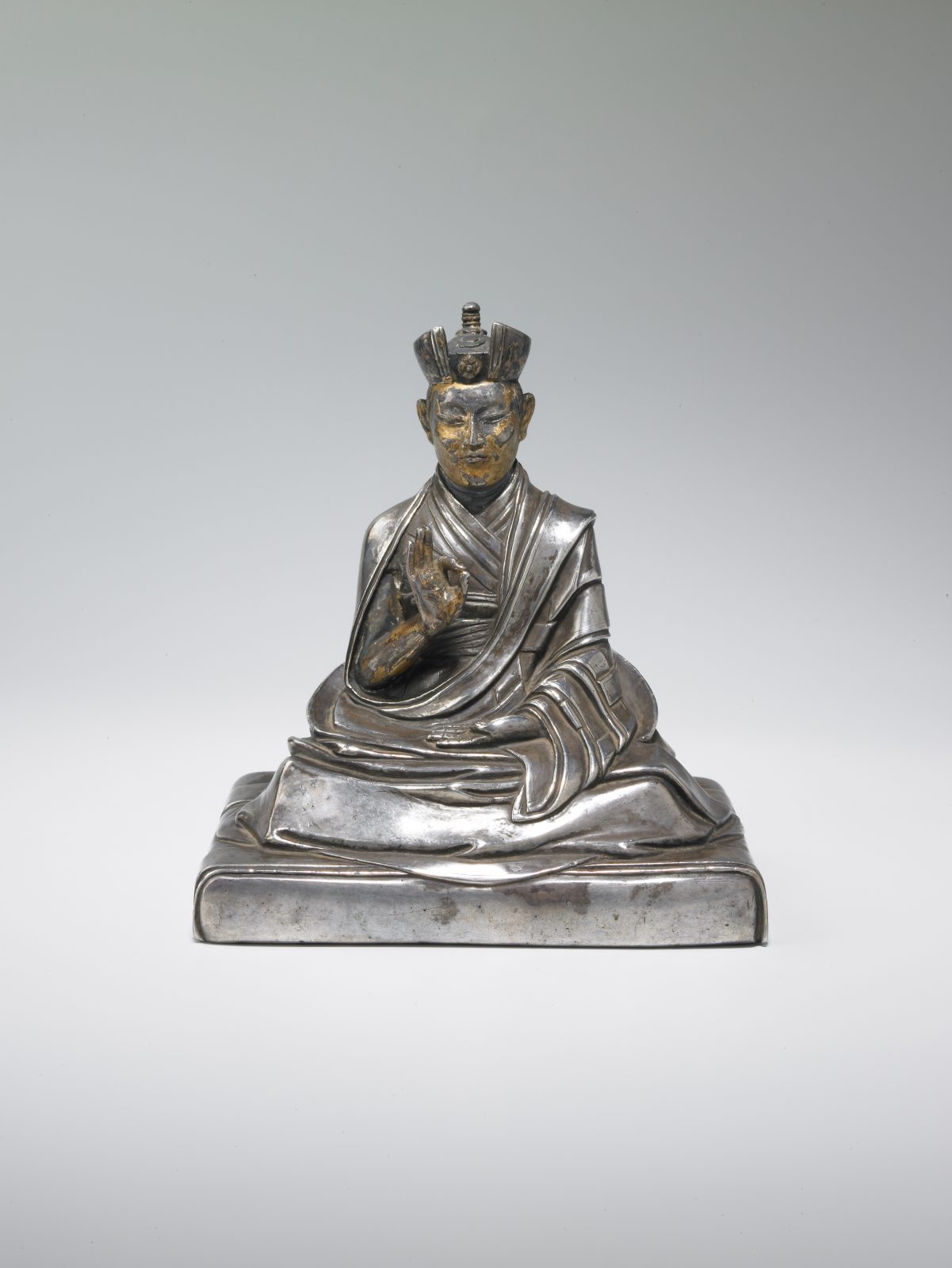
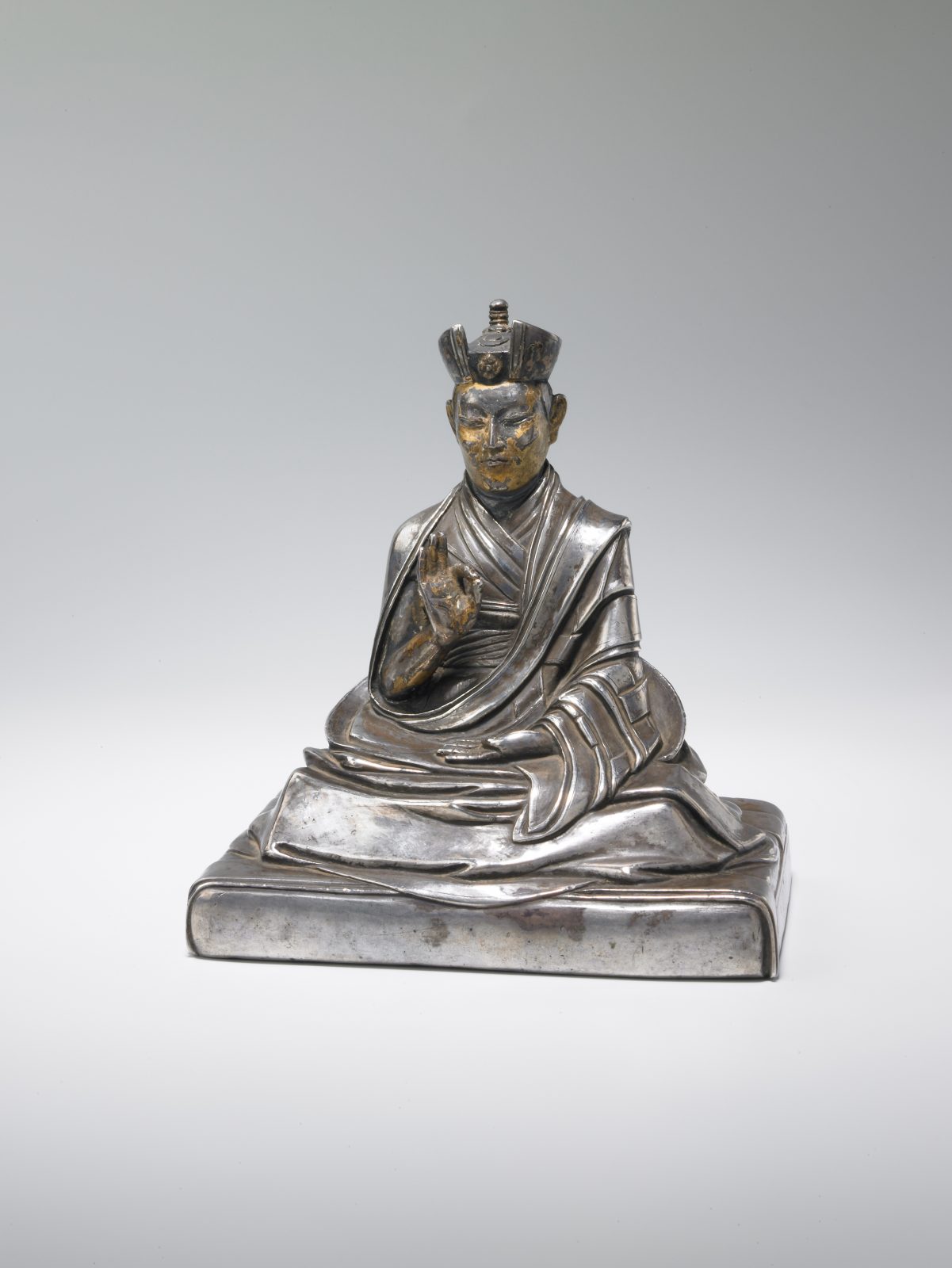
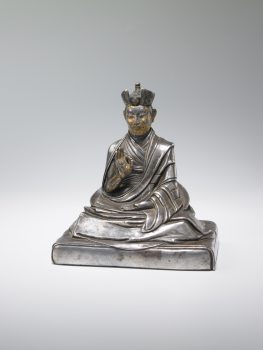
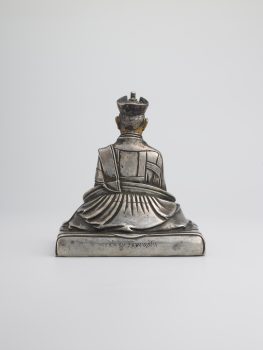
This silver portrait depicts the Eighth Karmapa, a master of great scholastic learning. He is also remembered as influential in the founding of the Encampment Style, one of the main Tibetan artistic traditions, in both painting and sculpture. This portrait sculpture displays the individuated physiognomy of this famous religious master with high cheekbones and strong chin.
While he is believed to have written a treatise on art, little is known of his actual role in the founding of this artistic tradition, and painting and sculpting are never mentioned in his biographies. He is remembered instead as a master of great scholastic learning and an outstanding religious teacher.
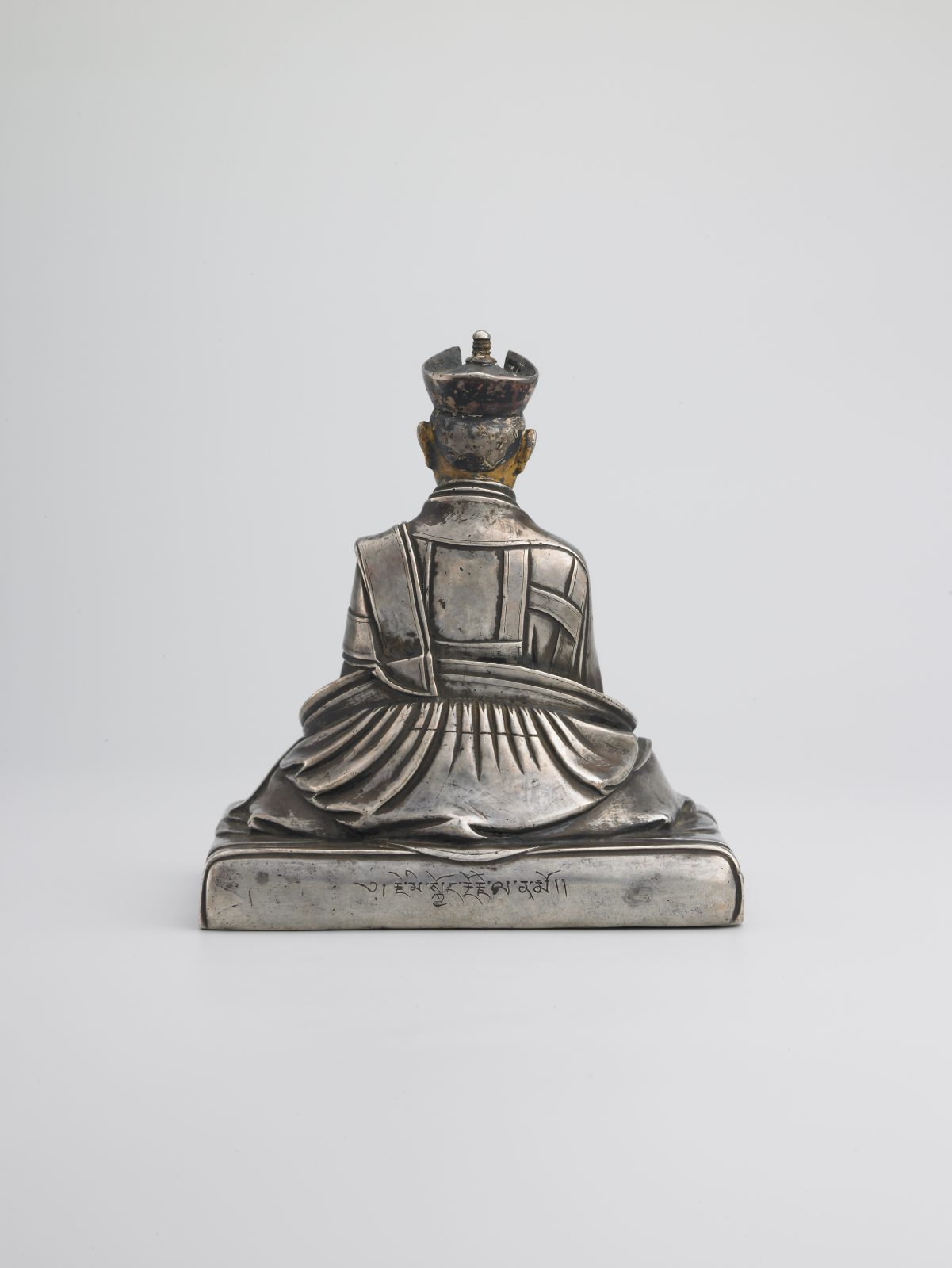
This statue is contemporaneous with the founding of the Encampment style, and it yields insights into the Encampment sculptural tradition of the Karmapa’s court. This is a lesser-known artistic style founded by Karma Sidrel, who was considered an emanation of the Eighth Karmapa and continued his work in sculpting. This silver portrait reveals a distinctive feature of the sculptural style of the Karmapa’s court, namely an intense interest in the patterning of repeated lines in the layers of the robes. It gives a sense of both weight and plasticity to the form. Based on other extant examples, the medium of silver itself also seems characteristic of these early portraits.
A contemplative practice in which a person uses concentration and visualization to achieve aims such as transforming the mind and generating feelings of compassion. Techniques include focusing on breathing or visualizing oneself as a deity.
The passing down of authentic Buddhist teachings from a teacher to a disciple or student, often in the form of a text in a ritualistic context.
The transmission of teachings from one generation to the next, from teacher to student, traced all the way back to the Buddha without interruption. A complete lineage is essential in Tantric Buddhist practices as it makes the blessings of the teaching more powerful.
Himalayan art includes portraits of legendary and historical humans, including accomplished religious teachers (lamas), the Buddha’s original disciples (arhats), and spiritually accomplished tantric masters (mahasiddhas).
Today, Tibetans primarily inhabit the Tibetan Plateau, situated between the Himalayan mountain range and the Indian subcontinent to the west, Chinese cultural regions to the east, and Mongolian cultural regions to the northeast. During the 7th to 9th century, Tibetan rulers expanded their empire across Central Asia, and established Buddhism as the state religion.

Get the latest news and stories from the Rubin, plus occasional information on how to support our work.