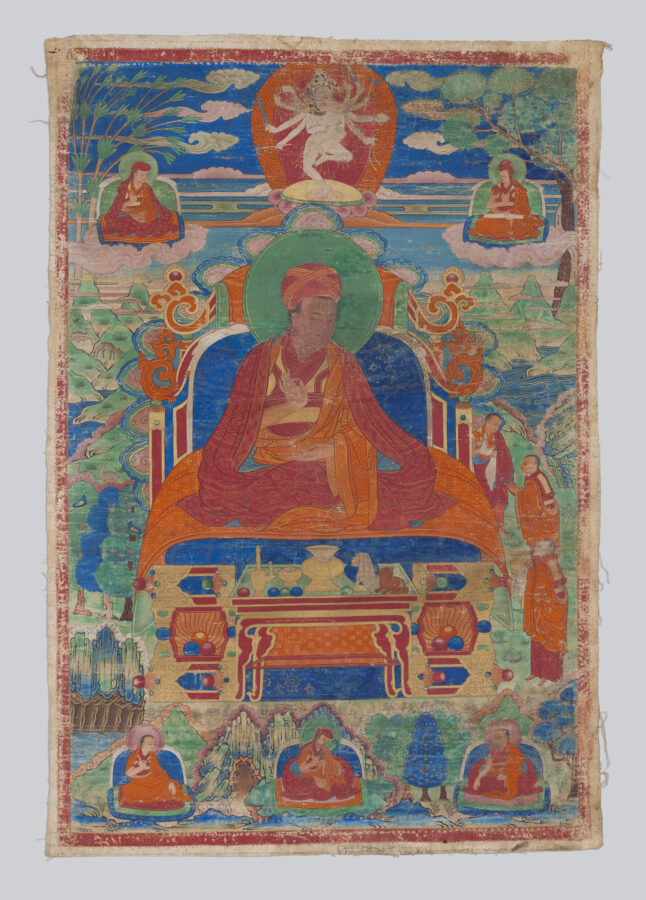
Fourteenth Karmapa Tekchog Dorje
Kham region, eastern Tibet
19th century
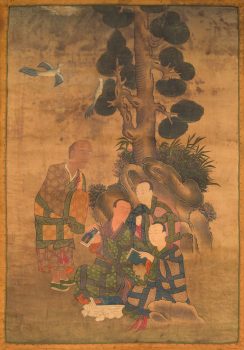
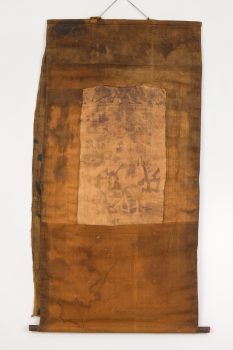
Fourteenth Karmapa Tekchog Dorje
Kham region, eastern Tibet
19th century
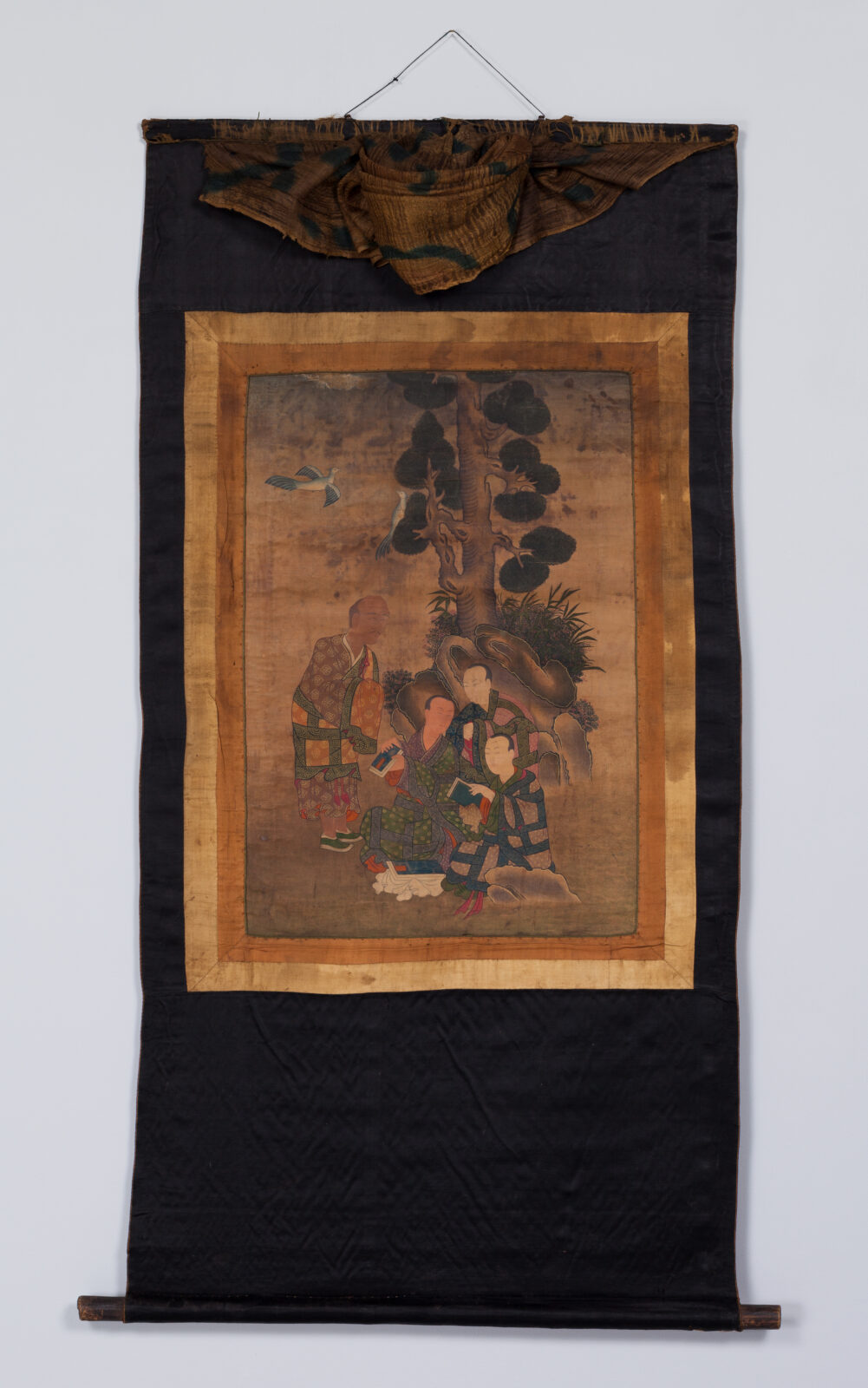
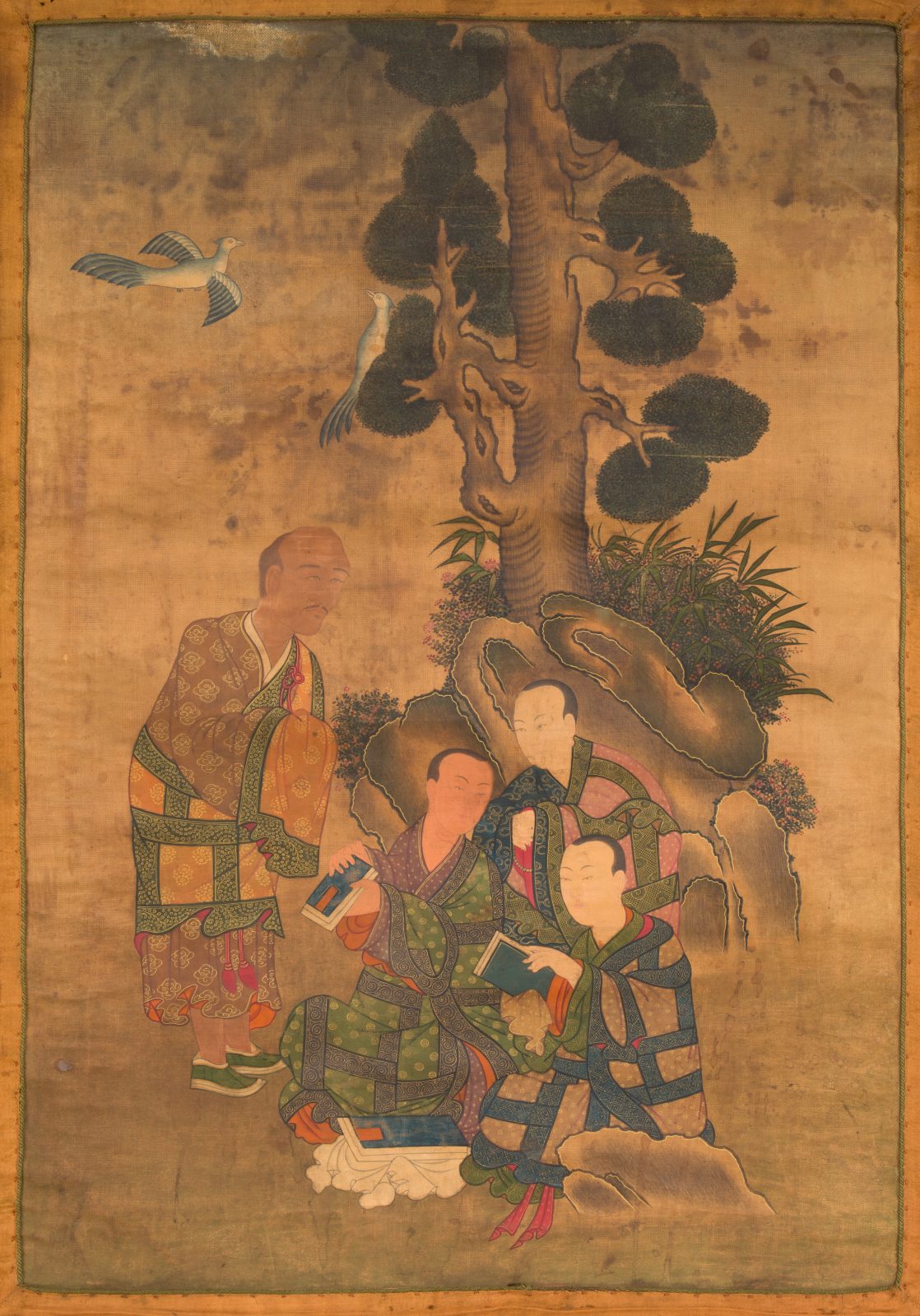
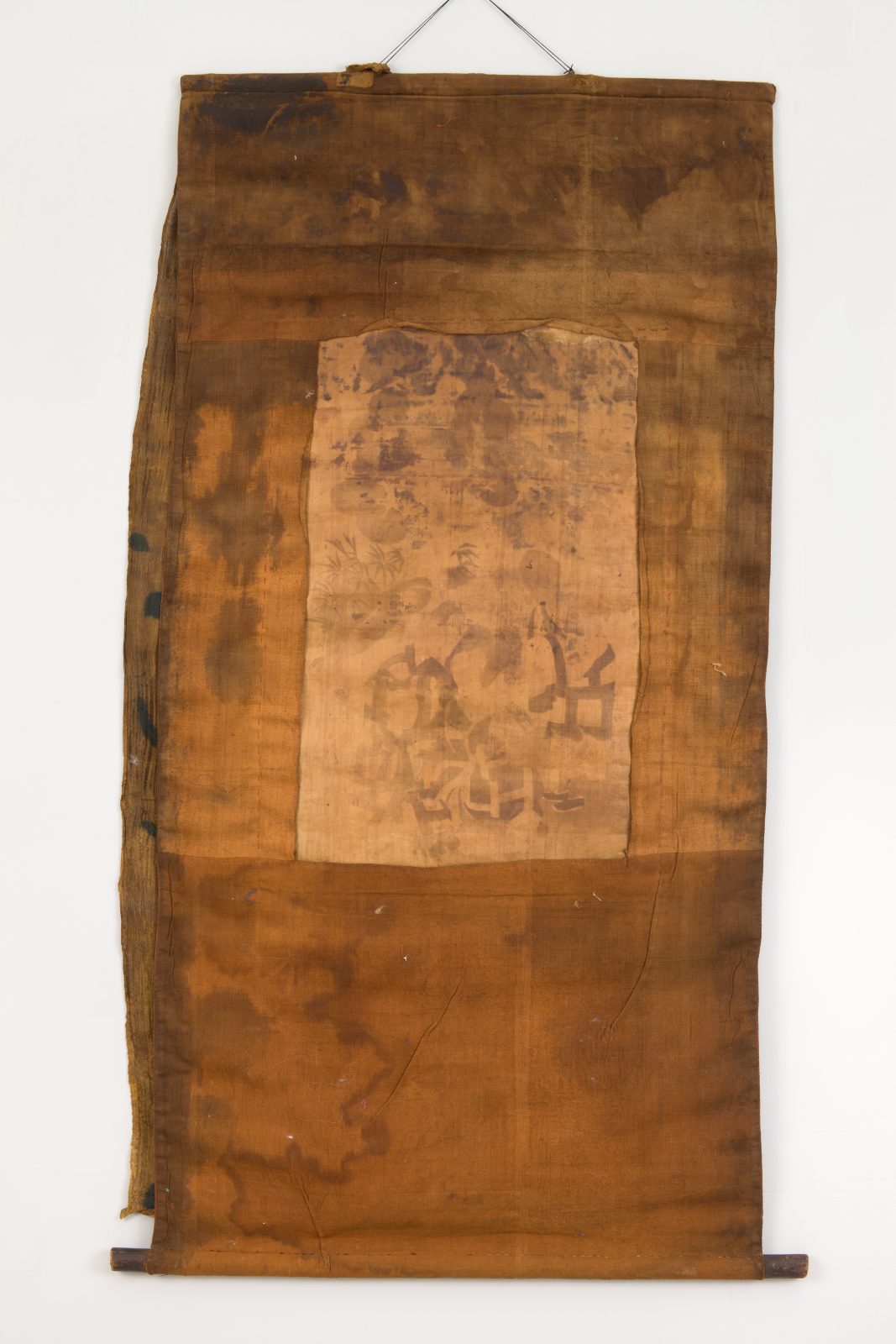
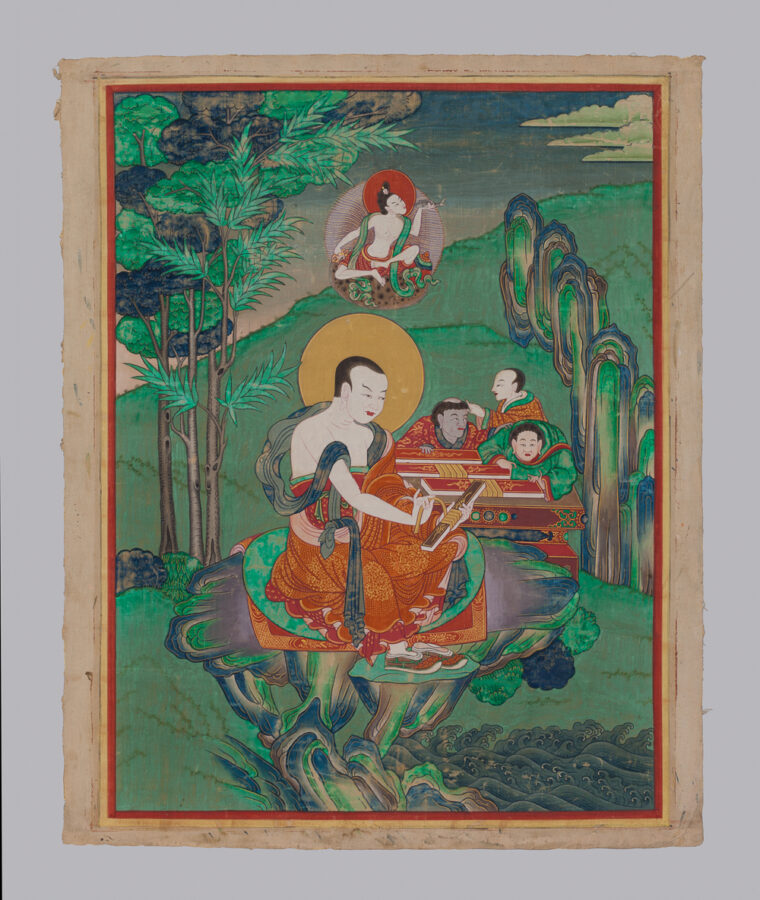
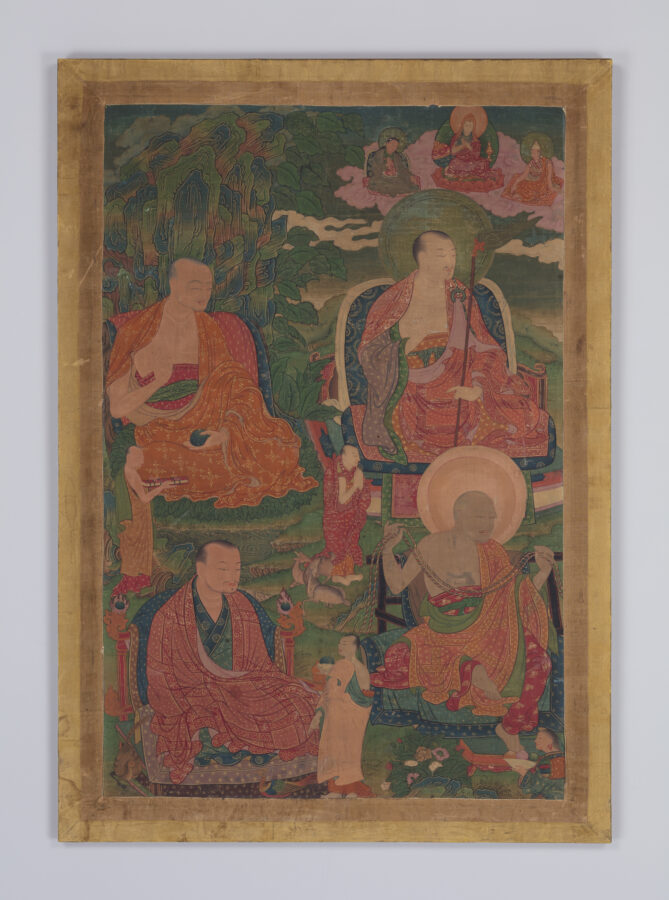
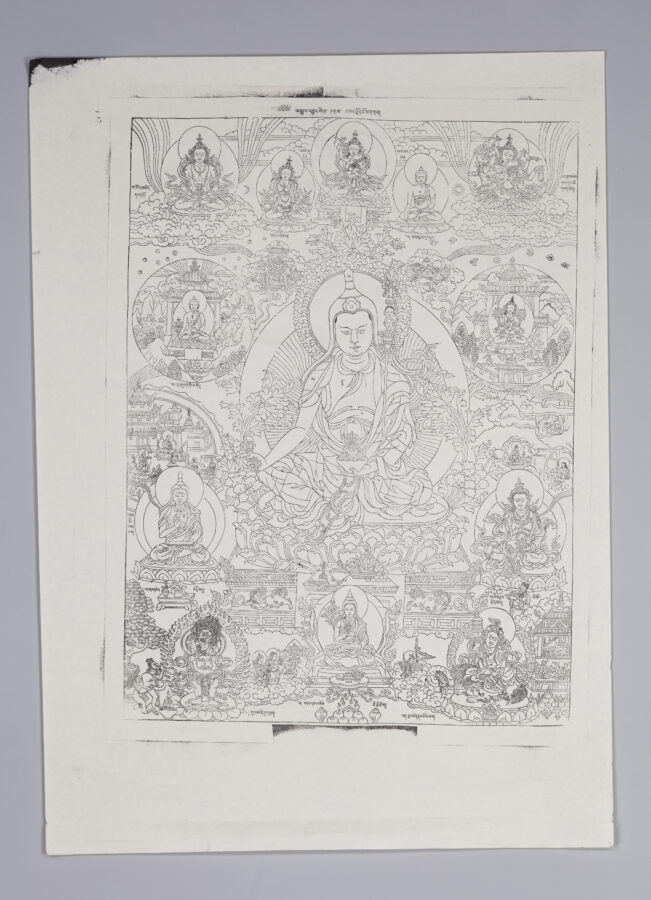
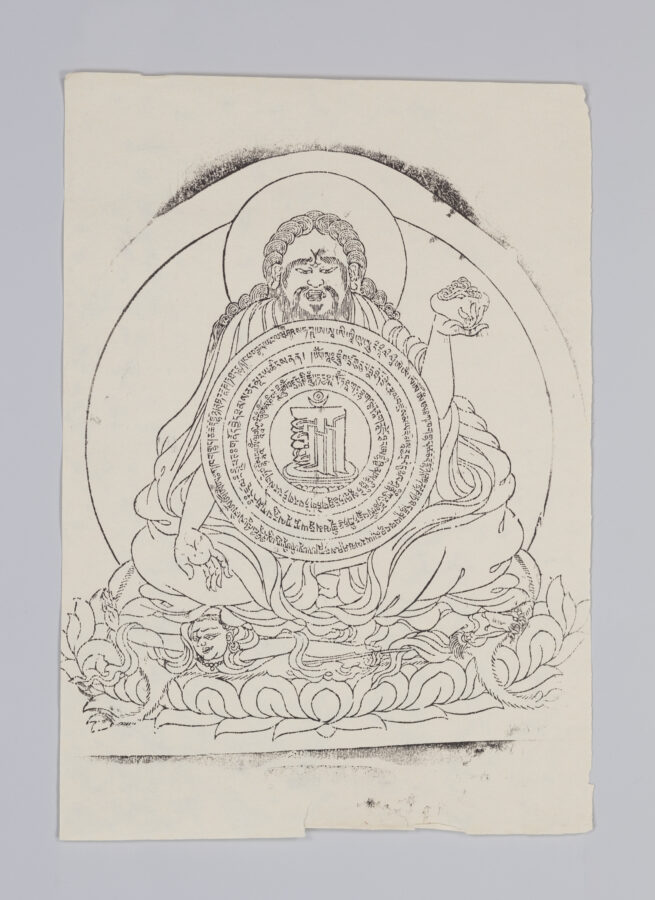
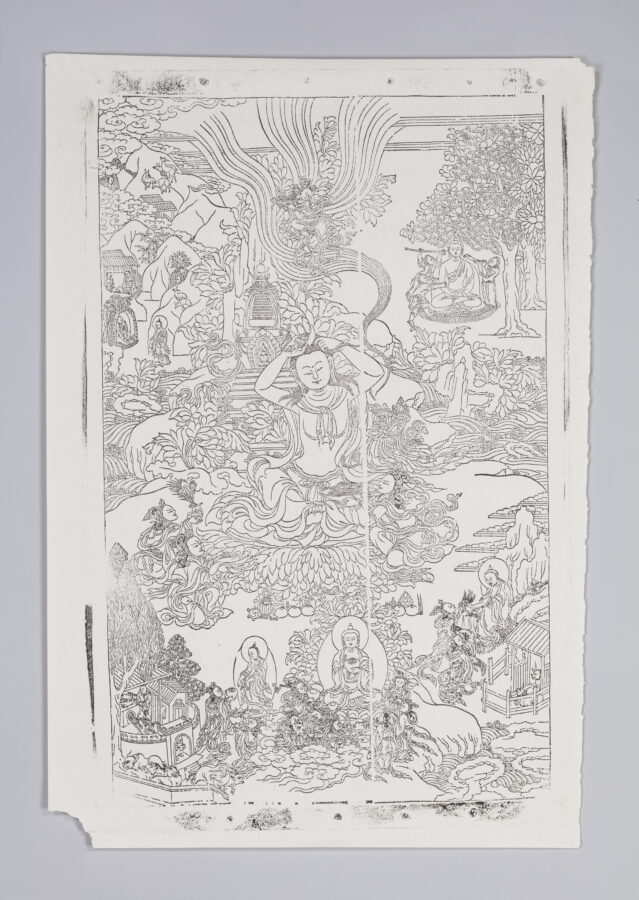
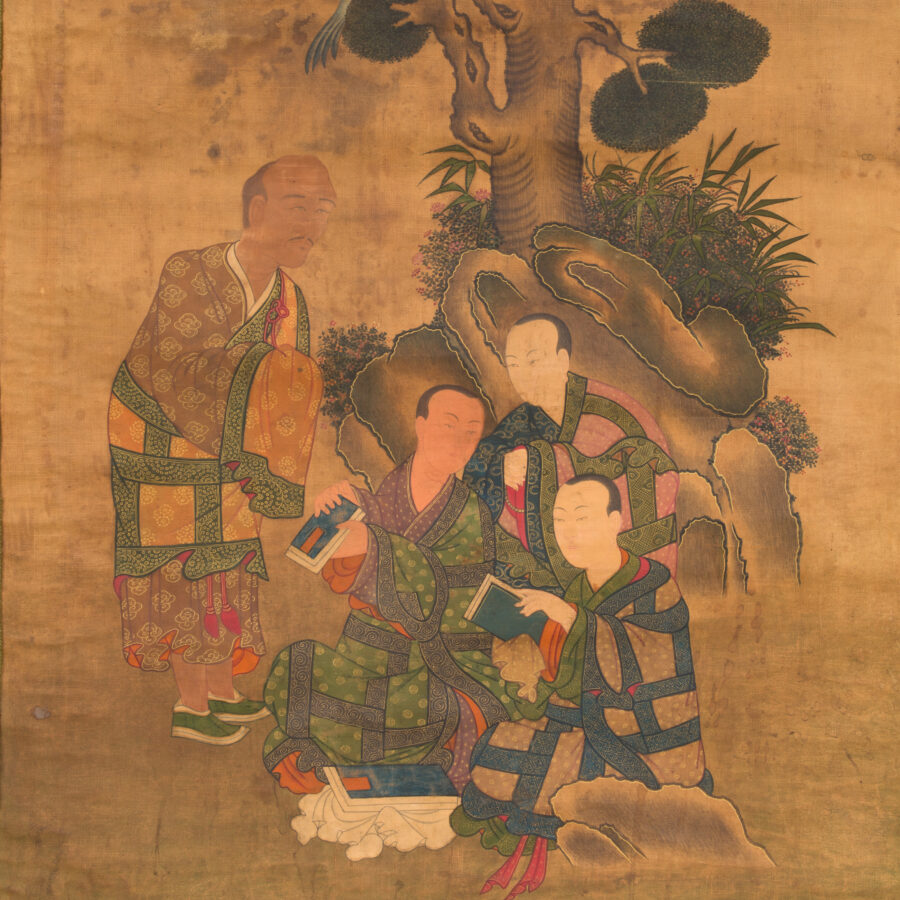
This painting shows four arhats, original disciples of Buddha Shakyamuni. It was once part of a set of five paintings depicting the full group of sixteen arhats flanking a central painting of the Buddha. In contrast to Tibetan representations of this subject, the arhats here are not distinguished individually but are shown engaged in a shared activity, namely as scholars reading books and discussing their content. The long-sleeved robes and books bound on one side with vertical title cartouches are Chinese in fashion, and the pine and rock motif is a Chinese symbol of longevity. The Tenth Karmapa, Chöying Dorjé (Chos dbyings rdo rje; 1604–1674), is known for creating such an idiosyncratic painting style strongly reminiscent of Chinese painting of the distant past. Following the Tenth Karmapa’s artistic tradition, this painting is closely comparable to a group of seven pounces identified as true copies (zhal bshus) from originals by the Fourteenth Karmapa, Tekchok Dorjé (theg mchog rdo rje; 1797–1845). For instance the arhat in green holding a text out to the viewer is almost identical to an arhat in one of the tracings, and the elongated birds are quite close to the birds in another. It also closely resembles other paintings in the collections of Thomas Chen, Ulrich von Schroeder, and Karma Monastery with a similar ornate treatment of the gold-patterned garments, inky rocks, and spare landscapes. All can be attributed to the Fourteenth Karmapa or his followers.
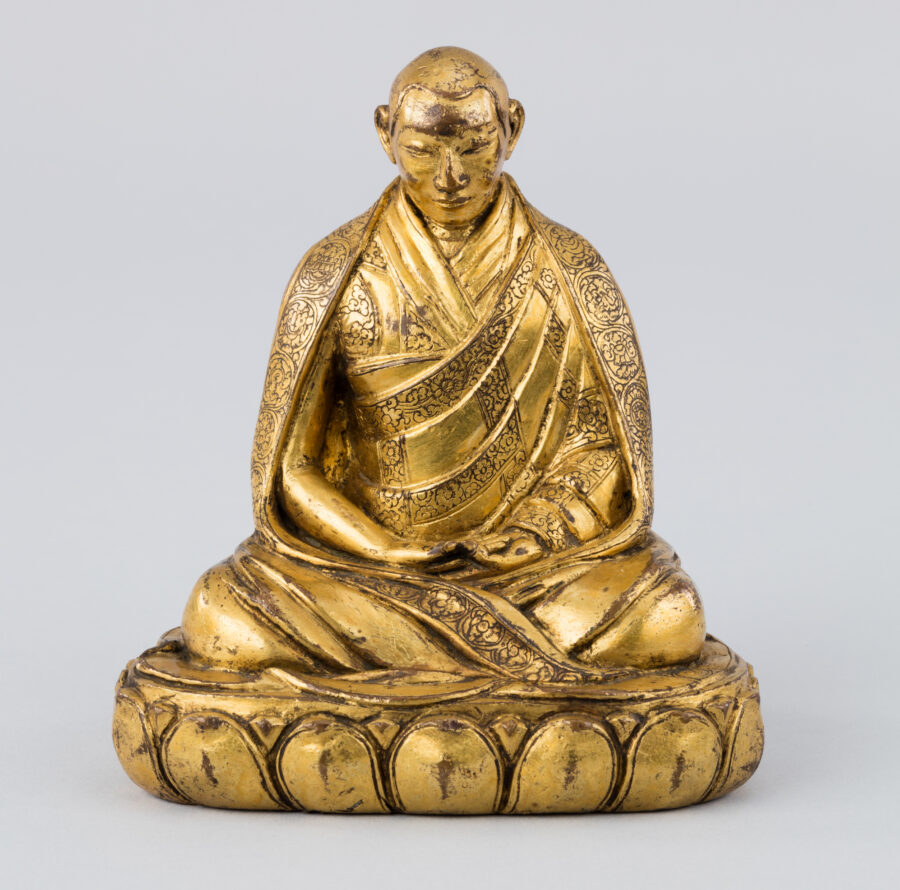
There is strong textual and visual evidence of later followers working in the Tenth Karmapa’s style at Pelpung Monastery, starting with the great scholar-artist and founder of Pelpung, the Eighth Situ, Situ Penchen (1700–1774), and continuing under his successor, the Ninth Situ Pema Nyinjé Wangpo (pad+ma nyin byed dbang po; 1774–1853). This continued awareness and imitation of the Karmapa’s style in the court of the Ninth Situ at Pelpung Monastery is especially interesting, as he was the teacher of the great nineteenth-century scholar Jamgön Kongtrül (‘jam mgon kong sprul ; 1813–1899), who gave Chöying Dorjé such a prominent place in the history of Tibetan painting. The Fourteenth Karmapa was another student of the Ninth Situ, born in Kham, and part of this same intellectual circle of lamas. He was, for instance, a teacher of the aforementioned Jamgön Kongtrül.According to his biography, the Fourteenth Karmapa “was one skilled in all arts such as Tibetan and Chinese orthographies, and the making of images of deities whether painted, carved, cast, and sewn like Bishwakarma (Hindu god of art and architecture).” The same biography goes on to say, “He erected many new representations of body, speech, and mind (statues, scriptures, and stūpas) such as Amitayus and Guru Rinpoche. In particular many art works such as paintings, cast metal, and appliqué (gos sku) with a graceful appearance made by the Lord of the Victorious Ones (the Karmapa) himself that are distinct from those made by others.”
A meditation technique primarily used in tantric practice that involves imagining a deity in one’s mind or imagining oneself becoming a deity and carrying out various activities. Such techniques are intended to help a practitioner transform ordinary perception and achieve enlightened qualities.
The transmission of teachings from one generation to the next, from teacher to student, traced all the way back to the Buddha without interruption. A complete lineage is essential in Tantric Buddhist practices as it makes the blessings of the teaching more powerful.
The central goal of Buddhism is the liberation of all beings from suffering and the cycle of life, death, and rebirth, known as samsara, through applying the teachings of the Buddha.
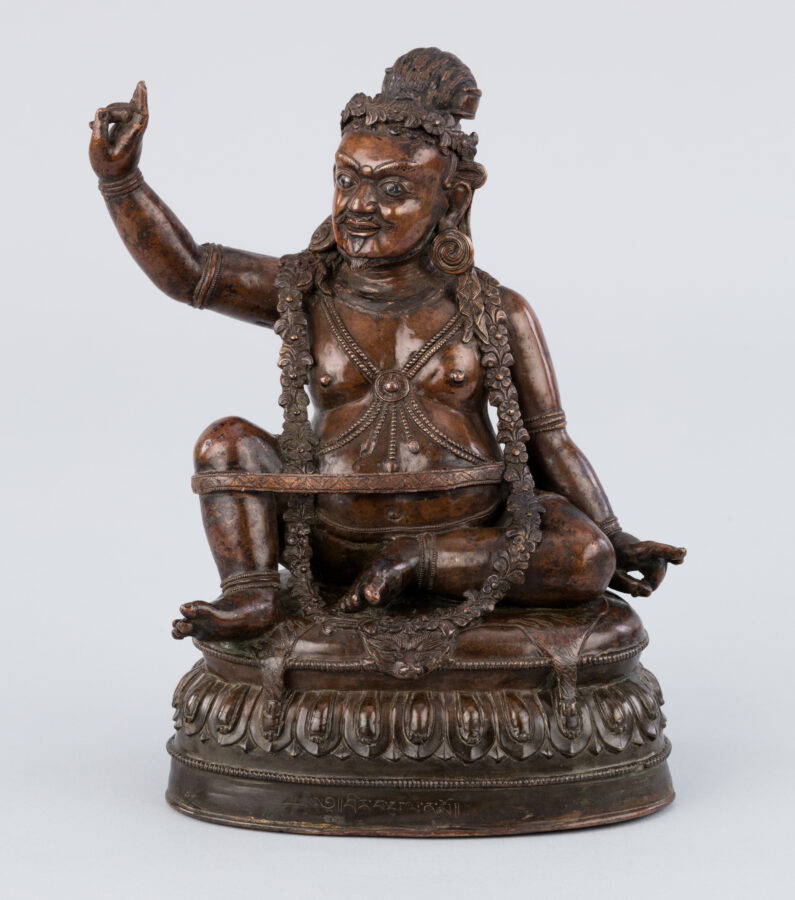
Himalayan art includes portraits of legendary and historical humans, including accomplished religious teachers (lamas), the Buddha’s original disciples (arhats), and spiritually accomplished tantric masters (mahasiddhas).
Today, Tibetans primarily inhabit the Tibetan Plateau, situated between the Himalayan mountain range and the Indian subcontinent to the west, Chinese cultural regions to the east, and Mongolian cultural regions to the northeast. During the 7th to 9th century, Tibetan rulers expanded their empire across Central Asia, and established Buddhism as the state religion.

Get the latest news and stories from the Rubin, plus occasional information on how to support our work.