Tibet
18th century
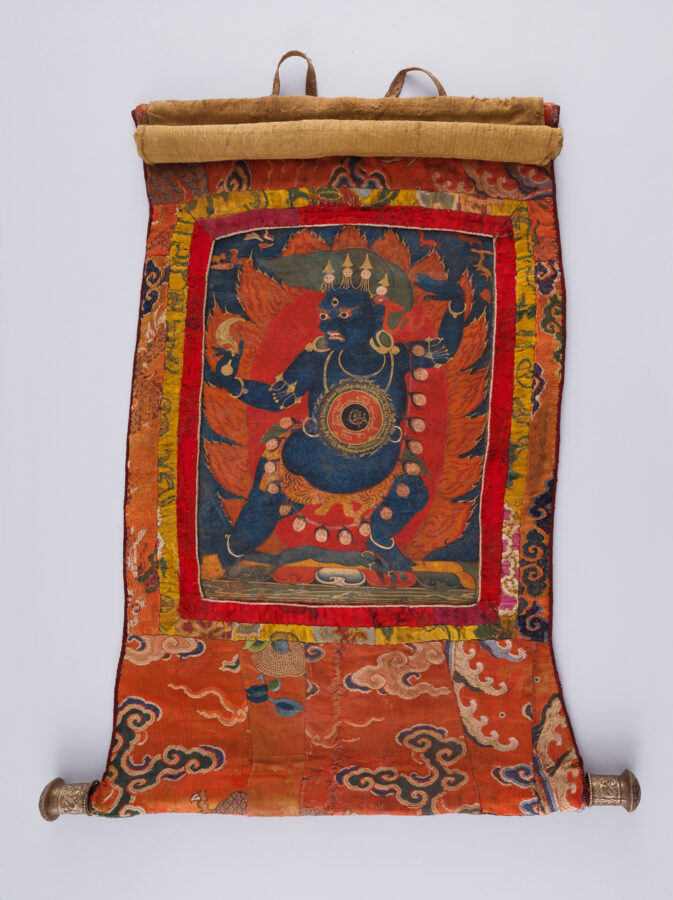
This gesture is that of embracing a consort and is symbolic of bringing together two aspects of enlightenment: wisdom and method.
Tibet
18th century
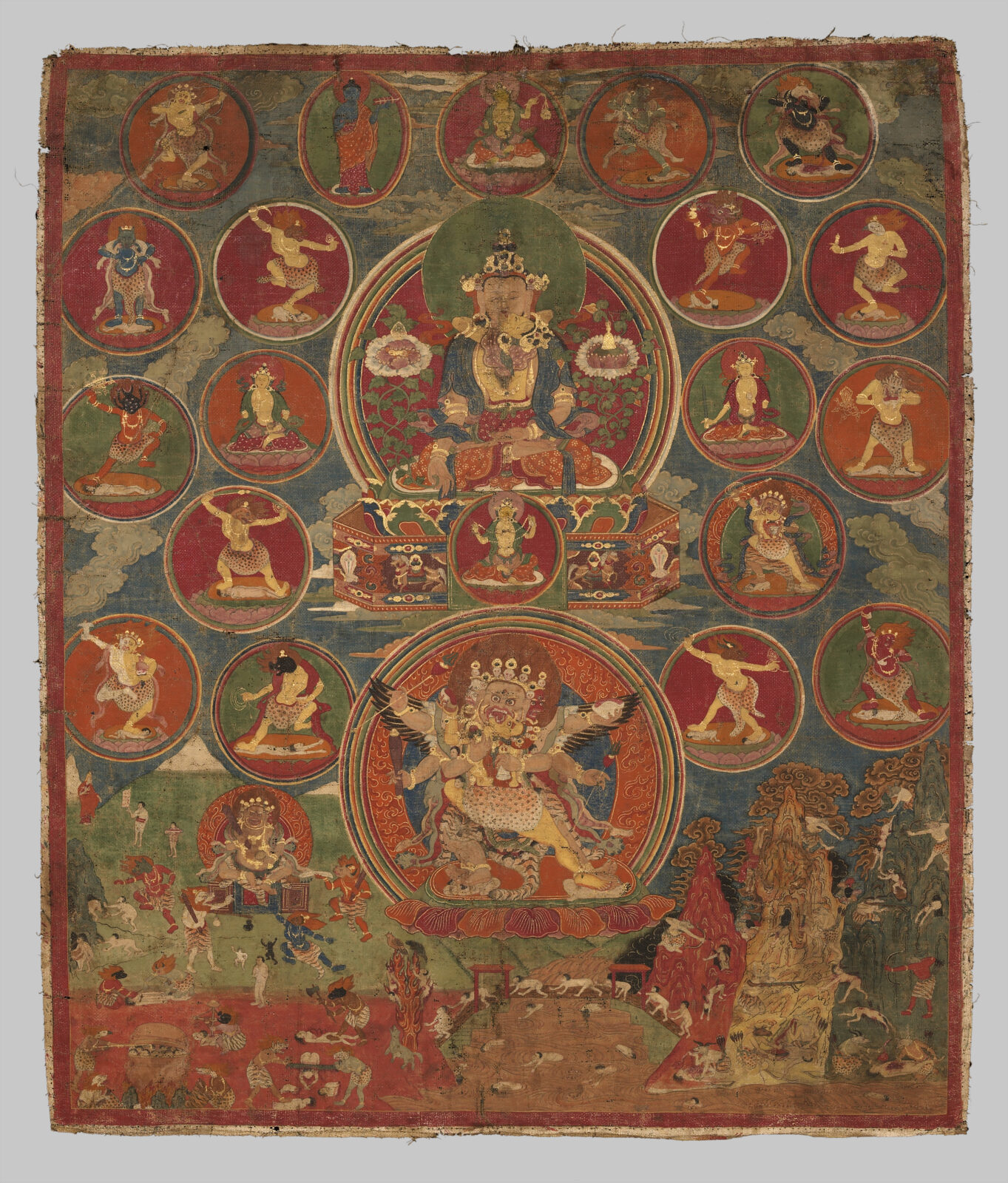
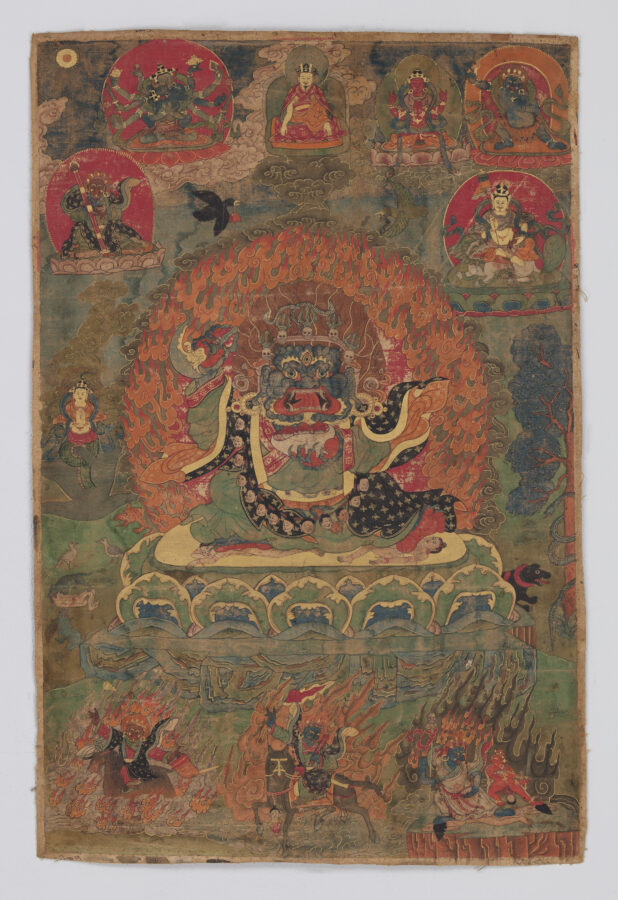
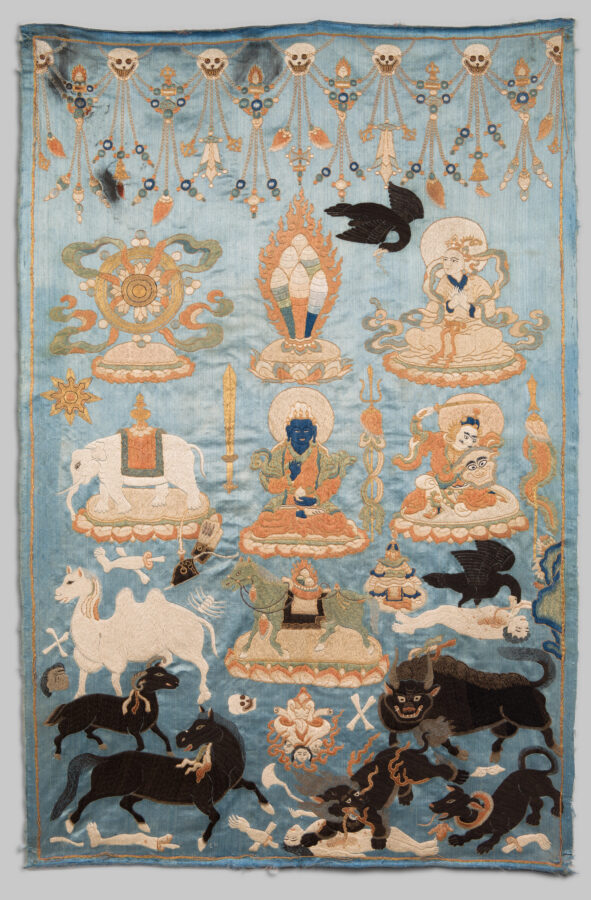
Buddhists believe that at the moment of death one’s consciousness transitions to an intermediate state called the bardo. For a period of 49 days, consciousness wanders, propelled by the person’s accumulated positive and negative actions known as karma.
This painting is a visual representation of the bardo from the Liberation through Hearing in the Intermediate State (Bardo Thodrol), known in the West as the Tibetan Book of the Dead. This 14th-century text gives a precise, carefully structured, and vivid description of the experience of the mind during the intermediate state.
At the moment of death, one experiences visions that offer an opportunity to achieve an enlightened state. But if the terrifying visions brought on by one’s own negative karma are not recognized as mere projections of one’s own mind, it prevents a good rebirth. The teachings of the text allow practitioners to prepare and train their minds for this moment. Often ritual specialists read instructions to the deceased as a means of guiding them through the difficult process of transitioning to their future existence.
The central figures in the upper half of this painting are Buddha Ratnasambhava and his consort Mamaki. According to the Bardo Thodrol, visions of these figures are said to occur on the third day of the bardo. Once the hallucinatory projections of the peaceful deities have finished, their wrathful manifestations appear. Depicted below are Ratna Heruka and his wrathful consort Ratna Krodhishvari, who are believed to manifest on the tenth day. The lower register portrays scenes of excruciating tortures inflicted on those condemned to the hell realms by their karma.

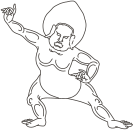
This gesture is that of embracing a consort and is symbolic of bringing together two aspects of enlightenment: wisdom and method.

The right hand is extended in a giving gesture.
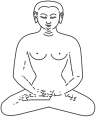
Also known as vajra position, this posture is associated with meditation.
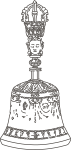
A bell is often paired with the vajra and is another implement used in tantric practices and an attribute of tantric masters and deities. It generally symbolizes wisdom, the feminine aspect of enlightenment, and its ring is said to be the sound of emptiness.
An energy wielded with intention, skill, and compassion to offer protection and remove obstacles. In Buddhism, it is considered different than negative emotions like anger or rage.
The idea that everything is temporary, constantly changing, and moving through stages of development, decay, and dissolution. Impermanence is a reminder to avoid strong attachments and focus on the present moment.
A religious movement that originated in India around the fifth to seventh century with sacred writings and esoteric teachings and practices transmitted from teacher to student through initiation. These remain an important part of Hinduism and Buddhism today.
In Buddhism time is perceived as relative, dynamic, and conceptual. This outlook highlights important principles of interdependence within Buddhist philosophy.
The end of this life marked by the cessation of bodily functions followed by decay. According to Buddhism, after death consciousness transitions to an intermediate state known as the bardo before embarking on another life.
A contemplative practice in which a person uses concentration and visualization to achieve aims such as transforming the mind and generating feelings of compassion. Techniques include focusing on breathing or visualizing oneself as a deity.
Buddhism is fundamentally about transformation, as changing one’s attitude and conduct are required to end suffering and attain enlightenment.
The functioning of cause and effect across time. Buddhists believe that everything we experience is the result of past actions, and everything we initiate has future consequences. Karma encourages actions to bring about positive outcomes and a better future.
A state of “waking up” from illusion and seeing the true nature of reality. Buddha Shakyamuni attained enlightenment while meditating under the bodhi tree. Buddhist teaching explains that the accumulation of merit and wisdom are essential for achieving enlightenment, also known as awakening.
A state of “waking up” from illusion and seeing the true nature of reality. Buddha Shakyamuni attained awakening while meditating under the bodhi tree. Buddhist teaching explains that the accumulation of merit and wisdom are essential for achieving awakening, also known as enlightenment.
The central goal of Buddhism is the liberation of all beings from suffering and the cycle of life, death, and rebirth, known as samsara, through applying the teachings of the Buddha.
An awakened being who understands the true nature of reality and is free from the cycle of birth, death, and rebirth. While there are many buddhas, Siddhartha Gautama is the historical Buddha, whose teachings became the foundation of Buddhism.
Tantric deities personify various enlightened qualities and are the focus of esoteric religious practices (tantras) that aim to swiftly and radically transform one’s understanding of reality.
Protectors of Buddhist teachings who destroy obstacles that impede the path to enlightenment. The more frightening and gruesome their appearance, the greater their power.
Today, Tibetans primarily inhabit the Tibetan Plateau, situated between the Himalayan mountain range and the Indian subcontinent to the west, Chinese cultural regions to the east, and Mongolian cultural regions to the northeast. During the 7th to 9th century, Tibetan rulers expanded their empire across Central Asia, and established Buddhism as the state religion.

Get the latest news and stories from the Rubin, plus occasional information on how to support our work.