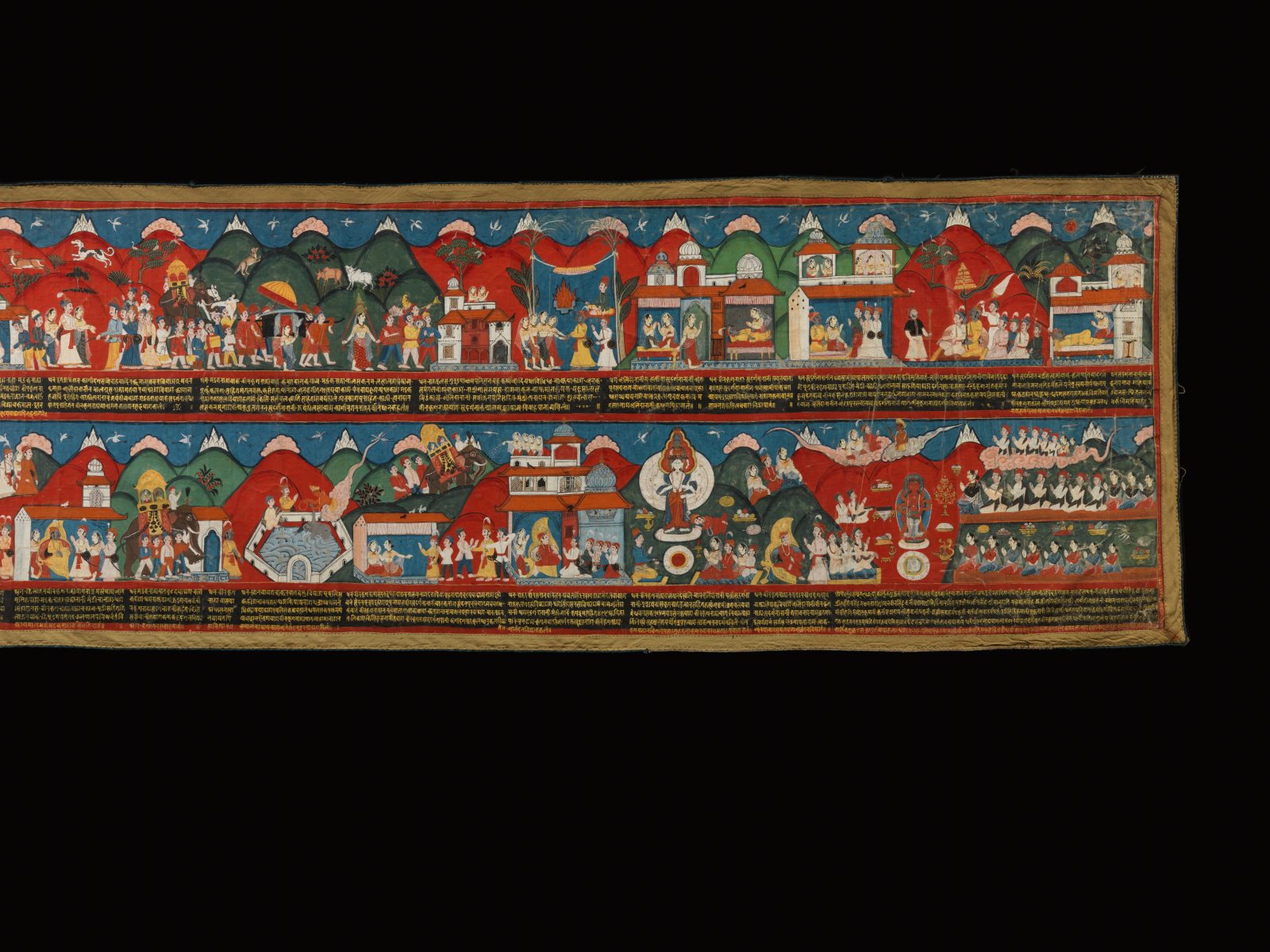
Temple Banner (Bilampau) Depicting Prince Virakusha’s Legend; Nepal; Dated by inscription 1864; Pigments on cloth; 33 3/4 × 225 1/4 in. (estimated); Rubin Museum of Art; Rubin Museum of Art, Gift of John and Fausta Eskenazi; C2002.44.2
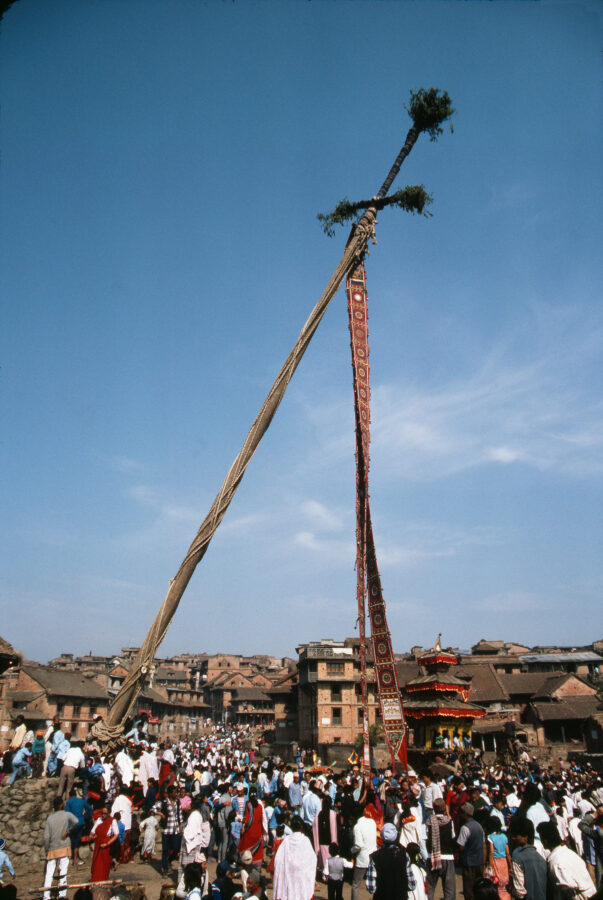
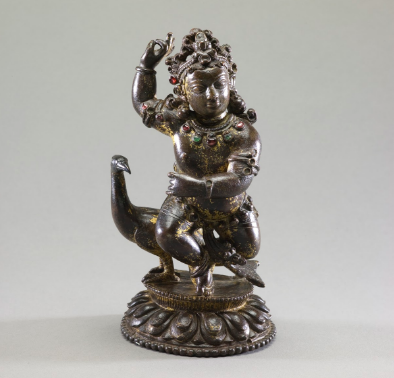
Featuring almost 50 objects from the Rubin Museum’s premiere collection of Nepalese art and select loans, Nepalese Seasons: Rain and Ritual illustrates the enduring manifestation of rituals, agrarian festivals, and the natural environment in the art of Nepal’s Kathmandu Valley. This is the first exhibition connecting well-known deities represented in Nepalese art to rituals and festivals surrounding the rainy season, or monsoon, and highlighting the importance of the seasons to the culture and everyday life of Nepalese people. Through this lens, the exhibition offers visitors a new understanding of the region and its art, which is already renowned for its high quality and aesthetic appeal.

As life in Nepal faces ongoing threats from natural disasters and climatic changes, Nepalese Seasons poignantly illustrates how the country’s dependence on monsoon rain continues to play an important role in its agriculture, spirituality, social culture, and art.
Gautama Vajracharya is a scholar of South Asian languages, art, and culture. He taught the history of Indian art at the University of Wisconsin-Madison for 23 years. In addition to teaching, Vajracharya has made contributions to Nepalese and Indian art and iconography throughout his long career.
His latest publication is “Ancient Cow Calendar: Discerning the Aspects of Vedic and Pre-Vedic Bovine Rites in Modern Day Festivities of India and Nepal,” Electronic Journal of Vedic Studies, vol. 30, no 1 (2025). He authored Nepalese Seasons: Rain and Ritual (2016) for the Rubin, detailing the interrelationships among local deities, seasonal festivals, rituals, and the annual monsoon as part of the 2017 exhibition Nepalese Seasons: Rain and Ritual, which he also curated. His other publications include Frog Hymns and Rain Babies: Monsoon Culture and the Art of Ancient South Asia (2013), Himalayas: An Aesthetic Adventure (2003, co-author), Watson Collection of Indian Miniatures at the Elvehjem Museum of Art: A Detailed Study of Selected Works (2002), and Hanumandhoka Rajdarbar (1974, in Nepali).
Elena Pakhoutova is senior curator, Himalayan art, at the Rubin Museum of Himalayan Art and holds a PhD in Asian art history from the University of Virginia. She has curated several exhibitions at the Rubin, including Death Is Not the End (2023), The Power of Intention: Reinventing the (Prayer) Wheel (2019), and The Second Buddha: Master of Time (2018). More →


This exhibition is made possible in part by the E. Rhodes and Leona B. Carpenter Foundation and the Ellen Bayard Weedon Foundation. Additional support is provided by the National Endowment for the Arts, public funds from the New York City Department of Cultural Affairs in partnership with the City Council, and contributors to the 2016 Exhibitions Fund. The accompanying publication is supported in part by John and Fausta Eskenazi.
Get the latest news and stories from the Rubin, plus occasional information on how to support our work.