Photo by Kuo-Heng Huang
Photo by Kuo-Heng Huang
Each video in the Himalayan Art Up Close series highlights an object from the Rubin’s preeminent collection of Himalayan art and features the Rubin’s curators Karl Debreczeny and Elena Pakhoutova in dialogue with Smarthistory’s Beth Harris and Steven Zucker. Launched by the Rubin in 2024, the series is created in collaboration with Smarthistory—the most-visited art history resource in the world. Himalayan Art Up Close offers an accessible and engaging online introduction to the art and material culture of the Tibetan, Himalayan, and Inner Asian regions. Two years into the partnership, 23 videos have been released, attracting over 100,000 views worldwide.
Smarthistory is an ideal partner to support the Rubin’s goal of bringing more art to more people in more places in the Museum’s new model as a global museum without a centralized physical space. For Kimon Keramidas, head of digital content and strategy at the Rubin, “Smarthistory has a tremendous following and loves our collection, so the collaboration was an easy fit. But just as important is how their mission aligns with ours. Smarthistory is first and foremost an education platform aimed at reaching undergraduate college and high school students.”
“This partnership dovetails nicely with our flagship educational initiative Project Himalayan Art. The essays in it are designed to be concise and accessible, but video can be a more engaging experience,” says Karl Debreczeny. Elena Pakhoutova echoes this sentiment, noting, “Smarthistory has a great formula of presenting and talking about an object, which works really well, especially for audiences who may have not encountered such art before or would like to learn more.”
When asked what makes their approach resonate so widely, Smarthistory’s Beth Harris and Steven Zucker explain, “Learners want to gain significant new insights from a trusted source and feel they are being treated respectfully and no assumptions are being made regarding their prior knowledge of the subject being explored.”
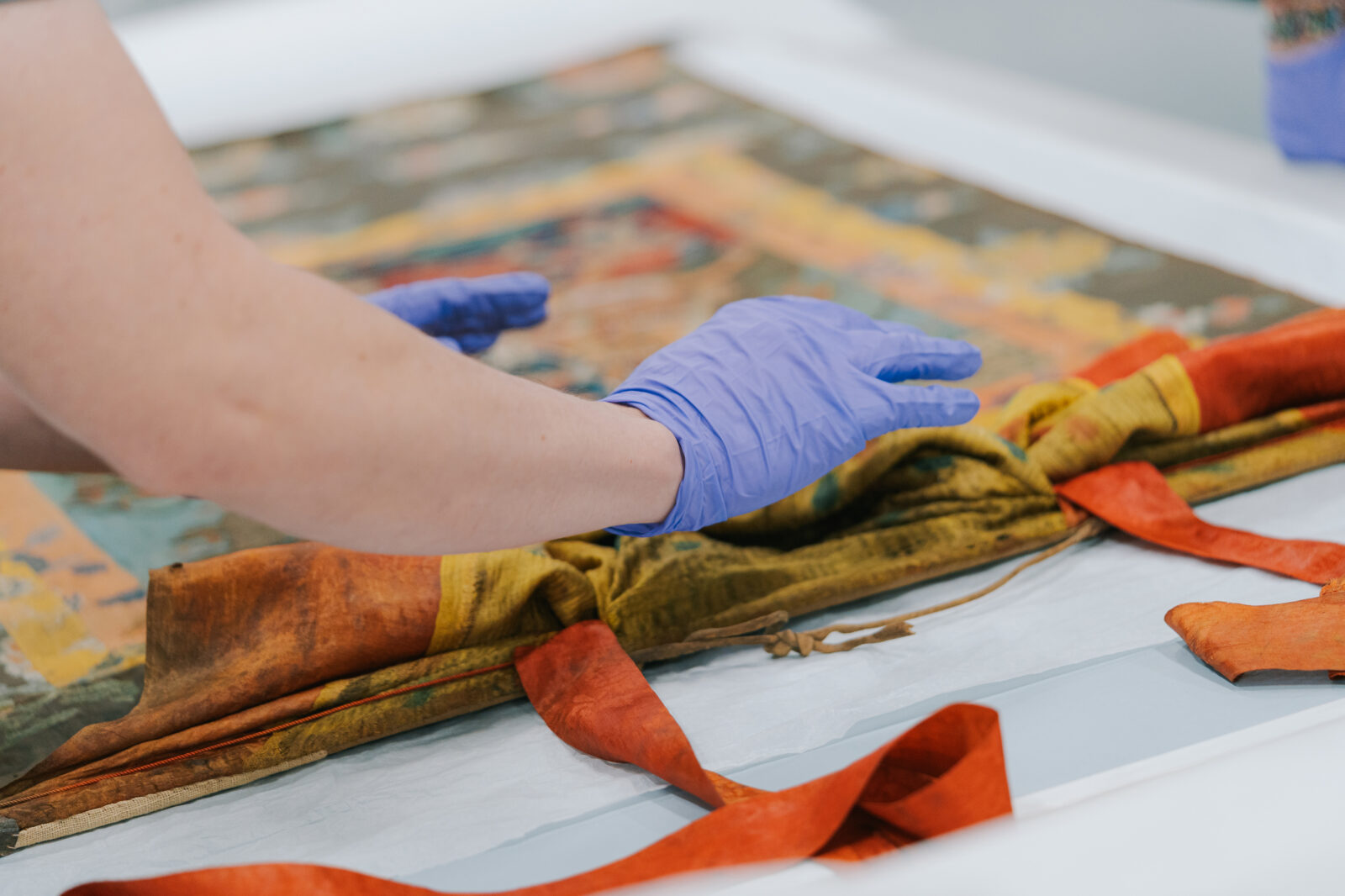
Photo by Kuo-Heng Huang
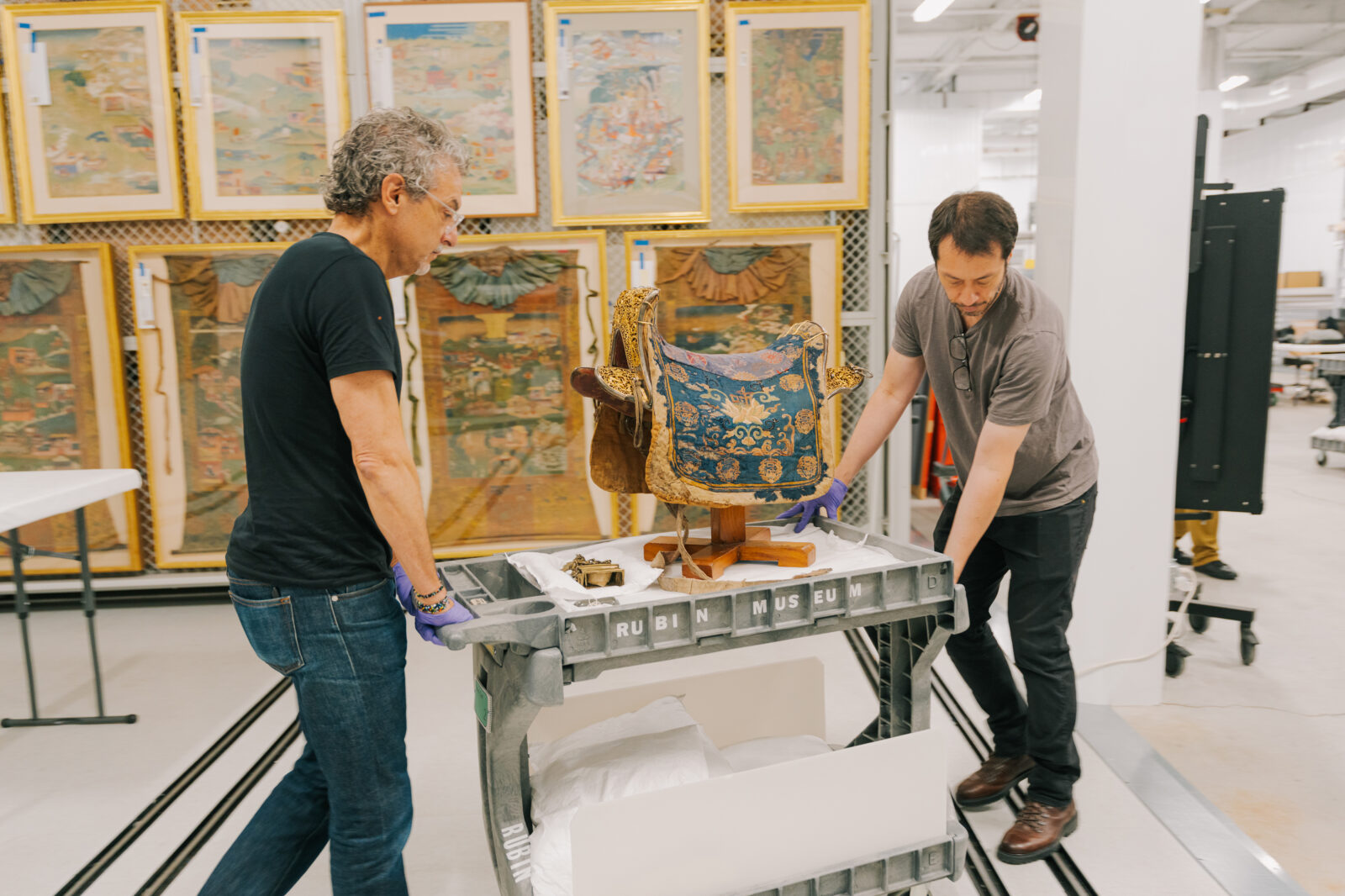
Photo by Kuo-Heng Huang
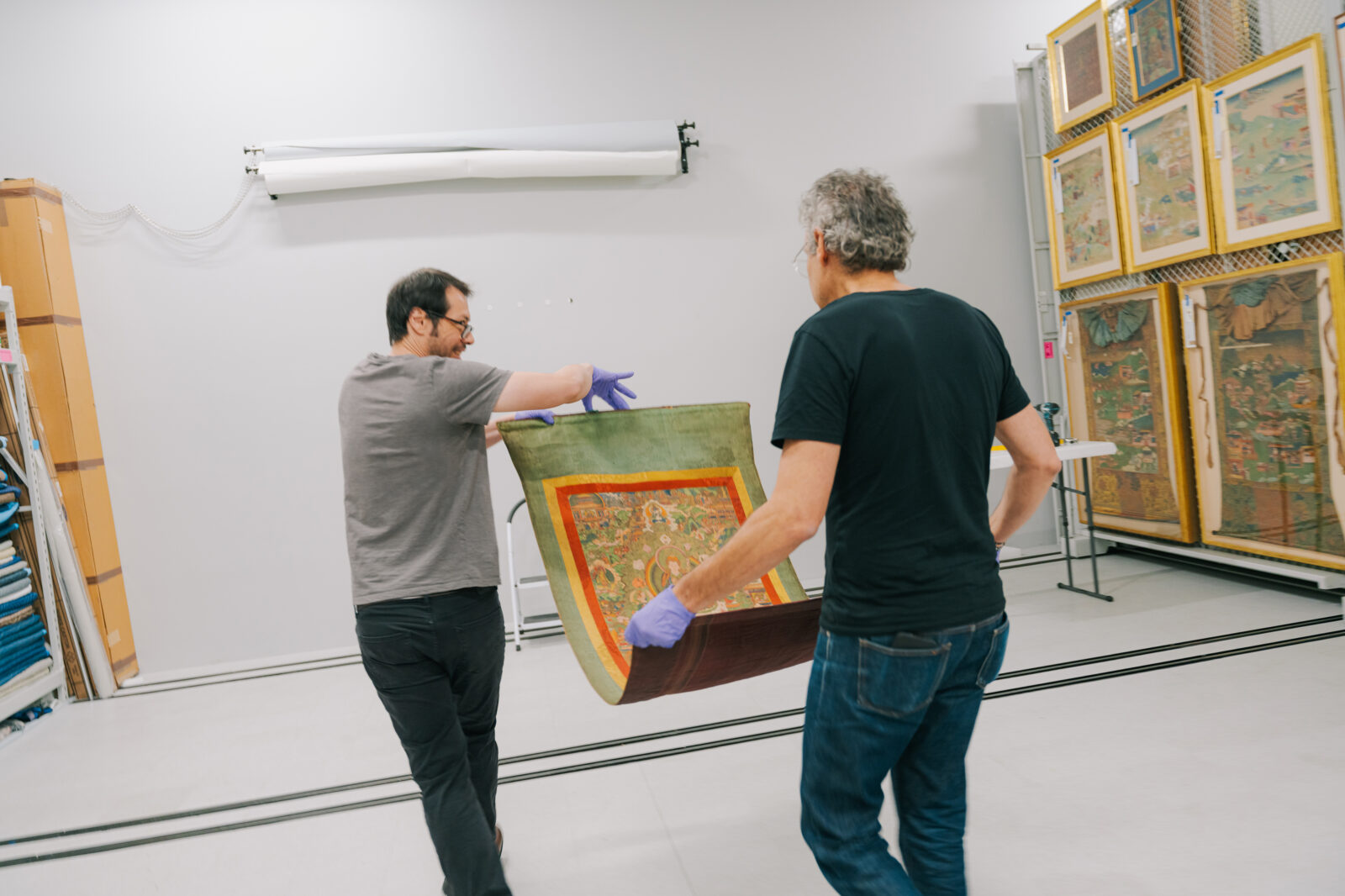
Each video can take up to six months to produce—from the initial brainstorm to the final edit. “Our curators have to prepare thorough materials to help Beth and Steven really understand the works they will be discussing,” says Kimon. “Because the Rubin’s art is very detailed and contains specialized techniques and symbolism, that takes a lot of work.”
Choosing the objects to highlight is a collective effort between the Rubin’s curators and Executive Director Jorrit Britschgi. “We often chose the objects that would be complimentary to Project Himalayan Art or have an interesting story, content, context, or just pure amazing presence,” notes Elena. Karl adds, “We try to find a balance of object types, mediums, styles, and techniques while making sure to represent the different cultural traditions, such as Eastern Indian, Kashmiri, Nepalese, Tibetan, Bhutanese, and Mongolian regions.”
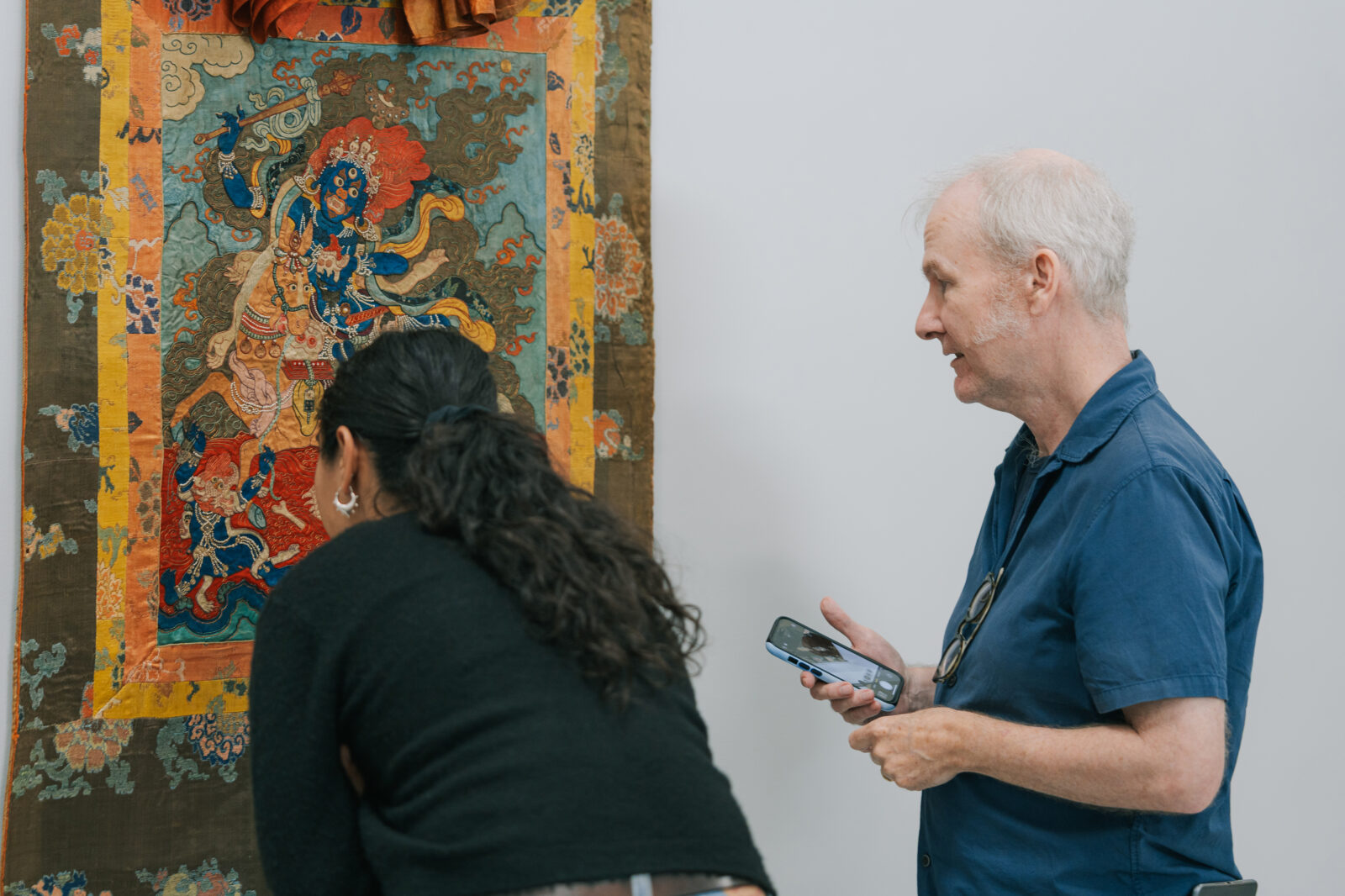
Photo by Kuo-Heng Huang
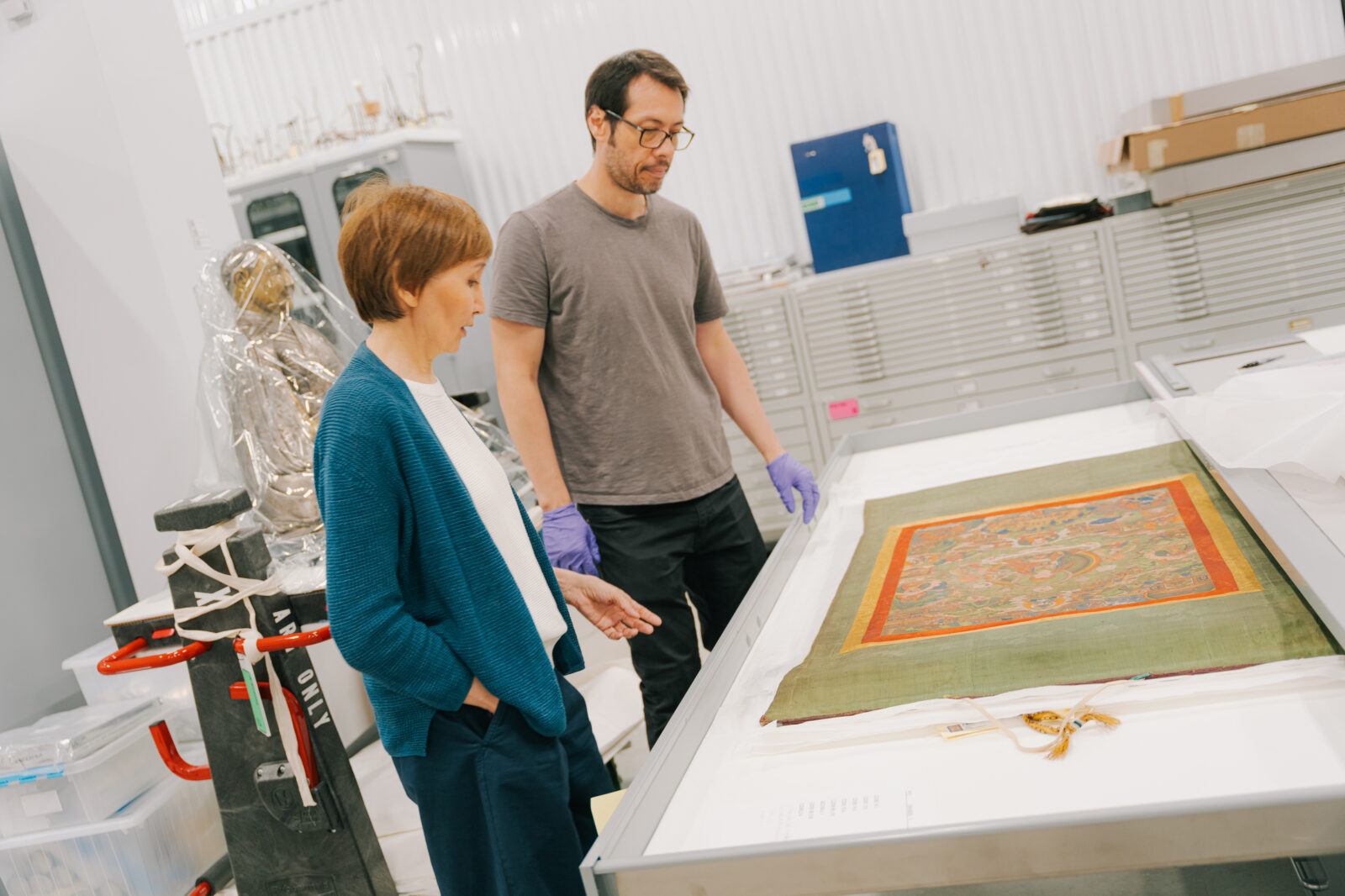
Photo by Kuo-Heng Huang
Each video is filmed in person, directly in front of the object itself—a detail not shown in the final edit, but it is essential to the process. As Beth and Steven note, “In an era when virtual realities and artificial intelligence have alienated us from direct experience, we want to share our love of looking together at the object as the artist intended. This means we see and can describe much finer details, subtle shades of color, and even the scale of a work—all things that might be lost if we worked from reproductions.”
Filming while looking at the object together shapes the conversational tone of the videos. In Elena’s experience, “When you talk about the object while it is in front of you, the immediacy of the connection is reflected in our conversation. This makes the videos helpful in guiding the audience to see the object as we see it during the conversation and teaches them how to look.” Karl adds, “One engages with the object as we hope the viewer will, as if the viewer is right there with us, listening in on our conversation and following along in a gallery.”

Photo by Kuo-Heng Huang
Key to the success of the video series is striking a balance between scholarship and accessibility. “This is where the Smarthistory partnership is especially useful, as they have a good understanding of what level of detail is essential and how much is too much,” Karl says. Elena adds, “What is always successful is to focus on the most interesting and notable things that make this specific object stand out. Often this can be an inscription, a specific technique, or symbolic meaning embodied in the object.”
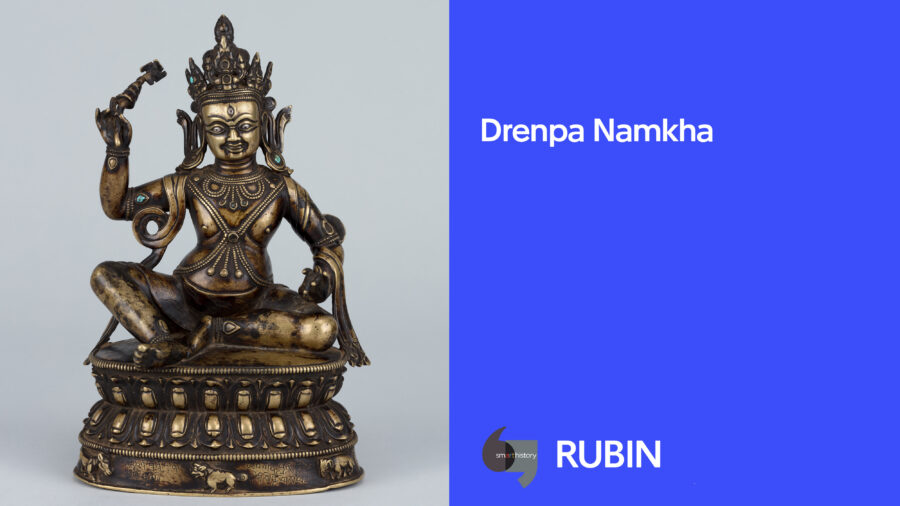
While the videos are aimed at Himalayan art novices, even the Rubin’s resident experts have gained new insights through the process of creating them. As Elena recalls, “The sculpture of the Bon teacher Drenpa Namkha was quite a challenge. It seems the inscription had never been translated, and I see why, as it proved quite difficult. I tried consulting a Tibetan scholar who kindly reached out to a Bon scholar and two Bon monks he knew. This is one of the challenges of working in a museum, being faced with a wide range of materials. This is also one way to learn and grow.”
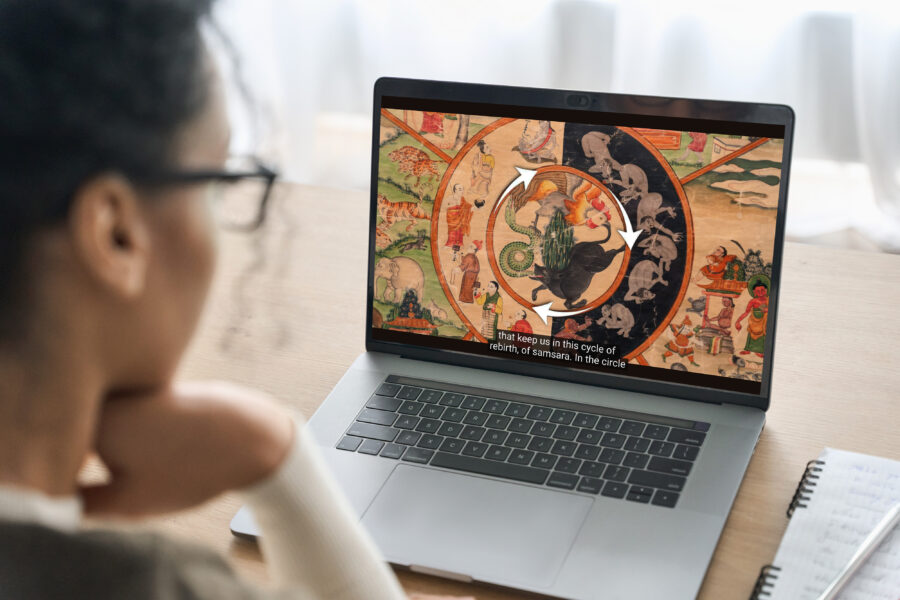
When asked which video they would recommend for a newcomer to Himalayan art, Beth and Steven say, “Perhaps it would be best to begin with the Wheel of Existence since it deals with foundational issues that may help to inform many of the other videos.”
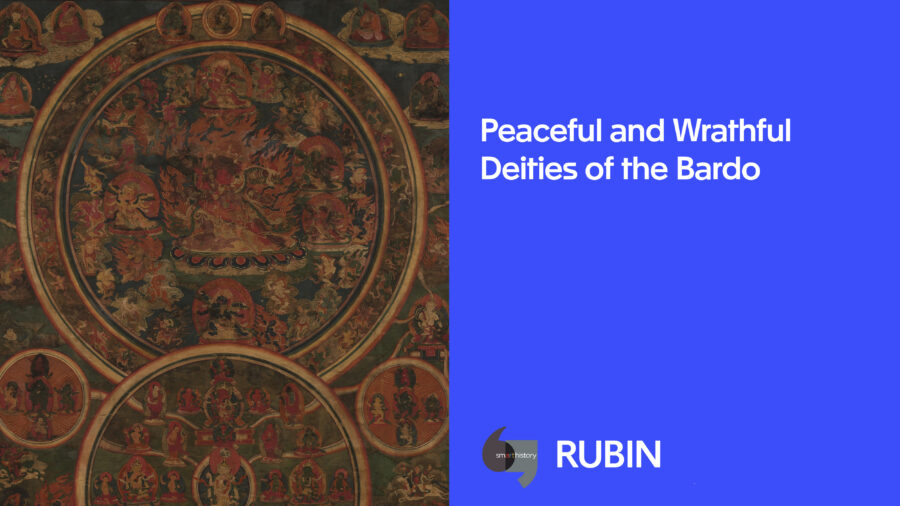
Kimon’s personal favorite video is the Peaceful and Wrathful Deities of the Bardo, “because of the way Smarthistory has used accessible editing techniques to make this extremely complex piece of art much easier to understand. With lots of vignettes, interlocking circles with sacred significance, and the presence of prominent Tibetan Buddhist deities and demigods, there is a lot to unpack. Smarthistory was able to isolate parts of the work and direct the viewer’s eye to understand how all these pieces come together.”
Smarthistory believes art has the power to transform lives and to build understanding across cultures. Beth and Steven elaborate, “Art has the ability to elicit empathy across time and cultures. Looking at art is a deeply human experience. We hope viewers will then seek to learn more by visiting museums, galleries, and libraries and perhaps even take classes online or in person. Smarthistory videos are meant to spark interest and to be a jumping off point so that learners develop an appreciation for the art that is all their own.”

Christina Watson is the digital editor at the Rubin Museum of Himalayan Art.
Karl Debreczeny is senior curator, collections and research, at the Rubin Museum of Himalayan Art. His research focuses on artistic, religious, and political exchanges between the Tibetan and Chinese traditions. His publications include The Black Hat Eccentric: Artistic Visions of the Tenth Karmapa (2012) and the coedited The Tenth Karmapa and Tibet’s Turbulent Seventeenth Century (2016). More →

Elena Pakhoutova is senior curator, Himalayan art, at the Rubin Museum of Himalayan Art and holds a PhD in Asian art history from the University of Virginia. She has curated several exhibitions at the Rubin, including Death Is Not the End (2023), The Power of Intention: Reinventing the (Prayer) Wheel (2019), and The Second Buddha: Master of Time (2018). More →

Dr. Beth Harris is cofounder and executive director of Smarthistory. Previously, she was dean of art and history at Khan Academy and director of digital learning at The Museum of Modern Art. Before joining MoMA, Beth was Associate Professor of art history and director of distance learning at the Fashion Institute of Technology where she taught both online and in the classroom. She has co-authored, with Dr. Steven Zucker, numerous articles on the future of education and the future of museums, and is the editor of Famine and Fashion: Needlewomen in the Nineteenth Century (2005). She received her Master’s degree from the Courtauld Institute of Art in London, and her doctorate in Art History from the Graduate Center of the City University of New York.

Dr. Steven Zucker is co-founder and executive director of Smarthistory. Previously, Steven was dean of art and history at Khan Academy. He was chair of history of art and design at Pratt Institute where he strengthened enrollment and lead renewal of curriculum across the Institute. Previously, he was dean of the School of Graduate Studies at the Fashion Institute of Technology, SUNY and chair of art history. He has taught at The School of Visual Arts, Hunter College, and at The Museum of Modern Art. Dr. Zucker is a recipient of the SUNY Chancellor’s Award for Excellence in Teaching. He has co-authored, with Dr. Beth Harris, numerous articles on the future of education and the future of museums. Dr. Zucker received his Ph.D. from the Graduate Center of the City University of New York.
Kimon Keramidas is the head of digital content and strategy at the Rubin museum of Himalayan art, spearheading new digital projects and initiatives. Before joining the Rubin in 2022, Keramidas served as a digital humanities consultant to the Museum to bridge the technical and subject matter experts, conceptualizing how digital tools can be presented to contextualize historical, object-centered information in compelling ways for a broad audience. More →


Get the latest news and stories from the Rubin, plus occasional information on how to support our work.