Kham region, eastern Tibet
19th century
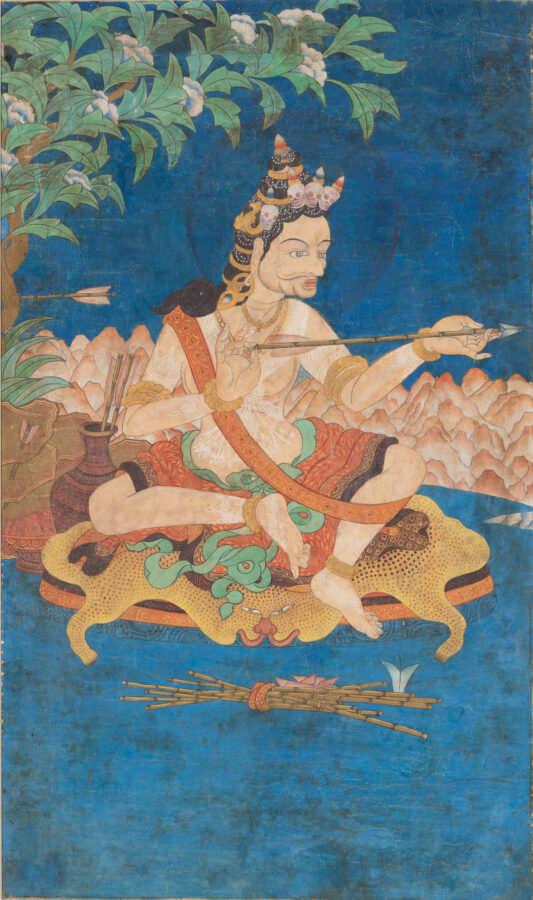
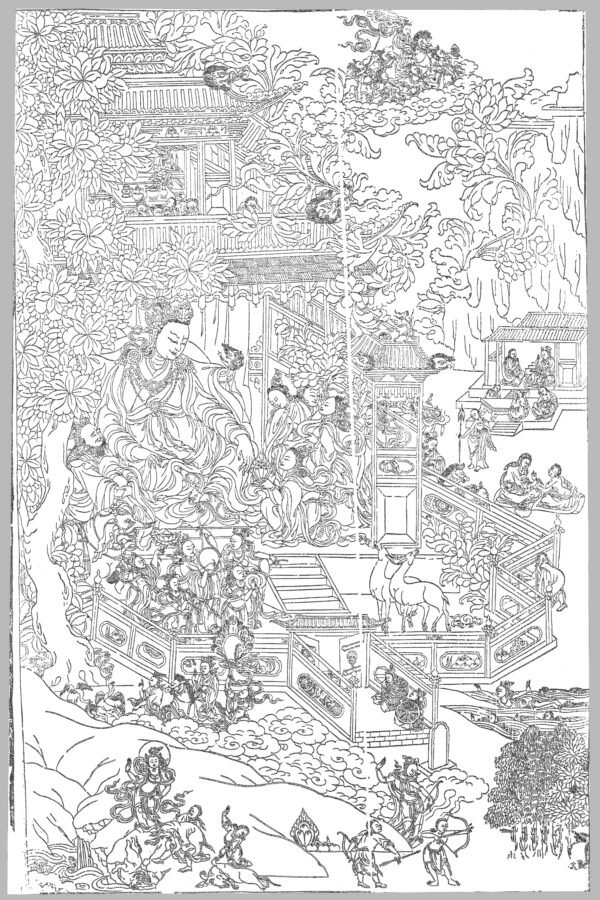
This relaxed posture is commonly associated with regal leisure.
Kham region, eastern Tibet
19th century
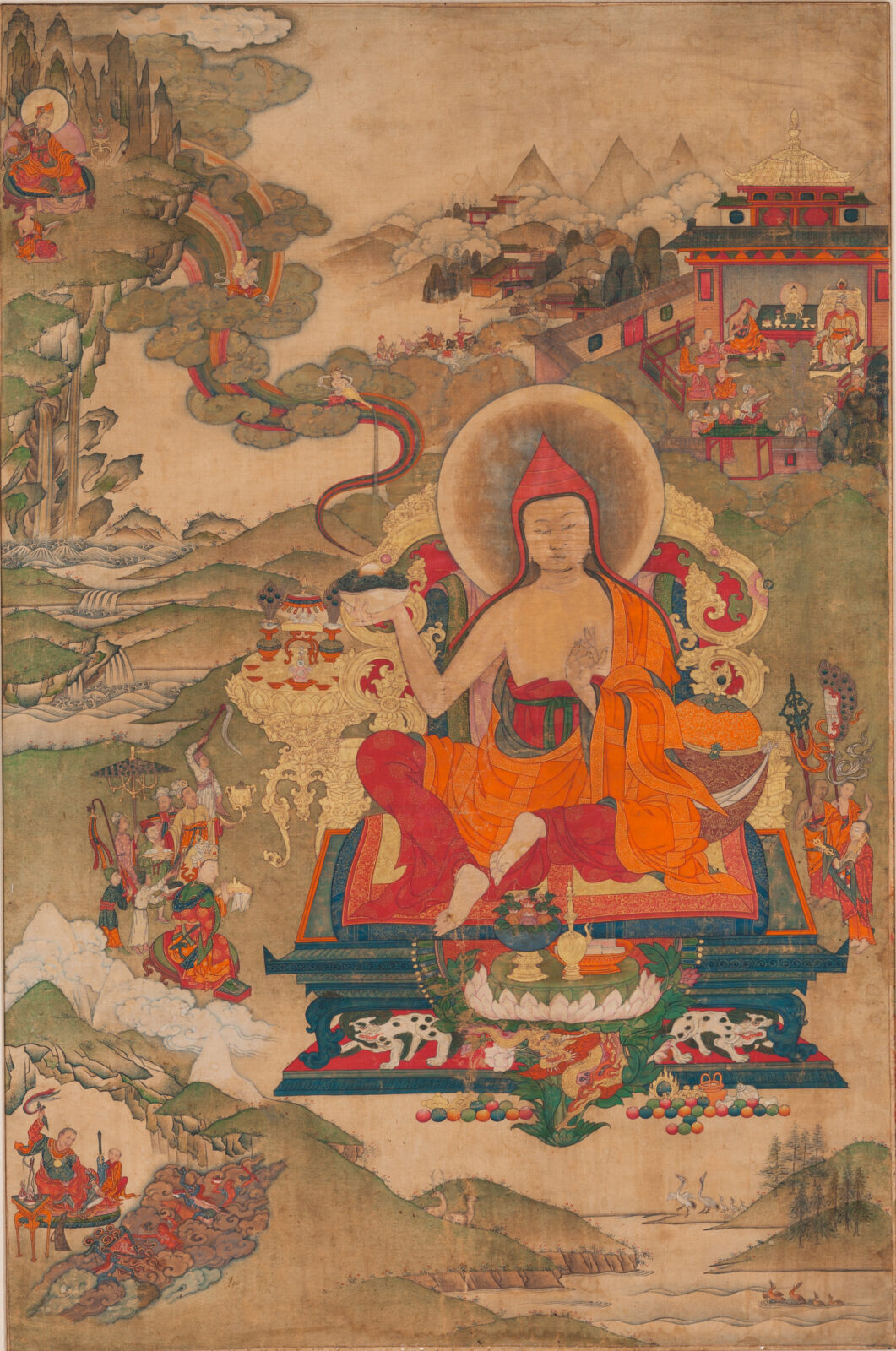
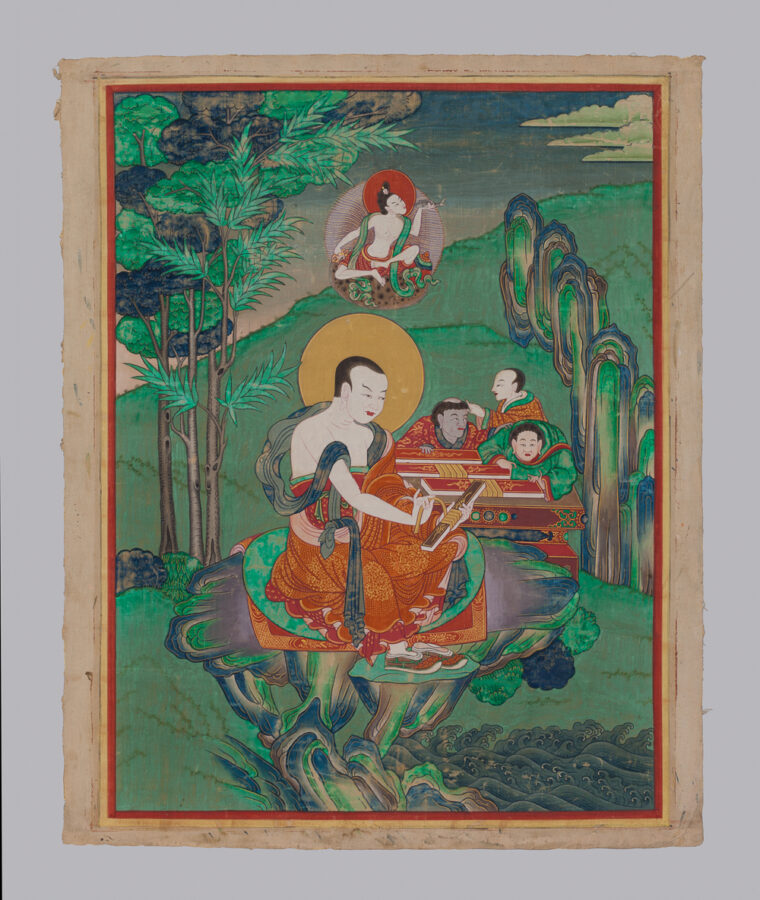
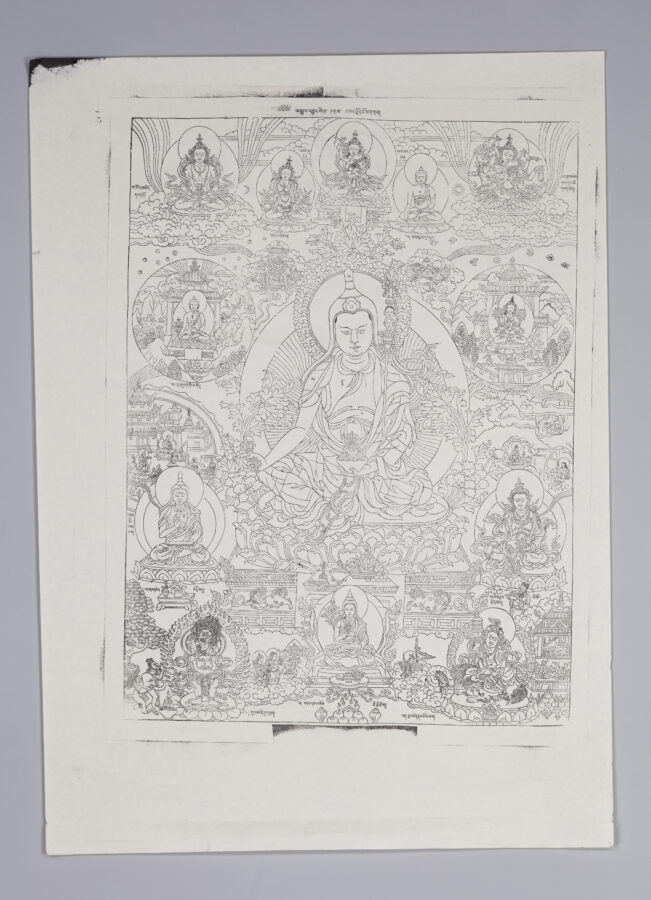
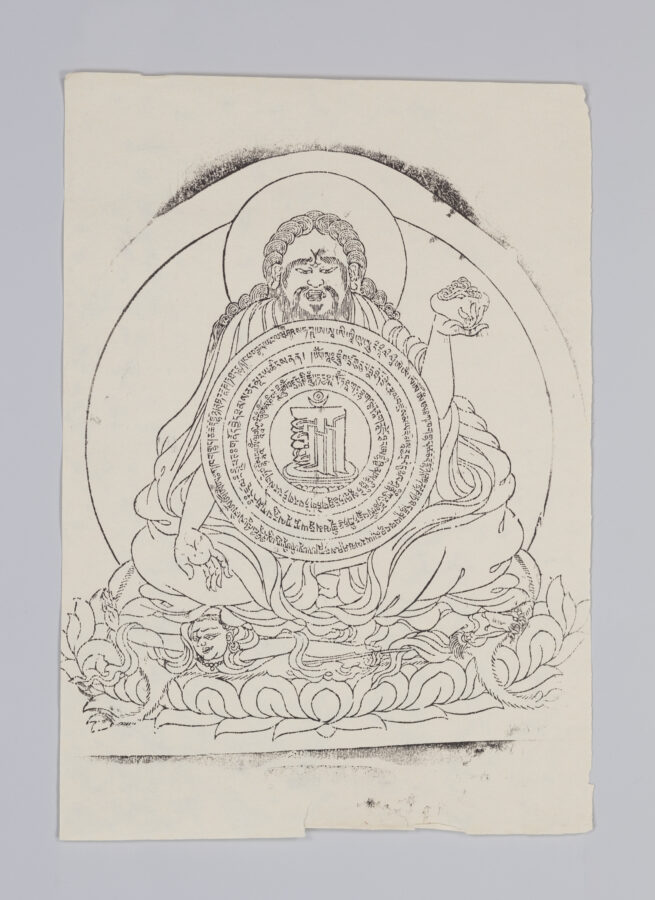
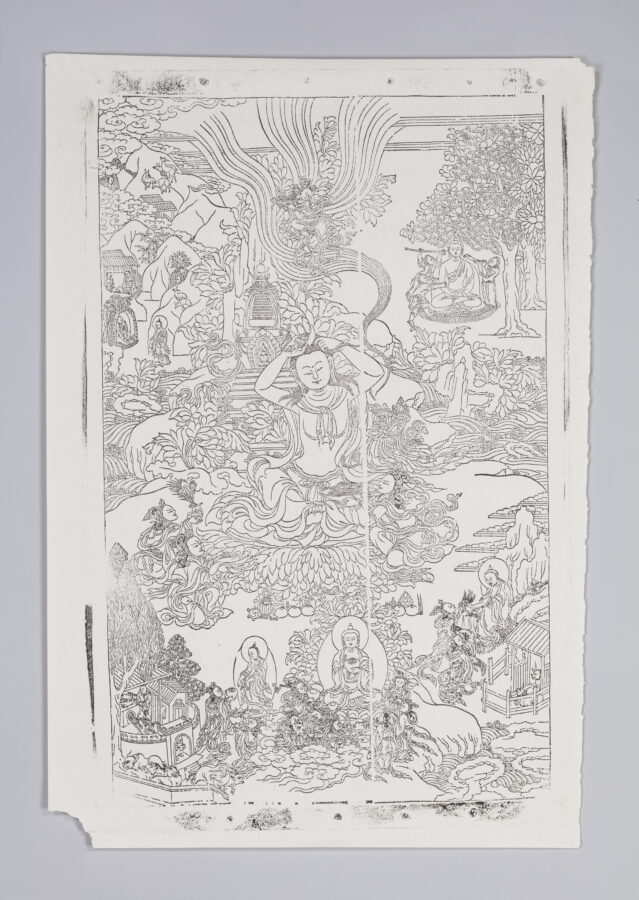
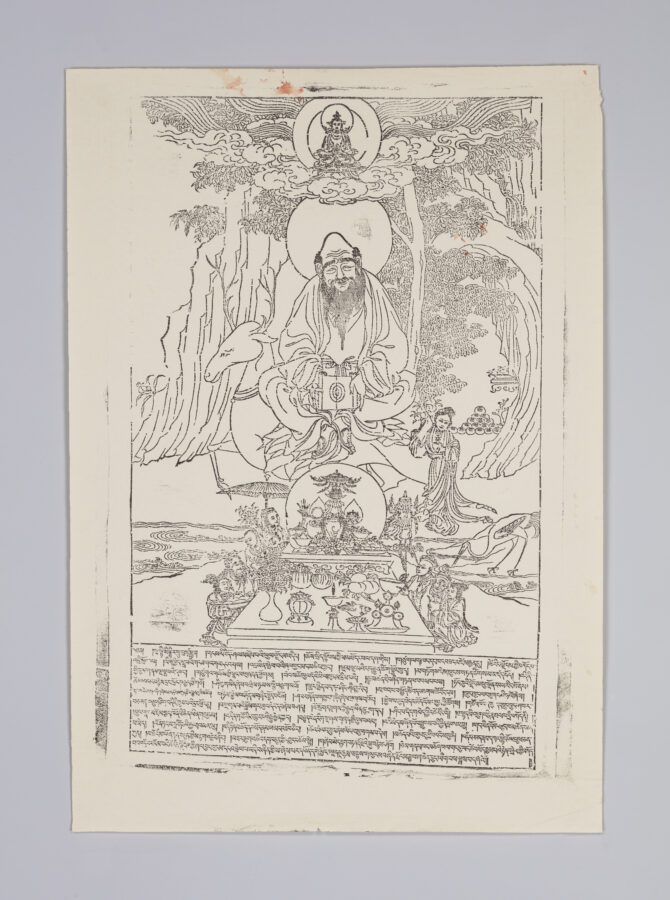
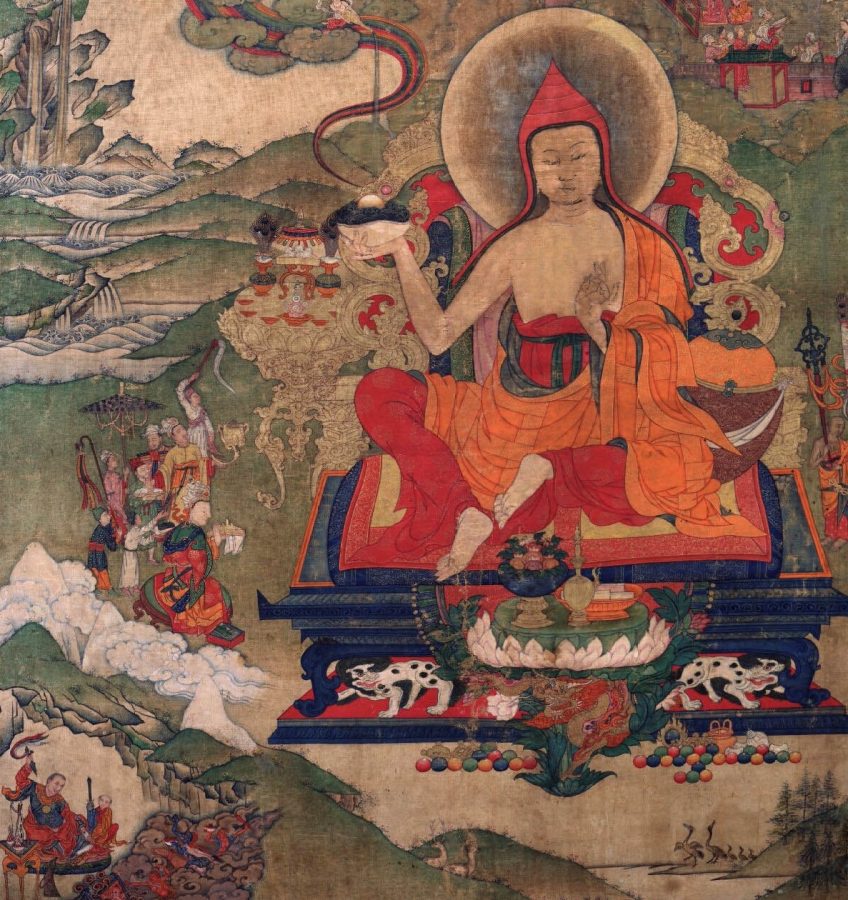
The Eight Manifestations of Padmasambhava (gu ru mtshan brgyad) are eight names of the legendary tantric master and yogin, who is said to have defeated the hostile spirits of Tibet while converting the land and its gods to Buddhism in the eighth century. The names became standardized and assumed iconographic forms now known as the Eight Manifestations of the Guru. This depiction as Pema Jungné (padma ‘byung gnas) is Padmasambhava as a young scholar when he studied in India.
This painting is from an important set from Pelpung Monastery depicting the Eight Manifestations of Padmasambhava in nine paintings. The biographies of the great patron and artist Situ Penchen (1700–1774) refer to at least two instances of him commissioning this subject. In his autobiography an event for 1770 he mentions supervising paintings of the Eight Manifestations of the painter Gyatsen (rgya tshan lha bzo) from from Dzatö (rdza stod), Chamdo. A second reference is to painting(s) painted by an artist from Jétö in western Kham in 1769, which scholar David Jackson suggests was probably Tséwang Drakpa (rje stod tshe dbang grags pa), a great painter and scholar that Situ worked with repeatedly in the 1740s and 1750s. Five other compositions have been identified as part of this set of Situ’s Eight Manifestations of Padmasambhava.
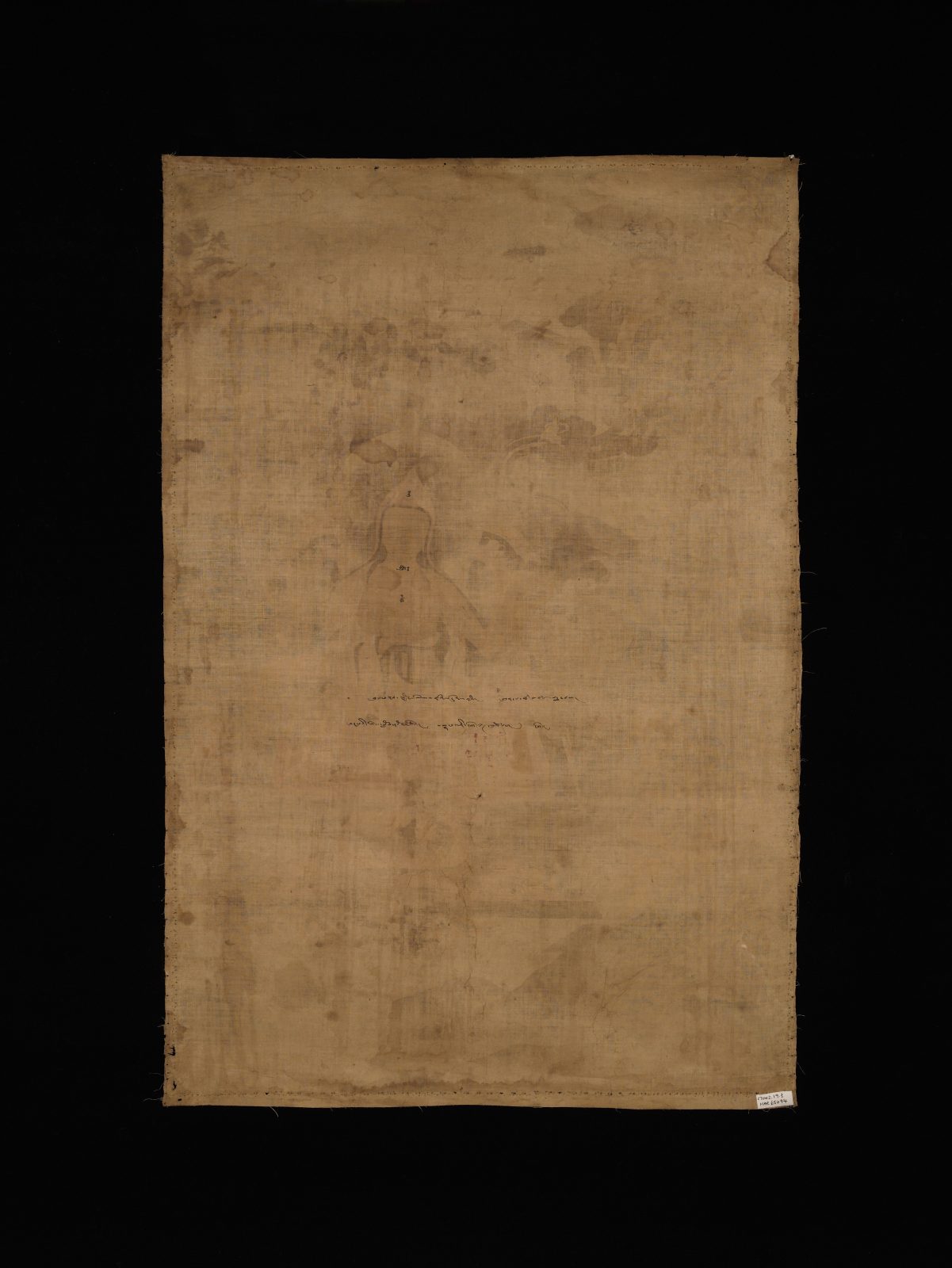
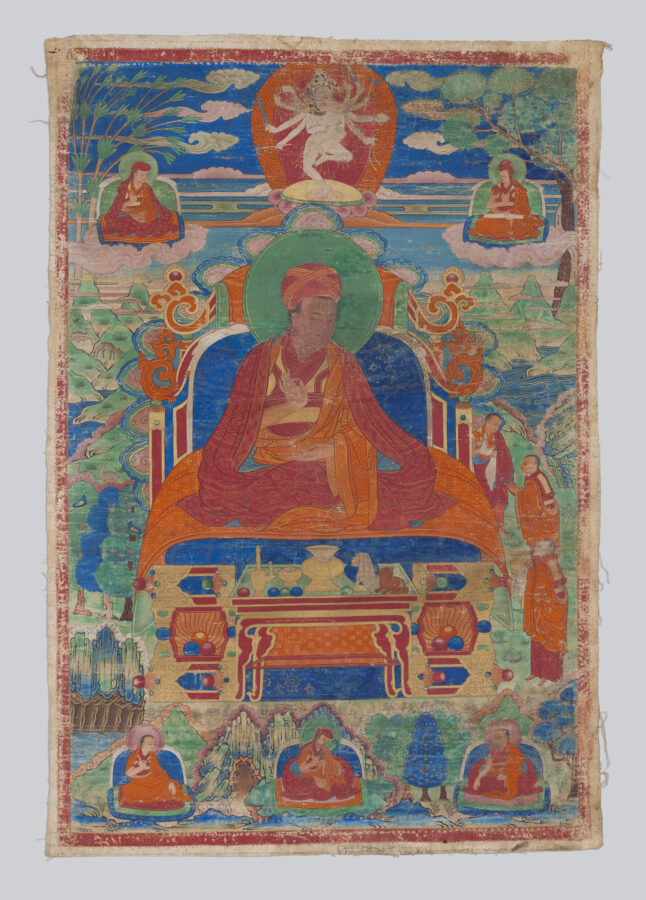
Another copy of this composition found in the Rubin Museum collection (C2006.66.459) contains inscriptions identifying each of the narrative scenes around him. Vibrantly colored rainbows emanate out of the upraised skull cup to Dhanasamskrita seated at top left on a rock outcropping with an offering cake (torma) on a tripod. At upper right, the Indian scholar Shantarakshita (Śāntarakṣita; 725–788) wearing a red pandita hat appears to be advising the enthroned Tibetan emperor Tri Songdetsen (khri srong lde brtsan; 742–800) to invite Padmasambhava to Tibet before a gilt sculpture of the Buddha. At lower left, at Padmasambhava’s foot, the Tibetan emperor worships him and holds up a golden offering mandala of the universe. Standing behind him in a white robe is Padmasambhava’s consort Yeshe Tsogyel (ye shes mtsho rgyal) holding up a large incense brasier shaped like a lotus flower. A peacock canopy, an ancient Indic symbol of royalty, marks their exalted status. In the bottom-left corner, Lang Palgyi Yeshe (rlang dpal gyi seng ge), one of Padmasambhava’s main disciples who participated in the Buddhist subjugation of Tibetan gods. He brandishes a ritual dagger (phur ba) and bell while performing a ritual based on Padmasambhava’s teachings to subdue negative spirits employing a triangular ghost trap. An inscription on the back of this painting reads: “May the great scholar Sambhava, born from the lotus, bestow the good fortune [just as] the lamp of the Buddha’s teaching Pacifies the darkness of the world.”

This relaxed posture is commonly associated with regal leisure.

A skull cup is an attribute of tantric deities and is usually paired with a curved knife. It can symbolize a mind filled with the bliss of realizing the true nature of reality.
A virtuous feeling and deep respect toward an authentic teaching, teacher, or path. Buddhists believe that expansive study, analysis, and meditation are essential steps for cultivating a healthy and enduring devotion.
Teachings and precepts that offer practical and experiential guidance. In Buddhism instruction is primarily an oral tradition and is often targeted to the specific needs or disposition of a student or disciple.
A vehicle for the preservation and transmission of knowledge. The Buddha’s teachings were originally passed down through oral transmission and storytelling, and stories of the Buddha’s past lives are considered an important source of inspiration and guidance.
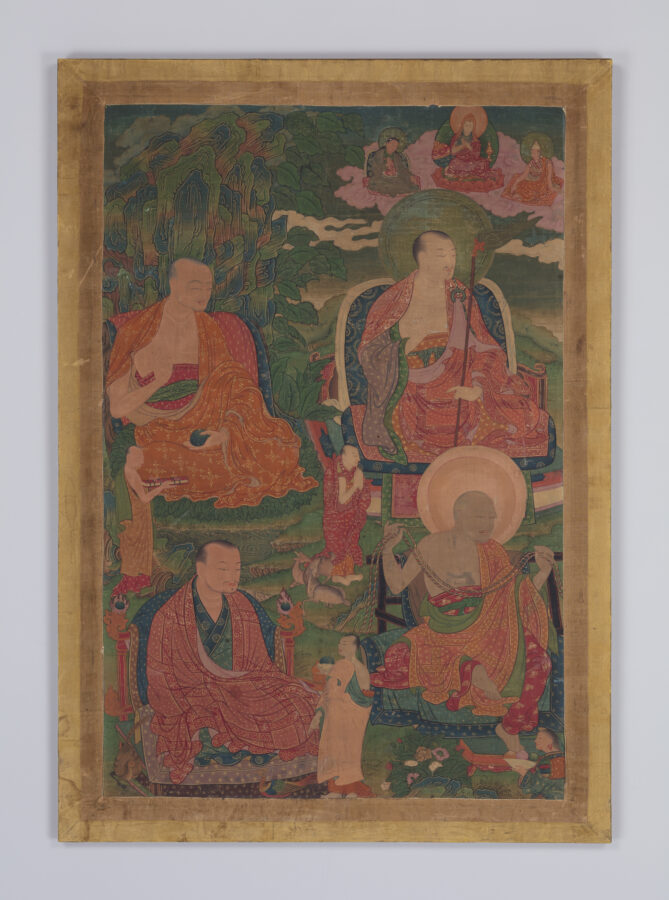
Himalayan art includes portraits of legendary and historical humans, including accomplished religious teachers (lamas), the Buddha’s original disciples (arhats), and spiritually accomplished tantric masters (mahasiddhas).
Today, Tibetans primarily inhabit the Tibetan Plateau, situated between the Himalayan mountain range and the Indian subcontinent to the west, Chinese cultural regions to the east, and Mongolian cultural regions to the northeast. During the 7th to 9th century, Tibetan rulers expanded their empire across Central Asia, and established Buddhism as the state religion.

Get the latest news and stories from the Rubin, plus occasional information on how to support our work.