Tibet
18th century
Tibet
18th century
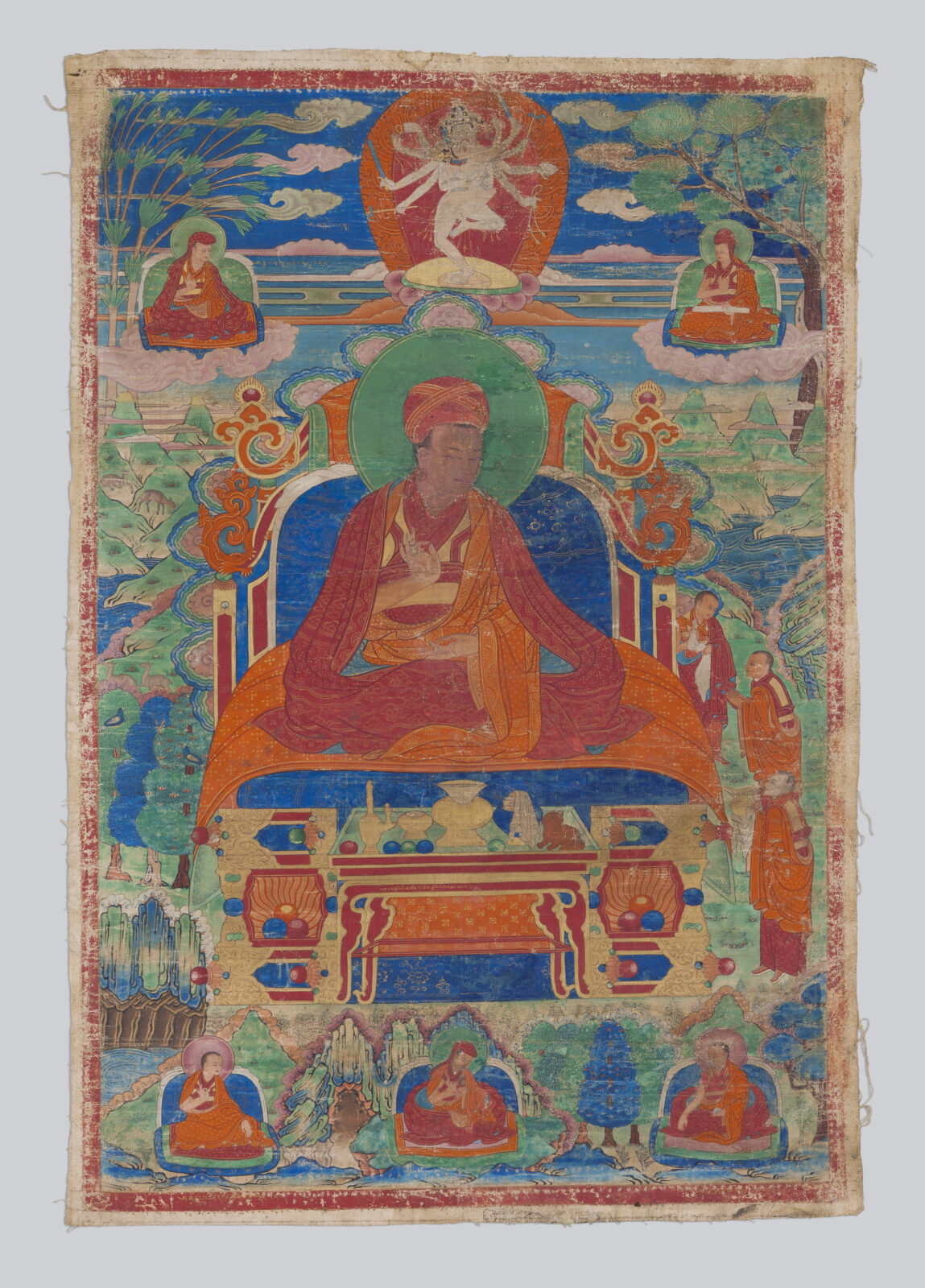
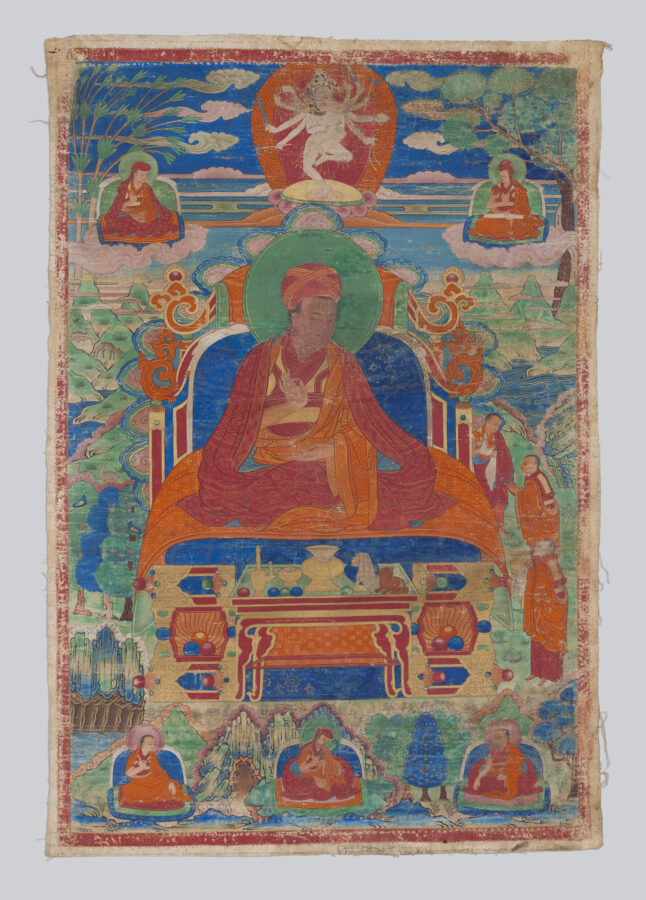
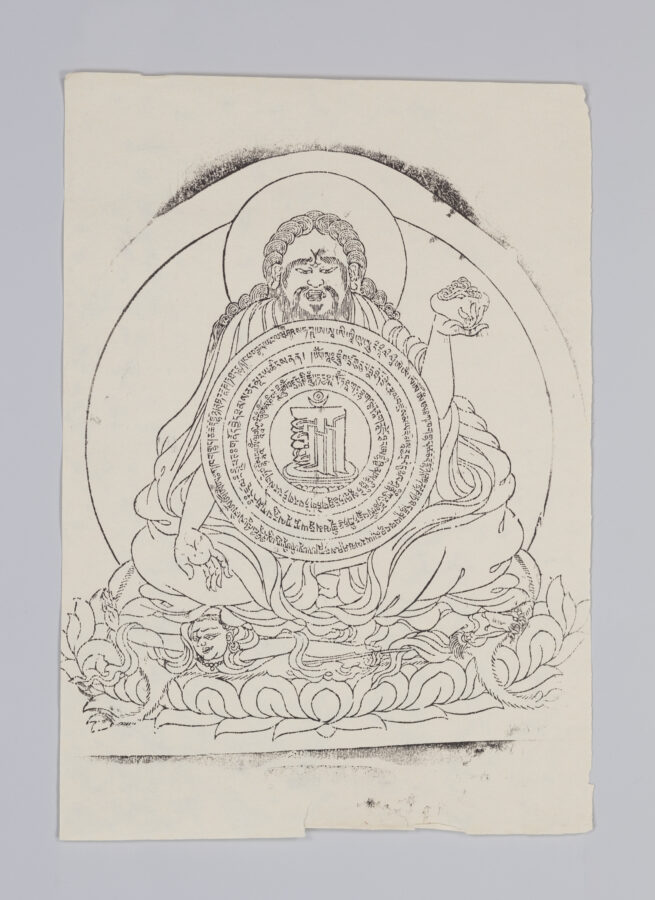
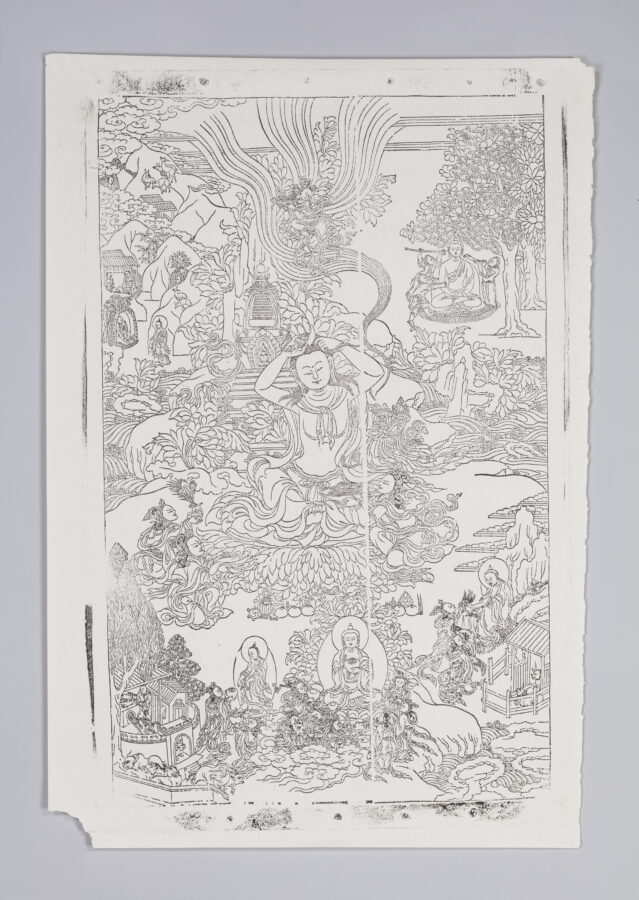
This painting is from a set that portrays the lineage of the Sakya tradition’s central teachings, “The Path and Its Result” (Tibetan: lam dre), as taught by the mahasiddha Virupa. It features Sakya hierarch Chogyel Pakpa Lodro Gyeltsen (1235–1280), who is famous as the teacher to Qubilai Khan (1215–1294) and the first imperial preceptor of the Yuan dynasty. In the upper corners of the paintings are lineage masters: the ninth abbot of Ngor Monastery, Gyelwa Lhachok Sengge (1468–1535), and the eleventh abbot of Ngor Monastery, Jamyang Sanggye Sengge (1504–1569).
The Rubin Museum has one other painting from this set, depicting the tenth abbot of Ngor Monastery, Ngorchen Konchog Lhundrup (1497–1557) (C2006.66.320). See Treasury of Lives for the biography of Chogyel Pakpa (1235–1280).

The hands form the shape of a wheel, symbolizing the “turning of the wheel of dharma,” a reference to teaching the Buddha’s doctrine.
Teachings and precepts that offer practical and experiential guidance. In Buddhism instruction is primarily an oral tradition and is often targeted to the specific needs or disposition of a student or disciple.
The passing down of authentic Buddhist teachings from a teacher to a disciple or student, often in the form of a text in a ritualistic context.
The antidote to ignorance, with the highest form of wisdom being an understanding of the true nature of reality and all phenomena. In Buddhism studying the nature of interdependence and emptiness is considered an important step for attaining wisdom.
The transmission of teachings from one generation to the next, from teacher to student, traced all the way back to the Buddha without interruption. A complete lineage is essential in Tantric Buddhist practices as it makes the blessings of the teaching more powerful.
Himalayan art includes portraits of legendary and historical humans, including accomplished religious teachers (lamas), the Buddha’s original disciples (arhats), and spiritually accomplished tantric masters (mahasiddhas).
Today, Tibetans primarily inhabit the Tibetan Plateau, situated between the Himalayan mountain range and the Indian subcontinent to the west, Chinese cultural regions to the east, and Mongolian cultural regions to the northeast. During the 7th to 9th century, Tibetan rulers expanded their empire across Central Asia, and established Buddhism as the state religion.

Get the latest news and stories from the Rubin, plus occasional information on how to support our work.