Eastern Tibet or Mongolia
19th century
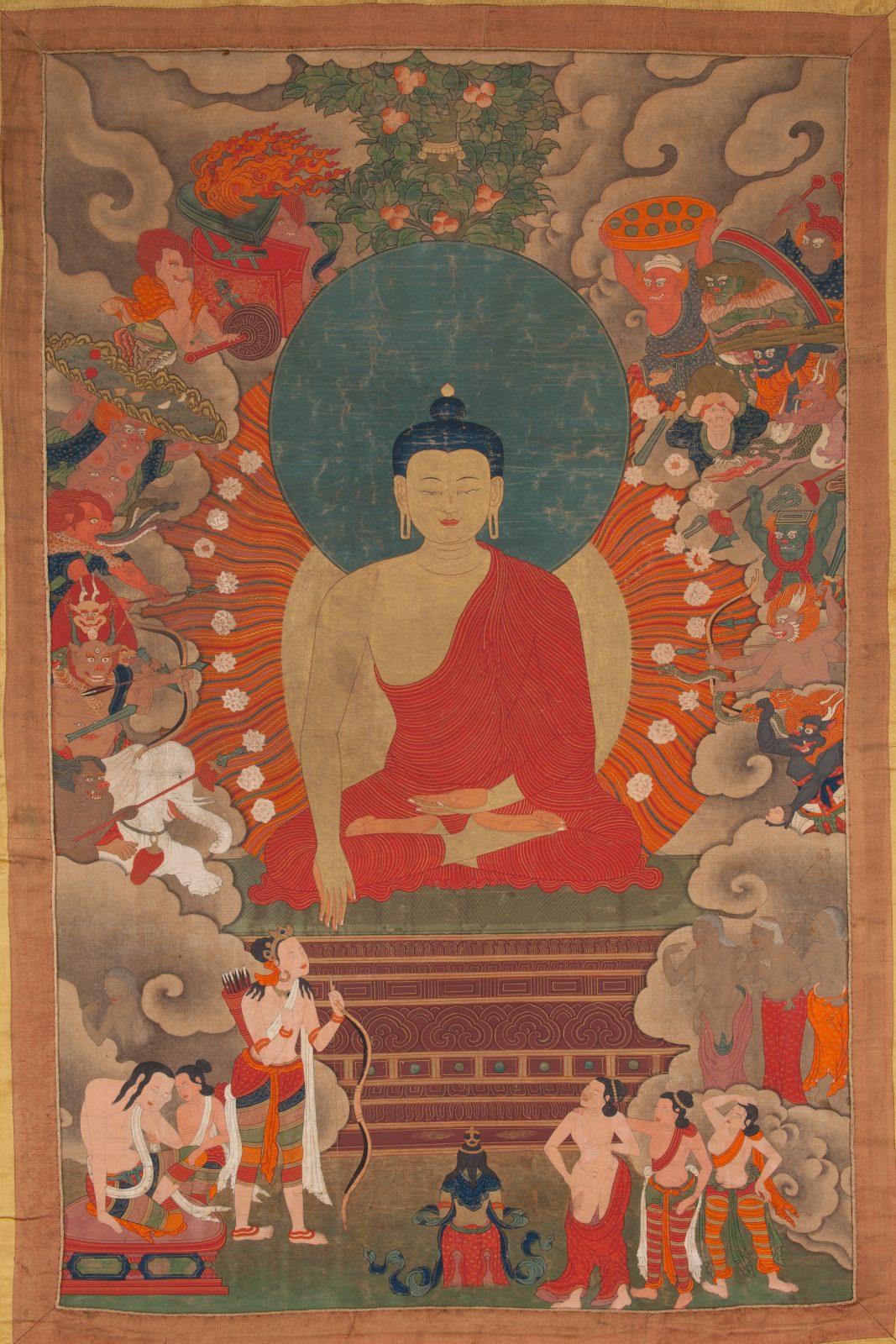
This is the gesture of the Buddha calling the earth to witness his awakening.
Eastern Tibet or Mongolia
19th century
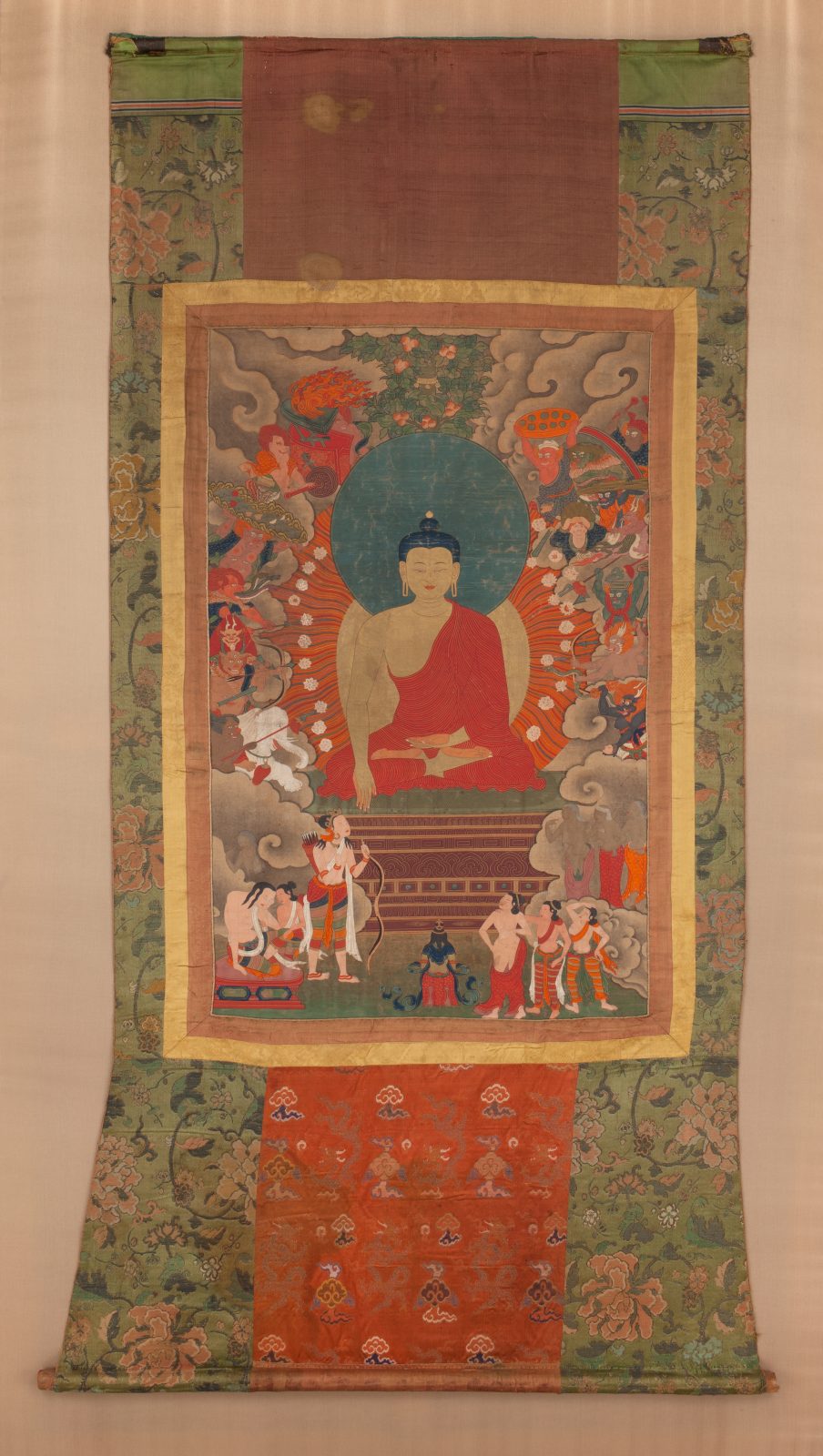
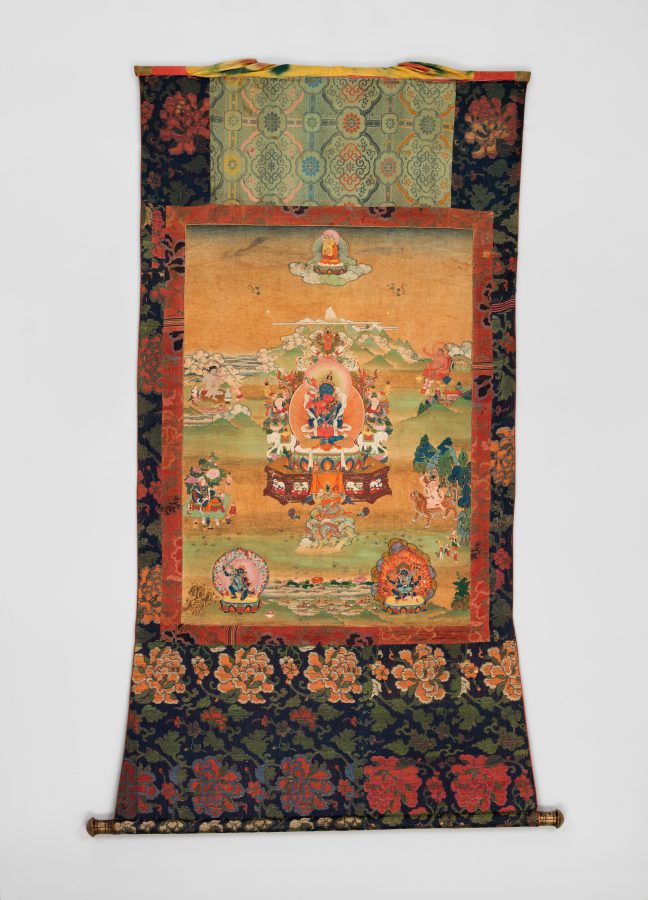
This traditional hanging scroll painting (thangka) depicts a dramatic event: the Buddha defeating the demon Mara and becoming a fully awakened person (a buddha). According to the story of this monumental feat, the Buddha sat down under a tree and vowed not to rise until he understood and awoke to the true nature of reality. Halfway through the night the demon Mara and his daughters challenged the Buddha through threats and temptations. Mara’s army attacked the Buddha with weapons, but he turned their spears and arrows into flowers. Mara’s daughters tried their ploys—sexual favors, a motherly breast, and sisterly need—but he remained unmoved. The Buddha touched the ground to call upon the earth goddess to witness his victory and awakening, and this gesture became known as the earth-touching mudra. The tree the Buddha sat under became known as the bodhi tree, the tree of awakening.

This is the gesture of the Buddha calling the earth to witness his awakening.
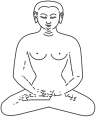
Also known as vajra position, this posture is associated with meditation.
A state of “waking up” from illusion and seeing the true nature of reality. Buddha Shakyamuni attained enlightenment while meditating under the bodhi tree. Buddhist teaching explains that the accumulation of merit and wisdom are essential for achieving enlightenment, also known as awakening.
A state of “waking up” from illusion and seeing the true nature of reality. Buddha Shakyamuni attained awakening while meditating under the bodhi tree. Buddhist teaching explains that the accumulation of merit and wisdom are essential for achieving awakening, also known as enlightenment.
The antidote to ignorance, with the highest form of wisdom being an understanding of the true nature of reality and all phenomena. In Buddhism studying the nature of interdependence and emptiness is considered an important step for attaining wisdom.
An awakened being who understands the true nature of reality and is free from the cycle of birth, death, and rebirth. While there are many buddhas, Siddhartha Gautama is the historical Buddha, whose teachings became the foundation of Buddhism.
Mongolians have been widely active in the Tibetan Buddhist world, playing a key role in Tibetan culture, politics, and relations with China. In the 13th century, the Mongol Empire—the largest contiguous empire in world history—facilitated the spread of Tibetan visual culture.
Today, Tibetans primarily inhabit the Tibetan Plateau, situated between the Himalayan mountain range and the Indian subcontinent to the west, Chinese cultural regions to the east, and Mongolian cultural regions to the northeast. During the 7th to 9th century, Tibetan rulers expanded their empire across Central Asia, and established Buddhism as the state religion.


Get the latest news and stories from the Rubin, plus occasional information on how to support our work.